Zurich Old Town Self-Guided Walking Tour: The Complete Riverside Route
This guide covers the full self-guided walking tour of Zurich's Old Town and Limmat riverside, from Zürich HB to Lake Zurich. Get the route, honest advice on what's worth paying for, crowd patterns by season, and practical details you won't find in a brochure.
Tickets & tours
Live prices and dates from our booking partner. If you book, we may earn a commission at no extra cost to you.
TL;DR
- The full Old Town and riverside loop is about 7–7.5 km, walkable in 2 hours of moving time, but plan 3–4 hours with stops.
- Start and end at Zürich Hauptbahnhof (HB): all key sights are within walking distance, no tram needed.
- The only paid interiors on the core route are Fraumünster Church (CHF 5) and Grossmünster tower (CHF 5 adults, CHF 2 children). Everything else is free.
- Cobblestones throughout Old Town get slippery in rain and ice. Wear shoes with grip, not fashion sneakers.
- Bahnhofstrasse is a luxury shopping street, not the Old Town. The medieval core is on both banks of the Limmat: Niederdorf on the east and Lindenhof on the west.
Understanding the Layout Before You Start
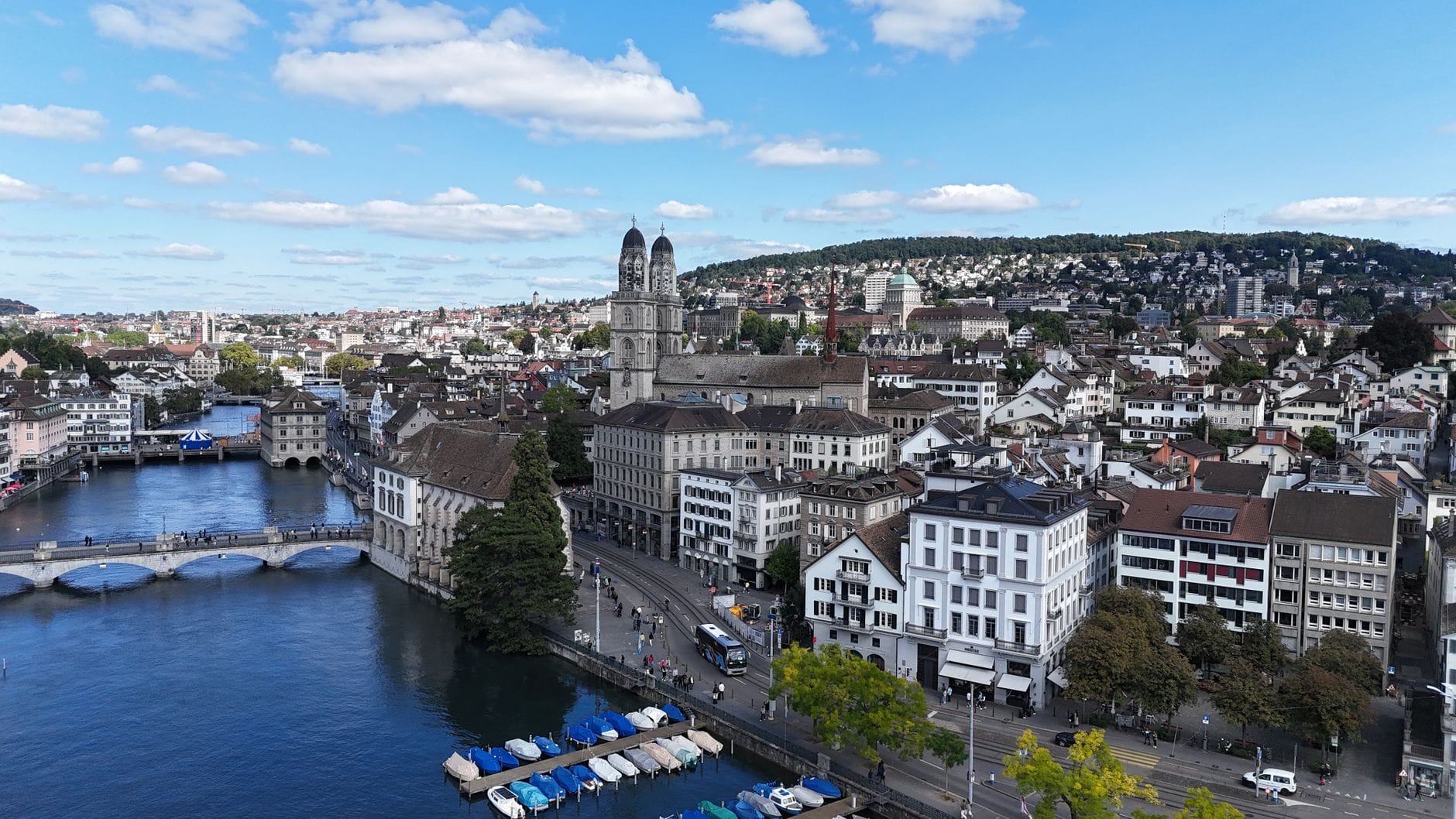
Zurich's Old Town (Altstadt) sits on both banks of the Limmat river, roughly between Zürich Hauptbahnhof to the north and the outlet of Lake Zurich to the south. The entire stretch is about 1.6 km along the river, and the medieval lanes extend only a few blocks deep on each side. That compact geography is what makes this walk so satisfying: everything is close together, transitions are short, and there's no dead time between points of interest.
The west bank is quieter and more residential in character, dominated by Lindenhof hill and the lanes around Augustinergasse. The east bank, known as Niederdorf, is livelier, with cafés, bookshops, and street-level activity running the full length of the route. A sensible approach is to walk south along one bank and return north along the other, crossing the Limmat at the lake end via the Quaibrücke bridge. This creates a natural loop without backtracking.
ℹ️ Good to know
Bahnhofstrasse, Zurich's famous luxury shopping avenue, runs parallel to the Limmat on the west side but is not part of Old Town. It's worth a brief detour at the start or end, but don't confuse it with the historic medieval core. The actual Altstadt begins once you cross into the narrow lanes behind it.
The Route: Landmarks in Order
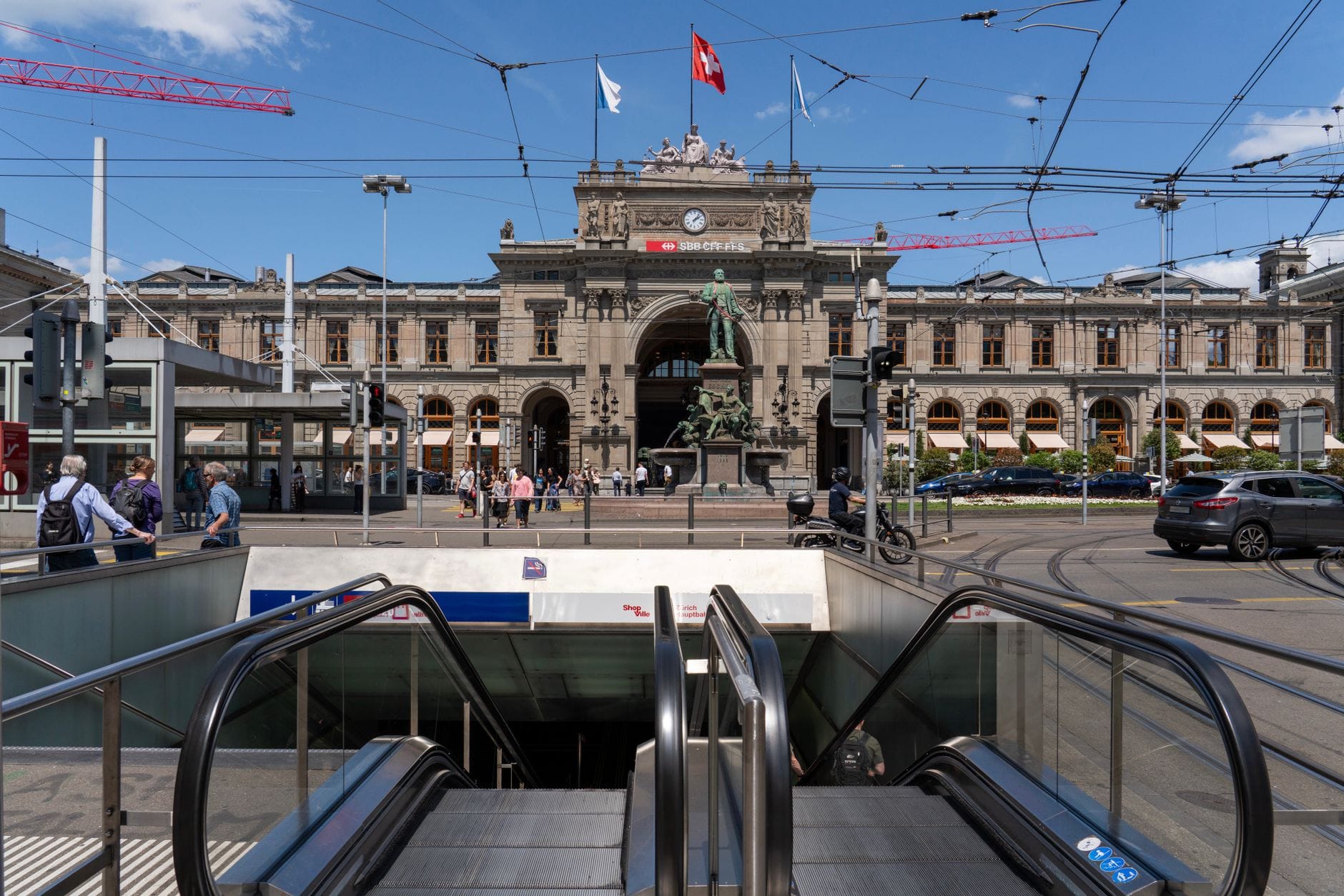
Begin at Zürich Hauptbahnhof, Switzerland's largest railway station and a landmark in its own right. The main hall is free to walk through and worth a look before you head south. From the station's front entrance, turn left onto Bahnhofstrasse for a brief introduction to the commercial side of the city, then cut east through the lanes to reach the river.
- Swiss National Museum (Landesmuseum) Directly adjacent to HB, this neo-Gothic building contains Switzerland's most comprehensive historical collection. Adult admission runs CHF 10–16 depending on temporary exhibitions. Plan 60–90 minutes if you go inside; skip it if you're focused on outdoor sightseeing.
- Lindenhof An elevated plateau on the west bank, this is the founding site of Roman Zurich and the city's best free viewpoint at street level. Arrive before 10am on weekdays to avoid the chess players and crowds. It takes about 10 minutes to walk up from the river.
- Augustinergasse One of the best-preserved medieval streets in Zurich, just west of the Limmat. The painted façades and oriel windows here date back centuries. It's short but concentrated: two minutes of walking, worth a full stop.
- Fraumünster Church The stained-glass windows by Marc Chagall (1970) and the rose window by Augusto Giacometti (1945) are the reason to pay CHF 5. Plan 20–30 minutes. Skip the tower; there's no public climb here. The church closes during Sunday morning services.
- Grossmünster Cross the Münsterbrücke to reach the east bank and Zurich's most iconic church. The twin towers date to the 12th century. Climb the Karlturm (CHF 5 adults, CHF 2 children) for a city-level rooftop view. The crypt and nave are free.
- Niederdorf The lane running north from Grossmünster to HB along the east bank. This is where most of the street-level life is: coffee shops, wine bars, independent bookshops. Budget 30–60 minutes just to walk and browse.
- Bürkliplatz and Lake Zurich Walk south from Fraumünster along the lake promenade to reach Bürkliplatz, the broad square at the lake's edge. In summer, the flea market runs here on Saturdays. The lake views here are unobstructed and free.
For a quick add-on at the northern end of the route, the Polybahn funicular departs from Central square (a 5-minute walk from HB) and climbs to the ETH Polyterrasse in under 3 minutes. The terrace offers one of the clearest elevated views over the Old Town rooftops. The Polybahn runs roughly every few minutes and accepts standard Zürich ZVV transport tickets.
What to Pay For and What to Skip
The most common mistake visitors make on this walk is paying for things that aren't worth the cost while missing the best free experiences. The Old Town district itself costs nothing to walk through. Most of what makes the route memorable, the river views, the medieval lane architecture, the hilltop at Lindenhof, Bürkliplatz at the lake, is completely free.
- Worth paying for: Fraumünster's Chagall windows (CHF 5). Nothing else in the city compares for stained glass of this calibre at this price.
- Worth paying for: Grossmünster's Karlturm (CHF 5 adults). The rooftop view over the Limmat is different in character from the Lindenhof and ETH viewpoints, and the climb takes only 5 minutes.
- Skip: Guided audio tours of the street route itself. The route is simple to navigate independently and well signposted. Save the money.
- Skip: The Swiss National Museum if time is short. It's excellent for Swiss history, but it's a 1–2 hour museum that competes with walking time. Visit on a separate day or a rainy afternoon.
- Optional: Switzerland Tourism sells a paid self-guided audio walking tour of the Old Town (approximately 2 hours of content). It adds context but is not necessary for first-time visitors.
⚠️ What to skip
Fraumünster and Grossmünster both close during Sunday morning religious services and may reduce hours on public holidays. If you're visiting on a Sunday, plan to arrive before 9am or after 12pm to be safe. Check current hours directly with the churches before your visit, as seasonal schedules vary.
Seasonal Conditions and Crowd Patterns
The walk is possible in all four seasons, but the experience changes significantly depending on when you go. Each season has a genuine trade-off, not just a different aesthetic.
Summer (June to August) is the peak period for the lake promenade and Bürkliplatz. Temperatures in the low-to-mid 20s °C mean the riverside fills up from mid-afternoon onwards. If you want the walk without crowds, start before 9am. The upside of summer is the longest daylight hours and the best conditions for seeing the lake. For more on summer-specific activities, the Zurich in summer guide covers what else is happening around the city.
Autumn (September to November) is arguably the most underrated time for this walk. Crowds thin after mid-September, morning fog often sits over the lake (which looks dramatic from Lindenhof), and the light in late afternoon is excellent for the church interiors. The downside is increasing rain frequency from October and shorter days.
Winter (December to February) brings shorter daylight, with useful light between roughly 8am and 4pm. Christmas markets cluster around the station and spread into the Old Town lanes, which increases pedestrian congestion in December. Cobblestones can ice over after overnight freezing: this is a real slip hazard, not a minor inconvenience. The Zurich in December guide has more detail on navigating the city during the festive period.
Spring (March to May) is the most variable season. March can still produce cold grey days with occasional snow at city level. By late April the riverbanks and plazas start coming back to life, and by May the walk is genuinely pleasant with mild temperatures and manageable crowds before the summer surge.
💡 Local tip
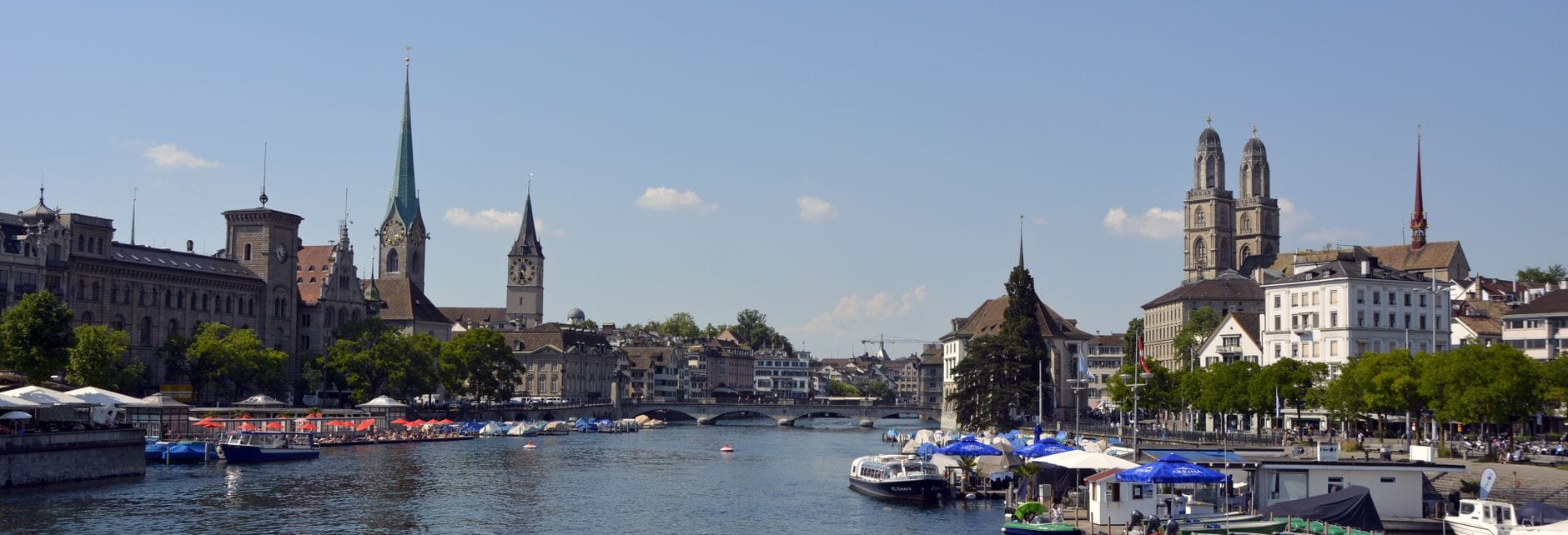
For the best photographs of the Grossmünster and Fraumünster spires together, position yourself on the east bank near the Münsterbrücke in the morning, when the light hits the west-facing Fraumünster façade. By afternoon, the towers fall into shadow from that angle.
Practical Logistics
No public transport is needed for the standard Old Town and riverside loop. The route starts and ends at Altstadt Zurich, which is directly accessible on foot from Zürich HB. If you're arriving by train from the airport (ZRH, about 13 km north of the city centre), the direct S-Bahn service to HB takes roughly 10–15 minutes. From HB, you step out of the main entrance and the walk begins immediately.
- Distance: approximately 7–7.5 km for the full loop
- Moving time: around 2 hours at a comfortable pace
- Total time with stops: 3–4 hours for most visitors; 5+ hours if you include the Swiss National Museum
- Terrain: mostly flat with one short uphill to Lindenhof and the Karlturm stair climb at Grossmünster
- Footwear: closed shoes with grip. Cobblestones on wet days are more challenging than they look
- Currency: Swiss franc (CHF). Most cafés and church ticket desks accept card, but carry small cash as a backup
- Water: Zurich's tap water is high quality, and the city has numerous public drinking fountains along the route. Bring a refillable bottle
If you want to extend the route south along the water, the Lake Zurich promenade continues past Bürkliplatz toward Zürichhorn Park, adding another 3–4 km of flat waterfront walking with views across the lake. This extension is particularly good in late afternoon. The getting around Zurich guide covers transport options if you want to return to HB by tram rather than walking back.
✨ Pro tip
The Niederdorf lanes on the east bank get significantly quieter before 9am on weekdays. If you're an early riser, this is the best time to see the medieval streetscape without navigating around tour groups and café crowds. Many of the best architectural details, carved doorways, painted façades, iron signs, are at eye level and easy to miss when the lane is packed.
Combining the Walk with Other Sights
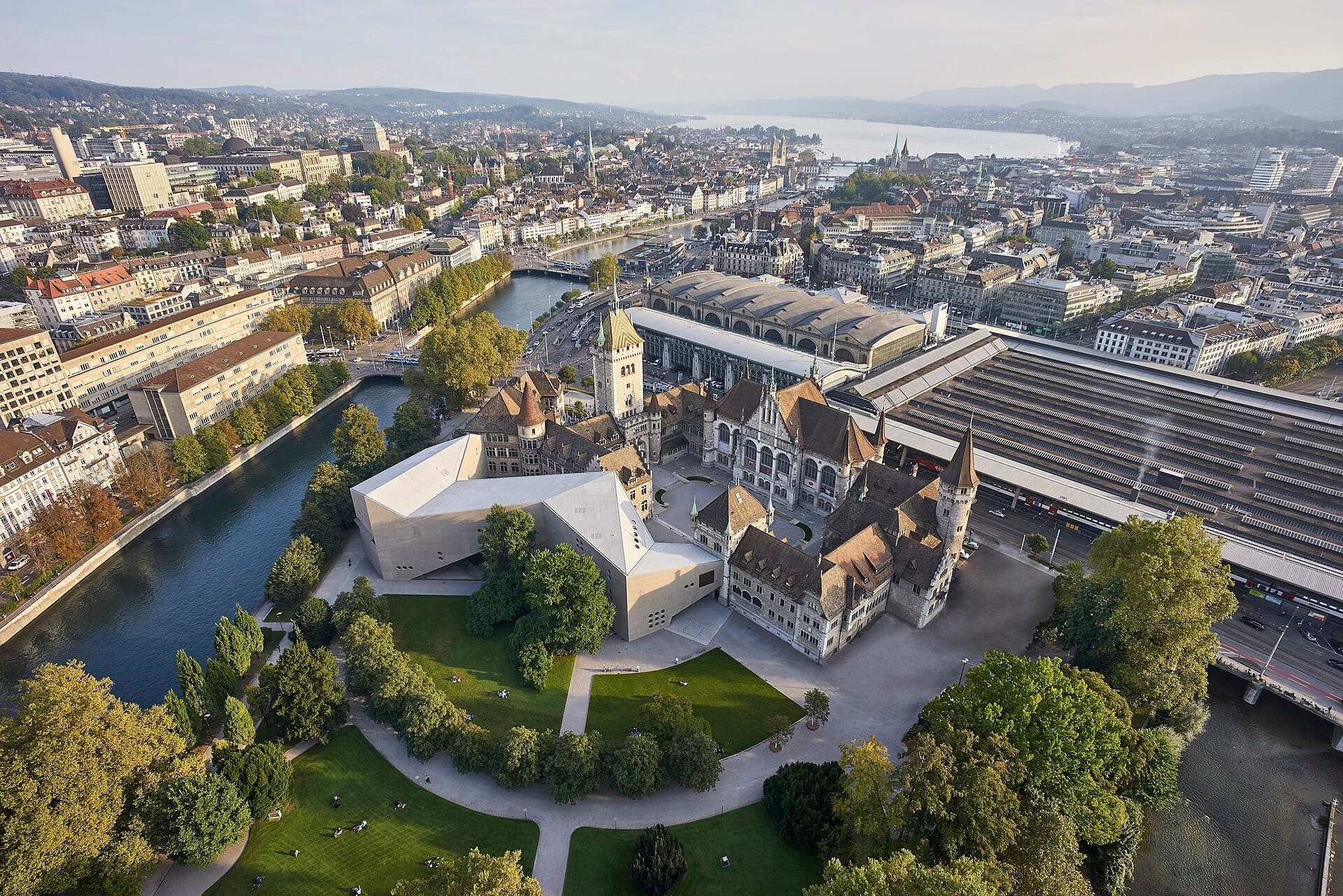
The walk integrates naturally with several other experiences nearby. The Swiss National Museum sits directly next to HB and works well as an add-on at the start or end of the day. For art, Kunsthaus Zürich is about a 15-minute walk east from Grossmünster and holds one of the largest art collections in Switzerland.
If you're spending more than one day in the city, the walking route pairs well with a half-day in Zürich-West, the former industrial quarter on the other side of the city that has a completely different architectural character. For a full itinerary built around the walk and surrounding sights, the 2 days in Zurich guide offers a practical day-by-day structure.
FAQ
How long does the Zurich Old Town walking tour take?
The core loop covering Lindenhof, Fraumünster, Grossmünster, Niederdorf, and Bürkliplatz is about 7–7.5 km and takes roughly 2 hours of walking. With time inside Fraumünster, the Grossmünster tower, and stops for coffee or photos, most visitors take 3–4 hours. Adding the Swiss National Museum extends the day to 5+ hours.
Is the Zurich Old Town walking tour free?
Walking through the Old Town itself is free. The main paid entries on the route are Fraumünster Church (CHF 5 adults, children under 16 free with an adult) and the Grossmünster Karlturm (CHF 5 adults, CHF 2 children). All outdoor sights including Lindenhof, Augustinergasse, Bürkliplatz, and the river promenades cost nothing.
Where does the Zurich Old Town walking tour start?
The most practical starting point is Zürich Hauptbahnhof (HB), Zurich's main railway station. All key Old Town sights are within walking distance from the station's main entrance, and no public transport is required to complete the route.
Can you do the Zurich walking tour in winter?
Yes, but with two caveats: daylight is limited (roughly 8am to 4pm in December), so plan church visits and viewpoints in the morning. More importantly, cobblestones throughout Old Town can become icy after overnight frost. Wear shoes with solid grip. The route itself is fully open year-round, and the Christmas market atmosphere in December adds a different kind of appeal.
Do I need a guide for the Zurich Old Town walk?
No. The route is compact, well-signposted, and easy to navigate independently. Switzerland Tourism offers a paid self-guided audio tour if you want narrated context, but for most visitors the sights are self-explanatory with brief research beforehand. A guided walking tour adds value mainly if you want detailed historical interpretation of specific buildings or the Chagall windows.
Tickets & tours
Live prices and dates from our booking partner. If you book, we may earn a commission at no extra cost to you.
Planning a trip? Discover personalized activities with the Nomado app.