Grossmünster: Zurich's Reformation Church and a Tower Worth Climbing
The Grossmünster has defined Zurich's skyline for nearly 900 years. This Romanesque church is where Ulrich Zwingli launched the Swiss Reformation in 1519, and today its twin towers remain the most recognizable silhouette on the Limmat. Entry to the church is free; the tower climb costs CHF 5 and rewards you with one of the clearest views over the Old Town.
Quick Facts
- Location
- Zwingliplatz 7, 8001 Zürich (Altstadt, east bank of the Limmat)
- Getting There
- Tram stop Helmhaus (lines 3, 4, 11, 15); 10-min walk from Stadelhofen
- Time Needed
- 30–60 min for church; add 30–45 min for the Karlsturm tower
- Cost
- Church: free. Karlsturm tower: CHF 5 adults, CHF 2 children/students
- Best for
- History, Reformation heritage, city views, Romanesque architecture
- Official website
- grossmuenster.ch
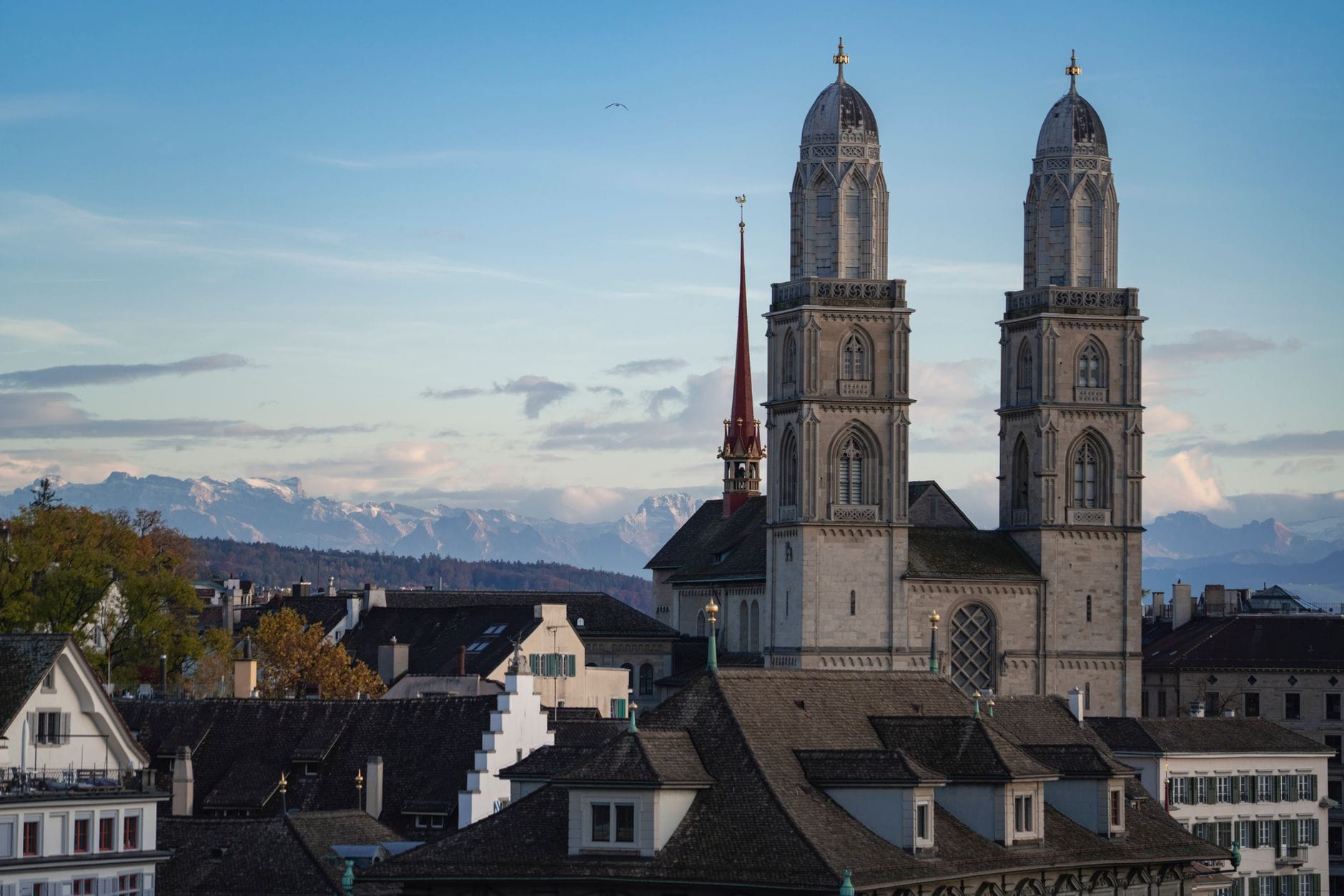
What the Grossmünster Actually Is
The Grossmünster is a Swiss Reformed Protestant church on the east bank of the Limmat river in Zurich's Old Town. Construction of the current Romanesque structure began around 1100 and was largely complete by circa 1220, making it one of the older surviving buildings in Switzerland. Its twin towers, added and modified over subsequent centuries, are the reference point visitors use to orient themselves across the city.
What elevates it beyond architecture is its historical weight. In 1519, the theologian Ulrich Zwingli began preaching here, setting off a reformation of Christianity in Switzerland that ran parallel to, but distinct from, Luther's movement in Germany. For anyone interested in European religious history, standing inside the Grossmünster puts you at one of the actual fault lines of that rupture. The church is still an active Reformed congregation and holds regular services, which means tourist visits coexist with ongoing worship — something to be aware of when timing your visit. For broader context on Zurich's religious heritage, the Zurich churches guide covers the wider landscape well.
💡 Local tip
Avoid arriving right at 10:00 on weekday mornings — that's when tour groups tend to cluster near the entrance. Come between 11:30 and 13:00, when the church interior is quieter, or late afternoon when the light through the choir windows is at its warmest.
Inside the Church: What You See and How It Feels
The interior of the Grossmünster is deliberately austere. The Reformed tradition stripped out much of the Catholic iconography during the 16th century, so you won't find the gilded altars or painted ceilings common in Catholic cathedrals across Europe. What you get instead is Romanesque stonework at its most unadorned: thick piers, round arches, and a crypt that dates to the 12th century. The overall effect is cool, quiet, and serious.
The main visual exception is the choir windows, designed by the artist Augusto Giacometti (a cousin of the sculptor Alberto Giacometti) and installed in 1932. Their deep blues and greens read almost like stained glass from another tradition entirely, and the contrast with the grey stone walls is striking. A second set of windows in the crypt was added later by Sigmar Polke, completed in 2009 using agate stone slices rather than conventional glass. On a bright morning, these emit a warm, amber-tinted glow that gives the crypt an unexpected intimacy.
The crypt itself is worth descending into. It houses a statue of Charlemagne, though the original is kept protected and a copy stands on display. According to medieval tradition, Charlemagne founded the Grossmünster after his horse knelt on the burial site of two early Christian martyrs, Felix and Regula, the patron saints of Zurich. The story is legend rather than documented history, but it speaks to the church's deep hold on Zurich's civic identity.
Tickets & tours
Live prices and dates from our booking partner. If you book, we may earn a commission at no extra cost to you.
Mount Titlis snow fun for first-time skiers from Zurich
From 212 €Instant confirmationFree cancellationSwiss ski experience from Zurich
From 321 €Instant confirmationFree cancellationBest intro tour of Zurich with a local
From 116 €Instant confirmationFree cancellationZurich Old Town guided walking tour
From 27 €Instant confirmationFree cancellation
Climbing the Karlsturm: The CHF 5 View
The Karlsturm, or Charles Tower, is the south tower of the Grossmünster (the one on the Limmat side) and is open to visitors for a separate admission of CHF 5 for adults (CHF 2 for children aged 6–16 and students; free with a Zürich Card). The climb involves a relatively steep, narrow staircase with no lift, so it is not suitable for visitors with limited mobility. The tower is open Monday–Saturday 10:00–18:00 and Sundays from approximately 12:30 from March through October, with shorter hours (closing at 17:00) from November through February.
The view from the top is genuinely worthwhile. You look directly across the Limmat to the Fraumünster and its slender spire, with the rooftops of the Niederdorf stretching away north. On clear days, the lake opens up to the south and the Alps are visible on the horizon. The platform is narrow and uncovered, so wind is a factor — bring a layer even in summer. Photographically, the late afternoon light (roughly 15:00–17:00) gives you warm tones on the Old Town rooftops without the harsh midday contrast.
Visitors making a full day of the Altstadt often pair the Grossmünster tower with the platform at Lindenhügel (Lindenhof) across the river, which gives a complementary angle on the same skyline without any climbing fee.
⚠️ What to skip
The Karlsturm is accessed via stairs only. There is no elevator. Visitors with mobility limitations should contact the parish office directly before planning a tower visit.
Historical and Cultural Weight
Few buildings in Switzerland carry as much documented historical significance as the Grossmünster. The church's role in the Swiss Reformation is not incidental — it was the pulpit from which Zwingli preached a theology that would spread across Reformed Protestantism worldwide, influencing Calvinist churches from Geneva to Edinburgh to New England. A bronze relief of Zwingli marks his connection to the building, and the surrounding square, Zwingliplatz, is named for him.
The surrounding Altstadt neighborhood that grew up around both the Grossmünster and the Fraumünster preserves much of its medieval street plan. The narrow lanes off Grossmünsterplatz lead into a compact area of guild houses, small squares, and workshops that still function as artisan spaces and independent shops. The Zurich Old Town guild houses nearby give good visual context for how the city organized itself around trade and craft in the post-medieval period.
The Grossmünster also has a continuous musical tradition. Organ concerts are held regularly, and the acoustic inside the stone nave is notably good for choral music. If a concert is scheduled during your visit, it can be one of the more atmospheric ways to experience the building — the programming calendar is available on the official website.
How the Experience Changes by Time of Day
The church opens at 10:00 on weekdays and Saturdays, and on Sundays after the morning service. Early in the morning, before the first tour groups arrive, the Grossmünster is unusually quiet for such a major landmark. The Romanesque interior absorbs sound well, and on weekday mornings between 10:00 and 11:00 you may have large sections of the nave essentially to yourself. The Polke agate windows in the crypt are best seen in morning light when the sun is lower and at an angle that drives light directly through the stone slices.
Midday brings the most visitors. The surrounding square, Grossmünsterplatz, fills with people from the Old Town cafes and nearby shops. Inside the church, the nave can feel busy, though the crypt tends to stay calmer. The exterior is photogenic from across the Limmat at any time of day, but the classic view from the Münsterbrücke bridge is at its best in morning light, with the towers facing east.
Late afternoon, from around 15:00 onward, sees the tourist volume ease off. The quality of light inside shifts warmer, which is when the Giacometti windows in the choir show their deepest color. The tower closes at 18:00 in summer, so aim to begin your climb by 17:00 to allow adequate time at the top. Sunday mornings the church holds services, which means regular tourist access begins later — after services for the main nave, and for the tower after the service. Plan accordingly.
Getting There and Practical Details
The Grossmünster sits in the heart of Altstadt Zurich, roughly a 15-minute walk from Zürich Hauptbahnhof. Trams 4 and 15 stop at Helmhaus, which is the closest tram stop, leaving a short walk across Grossmünsterplatz. Most visitors walking through the Old Town will reach the church naturally — it is impossible to miss the twin towers from the Limmat bridges.
Church admission is free. The Karlsturm tower costs CHF 5 for adults, CHF 2 for children (ages 6–16) and students. Opening hours: March 1 through October 31, the church is open daily 10:00–18:00; November 1 through February 28, daily 10:00–17:00. Tower hours differ slightly from the main church, with Sunday access beginning after the service rather than at 10:00.
ℹ️ Good to know
The Zürich Card covers the Karlsturm tower admission and also includes free public transport across the city. If you plan multiple attractions in a day, the card often pays for itself quickly. Check the current price and coverage at the official Zürich tourism site before purchasing.
Photography is permitted inside the church. There are no tripod restrictions mentioned by the parish, but given that services run regularly, use judgment about when flash or equipment setup would be intrusive. The exterior is freely photographable from the surrounding public squares and bridges at all hours.
Who Should Think Twice
If you are primarily interested in ornate religious art — painted ceilings, gilded altarpieces, extensive frescoes — the Grossmünster's Reformed interior will likely disappoint. Its beauty is structural, not decorative. Visitors accustomed to the Catholic cathedral circuit of Italy or France may find the nave surprisingly plain.
The tower is also not for everyone. The staircase is steep and narrow, and there is no lift. If tower climbs are not your preference, the rooftop views from Uetliberg are more accessible and dramatically wider in scope, though they require a train journey rather than a walk from the city center.
Insider Tips
- The Polke agate windows in the crypt are far less visited than the Giacometti choir windows upstairs. Take the time to go down — they are genuinely unusual and most visitors walk past the entrance without noticing.
- Sunday morning services are open to visitors who wish to observe, not just attend as tourists. If you are curious about Reformed worship in practice, arriving after the service is entirely appropriate — just be respectful of the congregation.
- The view from the Münsterbrücke bridge directly below the towers is one of the most photographed angles in Zurich. Arrive before 09:00 for the bridge view with no crowds.
- If an organ or choral concert is listed on the church calendar, attend. The acoustic inside the nave is excellent and tickets (where charged) are modest. Check grossmuenster.ch for the current schedule before your trip.
- Zürich Card holders get free tower access. If you are spending a full day in the city using public transport and visiting multiple attractions, factor the card cost against individual entry prices — the tower plus transport savings often tips the balance.
Who Is Grossmünster For?
- History and Reformation heritage travelers who want to stand in a documented site of European religious change
- Architecture enthusiasts interested in Romanesque design and 20th-century art glass in a single building
- Photographers looking for the iconic Zurich skyline shot from the Limmat bridges, or the city view from the Karlsturm platform
- Visitors on a tight budget — the church is free and the tower is CHF 5, making it one of the best-value experiences in Zurich
- Couples or solo travelers doing a self-guided Old Town walk who want historical depth alongside the visual
Nearby Attractions
Other things to see while in Altstadt (Old Town):
- Augustinergasse
Augustinergasse is a short, narrow pedestrian lane threading through Zurich's Altstadt between Bahnhofstrasse and St. Peterhofstatt. Free to walk, open at all hours, and steeped in history dating to a 13th-century Augustinian monastery, it rewards those who look up, slow down, and pay attention to what surrounds them.
- ETH Zurich Main Building
The ETH Zurich Main Building (Hauptgebäude) is one of the most architecturally significant public buildings in Switzerland, designed by Gottfried Semper in 1864 and freely open to visitors. Standing above the Altstadt on Rämistrasse, it offers a rare chance to walk through a world-class university's historic core without paying a cent.
- Fraumünster
Founded in 853 and home to five monumental stained glass windows designed by Marc Chagall, Fraumünster is one of the most visually striking churches in Switzerland. Small in footprint but overwhelming in atmosphere, it earns its place on any serious itinerary of Zurich's Old Town.
- Kunsthaus Zürich
Kunsthaus Zürich is one of Switzerland's largest art museums, housing a permanent collection that spans seven centuries of European and international art. The original 1910 Beaux-Arts building on Heimplatz was joined in 2021 by a major extension designed by David Chipperfield Architects, nearly doubling its exhibition space. Together they form one of the most substantial art destinations in the German-speaking world.
Planning a trip? Discover personalized activities with the Nomado app.