ETH Zurich Main Building: Architecture, History, and What to Expect
The ETH Zurich Main Building (Hauptgebäude) is one of the most architecturally significant public buildings in Switzerland, designed by Gottfried Semper in 1864 and freely open to visitors. Standing above the Altstadt on Rämistrasse, it offers a rare chance to walk through a world-class university's historic core without paying a cent.
Quick Facts
- Location
- Rämistrasse 101, 8092 Zurich (Altstadt / Zentrum campus)
- Getting There
- Tram 6 or 9 to 'ETH/Universitätsspital' stop, directly in front of the main entrance
- Time Needed
- 30 to 60 minutes for the building and terrace; longer if attending an exhibition or lecture
- Cost
- Free entry to the historic main building (Mon–Fri 06:00–22:00; Sat–Sun 08:00–17:00)
- Best for
- Architecture enthusiasts, history lovers, and anyone wanting a genuine slice of Swiss academic life
- Official website
- ethz.ch/en.html
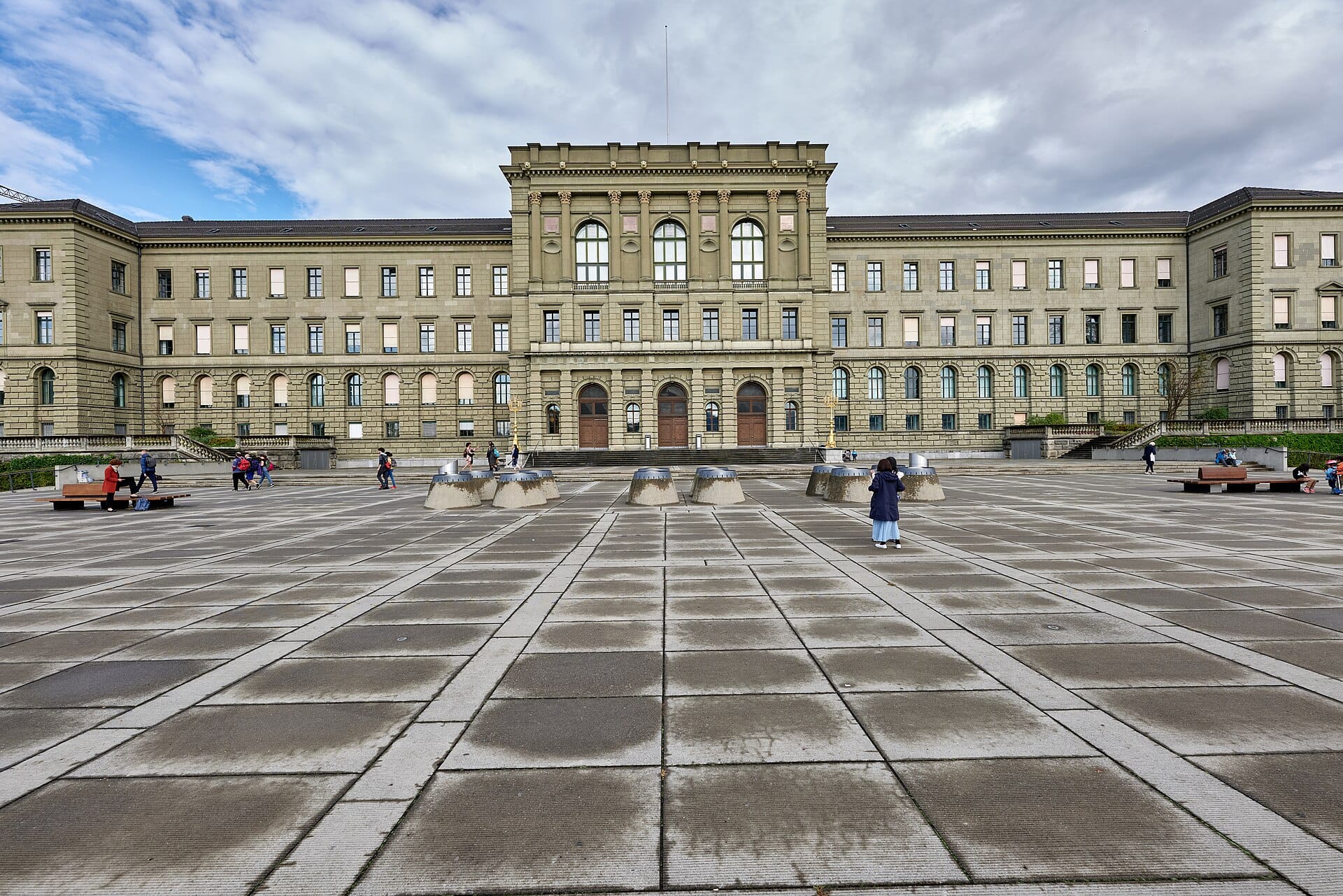
What the ETH Zurich Main Building Actually Is
The ETH Zurich Main Building, known in German as the Hauptgebäude (HG), is the ceremonial and academic heart of one of the world's top technical universities. The Eidgenössische Technische Hochschule Zürich was founded by the Swiss federal government in 1855 — teaching began that same year — and was conceived as a national institution for science and engineering at a moment when Switzerland needed trained professionals for industrialisation. The main building that now defines the campus came a decade later.
For visitors, this is not a museum in the conventional sense. There are no velvet ropes or audio guides at the entrance. You are walking into a functioning university building where students attend lectures, faculty cross corridors with coffee cups, and research carries on behind closed doors. That combination of historic grandeur and everyday academic life is precisely what makes the building interesting.
💡 Local tip
Entry to the main building is free and requires no registration. The building is open Monday to Friday from 06:00 to 22:00 and on weekends from 08:00 to 17:00. No seasonal restrictions are indicated, but hours for individual rooms, libraries, or event spaces may differ.
The Architecture: Semper's Vision and Gull's Expansion
The original main building was completed in 1864 to designs by Gottfried Semper, one of the most influential architects of the 19th century. Semper is perhaps better known internationally for the Semper Opera House in Dresden, but the ETH building represents his thinking about monumental civic architecture in a Swiss context. The structure sits on a ridge above the old city, giving it a commanding position that communicates institutional authority without being oppressive.
The building was substantially extended between 1914 and 1925 by architect Gustav Gull. The distinction matters architecturally, because the two phases represent quite different approaches to institutional design separated by half a century.
From street level, the neoclassical facade reads as a formal composition of arched windows, pilasters, and rusticated stonework. The building sits at a higher elevation than the street, reached by steps that give it a podium effect. On clear days, this elevated position also means the view back towards the city and Lake Zurich from the building's terrace is genuinely rewarding.
If you want to understand the broader architectural character of this part of the city, the ETH main building works well as a starting point for exploring the Altstadt, where layers of building from different centuries sit in close proximity.
Tickets & tours
Live prices and dates from our booking partner. If you book, we may earn a commission at no extra cost to you.
Mount Titlis snow fun for first-time skiers from Zurich
From 212 €Instant confirmationFree cancellationSwiss ski experience from Zurich
From 321 €Instant confirmationFree cancellationBest intro tour of Zurich with a local
From 116 €Instant confirmationFree cancellationZurich Old Town guided walking tour
From 27 €Instant confirmationFree cancellation
How the Building Feels at Different Times of Day
The experience of visiting shifts noticeably depending on when you arrive. On weekday mornings between about 08:00 and 09:30, the entrance hall fills with students moving between lectures. The noise is low but purposeful: rolling bags on stone floors, conversations in German, English, and several other languages, the distant echo of a lecture hall door closing. The atmosphere is energetic without being loud.
By midday, the corridors near the main aula and ground floor open spaces are quieter. This is a good time to examine the architectural detailing at your own pace, including the coffered ceilings, the proportions of the main staircase, and the interior courtyards that are easy to miss if you only pass through quickly. In summer, natural light falls across the interior stonework in a way that rewards slow observation.
Weekend visits, when the building is open from 08:00 to 17:00, have an entirely different character. Student foot traffic drops sharply and the corridors feel more like those of a historic public building than a working campus. The quiet on a Saturday morning, when you can hear your own footsteps on the floors, gives a clearer sense of the spatial scale Semper and Gull intended.
ℹ️ Good to know
Weekday afternoons between roughly 13:00 and 15:00 offer a middle ground: light foot traffic, good interior light, and enough ambient university activity to feel the place as it actually functions.
The Terrace and the View Over Zurich
One of the practical reasons to visit the ETH main building, even if architecture is not your primary interest, is the outdoor terrace accessible from the building. The terrace sits above Rämistrasse and provides an unobstructed look across the rooftops of the old city toward Lake Zurich. On clear days, the lake and the Alps beyond it are visible simultaneously, which is the kind of view that takes a moment to process.
The view from the ETH terrace is among the more underrated in the city. For a systematic look at Zurich's best elevated vantage points, the best views in Zurich guide compares the main options across the city.
Late afternoon light, particularly in the hour before sunset, catches the facades of the Altstadt below in warm tones and makes the lake surface reflect clearly. This is one of the better times for photography from the terrace, though the building closes at 17:00 on weekends, so plan accordingly if you want both the terrace and evening light.
Getting There and Navigating the Campus
The main building is at Rämistrasse 101, reached most directly by tram lines 6 or 9 to the stop 'ETH/Universitätsspital'. From Zurich Main Station, the journey takes roughly 10 to 15 minutes. The tram stop is on flat ground, and the entrance area is step-free at street level, though the building itself has internal stairs. For detailed internal accessibility routes, ETH Zurich's building orientation tools and floor plans are available on the university website.
Alternatively, the ETH Zurich Polybahn funicular connects Central square (near the river) to the Zentrum campus area. The Zurich Polybahn is a short, inexpensive ride that delivers you to the upper part of the campus and adds a bit of character to the journey.
Once inside the main building, orientation is straightforward. The entrance hall and main staircase are immediately visible from the front door. The aula, the large ceremonial hall used for formal events, is not always accessible to casual visitors depending on the day's schedule, so it is worth checking the ETH events calendar if this is a specific interest. The building's corridors branch off logically from the central spine, and getting pleasantly lost for 20 minutes is part of the experience.
⚠️ What to skip
The ETH main building is an active academic space, not a tourist attraction. Respect ongoing lectures and seminars. Keep noise low in corridor areas adjacent to classrooms, and avoid entering rooms that are clearly in use.
Cultural Context: Why ETH Zurich Matters
ETH Zurich has produced more than 20 Nobel Prize laureates, including Albert Einstein, who was a student here. That history is not advertised loudly inside the building, which is part of what makes it feel genuine rather than packaged. You are unlikely to encounter plaques at every corner or promotional displays about famous alumni. The institution's attitude to its own history is notably understated.
The main building sits at the intersection of Swiss federal ambition and 19th-century European academic culture. When the Confederation commissioned it, Switzerland was consolidating its national institutions, and a federal polytechnic was a deliberate statement of modernity. The choice of Semper, who was at the time a political exile in Zurich after participating in the Dresden uprising of 1849, added an extra layer of significance: this was a building designed by a figure who carried the intellectual currents of European radicalism into Swiss institutional life.
For more context on Zurich's broader cultural and historical institutions, the Swiss National Museum nearby covers the national story in considerable depth and pairs well with a visit to the ETH building.
Who Will Get the Most from This Visit
The ETH main building suits people with a genuine interest in architecture, academic history, or the urban fabric of Zurich. It is a rewarding stop for anyone who finds working institutions more interesting than static exhibits, and for travelers who want to understand the city beyond its medieval centre and lakefront. The terrace alone justifies a detour if you are already in the Altstadt area.
Families with younger children may find the visit less engaging unless the children have a specific interest in science or university buildings. The building does not have child-oriented programming on a drop-in basis. Similarly, travelers looking for a polished tourist experience with guided commentary and souvenir options will find little of that here. This is a place that rewards curiosity and self-directed exploration, not passive consumption.
If you are putting together a broader itinerary around Zurich's walkable historic core, the Zurich walking tour guide covers routes that connect the ETH area with the Altstadt below.
Insider Tips
- The ETH main building has several internal courtyards that are easy to miss if you only follow the main corridor. Step through any unlocked courtyard door you see: these spaces show the building's real scale and the quality of the stonework in detail.
- The university café inside the building is open on weekdays and offers coffee and simple food at prices noticeably lower than street-level Zurich cafes. It is used primarily by students and staff, which means no tourist markup.
- If you want the terrace largely to yourself, arrive on a weekday before 09:00 or after 18:00 in summer. The terrace view is at its best in winter when the air is clear and snow sits on the distant Alpine peaks.
- ETH Zurich regularly holds public lectures, exhibitions, and open events in the main building, many of which are free or low-cost. Checking the ETH events calendar before your visit may turn a brief architectural stop into something more substantial.
- The tram stop 'ETH/Universitätsspital' is also the access point for the nearby ETH Zentrum campus. Combining both campuses in a single walk adds little extra time and gives a more complete picture of Zurich's academic concentration on this ridge.
Who Is ETH Zurich Main Building For?
- Architecture and design enthusiasts drawn to 19th-century European institutional buildings
- History-minded travelers interested in the origins of Swiss federal institutions and scientific culture
- Photographers looking for an underused vantage point over the Altstadt and Lake Zurich
- Budget travelers: free entry, good terrace view, and a campus café with reasonable prices
- Curious visitors who prefer exploring working places over curated tourist sites
Nearby Attractions
Other things to see while in Altstadt (Old Town):
- Augustinergasse
Augustinergasse is a short, narrow pedestrian lane threading through Zurich's Altstadt between Bahnhofstrasse and St. Peterhofstatt. Free to walk, open at all hours, and steeped in history dating to a 13th-century Augustinian monastery, it rewards those who look up, slow down, and pay attention to what surrounds them.
- Fraumünster
Founded in 853 and home to five monumental stained glass windows designed by Marc Chagall, Fraumünster is one of the most visually striking churches in Switzerland. Small in footprint but overwhelming in atmosphere, it earns its place on any serious itinerary of Zurich's Old Town.
- Grossmünster
The Grossmünster has defined Zurich's skyline for nearly 900 years. This Romanesque church is where Ulrich Zwingli launched the Swiss Reformation in 1519, and today its twin towers remain the most recognizable silhouette on the Limmat. Entry to the church is free; the tower climb costs CHF 5 and rewards you with one of the clearest views over the Old Town.
- Kunsthaus Zürich
Kunsthaus Zürich is one of Switzerland's largest art museums, housing a permanent collection that spans seven centuries of European and international art. The original 1910 Beaux-Arts building on Heimplatz was joined in 2021 by a major extension designed by David Chipperfield Architects, nearly doubling its exhibition space. Together they form one of the most substantial art destinations in the German-speaking world.
Planning a trip? Discover personalized activities with the Nomado app.