Lindenhof: Zurich's Ancient Hilltop Square with Old Town Panoramas
Perched above the Limmat River in the heart of Zurich's Altstadt, Lindenhof is a free, open-air hilltop square with roots stretching back to a Roman fort in the 4th century. It offers some of the most unobstructed views of the Old Town, the river, and the Grossmünster towers, all without a ticket queue in sight.
Quick Facts
- Location
- Lindenhof, 8001 Zürich (Altstadt, west bank of the Limmat)
- Getting There
- Approx. 7–10-minute walk from Zurich Main Station (HB); tram stops Rennweg or Paradeplatz nearby
- Time Needed
- 20–45 minutes for the hill itself; allow more if combining with Altstadt exploration
- Cost
- Free — no admission fee
- Best for
- Panoramic Old Town views, quiet reflection, history, photography, and casual picnics
- Official website
- www.zuerich.com/en/visit/nature/lindenhof
What Lindenhof Actually Is
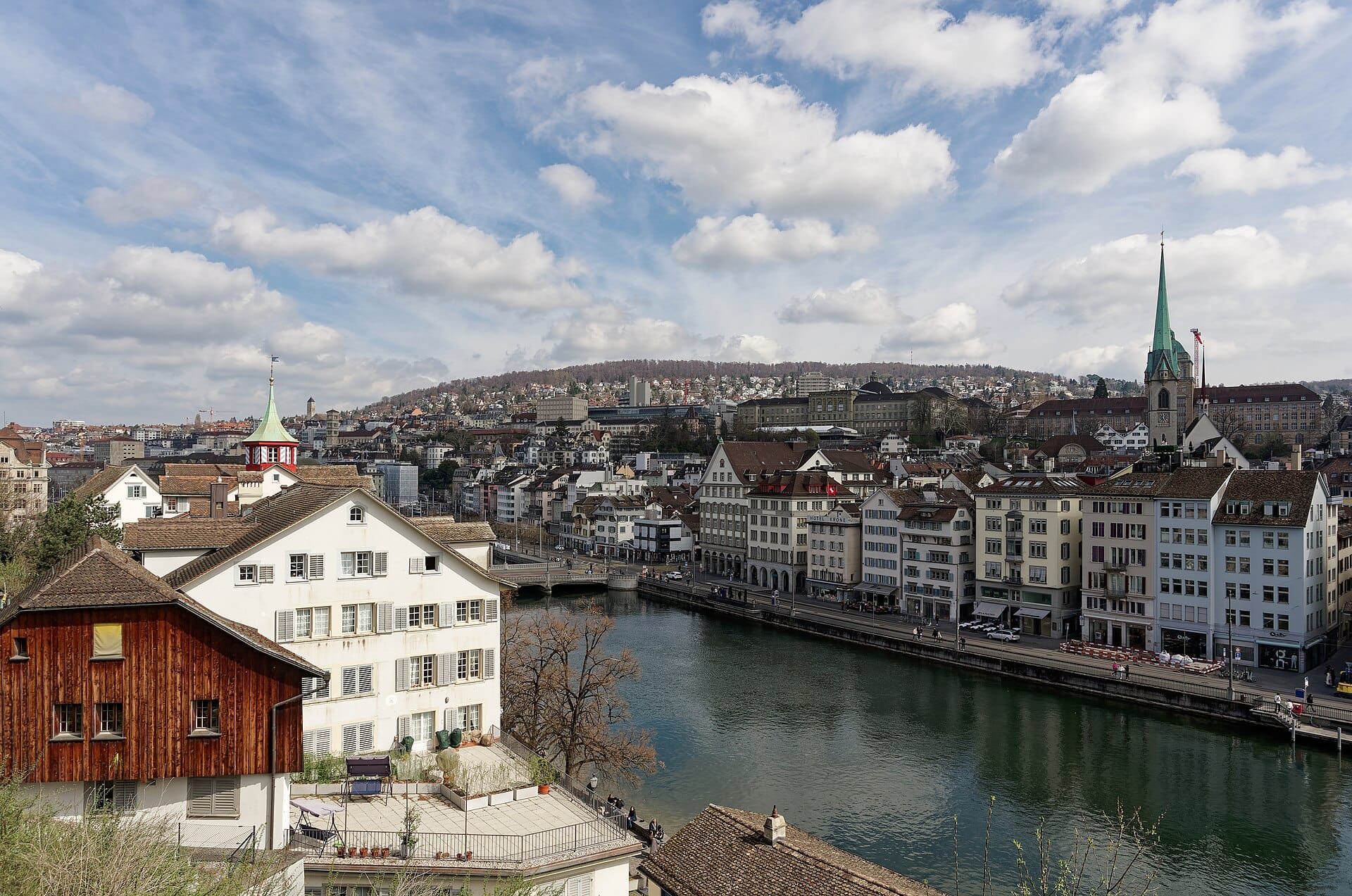
Lindenhof is a raised, gravelled public square and small park sitting on a natural moraine hill on the west bank of the Limmat River, in the core of Zurich's medieval Altstadt. It is not a museum, not a tower, and not a manicured formal garden. What it is: one of the best free viewpoints in the city, with a low stone balustrade overlooking the rooftops of Niederdorf on the opposite bank, the twin Romanesque towers of the Grossmünster, and the Limmat below. On clear days, the Alps sit faintly on the southern horizon.
The hill has been occupied continuously for over two thousand years, making it one of the oldest settled spots in Zurich. It sits comfortably within the Altstadt, and unlike some Old Town attractions that require timing, booking, or entry fees, Lindenhof is simply always there, open to anyone who climbs the cobbled lane to reach it.
💡 Local tip
The approach matters. The most atmospheric route is through the narrow medieval lanes off Lindenhofstrasse or Pfalzgasse — both funnel you up between stone walls and suddenly open onto the square. Skip the wider street approach if you can.
Two Thousand Years on One Hill
The layered history of Lindenhof is genuine, not tourist embellishment. In the 4th century, the Romans constructed a fort here — the elevated position commanded views over the Limmat crossing below, a strategic advantage that shaped the site's use for centuries. By the 9th century, a Carolingian royal residence occupied the plateau, connecting Zurich to the broader Frankish world and marking the hill as a seat of political authority.
The site carries one more historically significant date: in 1798, the oath to the Helvetic Constitution was sworn at Lindenhof, anchoring the square to the political transformation of Switzerland in the revolutionary era. The linden trees that shade the square today are part of a long tradition of tree-planting on this hill, though the current specimens are not ancient. The name Lindenhof itself means 'linden-tree court', a reference to the genus of trees rather than to any surviving medieval plantings.
For visitors interested in going deeper on Zurich's medieval and religious history, Lindenhof pairs well with a walk across the Limmat to the Grossmünster and the Fraumünster, both of which are visible from the hilltop itself.
Tickets & tours
Live prices and dates from our booking partner. If you book, we may earn a commission at no extra cost to you.
Mount Titlis snow fun for first-time skiers from Zurich
From 212 €Instant confirmationFree cancellationSwiss ski experience from Zurich
From 321 €Instant confirmationFree cancellationBest intro tour of Zurich with a local
From 116 €Instant confirmationFree cancellationZurich Old Town guided walking tour
From 27 €Instant confirmationFree cancellation
How the Square Feels at Different Times of Day
Early mornings, roughly before 9am, Lindenhof belongs almost entirely to locals. Dog walkers, people cutting through from one street to another, the occasional person sitting alone with a coffee from a nearby bakery. The light at this hour is low and raking, catching the texture of the surrounding stone buildings and turning the Limmat below a pale silver. It is the quietest and, for photography, often the most rewarding time to visit.
Midday and early afternoon bring a different atmosphere. Office workers from the surrounding Altstadt use the square as a lunch spot. On warmer days, the benches and the low wall along the viewpoint fill steadily. A permanent feature of the square is a set of large outdoor chess boards set into the gravel surface — and they are genuinely used, often by older men who seem to treat the games with total seriousness. The sight of a slow chess match framed against the Old Town rooftops is one of the more specific pleasures of Lindenhof.
Late afternoon is when the light turns golden on the east-facing view and the Grossmünster towers catch the sun directly. Tourist numbers tend to peak in the 2pm–4pm window on busy days, but the square is large enough and open enough that it rarely feels genuinely crowded. By early evening, especially in summer, it quietens again into a local hangout, with the long northern daylight keeping the view clear well into the evening hours.
ℹ️ Good to know
In autumn and winter, morning fog often fills the Limmat valley below while Lindenhof sits just above the fog line. If you see fog in the city, it is worth climbing the hill to check — the effect of church towers emerging from mist is dramatic and photographically unusual.
The View: What You See and What You Don't
The primary view from Lindenhof faces east and southeast. Directly across the river sits the Niederdorf district, with its densely packed medieval buildings, and above them the unmistakable Romanesque towers of the Grossmünster. The St. Peter Church clock tower, which has one of the largest clock faces in Europe, is also visible from the hill. The Limmat runs below, with the Rudolf Brun Bridge and its lower-profile footbridge visible from certain angles.
What Lindenhof does not offer is a 360-degree panorama. The surrounding buildings on the west side close in the view in that direction. For broader sweeping views that take in Lake Zurich, the city's full spread, and Alpine peaks, Uetliberg Summit is the better choice — but that requires a half-day trip rather than a 20-minute walk from the station.
Photographers should know that the best focal lengths for shooting from the balustrade across to the Grossmünster are in the 50mm–100mm range on full-frame cameras. Wide angle lenses tend to flatten and diminish the towers. A morning visit with the light coming from the east and hitting the far bank directly is ideal, though the towers are backlit at that hour — shooting in the afternoon gives cleaner exposure on the towers themselves.
Getting There and Moving On
Lindenhof is about a 7-minute walk from Zurich Main Station (Zürich Hauptbahnhof). From the station, the most direct route runs south through the Altstadt streets, picking up Rennweg and then cutting east through the medieval lanes. Several tram lines serve Rennweg, making it accessible without any walking from the main transit corridor. For a full sense of how Lindenhof fits into a broader Old Town walk, the Zurich walking tour guide maps the connections between the main Altstadt landmarks.
The paths leading up to the square are cobbled and moderately steep. Flat shoes or walking shoes are sufficient. The surface at the top is compacted gravel — stable, but not smooth paving. Visitors with mobility limitations should be aware that there is no lift or ramp access to the hilltop from the main approach lanes; the access is via cobbled inclines, which may be challenging with wheels or for those with limited mobility.
From Lindenhof, the natural next stops walking south along the river are the Fraumünster and then Bürkliplatz at the lake. Walking north and across the Limmat takes you into Niederdorf. The hill sits at an almost perfect midpoint in the Altstadt, making it a natural pivot point for any Old Town circuit rather than a destination that requires a dedicated trip.
⚠️ What to skip
The cobbled approach lanes to Lindenhof are wet and can be slippery after rain. Leather-soled shoes or heels are a poor choice. The gravel square itself drains quickly, but the approach stones hold water for some time.
Is It Worth Your Time?
Lindenhof is worth 20 to 30 minutes for almost any visitor to Zurich. It costs nothing, requires no planning, and delivers a panorama that contextualises the Old Town in a way that standing in the lanes below cannot. The chess players, the locals at lunch, the view of the Grossmünster framed by linden branches — these are specific, unhurried pleasures.
Visitors who are primarily interested in indoor attractions, or who have very limited time and need to prioritise, might reasonably skip Lindenhof in favour of the Swiss National Museum or the Kunsthaus. The hill does not have a café, a shop, a guided tour, or any ticketed experience to structure the visit. It is simply a place to stand, look, and understand where you are in the city.
Those who find open-air squares with no commercial activity dull, or who are visiting in heavy rain or thick fog with no visual payoff, may feel the climb was not worth the detour. In those conditions, the square loses its main appeal entirely.
Insider Tips
- The chess sets embedded in the square's gravel surface are public and available to use. If you find them occupied, watching a game in progress is its own entertainment — the regulars play with genuine intensity.
- The lane called Pfalzgasse on the south side of the hill is one of the most photographed medieval lanes in Zurich. The walk up through it to Lindenhof is as visually rewarding as the hilltop view itself, and almost nobody photographs it from the lower end looking up.
- The St. Peter Church clock tower is visible from Lindenhof and is one of the most precisely maintained clocks in the city. If you look during the day and the clock reads something odd, double-check — it is almost certainly correct and your phone might not be.
- Autumn visits just after the linden trees turn yellow produce a specific combination of warm leaf colour in the foreground and the stone-grey roofscape of Niederdorf in the background that is hard to replicate at any other time of year.
- If you want the view with genuinely few people around, aim for weekday mornings before 9am, or any rainy day. Even in peak summer, the weather clears the square far more efficiently than at other Zurich landmarks.
Who Is Lindenhof For?
- First-time visitors who want a free, high-context overview of Zurich's Old Town layout
- Photographers looking for the classic Grossmünster-and-Limmat composition
- History-minded travelers interested in Roman and medieval Zurich
- Slow travelers who prefer sitting with a view over structured itineraries
- Anyone planning a self-guided Altstadt walking circuit looking for a natural midpoint
Nearby Attractions
Other things to see while in Altstadt (Old Town):
- Augustinergasse
Augustinergasse is a short, narrow pedestrian lane threading through Zurich's Altstadt between Bahnhofstrasse and St. Peterhofstatt. Free to walk, open at all hours, and steeped in history dating to a 13th-century Augustinian monastery, it rewards those who look up, slow down, and pay attention to what surrounds them.
- ETH Zurich Main Building
The ETH Zurich Main Building (Hauptgebäude) is one of the most architecturally significant public buildings in Switzerland, designed by Gottfried Semper in 1864 and freely open to visitors. Standing above the Altstadt on Rämistrasse, it offers a rare chance to walk through a world-class university's historic core without paying a cent.
- Fraumünster
Founded in 853 and home to five monumental stained glass windows designed by Marc Chagall, Fraumünster is one of the most visually striking churches in Switzerland. Small in footprint but overwhelming in atmosphere, it earns its place on any serious itinerary of Zurich's Old Town.
- Grossmünster
The Grossmünster has defined Zurich's skyline for nearly 900 years. This Romanesque church is where Ulrich Zwingli launched the Swiss Reformation in 1519, and today its twin towers remain the most recognizable silhouette on the Limmat. Entry to the church is free; the tower climb costs CHF 5 and rewards you with one of the clearest views over the Old Town.
Planning a trip? Discover personalized activities with the Nomado app.