Best Churches in Zurich: Romanesque, Gothic & Reformed
Zurich's churches are among the most historically significant in Switzerland, shaped by Romanesque foundations, Gothic ambition, and the radical sweep of the Swiss Reformation. This guide covers the four main Old Town churches in depth, plus lesser-known stops worth your time, with practical hours, access tips, and honest assessments of what each is worth.
Tickets & tours
Live prices and dates from our booking partner. If you book, we may earn a commission at no extra cost to you.
TL;DR
- The four essential Old Town churches are Grossmünster, Fraumünster, St. Peter, and Predigerkirche — all within walking distance of each other.
- Zurich was the birthplace of the Swiss Reformed Church: Huldrych Zwingli began preaching at the Grossmünster in 1519, which still shapes how these buildings look and function today.
- Fraumünster's Marc Chagall windows are world-class; expect a small entry fee and photography restrictions inside.
- Most churches open to visitors from around 10:00, but access is limited on Sunday mornings during services — plan accordingly.
- All major churches are free or low-cost to enter and are concentrated in Zurich's Altstadt, making them easy to combine with a walking tour of the Old Town.
Why Zurich's Churches Are Worth Your Time
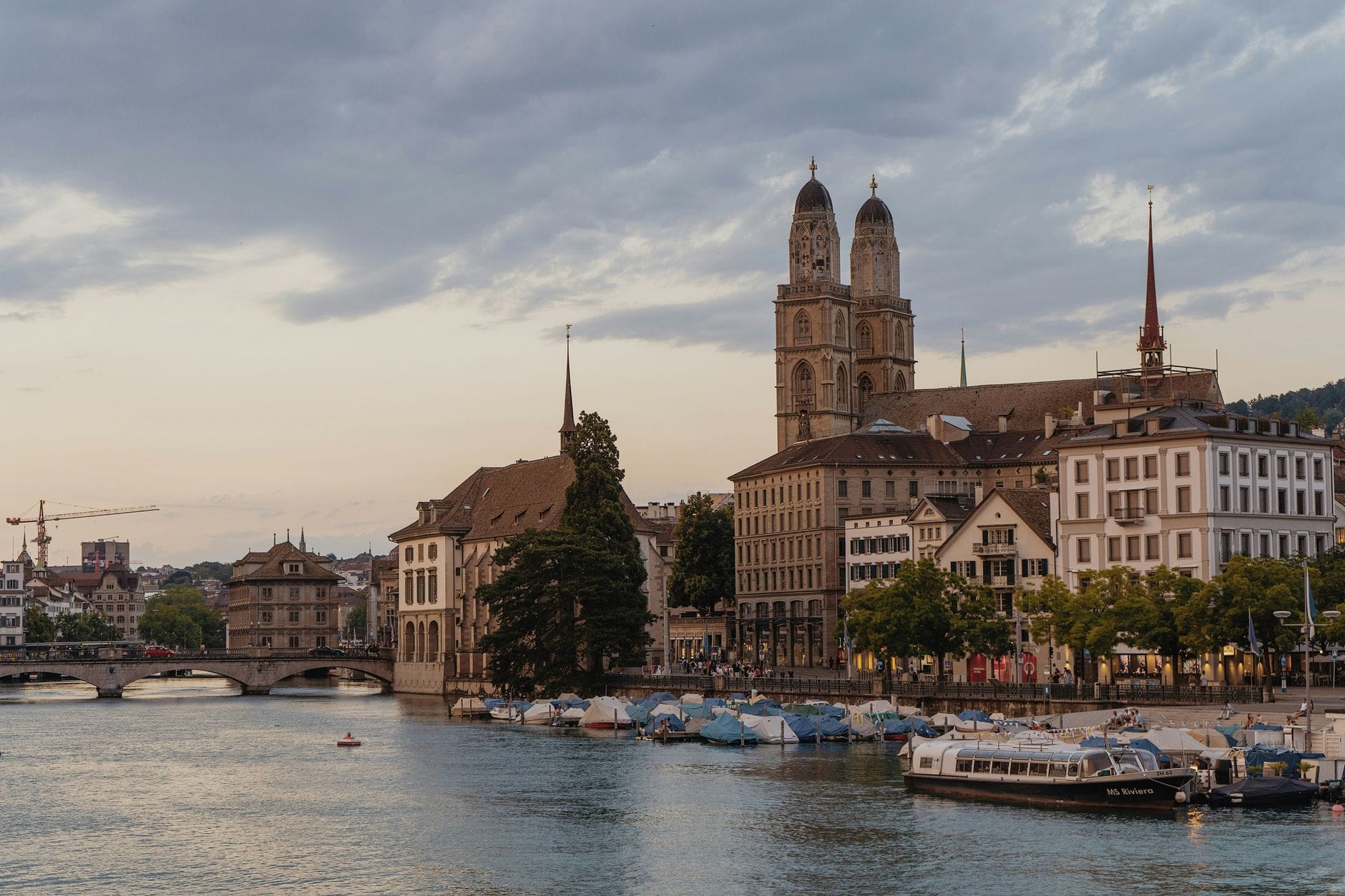
Zurich is not Rome or Prague. Its churches are not dripping in Baroque gilding or competing for grandeur. What they offer instead is something more specific: a direct window into the Swiss Reformation of the 16th century, some genuinely excellent Romanesque and Gothic architecture, and two of the finest examples of modern stained glass in Europe. The austerity you see inside most of these buildings is not neglect — it is ideology. When Zwingli reformed Zurich in the 1520s, whitewash went over the frescoes, organs were removed, and images were stripped out. What remains is stripped-back, occasionally severe, and historically fascinating.
The four main Old Town churches sit within roughly 600 meters of each other, all in or around Niederdorf and the Lindenhügel area. A focused half-day covers all of them comfortably. If you want deeper context on how to structure a walk through this area, the Zurich walking tour guide maps out a logical route from the main station through the Old Town.
⚠️ What to skip
These are active congregations, not museums. Sunday mornings before roughly 11:00 are typically unavailable for tourist visits at most churches. Arriving on a Sunday afternoon is far more practical. Services and special church holidays can close access without notice, so check posted signs at the door before planning your schedule around a specific church.
Grossmünster: The Reformer's Church
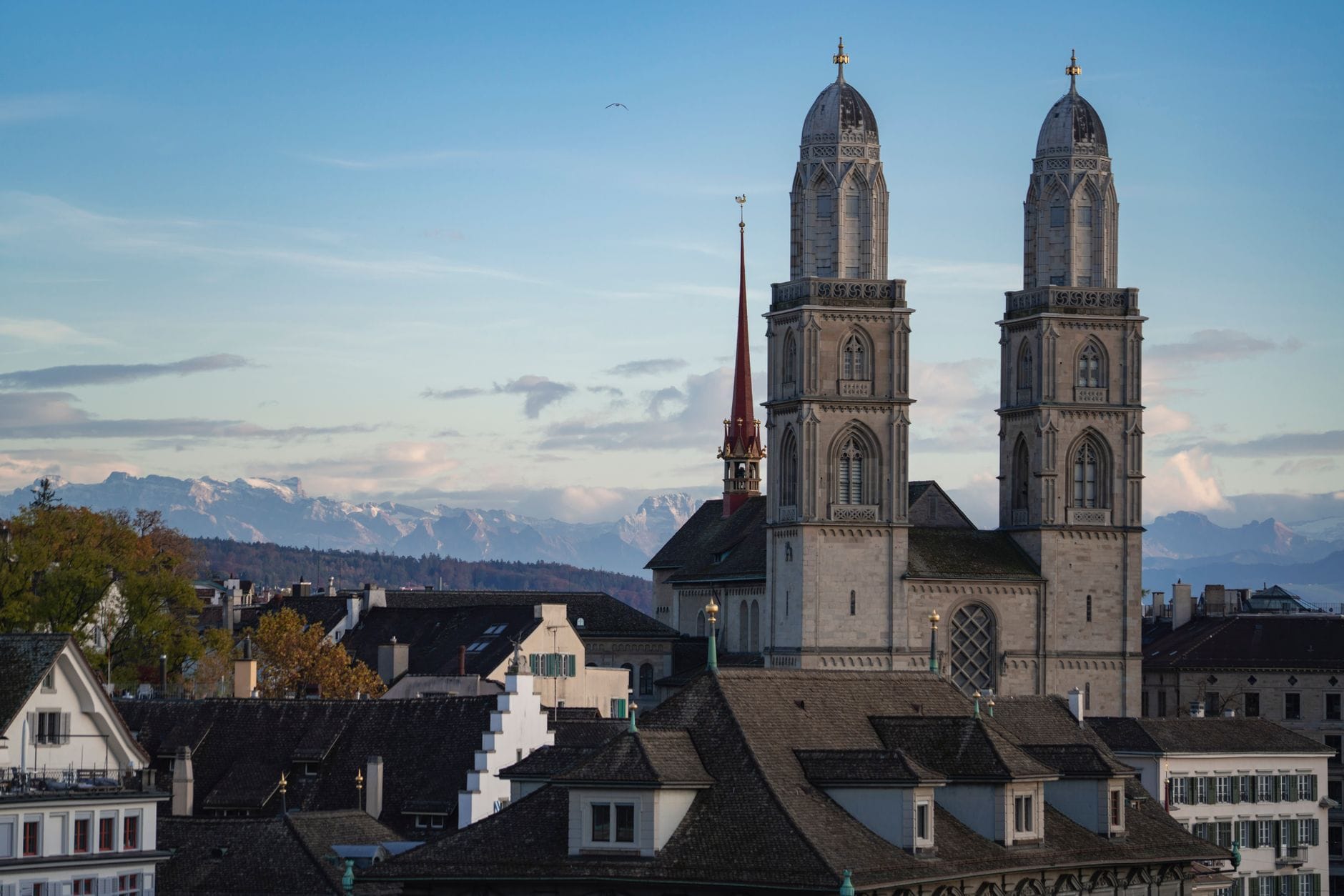
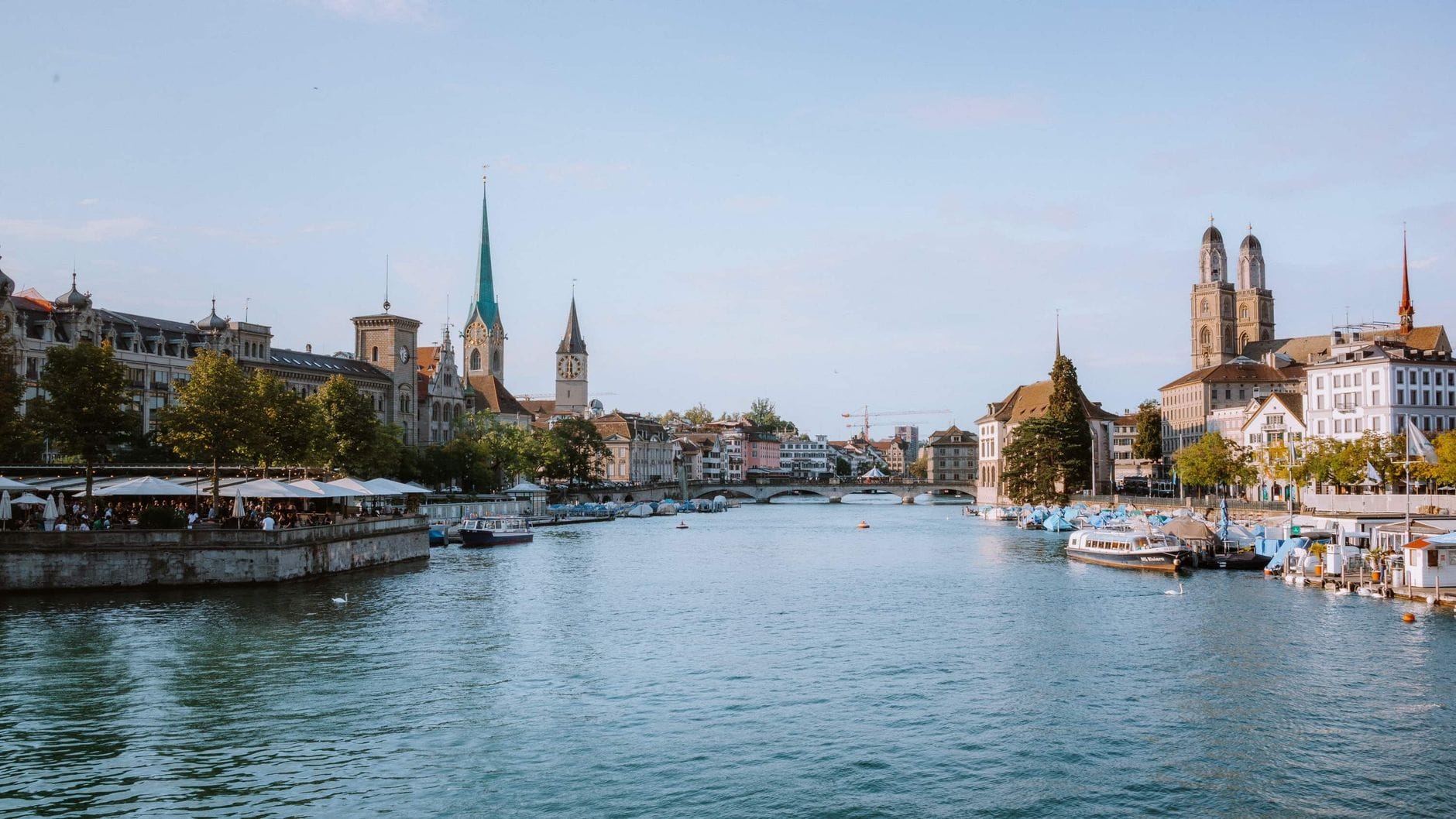
Grossmünster is the most architecturally prominent church in Zurich, its twin neo-Gothic towers visible from much of the Old Town and the lake promenade. Construction began around 1100 on Romanesque foundations, and the building reflects several centuries of additions and modifications. The towers received their current neo-Gothic caps only in the early 19th century, which explains the stylistic tension you notice when approaching from the river.
The interior is deliberately spare. After Zwingli's Reformation took hold in the 1520s, the church was stripped of its ornamental decoration. What you see now is mostly bare stone, but the choir contains something exceptional: a series of stained-glass windows by Augusto Giacometti, completed in 1933, which bring warm color back into an otherwise austere space. In the crypt, a weathered stone figure of Charlemagne sits in semi-darkness — the church's legendary founder, though historians date the actual building to well after his era. The figure is worth the descent into the crypt.
The Karlsturm, the south tower, is open to climb for a modest fee paid on site. The views across the Limmat river, the Old Town rooftops, and toward Lake Zurich are genuinely good, and the staircase is narrow enough to feel authentically medieval. Typical visiting hours for the church run from 10:00 to 18:00 between March and October, shortening to 17:00 in winter months; on Sundays it opens to visitors only after the morning service. Always verify current hours directly at grossmuenster.ch before your visit, as services and seasonal closures apply.
ℹ️ Good to know
Grossmünster is often called a 'cathedral' in tourism materials, but this is technically inaccurate. It belongs to the Swiss Reformed Church, not the Roman Catholic Church, and has no bishop's seat. The same applies to Fraumünster and the other main Old Town churches. This is not a minor distinction — it goes to the heart of Zurich's Reformation identity.
Fraumünster: Chagall's Light in a Medieval Shell
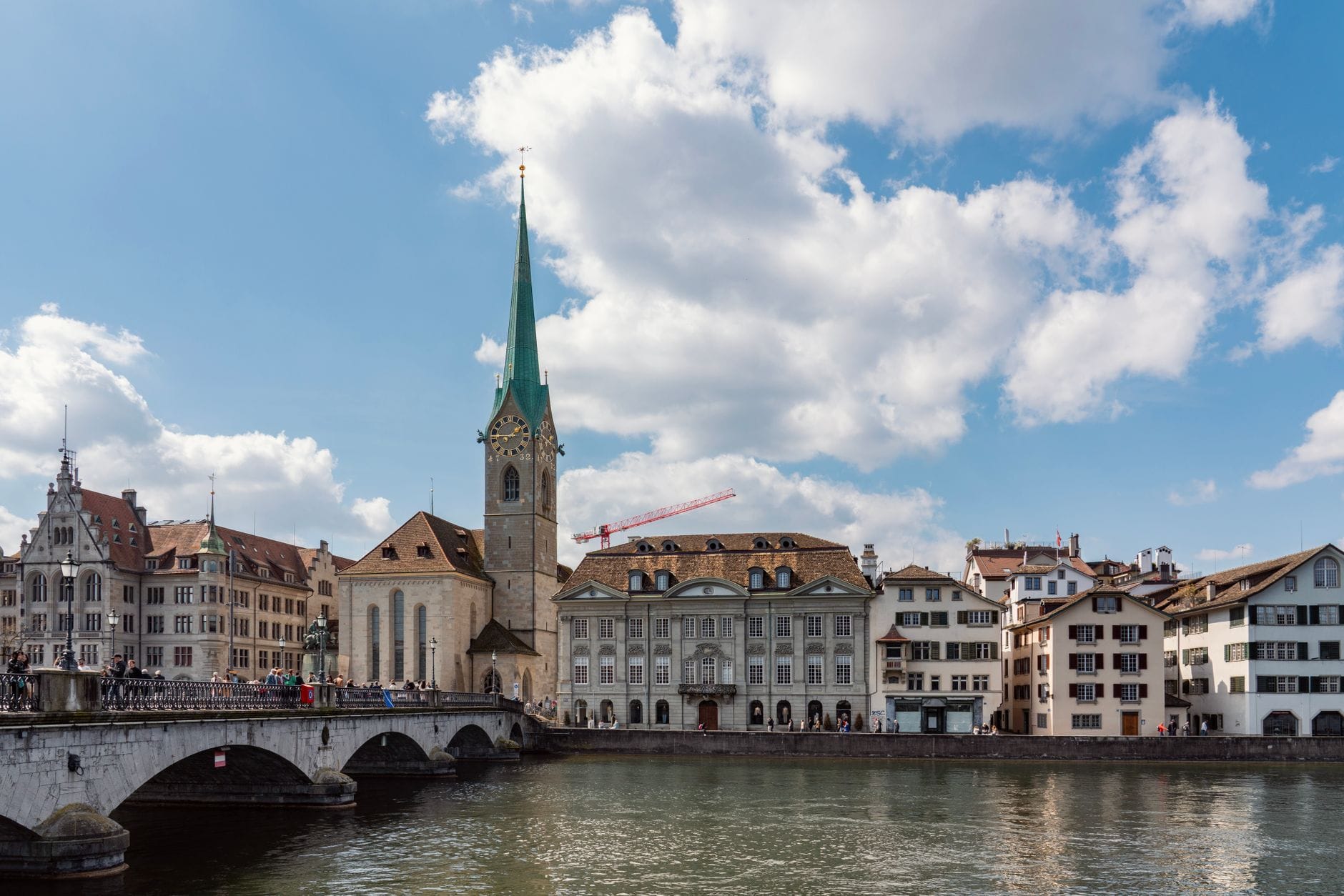
Fraumünster stands on the west bank of the Limmat, directly across from Grossmünster, and has the older founding story: it began as a Benedictine abbey established in the 9th century by Louis the German, a grandson of Charlemagne. For centuries the abbess of Fraumünster held significant civic power in Zurich, including the right to grant market rights and toll privileges. The abbey was dissolved during the Reformation, and the building has served as a Reformed church ever since. You can see the Fraumünster from the riverside walkway along the Limmat, its slender Gothic spire framing nicely against the hills behind.
The main draw here is the set of five stained-glass windows designed by Marc Chagall in 1970. They are large, vivid, and deeply personal in their imagery, drawing on themes from the Old and New Testaments using Chagall's characteristic blues, greens, and golds. The rose window above the entrance was added later by Augusto Giacometti. The combination of Chagall's narrative windows and Giacometti's abstract rose window makes Fraumünster the most visually rewarding interior of Zurich's churches, and that is saying something in a city that otherwise leans heavily toward austerity.
Entry is typically ticketed, with a small fee collected at the door. Photography restrictions apply inside: flash photography is prohibited, and rules around photographing the Chagall windows vary by season and staff discretion. Come prepared to simply look rather than document. Visiting hours generally run around 10:00 to 18:00 in summer, with shorter hours in winter — check posted signs or the official church website before visiting.
St. Peter and Predigerkirche: The Other Two Worth Knowing
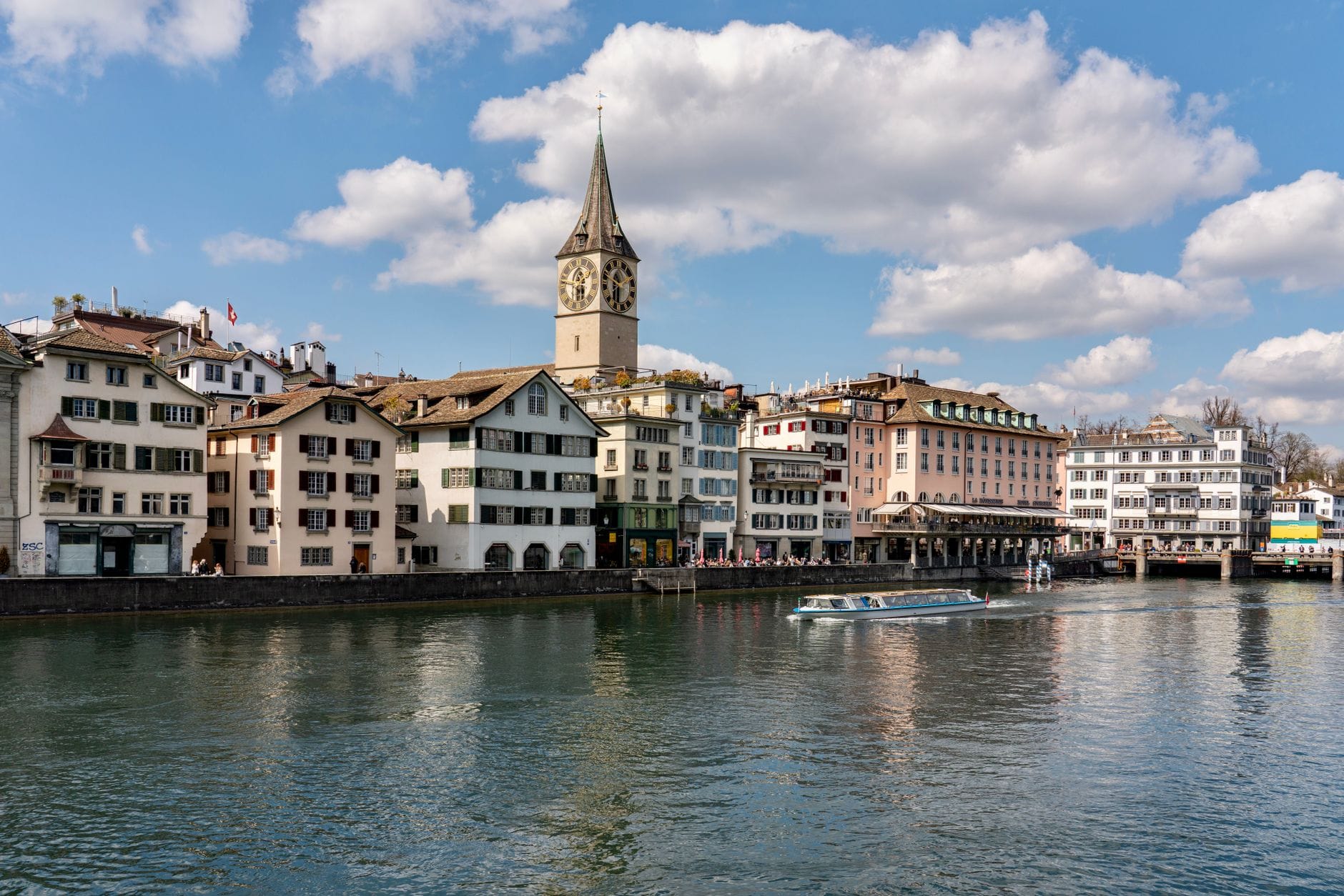
St. Peter is the least immediately dramatic of the four main churches from the outside, but it holds a specific distinction worth noting: the clock face on its tower is one of the largest church clock faces in Europe, measuring over 8.7 meters in diameter. It has been a navigational landmark in the Old Town for centuries. The church itself has Romanesque origins but was substantially rebuilt in the 18th century, giving the interior a Baroque feel somewhat at odds with the Reformed tradition of its congregation. It sits on St. Peter's square near the Lindenhügel, easily reached on foot from Bahnhofstrasse.
Predigerkirche is the most overlooked of the four, and arguably the most interesting for architecture enthusiasts. It began in 1231 as a Romanesque Dominican basilica and was progressively rebuilt through the 14th century into a Gothic structure. The bell tower is considered the tallest Gothic structure in Zurich. After the Reformation it passed to the Reformed Church, was later used as a library by the University of Zurich, and has served as a concert and event venue in more recent decades. The interior is stripped and functional, but the Gothic choir and the scale of the tower make it worth a short detour, particularly if you are walking north through the Old Town.
- Grossmünster Best for: Reformation history, tower views, Giacometti choir windows. Climb the Karlsturm for one of the best rooftop vantage points in the Old Town.
- Fraumünster Best for: Marc Chagall stained glass, medieval abbey atmosphere. The most visually rewarding interior of the four main churches.
- St. Peter Best for: The famous oversized clock face, central location near Lindenhügel. Quick visit; the exterior and tower view are more compelling than the interior.
- Predigerkirche Best for: Gothic architecture, quiet atmosphere, tall Gothic bell tower. Often skipped by tourists — worth a short stop if you have time.
- Wasserkirche Best for: History of the Reformation, unusual riverside location. Small, often overlooked, but one of the five churches central to the Reformation story in Zurich.
Zurich's Reformation History: Context That Changes How You See These Buildings
Understanding even the basics of what happened in Zurich in the 1520s transforms a visit to these churches from an architecture tour into something more layered. Huldrych Zwingli arrived at Grossmünster as People's Priest in 1519 and rapidly developed a theology of reform that in some ways went further than Luther's in Germany. By the mid-1520s, Zwingli and the Zurich city council had overseen the removal of images, the whitewashing of frescoes, the silencing of organs, and the abolition of the Mass. The visual austerity you encounter in Grossmünster, Fraumünster, and the others is a direct physical consequence of these decisions.
Five churches are most directly connected to the Reformation story in Zurich: Grossmünster, Fraumünster, Predigerkirche, St. Peter, and Wasserkirche. The Wasserkirche, a small Gothic building right on the Limmat, stands on the site where early Christian martyrs Felix and Regula were reportedly executed, and it served as a focal point in early Reformation debates. It functions today as a Reformed church and cultural venue — less visually striking than the others, but its location and symbolic weight make it a meaningful stop for anyone following the Reformation trail.
✨ Pro tip
If Reformation history is your primary interest, consider visiting in the late morning on a weekday when the churches are quiet and staff are occasionally available to answer questions. The Grossmünster in particular has English-language information panels inside that provide solid historical context without requiring a guided tour. For a broader historical overview of the city, the Swiss National Museum near Zurich HB provides the best single-building introduction to Swiss history.
Practical Information: Hours, Costs, and Visitor Tips
All four main Old Town churches are within comfortable walking distance of each other, clustered in the Altstadt on both sides of the Limmat. The logical approach from Zurich HB is to walk south along the river, passing the Swiss National Museum, crossing into the Old Town, and visiting the churches roughly in a loop. Allow two to three hours for a thorough visit to all four, more if you plan to climb the Grossmünster tower.
- Grossmünster tower climb: small fee, paid on site; hours typically 10:00-18:00 (Mar-Oct), 10:00-17:00 (Nov-Feb). Sundays: after morning service only.
- Fraumünster: small entry fee; summer hours roughly 10:00-18:00, shorter in winter. Photography restrictions apply inside.
- St. Peter and Predigerkirche: generally free entry; shorter interior visiting hours, particularly on weekdays when the building may be used for events.
- Sunday mornings before approximately 11:00 are typically reserved for services at all four churches — tourist access is limited during this time.
- Winter months (November-February) bring shorter opening hours across all churches; always check posted signs or official websites before visiting.
None of these churches require advance booking or tickets purchased online. Entry is pay-at-the-door or free. This makes them easy to fit into any itinerary, including a budget visit to Zurich. Dress modestly — shoulders covered, no beachwear — as these are active places of worship. The dress code is not strictly enforced at most of them, but basic respect is expected.
💡 Local tip
The best time to photograph the Grossmünster towers from the outside is early morning or late afternoon, when the light hits the stone from the east (morning) or the west (late afternoon) and the riverfront crowds are smaller. The view from the Lindenhof hill, a short walk up from St. Peter, frames both Grossmünster and the Limmat in a single composition and is the most reproduced skyline shot in Zurich.
For those combining a church visit with the broader Old Town experience, the Lindenhof is a natural starting point — it sits above St. Peter and provides a panoramic orientation before you descend into the medieval streets. The Zurich hidden gems guide includes several smaller chapels and courtyards in the Altstadt that most visitors walk past without noticing.
FAQ
Is there an entry fee to visit the Grossmünster and Fraumünster?
Entering the Grossmünster nave is generally free, but climbing the Karlsturm tower requires a small fee paid on site. Fraumünster charges a modest admission fee at the door to enter the church interior and view the Chagall windows. Both are low-cost by any measure. Exact amounts change periodically, so check the official church websites or posted signs for current pricing.
Can you visit Zurich churches on a Sunday?
Yes, but timing matters. All four main Old Town churches hold services on Sunday mornings, which typically limits tourist access until services conclude — usually around 11:00 or later depending on the church. Sunday afternoons are generally fine for visiting. Avoid arriving on Sunday morning if you want undisturbed access to the interiors.
Are Zurich's churches Roman Catholic or Protestant?
The four main Old Town churches — Grossmünster, Fraumünster, St. Peter, and Predigerkirche — all belong to the Swiss Reformed Church, a Protestant denomination. They are sometimes called 'cathedrals' in tourism materials, but none has a bishop's seat, and none is Roman Catholic. Zurich was the birthplace of the Swiss Reformation under Huldrych Zwingli in the 16th century, and these buildings reflect that history directly.
Are photography and filming allowed inside Zurich's churches?
Rules vary by church. Fraumünster has the strictest rules, particularly around photographing the Chagall windows — flash photography is prohibited and general photography may be restricted depending on current policy. Grossmünster is generally more permissive but check signage inside. At all churches, avoid photographing during services and exercise discretion.
How long does it take to visit all four main Old Town churches?
A focused visit to all four — Grossmünster, Fraumünster, St. Peter, and Predigerkirche — takes around two to three hours on foot, including travel time between them. If you climb the Grossmünster tower and spend meaningful time with the Chagall windows at Fraumünster, allow closer to three hours. Adding the Wasserkirche and Lindenhof viewpoint makes for a comfortable half-day in the Old Town.
Tickets & tours
Live prices and dates from our booking partner. If you book, we may earn a commission at no extra cost to you.
Planning a trip? Discover personalized activities with the Nomado app.