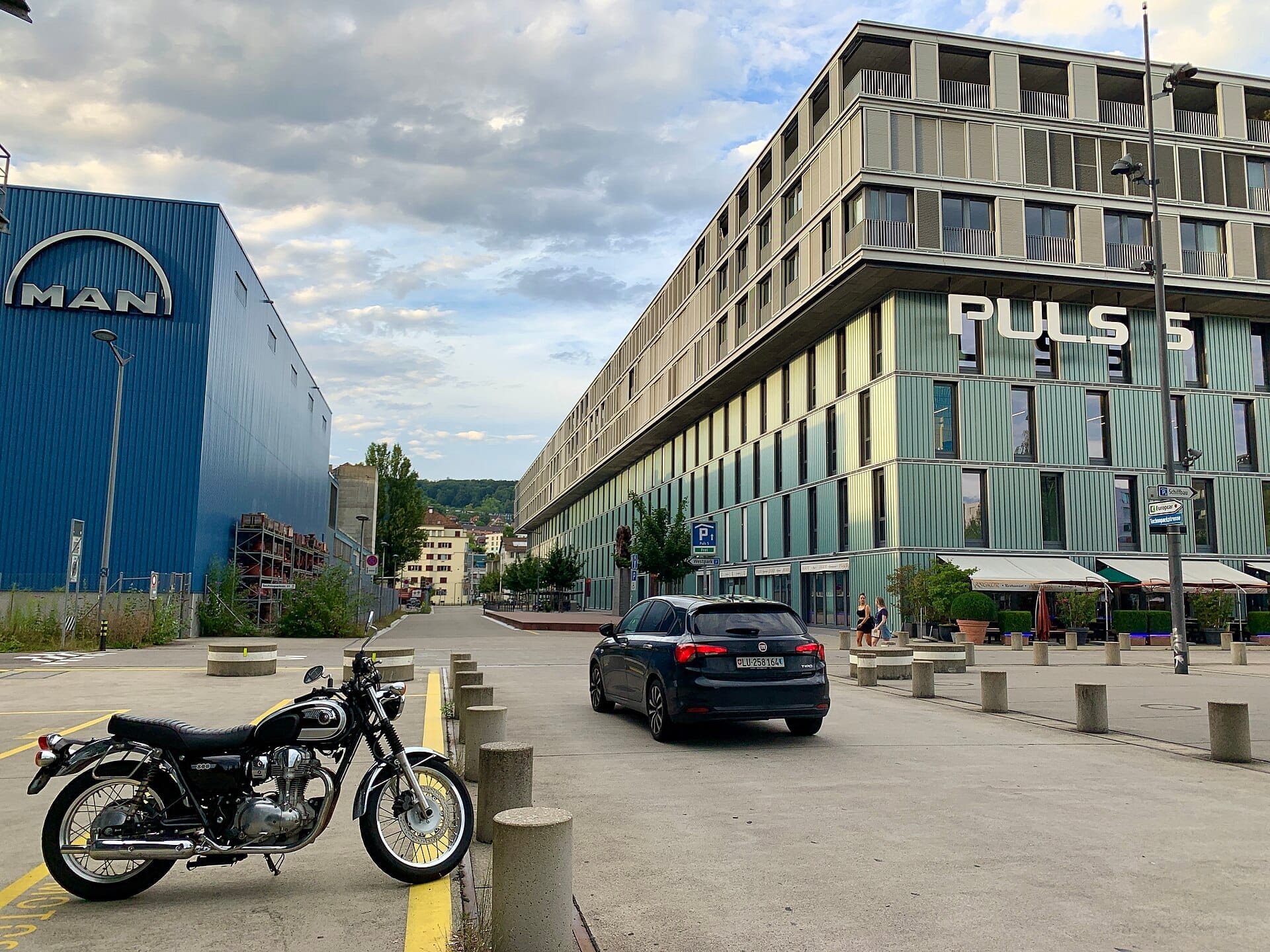
Zurich West, officially part of Kreis 5, is a former industrial quarter that has transformed into one of Zurich's most architecturally striking and culturally active districts. From the arched arcades of Im Viadukt to the stacked-container Freitag flagship, this is where the city's creative energy concentrates. It sits just minutes from Zurich HB by tram or S-Bahn, but feels like a different city entirely.
Zurich West is what happens when a city decides to stop demolishing its industrial past and start living inside it. The old machine halls, railway viaducts, and factory floors of Kreis 5 have been converted into design studios, restaurants, clubs, and cultural spaces, with glass towers rising between them. It is raw and polished at the same time, and no other part of Zurich looks quite like it.
Orientation: Where Zurich West Sits
Zurich West occupies the western section of Kreis 5, formally called the Industriequartier. To build a mental map: start at Zurich Hauptbahnhof and walk or tram westward along Hardstrasse, passing under the railway viaduct. Within ten minutes you are in the heart of the district. The area is broadly bounded by the Limmat River to the south, the main-line rail tracks to the north, Hardstrasse and the Aussersihl viaduct to the east, and Aargauerstrasse to the west. Hardturmstrasse and Pfingstweidstrasse cut through the middle.
The focal point is Escher-Wyss-Platz, a large road junction that functions as the neighborhood's central node. Most of the key destinations cluster within a ten-minute walk of this square: Im Viadukt to the east, Schiffbau theater to the northwest, and the Prime Tower glass skyscraper rising above everything. The district sits directly between the Old Town and the outer suburb of Altstetten, making it genuinely easy to reach from almost anywhere in central Zurich.
Come on a weekday morning and Zurich West feels like an office district with ambitions. Architects and media companies occupy the upper floors of converted industrial buildings; construction cranes occasionally still punctuate the skyline as another plot completes its transformation. The streets around Prime Tower are clean and purposeful. Delivery vans idle outside the restaurants under Im Viadukt as chefs take early deliveries. It is organized and a little austere in the early hours.
By afternoon the character shifts. The wide pavements along Hardturmstrasse attract workers on lunch breaks, and the market stalls inside Im Viadukt's arches do steady business in cheese, bread, and specialty coffee. The Freitag tower, built from stacked freight containers, draws a steady stream of design-conscious visitors who climb to the rooftop for the view across the rail yards and river toward the city center. The light in this part of Zurich is particular: there are few medieval spires or lake reflections to soften it, so on clear afternoons the glass and concrete catch hard, flat sunlight that makes everything look slightly cinematic.
After dark, Zurich West becomes a genuinely different place. The nightlife here is among the most significant in Switzerland, centered on clubs and bars that inhabit former factory spaces around Escher-Wyss-Platz. On Thursday, Friday, and Saturday nights the streets around Schiffbau fill with people moving between bars, and the clubs that line the back streets and former industrial yards operate until the early morning. It is louder, denser, and more anonymous than the Old Town at night, which is part of the appeal for the crowds it draws.
⚠️ What to skip
Zurich West's nightlife is genuine and busy, but the neighborhood is not pristine after dark. Some spaces beneath the railway tracks and in transitional zones between developments retain a rough-edged quality. Solo travelers should stick to the main streets around Escher-Wyss-Platz and Im Viadukt at night. The district is not dangerous by any meaningful standard, but it rewards awareness.
What to See and Do
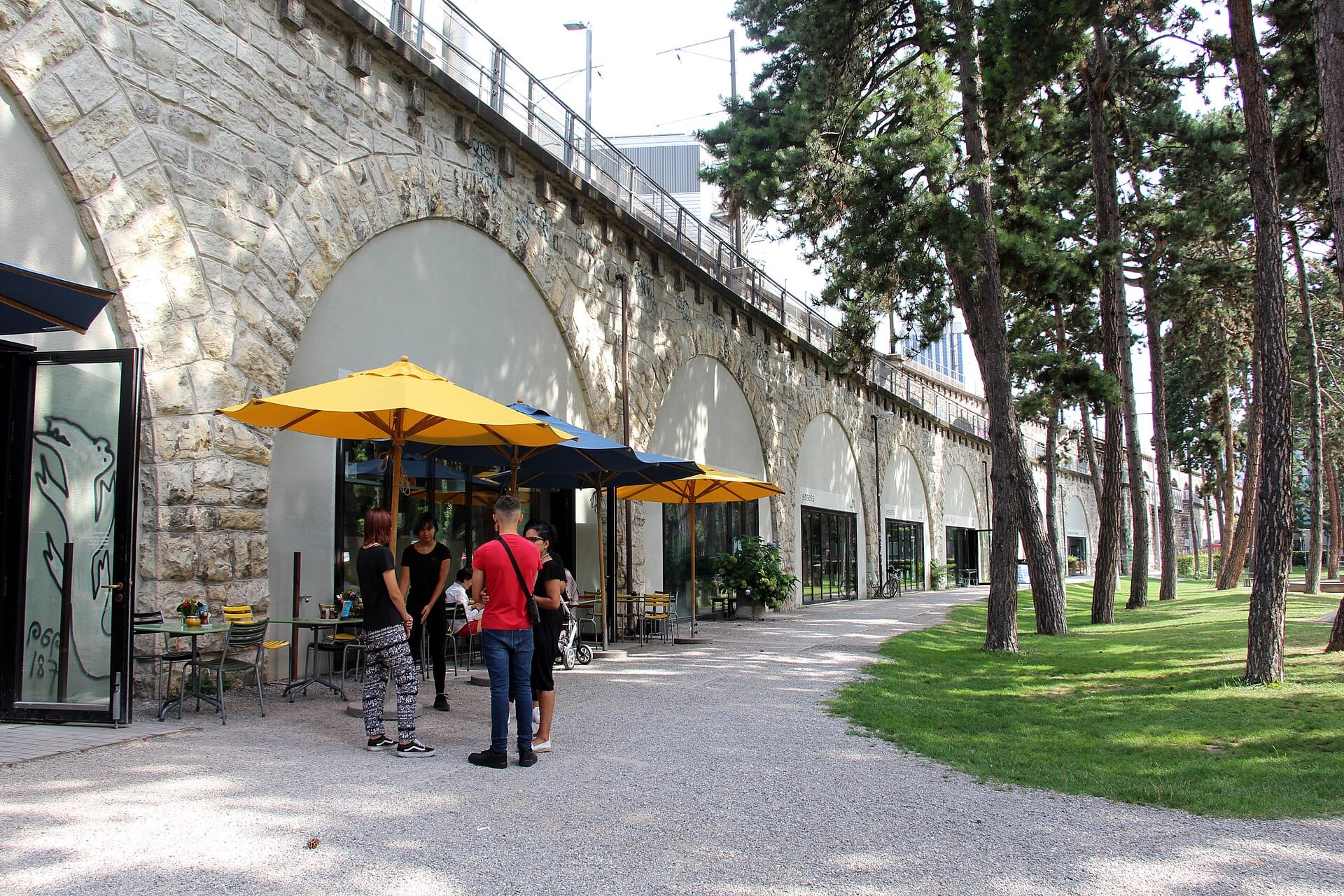
The architecture itself is worth treating as an attraction. Walk the length of the railway viaduct that cuts through the district: its stone arches, built in the late nineteenth century to carry the rail lines out of Zurich HB, now shelter a different kind of commerce entirely. Im Viadukt, the project that converted these arches into market halls and shops, is one of the most successful urban regeneration projects in recent Swiss history. The eastern entrance near Geroldstrasse draws the most foot traffic, but the arches extend westward for several hundred meters and the western end is noticeably quieter.
The Im Viadukt market hall is the district's social anchor. On weekday mornings it functions as a local food market; on weekends it becomes more of a destination. Browse independently run stalls selling Swiss produce, international street food, and design objects before the weekend crowds arrive around noon.
The Freitag flagship store on Geroldstrasse is a genuine piece of architecture: 19 recycled shipping containers stacked into a tower about 26 meters high. You can browse the bags made from salvaged truck tarpaulins inside, but the main reason to come is the rooftop, which offers an unobstructed view across the rail yards, the Limmat, and the broader cityscape that you simply cannot get from the Old Town hilltops. It is free to go up during store opening hours, though the morning light is better from this direction.
Im Viadukt market hall: food, design, and independent retail under the railway arches
Freitag Tower rooftop: the best industrial-era panorama in Zurich, free to access
Schiffbau: a converted ship factory now housing the Schauspielhaus theater and a jazz club
Prime Tower base: worth walking around to appreciate its scale within the urban fabric
Escher-Wyss-Platz: the district's crossroads, best observed from a cafe terrace during rush hour
Geroldstrasse: a street of independent studios, pop-up bars, and seasonal outdoor venues
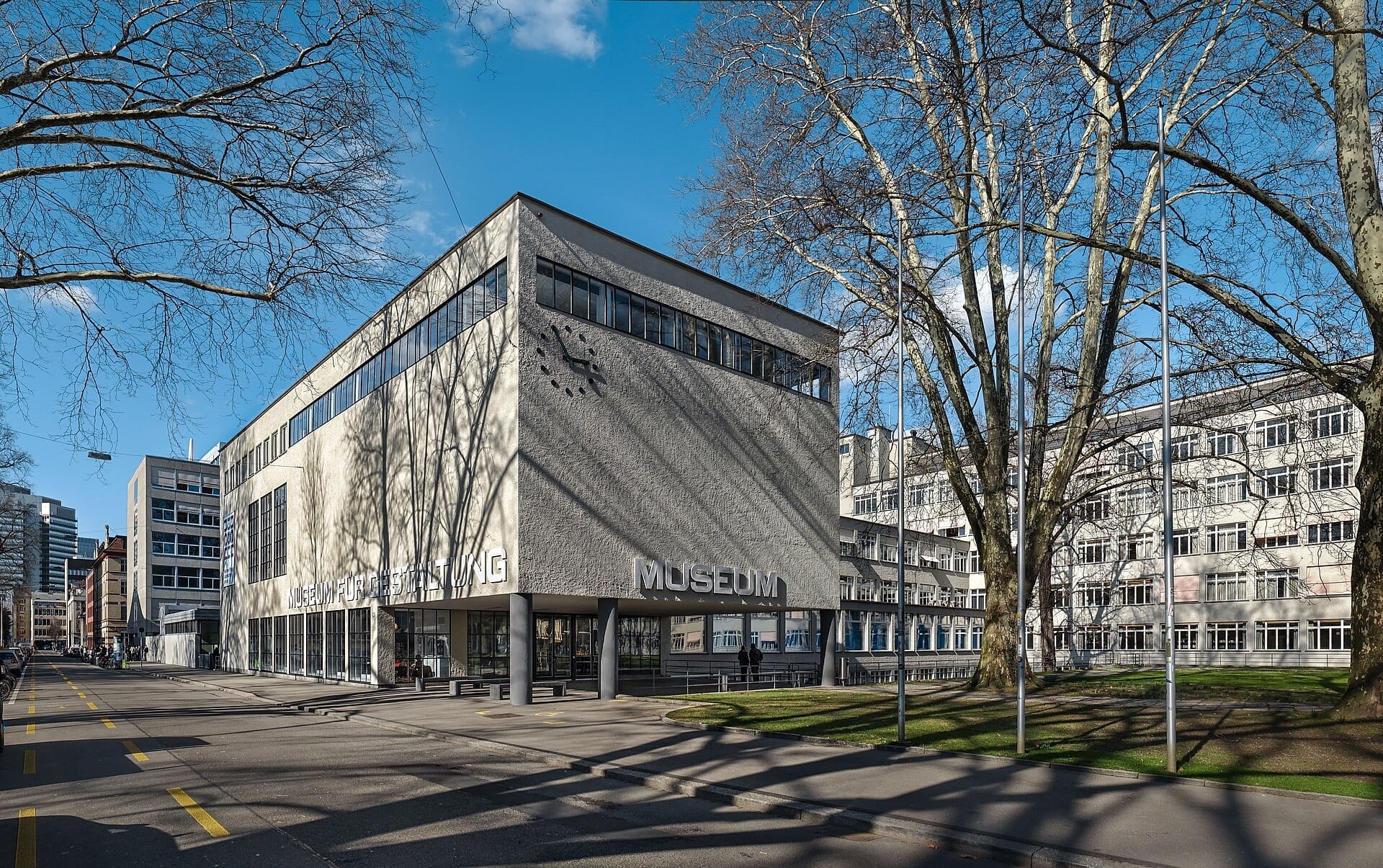
If you are combining Zurich West with a broader cultural day, the Museum für Gestaltung (Museum of Design) sits on Ausstellungsstrasse at the edge of the district and is one of Switzerland's leading design museums. Its main building is a short tram ride or brisk walk from Escher-Wyss-Platz and fits naturally into a Zurich West afternoon.
💡 Local tip
The Freitag Tower rooftop is free and open during store hours. Come on a clear morning for the best light over the rail yards and Limmat. It is one of the better free viewpoints in Zurich and far less visited than the hilltop at Lindenhof.
Eating and Drinking
Zurich West has developed a food scene that reflects its mixed identity: part working district, part creative hub, part nightlife destination. The range runs from market stalls and casual lunch spots through serious restaurants in converted industrial spaces to craft cocktail bars that fill up after midnight. Prices are Zurich prices, meaning high by most European standards, but the quality tends to justify it.
The Im Viadukt market hall anchors the eating scene during the day. The arches house a mix of permanent vendors and rotating stalls, with a strong emphasis on Swiss-sourced ingredients: regional cheeses, cured meats, fresh bread, and seasonal vegetables. For sit-down lunch, the restaurants on Geroldstrasse and the surrounding blocks offer everything from Japanese ramen to Swiss-Italian cooking. Several occupy old factory floor spaces, which gives even modest-budget places a certain spatial drama.
The drinking options are extensive and span price points. Casual beer gardens set up on former industrial plots in summer, particularly along Geroldstrasse, which becomes an outdoor social district of pop-up bars and food trucks from late spring through early autumn. For cocktail bars and wine bars, the streets around Escher-Wyss-Platz and Schiffbau have the densest concentration. The jazz club inside the Schiffbau complex is worth knowing about: it combines serious music programming with a bar that is accessible without a concert ticket on most nights.
Zurich West's nightlife feeds into the broader scene described in the Zurich nightlife guide. The clubs here are largely housed in former industrial buildings, which means generous ceiling heights, serious sound systems, and a very different feel from Old Town bars. The cluster around Escher-Wyss-Platz includes some of Switzerland's most internationally recognized club venues.
ℹ️ Good to know
Many of the outdoor bars and pop-up venues on Geroldstrasse are seasonal, operating from April or May through September. In winter, the scene concentrates indoors and is smaller but still active. Check current listings before planning an evening around these spaces.
Getting There and Around
Zurich West is straightforward to reach from anywhere in central Zurich. The fastest option from Zurich HB is the S-Bahn to Zürich Hardbrücke station, a journey of around three minutes, which deposits you directly at the northern edge of the district. From Hardbrücke, it is a short walk downhill to Escher-Wyss-Platz and Im Viadukt.
By tram, lines 4, 13, and 17 all serve Escher-Wyss-Platz, connecting it to the city center and to neighborhoods further west. Tram line 4 continues through to the Schiffbau and Technopark stops, which are useful for the western end of the district. From Paradeplatz or Bellevue in the Old Town, the tram takes roughly ten to fifteen minutes. All transit runs on the ZVV fare system; a standard city ticket covers travel throughout the central zone.
For a full picture of how to navigate Zurich by tram and S-Bahn, the guide on getting around Zurich covers fares, zone maps, and the logic of the ZVV network.
On foot from Zurich HB, the walk to Escher-Wyss-Platz along Hardstrasse takes about fifteen to twenty minutes and passes through the western edge of the Langstrasse district, which is worth noting if you want to combine the two neighborhoods in a single afternoon. Cycling is practical here: the streets are wide, gradients are minimal, and the city's bike-share network has stations throughout the district.
Zurich West and Its Neighbors
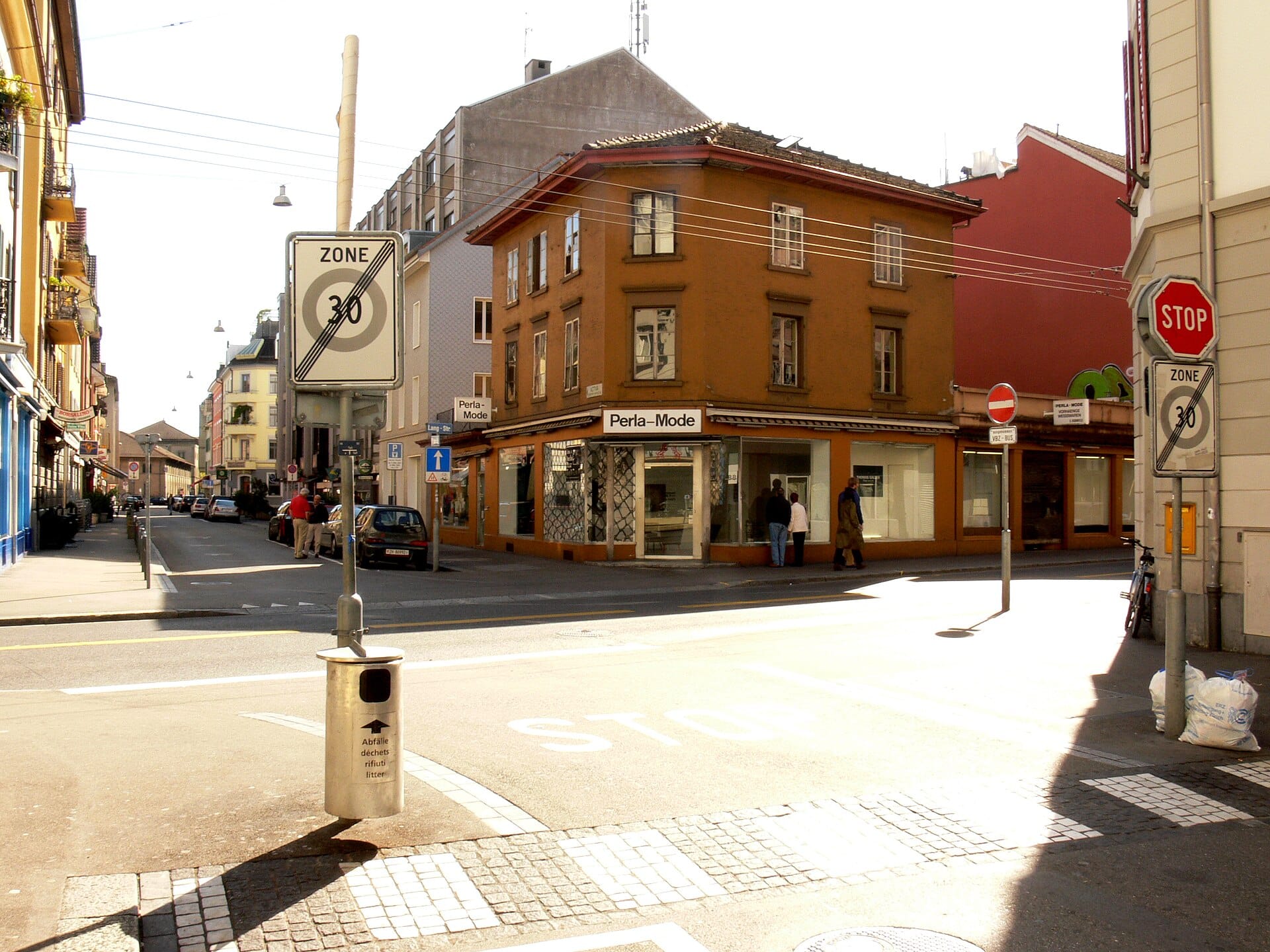
Zurich West borders Langstrasse to its east, and the two districts bleed into each other along the Langstrasse corridor. Langstrasse is narrower, denser, and more ethnically mixed, with a longer history as Zurich's red-light and counterculture quarter. If Zurich West is the district that has been remade, Langstrasse is the one still in process. Together they form the core of what Zurich's tourism materials call the creative west of the city. Explore the Langstrasse for a rawer, less designed version of the same westside energy.
To the east and across the river lies the Old Town, a twenty-minute walk or a single tram stop away. The contrast between the two areas is stark: medieval guild houses and church spires versus glass towers and repurposed factory shells. Spending a morning in Zurich's Altstadt followed by an afternoon in Zurich West covers an enormous range of what the city actually is.
Where to Stay
Accommodation in Zurich West is skewed toward design hotels and business hotels rather than traditional mid-range or budget options. The district has attracted a cluster of design-forward hotels that occupy converted industrial buildings or purpose-built towers, and prices reflect this positioning. It is a good base for travelers who prioritize nightlife access, design aesthetics, and proximity to the creative quarter over Old Town charm or lakeside views.
Staying here puts you within easy S-Bahn reach of the main station and a short tram ride from the Old Town, Bahnhofstrasse, and the lake. The trade-off is noise: the streets around Escher-Wyss-Platz and the club district are genuinely loud on weekend nights, and rooms on the lower floors of buildings near active venues will feel it. If you are a light sleeper or plan to be in bed before midnight on a Saturday, ask specifically about room positioning when booking.
For a full comparison of Zurich's neighborhoods as bases for different types of traveler, see the guide on where to stay in Zurich.
Is Zurich West Worth Your Time?
Zurich West is not the Zurich that appears on postcards. There is no medieval cathedral, no lakeside promenade, no chocolate-box beauty. What it offers instead is a city in the act of reinventing itself, with all the energy and occasional roughness that implies. For travelers who want to understand what Zurich actually is in the 2020s, rather than what it was in the nineteenth century, this district is essential.
On a short trip, the combination of Im Viadukt, the Freitag Tower, and the Museum für Gestaltung makes a coherent half-day that covers design, architecture, and urban history. Pair it with a walk through Langstrasse and you have a full afternoon that shows a completely different side of Zurich from the Grossmünster and the Old Town guildhalls. For nightlife, it is simply the best district in the city.
TL;DR
Zurich West (Kreis 5) is Zurich's former industrial quarter, transformed into a design, culture, and nightlife district anchored by Im Viadukt, the Freitag Tower, and the Prime Tower skyline.
Best for: design-minded travelers, nightlife seekers, architecture enthusiasts, and anyone wanting to see Zurich beyond the Old Town.
Not ideal for: travelers focused entirely on historic sights or lakeside scenery, or light sleepers staying near club venues on weekends.
Getting here is easy: S-Bahn to Zürich Hardbrücke, or trams 4, 13, and 17 to Escher-Wyss-Platz, both within ten to fifteen minutes of the city center.
Time required: half a day covers the key sights comfortably; combine with Langstrasse for a full day, or return in the evening for the food and nightlife scene.
Two days in Zurich is enough to cover the historic Old Town, the lakefront, a mountain viewpoint, and world-class museums — if you plan it right. This itinerary lays out exactly how to spend 48 hours in Zürich, with practical logistics, honest advice on costs, and clear guidance on what's worth your time.
Zurich has a genuinely impressive museum scene for a city its size. Whether you're after world-class fine art, Swiss cultural history, non-European civilizations, or the roots of the Dada movement, this guide covers the best museums in Zurich and tells you exactly what makes each one worth your time.
Zurich rewards visitors year-round, but the timing of your trip makes a significant difference to your budget, experience, and what you can actually do. This guide breaks down every season honestly, including when to avoid and when the city is at its best.
Zurich has an impressive range of scenic vantage points for a city its size. Whether you want sweeping Alps panoramas, rooftop river views, or lakeside reflections at sunset, this guide covers every worthwhile viewpoint in the city, with practical tips on how to reach each one.
Zurich sits at one of the best-connected points in Europe for short excursions. Within two hours by train, you can reach medieval lakeside towns, one of Europe's most powerful waterfalls, and alpine peaks above 3,000 metres. This guide breaks down the best day trips from Zurich by travel time, effort, and what kind of traveller each suits.
Zurich has a reputation for being expensive, but a surprising amount of the city's best experiences cost nothing at all. From hiking to an Alpine panorama and swimming in the Limmat to exploring medieval lanes and world-class architecture, this guide covers the best free things to do in Zurich.
Zurich's public transport network is one of the most efficient in Europe, but the ticketing zones and the Zurich Card can trip up first-time visitors. This guide covers everything: getting from Zurich Airport (ZRH) to the city center, how the ZVV zone system works, when the Zurich Card is worth buying, and what to know about trams, night buses, and taxis.
Zurich gets dismissed as a banker's city or skipped in favour of Geneva and Lucerne. That's a mistake. This guide breaks down exactly what Zurich offers, what it costs, when to go, and who should actually add it to their itinerary.
Zurich punches well above its size as a luxury destination. This guide covers the finest hotels, high-end dining, world-class shopping, and cultural experiences that make Switzerland's largest city one of Europe's most rewarding upscale escapes.
Zurich packs medieval churches, world-class museums, Alpine viewpoints, and lake swimming into one compact, walkable city. This guide covers the best things to do in Zurich across every budget and season, with real prices, transport details, and the honest advice most guides skip.
Zurich's food scene runs deeper than fondue and chocolate. This guide covers the essential Swiss dishes to try, honest price expectations, seasonal must-orders, and practical tips for eating well without overpaying in one of Europe's most expensive cities.
Choosing where to stay in Zurich shapes your entire trip. This guide breaks down every major neighborhood by character, price, transport links, and who it suits best, so you can book with confidence rather than guesswork.
Zurich Airport (ZRH) is Switzerland's largest and most efficient international hub. This guide covers the terminal layout, transfer connections, train and tram options to the city centre, lounge access, and what to know before you fly.
Zurich's churches are among the most historically significant in Switzerland, shaped by Romanesque foundations, Gothic ambition, and the radical sweep of the Swiss Reformation. This guide covers the four main Old Town churches in depth, plus lesser-known stops worth your time, with practical hours, access tips, and honest assessments of what each is worth.
Zurich is one of Europe's most underrated cities for a romantic trip. This guide covers the best couple-friendly experiences in Zurich, from lakeside evenings and hilltop sunsets to chocolate workshops and candlelit Old Town strolls, with honest advice on what's worth your time and money.
Zurich rewards the curious traveler who looks beyond the obvious. From a Dada birthplace bar to a Le Corbusier pavilion in a lakeside park, these are the experiences that show a different side of Switzerland's largest city.
Zurich sits at the edge of one of Switzerland's most walkable landscapes. With over 3,000 km of signposted trails in the region, serious day hikes are reachable entirely by public transport. This guide covers the best routes, seasonal timing, and everything you need to plan a hike from the city.
December transforms Zurich into one of Europe's finest winter destinations. From the grand indoor market at the Hauptbahnhof to the lakeside Wienachtsdorf, this guide covers every major Christmas market, what things cost, how to get around, and what most visitors get wrong.
Summer transforms Zurich into one of Europe's most enjoyable warm-weather cities. From the Badi culture on Lake Zurich to the Seeüberquerung mass swim and open-air festivals, this guide covers everything you need to plan a great visit from June through September.
Zurich has one of the highest densities of public swimming areas in Europe, with more than 20 official Badis on Lake Zurich and the Limmat River. This guide covers the best spots, what to expect on arrival, what you'll pay, and which ones are completely free.
Zurich nightlife runs deeper than its polished reputation suggests. Three distinct districts, clubs that go until sunrise, and a surprisingly diverse bar scene make this one of Europe's more underrated after-dark cities. Here's how to navigate it properly.
Zurich has a reputation for being one of Europe's priciest cities, and that reputation is not entirely undeserved. But with the right approach to accommodation, food, transport, and timing, a daily budget of CHF 110–145 per person is genuinely achievable. This guide breaks down exactly where to save and where it's worth spending a little more.
Zurich's shopping scene spans 1.4 km of world-class luxury on Bahnhofstrasse, medieval lanes full of Swiss design in the Old Town, and a converted railway viaduct in Zurich West where independent labels thrive. This guide maps out every district, explains the Sunday-closing reality, and tells you where to go based on what you actually want to buy.
The Zurich Street Parade draws close to one million people to the shores of Lake Zurich every August for a free, open-air electronic music parade. This guide covers the route, logistics, crowd realities, after-party scene, and everything else you need to experience it properly.
Zurich is a serious chocolate destination in its own right. From the historic Confiserie Sprüngli on Bahnhofstrasse to the world's largest chocolate museum in nearby Kilchberg, this guide covers every stop worth making, with prices, transport tips, and honest advice on what to skip.
The Zurich to Basel corridor is one of Switzerland's most efficient rail routes, with direct trains running roughly every 15-30 minutes and the fastest services taking under an hour. This guide covers every transport option, how to get the best price, and how to make the most of Basel as a day trip.
The train from Zurich to Geneva is one of Switzerland's most travelled intercity routes, covering 224 km in under 3 hours on the best services. This guide covers exact journey times, current pricing, booking strategies, bus alternatives, and the key differences between the two cities to help you plan smarter.
The Zurich to Interlaken journey by train is one of Switzerland's most rewarding travel corridors, combining Swiss rail efficiency with increasingly dramatic Alpine scenery. This guide covers direct routes, ticket prices, scenic alternatives, and practical tips for making the most of your time in the Bernese Oberland.
The train from Zurich to Lucerne is one of Switzerland's most practical short-haul routes: direct, frequent, and under an hour. This guide covers timetables, ticket prices, booking strategies, and what to expect at both ends of the journey.
The Zurich to Milan train is one of Europe's great cross-border rail journeys: direct EuroCity service through the Gotthard Base Tunnel in around 3 hours 17 minutes, with up to 14 departures daily. This guide covers schedules, pricing, booking strategy, and what to expect at both ends of the route.
Everything you need to know about travelling from Zurich to Paris: direct TGV Lyria trains in just over 4 hours, flights that look fast but rarely are, and budget buses for the patient traveller. Prices, booking tips, and honest comparisons included.
This guide covers the full self-guided walking tour of Zurich's Old Town and Limmat riverside, from Zürich HB to Lake Zurich. Get the route, honest advice on what's worth paying for, crowd patterns by season, and practical details you won't find in a brochure.
Zurich is one of the world's great cities for buying a Swiss watch, with authorized dealers, heritage boutiques, and pre-owned specialists spread across the city. This guide covers where to shop, what to pay, how to claim your VAT refund, and which common assumptions will cost you money.
Zurich is far more family-friendly than its reputation suggests. From a world-class zoo and interactive chocolate museum to free riverside swimming and mountain hikes, this guide covers the best activities for kids of all ages, what to book ahead, and how to keep costs manageable.