Langstrasse: Zurich's Most Honest Neighborhood
Langstrasse is the street and quarter in Zurich's district 4 that refuses to be polished. Bars, independent shops, immigrant-run restaurants, and nightclubs line a strip that looks rough by day and comes alive after dark. It costs nothing to walk and rewards curiosity.
Quick Facts
- Location
- Langstrasse, 8004 Zürich (Kreis 4)
- Getting There
- Zürich Hauptbahnhof (10-min walk); multiple tram and bus lines serve Kreis 4
- Time Needed
- 1–2 hours daytime; an entire evening after dark
- Cost
- Free to visit; individual venues charge separately
- Best for
- Nightlife, bar-hopping, independent food, urban character
- Official website
- www.zuerich.com/en/visit/attractions/langstrasse
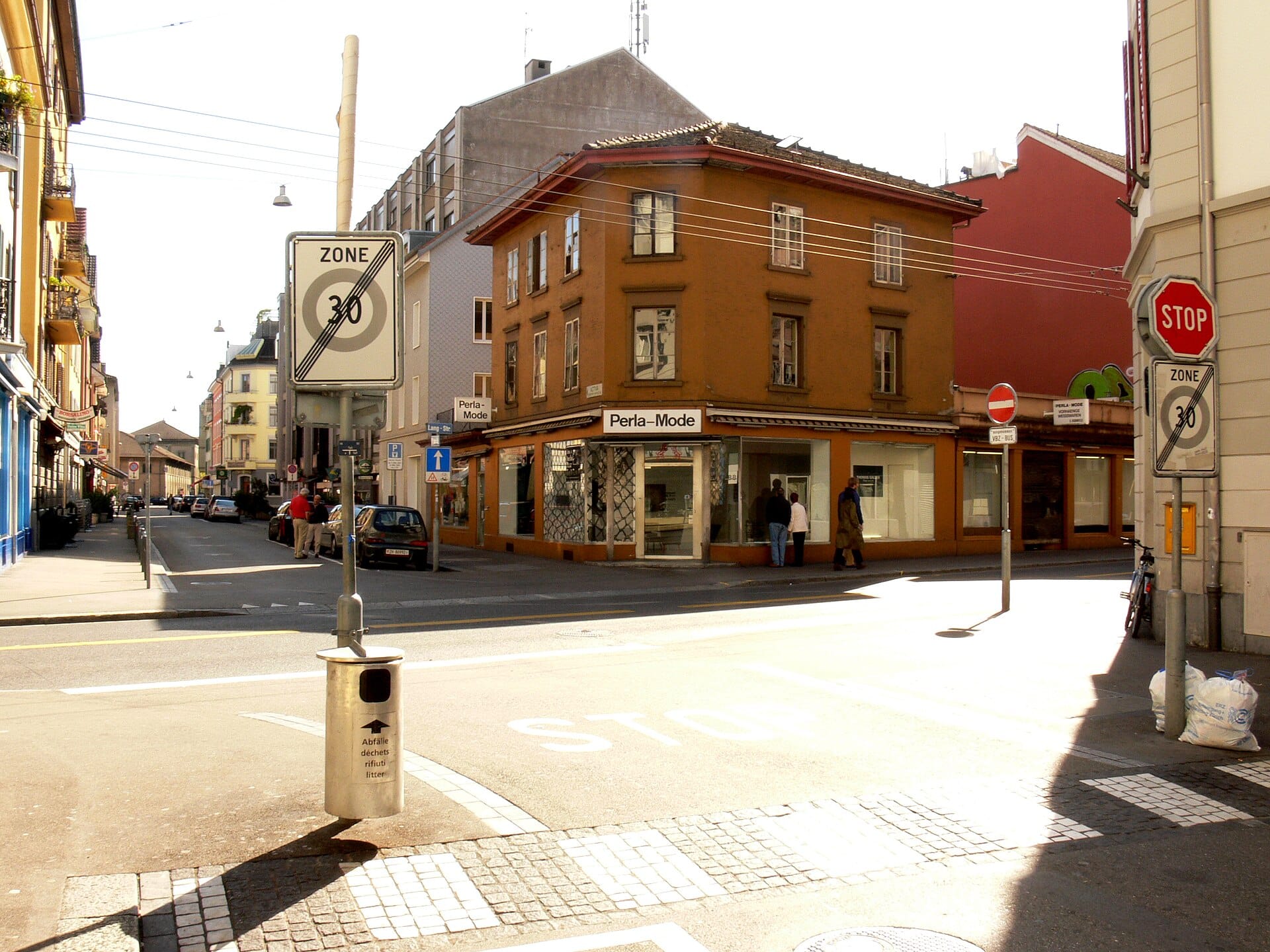
What Langstrasse Actually Is
Langstrasse is both a street and a residential quarter within Kreis 4, Zurich's fourth district. The street itself runs north-northeast from near the district court buildings toward the railway tracks of Zürich Hauptbahnhof, with a short continuation toward Limmatplatz in district 5. The name dates to the shortening of 'Langfurrenstrasse' after 1869, which itself referred to the locality of Langfurren. Today, around 10,500 people live in the quarter, which covers 1.13 square kilometres.
The street gained a reputation over decades as Zurich's red-light district, and traces of that history remain visible. But it has evolved into something considerably more layered: a corridor of Turkish and Balkan grocers next to cocktail bars with serious menus, sex shops beside independent record stores, and old-school corner pubs sharing walls with natural wine spots. It is, in other words, a street that reflects how a real city actually works, rather than how a city markets itself to visitors.
ℹ️ Good to know
Langstrasse is a public street with no entrance fee and no opening hours. The quarter is accessible at all times. What changes dramatically is the atmosphere and crowd depending on the time of day.
The Street by Day: Quieter Than You Expect
In the morning, Langstrasse belongs to its residents. The smell of fresh bread comes from a handful of bakeries and snack shops that open early for local workers. Delivery vans double-park outside grocers. Older men sit outside corner cafes drinking espresso. The shuttered fronts of bars and clubs give the street a slightly bleary look that is entirely appropriate: this is a neighbourhood that stays up late.
By early afternoon, things loosen up. The street-level mix becomes more visible: a pharmacy beside a Thai massage studio beside a pawn shop beside a bar already open at noon. This is not a street designed for window shopping in the conventional sense, but it rewards walking slowly. The signage alone tells you something about Zurich's immigrant population, with text in German, Turkish, Serbian, and occasionally Thai or Arabic. The quarter has one of the most diverse populations in the city.
Daytime visitors who want context for what they're seeing might benefit from reading about Zurich West, the broader post-industrial district that surrounds and overlaps with Kreis 4, and which gives some background on how this part of the city developed.
Tickets & tours
Live prices and dates from our booking partner. If you book, we may earn a commission at no extra cost to you.
Mount Titlis snow fun for first-time skiers from Zurich
From 212 €Instant confirmationFree cancellationSwiss ski experience from Zurich
From 321 €Instant confirmationFree cancellationBest intro tour of Zurich with a local
From 116 €Instant confirmationFree cancellationZurich Old Town guided walking tour
From 27 €Instant confirmationFree cancellation
The Street After Dark: What the Reputation Is About
From around 9 PM onward, Langstrasse transforms. The shuttered clubs open. Queues form at the busier bars. The street fills with a crowd that is notably younger, louder, and more international than you will find in Zurich's Old Town. This is where Zurich's nightlife reputation lives in practice, not in polished rooftop bars near Bahnhofstrasse but in the narrow strip of Langstrasse and its side streets.
The bars range from dive-level to genuinely well-curated, sometimes in the same building. You can find strong craft beer, late-night kebabs, techno clubs, and low-key jazz in a radius of about 200 metres. The noise level rises steadily through the night. By midnight on a weekend, the pavement itself becomes a social space, with people spilling out of bars, eating standing up, and moving from venue to venue.
The area around Langstrasse is also the centre of Zurich's sex work industry, which is legal and regulated in Switzerland. This is worth knowing before you visit so you are not surprised. It is part of the street's character and not something that is hidden or disruptive, but it is present, particularly on some side streets.
💡 Local tip
Thursday through Saturday nights are the busiest periods. If you want to experience the atmosphere without the full crowd intensity, a Wednesday evening walk gives you most of the character at about half the volume.
Food: The Practical and the Serious
One of Langstrasse's underappreciated qualities is that you can eat well here without spending much by Zurich standards. The immigrant-run restaurants and snack counters offer some of the most affordable food in the city. Turkish gözleme, shawarma, Vietnamese pho, and Balkan grilled meats all appear within a short stretch. These are not tourist-oriented operations; they exist primarily for the local population and tend to be consistent.
Alongside the budget end, the neighbourhood has attracted a crop of independently run restaurants that take their food seriously. Natural wine bars with small seasonal menus, small-plate concepts, and bars that treat their cocktail lists as seriously as the drinks lists in the city's more formal venues. These have appeared gradually over the past decade and reflect the broader gentrification pressure that has been pushing into Kreis 4, though the street's character has so far absorbed this without losing its edge.
For a broader picture of eating in Zurich across different price points and neighborhoods, the what to eat in Zurich guide provides useful context before you start walking.
Getting There and Getting Around
Langstrasse is easy to reach on foot from Zürich Hauptbahnhof in roughly 10 minutes by walking south through the station area and into Kreis 4. Multiple tram and bus lines from the ZVV network also serve the area; the network is frequent and runs late into the night, which matters if you are planning an evening here.
The street itself is flat and walkable with standard pavements along its full length. Accessibility for individual venues varies and is determined by each business rather than the street as a whole. Several bars and clubs have steps at entrance level, so it is worth checking specific venues in advance if this is a concern.
If you are navigating Zurich primarily by public transport, the getting around Zurich guide explains tram zones, night trams, and day passes in detail.
Photography and What to Expect Visually
Langstrasse is photogenic in an unscripted way. The layered signage, the contrast between old residential buildings above and neon-lit bars below, the crowd diversity at night: these make for strong documentary-style photography. Daytime light between roughly 11 AM and 2 PM hits the street well before the buildings block it. Night photography requires confidence because the light is unpredictable and the street is busy.
Be respectful with your camera, particularly on side streets at night. This is a working neighbourhood where not everyone wants to be photographed, and the mix of residents, sex workers, and bar patrons means you are pointing a lens into people's actual lives rather than a staged tourist scene.
Is Langstrasse Worth Your Time?
Langstrasse is probably Zurich's most honest neighbourhood. It does not sell itself. It is not polished or optimised for tourism in the way that the Old Town or Bahnhofstrasse are. That is precisely why it is worth including in a visit, particularly if you want to understand the city beyond its financial and cultural institutions.
Visitors who want the contrast between this side of Zurich and the city's more formal heritage should consider pairing a Langstrasse evening with a daytime walk through Bahnhofstrasse or a visit to the Swiss National Museum, both of which sit close to Zürich Hauptbahnhof.
That said, it is not for everyone. If you are looking for scenic architecture, lakeside calm, or family-friendly activities, this is the wrong street. Langstrasse at night can be loud, crowded, and chaotic in a way that feels perfectly normal to residents but can feel overwhelming to visitors who prefer quieter settings. The area's character, including its adult entertainment venues and late-night energy, is something to consider before bringing children or anyone uncomfortable with urban night culture.
If the nightlife angle is what draws you, the Zurich nightlife guide covers the full landscape of clubs, bars, and late-night options across the city, with Langstrasse as a central chapter.
Insider Tips
- Walk the side streets off Langstrasse, particularly Militärstrasse and Brauerstrasse, which have bars and restaurants that are slightly calmer and often better quality than the main strip.
- If you want to eat affordably, go before 8 PM. The Turkish and Balkan spots fill up quickly once the evening crowd arrives and queues form at the popular counters.
- The stretch closer to Zürich HB (the northern end) is generally quieter and more residential. The real density of bars and clubs is concentrated in the central and southern sections of the street.
- Weekday evenings in summer bring a more local, less tourist-heavy crowd. If you want to see the street as residents experience it rather than as a party destination, aim for a Tuesday or Wednesday in June or July.
- Carry cash. Many of the smaller bars, snack shops, and older venues on Langstrasse are cash-only or prefer it, and there are ATMs in the area but they can have queues on busy weekend nights.
Who Is Langstrasse For?
- Night owls looking for bar-hopping options that feel lived-in rather than designed
- Travelers interested in urban diversity and immigrant food culture
- Photographers who want gritty, unscripted street scenes
- Budget travelers seeking affordable food in an otherwise expensive city
- Repeat visitors to Zurich who have already seen the standard attractions
Nearby Attractions
Other things to see while in Zurich West:
- Im Viadukt
Built into the stone arches of an 1894 railway viaduct in Zurich-West, Im Viadukt stretches 500 metres through 36 arch-shaped units housing independent shops, a covered market hall, studios, and restaurants. Entry is free, the atmosphere is low-key, and it offers a grounded alternative to the city's more polished retail strips.
- Museum für Gestaltung (Design Museum)
Founded in 1875, the Museum für Gestaltung Zürich is one of Europe's most significant design museums, with a collection of over 500,000 objects across applied arts, graphic design, and posters. Split across two locations in Zurich-West, it rewards anyone with a serious interest in how objects and images shape everyday life.
- Flussbad Oberer Letten
Flussbad Oberer Letten is a 400-metre open-air river swimming channel cut into the Limmat near Zurich West, free to enter and open from May through September. Built in 1952, it draws everyone from early-morning lap swimmers to after-work sunbathers, and remains one of the most authentic summer experiences the city offers.
Planning a trip? Discover personalized activities with the Nomado app.