Museum für Gestaltung Zürich: Inside Switzerland's Definitive Design Museum
Founded in 1875, the Museum für Gestaltung Zürich is one of Europe's most significant design museums, with a collection of over 500,000 objects across applied arts, graphic design, and posters. Split across two locations in Zurich-West, it rewards anyone with a serious interest in how objects and images shape everyday life.
Quick Facts
- Location
- Ausstellungsstrasse 60, 8005 Zürich (main building); Pfingstweidstrasse 96, 8005 Zürich (Toni-Areal)
- Getting There
- Tram 4, 13, or 17 to 'Museum für Gestaltung' stop (main building)
- Time Needed
- 1.5 to 3 hours per location; allow a full half-day for both
- Cost
- CHF 15 regular / CHF 10 reduced per location; combined ticket CHF 20 / CHF 15. Free for under-20s and every Thursday from 17:00
- Best for
- Design and typography enthusiasts, architecture lovers, students, and anyone curious about Swiss visual culture
- Official website
- museum-gestaltung.ch/en
What the Museum für Gestaltung Actually Is
The Museum für Gestaltung Zürich is not a typical art museum. It is a design museum in the most literal sense: a place dedicated to how things are made, how they communicate, and how they function. The collection stretches from industrial furniture prototypes and ceramic tableware to mid-century Swiss travel posters, contemporary product design, and full-scale spatial installations. With over 500,000 objects in its holdings, it is one of the largest design collections in Europe.
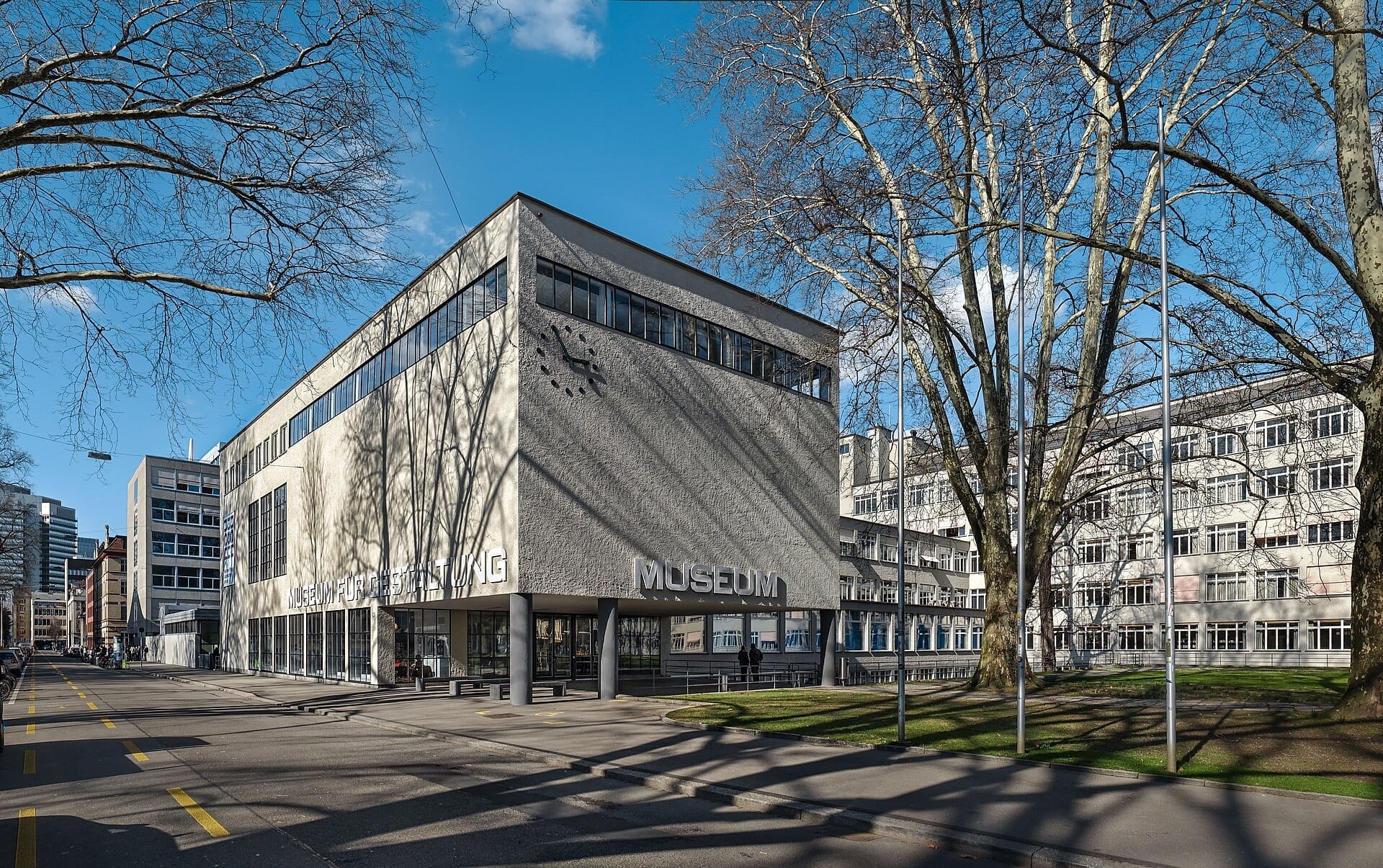
The museum traces its origins to 1875, when it opened as the Kunstgewerbemuseum der Stadt Zürich (Museum of Applied Arts of the City of Zurich), making it one of the oldest applied arts institutions in the German-speaking world. It opened to the public in 1878 and moved into its current functionalist main building on Ausstellungsstrasse in 1933. That building, designed by architects Adolf Steger and Karl Egender, is itself a document of the era: clean lines, horizontal windows, and an industrial discipline that mirrors the museum's ethos.
Today the museum operates across two locations in the Zurich-West district, a former industrial quarter that has gradually reinvented itself as a hub for creative and cultural institutions. The Ausstellungsstrasse site functions as the main exhibition building, while the Toni-Areal on Pfingstweidstrasse houses rotating shows within a vast converted dairy factory that now also contains the Zurich University of the Arts.
💡 Local tip
Thursday evenings (17:00–20:00) offer free admission to both locations. This is the best time to visit if you are watching your budget, and crowds tend to be lighter than on weekend afternoons.
The Main Building on Ausstellungsstrasse
The Ausstellungsstrasse building is where most visitors begin, and for good reason. The architecture sets the tone immediately: the facade is restrained but purposeful, with a horizontality that reads as confident rather than austere. Standing outside, you notice the building does not announce itself loudly. There is no grand staircase, no imposing colonnade. It simply exists on the street like a very well-resolved object.
Inside, the exhibition spaces feel generous without being overwhelming. Natural light enters from high windows, and the circulation between galleries is intuitive. Temporary exhibitions rotate throughout the year across themes that span graphic design, product design, fashion, and digital culture. The quality of curation is consistently high, and the accompanying texts strike a rare balance: substantive enough for professionals, accessible enough for curious visitors with no design background.
The permanent collection includes one of the world's most significant poster archives, covering Swiss and international graphic design from the late 19th century onward. If you have any interest in typography, Swiss Style modernism, or the history of visual communication, this archive is genuinely extraordinary. Not all of it is on display at any given time, so check the website before visiting to see what is currently exhibited.
ℹ️ Good to know
Disabled parking is available directly in front of the Ausstellungsstrasse entrance. Additional paid parking is accessible at Parkhaus Hauptbahnhof (Sihlquai). Bicycle parking is provided at street level. For individual accessibility arrangements, contact the museum at +41 43 446 67 35 or manuela.moor@zhdk.ch.
Tickets & tours
Live prices and dates from our booking partner. If you book, we may earn a commission at no extra cost to you.
Mount Titlis snow fun for first-time skiers from Zurich
From 212 €Instant confirmationFree cancellationSwiss ski experience from Zurich
From 321 €Instant confirmationFree cancellationBest intro tour of Zurich with a local
From 116 €Instant confirmationFree cancellationZurich Old Town guided walking tour
From 27 €Instant confirmationFree cancellation
The Toni-Areal: Design in an Industrial Shell
The second location, at Pfingstweidstrasse 96, occupies part of the Toni-Areal, a converted dairy complex that was originally one of the largest milk-processing facilities in Europe. The scale of the building is striking. High ceilings, long corridors, and the occasional industrial detail that was left deliberately intact give the space a raw atmosphere that contrasts interestingly with carefully mounted design exhibitions.
The Toni-Areal location tends to host larger-scale shows, including spatial installations and works that would not fit comfortably into the more contained Ausstellungsstrasse galleries. Because the building is also home to the Zurich University of the Arts (ZHdK), the surrounding spaces are full of students, faculty, and the general noise of creative work in progress. On a weekday morning, you might walk through corridors where art and design students are carrying models or reviewing prints. It gives the museum a sense of being embedded in a living creative institution rather than sealed off from one.
When to Visit and What to Expect at Different Times
Both locations are open Tuesday through Sunday, 10:00 to 17:00, with extended hours on Thursdays until 20:00. Mondays are closed. Weekend afternoons draw the largest crowds, particularly when a major temporary exhibition is on. If you want space to look carefully, aim for a Tuesday or Wednesday morning, or the Thursday evening slot.
Morning visits to Ausstellungsstrasse feel noticeably calmer. The light through the high windows is softer before noon, and the galleries are often empty enough that you can spend several minutes in front of a single object without feeling rushed. By early afternoon on weekends, particularly during blockbuster shows, the main galleries can feel congested, and the shop near the entrance gets crowded.
Thursday evenings have their own texture. The free admission draws a younger, more local crowd, and the atmosphere shifts slightly toward something more social. Groups stand longer in conversation. It is a pleasant way to experience the museum if you enjoy a more animated environment.
⚠️ What to skip
The two museum locations are not within easy walking distance of each other. Allow travel time if you plan to visit both in the same day, either by tram or on foot (roughly 10–15 minutes between them depending on your route).
Getting There: Transit and Practical Logistics
The Ausstellungsstrasse building is directly served by a dedicated tram stop, 'Museum für Gestaltung', on tram lines 4, 13, and 17. From Zurich Main Station, tram 4 or 13 takes roughly five minutes. The stop is right in front of the entrance, so there is no navigation involved once you are on the tram.
For context on using Zurich's tram network more broadly, the getting around Zurich guide covers ZVV zone tickets, day passes, and which tram lines connect to key areas of the city.
The Toni-Areal location on Pfingstweidstrasse is also accessible by tram. Check the ZVV journey planner for the most current route, as connections depend on which direction you are traveling from. Both buildings are in the 8005 postal district of Zurich, making them easy to combine with other Zurich-West attractions on the same trip.
The Collection in Context: Why This Museum Matters
Switzerland, and Zurich in particular, occupies an unusual position in 20th-century design history. The Swiss Style of graphic design, also known as the International Typographic Style, emerged from Zurich and Basel in the 1950s and became one of the most influential visual languages in the world. Its hallmarks, grid-based layouts, sans-serif typefaces, objective photography, and clean hierarchy, shaped everything from corporate identity to airport signage across continents. The Museum für Gestaltung holds primary material documenting this movement in depth.
Beyond graphic design, the museum's applied arts and product design holdings trace how Swiss manufacturing and craft evolved alongside industrial production. Visitors interested in architecture and design history will find natural connections to other institutions in the city, including the ETH Zurich main building, where several figures central to Swiss modernism were educated and taught.
It would be misleading to describe this museum as underappreciated. It is well-regarded internationally and consistently attracts design professionals alongside general visitors. What is sometimes undersold, however, is the breadth of the permanent holdings relative to what any single exhibition displays. The 500,000-object collection means there is always more depth below the surface of what is visible on any given visit.
Photography, the Shop, and Practical Notes
Photography policies can vary between temporary exhibitions depending on the agreements in place with lenders. The permanent collection areas generally permit non-flash photography for personal use, but always check signage at the gallery entrance. For photography of the architecture itself, the Ausstellungsstrasse facade and entrance hall are worth documenting, particularly in morning light when shadows from the horizontal windows create clean geometric patterns on the floor.
The museum shop at Ausstellungsstrasse is genuinely good. It stocks design monographs, typography books, posters from the museum's own archive reproductions, and a curated selection of designed objects. It is one of the better design bookshops in Zurich and worth browsing even if you are only passing through the area. If you are researching shopping in Zurich with a design or print focus, this is a reliable destination.
The museum does not have a full restaurant, but there are cafe options in the Toni-Areal building, where the student population ensures a steady supply of coffee vendors and canteen-style eating. For a more substantial meal before or after a visit, Zurich-West has a range of options along Hardstrasse and in the Im Viadukt arches nearby.
The Im Viadukt market and restaurant complex is about a ten-minute walk from the Ausstellungsstrasse building and makes a natural pairing for a half-day out in Zurich-West.
Who This Museum Is Not For
Travelers looking for sweeping city views, interactive exhibits aimed at young children, or a traditional fine arts experience will likely be frustrated here. The museum is intellectually demanding in the best sense: it rewards close attention and some prior interest in design, visual culture, or material history. Visitors who prefer to move quickly through a space without reading labels will not get much from it.
Families with young children may find the Swiss National Museum a better fit, given its more varied exhibit formats and family-oriented programming. The Museum für Gestaltung is not unsuitable for older children or teenagers with an interest in art or design, but the content is primarily pitched at adults.
Insider Tips
- The museum's website publishes its full exhibition program well in advance. Checking it before you visit is genuinely useful: a blockbuster show from a major brand or designer will mean busier spaces and sometimes longer queues at the entrance, while quieter periods between major exhibitions can actually offer better access to the permanent collection.
- Thursday evening free admission (17:00–20:00) is not widely advertised in mainstream tourism content. It is a reliable way to visit without paying full price and the audience skews toward locals, which changes the atmosphere noticeably.
- The poster collection is one of the great underappreciated resources in European design history. If you have a specific area of interest, for example Swiss tourism posters from the 1930s or mid-century Zurich typography, contact the museum's archive team in advance. Public access to non-exhibited collection items can sometimes be arranged.
- The Toni-Areal building is worth exploring beyond the museum's dedicated gallery floors. The corridors and shared spaces of the Zurich University of the Arts regularly feature student exhibitions and installations that are free to view and often surprisingly strong.
- If you are visiting both locations on the same day, buy the combined ticket (CHF 20 regular) rather than two single tickets at CHF 15 each. The saving is modest but the combined ticket is valid across both sites for the day.
Who Is Museum für Gestaltung (Design Museum) For?
- Design and typography professionals or students who want access to primary Swiss modernism material
- Architecture enthusiasts interested in functionalist 1930s building design
- Travelers combining a cultural itinerary with Zurich-West's converted industrial spaces
- Budget visitors using the Thursday evening free admission slot
- Anyone curious about how Switzerland's visual identity was constructed and exported globally
Nearby Attractions
Other things to see while in Zurich West:
- Im Viadukt
Built into the stone arches of an 1894 railway viaduct in Zurich-West, Im Viadukt stretches 500 metres through 36 arch-shaped units housing independent shops, a covered market hall, studios, and restaurants. Entry is free, the atmosphere is low-key, and it offers a grounded alternative to the city's more polished retail strips.
- Langstrasse
Langstrasse is the street and quarter in Zurich's district 4 that refuses to be polished. Bars, independent shops, immigrant-run restaurants, and nightclubs line a strip that looks rough by day and comes alive after dark. It costs nothing to walk and rewards curiosity.
- Flussbad Oberer Letten
Flussbad Oberer Letten is a 400-metre open-air river swimming channel cut into the Limmat near Zurich West, free to enter and open from May through September. Built in 1952, it draws everyone from early-morning lap swimmers to after-work sunbathers, and remains one of the most authentic summer experiences the city offers.
Planning a trip? Discover personalized activities with the Nomado app.