Zurich to Milan by Train: The Complete Guide to Tickets, Times & Tips
The Zurich to Milan train is one of Europe's great cross-border rail journeys: direct EuroCity service through the Gotthard Base Tunnel in around 3 hours 17 minutes, with up to 14 departures daily. This guide covers schedules, pricing, booking strategy, and what to expect at both ends of the route.
Tickets & tours
Live prices and dates from our booking partner. If you book, we may earn a commission at no extra cost to you.
TL;DR
- Direct EuroCity trains run from Zurich HB (Hauptbahnhof) to Milano Centrale in approximately 3 hours 17 minutes, through the Gotthard Base Tunnel.
- Up to 14 direct departures daily, with the first at 06:33 and the last at 19:33 from Zurich.
- Advance tickets start from CHF 38 (2nd class) on SBB; prices rise steeply closer to departure, especially during summer and holiday peaks. See also the Zurich to Lucerne train guide if you want a shorter day-trip option.
- Seat reservations are generally included in international EuroCity tickets on this route and strongly recommended, though they are not universally mandatory on every fare type. Book on SBB, Rail Europe, or Trainline.
- This is not a scenic mountain route: the Gotthard Base Tunnel runs mostly underground. For alpine views, you'd need the older Gotthard Panorama route, which takes significantly longer.
The Route: What You're Actually Boarding
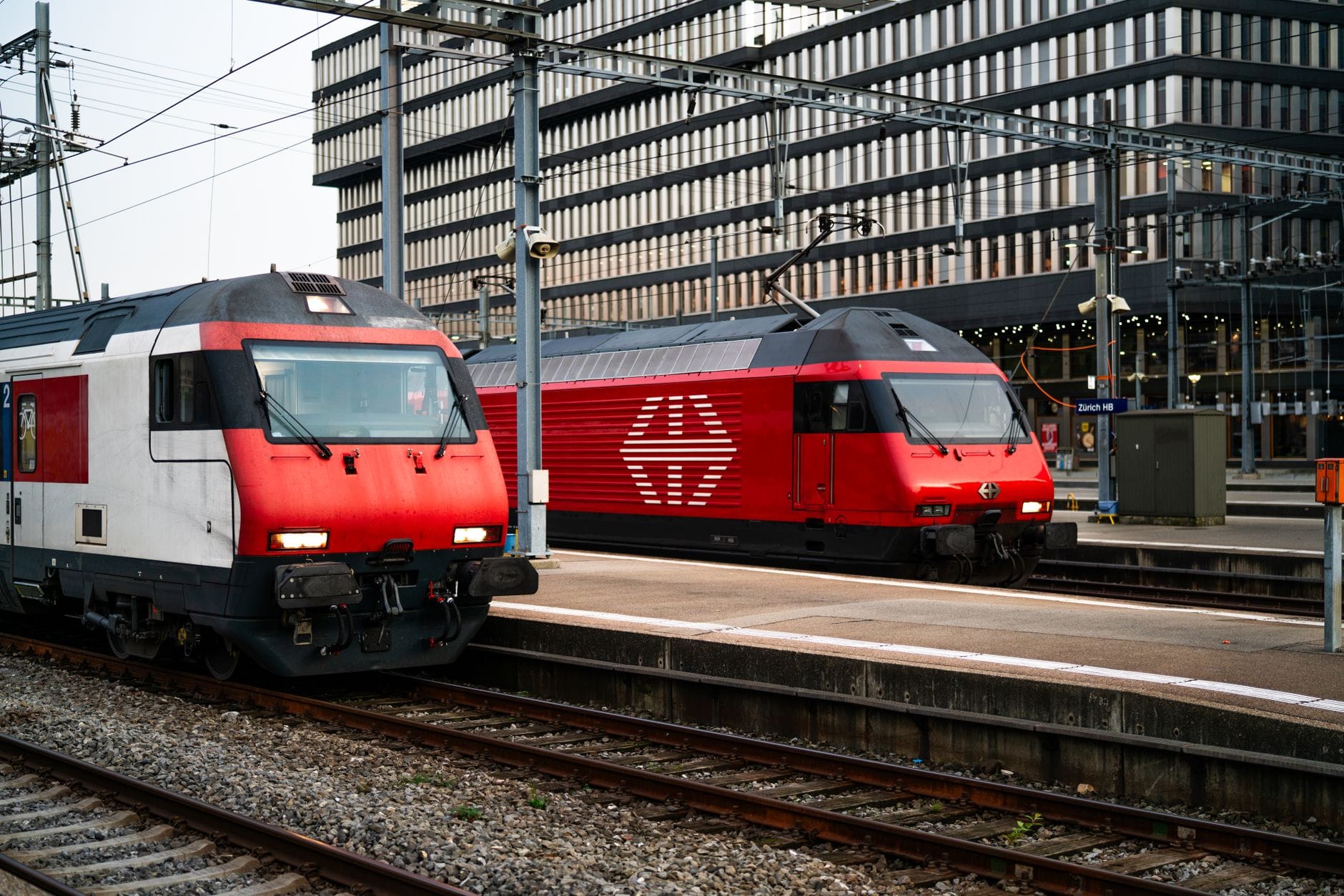
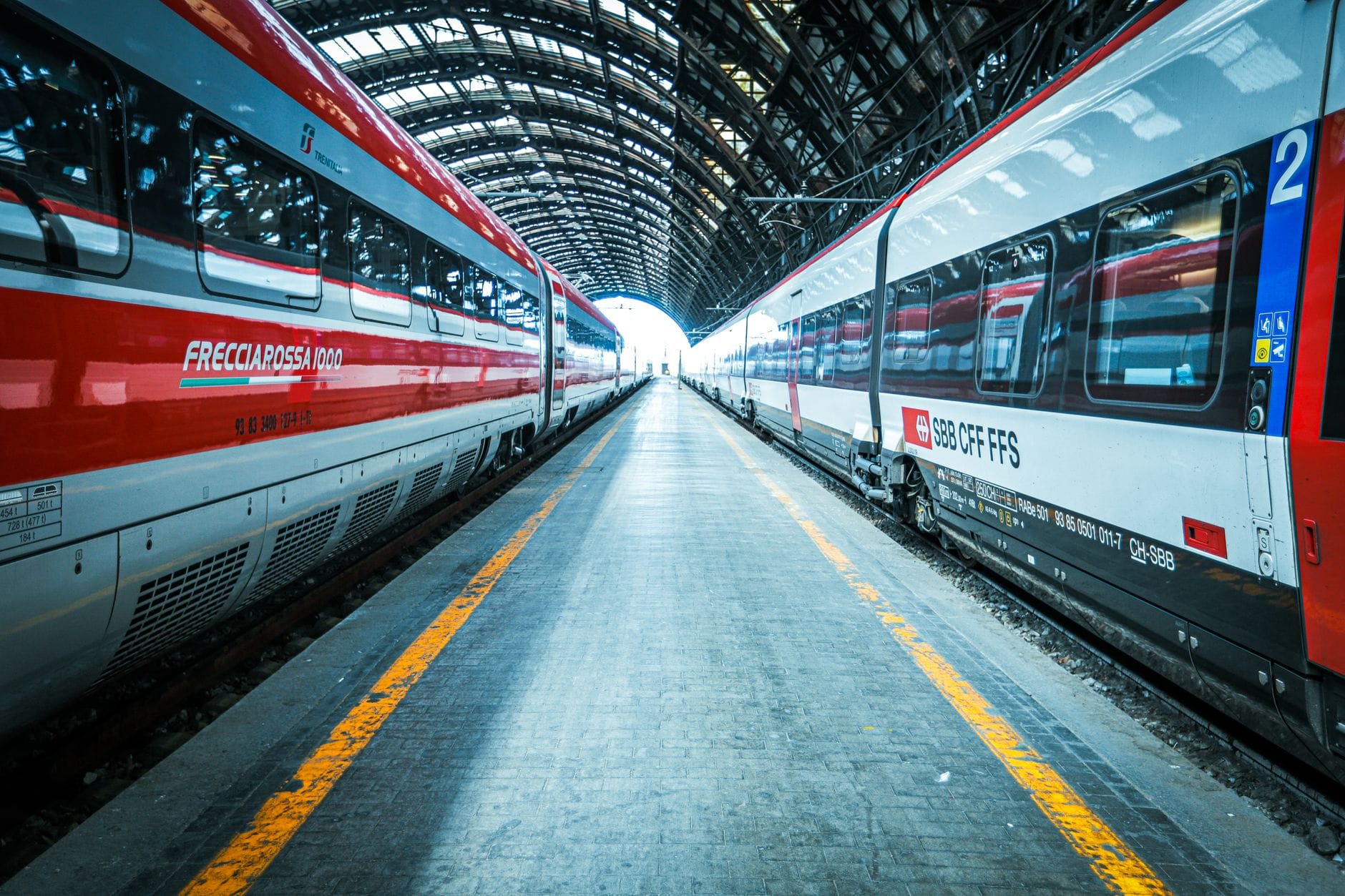
The Zurich to Milan train is a direct international EuroCity (EC) service jointly operated by SBB (Swiss Federal Railways) and Trenitalia. It covers roughly 216–219 km between Zurich Hauptbahnhof and Milano Centrale, passing through the canton of Uri, beneath the Alps via the Gotthard Base Tunnel, and into the Ticino canton before crossing into northern Italy. The journey takes approximately 3 hours 17 minutes on the fastest services.
The Gotthard Base Tunnel, which opened in 2016, is the world's longest railway tunnel at 57 km. Its use on this route is the reason journey times dropped dramatically compared to the old Gotthard mountain line. You won't see the famous spiral tunnels or dramatic alpine passes from the window: most of the Swiss alpine crossing is underground. If a scenic mountain experience is your priority, the Gotthard Panorama Express runs seasonally via the old route but takes considerably longer and operates differently. For the standard commuter or city traveler, the speed of the base tunnel is unambiguously better.
ℹ️ Good to know
Don't confuse EuroCity trains with regional connections. Some aggregator results show journeys with one or two changes that stretch to 4-5 hours. Direct EC services take around 3h17min. Always filter for direct trains on SBB.ch or Trainline before booking.
Schedule: When Do Trains Run?
SBB lists 14 direct trains daily from Zurich HB to Milano Centrale. The first departure is at 06:33 and the last at 19:33, giving a broad spread throughout the day. This means you have genuine flexibility: you can take an early morning train, spend a full day in Milan, and return the same evening if you prefer. Services generally run at roughly hourly intervals, though the exact spacing varies by time of day.
Aggregator platforms like Rail Europe and Trainline often show 20 to 30 total connections per day when you include indirect options with one change, typically at Lugano or Bellinzona. These indirect routes aren't worth choosing unless all direct tickets are sold out: the time penalty is significant and rarely offset by a meaningful price difference.
- First direct departure 06:33 from Zurich HB, arriving Milano Centrale around 09:50
- Last direct departure 19:33 from Zurich HB, arriving around 22:50
- Frequency Roughly every 60-90 minutes throughout the day
- Journey time Around 3h17min on fastest direct EC services
- Timetable reliability Check SBB.ch within a few weeks of travel; engineering works occasionally cause adjustments
⚠️ What to skip
Timetables on this route can shift slightly between annual schedule changes (typically mid-December each year). Always verify exact departure times on SBB.ch or the Trenitalia website shortly before your travel date, not months in advance.
Tickets and Pricing: What to Expect and When to Book
Fares on the Zurich to Milan EuroCity route are dynamic, meaning the price you pay depends heavily on when you book and how popular your chosen departure is. SBB advertises advance saver fares from CHF 38 in 2nd class and CHF 79 in 1st class one-way, but these are the floor, not the typical price. Rail Europe reports average advance prices around US$57 when buying 30 or more days ahead, with prices rising significantly when booked closer to departure.
The most important thing to understand: seat reservations are mandatory on EuroCity trains and are included in the ticket price. You won't pay separately for a reservation, but you also can't board without one. Tickets are released up to 12 months in advance on most platforms. Book through Zurich Hauptbahnhof's official SBB website for the most accurate pricing, or use Rail Europe and Trainline for multi-currency convenience and sometimes competitive advance fares.
- Book 6-8 weeks out minimum for reliable access to discounted fares on peak travel dates
- Saver tickets (SBB 'Sparbillett') are non-refundable and non-exchangeable: only buy them if your plans are firm
- Flexible tickets cost more but allow changes; useful if travel plans are uncertain
- First class on this route means wider seats, quieter carriages, and a slightly calmer atmosphere: the premium is often reasonable (CHF 79 advance versus CHF 38 for 2nd class)
- Holiday periods (Easter, July-August, Christmas) fill up fast: prices at these times can be 2-3x the minimum advertised fare if you haven't booked ahead
- Swiss Half Fare Card holders get 50% off flexible fares on the Swiss leg; Eurail and Interrail pass holders still need a reservation but may ride at reduced cost
✨ Pro tip
Check SBB.ch first, even if you end up booking elsewhere. SBB displays the full range of fares including their own saver prices, which sometimes undercut third-party resellers. Third-party platforms can add service fees that erase any apparent discount.
Zurich HB: What to Know Before You Board
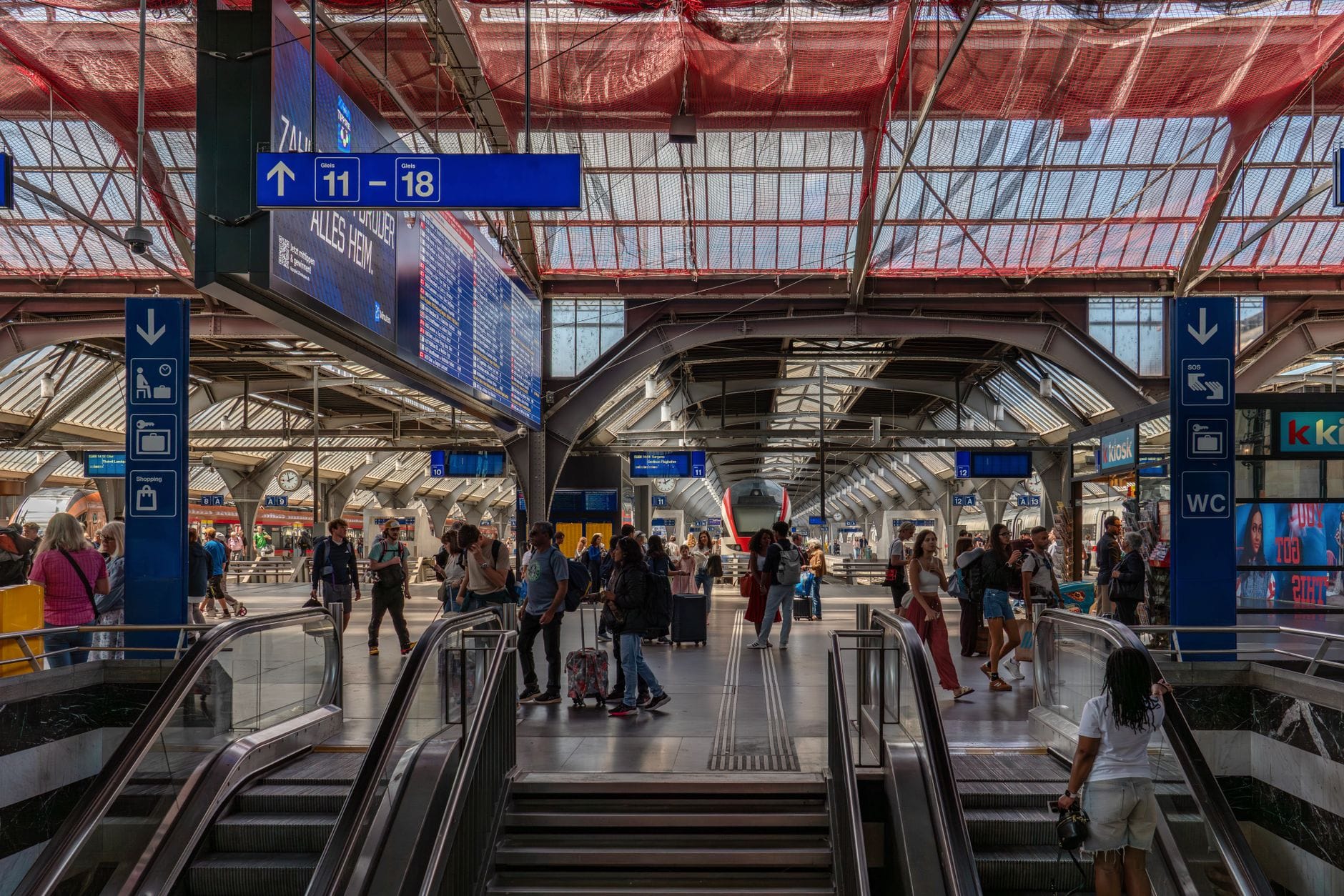
Zurich Hauptbahnhof is Switzerland's busiest railway station and your departure point for Milan. International EuroCity trains depart from the main platforms on the ground level (Hauptbahnhof, not the underground S-Bahn levels). Signage is clear and bilingual in German and English. Arrive at least 15 minutes before departure, particularly if you need to print or collect a ticket, though most travelers now use digital tickets on their phones.
Zurich HB has luggage storage facilities, multiple food options from quick bakeries to sit-down restaurants, and a large supermarket in the main hall. If you're arriving in Zurich from elsewhere in Switzerland or from the airport, connections into HB are frequent and reliable. Zurich Airport is about 13 km north of HB and directly connected by S-Bahn and intercity trains in approximately 10–15 minutes, so an airport-to-Milan same-day itinerary is entirely feasible with proper planning.
If you have time before your Milan train, the area around Zurich HB is worth exploring: the Swiss National Museum is immediately adjacent, and Bahnhofstrasse begins right at the station entrance. For a quick overview of the city, the Polybahn funicular is a 10-minute walk away and reaches a viewpoint over the old town in under 2 minutes.
Arriving in Milan: Milano Centrale and What Comes Next
EuroCity trains from Zurich arrive at Milano Centrale, Milan's main station and one of the most architecturally dramatic railway terminals in Europe. The station is in the northeast of the city centre, roughly 3 km from the Duomo. From Centrale, Metro Line M2 (green) and M3 (yellow) connect to central Milan within about 5–10 minutes. Taxis queue outside the main exit on the south side of the station.
Italian customs and border checks do apply on this cross-border route. You don't need to disembark: checks are conducted on the train, typically at the Swiss-Italian border near Chiasso. Have your passport or EU ID card ready. Swiss residents and EU citizens generally pass quickly, but allow slightly more buffer if your documentation is non-standard.
Common Misconceptions About This Train Route
A few persistent myths circulate about the Zurich to Milan train, and they're worth addressing directly before you plan around bad information.
- "There's only one train per day" Some older sources and certain aggregators (including some Rome2Rio summaries) reference a single daily direct service. SBB lists 14 direct trains per day. This confusion likely stems from outdated data or references to a specific operator's subset of services.
- "It's a slow, scenic mountain route" Current EuroCity trains use the Gotthard Base Tunnel and take around 3h17min. The old Gotthard mountain route, with its spirals and passes, takes significantly longer and is only used by specific slow or panoramic services, not by the standard EC trains.
- "Train prices are fixed and expensive" Fares are fully dynamic. Advance booking from CHF 38 is genuinely achievable. Flexible last-minute fares are much higher. The route is not inherently more expensive than comparable European international trains.
- "Flying is faster when you factor in airport time" For most city-centre-to-city-centre comparisons, the train is competitive or faster. Factor in check-in times, the suburban journey to Zurich Airport, and baggage claim at Milan Malpensa (about 50 km from the city centre), and the 3h17min train to Milano Centrale wins on total journey time for most travelers.
The Zurich to Milan train is one of the more efficient international connections in Europe. It also connects a region with several excellent day-trip options: if you're based in Zurich, day trips from Zurich cover a range of destinations across Switzerland, Italy, and Germany. Milan makes for an ambitious but achievable day trip given the early first departure and late last return from the Italian side.
💡 Local tip
If you're comparing this route to driving, the car journey from Zurich to Milan via the A2 motorway typically takes around 3.5-4 hours in normal traffic, not including fuel costs, the Gotthard road tunnel fee, and Italian motorway tolls. The train is genuinely competitive on time and often wins on cost when booked in advance.
How This Route Compares to Other Zurich Rail Journeys
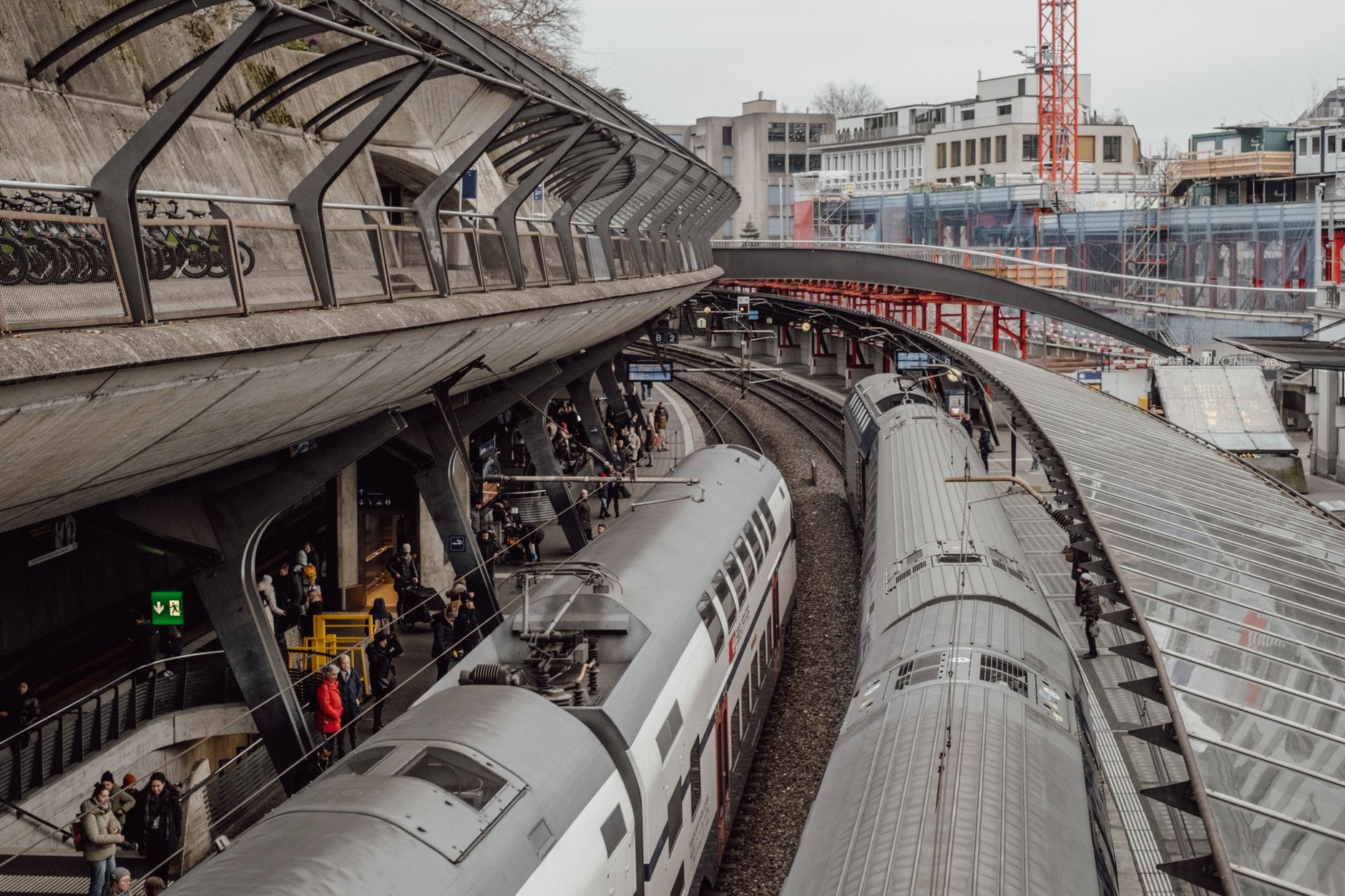
The Zurich to Milan train is a longer international route in a network that also offers shorter, highly efficient Swiss domestic connections. For comparison: the Zurich to Lucerne train takes around 45-50 minutes and costs from CHF 23 standard. The Zurich to Basel journey is under an hour. If you're considering France, the Zurich to Paris train takes around 4 hours on the TGV Lyria service, with its own set of booking dynamics and pricing tiers.
The Milan route sits in the middle of this spectrum in terms of distance and complexity. It's longer than a Swiss domestic journey but shorter and more straightforward than the Paris service. Unlike the Paris TGV, which has stricter luggage policies and a different booking system, EuroCity trains are operationally closer to standard intercity trains: relatively relaxed about luggage, with on-board dining carts, and comfortable for families.
FAQ
How long does the Zurich to Milan train take?
Direct EuroCity trains take approximately 3 hours 17 minutes. This is the fastest option and uses the Gotthard Base Tunnel. Indirect connections with one change can take around 4–5 hours and are generally not worth choosing unless direct tickets are unavailable.
Do I need to book in advance for the Zurich to Milan train?
You don't have to, but you should. Advance booking (ideally 4–8 weeks out) secures the lowest saver fares starting from CHF 38 in 2nd class. Last-minute flexible tickets are significantly more expensive, especially during summer and holiday periods. Seat reservations are recommended and often included in the ticket price on international EC tickets, but not every fare type strictly requires one in Switzerland.
Can I use a Eurail or Interrail pass on this route?
Yes, Eurail and Interrail pass holders can use their pass on EuroCity trains between Zurich and Milan, but a separate seat reservation is still required and must be purchased. Check the current reservation fee on SBB.ch or Rail Europe, as fees vary and change periodically.
Which station do trains depart from in Zurich and arrive at in Milan?
All direct EuroCity trains depart from Zurich Hauptbahnhof (Zürich HB) and arrive at Milano Centrale. Both are the main central stations in their respective cities, with excellent onward connections by metro, tram, and taxi.
Is there a passport check on the Zurich to Milan train?
Yes. Switzerland is not part of the EU, so border checks can apply when crossing into Italy. Checks are conducted on board, usually near Chiasso at the Swiss-Italian border. Have your passport or valid EU ID card accessible. The process is typically quick but can vary depending on the day and staffing.
Tickets & tours
Live prices and dates from our booking partner. If you book, we may earn a commission at no extra cost to you.
Planning a trip? Discover personalized activities with the Nomado app.