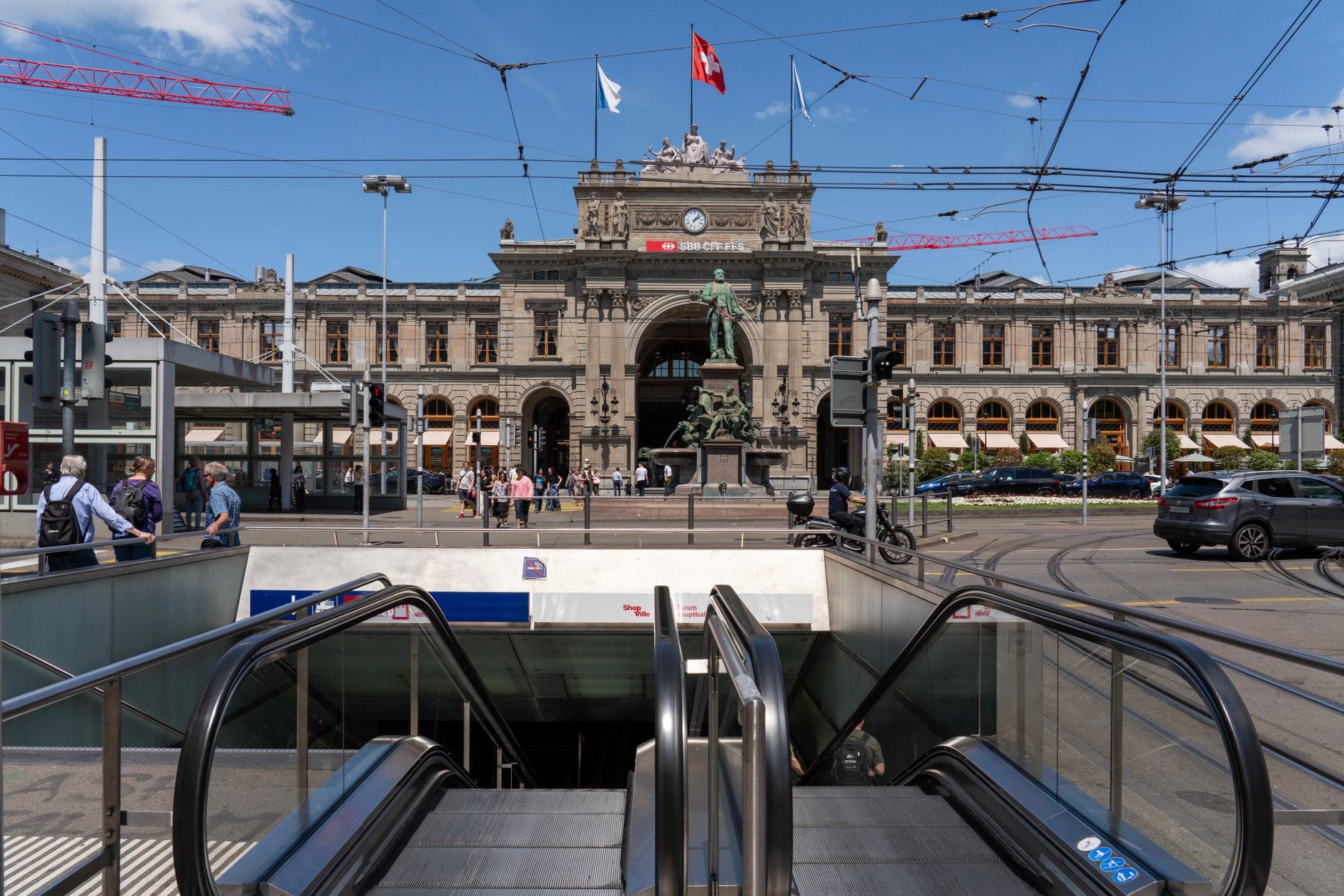
Zurich HB and the surrounding city centre form the commercial and transit core of Switzerland's largest city. From the grand halls of the Hauptbahnhof to the polished storefronts of Bahnhofstrasse and the collections of the Swiss National Museum, this district is where most journeys through Zurich begin and many visitors spend the bulk of their time.
Zurich HB is more than just a train station. The district radiating outward from the Hauptbahnhof is Zurich's undisputed centre of gravity, where intercity rail, luxury retail, and major cultural institutions meet in a tight, walkable grid. It is intense, efficient, and unmistakably Swiss.
Orientation
Zurich HB sits at the northern edge of central Zurich, positioned between two rivers: the Sihl to the west and the Limmat to the east. The station anchors the northern end of Bahnhofplatz, the broad square that funnels pedestrian traffic southward onto Bahnhofstrasse. Everything in this district flows outward from that axis.
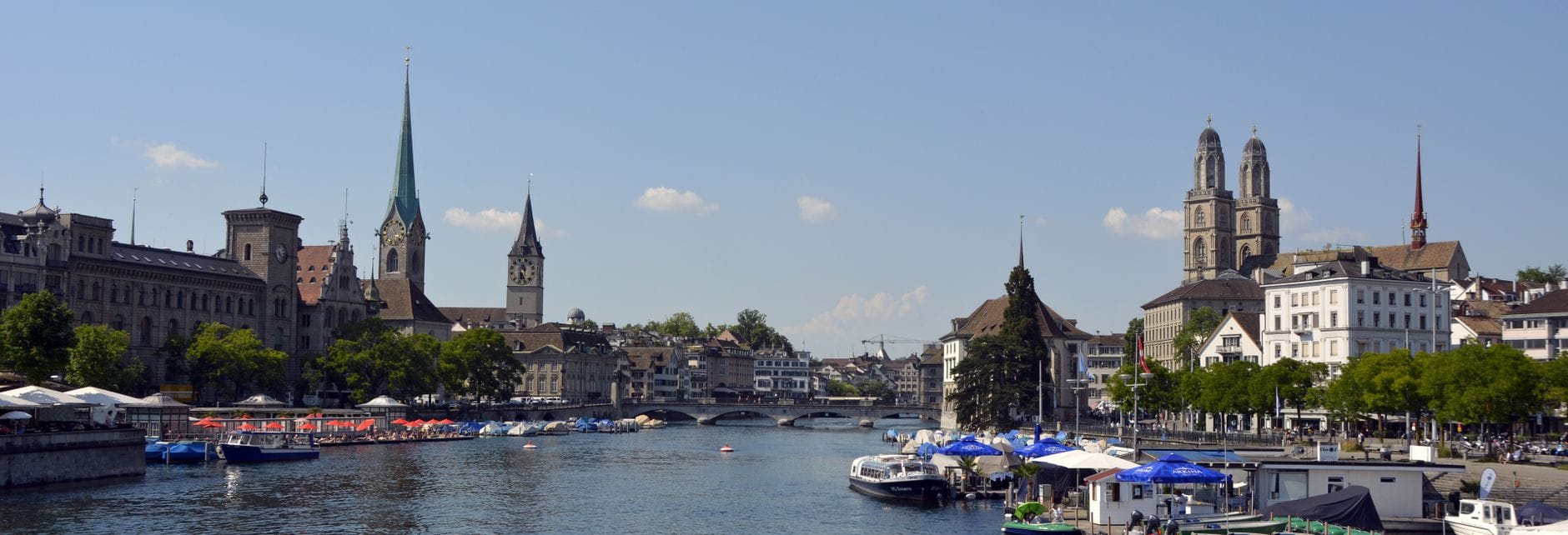
Administratively, the area falls within Kreis 1, specifically the 'City' quarter on the west bank of the Limmat. To the east across the Limmat lies Niederdorf, the medieval Old Town quarter. To the south, Bahnhofstrasse runs approximately 1.4 kilometres before reaching Bürkliplatz and the northern shore of Lake Zurich. The western boundary is loosely defined by the Schanzengraben, a former moat channel, and the Sihl river.
Walking north from the station along Museumstrasse brings you immediately to the Swiss National Museum and Platzspitz Park, a green wedge at the confluence of the Limmat and Sihl. This compact triangle of space, the station, the museum, and the park, captures the character of the entire district: dense with purpose, but not without breathing room.
The district connects effortlessly to neighbouring areas. The Altstadt and Niederdorf are a short walk east across the Limmat. Zurich West, the former industrial quarter, is accessible by tram in under ten minutes. The lake is a 15-minute walk south down Bahnhofstrasse, past Bürkliplatz. For anyone arriving by train, this is your natural starting point for the entire city.
Character & Atmosphere
The HB district operates at a different pace than the rest of Zurich. Early mornings belong to commuters: platforms fill before 7am, the underground ShopVille concourse hums with people collecting coffee and pastries, and the tram stops outside already cycle through their routes with clockwork regularity. There is a productive, pre-work energy to the station hall at this hour, the arched ceiling catching the first grey light, the departure boards clicking through departures to Basel, Bern, and beyond.
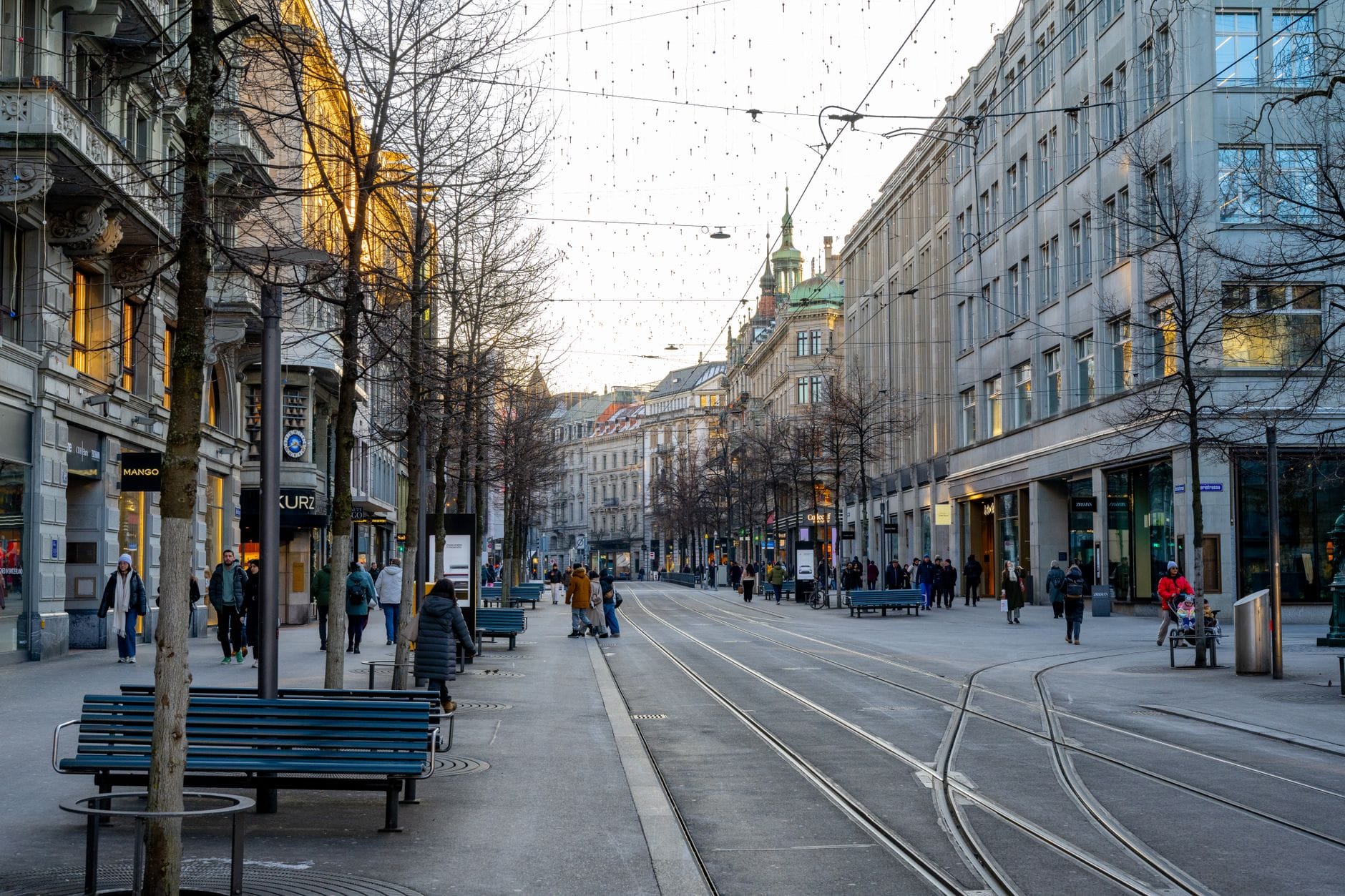
By mid-morning, the character shifts. Tourist groups gather outside the main entrance, bags in hand, consulting maps. Bahnhofstrasse fills with shoppers moving between flagship stores and jewellers. The street itself is broad and relatively calm, with no private car traffic, just trams gliding silently past window displays of watches and chocolate. The paving stones, the restrained facades, and the absence of fast food chains give it an air of deliberate exclusivity.
Afternoons on Bahnhofstrasse have a particular quality in summer: the light comes in low and warm from the west, catching the glass shopfronts and the polished nameplate of every bank and jeweller. It looks exactly like the photographs, which is either reassuring or slightly surreal depending on your expectations. The street is genuinely beautiful and, unlike many famous shopping streets in other cities, it is clean, uncluttered, and not aggressively commercial at the street level.
After dark, the station area stays active well into the evening. The ShopVille underground concourse and the station's ground-floor shops keep extended hours. The bars and restaurants around Europaallee, the modern development to the station's southwest, draw a post-work crowd of office workers and travellers. It is not a nightlife district in the way that Langstrasse is a short distance to the southwest, but it is far from quiet.
ℹ️ Good to know
Platzspitz Park, the green space just north of the station between the Limmat and Sihl rivers, has a complicated history. It was the site of a notorious open-air drug scene in the late 1980s and early 1990s. The area was cleaned up and the park was eventually restored to public use. Today it is a pleasant place for a midday walk, used mostly by local office workers on lunch breaks.
What to See & Do
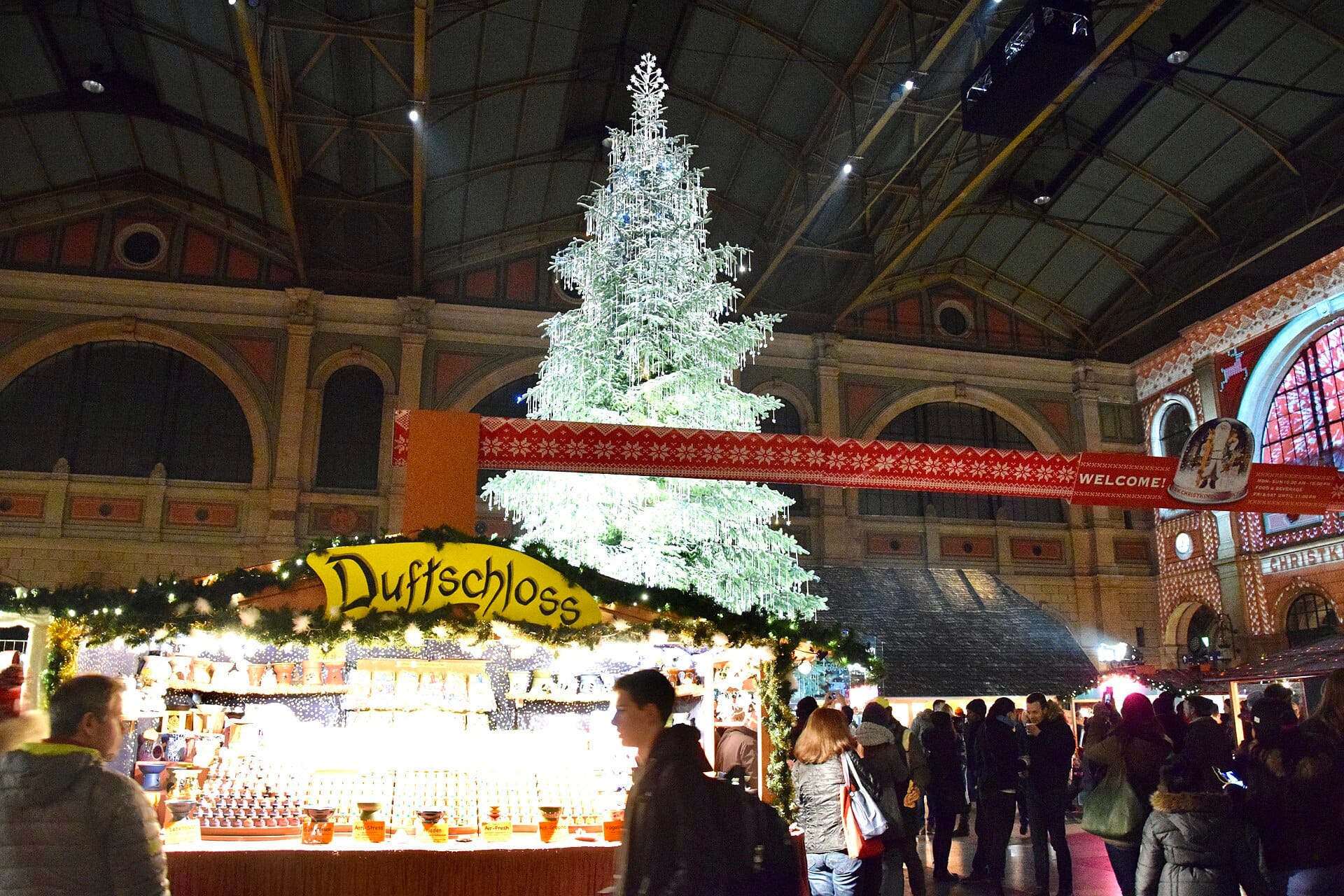
The immediate draw for most visitors is Zurich Main Station itself. The Hauptbahnhof is the largest railway station in Switzerland, and the main hall, with its soaring 19th-century arched roof and the hanging Lili sculpture by Niki de Saint Phalle, is worth pausing in before you catch your next connection. The station regularly hosts art installations and temporary exhibitions in the main concourse.
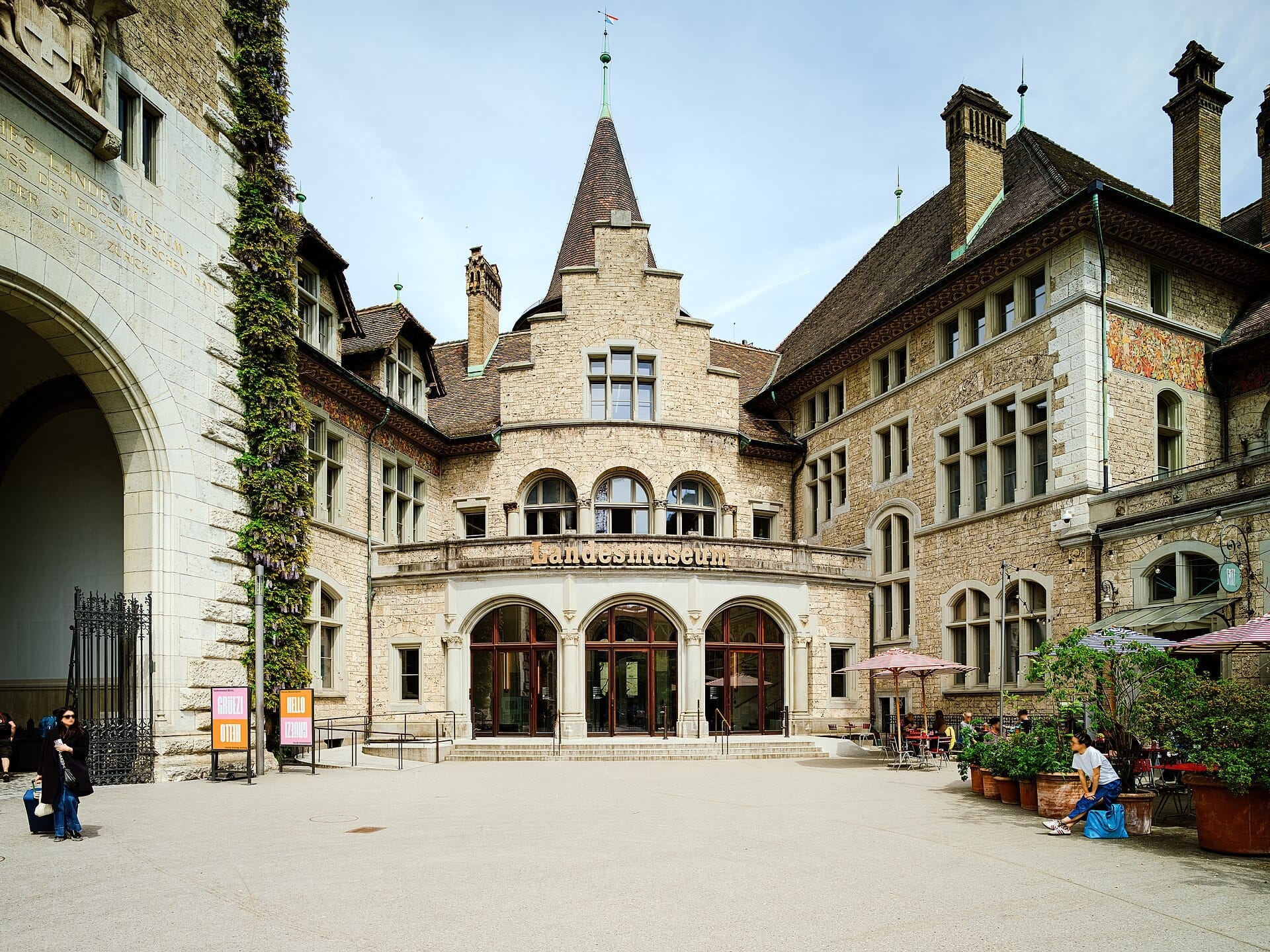
Directly opposite the station's north exit, across Museumstrasse, stands the Swiss National Museum (Landesmuseum Zürich). Housed in a late-19th-century building that was deliberately designed to look like a fairytale castle, the museum covers Swiss cultural history from prehistoric times to the 20th century. Its collections on medieval crafts, Reformation-era artefacts, and Swiss domestic life are serious and well-curated. Allow two to three hours.
Walking south from the station onto Bahnhofstrasse, the street functions as both a shopping destination and an architectural promenade. The building facades along its length are mostly late-19th and early-20th century, with the occasional modern insertion. Further south, the street opens up toward Bürkliplatz, where flower markets run on Tuesday and Friday mornings and where you get your first unobstructed view of Lake Zurich. From here you can join the Lake Zurich promenade heading east toward Seefeld.
Swiss National Museum: cultural history of Switzerland, strong on medieval and Reformation collections
Platzspitz Park: riverside green space at the confluence of the Limmat and Sihl
Bahnhofstrasse: the full 1.4km walk south to the lake, best done on a clear morning
Bürkliplatz market: Tuesday and Friday mornings, flowers and seasonal produce
The main station hall: architecture, the Lili sculpture, and the rhythm of European rail travel
💡 Local tip
If you have only one day in Zurich, use HB as your base and walk south down Bahnhofstrasse to the lake, then cut east through Niederdorf to the Grossmünster, north along the Limmat back to the Swiss National Museum. This loop covers the city's core in about three to four hours on foot.
Eating & Drinking
The area around Zurich HB covers a wide spectrum, from quick train-platform food to polished hotel dining. Inside the station, the ShopVille underground level and the ground-floor concourse have cafés, bakeries, and takeaway counters that open early and close late. This is not destination dining, but for an early departure or a late arrival, the quality is reliably decent by station standards.
The streets immediately west and south of the station, particularly around Europaallee and the blocks between Bahnhofstrasse and Löwenstrasse, have a concentration of lunch spots aimed at the office crowd: sushi counters, soup bars, and Swiss-style canteens. Prices reflect the central location, typically CHF 20 to 40 for a sit-down lunch, though takeaway options bring that down considerably.
For a more considered meal, the streets closer to the Altstadt and the western bank of the Limmat offer more variety. The area near Rennweg and Augustinergasse, just east of Bahnhofstrasse, has a handful of traditional Swiss restaurants and wine bars. If you want to explore the food culture more broadly, the guide to what to eat in Zurich covers local specialities like Zürcher Geschnetzeltes, rösti, and the city's café culture in more depth.
Chocolate is a reasonable obsession in this part of the city. Several Swiss chocolatiers maintain flagship or quality retail stores along and just off Bahnhofstrasse, and the station itself has multiple options for picking up pralines and bars before a departure. Do not buy chocolate at airport prices if you can avoid it; the station and the street are the better options.
⚠️ What to skip
The restaurants directly on Bahnhofplatz, facing the station entrance, tend to trade heavily on location. Prices are high relative to quality. Walk one or two blocks in any direction and you will find significantly better value.
Getting There & Around
Zurich HB is the central node of the entire Swiss rail network. Almost every long-distance and intercity train passes through here, and the S-Bahn suburban network connects the station to neighbourhoods across the wider metropolitan area. From Zurich Airport (ZRH), direct S-Bahn and intercity trains reach the Hauptbahnhof in roughly 10 to 12 minutes. The full Zurich airport guide covers your options for getting into the city in detail.
Zurich has no metro or subway system. Urban transport runs on an extensive network of trams and buses operated by VBZ (Verkehrsbetriebe Zürich) within the ZVV regional fare system. The station is served by numerous tram lines and trolleybus routes across multiple stops: Bahnhofplatz/HB immediately south of the main entrance serves trams 3, 4, 6, 7, 10, 11, 13, and 14; Bahnhofstrasse/HB a short walk further south catches additional central tram routes; and Bahnhofquai/HB covers the Limmat-facing east side.
Walking is the most practical way to navigate the immediate district. Bahnhofstrasse is largely car‑free along its central stretch, with trams running its length and generous space for pedestrians. The Altstadt and Niederdorf are a 5 to 8-minute walk east across the Limmat bridges. For Zurich West, trams 4 and 17 reach Im Viadukt and Hardbrücke in around 8 minutes. A ZVV day pass covers unlimited travel on all trams, buses, and S-Bahn within the city zones and is worth buying if you plan to cover multiple neighbourhoods.
For practical guidance on navigating the whole city by public transport, the getting around Zurich guide lays out fare zones, day pass options, and tram versus S-Bahn logic for first-time visitors.
Where to Stay
The HB district and surrounding city centre have a high concentration of hotels at the upper end of the market. The blocks between Bahnhofstrasse and the Sihl contain several four and five-star properties that trade on their central location. For business travellers arriving by train, the convenience is real: you can walk from platform to hotel lobby in under ten minutes.
The Europaallee development, southwest of the station, has added newer hotels in recent years, with a slightly more contemporary profile than the traditional grand hotels on Bahnhofstrasse. These tend to be four-star business hotels aimed at the conference and transit market, which means reliable quality and facilities, but not much neighbourhood character.
Budget and mid-range accommodation is thin in this specific district. If cost is a factor, you will find better value a tram stop or two away, particularly in Kreis 4 (around Langstrasse) or across the river in Kreis 5. The broader where to stay in Zurich guide covers the tradeoffs between location, price, and neighbourhood atmosphere across the whole city.
Staying in the HB district suits travellers who want zero friction for early trains or late arrivals, are attending business events in the centre, or who simply want to be within walking distance of the main sights without navigating the tram system. It does not suit travellers looking for local colour, quieter streets, or value for money.
Honest Assessment: Who This District Is For
The HB district is Zurich's most functional neighbourhood. It is genuinely impressive in the Swiss way: clean, well-organised, architecturally coherent, and oriented around high-quality transport. But it is not the Zurich that most visitors end up loving. That version of the city is found in Niederdorf's medieval lanes, along the Seefeld waterfront, or in the converted industrial spaces of Zurich West.
Bahnhofstrasse is worth walking once, particularly if luxury retail or Swiss watchmaking is of interest. The Swiss National Museum deserves a proper visit, especially if you have any curiosity about Swiss history before the 20th century. And the station itself, as a piece of infrastructure and urban architecture, is one of the great European train stations. But the surrounding streets, especially the blocks closest to the station, are dense with offices, banks, and chain retail in a way that can feel interchangeable with any other prosperous European city centre. For a fuller picture of what to prioritise across the city, the things to do in Zurich guide helps put the HB district in context alongside the rest of Zurich's neighbourhoods.
TL;DR
Zurich HB is Switzerland's largest and most connected railway station, ideal as an arrival point and transit hub for the whole city and country.
Bahnhofstrasse, running south from the station, is one of Europe's premier luxury shopping streets and an architectural promenade worth walking in full.
The Swiss National Museum, directly north of the station, is a serious cultural institution covering Swiss history across centuries.
Hotels here are mostly high-end and business-oriented; budget travellers will find better value in adjacent districts.
Best suited to: first-time visitors, business travellers, transit passengers, and anyone who wants to be within 15 minutes' walk of the main sights. Less suited to those seeking local atmosphere or affordable dining.
Two days in Zurich is enough to cover the historic Old Town, the lakefront, a mountain viewpoint, and world-class museums — if you plan it right. This itinerary lays out exactly how to spend 48 hours in Zürich, with practical logistics, honest advice on costs, and clear guidance on what's worth your time.
Zurich has a genuinely impressive museum scene for a city its size. Whether you're after world-class fine art, Swiss cultural history, non-European civilizations, or the roots of the Dada movement, this guide covers the best museums in Zurich and tells you exactly what makes each one worth your time.
Zurich rewards visitors year-round, but the timing of your trip makes a significant difference to your budget, experience, and what you can actually do. This guide breaks down every season honestly, including when to avoid and when the city is at its best.
Zurich has an impressive range of scenic vantage points for a city its size. Whether you want sweeping Alps panoramas, rooftop river views, or lakeside reflections at sunset, this guide covers every worthwhile viewpoint in the city, with practical tips on how to reach each one.
Zurich sits at one of the best-connected points in Europe for short excursions. Within two hours by train, you can reach medieval lakeside towns, one of Europe's most powerful waterfalls, and alpine peaks above 3,000 metres. This guide breaks down the best day trips from Zurich by travel time, effort, and what kind of traveller each suits.
Zurich has a reputation for being expensive, but a surprising amount of the city's best experiences cost nothing at all. From hiking to an Alpine panorama and swimming in the Limmat to exploring medieval lanes and world-class architecture, this guide covers the best free things to do in Zurich.
Zurich's public transport network is one of the most efficient in Europe, but the ticketing zones and the Zurich Card can trip up first-time visitors. This guide covers everything: getting from Zurich Airport (ZRH) to the city center, how the ZVV zone system works, when the Zurich Card is worth buying, and what to know about trams, night buses, and taxis.
Zurich gets dismissed as a banker's city or skipped in favour of Geneva and Lucerne. That's a mistake. This guide breaks down exactly what Zurich offers, what it costs, when to go, and who should actually add it to their itinerary.
Zurich punches well above its size as a luxury destination. This guide covers the finest hotels, high-end dining, world-class shopping, and cultural experiences that make Switzerland's largest city one of Europe's most rewarding upscale escapes.
Zurich packs medieval churches, world-class museums, Alpine viewpoints, and lake swimming into one compact, walkable city. This guide covers the best things to do in Zurich across every budget and season, with real prices, transport details, and the honest advice most guides skip.
Zurich's food scene runs deeper than fondue and chocolate. This guide covers the essential Swiss dishes to try, honest price expectations, seasonal must-orders, and practical tips for eating well without overpaying in one of Europe's most expensive cities.
Choosing where to stay in Zurich shapes your entire trip. This guide breaks down every major neighborhood by character, price, transport links, and who it suits best, so you can book with confidence rather than guesswork.
Zurich Airport (ZRH) is Switzerland's largest and most efficient international hub. This guide covers the terminal layout, transfer connections, train and tram options to the city centre, lounge access, and what to know before you fly.
Zurich's churches are among the most historically significant in Switzerland, shaped by Romanesque foundations, Gothic ambition, and the radical sweep of the Swiss Reformation. This guide covers the four main Old Town churches in depth, plus lesser-known stops worth your time, with practical hours, access tips, and honest assessments of what each is worth.
Zurich is one of Europe's most underrated cities for a romantic trip. This guide covers the best couple-friendly experiences in Zurich, from lakeside evenings and hilltop sunsets to chocolate workshops and candlelit Old Town strolls, with honest advice on what's worth your time and money.
Zurich rewards the curious traveler who looks beyond the obvious. From a Dada birthplace bar to a Le Corbusier pavilion in a lakeside park, these are the experiences that show a different side of Switzerland's largest city.
Zurich sits at the edge of one of Switzerland's most walkable landscapes. With over 3,000 km of signposted trails in the region, serious day hikes are reachable entirely by public transport. This guide covers the best routes, seasonal timing, and everything you need to plan a hike from the city.
December transforms Zurich into one of Europe's finest winter destinations. From the grand indoor market at the Hauptbahnhof to the lakeside Wienachtsdorf, this guide covers every major Christmas market, what things cost, how to get around, and what most visitors get wrong.
Summer transforms Zurich into one of Europe's most enjoyable warm-weather cities. From the Badi culture on Lake Zurich to the Seeüberquerung mass swim and open-air festivals, this guide covers everything you need to plan a great visit from June through September.
Zurich has one of the highest densities of public swimming areas in Europe, with more than 20 official Badis on Lake Zurich and the Limmat River. This guide covers the best spots, what to expect on arrival, what you'll pay, and which ones are completely free.
Zurich nightlife runs deeper than its polished reputation suggests. Three distinct districts, clubs that go until sunrise, and a surprisingly diverse bar scene make this one of Europe's more underrated after-dark cities. Here's how to navigate it properly.
Zurich has a reputation for being one of Europe's priciest cities, and that reputation is not entirely undeserved. But with the right approach to accommodation, food, transport, and timing, a daily budget of CHF 110–145 per person is genuinely achievable. This guide breaks down exactly where to save and where it's worth spending a little more.
Zurich's shopping scene spans 1.4 km of world-class luxury on Bahnhofstrasse, medieval lanes full of Swiss design in the Old Town, and a converted railway viaduct in Zurich West where independent labels thrive. This guide maps out every district, explains the Sunday-closing reality, and tells you where to go based on what you actually want to buy.
The Zurich Street Parade draws close to one million people to the shores of Lake Zurich every August for a free, open-air electronic music parade. This guide covers the route, logistics, crowd realities, after-party scene, and everything else you need to experience it properly.
Zurich is a serious chocolate destination in its own right. From the historic Confiserie Sprüngli on Bahnhofstrasse to the world's largest chocolate museum in nearby Kilchberg, this guide covers every stop worth making, with prices, transport tips, and honest advice on what to skip.
The Zurich to Basel corridor is one of Switzerland's most efficient rail routes, with direct trains running roughly every 15-30 minutes and the fastest services taking under an hour. This guide covers every transport option, how to get the best price, and how to make the most of Basel as a day trip.
The train from Zurich to Geneva is one of Switzerland's most travelled intercity routes, covering 224 km in under 3 hours on the best services. This guide covers exact journey times, current pricing, booking strategies, bus alternatives, and the key differences between the two cities to help you plan smarter.
The Zurich to Interlaken journey by train is one of Switzerland's most rewarding travel corridors, combining Swiss rail efficiency with increasingly dramatic Alpine scenery. This guide covers direct routes, ticket prices, scenic alternatives, and practical tips for making the most of your time in the Bernese Oberland.
The train from Zurich to Lucerne is one of Switzerland's most practical short-haul routes: direct, frequent, and under an hour. This guide covers timetables, ticket prices, booking strategies, and what to expect at both ends of the journey.
The Zurich to Milan train is one of Europe's great cross-border rail journeys: direct EuroCity service through the Gotthard Base Tunnel in around 3 hours 17 minutes, with up to 14 departures daily. This guide covers schedules, pricing, booking strategy, and what to expect at both ends of the route.
Everything you need to know about travelling from Zurich to Paris: direct TGV Lyria trains in just over 4 hours, flights that look fast but rarely are, and budget buses for the patient traveller. Prices, booking tips, and honest comparisons included.
This guide covers the full self-guided walking tour of Zurich's Old Town and Limmat riverside, from Zürich HB to Lake Zurich. Get the route, honest advice on what's worth paying for, crowd patterns by season, and practical details you won't find in a brochure.
Zurich is one of the world's great cities for buying a Swiss watch, with authorized dealers, heritage boutiques, and pre-owned specialists spread across the city. This guide covers where to shop, what to pay, how to claim your VAT refund, and which common assumptions will cost you money.
Zurich is far more family-friendly than its reputation suggests. From a world-class zoo and interactive chocolate museum to free riverside swimming and mountain hikes, this guide covers the best activities for kids of all ages, what to book ahead, and how to keep costs manageable.