Zurich to Interlaken: Train Routes, Tickets & What to Do When You Arrive
The Zurich to Interlaken journey by train is one of Switzerland's most rewarding travel corridors, combining Swiss rail efficiency with increasingly dramatic Alpine scenery. This guide covers direct routes, ticket prices, scenic alternatives, and practical tips for making the most of your time in the Bernese Oberland.
Tickets & tours
Live prices and dates from our booking partner. If you book, we may earn a commission at no extra cost to you.
TL;DR
- The fastest direct trains from Zürich Hauptbahnhof (HB) to Interlaken Ost take around 1 hour 31 minutes; the average is closer to 2 hours 17 minutes.
- Around 44 trains run daily on this corridor, with multiple direct services and up to two departures per hour at peak times.
- A standard 2nd-class full-fare ticket costs around CHF 75, but Saver Day Passes from CHF 29 are available if you book ahead via Zürich HB or the SBB app.
- The scenic route via Lucerne and the Brünig line adds about 30-45 minutes but rewards you with lake and mountain views worth considering in summer.
- Interlaken works equally well as a day trip from Zurich or as an overnight base for the Jungfrau region.
The Basics: Route, Distance & Journey Time
Zurich to Interlaken covers Zurich to Interlaken covers roughly 92 km by rail, but Swiss rail routes wind through the pre-Alps, which means the actual track distance is longer., but Swiss rail routes wind through the pre-Alps, which means the actual track distance is longer. The journey is operated by SBB (Swiss Federal Railways), Switzerland's national rail operator, running from Zürich HB south through Bern and on to Interlaken Ost, running from Zürich HB south through Bern and on to Interlaken Ost, the main arrival point for travellers heading onward to Grindelwald, Lauterbrunnen, or the Jungfraujoch region.
Most direct services run via Bern, taking around 1 hour 50 minutes to 2 hours 17 minutes depending on the specific train. The fastest recorded connection is approximately 1 hour 31 minutes. If you're travelling via the Lucerne and Brünig Pass route, add another 30 to 45 minutes, but the scenery along Lake Lucerne and through the Bernese pre-Alps makes it a worthwhile trade-off, particularly in summer.
- Zurich HB to Interlaken Ost (via Bern) The fastest and most frequent route. Direct trains available, approximately 1h 31min to 2h 17min.
- Zurich HB to Interlaken West One stop before Interlaken Ost. Useful if your accommodation is on the western side of town, near the Thunersee shore.
- Zurich Airport to Interlaken Ost Several direct services daily, bypassing Zürich HB entirely — practical if you're arriving at ZRH and heading straight to the mountains.
- Via Lucerne and the Brünig Line A longer scenic alternative (around 2h 45min or more) passing Lake Lucerne and climbing through the Bernese Oberland. No high-speed trains on this route — it's a deliberate choice, not the default.
ℹ️ Good to know
Interlaken has two train stations: Interlaken West and Interlaken Ost. Most long-distance trains from Zurich terminate at Interlaken Ost, which is the better departure point for mountain railways to Grindelwald and the Jungfraujoch. Check your ticket carefully.
Tickets, Fares & How to Book
Swiss rail pricing has a reputation for being expensive, and on the full-fare walk-up ticket, it is. A standard 2nd-class full-fare ticket from Zurich to Interlaken Ost runs around CHF 55 to CHF 110. First class is available but rarely necessary for a 2-hour journey unless you have a rail pass covering it.
The real value comes from advance booking and pass options. SBB's Saver Day Pass can bring the fare down to around CHF 29 for off-peak travel booked well in advance. The Swiss Travel Pass, popular with international visitors, covers the entire journey and The real value comes from advance booking and pass options. SBB's Saver Day Pass can bring the fare down to around CHF 29 for off-peak travel booked well in advance. The Swiss Travel Pass, popular with international visitors, covers the entire journey and includes unlimited travel on public transport, plus discounts or free access on many mountain railways. If you're spending more than three days in Switzerland, the pass often pays for itself quickly.
- Full-fare 2nd-class ticket: around CHF 75
- Saver Day Pass (advance booking, off-peak): from CHF 29
- Children under 6: travel free when accompanied by an adult
- Ages 6-15: free with Junior Card or Swiss Family Card when parents hold a Swiss Travel Pass
- Swiss Travel Pass: covers the full Zurich-Interlaken corridor plus most mountain transport
- Half-Fare Card (Halbtax): cuts most SBB fares by 50% — worth buying if you're in Switzerland for a week or more
Book directly through the SBB app or website for the most reliable pricing and up-to-date timetables. Third-party platforms like Trainline and Rail Europe are also valid options and sometimes easier to navigate for non-German speakers, though prices should be the same for standard tickets.
💡 Local tip
Avoid buying tickets at the platform machines if you can — the SBB app lets you store your ticket digitally, shows real-time platform information, and makes it easier to catch connection changes. Download it before you leave Zurich.
Frequency, Timing & When to Travel
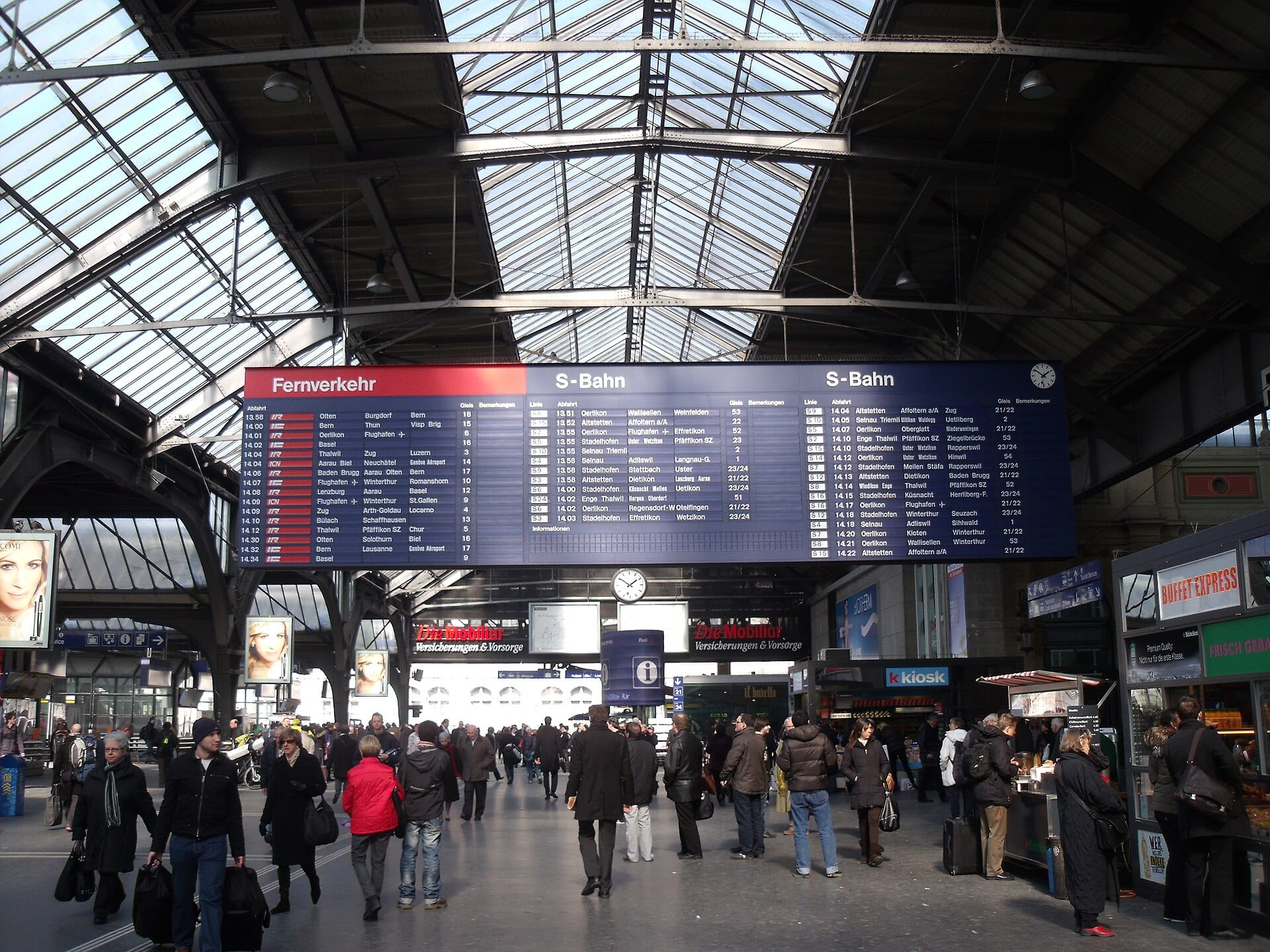
With around 44 trains per day running between Zurich and Interlaken Ost, this is not a route where you need to plan too obsessively around the timetable. At peak times you'll find departures roughly every 30 minutes from Zürich HB. That said, timing still matters for practical reasons.
Peak commuter hours, roughly 06:00 to 10:00 and 15:00 to 19:00, tend to bring busier trains and higher fares on flexible tickets. If you're making a day trip, departing around 08:00 to 09:00 gives you a full day in Interlaken and the surrounding area before trains back to Zurich thin out in the late evening. For summer weekends especially, booking a specific train in advance is worth the minor inconvenience — popular mountain routes can fill up.
Trains run year-round with consistently high frequency. Winter doesn't significantly reduce services, and the Bernese Oberland is arguably at its most spectacular under snow. Just be aware that mountain weather can affect some of the connecting narrow-gauge railways beyond Interlaken, such as the Jungfraubahn.
⚠️ What to skip
There is no standard intercity bus service between Zurich and Interlaken. If you see private tour buses advertised, these are organised excursions, not regular scheduled services. For public transport, the train is your only practical option and is genuinely excellent.
The Scenic Route: Via Lucerne and the Brünig Pass
If you have the time, the alternative routing via Lucerne deserves serious consideration. From Zürich HB, take an InterCity train to Lucerne (around 45 to 50 minutes), then pick up the Brünig line operated by Zentralbahn, a narrow-gauge railway that climbs through Lungern, Giswil, and Meiringen before descending into the Interlaken basin. The total journey time is around 2 hours 45 minutes or more, depending on connections. For more on what Lucerne has to offer en route, see the Zurich to Lucerne train guide.
This is not the efficient choice. It's the enjoyable one. The Brünig line passes Lake Sarnen, the turquoise Lungern reservoir, and a series of pre-Alpine valleys that the main Bern route bypasses entirely. In summer, with clear skies, this section is as scenic as anything in Switzerland at standard train prices. The Brünig Pass itself sits at 1,002 metres above sea level, giving you a brief but genuine alpine crossing before the descent towards Interlaken.
The Brünig route is popular in July and August, so window seats on the right-hand side heading towards Interlaken fill up. Board early at Lucerne for the best views. This route is less useful for winter travel when lower cloud cover can obscure much of the scenery.
What to Do in Interlaken: Making the Most of Your Time
Interlaken itself is a small town of around 6,000 residents positioned on the narrow strip of land between Lake Thun (Thunersee) and Lake Brienz (Brienzersee). The town centre is straightforward to navigate on foot. Most visitors treat it as a gateway rather than a destination in its own right, which is fair. That said, the lakeshores and the Höhematte meadow with its unobstructed views of the Eiger, Mönch, and Jungfrau are genuinely impressive without going anywhere near a mountain railway. For ideas on combining Interlaken with other routes, the day trips from Zurich guide covers several Bernese Oberland options.
- Jungfraujoch (Top of Europe) Switzerland's most famous mountain excursion, reached via rack railways from Interlaken Ost through Grindelwald or Lauterbrunnen. Book tickets in advance; the full return trip takes around 5-6 hours and is expensive (from around CHF 225 for a standard return, verify current prices).
- Grindelwald Around 35 minutes from Interlaken Ost by train. Better base for hiking and the Eiger Trail. More relaxed than Interlaken town.
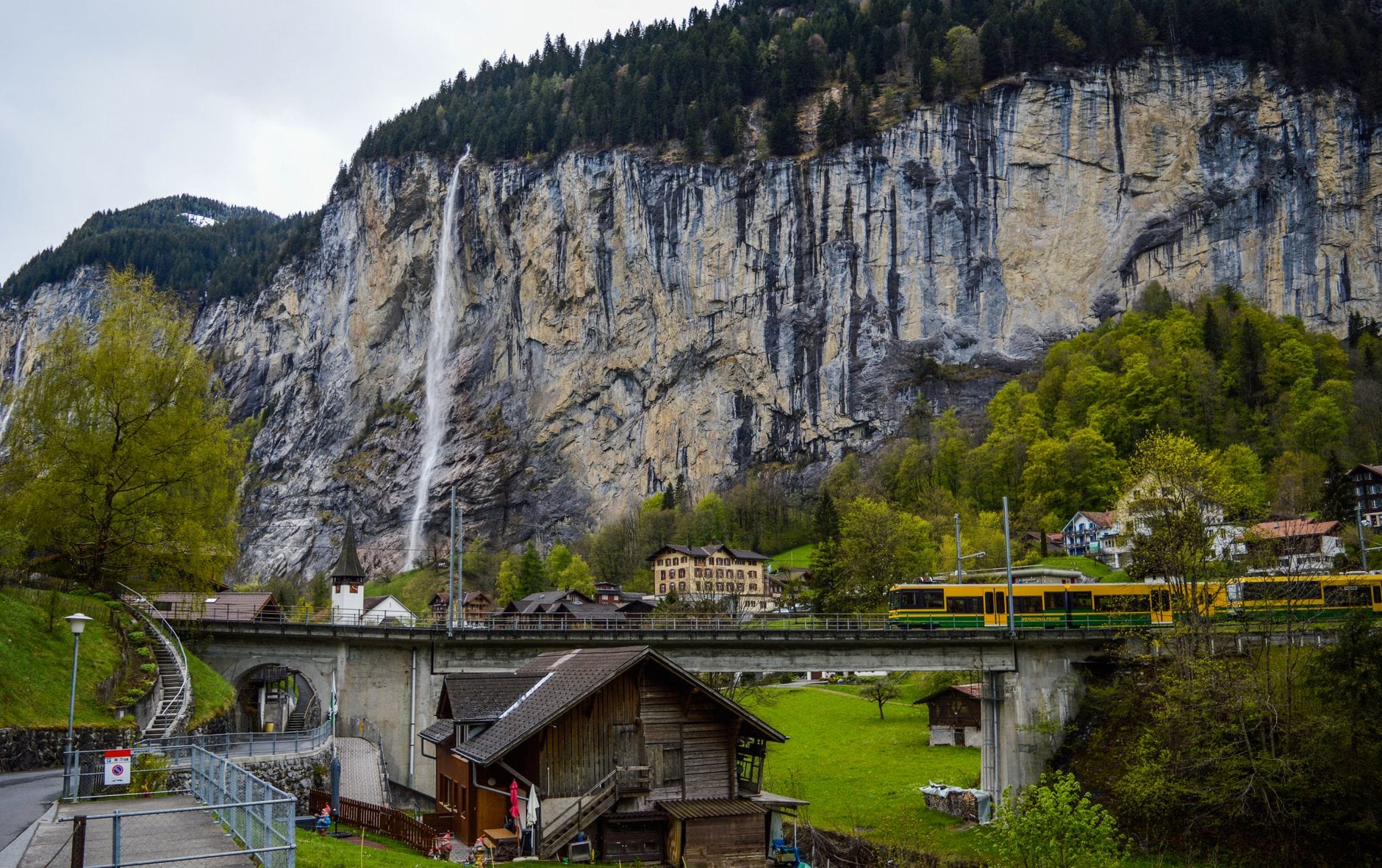
- Lauterbrunnen Valley The valley of 72 waterfalls, around 25 minutes from Interlaken Ost. Staubbach Falls drops 297 metres into the village — one of Switzerland's most photographed natural features.
- Lake Brienz boat trips Departing from Interlaken Ost pier, the Brienzersee is notably less visited than Lake Lucerne and Zurich but arguably more dramatic, with steep forested slopes.
- Harder Kulm A funicular from Interlaken Ost to 1,322 metres, with panoramic views of both lakes and the Jungfrau massif. Takes about 10 minutes up. Far cheaper than the Jungfraujoch and underrated.
- Adventure sports Interlaken has a well-established adventure tourism industry including paragliding, canyoning, and bungee jumping. Prices and operators vary; book through your accommodation or at activity centres in town.
If you're spending more than one day in the region and want to plan your wider Switzerland itinerary around Zurich, the best time to visit Zurich guide can help you align your Interlaken trip with seasonal conditions — summer for hiking and lake swimming, winter for skiing at Grindelwald and Mürren.
Practical Logistics: What to Know Before You Go
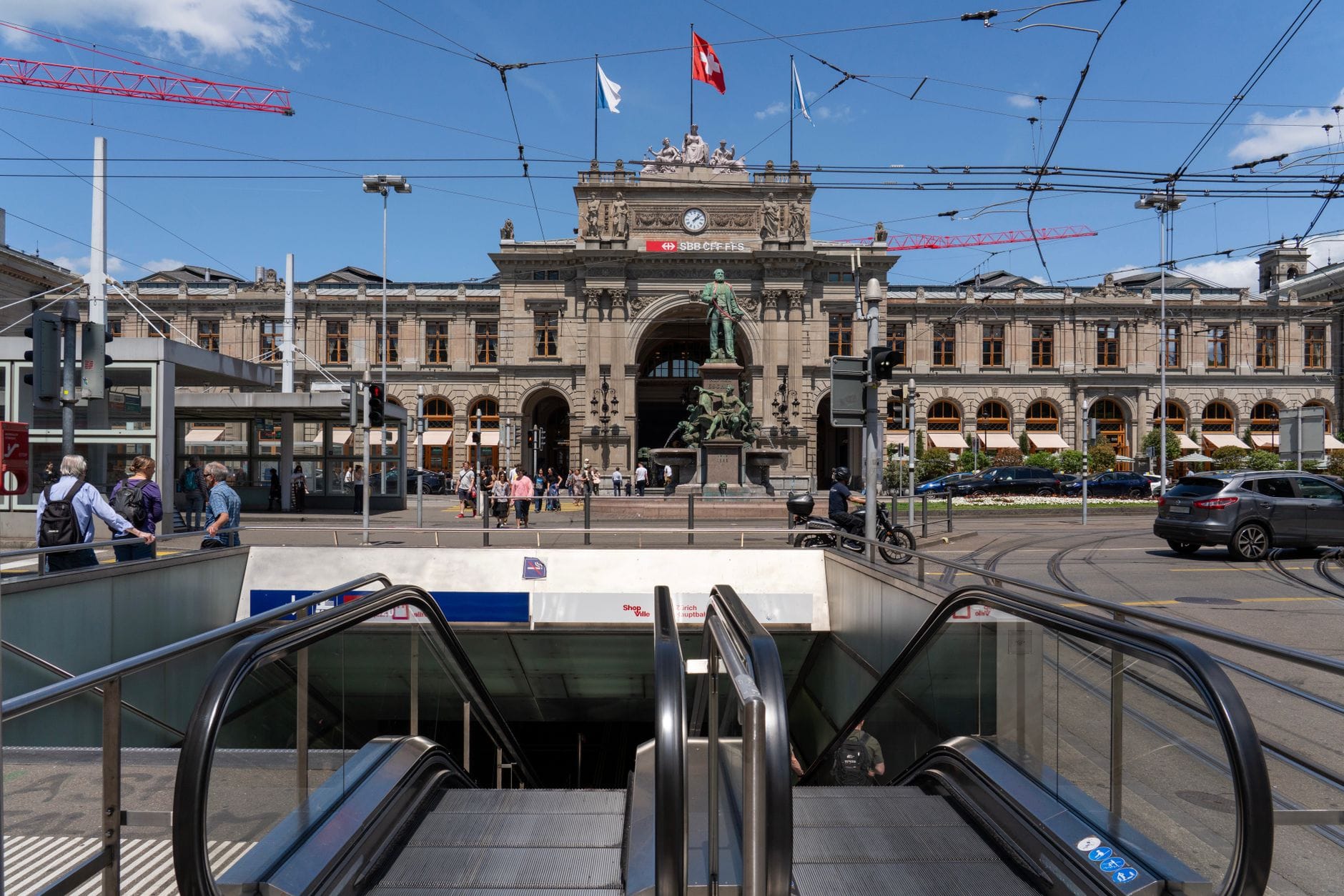
Zürich Hauptbahnhof is the starting point for the vast majority of Zurich-Interlaken journeys. It's Switzerland's largest and busiest rail station, located in the heart of the city. Trains to Interlaken typically depart from the main station platforms. The station has luggage lockers, food options, and a tourist information desk if you need last-minute advice. For more on the station itself and the surrounding area, see the Zurich Main Station guide.
Switzerland runs on Swiss francs (CHF). Card payment is widely accepted at stations, but having a small amount of cash is useful for smaller establishments in Interlaken and especially in mountain villages beyond. English is spoken reliably throughout the tourist infrastructure in both Zurich and the Bernese Oberland. Tipping is not expected but rounding up the bill is common practice.
If you're planning to do multiple excursions from Zurich, consider using Zürich HB as your hub. The getting around Zurich guide explains the ZVV transport network, which integrates trams, S-Bahn, and buses across the city and canton. A ZVV day pass covers your Zurich city travel but not the intercantonal SBB journey to Interlaken, which needs a separate ticket.
✨ Pro tip
If you're only doing the Zurich-Interlaken run once, the Saver Day Pass booked two to three weeks ahead often represents the best value at around CHF 29. If you're doing multiple intercity journeys across Switzerland in a week, a Swiss Travel Pass almost always works out cheaper and covers the mountain transit discounts. Compare both options on the SBB website before committing.
FAQ
Is there a direct train from Zurich to Interlaken?
Yes. Multiple direct trains run daily from Zürich HB to Interlaken Ost, primarily via Bern. You don't need to change trains on these services. Some timetables do require a change at Bern, so check your specific departure on the SBB website or app before travelling.
How long does the train from Zurich to Interlaken take?
The fastest direct services take around 1 hour 31 minutes. The average journey time is closer to 2 hours 17 minutes. The scenic alternative via Lucerne and the Brünig line takes around 2 hours 45 minutes or more.
How much does a train ticket from Zurich to Interlaken cost?
A standard full-fare 2nd-class ticket costs around CHF 55 to CHF 110. Advance Saver Day Pass fares start from around CHF 29 for off-peak travel. Swiss Travel Pass holders travel free on this route. Prices are set by SBB and should be verified on their official website before booking as fares change periodically. Swiss Travel Pass holders travel free on this route. Prices are set by SBB and should be verified on their official website before booking as fares change periodically.
Can you do Zurich to Interlaken as a day trip?
Yes, comfortably. Departing Zurich around 08:00 to 09:00 gives you a full day in Interlaken and the surrounding area, with trains back to Zurich running into the early evening. If you want to include a Jungfraujoch excursion, an early departure is essential as the mountain railway round trip takes around 5 to 6 hours.
Which is better: Interlaken West or Interlaken Ost?
For most travellers, Interlaken Ost is the better arrival point. It's the terminus for mountain railways to Grindelwald, Lauterbrunnen, and ultimately the Jungfraujoch. Interlaken West is useful if your hotel is on the western side of town or if you're continuing by train towards Spiez and Thun.
Tickets & tours
Live prices and dates from our booking partner. If you book, we may earn a commission at no extra cost to you.
Planning a trip? Discover personalized activities with the Nomado app.