Zürichhorn Park: Zurich's Most Relaxed Stretch of Lakeshore
Zürichhorn Park is a free, open-access green space on the eastern shore of Lake Zurich in the Seefeld quarter. With Alpine views, public sculptures, and lake access, it draws everyone from early-morning joggers to afternoon picnickers. No ticket required, no agenda needed.
Quick Facts
- Location
- Bellerivestrasse, 8008 Zürich (Seefeld quarter, eastern shore of Lake Zurich)
- Getting There
- Tram 2 or 4 to Fröhlichstrasse then a short walk, or bus 912/916 to Chinagarten stop. Lake boats from Bürkliplatz stop at Zürichhorn landing stage.
- Time Needed
- 1 to 2.5 hours for a relaxed visit; longer if combining with swimming or the adjacent Chinagarten
- Cost
- Free entry. Nearby food kiosks and the Strandbad swimming area charge separately.
- Best for
- Lakeside walks, picnics, families, photography, and escaping city crowds without leaving the city
What Zürichhorn Park Actually Is
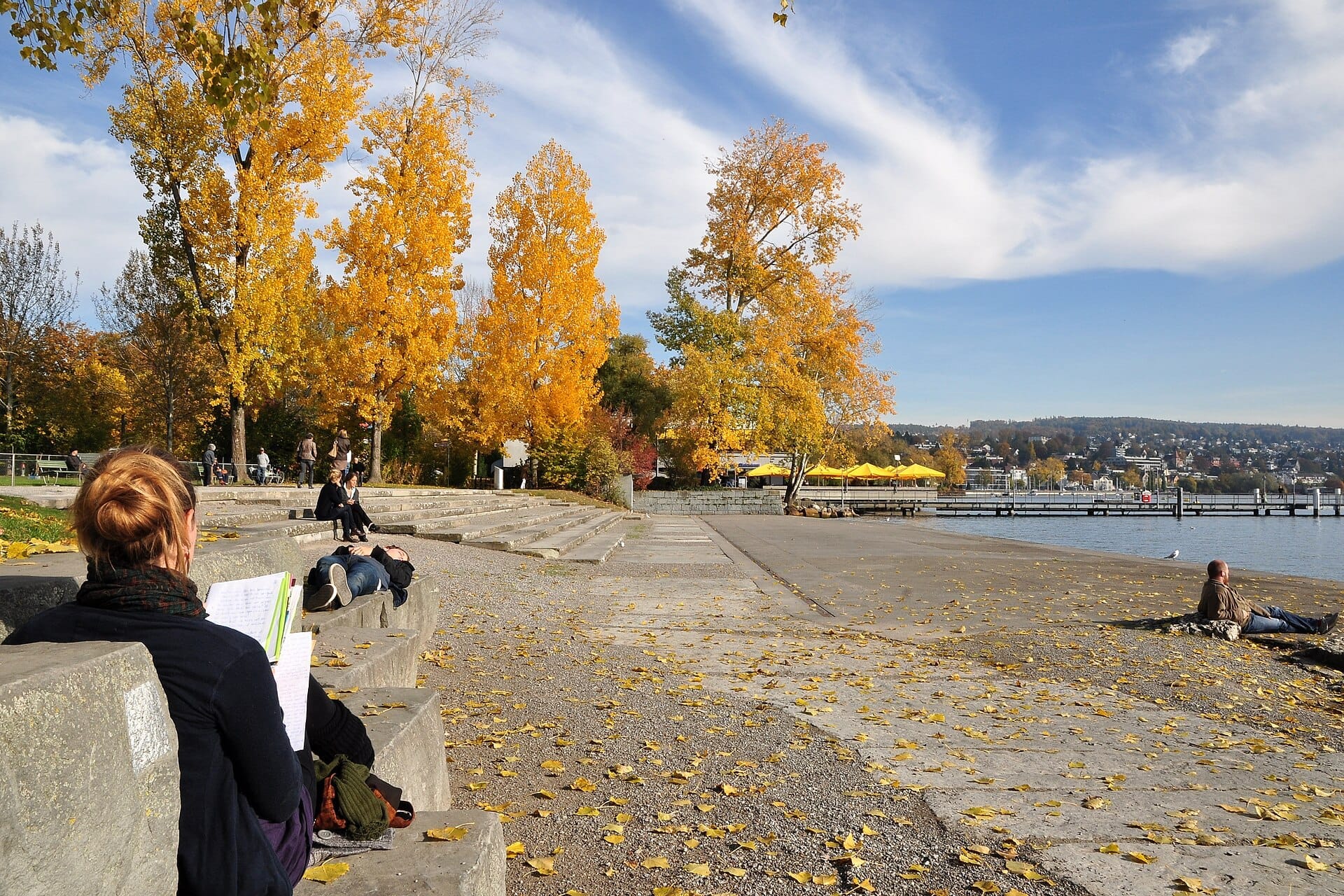
Zürichhorn Park, known officially as Parkanlage Zürichhorn, occupies the eastern shoreline of Lake Zurich in the Seefeld quarter of the city. It is one of Zurich's largest and most used public green spaces, sitting directly on the water with unobstructed views south toward the Alps. The park is free, always open, and belongs to the category of places that reward slow visits rather than rushed ones.
Unlike many urban parks that feel hemmed in by roads and fences, Zürichhorn feels genuinely spacious. Wide lawns roll down to the lake edge, there are shaded paths under mature trees, and the promenade along the water is wide enough that even on a warm Sunday it never feels shoulder-to-shoulder. The park does not have a ticketed entrance or a map handed to you at the gate. You simply arrive and orient yourself by the lake.
💡 Local tip
Arriving by lake boat from Bürkliplatz is the most scenic approach. The short crossing takes around 10 to 15 minutes and sets up the park's lakeside character before you even step ashore. Boats are operated by ZSG (Zürichsee-Schifffahrtsgesellschaft); check current schedules and fares before your visit.
The Shape of the Land: A Park Born from a River Delta
Zürichhorn is not a designed park in the Baroque or formal sense. The headland itself is a natural alluvial cone, formed over centuries by the Hornbach stream (known upstream as the Werenbach) depositing sediment into the lower basin of Lake Zurich. That geological origin explains the gentle, slightly elevated character of the ground at the horn's tip and the softer, flatter terrain closer to the shore.
The Hornbach was rerouted in the late 19th century to allow the area to function as a public park, and by the end of that period Zürichhorn had expanded to roughly its present extent. This Victorian-era transformation from delta wetland to civic green space was part of a wider effort by the City of Zurich to make the lakeshores publicly accessible, a priority that still shapes how the city manages its waterfront today. This Victorian-era transformation from delta wetland to civic green space was part of a wider effort by the City of Zurich to make the lakeshores publicly accessible, a priority that still shapes how the city manages its waterfront today.
The park also carries a connection to the Swiss National Exhibition Expo 1964, which used the Zürichhorn area as one of its sites. The infrastructure of that era has mostly vanished, but the event left behind a sense of the park as a place of civic gathering, a quality it still holds on summer weekends. The infrastructure of that era has mostly vanished, but the event left behind a sense of the park as a place of civic gathering, a quality it still holds on summer weekends.
Tickets & tours
Live prices and dates from our booking partner. If you book, we may earn a commission at no extra cost to you.
Mount Titlis snow fun for first-time skiers from Zurich
From 212 €Instant confirmationFree cancellationSwiss ski experience from Zurich
From 321 €Instant confirmationFree cancellationBest intro tour of Zurich with a local
From 116 €Instant confirmationFree cancellationZurich Old Town guided walking tour
From 27 €Instant confirmationFree cancellation
What You Will See and Where to Walk
The main axis of any visit is the lakeside promenade, a broad, flat path running along the water's edge from the southern end of the park toward the Chinagarten Chinese garden to the north. The path surface is smooth enough for strollers and wheelchairs, and the level terrain throughout the park makes it one of the more accessible outdoor spaces in Zurich. Note that specific accessibility features for toilets and pier areas are worth checking on-site, as the city park page does not detail every facility.
Zürichhorn has a small but thoughtful collection of public sculptures placed across the lawns. The most discussed is a kinetic sculpture by Jean Tinguely, titled Heureka, which was created for Expo 1964. It stands near the lake and moves in a clanking, mechanical rhythm that surprises most visitors who walk past it without reading the plaque. The contrast between the sculpture's industrial motion and the calm water behind it is one of the more genuinely interesting visual moments the park offers.
At the northern edge of the park, the Chinagarten, a formal Chinese garden gifted to Zurich by the city of Kunming in 1994, sits behind a separate entry gate and charges a small admission fee. It is worth 30 to 45 minutes if you have not seen traditional Chinese garden architecture before. The park and the garden together make a natural half-day loop from the Seefeld neighborhood.
How the Park Changes Through the Day
Early morning at Zürichhorn is notably quieter than its reputation might suggest. Between roughly 7 and 9am, the park belongs to joggers completing loops along the promenade and dog walkers moving at their own pace. The light off the lake at that hour is direct and bright, and the Alps to the south are at their sharpest, particularly on clear days in spring and autumn when the air carries less haze. Photographers targeting the mountain backdrop should come in this window.
By late morning on weekends between May and September, the park fills steadily. Families claim sections of the lawn, groups arrive with portable speakers and folding chairs, and the lake edge becomes a mix of swimmers, paddleboarders, and people simply sitting with their feet in the water. The atmosphere is relaxed rather than rowdy, in line with Zurich's general outdoor culture, but on a hot August Sunday the park is genuinely busy and finding a quiet spot requires walking toward the southern end or into the tree line.
Afternoons from roughly 3pm onward can be the most photogenic for the lake itself, with the sun moving to the west and casting warmer light across the water. Evenings in summer draw a different crowd: couples walking, people finishing outdoor swims before dusk, and small groups gathered near the Tinguely sculpture. After sunset, the park empties quickly, and there is little to see in darkness given the absence of dramatic lighting installations.
ℹ️ Good to know
In winter, the park remains open and walkable, but the experience is substantially different. The lawns are often empty, the lake is grey-green rather than the vivid blue of summer, and the Alps are sometimes hidden by low cloud. Winter visits have their own stillness and are worth considering on a clear cold day, but the park's best qualities are fundamentally tied to warm weather and light.
Swimming, Sport, and What Else Is Nearby
Zürichhorn sits adjacent to the Badeanlage Zürichhorn, a lakeside bathing facility with a beach, changing rooms, and diving areas. This is one of several Badis, Zurich's beloved public lake and river bathing spots, that ring the lake. The bathing area has its own seasonal opening hours and separate entry fee, so it is worth checking current information before visiting if swimming is your priority.
Lake swimming culture is central to what makes Zurich summers distinctive, and Zürichhorn is one of the best places to experience it without needing to arrive at dawn to secure space. For broader context on swimming options across the city, the Zurich lake swimming guide covers the main outdoor bathing options and what to expect at each.
Beyond swimming, the park has rental facilities for paddleboats and similar watercraft during the summer season, though availability and operators can change year to year. The promenade connects southward into the broader Seefeld lakeside path, making it easy to extend a walk in either direction without retracing steps.
Practical Details and Getting There
The park is located on Bellerivestrasse in the 8008 postal district of Zurich, within the Seefeld quarter on the eastern shore of Lake Zurich. The tram to Fröhlichstrasse followed by a 5 to 10 minute walk is the most common public transport approach. Buses 912 and 916 stop at Chinagarten, which puts you at the northern edge of the park. All public transport in Zurich operates within the ZVV fare system; the park falls within the central zones, so a standard city ticket covers the journey from most central Zurich locations.
Arriving by lake boat from Bürkliplatz is slower but distinctly more enjoyable on a clear day. The Zurich lake boat services stop at the Zürichhorn landing stage, which deposits you directly at the park's southern tip. This approach is particularly worthwhile if you are combining Zürichhorn with a visit to the broader lakeside area.
Cycling to the park is a practical option given the flat terrain along the lakeshore. Zurich's city bike infrastructure connects Zürichhorn to the broader lakeside cycling route with minimal road crossings. Bringing a bike also makes it easy to continue along the lake in either direction after your visit.
⚠️ What to skip
Parking near Zürichhorn is limited and can be difficult on summer weekends. Public transport or cycling are the practical choices for most visitors. Arriving by car and expecting to park directly at the park entrance is likely to waste significant time.
Who Will Enjoy Zürichhorn and Who Might Not
Zürichhorn suits visitors who want outdoor time that feels genuinely local rather than tourist-oriented. On a summer afternoon, the people around you are mostly Zurich residents, not tourists, which gives the park a texture that more-visited attractions lack. If you are putting together a broader itinerary, it pairs naturally with a walk through the Seefeld quarter, where the streets behind the park have a concentration of good cafes and independent shops.
Visitors traveling in winter or on a cold grey day with limited time should consider whether the park is the best use of their hours. In poor weather, the lake loses its visual appeal quickly, and Zürichhorn offers almost nothing under cover. In that situation, the city's indoor cultural options, from the Kunsthaus Zürich to the Swiss National Museum, will deliver more for the time spent.
Travelers who require constant stimulation or prefer curated, structured experiences may find Zürichhorn underwhelming. The park does not have a strong narrative arc, a collection to work through, or a centerpiece that rewards study. What it offers is space, light, water, and the particular quality of a city at ease with itself. That is worth more than it sounds, but only if you are in the mood for it.
Insider Tips
- The tip of the Zürichhorn headland, at the southernmost point of the park where the land meets the lake, is the best spot for an unobstructed view of the upper lake and the Alps. Most visitors stop well short of it. Walk past the Tinguely sculpture and continue to the very edge of the headland.
- On warm evenings in June and July, the park stays light until well past 9pm. Arriving at 7pm lets you enjoy the space as the afternoon crowd thins out, with better light and noticeably more room on the lawn.
- If you are combining the park with the Chinagarten, note that the Chinese garden has its own separate entrance and closing time. It is worth checking current hours directly before combining both in a single visit, as they close independently of the park.
- The lake boat approach from Bürkliplatz gives you a southward view of Zürichhorn from the water before you arrive, which helps orient the park's geography. The same return boat trip gives you a view of the city skyline from the water, which is among the better perspectives on central Zurich.
- Early October is underrated for Zürichhorn. Summer crowds have gone, the trees carry autumn color, and the Alps are sharp and snow-dusted on clear days. The park feels more contemplative than in high summer, and the light in the afternoon is exceptionally warm.
Who Is Zürichhorn Park For?
- Families with young children looking for open space and safe lake access without paying entry fees
- Photographers targeting Alpine views and lake reflections, especially in early morning and late afternoon light
- Travelers on a budget who want a genuine Zurich outdoor experience without spending anything
- Visitors combining an afternoon walk with a lake boat trip and a wander through the Seefeld neighborhood
- Residents and repeat visitors who want a slower, less tourist-heavy alternative to the Bürkliplatz lakefront
Nearby Attractions
Other things to see while in Riesbach & Seefeld:
- Le Corbusier Pavilion (Heidi Weber Museum)
The Pavillon Le Corbusier in Zurich's Seefeld district is the last building Le Corbusier designed before his death in 1965 — he never saw it completed. Inaugurated on 15 July 1967, this steel and glass structure of just 315 m² stands on the lakeside as both a museum and an architectural argument. Here is exactly what to expect when you visit.
- Zurich Botanical Garden (Botanischer Garten)
The Botanical Garden of the University of Zurich (Botanischer Garten der Universität Zürich) is a freely accessible green space in the Seefeld district, home to tropical greenhouses, medicinal plant collections, and curated outdoor beds. It rewards slow, attentive visitors more than it does those rushing through.
- Zurich Opera House (Opernhaus Zürich)
The Opernhaus Zürich has anchored the city's cultural life since 1891, combining a striking Neo-Renaissance facade with world-class opera and ballet. Whether you're a first-time operagoer or a seasoned aficionado, here's what a visit really involves.
Planning a trip? Discover personalized activities with the Nomado app.