Punta Carretas is one of Montevideo's most livable coastal neighborhoods, combining upscale residential streets with a waterfront promenade, a converted prison mall, and some of the city's best dining. It sits between Pocitos and Parque Rodó, making it an ideal base for travelers who want comfort close to the water without the full tourist intensity of Ciudad Vieja.
Punta Carretas occupies a privileged corner of Montevideo's southern coastline, where a 19th-century lighthouse still marks the point where the Río de la Plata meets the city's edge. It's the kind of neighborhood where a former penitentiary is now a shopping mall, tree-lined streets give way to the Rambla, and residents walk their dogs past buildings with more architectural personality than most entire city blocks elsewhere.
Orientation
Punta Carretas sits in the southern reaches of Montevideo, roughly 4 kilometers east of Ciudad Vieja along the coast. It forms a wedge between Bulevar Artigas to the west, Avenida Julio María Sosa and Avenida Sarmiento to the north, Juan María Pérez to the east and northeast, and the Rambla Mahatma Gandhi along its southern shoreline. The neighborhood's northern boundary brushes Avenida Gonzalo Ramírez, and it shares a border with Pocitos to the east and northeast, and Parque Rodó to the north and west.
The internal street grid is pleasant to navigate. Avenida José Ellauri and Avenida 21 de Septiembre are the two main arteries running through the heart of the neighborhood, lined with shops, cafés, and apartment buildings. The streets slope gently toward the water, so walking south from any of the main avenues will eventually deliver you to the Rambla and the coast.
If you're building a mental map of Montevideo, Punta Carretas fits into the coastal arc that runs from Parque Rodó in the west through to Pocitos and beyond toward Carrasco in the east. It's central enough to reach most of the city easily, yet far enough from downtown to feel genuinely residential. The old city is around 15 to 25 minutes by bus; the airport is roughly 25 to 30 minutes by taxi or ride-hailing app.
Character & Atmosphere
Punta Carretas has the texture of a neighborhood where people actually live well. The apartment buildings are taller and newer than in the older barrios, but the streets are wide enough to feel unhurried, and there are enough mature trees along the sidewalks to provide shade in the summer heat. It's upper-middle-class without being flashy about it, which gives the area a relaxed self-assurance that some of Montevideo's more touristic zones lack.
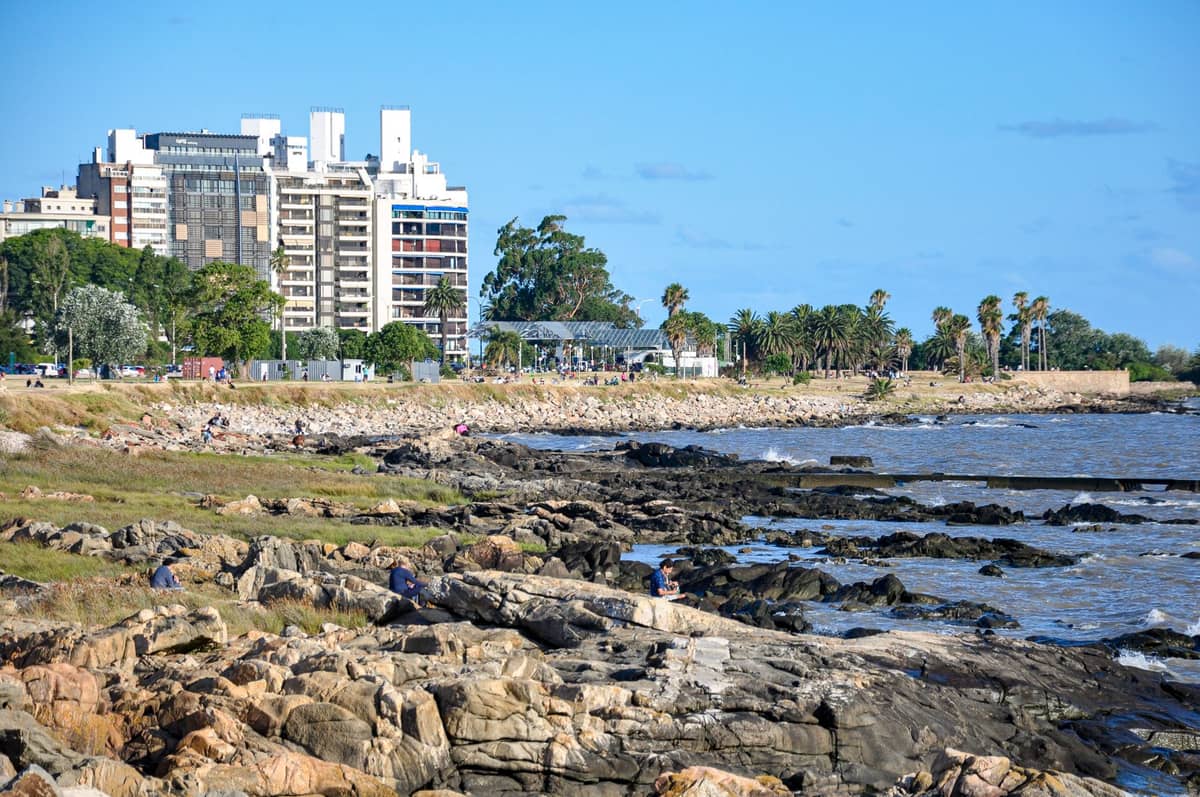
In the mornings, the Rambla Mahatma Gandhi fills with joggers, cyclists, and dog walkers moving along the waterfront. The light at this hour is soft and flat off the Río de la Plata, which at this width barely resembles a river at all, looking more like a silver-brown sea stretching to the horizon. Coffee comes early at the cafés around 21 de Septiembre, and the neighborhood has a quiet, purposeful morning energy that contrasts with the slower pace of the old city.
Afternoons shift the balance. The Punta Carretas Shopping center draws a steady flow of locals and visitors, and the streets around it fill with the mid-afternoon rhythm of people running errands, meeting friends, or simply occupying a terrace. The coastal strip is best in the late afternoon, when the sun drops toward the west and the Rambla catches long, warm light. This is when the benches fill and the improvised football games start on the grass strips above the water.
After dark, Punta Carretas is lively without being loud. The restaurant scene along Ellauri and 21 de Septiembre generates steady foot traffic well into the night, and the streets around the mall stay active until late. The quieter residential blocks toward Bulevar Artigas empty out faster, and standard urban caution applies anywhere away from the main commercial corridors after midnight.
ℹ️ Good to know
Punta Carretas is significantly calmer than Centro or Ciudad Vieja after dark. If you're looking for nightlife intensity, you'll want to head toward Parque Rodó or further west. Here, evenings are more about dinner and a walk than clubs and late bars.
What to See & Do
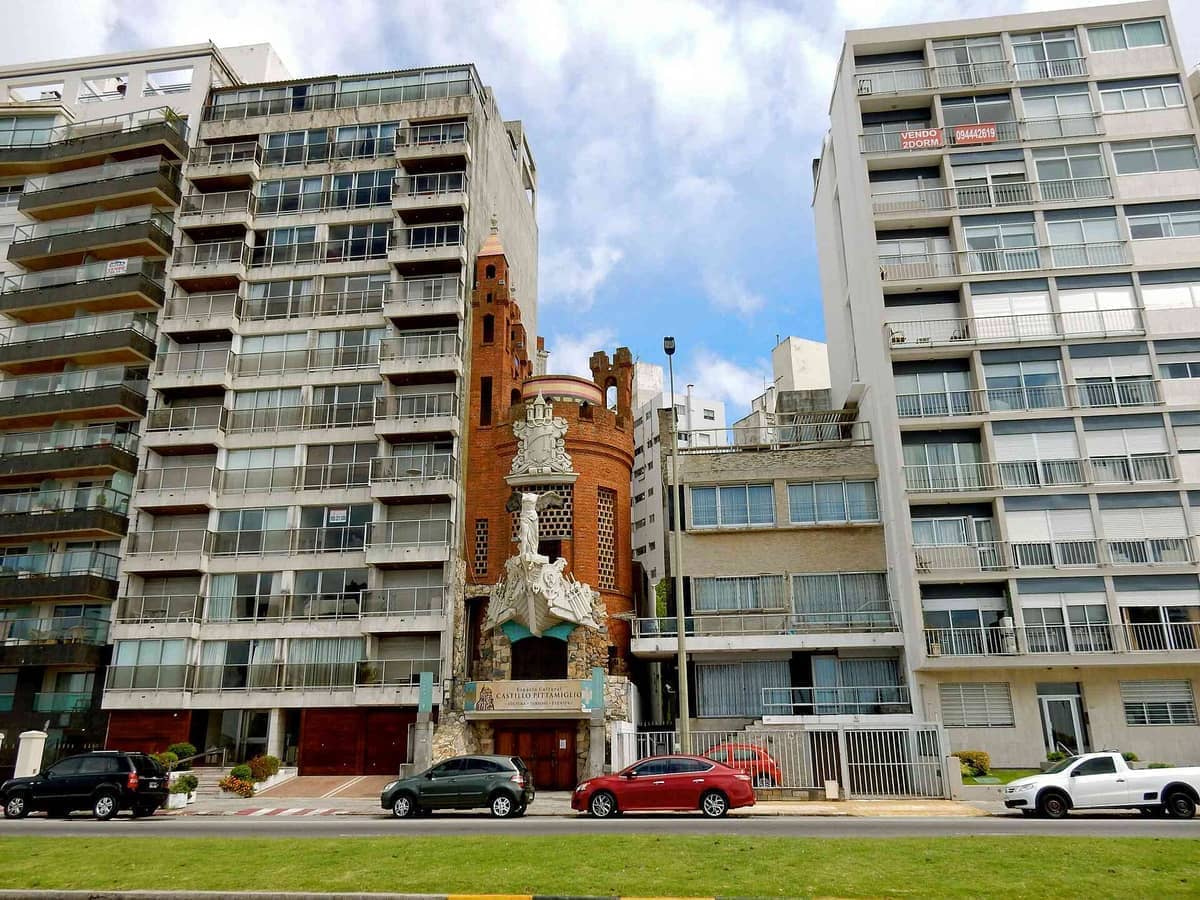
The neighborhood's most singular landmark is the Castillo Pittamiglio, an eccentric stone building begun in 1910 by architect and alchemist Humberto Pittamiglio. It incorporates Templar crosses, Masonic symbolism, and esoteric numerology into its facade and interior, and operates today as a museum and cultural center. There's nothing quite like it anywhere else in the city, and a guided visit reveals layers of intentional symbolism that take time to decode. It sits on Rambla Mahatma Gandhi, directly facing the water.
A few minutes' walk from the Castillo, the Faro de Punta Carretas has stood since 1876. The 21-meter lighthouse continues to function as a navigational marker, and there is a public observation area nearby. It's a small detour but gives a good sense of the point's geography and explains why the neighborhood carries this name. The surrounding lawn area is a pleasant spot to sit and look out at the water, and it connects naturally to the wider Rambla de Montevideo, which you can follow continuously east toward Pocitos or west toward Parque Rodó.
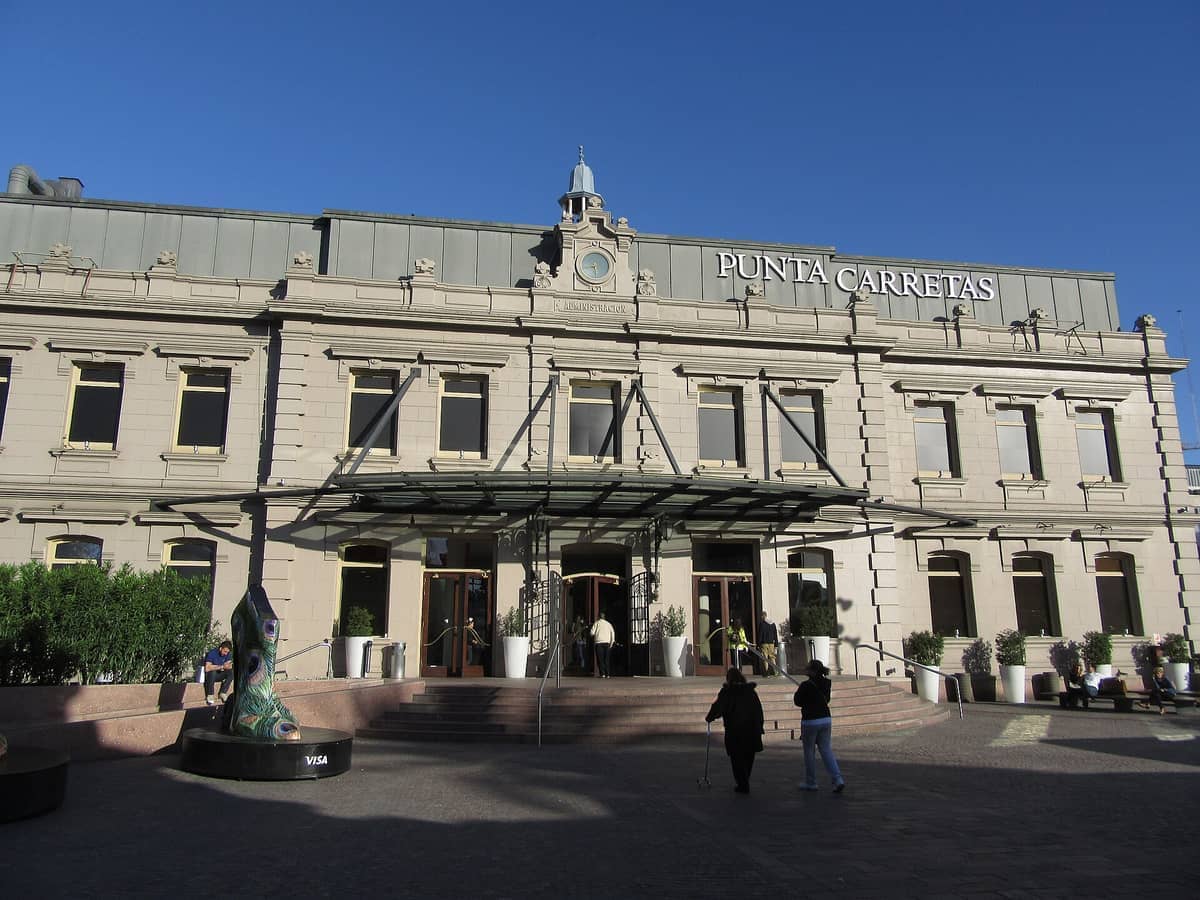
The Punta Carretas Shopping center is genuinely worth a look even for travelers who don't intend to shop. The building was the Punta Carretas Penitentiary, a working prison until its closure in 1986. In 1994, it was converted into one of Montevideo's main retail centers, and the adaptation is architecturally careful enough that you can still read the old prison structure beneath the boutiques and food court. The preserved exterior walls, the central atrium, and the courtyard layout all carry echoes of the original building.
Walk the Rambla Mahatma Gandhi at any time of day, but particularly at sunset when the western light hits the water
Visit the Castillo Pittamiglio on a guided tour to understand the building's symbolic program
Explore the Punta Carretas Shopping for its architectural history as much as its retail
Find the Faro de Punta Carretas on the coastal point and look back toward the city skyline
Connect on foot or by bike westward to Parque Rodó park and its lakeside paths
💡 Local tip
The Rambla here is part of the continuous 22-kilometer coastal promenade that runs along most of Montevideo's southern edge. Renting a bicycle is an efficient and enjoyable way to cover more of it in a single outing, connecting Punta Carretas to beaches and parks in both directions.
Eating & Drinking
Punta Carretas has one of Montevideo's strongest neighborhood dining scenes, concentrated mainly along Avenida José Ellauri and the streets immediately surrounding the shopping center. The price range skews toward mid-range and above, reflecting the local demographic, though there are casual options mixed in. For an overview of what to expect across Montevideo's food culture, the guide to eating in Montevideo covers the staples you'll encounter here: chivitos, milanesas, pasta from the city's Italian heritage, and abundant grilled meat.
Parrillas (traditional Uruguayan grill restaurants) are well represented in the area. Punta Carretas is not the place to look for cheap tourist menus, but if you want a serious Uruguayan asado experience in comfortable surroundings, this neighborhood delivers it reliably. The Montevideo asado guide explains the cuts and customs worth knowing before you sit down.
Cafés are plentiful along 21 de Septiembre and around the shopping center, serving cortados, medialunas, and the strong filtered coffee that Montevideo runs on. Afternoon coffee culture here is genuinely embedded in daily life, not performative. The terraces along Ellauri pick up considerably in spring and summer, when outdoor seating becomes the default. Wine bars and cocktail-focused spots appear in the evening mix, and the neighborhood's proximity to the Pocitos strip means there's a wider selection within easy walking distance.
For those interested in pairing food with local wine, Uruguay's Tannat-based wines are worth exploring here. Several restaurants in the neighborhood carry solid local wine lists, and the Montevideo wine guide gives context for the country's wine regions and what to look for on a menu.
Getting There & Around
Montevideo has no metro system. Getting to Punta Carretas from elsewhere in the city means bus, taxi, or ride-hailing. Multiple bus lines run along Bulevar Artigas and Avenida Gonzalo Ramírez, connecting the neighborhood to Centro and Ciudad Vieja to the west, and to Pocitos and Carrasco to the east. Lines also run inland through the neighborhood on José Ellauri and 21 de Septiembre. Journey times to Plaza Independencia in the old city center are typically 20 to 30 minutes depending on traffic.
For the coastal route, buses along the Rambla offer one of the most scenic urban commutes in the city, following the waterfront in both directions. Uber and similar ride-hailing services operate in Montevideo and are a practical option for direct point-to-point trips, particularly at night or with luggage. Standard taxis are readily available on the main avenues.
Within the neighborhood itself, walking is the most practical way to get around. From the Punta Carretas Shopping center to the lighthouse is a flat 10- to 15-minute walk. From the shopping to the edge of Parque Rodó park is roughly 15 minutes on foot heading northwest along Ellauri. The Rambla promenade is accessible from multiple points along the southern edge of the neighborhood. For more on navigating the city generally, the guide to getting around Montevideo covers bus cards, taxi customs, and cycling options in detail.
💡 Local tip
If you're arriving from Carrasco International Airport (IATA: MVD), a taxi or ride-hailing app direct to Punta Carretas takes roughly 25 to 35 minutes depending on traffic. The airport is located east of the city in the Canelones Department, about 20 to 22 kilometers by road from central Montevideo.
Where to Stay
Punta Carretas is among the better areas to base yourself if you want a quieter, more residential Montevideo experience without sacrificing access to restaurants, the coast, or transport. It suits independent travelers, couples, and anyone spending more than a few days in the city who wants to settle into a neighborhood rather than a hotel corridor. The complete guide to where to stay in Montevideo compares this neighborhood against other options across the city.
Accommodation here skews toward apartment rentals and small boutique hotels rather than large chain properties. The residential fabric means short-stay apartments are common and often better value than hotels at similar price points. For the best experience, look for properties on or close to the Rambla side of the neighborhood, or within a block or two of 21 de Septiembre for easy access to restaurants and cafés.
Punta Carretas is a practical choice for families as well as for digital nomads, given the combination of quiet streets, reliable cafés, and green space nearby at Parque Rodó. The Montevideo digital nomad guide rates this part of the city favorably for remote workers seeking quality of life over central location.
⚠️ What to skip
The streets immediately around the Punta Carretas Shopping are noticeably busier with vehicle traffic, particularly during weekend afternoons and evening shopping hours. If noise and congestion are concerns, look for accommodation one or two blocks away from the mall's immediate perimeter.
Honest Assessment: Is Punta Carretas Right for You?
Punta Carretas is not the neighborhood that will give you Montevideo's historical depth or its rougher, more interesting edges. Ciudad Vieja does that. It's not the place for nightlife intensity, either. What it offers is comfort, reliability, and a genuinely pleasant coastal setting that rewards those who want to live in the city rather than just pass through it. The food scene is strong, the Rambla is right there, and the converted prison mall is one of the city's more unusual architectural stories.
Travelers on a strict budget may find better value further from the coast, as Punta Carretas prices reflect its desirability. Those looking for concentration of major museums and monuments will need to travel, since most of those are in Ciudad Vieja and Centro. But as a base for a longer stay, or as an alternative to the more tourist-dense zones, it's hard to fault.
TL;DR
Punta Carretas is a comfortable, well-maintained coastal neighborhood suited to travelers who prioritize quality of life over sightseeing density.
Key attractions include the Castillo Pittamiglio, the 1876 lighthouse, and the Punta Carretas Shopping center housed in a former penitentiary.
The Rambla Mahatma Gandhi provides direct waterfront access and connects to Montevideo's continuous 22-kilometer coastal promenade.
The dining scene along José Ellauri and 21 de Septiembre is among the city's strongest for mid-range and upscale options.
Best suited to independent travelers, couples, families, and digital nomads; less ideal for budget travelers or those focused on nightlife and major museums.
Forty-eight hours in Montevideo is enough to cover the historic old town, the waterfront Rambla, world-class museums, and some of South America's best grilled meat. This itinerary cuts the noise and tells you exactly what to do, when, and how to get there.
Montevideo has a stronger museum scene than many visitors expect. From a major collection of pre-Columbian art to a museum dedicated to Carnival as a living tradition, these are the best museums in Montevideo for first-time visitors and returning travelers alike.
Montevideo is a genuine year-round destination, but each season offers a different experience. This guide breaks down the weather, crowds, prices, and key events month by month so you can choose the timing that fits your trip.
Colonia del Sacramento is Uruguay's most visited colonial town, and it's reachable from Montevideo in under three hours by bus. This guide covers transport options, timing, what to prioritize once you arrive, and the common mistakes that turn a great day trip into a rushed one.
Montevideo sits at the centre of one of South America's most underrated travel regions. Within three hours by bus, you can reach a UNESCO colonial town, Uruguay's glamorous beach resort, and some of the Southern Cone's most interesting wineries. This guide covers every realistic option for day trips from Montevideo, with transport breakdowns, seasonal advice, and practical logistics.
Montevideo rewards travelers who know where to look. From always-free museums and colonial plazas to 22 kilometers of waterfront promenade, this guide covers the best free experiences in the Uruguayan capital, organized by neighborhood and type.
Montevideo runs on buses. No metro, no tram, no underground — just an extensive STM network covering the whole city, plus taxis, Uber, and a reliable airport bus from Carrasco. This guide breaks down every option with current fares, route logic, and straightforward advice on what actually works.
Montevideo is Uruguay's capital and its most-visited city, attracting about 876,000 foreign tourists in 2025 alone. But is it worth a detour on your South America trip? This guide breaks down what the city genuinely offers, who it suits, and what to skip.
Montevideo's skyline tells the story of a city that built ambitiously across several decades. From the Palacio Salvo's eclectic tower to the Neoclassical grandeur of Teatro Solís, this guide covers the key buildings, the best walking routes, and how to actually get inside them — with clear advice on tours, timing, and what to skip.
Uruguay takes its beef seriously, and nowhere is that more evident than in Montevideo's parrilla restaurants. This guide covers the culture behind asado, where to find the best grills across the city, what to expect on the menu, and honest pricing so you know what you're getting into before you sit down.
Montevideo has more than twenty named beaches stretching along the Río de la Plata, from lively Pocitos near the city center to the tranquil sands of Carrasco. This guide covers water quality, the best beaches for swimming versus walking, seasonal crowd patterns, and how to get there.
Candombe is Montevideo's most distinctive cultural practice: an Afro-Uruguayan drum tradition inscribed on UNESCO's Intangible Cultural Heritage list since 2009. This guide covers where to hear it, when to go, what to expect at the Desfile de Llamadas, and how to engage respectfully with a living community practice.
Montevideo hosts one of the longest Carnival seasons in the world, running from late January through early March. This guide covers the key events, ticket prices, neighborhood tablados, cultural context, and practical logistics to help you experience it properly.
Montevideo is one of South America's most livable capitals, with reliable infrastructure, a stable political climate, and a quality of life that few cities in the region can match. This guide covers everything remote workers need: Uruguay's digital nomad permit, the best neighborhoods to base yourself, coworking options, cost of living, and the practical details that most guides skip.
From the sprawling Sunday chaos of Tristán Narvaja to the relaxed crafts stalls of Villa Biarritz, Montevideo's flea markets and street fairs are some of the best in South America. This guide covers every major market, exact schedules, what to expect, and how to get the most out of each one.
Montevideo is one of South America's most football-obsessed cities, home to two of the continent's oldest clubs and a stadium that hosted the first World Cup final. This guide covers every major venue, how to buy tickets, what to expect at a clásico, and the practical details that make the difference between a great experience and a frustrating one.
Montevideo's nightlife runs on tango, candombe, and craft beer rather than superclubs. This guide breaks down the best neighborhoods, venues, and what to expect from the city's after-dark culture, with practical prices and timing.
Montevideo is more affordable than its reputation suggests. With free museum days, a reliable bus network costing around US$1.50 per ride, and a coastline that charges nothing for entry, the Uruguayan capital rewards travelers who plan smart. This guide breaks down exactly how to keep costs low without sacrificing the best the city has to offer.
Montevideo is one of South America's more livable capitals, but that doesn't mean it's risk-free. This guide breaks down the real safety picture — crime statistics, neighborhood-by-neighborhood risk levels, what official travel advisories say, and practical tips that actually make a difference on the ground.
Uruguay's flagship grape Tannat has put South American wine on the map, and Montevideo is your best base for exploring it. This guide covers the top wineries, urban tasting rooms, seasonal timing, and honest pricing so you can plan a wine experience that suits your budget and schedule.
Montevideo is one of South America's most relaxed capitals for family travel. From the boat-filled lake at Parque Rodó to the Rambla's long coastal path, the city offers low-cost, walkable experiences that work well across a wide range of ages. This guide covers the best activities, practical logistics, and practical advice for visiting Montevideo with kids.
A Punta del Este day trip from Montevideo is one of Uruguay's most popular excursions, and for good reason. With buses running every 20-60 minutes from Terminal Tres Cruces and a journey of around two hours each way, it's entirely doable as a same-day visit. This guide covers transport logistics, costs, what to do with limited time, and the honest trade-offs.
Montevideo rewards travelers who go beyond the surface. This guide covers the best things to do in Montevideo, Uruguay, from free rooftop viewpoints and major museums to asado markets, carnival culture, and a day trip to Colonia del Sacramento. Practical, specific, and clear about what's worth your time.
Ciudad Vieja is Montevideo's historic peninsula neighborhood, packed with colonial architecture, key museums, and some of the best food in the city. This guide covers the full self-guided walking tour route, stop by stop, with practical details on timing, costs, and what to skip.
Montevideo's food scene is built on beef, but it goes much further than that. This guide covers the essential dishes, best markets, honest price breakdowns, and where to eat well across every neighborhood, from the historic port to the coastal rambla.
Choosing where to stay in Montevideo makes a bigger difference than most travelers expect. This guide breaks down the city's key neighborhoods by character, price range, and who they suit best, so you can book with confidence.