Castillo Pittamiglio: Montevideo's Most Eccentric Building
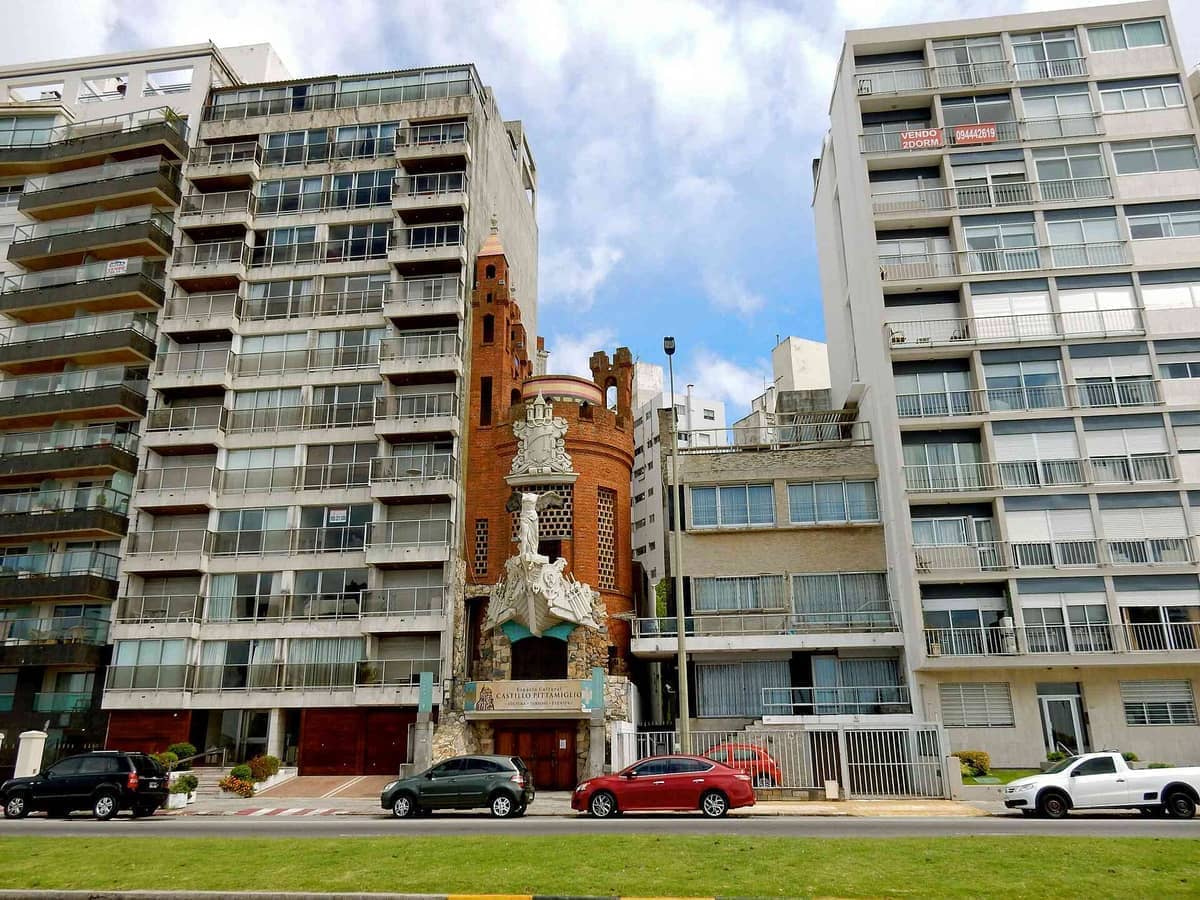
Built by engineer and alchemist Humberto Pittamiglio on the Punta Carretas waterfront, Castillo Pittamiglio is unlike anything else in Montevideo. Part castle, part museum, part philosophical statement, it sits directly on the Rambla and opens to the public as a free cultural space with paid guided tours.
Quick Facts
- Location
- Rambla Mahatma Gandhi 633, Punta Carretas, Montevideo
- Getting There
- Multiple city buses serve Punta Carretas; walkable from Parque Rodó along the Rambla
- Time Needed
- 45–90 minutes depending on whether you take a guided tour
- Cost
- Free entry to castle, gallery and garden; separate paid spaces and guided experiences typically range around $300 UYU (verify current pricing).
- Best for
- Architecture lovers, history buffs, curious travellers looking for something offbeat
- Official website
- universopittamiglio.com
What Is Castillo Pittamiglio?
Castillo Pittamiglio is a medieval-style castle standing on the Rambla Mahatma Gandhi in Montevideo's Punta Carretas neighbourhood, occupying a stretch of waterfront where the Río de la Plata opens wide and the skyline drops low. It was designed and built by Humberto Pittamiglio, a Uruguayan engineer of Italian descent who also practised alchemy, astrology, and esoteric philosophy. Construction extended across much of the mid-twentieth century, and the building reflects all of it: turrets, towers, hidden chambers, symbolic carvings, and proportions that seem to follow no conventional logic. The result is something genuinely singular in Montevideo's urban landscape.
Today the building is municipal property, managed as a public cultural space under the name Museo Castillo Pittamiglio. The ground-level areas, garden, and gallery spaces are open for free. Specific paid experiences and guided visits, which go deeper into the building's symbolism and history, carry a small admission fee (around $300 UYU for standard admissions at time of writing, though this should be verified before your visit). The official programming and tour schedules are coordinated through Universo Pittamiglio.
ℹ️ Good to know
Opening hours vary between weekday and weekend schedules, and programming changes seasonally. Check universopittamiglio.com before visiting to confirm current times. The reported hours on the main listings are: Tuesday to Friday 11:00–17:00, Saturday to Sunday 15:30–19:30, with guided tours at 16:00 on Saturdays and at 16:00 and 18:00 on Sundays. A separate Universo Pittamiglio page lists Wednesday to Sunday 12:00–20:00 with free access to the castle, gallery, garden and shop and paid entry to specific spaces. Contact the museum at +598 2710 1089 to confirm.
The Man Behind the Castle
Understanding the building requires understanding Humberto Pittamiglio. He was not an architect by training but an engineer with an unusually wide set of preoccupations: structural design, chemistry, Freemasonry, alchemy, and the occult traditions that circulated through early twentieth-century intellectual circles in South America. He approached the castle less as a home and more as a physical record of his beliefs, encoding numerical relationships, astrological symbols, and alchemical references into its proportions and decorative elements.
The building process was long and cumulative, with Pittamiglio adding to and modifying the structure over decades. This makes it architecturally layered rather than unified. Some rooms feel deliberately labyrinthine; others open unexpectedly onto views of the Rambla. The symbolism is dense enough that without a guide, much of it reads simply as eccentric decoration. With a guide, it becomes a coherent, if highly personal, system of ideas.
For visitors already interested in Montevideo's relationship between architecture and identity, pairing this visit with a walk through Palacio Salvo offers useful contrast. Salvo is theatrical and civic; Pittamiglio's castle is private and esoteric, two different responses to the same era.
Tickets & tours
Live prices and dates from our booking partner. If you book, we may earn a commission at no extra cost to you.
Guided Tour with Wine Tasting Experience at Bouza Winery
From 68 €Instant confirmationFree cancellationAirport to Hotel or Hotel to Airport Transfer in Montevideo
From 47 €Instant confirmationFree cancellationTasting and Lunch at Bodega Pizzorno in Montevideo
From 115 €Instant confirmationFree cancellationPunta del Este full-day guided tour from Montevideo
From 47 €Instant confirmationFree cancellation
Arriving and Moving Through the Space
The castle faces the Rambla directly, so your first view of it is from the waterfront promenade. From that angle it reads as improbably medieval: crenellated towers, rough stone textures, narrow windows. The surrounding neighbourhood is residential and relatively quiet, which makes the building's scale more striking. It does not ease into its context. It simply stands there.
The ground-level garden is accessible without a ticket and worth a few minutes even if you do not enter the building. The exterior detailing is intricate, and the coastal light in the late afternoon, particularly in autumn and spring when the sun sits lower, picks up the texture of the stonework in a way that photographs well. Morning visits are quieter but the building's western-facing facades are better lit in the afternoon.
Inside, the spaces are compact and occasionally dim. The interior temperatures are cooler than the street in summer, which is a practical comfort. Narrow staircases connect multiple levels, and the floor plan is deliberately non-linear. If you have mobility limitations, contact the museum before visiting: the building's historic structure means access to upper floors may be restricted, and staff can advise on what is reachable at ground level.
💡 Local tip
The guided tour is strongly recommended for a first visit. The symbolic content of the building is not self-explanatory, and the tour routes include rooms and levels that are not always accessible to independent visitors. Weekend afternoon tours (16:00 and 18:00 on Sundays) tend to draw small groups; arrive a few minutes early.
How Time of Day Changes the Experience
Weekday mornings are the quietest window. The neighbourhood is calm, there are fewer visitors, and the garden offers a relatively unhurried space to examine the exterior. On most listings the building opens at 11:00 on weekdays for standard visits, and the first hour sees minimal foot traffic. Weekend afternoons, especially Sundays, are more animated: locals walk the Rambla, the guided tours attract mixed groups of Uruguayan families and foreign visitors, and the atmosphere is more social.
In summer (December through February), afternoon heat on the Rambla can be significant. The castle's interior provides relief, but the garden is exposed. If you are visiting in summer, the late Saturday tour at 16:00 or the early Sunday tour at the same time catches the day when the heat is beginning to ease and the light on the river is at its warmest. In winter, carry a layer: the interior is unheated, and the building's stone walls hold the cold.
Photography and Practical Logistics
The exterior is the most photographable element. The Rambla in front of the castle gives you enough distance to capture the full facade, and the river as a backdrop keeps the image from feeling crowded. Early afternoon in spring or autumn is the most reliable light. In summer, the midday glare flattens the stonework and makes colour reproduction difficult.
Interior photography is generally permitted in the open gallery areas; check with staff about restrictions in specific rooms during guided tours. The stairwells and narrower corridors are dark, so a phone camera will struggle without stabilisation. If photography matters to you, bring a camera that handles low light well.
The castle is reachable on foot along the Rambla de Montevideo, Montevideo's coastal promenade, from the Parque Rodó end or from the Punta Carretas shopping area. The walk from either direction takes around ten to fifteen minutes and passes along the waterfront, making it a pleasant approach in good weather. City buses serving Punta Carretas stop within a short walk of the building.
Cultural Context and Why It Matters
Castillo Pittamiglio occupies an unusual position in Montevideo's architectural heritage. The city has genuine modernist landmarks, civic monuments, and significant early twentieth-century buildings, many of them covered in the Montevideo architecture guide. The Pittamiglio castle does not fit neatly into any of those categories. It is neither public monument nor purely private folly. It is the physical expression of one person's intellectual and spiritual world, built over decades and now held in common.
That particularity is what makes it worth visiting. Montevideo has fine museums, good parks, and a well-preserved historic centre. What it does not have in abundance is buildings that feel genuinely strange, that resist easy categorisation, and that reward curiosity over simple sightseeing. This is one of them.
If you are assembling a day that moves between architectural and cultural sites, a walking tour of Ciudad Vieja pairs well with an afternoon visit to the castle. The old city is a thirty-minute bus ride or a long coastal walk away, and the contrast between institutional colonial heritage and Pittamiglio's idiosyncratic personal project makes both feel more legible.
Honest Assessment: Is It Worth Your Time?
If you are the kind of traveller who responds to buildings that carry a specific person's obsessions, yes, this is worth an hour to ninety minutes. The guided tour makes the difference: without it, the interior reads as a collection of unusual rooms. With it, the logic becomes visible, even if you do not share Pittamiglio's beliefs.
If you are primarily interested in Uruguayan history, colonial architecture, or art collections, your time is probably better spent at other sites first. The castle is culturally significant but not historically central to Montevideo's civic story. It is a sidelight, not a main thread, and it works best for visitors who have already covered the essential ground and want something that does not resemble anything else they have seen.
Families with young children may find the narrow staircases and esoteric content less engaging than other options in the city. The space is not designed for children, and there is limited outdoor area for them to move freely.
Insider Tips
- Weekend guided tours at 18:00 on Sundays catch the late afternoon light on the Rambla and are often the least crowded of the weekend slots. The riverside walk back toward Parque Rodó at dusk is a natural extension of the visit.
- The garden and facade are accessible even when the interior is closed or at capacity, so a short stop to photograph the exterior is viable without committing to a full visit.
- Call ahead (+598 2710 1089) if you have mobility limitations. The building has multiple floors connected by narrow stairs, and staff can clarify which areas are accessible on a given day and whether any ground-floor programming is scheduled.
- The gift shop carries items related to Pittamiglio's symbology and the castle's history. For visitors interested in Uruguayan esoteric traditions or early twentieth-century intellectual history, it is worth a few minutes.
- Programming changes regularly: concerts, exhibitions, and special events are occasionally held in the castle's spaces. Check the Universo Pittamiglio website before your trip to see whether anything coincides with your visit.
Who Is Castillo Pittamiglio For?
- Architecture and design travellers drawn to singular, unconventional buildings
- Visitors with an interest in esoteric traditions, alchemy, or early twentieth-century intellectual history
- Photographers looking for a visually striking facade with strong textural detail
- Travellers who have already covered Montevideo's main sights and want something genuinely different
- Anyone walking or cycling the Rambla who wants a cultural stop with free entry
Nearby Attractions
Other things to see while in Punta Carretas:
- Punta Carretas Shopping
Punta Carretas Shopping occupies a converted 1915 prison in one of Montevideo's most pleasant coastal neighborhoods. Free to enter, it combines everyday retail with genuine architectural curiosity, making it worth a look even if shopping isn't your priority.
Planning a trip? Discover personalized activities with the Nomado app.