Self-Guided Walking Tour of Montevideo's Ciudad Vieja
Ciudad Vieja is Montevideo's historic peninsula neighborhood, packed with colonial architecture, key museums, and some of the best food in the city. This guide covers the full self-guided walking tour route, stop by stop, with practical details on timing, costs, and what to skip.
Tickets & tours
Live prices and dates from our booking partner. If you book, we may earn a commission at no extra cost to you.
TL;DR
- The full circuit from Plaza Independencia through Ciudad Vieja to Mercado del Puerto takes 3–4 hours on foot, or a full day if you visit museums.
- Start at Plaza Independencia and walk west along Peatonal Sarandí — this pedestrian street is the spine of the route.
- Museum admission prices are modest (around USD 4–8); many cultural sites are free or low-cost.
- Daytime hours (10:00–18:00) are best for sightseeing; side streets quiet down noticeably after 20:00.
- No guided tour is required — Ciudad Vieja is one of the most walkable historic districts in South America. See our broader Montevideo attractions overview for context.
Why Ciudad Vieja Rewards a Full Half-Day
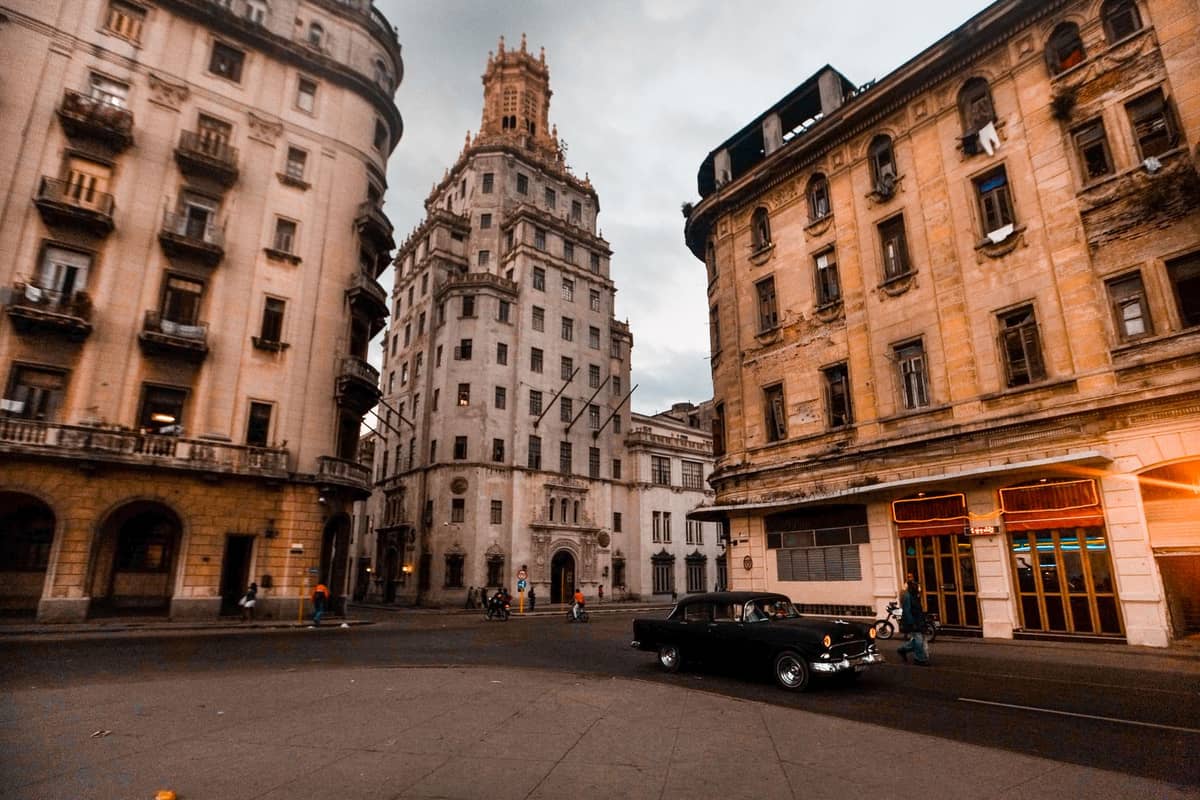
Ciudad Vieja occupies the narrow western peninsula of Montevideo, jutting into the Río de la Plata. As the city's original settlement, it holds the highest concentration of 19th- and early-20th-century architecture in Uruguay, from neoclassical public buildings to Art Deco towers. The neighborhood functions simultaneously as a government and legal district, an arts quarter, and a tourist corridor — which means it avoids the hollow, sanitized feel of some historic centers. Offices share blocks with world-class museums, candombe rehearsal spaces, and some of the best traditional restaurants in the city.
The walkable scale is one of Ciudad Vieja's real advantages. The neighborhood is roughly 1.5 km from east to west, meaning you can cover the core circuit on foot without transport. That said, the quality of the experience changes significantly depending on when you visit and how you sequence the stops — which is exactly what this guide addresses.
ℹ️ Good to know
If you're arriving from Buenos Aires by Buquebus ferry, the terminal sits right on the northern edge of Ciudad Vieja. You can start walking the route immediately without needing a taxi — one of the more convenient entry points into any South American historic district.
The Route: Stop-by-Stop from East to West
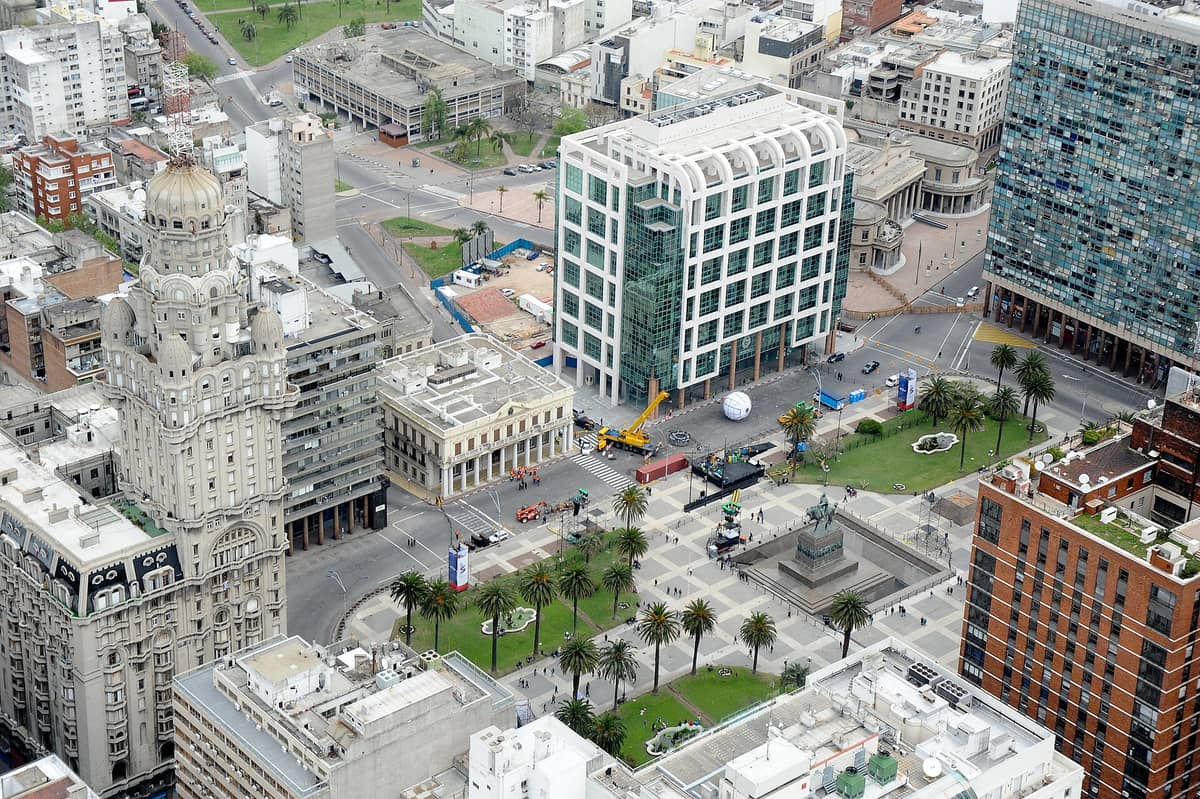
The most logical approach is to start at Plaza Independencia, which sits at the boundary between the Centro neighborhood and Ciudad Vieja. From the Centro, walk west along Avenida 18 de Julio for 15–20 minutes until you reach the plaza. This square is large and legible: the mausoleum of José Artigas sits at its center, and the square is flanked by the Palacio Salvo on one side and the Teatro Solís on another. Palacio Salvo, completed in 1928, was for a time the tallest building in South America — the neo-Gothic and Art Nouveau mix is distinctive and worth a few minutes of close inspection.
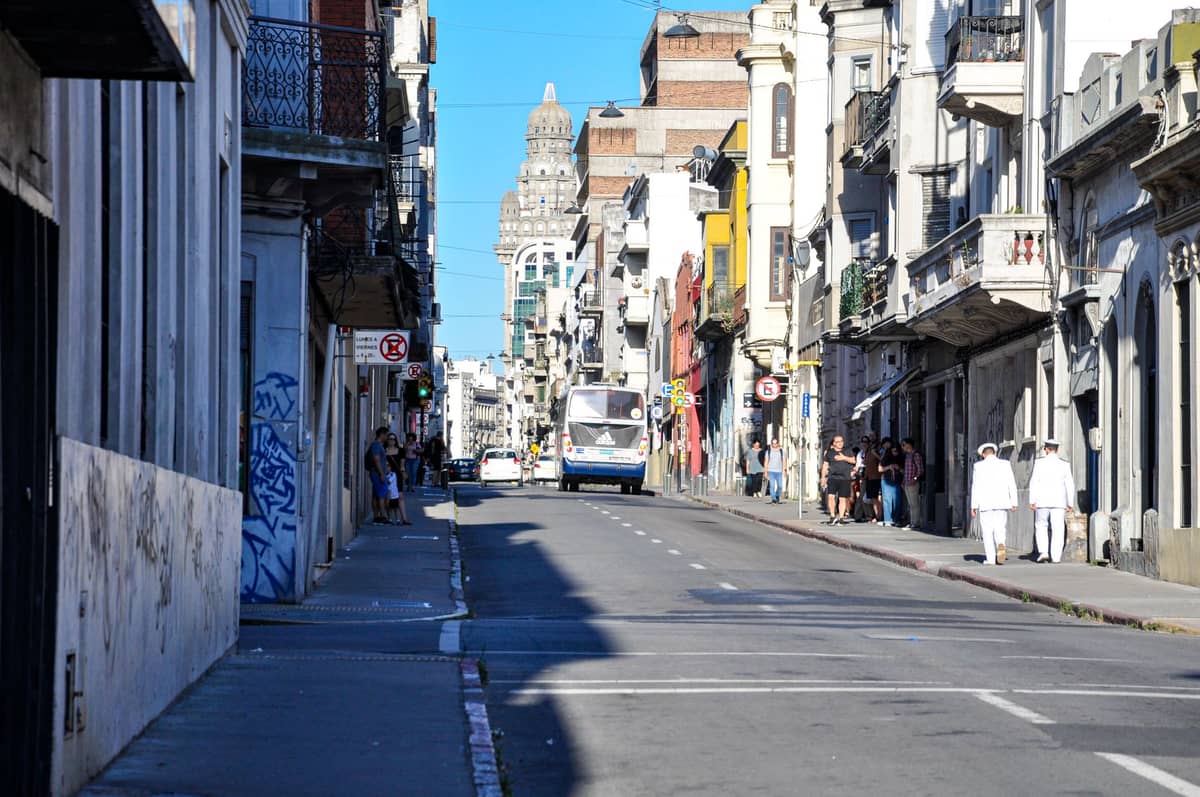
From the plaza, pass through the Puerta de la Ciudadela — the surviving gate of the original colonial fortification, dating to the 18th century. This marks the formal entry into Ciudad Vieja. Immediately west, Peatonal Sarandí begins: a pedestrian-only street that runs about 700 meters through the heart of the neighborhood and serves as the main artery of the walking tour.
- Plaza Independencia Starting point. Artigas mausoleum, Palacio Salvo, Teatro Solís. Allow 20–30 minutes.
- Puerta de la Ciudadela 18th-century colonial gate. Quick stop, good for photos, free to view.
- Peatonal Sarandí The pedestrian spine of Ciudad Vieja. Street art, cafés, bookshops. Walk the full length west to Plaza Matriz.
- Plaza Matriz (Plaza Constitución) The oldest square in Montevideo. Catedral Metropolitana and the Cabildo (historic town hall) face each other across the square.
- Museo Andes 1972 Rincón 619. Dedicated to the 1972 Andes plane crash survivors. One of the most emotionally affecting small museums in Uruguay. USD 8 adults, closed Sundays.
- Mercado del Puerto The iron-framed market near the old port. Best visited at lunch (12:00–15:00) for traditional asado. Crowded but authentic.
Plaza Matriz, also known as Plaza Constitución, is the oldest public square in Montevideo and the heart of colonial urban life. The Catedral Metropolitana dates from 1804 and is the oldest church in the city. The Cabildo across the square served as the seat of government during colonial and early independence periods and now functions as a historic museum. Both are worth entering briefly. The square itself is a natural rest point — benches, pigeons, and a working fountain make it the kind of place where you get a genuine sense of civic life rather than a polished tourist set piece.
Museums Worth Your Time (and One That's Overhyped)
Ciudad Vieja has an unusually high density of museums for a neighborhood its size. The challenge is that they vary considerably in quality and relevance to different kinds of travelers. Here is an honest breakdown.
The Museo Andes 1972 at Rincón 619 is the standout. It tells the story of the Uruguayan rugby team whose plane crashed in the Andes in 1972, and the 16 survivors who spent 72 days in extreme conditions before rescue. The exhibits are well-curated and multilingual, and the subject matter is genuinely compelling regardless of your interest in sport. Admission is USD 8 for adults, USD 6 for seniors (65+), USD 4 for youths under 15, and free for children under 12. Hours are Monday to Friday 10:00–17:00, Saturday 10:00–15:00, closed Sunday. Last entry is 30 minutes before closing. Closed on 1 January, 1 May, and 25 December.
The Museo Torres García is essential for anyone with an interest in modern art. Joaquín Torres García was one of the most significant Latin American artists of the 20th century, and the museum dedicated to his constructivist work is thoughtfully organized and small enough to absorb properly in under an hour. The Museo del Carnaval is another strong option — it provides genuine historical depth on Montevideo's Carnival tradition and the Afro-Uruguayan candombe culture that underlies it, which many visitors don't encounter elsewhere. Admission prices at both museums are modest; verify current rates on arrival.
⚠️ What to skip
The Mercado del Puerto is not a trap, but timing matters enormously. At lunch on a Saturday it is full of smoke, noise, and locals eating grilled meat at standing counters — excellent. On a weekday evening or Sunday morning, it is nearly empty and loses most of its appeal. Plan your route to arrive between 12:00 and 14:30 if you want the full experience.
Timing, Seasons, and When to Go
Ciudad Vieja is walkable year-round. Montevideo has a humid subtropical climate with mild winters (average 6–14°C in June–August) and warm summers (average 26–28°C in December–February). Rain is distributed fairly evenly across all months, so there is no guaranteed dry window. The practical implication for a walking tour: summer heat can make extended outdoor walking uncomfortable during midday, while winter mornings tend to be cool but perfectly manageable with a layer.
Spring (September–November) and autumn (March–May) offer the most comfortable conditions: temperatures between 12–22°C, moderate rainfall, and the city functioning at a normal weekday pace. If your visit overlaps with Carnival (typically February), Ciudad Vieja becomes a focal point for parades and performances — worth planning around if that interests you. The Montevideo Carnival guide has full details on timing and logistics.
Local sources recommend visiting Wednesday through Saturday for the best combination of open venues, street activity, and weekend market energy. Monday and Tuesday see some museums and smaller businesses operating on reduced hours. Sunday mornings are quiet; many shops are closed, and Sarandí has a different, more local character that some travelers actually prefer.
💡 Local tip
The Montevideo tourist office has a Ciudad Vieja branch on Piedras Street between Pérez Castellano and Yacaré — pick up a free printed map here before starting your walk. The national tourism office is also nearby on Rambla 25 de Agosto and Yacaré.
Practical Logistics: Getting There, Getting Around, Staying Safe
Ciudad Vieja is about 15–20 minutes on foot west of the main Centro area along Avenida 18 de Julio. Multiple bus lines connect the neighborhood to the rest of the city. Ride-hailing services including Uber operate in Montevideo and provide a straightforward option from more distant neighborhoods. If you're based in Pocitos or Punta Carretas, budget 20–30 minutes by bus or around 15 minutes by taxi to reach Ciudad Vieja. For full transport options across the city, the getting around Montevideo guide covers routes and costs in detail.
Daytime safety in Ciudad Vieja is generally not an issue on the main pedestrian routes. Sarandí, Plaza Independencia, and Plaza Matriz are well-trafficked and straightforward. The calculus changes after about 20:00: the neighborhood empties quickly as offices close, and some blocks between the main squares and the port become noticeably quiet. Sticking to Sarandí and the main plazas in the evening is sensible. For side-street exploration, daytime is the right call.
- Wear comfortable walking shoes — cobblestones on side streets are uneven.
- Carry some Uruguayan pesos (UYU) for small cafés and street vendors; many accept cards but not all.
- The route is compact: you will not need to use transport mid-tour unless you add Cerro de Montevideo or the rambla.
- Photography of street art and architecture is openly encouraged; ask permission before photographing individuals.
- Public restrooms are available inside the Mercado del Puerto and at the tourist information office.
Extending the Tour: What to Add If You Have More Time
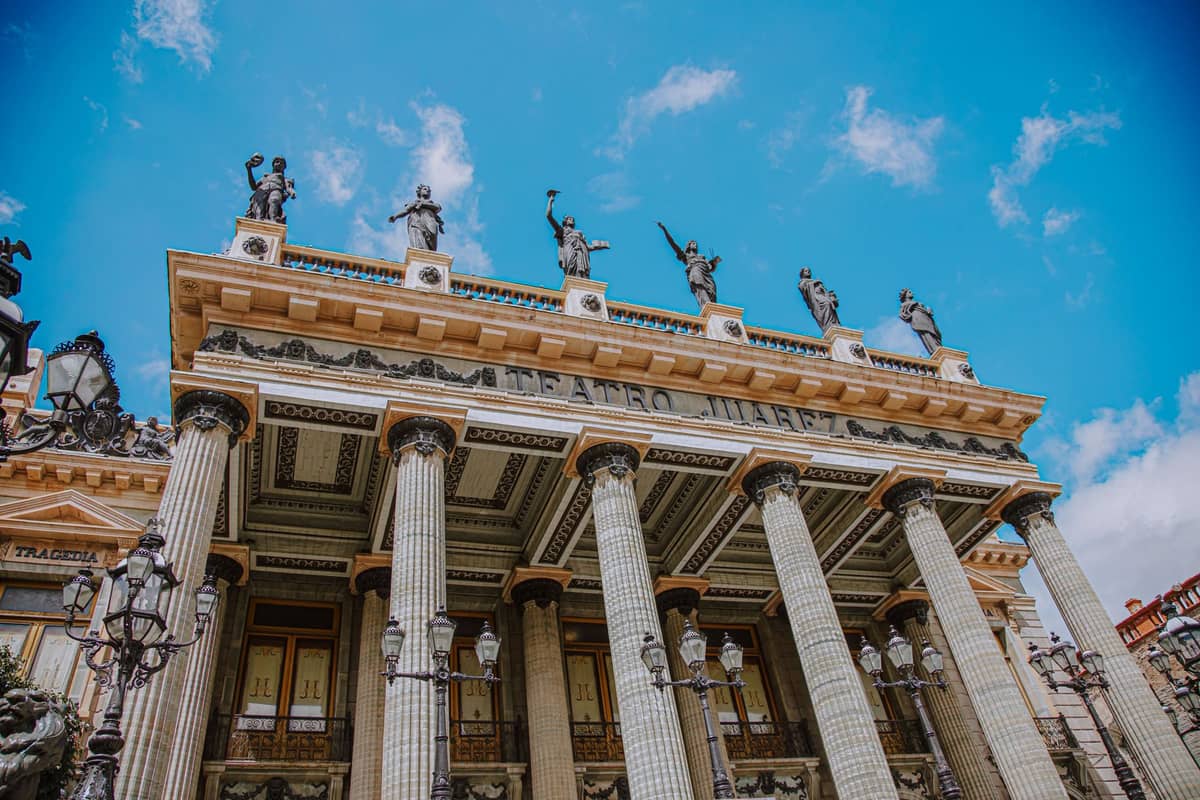
If you finish the core Ciudad Vieja circuit and still have time, the most natural extension is east toward Teatro Solís, Montevideo's main opera house on Plaza Independencia. Guided backstage tours run most mornings and are worth the hour. Further east, the Rambla de Montevideo — the 22-kilometer coastal promenade — begins near Ciudad Vieja and runs east past Parque Rodó and beyond. Even a 30-minute walk along the waterfront from the old port gives a useful sense of the city's coastal scale.
For a full two-day itinerary that incorporates Ciudad Vieja alongside other neighborhoods, the 2 days in Montevideo itinerary sequences the districts efficiently. If budget is a priority, the free things to do in Montevideo guide identifies which attractions within and near Ciudad Vieja require no admission.
✨ Pro tip
End the walking tour with lunch at one of the parrillas inside Mercado del Puerto rather than the tourist-facing restaurants on the perimeter. The interior stalls serve the same grilled meat at lower prices with more atmosphere. Point at what others are eating rather than wrestling with a menu if your Spanish is limited — it works fine.
FAQ
How long does the Ciudad Vieja walking tour take?
The core route from Plaza Independencia to Mercado del Puerto takes 3–4 hours at a relaxed pace. Add 1–2 hours if you plan to enter museums such as the Museo Andes 1972, Museo Torres García, or the Cabildo. A full day gives you flexibility without feeling rushed.
Is Ciudad Vieja safe to walk around?
During daytime hours on the main routes (Sarandí, Plaza Independencia, Plaza Matriz), Ciudad Vieja is well-trafficked and generally relaxed. After around 20:00, the neighborhood empties as offices close; sticking to lit main streets and using taxis or ride-hailing for side-street destinations after dark is a sensible precaution.
Do I need a guided tour of Ciudad Vieja, or can I do it alone?
No guided tour is required. Ciudad Vieja is explicitly designed for self-guided exploration: the main sights are within walking distance of each other, most have signage in Spanish and some in English, and the tourist office on Piedras Street provides free maps. A guide adds value mainly if you want deep historical commentary or are traveling with a group that benefits from narration.
What is the best day to visit Ciudad Vieja?
Wednesday through Saturday give the best combination of open museums, active street life, and market energy. Saturday lunch at Mercado del Puerto is particularly lively. Sunday mornings are quiet with some closures but have a calmer local character. Monday and Tuesday are functional but some smaller venues run reduced hours.
How much does it cost to do the Ciudad Vieja walking tour?
Walking the route itself is free. Museum admissions are modest: Museo Andes 1972 charges USD 8 for adults. Other museums in the neighborhood charge similar or lower rates; several are free. Budget USD 15–25 per person for a sit-down lunch at Mercado del Puerto, less if you eat at a simple café on Sarandí.
Tickets & tours
Live prices and dates from our booking partner. If you book, we may earn a commission at no extra cost to you.
Planning a trip? Discover personalized activities with the Nomado app.