Museo Andes 1972: The Andes Crash Memorial in Montevideo's Old City
Museo Andes 1972 is a compact but deeply affecting memorial museum in Montevideo's historic Ciudad Vieja, dedicated to Uruguayan Air Force Flight 571 and the extraordinary survival story that followed the 1972 Andes crash. Across three levels and 400 square metres, original artifacts, audiovisual material, and survivor accounts transform one of the twentieth century's most gripping human dramas into something quiet, personal, and hard to forget.
Quick Facts
- Location
- Peatonal Rincón 619, Ciudad Vieja, Montevideo
- Getting There
- Walk from Plaza Independencia (~10 min); multiple city buses stop near Ciudad Vieja
- Time Needed
- 1.5–2.5 hours
- Cost
- Adults USD 8; seniors (65+) USD 6; ages 12–15 USD 4; under 12 free
- Best for
- History lovers, documentary fans, travelers seeking emotional depth
- Official website
- mandes.uy/en
What Is Museo Andes 1972?
On October 13, 1972, Uruguayan Air Force Flight 571 crashed into the Andes mountains while carrying 45 people (40 passengers and 5 crew), mostly members of the Old Christians Club rugby team from Montevideo. The aircraft struck a peak and came to rest at roughly 3,600 metres altitude in one of the most remote and hostile environments on earth. Sixteen people survived 72 days before rescue, a story that shocked the world and has never stopped resonating in Uruguay.
Museo Andes 1972 exists to tell that story in full, without sensationalism and without evasion. Located on the pedestrian street Rincón in Ciudad Vieja, the museum opened to give survivors and the families of those who died a space they controlled, a place where the human truth of the disaster takes precedence over the lurid details that dominate popular retellings. The result is a museum that feels remarkably intimate given its subject matter.
ℹ️ Good to know
The museum is closed on Sundays. Hours are Monday to Friday 10:00–17:00 and Saturday 10:00–15:00, except on public holidays such as January 1, May 1, and December 25 when the museum is closed. Plan arrival at least 90 minutes before closing to avoid rushing the final level.
The Exhibition: Three Levels, One Story
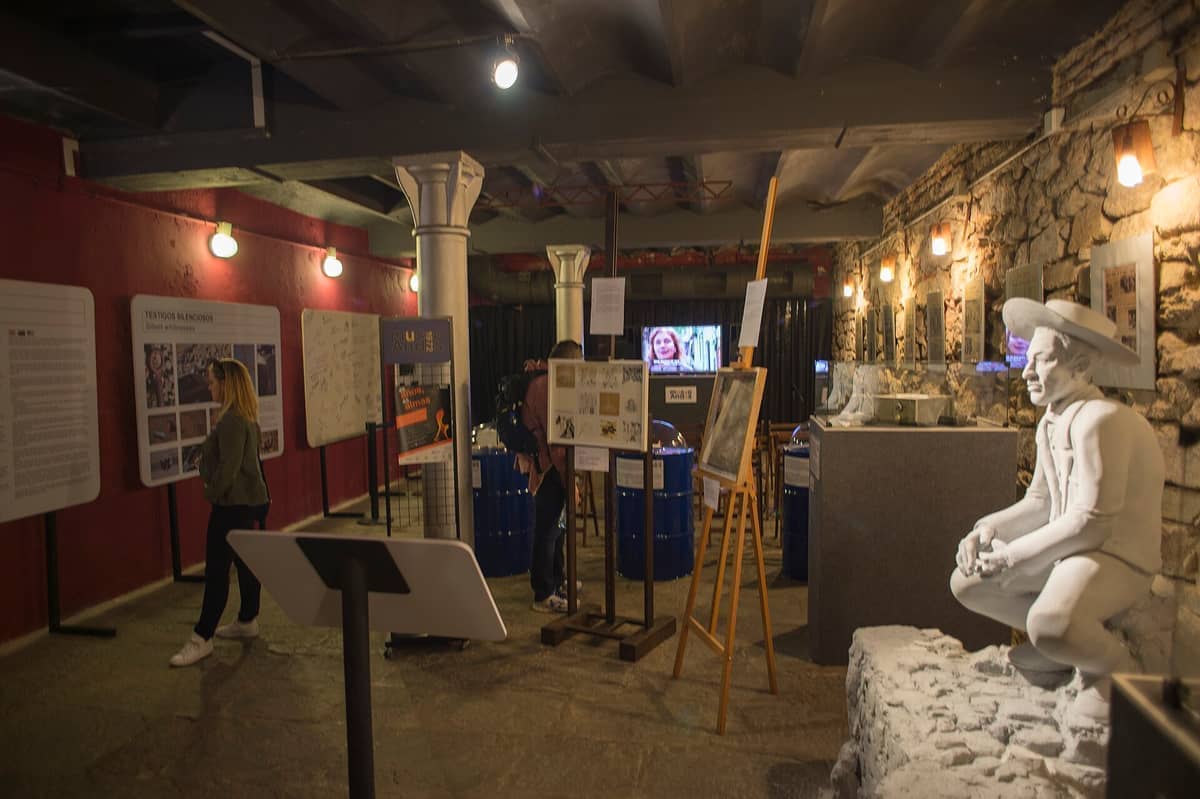
The permanent exhibition covers approximately 400 square metres across three floors, structured as a chronological and thematic journey. More than 45 information panels line the walls, written in Spanish with English translation available, and 35 display cases hold original objects recovered from the crash site or preserved by survivors and families.
The ground level sets the scene, introducing the passengers, their backgrounds, and the rugby culture they came from. Photographs here feel almost cheerful at first: young men at matches, family portraits, pre-flight moments at the airport. The tone shifts as you move deeper into this floor, where the sequence of the crash is documented with maps, wreckage diagrams, and early news coverage.
The second level addresses the 72 days of survival directly. This is where the exhibition earns its reputation for emotional weight. Actual clothing worn in the Andes, personal items found in the snow, handwritten notes, and a section of the fuselage used as a shelter are displayed alongside audiovisual testimonies from survivors. The accounts are unhurried and specific. Survivors describe cold, hunger, grief, and the daily negotiations required just to remain alive. The decision to eat the flesh of those who had died, which generated enormous controversy when the story broke, is addressed honestly and without deflection.
The third level covers the rescue and its aftermath: the media storm, the theological debates in Uruguay, the survivors' return to life, and the long work of memory. It ends with a reflection space, quieter than the floors below, where visitors often linger.
Tickets & tours
Live prices and dates from our booking partner. If you book, we may earn a commission at no extra cost to you.
Guided Tour with Wine Tasting Experience at Bouza Winery
From 68 €Instant confirmationFree cancellationAirport to Hotel or Hotel to Airport Transfer in Montevideo
From 47 €Instant confirmationFree cancellationTasting and Lunch at Bodega Pizzorno in Montevideo
From 115 €Instant confirmationFree cancellationPunta del Este full-day guided tour from Montevideo
From 47 €Instant confirmationFree cancellation
What It Feels Like to Visit
The building is on a pedestrian street in Ciudad Vieja, a neighborhood of colonial-era facades, street vendors, and lunchtime foot traffic. Nothing about the exterior announces what is inside. The street itself can feel ordinary, even slightly noisy, which makes the contrast on crossing the threshold more striking. Inside, light levels drop, the acoustic changes, and the temperature is noticeably cooler from the climate control required to preserve the artifacts.
Visitors tend to slow down instinctively as they move through the rooms. The combination of personal photographs, handwritten texts, and objects worn by specific people who were alive and then were not creates a weight that abstract history rarely achieves. Expect silence from other visitors even when the museum is at moderate capacity. Children under about 10 can find the content difficult to process, and younger children may not engage with text-heavy panels.
💡 Local tip
Weekday mornings before noon are the quietest. Saturday mornings draw more visitors, especially tour groups that can occupy the lower level for extended periods. If visiting on a Saturday, arriving at 10:00 when the doors open gives you the best chance of moving at your own pace.
The audiovisual sections require headphones, which are provided. Taking time with these rather than reading only the panels significantly deepens the experience. The survivor testimonies in particular shift the exhibition from documentation to something closer to conversation.
Historical and Cultural Context
The 1972 Andes disaster is embedded in Uruguayan national consciousness in a way that is difficult to fully appreciate from outside. The passengers were from Montevideo, the club they played for was a social institution in the city, and their families were prominent. When the survivors returned in late December 1972, they were met with a country simultaneously relieved, grieving, and disturbed. The questions raised by their survival, especially the ethical dimensions of what they did to stay alive, divided Catholic Uruguay and generated decades of ongoing reflection.
The story reached global audiences through Piers Paul Read's 1974 book 'Alive' and later the 1993 film of the same name. More recently, the 2023 Chilean film 'Society of the Snow', directed by J.A. Bayona and filmed partly with the involvement of survivors and families, brought a new generation into contact with the event. The museum predates that film but has seen renewed international interest since its release.
The museum sits within walking distance of several of Ciudad Vieja's key sites, making it a natural anchor for a longer day in the historic quarter. The Plaza Matriz and the Catedral Metropolitana are a short walk north, and the Mercado del Puerto is reachable in under ten minutes on foot. If you plan a full day in Ciudad Vieja, this museum works well as a morning anchor before the neighborhood fills with lunch crowds.
Getting There and Practical Details
The museum address is Peatonal Rincón 619, in the heart of Ciudad Vieja. Rincón is a pedestrian-only street, so there is no vehicle access to the door itself. The nearest bus stops are on the main arterial streets bordering Ciudad Vieja. From Plaza Independencia, the walk takes roughly 8 to 10 minutes heading northwest through the old city streets.
Montevideo has no metro system. City buses cover the route from most neighborhoods, and ride-hailing apps operate in the city. For orientation within the broader area, the guide to getting around Montevideo covers bus routes and transit options in detail. Taxis and app-based cars can drop visitors on the nearest accessible street, from where it is a short walk to the entrance.
The museum offers a free loan service for wheelchairs on site and some signage supporting visitors with hearing impairments and QR codes with audio support, though overall motor accessibility is described as limited and accessible toilets are not specifically listed. These accommodations are noted in the municipal cultural accessibility information and on the museum site.
Photography policies should be confirmed at the entrance, as restrictions may apply in certain sections out of respect for survivor families and the sensitivity of some displayed materials. Keep bags and large items in mind: the exhibition space is not cramped but the display cases require close reading, and backpacks can be disruptive in narrow sections.
Is It Worth Your Time? An Honest Assessment
For visitors who already know the story of the Andes crash, the museum offers depth that no book or film achieves: the physical presence of the objects, the scale of the personal photographs, and the direct testimonies create something qualitatively different from mediated accounts. For visitors who arrive without much prior knowledge, the exhibition is structured clearly enough that it works as an introduction, though you will leave wanting to read more.
The museum is not large and does not need to be. It does not compete in terms of spectacle with large-format history museums. What it offers is specificity and respect. If you are making a two-day visit to Montevideo and need to prioritize, this is one of the city's most singular experiences, the kind of place that exists nowhere else because the story belongs specifically to Montevideo.
That said, visitors looking for a broad survey of Uruguayan history, interactive exhibits, or a family-friendly experience with younger children may find the museum's format and subject matter less suited to their needs. The content requires emotional engagement, and the text-panel format assumes a willingness to read at length. It is not passive.
⚠️ What to skip
The exhibition covers survival cannibalism directly and without euphemism. Parents of children under 10 should read about the content in advance. The museum handles the subject with dignity, but it does not avoid it.
Insider Tips
- Arrive having read at least a basic summary of the disaster beforehand. Visitors with no prior knowledge sometimes find the early panels move quickly through context that the rest of the exhibition assumes. The Wikipedia article on the Andes flight disaster or the first chapter of 'Alive' by Piers Paul Read is good preparation.
- The museum sells a range of books about the disaster at the entrance, including translated editions and survivor accounts. If you plan to buy one, browsing before entering lets you read more of the exhibition with the book's framework in mind.
- Allow time for the reflection space on the third level. Many visitors rush through it after the more intense second level, but it contains some of the most considered material in the exhibition, including text from survivors about how the experience shaped their adult lives.
- The pedestrian street outside has a couple of small cafes where you can sit quietly after the visit. The museum's content tends to settle over time, and a 20-minute pause before moving on to the next attraction is worth building into your schedule.
- The museum's official site at mandes.uy offers ticket purchase in advance. Buying online is not strictly necessary as the museum rarely sells out entirely, but it saves time at the entrance and guarantees your slot on busier Saturday mornings.
Who Is Museo Andes 1972 For?
- Travelers who have read 'Alive' by Piers Paul Read or seen either the 1993 film or the 2023 film 'Society of the Snow' and want to engage with the story at source
- History and documentary enthusiasts drawn to human survival narratives and 20th-century South American history
- Visitors seeking emotional depth rather than visual spectacle, who appreciate museum experiences that require genuine attention
- Uruguayan diaspora and anyone with personal connections to the story
- Solo travelers comfortable moving through text-heavy exhibitions at their own pace
Nearby Attractions
Other things to see while in Ciudad Vieja:
- Catedral Metropolitana de Montevideo
The Catedral Metropolitana de Montevideo, also known as Iglesia Matriz, is the mother church of the Archdiocese of Montevideo and the spiritual anchor of the city's oldest square. A neoclassical basilica with three naves, a transept, and a dome on a cylindrical drum, it stands opposite the Cabildo on Plaza de la Constitución and is free to enter.
- Mercado del Puerto
Mercado del Puerto is the gastronomic heart of Montevideo's Ciudad Vieja, a 19th-century iron-and-glass market hall packed with traditional parrillas, smoke-filled air, and the kind of asado culture that defines Uruguay. Entry is free, the food is serious, and the atmosphere is unlike anything else in the city.
- Museo de Arte Precolombino e Indígena (MAPI)
Tucked into a colonial street in Ciudad Vieja, the Museo de Arte Precolombino e Indígena (MAPI) presents thousands of years of indigenous American art with clarity and care. It is compact, thoughtfully curated, and free on Monday mornings — making it one of the most rewarding cultural stops in Montevideo for travelers who want substance over spectacle.
- Museo del Carnaval
The Museo del Carnaval on Rambla 25 de Agosto preserves the costumes, drums, and photographs behind Uruguay's legendary carnival tradition. Small in size but dense with cultural weight, it offers genuine insight into a celebration that runs longer than any other in the world.
Planning a trip? Discover personalized activities with the Nomado app.