Mercado del Puerto: Inside Montevideo's Legendary Port Market
Mercado del Puerto is the gastronomic heart of Montevideo's Ciudad Vieja, a 19th-century iron-and-glass market hall packed with traditional parrillas, smoke-filled air, and the kind of asado culture that defines Uruguay. Entry is free, the food is serious, and the atmosphere is unlike anything else in the city.
Quick Facts
- Location
- Rambla 25 de Agosto de 1825 228, Ciudad Vieja, Montevideo
- Getting There
- Walkable from Plaza Independencia (about 20 min); multiple city bus routes serve the Ciudad Vieja port area
- Time Needed
- 1.5 to 3 hours, depending on whether you eat
- Cost
- Free entry; meals and drinks priced separately at individual venues (paid in Uruguayan pesos, UYU)
- Best for
- Meat lovers, architecture enthusiasts, travelers wanting an authentic Uruguayan lunch experience
- Official website
- http://www.mercadodelpuerto.com
What Mercado del Puerto Actually Is
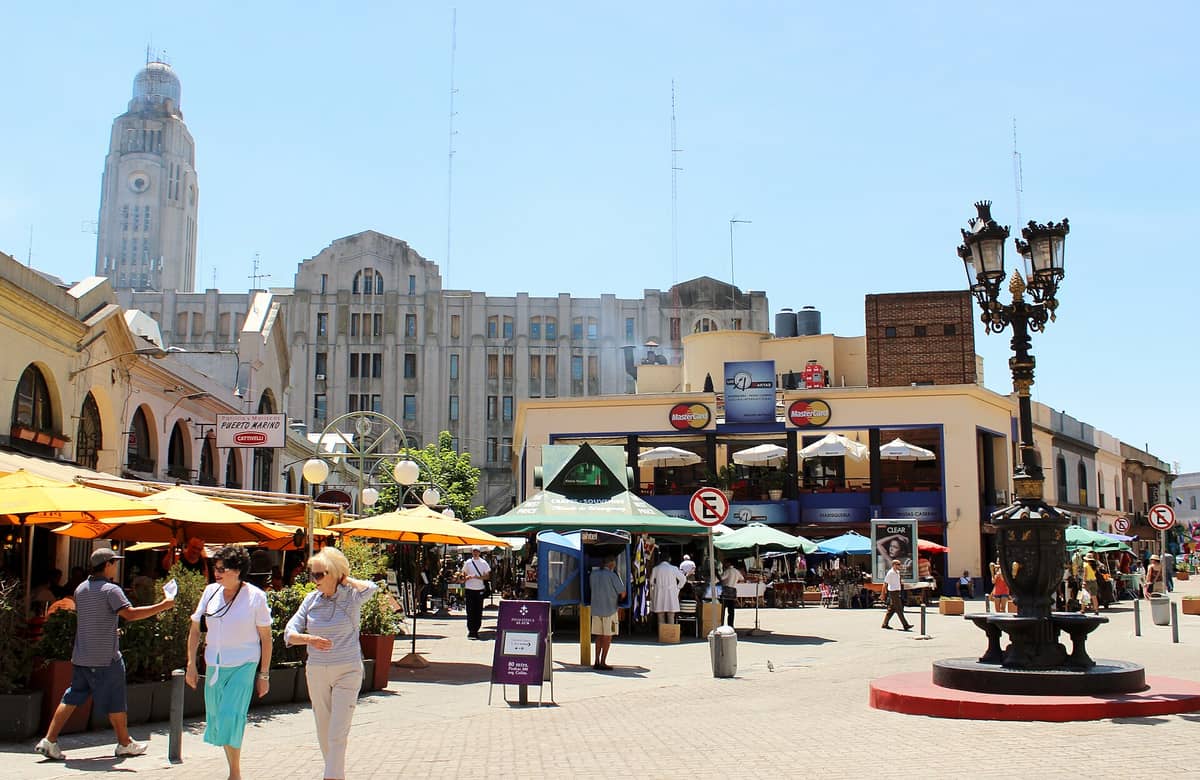
Mercado del Puerto is a covered market hall built in the 19th century, located on the waterfront edge of Ciudad Vieja, Montevideo's historic old town. The structure is a fine example of the iron-and-glass construction style that defined European market architecture of that era: tall cast-iron columns support a vaulted roof of glass and steel, flooding the interior with natural light even when the city outside is overcast. The building was originally designed to serve the commercial port, but over time its function shifted entirely toward food.
Today, the market is densely packed with parrillas, the traditional Uruguayan grill restaurants that anchor the country's food culture. Vendors work over wood-burning grills positioned at the edge of each stall, meaning smoke is always present in the air. The smell of burning quebracho wood and charring beef hits you before you reach the entrance. For anyone interested in understanding how Uruguayans actually eat, this building is one of the clearest possible demonstrations.
Mercado del Puerto sits directly across from the port's cruise and ferry terminals, which means it absorbs a significant tourist flow on days when ships are docked. If you want a more local-weighted crowd, visit on a weekday morning when the port is quiet. For a deeper read on the neighborhood surrounding the market, the Ciudad Vieja neighborhood guide covers the old town's street layout and heritage buildings in detail.
💡 Local tip
Saturday lunch is the single busiest period at Mercado del Puerto. If you want to eat here on a Saturday, arrive before noon to claim a counter seat before the crowds peak. Tables at popular parrillas fill quickly and are rarely reserved in advance.
The Architecture: More Than a Backdrop
The market's iron-and-glass structure is genuinely worth pausing to appreciate before you order anything. The main hall's vaulted ceiling channels smoke upward and away from diners, which is a practical engineering decision, but it also creates a cathedral-like sense of height that makes the space feel more expansive than it is. The ironwork carries ornamental detailing typical of the period: brackets with modest flourishes, arched window frames, and columns that taper slightly toward the base.
Natural light varies dramatically by time of day. In the morning, sunlight enters from the east-facing skylights and catches the smoke rising from the early grills, producing a visual effect that photographers who arrive at opening time specifically come to capture. By mid-afternoon, the light flattens and the interior feels warmer but less dramatic. Visiting in the morning also means watching grill workers prepare their fires, which is a process worth observing: wood is stacked, ignited, and allowed to reduce to embers before any meat goes on.
If the architecture at Mercado del Puerto interests you, Ciudad Vieja has several other 19th and early 20th-century buildings worth including in the same visit, including Palacio Salvo and the remarkable Palacio Piria. A focused route through the area is covered in the Montevideo architecture guide.
Tickets & tours
Live prices and dates from our booking partner. If you book, we may earn a commission at no extra cost to you.
Punta del Este full-day guided tour from Montevideo
From 47 €Instant confirmationFree cancellationGuided Tour with Wine Tasting Experience at Bouza Winery
From 68 €Instant confirmationFree cancellationAirport to Hotel or Hotel to Airport Transfer in Montevideo
From 47 €Instant confirmationFree cancellationTasting and Lunch at Bodega Pizzorno in Montevideo
From 115 €Instant confirmationFree cancellation
The Food: What to Order and What to Expect
The parrillas here specialize in cuts of beef that are standard in Uruguay but unfamiliar to many foreign visitors: tira de asado (cross-cut short ribs), vacío (flank steak), and entraña (skirt steak) are the staples. A full mixed grill plate will typically include several of these alongside chorizo and morcilla (blood sausage). Portions are large. A single main course at lunch is usually sufficient for most people.
Grills are wood-fired, not gas, which produces a distinct flavor profile that is smokier and slightly more complex than gas-grilled meat. The meat is typically cooked a punto (medium to medium-well) unless you specify otherwise, in line with local preference. Asking for jugoso (closer to medium-rare) is understood and respected at most parrillas here.
Wine is available at most stalls, typically Uruguayan Tannat by the glass or carafe. Tannat is Uruguay's signature grape and it pairs well with the fat content in the grilled cuts. Beer (usually in large 960ml bottles) is the other common choice. Non-alcoholic options are limited to soft drinks and water at most venues.
Beyond the parrillas, a handful of artisan stalls sell leather goods, mate accessories, and craft items at the market's edges. These are secondary to the food experience and vary in quality; prices are negotiable at some. If you want to understand the deeper cultural significance of the asado tradition you are eating your way through, the Montevideo asado guide provides useful context.
ℹ️ Good to know
Prices at individual restaurants are paid in Uruguayan pesos (UYU). Exchange rates fluctuate, so check current rates before your visit. Credit cards are accepted at many stalls, but carrying some cash is advisable for smaller purchases and artisan vendors.
When to Visit and What Changes by Hour
The market is generally open daily from around 10:00 to 17:00, with most restaurant activity concentrated between 11:30 and 15:30.
The hour between 10:00 and 11:00 is the quietest of the day. Grill fires are being started, vendors are setting up, and the market has a working atmosphere rather than a tourist one. This is the best window if you want to photograph the space or walk through without navigating around large groups. By noon, groups arrive, the smoke intensifies, the noise level rises considerably, and counter seats are often occupied.
Weekdays versus weekends represent a significant difference in experience. Saturday attracts the largest crowds, including Montevideans who treat a long Saturday lunch here as a social ritual. This produces an atmosphere that feels genuinely celebratory and local, but it also means waits for seating and slower service. Weekday visits are calmer but lose some of that collective energy. There is no objectively correct choice: it depends on what kind of experience you want.
⚠️ What to skip
On days when cruise ships are docked at the adjacent terminal, the market and surrounding streets absorb a concentrated surge of visitors. If your visit coincides with a ship arrival, expect limited seating, longer service times, and higher ambient noise. Check the port's schedule in advance if a quieter visit matters to you.
Getting There and Getting Around
The market is located at Rambla 25 de Agosto de 1825 228, directly on the waterfront in Ciudad Vieja. If you are staying in the Centro or around Plaza Independencia, the walk takes around 20 minutes through the old town's colonial streets, passing several points of historical interest along the way. The route is flat and straightforward.
Multiple city bus routes serve the port area and Ciudad Vieja; Montevideo's urban bus network is extensive and covers this part of the city well. Ride-hailing services including Uber operate in Montevideo and provide a convenient alternative, particularly if you are arriving from a neighborhood further east. Taxis are also available throughout the old town.
The market is close enough to other Ciudad Vieja landmarks that a combined visit makes sense. Plaza Matriz and the Catedral Metropolitana are both within a 10-minute walk, as is the Ciudad Vieja walking tour route that connects the neighborhood's key sites.
Accessibility: the main market hall is ground-level with multiple street entrances, and there are no steps at the primary access points. However, the interior during peak hours is crowded and the aisles between stalls are narrow. Wheelchair users should note that maneuverability at busy times may be limited; the experience of navigating the space comfortably is more feasible during off-peak hours.
Honest Assessment: Who This Is For, and Who Might Be Disappointed
Mercado del Puerto is unambiguously oriented toward meat, and specifically toward beef cooked over wood fire. Vegetarians and vegans will find almost nothing on the menus that suits them. This is not a place where the kitchen can easily accommodate dietary restrictions; it is a specialist venue and that focus is its strength.
Travelers who have read descriptions of the market and arrive expecting a large, diverse food hall in the mold of European covered markets will be surprised by how focused the offering actually is. There are no stalls selling fish, produce, or prepared foods beyond the grill tradition. The artisan goods at the periphery are secondary. If you want variety, this is not the right lunch destination.
That said, for anyone with an interest in Uruguayan culture, the market delivers something that is difficult to find at this concentration anywhere else in the city. Watching a parrillero manage a full wood-fired grill during a Saturday service is genuinely impressive, and the combination of 19th-century architecture, serious food craft, and social energy makes the market one of Ciudad Vieja's most distinctive spaces. It earns its reputation, provided you understand what it is offering.
Insider Tips
- Counter seating directly facing the grill is available at most parrillas and gives you the best view of the cooking process. If you are visiting solo or as a pair, ask for a spot at the barra rather than waiting for a table.
- The smoke inside the market will transfer noticeably to clothing, particularly natural fibers. If you are heading to a formal dinner or meeting later the same day, factor this in or bring a layer you can remove.
- Grill workers often start their fires with quebracho wood, which burns long and hot. Ask your server which wood is being used that day; it varies, and some regulars have preferences that the staff are happy to discuss.
- A few parrillas on the market's exterior perimeter face the Rambla and get direct afternoon sun, making them pleasant for outdoor seating on warm days. They are also slightly less smoky than the interior positions.
- The market's artisan vendors at the edges are more likely to engage in price negotiation later in the afternoon when foot traffic slows. Mid-morning purchases are less flexible on price.
Who Is Mercado del Puerto For?
- Carnivores and food-focused travelers who want to experience Uruguayan asado culture in its most concentrated form
- Architecture and history enthusiasts interested in 19th-century iron-and-glass market construction
- Travelers spending a full day in Ciudad Vieja who need a substantial and atmospheric lunch stop
- Groups with a shared appetite for a long, sociable Saturday lunch in a genuinely local setting
- First-time visitors to Montevideo who want a single experience that captures the city's culinary identity
Nearby Attractions
Other things to see while in Ciudad Vieja:
- Catedral Metropolitana de Montevideo
The Catedral Metropolitana de Montevideo, also known as Iglesia Matriz, is the mother church of the Archdiocese of Montevideo and the spiritual anchor of the city's oldest square. A neoclassical basilica with three naves, a transept, and a dome on a cylindrical drum, it stands opposite the Cabildo on Plaza de la Constitución and is free to enter.
- Museo Andes 1972
Museo Andes 1972 is a compact but deeply affecting memorial museum in Montevideo's historic Ciudad Vieja, dedicated to Uruguayan Air Force Flight 571 and the extraordinary survival story that followed the 1972 Andes crash. Across three levels and 400 square metres, original artifacts, audiovisual material, and survivor accounts transform one of the twentieth century's most gripping human dramas into something quiet, personal, and hard to forget.
- Museo de Arte Precolombino e Indígena (MAPI)
Tucked into a colonial street in Ciudad Vieja, the Museo de Arte Precolombino e Indígena (MAPI) presents thousands of years of indigenous American art with clarity and care. It is compact, thoughtfully curated, and free on Monday mornings — making it one of the most rewarding cultural stops in Montevideo for travelers who want substance over spectacle.
- Museo del Carnaval
The Museo del Carnaval on Rambla 25 de Agosto preserves the costumes, drums, and photographs behind Uruguay's legendary carnival tradition. Small in size but dense with cultural weight, it offers genuine insight into a celebration that runs longer than any other in the world.
Planning a trip? Discover personalized activities with the Nomado app.