Montevideo Architecture Guide: Art Deco, Neoclassical & Beyond
Montevideo's skyline tells the story of a city that built ambitiously across several decades. From the Palacio Salvo's eclectic tower to the Neoclassical grandeur of Teatro Solís, this guide covers the key buildings, the best walking routes, and how to actually get inside them — with clear advice on tours, timing, and what to skip.
Tickets & tours
Live prices and dates from our booking partner. If you book, we may earn a commission at no extra cost to you.
TL;DR
- Montevideo's most concentrated stretch of historic architecture runs through Ciudad Vieja and along Avenida 18 de Julio — walkable in a half day.
- Palacio Salvo (1928) is the city's architectural icon: guided visits cost around UYU 200 and last 90 minutes. Book ahead via Palacio Salvo for the best access.
- Teatro Solís offers guided tours Tuesday through Sunday (typically 11:00, 12:00, 15:00, 16:00) for around UYU 200–250, but schedules shift with rehearsals — always confirm at Teatro Solís before visiting.
- Free walking tours of the Old City cover the main landmarks at no fixed cost; a tip of around €15–€30 per person is reasonable.
- For a broader day of sightseeing, combine architecture with the Ciudad Vieja walking tour to link cultural context with the buildings themselves.
Why Montevideo's Architecture Stands Out
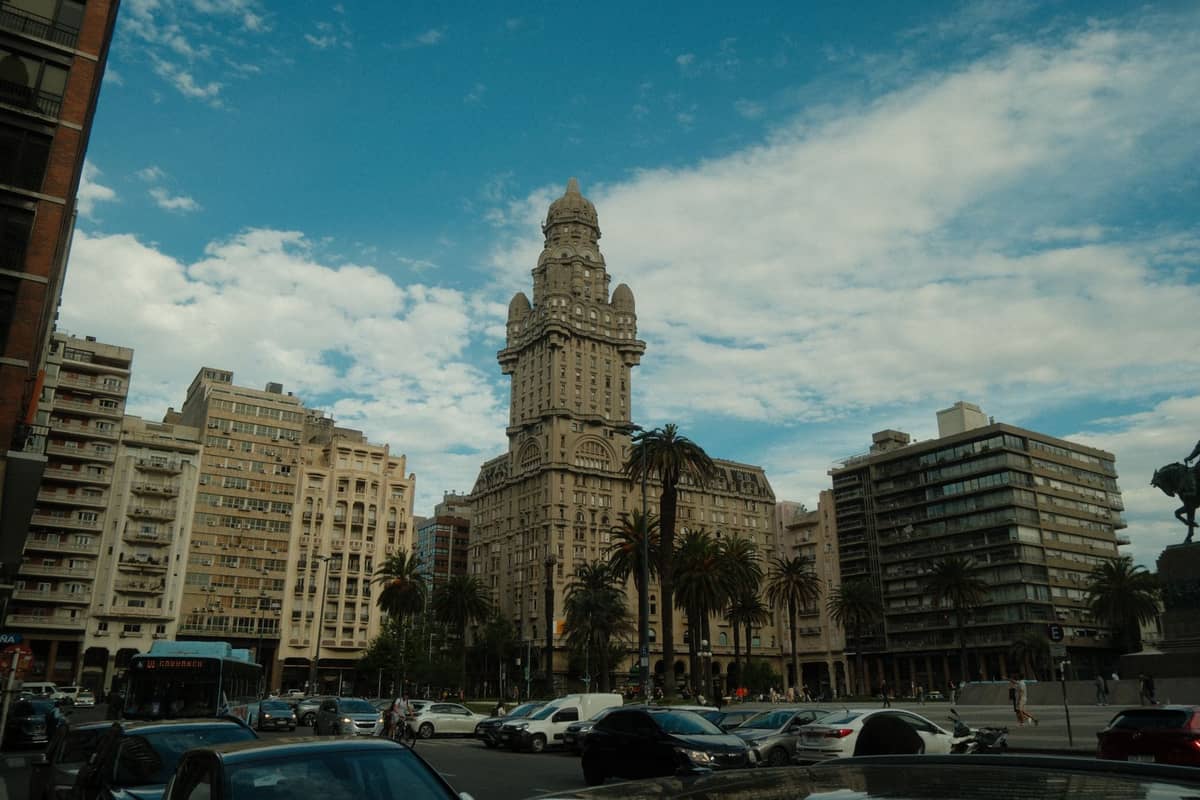
For a city of around 1.3 million people, Montevideo has an unusually rich architectural stock. The explanation is economic timing: Uruguay experienced significant prosperity from the late 19th century through the 1930s, fueled by beef and wool exports. That wealth funded ambitious civic and commercial construction at exactly the moment when Art Deco and Beaux-Arts styles were peaking globally. When the economy slowed, demolition was rarely affordable, so the buildings survived.
The result is an unusually intact urban fabric, particularly in Ciudad Vieja (the historic peninsula) and Centro. You'll find Neoclassical theatres and government palaces alongside Art Deco towers and early Rationalist apartment blocks, often on the same block. This layering of styles across roughly 80 years of construction makes Montevideo one of the more architecturally diverse capitals in South America — without the overwhelming scale of Buenos Aires or São Paulo.
ℹ️ Good to know
Montevideo's architecture is best understood as 'Eclectic' at heart. Many buildings blend two or three styles rather than committing fully to one. Palacio Salvo, often labeled Art Deco, also incorporates Neo-Gothic and Expressionist elements. Approach each building with that flexibility in mind.
The Essential Buildings: What to See and Why
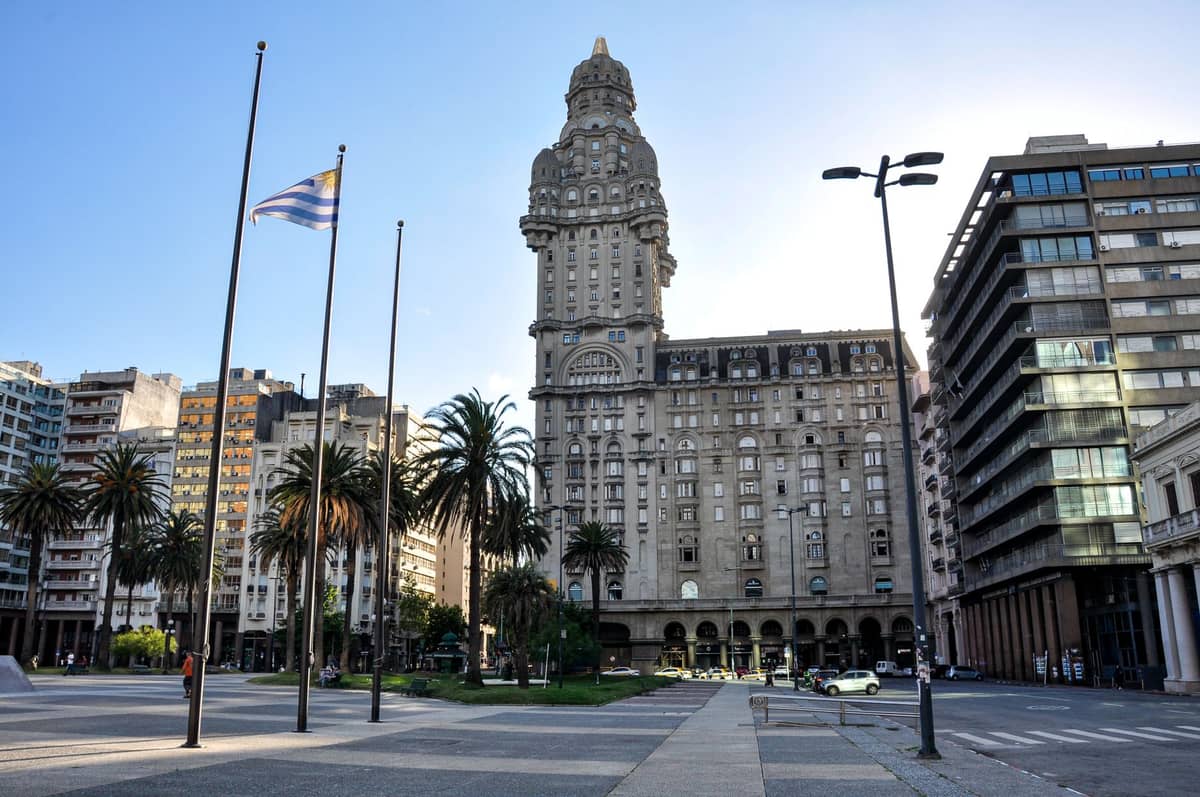
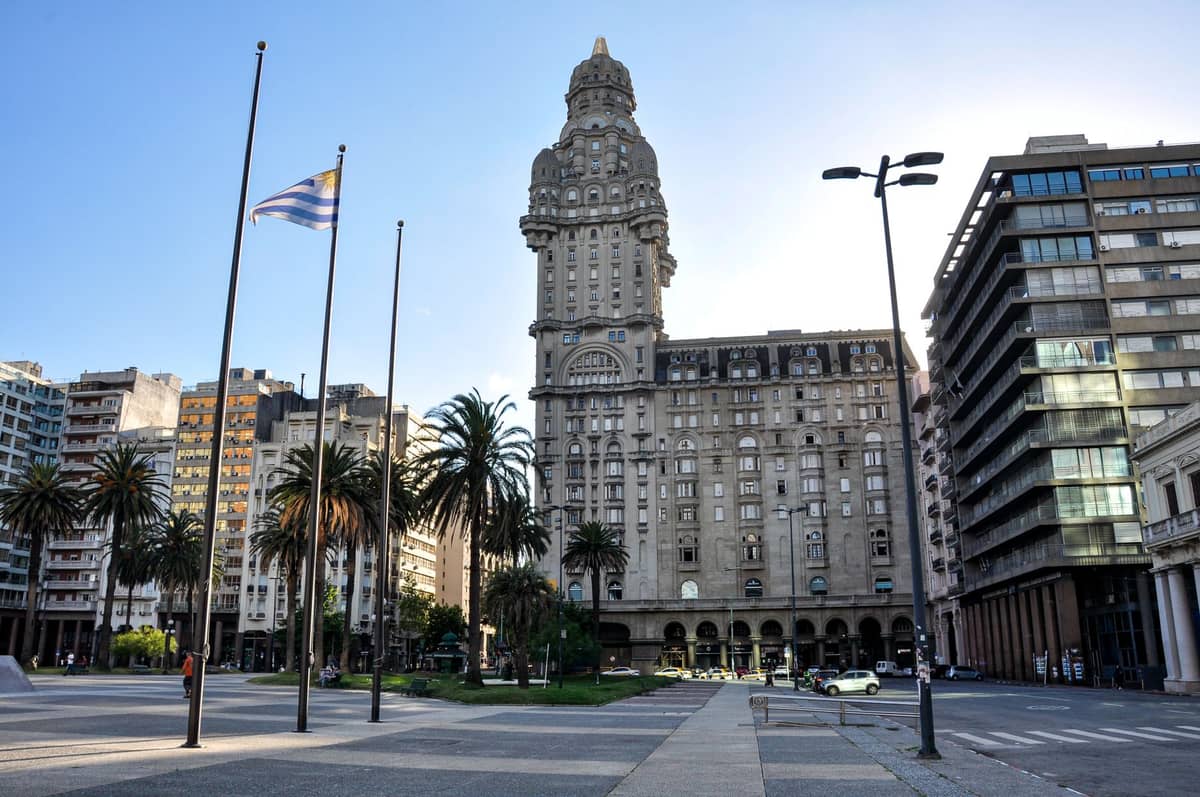
The starting point for any architecture tour is Palacio Salvo at Plaza Independencia. Completed in 1928 to a design by Italian architect Mario Palanti, it was the tallest building in South America at the time of construction. The tower reaches 95 meters and combines Art Deco verticality with Neo-Gothic ornamental detail and Expressionist massing — a combination that makes it strange and compelling rather than purely elegant. Guided visits ("Mañanas en el Salvo") run approximately 90 minutes and cost around UYU 200 per person, meeting at Plaza Independencia 848. It's worth doing at least once; the upper floors offer a good orientation of the city grid.
Two blocks west, Teatro Solís represents the Neoclassical civic ambition of mid-19th-century Montevideo. Opened in 1856 and significantly restored in the early 2000s, it remains the city's main performing arts venue. The guided tour covers the main hall, backstage areas, and the building's architectural history. Tours run Tuesday through Sunday, typically at 11:00, 12:00, 15:00, and 16:00 (in Spanish; English-language tours are available but less frequent). Prices hover around UYU 200–250, roughly USD 5–7. Monday tours are not typically offered, and rehearsal days can cancel or reschedule morning slots — confirm the current schedule at teatrosolis.org.uy or at the box office the day before.
- Palacio Salvo (1928) The city's defining tower on Plaza Independencia. Mixed Art Deco, Neo-Gothic, and Expressionist. Guided tours ~90 min, UYU 200 per person.
- Teatro Solís (1856, restored 2004) Neoclassical civic theatre. Guided tours Tue–Sun, ~UYU 200–250. Confirm schedules in advance.
- Palacio Lapido (1931) One of the purest Art Deco facades in the city, on Avenida 18 de Julio. Exterior appreciation only for most visitors.
- Palacio Piria (1917) Eclectic palazzo in Ciudad Vieja, built by eccentric developer Francisco Piria. Now houses Uruguay's Supreme Court. Limited interior access.
- Palacio Legislativo (1925) Uruguay's parliament building, constructed largely from domestic marble. Free guided tours available on weekdays; one of the best free architectural experiences in the city.
- Puerta de la Ciudadela (1741) The sole surviving gateway of Montevideo's original colonial fortifications. A brief but important stop for historical context before the 19th-century building boom.
Palacio LegislativoPalacio Legislativo is underrated on most itineraries. The building took 23 years to complete (1902–1925) and used eight varieties of Uruguayan marble in its construction. Free weekday tours run in Spanish, with English options available if arranged in advance through the parliament's public affairs office. It sits in Aguada on Avenida de las Leyes, about 2–2.5 km north of Plaza Independencia — a worthwhile extra stop on an architecture day.
✨ Pro tip
Palacio Piria is often overlooked in favor of Palacio Salvo, but it's a fascinating building in its own right. Francisco Piria was a real-estate developer, alchemist, and self-promoter who filled the building with occult symbolism. The exterior is free to examine any time; occasional heritage open days allow interior access.
Walking the Architecture: Routes and Logistics
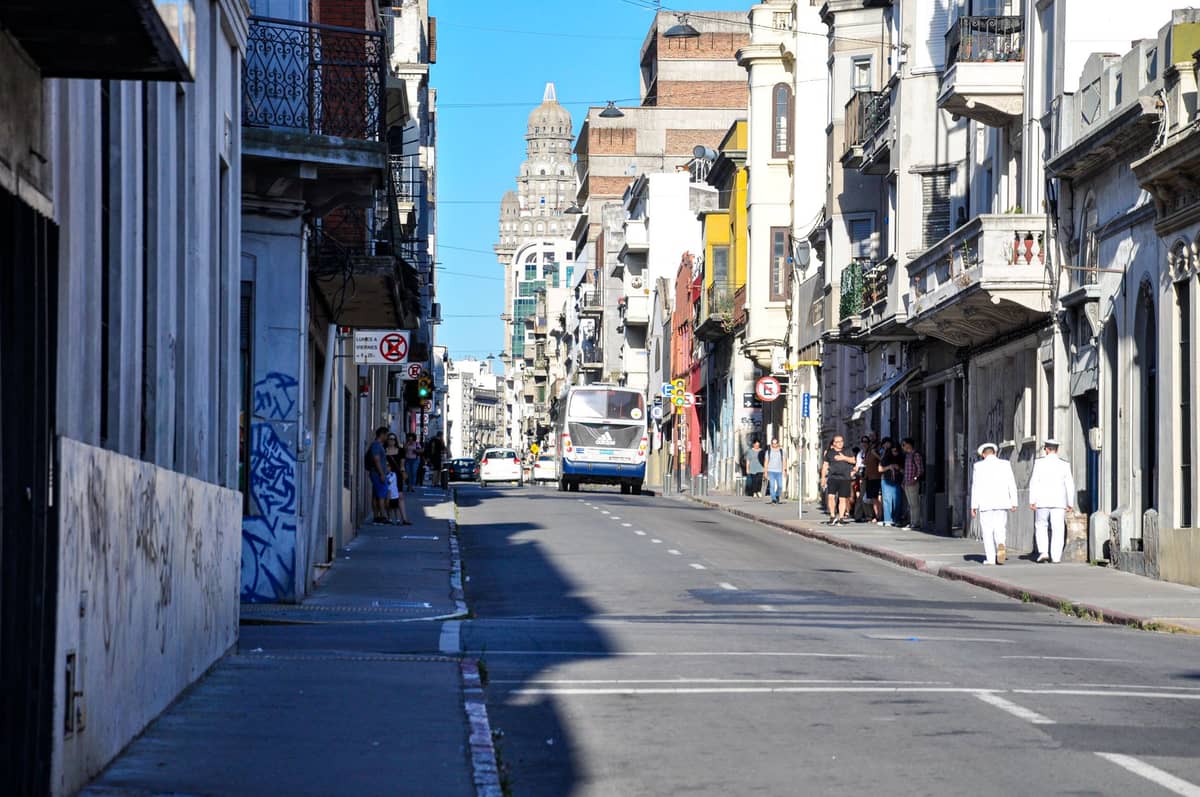
The most efficient way to cover Montevideo's architectural highlights is on foot, using Ciudad Vieja as your base. The historic peninsula is compact — roughly 1.5 km from the Puerta de la Ciudadela at its eastern edge to the port waterfront at the west. Start at Plaza Independencia (the boundary between Ciudad Vieja and Centro), take in Palacio Salvo and the Puerta de la Ciudadela, then walk west through Calle Sarandí — the main pedestrian street — to Plaza Matriz, the original colonial square. From there, loop through the former financial district streets (Calle Zabala, Calle Rincón) to see the concentrated 1920s–1930s commercial architecture.
For the broader Centro arc, Avenida 18 de Julio runs east from Plaza Independencia toward Tres Cruces. This 2.5 km boulevard concentrates much of Montevideo's mid-20th-century commercial architecture, including Palacio Lapido and several notable apartment buildings from the 1940s and 1950s. The walk takes about 30–40 minutes one way, with several cafe stops along the route. It's less dramatic than Ciudad Vieja but gives a fuller picture of how the city developed after the initial historic core.
- Allow 2–3 hours for a self-guided Ciudad Vieja architecture walk, including time to read building facades and take photos.
- Mornings (9:00–12:00) offer better light on the west-facing facades along Sarandí and better crowds for photography.
- The Intendencia de Montevideo (city government) publishes a free architecture walking guide in English — available as a PDF from montevideo.gub.uy — that maps dozens of buildings with brief histories.
- If combining a Palacio Salvo visit with Teatro Solís in the same morning, book the Salvo tour first (it starts at the building) then confirm the Solís slot time separately.
- Wear comfortable shoes: the cobblestones in Ciudad Vieja are uneven, particularly on the smaller cross streets.
Guided Tours: Free, Paid, and What Each Delivers
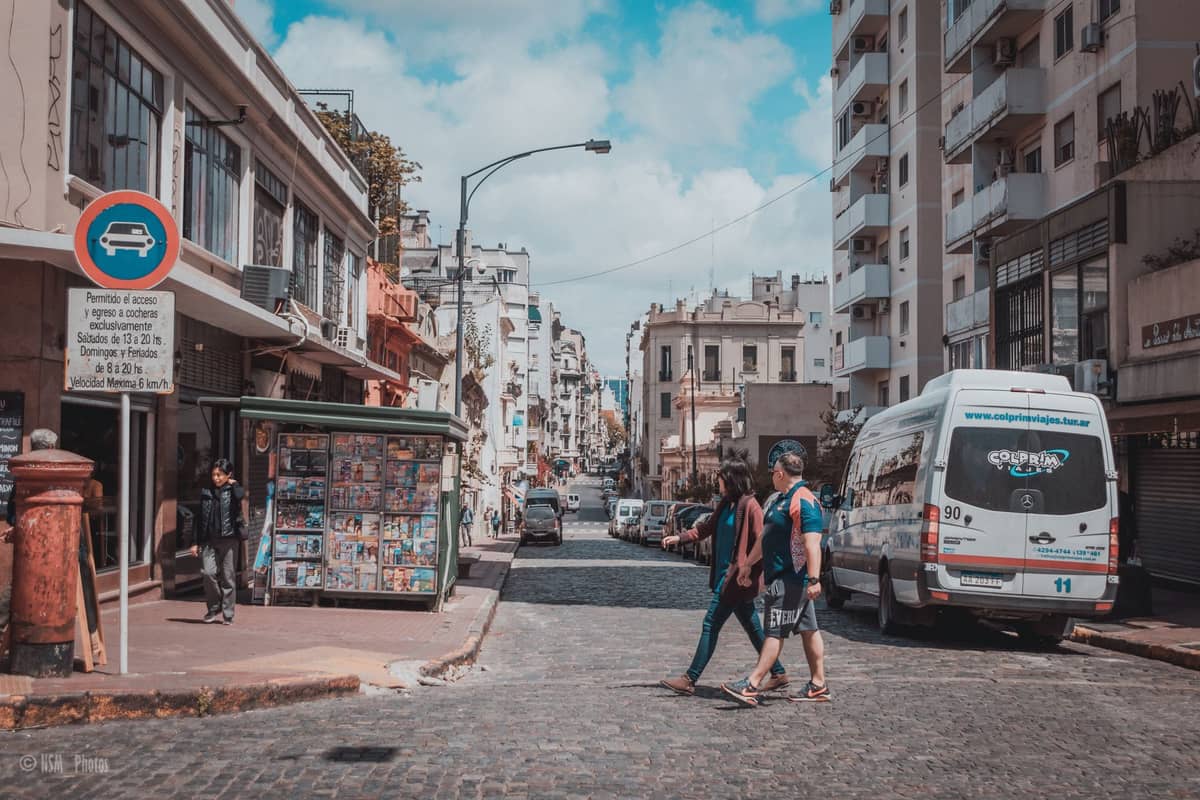
Curioso Free Tour runs one of the more established Old City walking tours, covering Plaza Independencia, Palacio Salvo, Teatro Solís, and several lesser-known buildings over about two hours. The format is tip-based: no fixed price, but €15–€30 per person is appropriate for a good guide. Quality varies depending on the individual guide, and groups can get large in peak season (December–February and July). These tours run most days; check GuruWalk or the operator's own listings for current schedules.
Paid small-group tours of Teatro Solís that include hotel transfers are available through major booking platforms at around USD 95 per adult. That's a significant premium over the walk-in guided tour rate. The transfer option is useful if you're short on time or unfamiliar with the city, but for most independent travelers the direct route (walk in, buy a ticket, join the next tour) is perfectly straightforward and a fraction of the cost.
⚠️ What to skip
Some private 'architecture tours' listed on third-party platforms are simply standard city tours with a thin architectural overlay. Before booking, check whether the guide has specific knowledge of architectural history or whether the tour is primarily a general sightseeing product. The city's official tourism resources and registered guide organizations are the safer benchmark.
For a self-directed alternative that doesn't require booking anything, the Ciudad Vieja walking tour guide covers the key buildings with enough historical context to make the route meaningful without a live guide. Pair it with the Intendencia's free PDF map for the most complete experience.
Architectural Styles Explained: A Brief Field Guide
Understanding what you're looking at makes the walk considerably more interesting. Montevideo's building stock falls into a few broad categories that are easy to identify once you know the signals.
- Neoclassical (1850s–1900s) Symmetrical facades, columns or pilasters, pediments, restrained ornamentation. Teatro Solís and the original Palacio Municipal are the primary examples. These buildings were statements of institutional authority modeled on European civic architecture.
- Eclectic / Historicist (1880s–1920s) Freely combines elements from different historical styles: Renaissance windows, Baroque cornices, Gothic towers. Palacio Piria is the extreme version. Common in commercial and residential buildings of the Belle Époque period.
- Art Deco (1920s–1940s) Vertical emphasis, geometric ornament, stylized relief work, setbacks. Palacio Lapido on 18 de Julio is the textbook example. Look for sunburst motifs, chevrons, and angular lettering on facades.
- Rationalism / Early Modernism (1930s–1950s) Flat facades, horizontal window bands, minimal ornament, reinforced concrete. Several apartment buildings in Centro and Cordón reflect this transition. Less photogenic but historically important as the shift away from decorative excess.
Seasonal Considerations and Practical Notes
Architecture touring is genuinely year-round in Montevideo. The city has a humid subtropical climate with mild winters (daytime highs around 14–15°C in July) and warm summers (26–28°C in January). Neither extreme is prohibitive for walking. The main variable is daylight: winter afternoons get dark by 18:00, which compresses the useful touring window. Spring (September–November) and autumn (March–May) offer the most comfortable temperatures and the best photographic light. For the full context of when to visit, see the best time to visit Montevideo guide.
Teatro Solís tour schedules are the one meaningful seasonal complication. During major performance runs and rehearsal-heavy periods, morning tours are the first to be cancelled or rescheduled. The safest approach is to confirm the day before, either online at teatrosolis.org.uy or in person at the box office on Calle Buenos Aires. Don't rely on the schedule you found in a blog post from two years ago.
If Montevideo's architecture sparks a broader interest in the city's history, several of the major museums sit in or near landmark buildings themselves. The Museo Torres García occupies a modest historic building in Ciudad Vieja, while the Museo Histórico Cabildo is housed in the colonial Cabildo on Plaza Matriz, one of the oldest surviving civic buildings in Montevideo. Visiting these adds interior access to buildings you'd otherwise only see from outside.
FAQ
Can you go inside Palacio Salvo without a guided tour?
The ground floor lobby and the hotel entrance (Esplendor Palacio Salvo operates inside) are accessible without a tour. However, the upper floors, terraces, and observation areas require booking a guided visit. Tours run most mornings and cost around UYU 200 per person; book in advance as slots are limited, particularly on weekends.
Is Teatro Solís worth the visit if I'm not seeing a performance?
Yes, for most architecture and history visitors. The guided tour covers the main auditorium, the stage mechanics, backstage areas, and the restoration story — it's a substantive 45-60 minute experience rather than a quick walk-through. At UYU 200–250, it's one of the better-value cultural experiences in the city. That said, if you have no particular interest in theatre architecture, the time might be better spent on Palacio Salvo or the Palacio Legislativo.
What is the best free architecture experience in Montevideo?
The Palacio Legislativo guided tour is free and covers one of the most impressive interiors in the city — eight types of domestic marble, grand ceremonial halls, and a detailed political history. Free tours run on weekdays; check with the parliament's public affairs office for current times. The Intendencia also publishes a free English-language walking guide (PDF) that covers 30+ buildings in the historic core.
How much time should I budget for an architecture-focused day in Montevideo?
A half-day (4–5 hours) is enough to cover the Ciudad Vieja core: Palacio Salvo tour, a self-guided street walk through the historic district, and a stop at Plaza Matriz and the Cabildo. A full day allows you to add a Teatro Solís tour, walk Avenida 18 de Julio toward Palacio Lapido, and reach Palacio Legislativo. If you're combining with museums or the Rambla, plan for two separate days.
Is Palacio Salvo really Art Deco?
The building is commonly labeled Art Deco, and elements of the style are certainly present, but the classification oversimplifies it. Mario Palanti's design blends Art Deco verticality with Neo-Gothic ornamental detail, Expressionist massing, and some Baroque flourishes. It's more accurately described as Eclectic with Art Deco tendencies — which was common for South American commercial buildings of the late 1920s, where stylistic categories were less rigidly applied than in European or North American practice.
Tickets & tours
Live prices and dates from our booking partner. If you book, we may earn a commission at no extra cost to you.
Planning a trip? Discover personalized activities with the Nomado app.