Teatro Solís: Inside Montevideo's Grand Historic Theatre
Teatro Solís is Montevideo's most important historic theatre, a 19th-century neoclassical landmark one block from Plaza Independencia. Whether you attend a performance or join a guided tour of its gilded interiors, it rewards the visit in ways few buildings in the city can match.
Quick Facts
- Location
- Buenos Aires s/n, corner Bartolomé Mitre, Ciudad Vieja, Montevideo
- Getting There
- Walk 1 block from Plaza Independencia; multiple city bus lines stop at the plaza
- Time Needed
- 45–90 minutes for a guided tour; longer if attending a performance
- Cost
- Guided tour: 200 UYU for nationals / 400 UYU for foreigners / Free on Wednesdays
- Best for
- Architecture lovers, culture seekers, first-time visitors to Montevideo
- Official website
- www.teatrosolis.org.uy
What Is Teatro Solís?
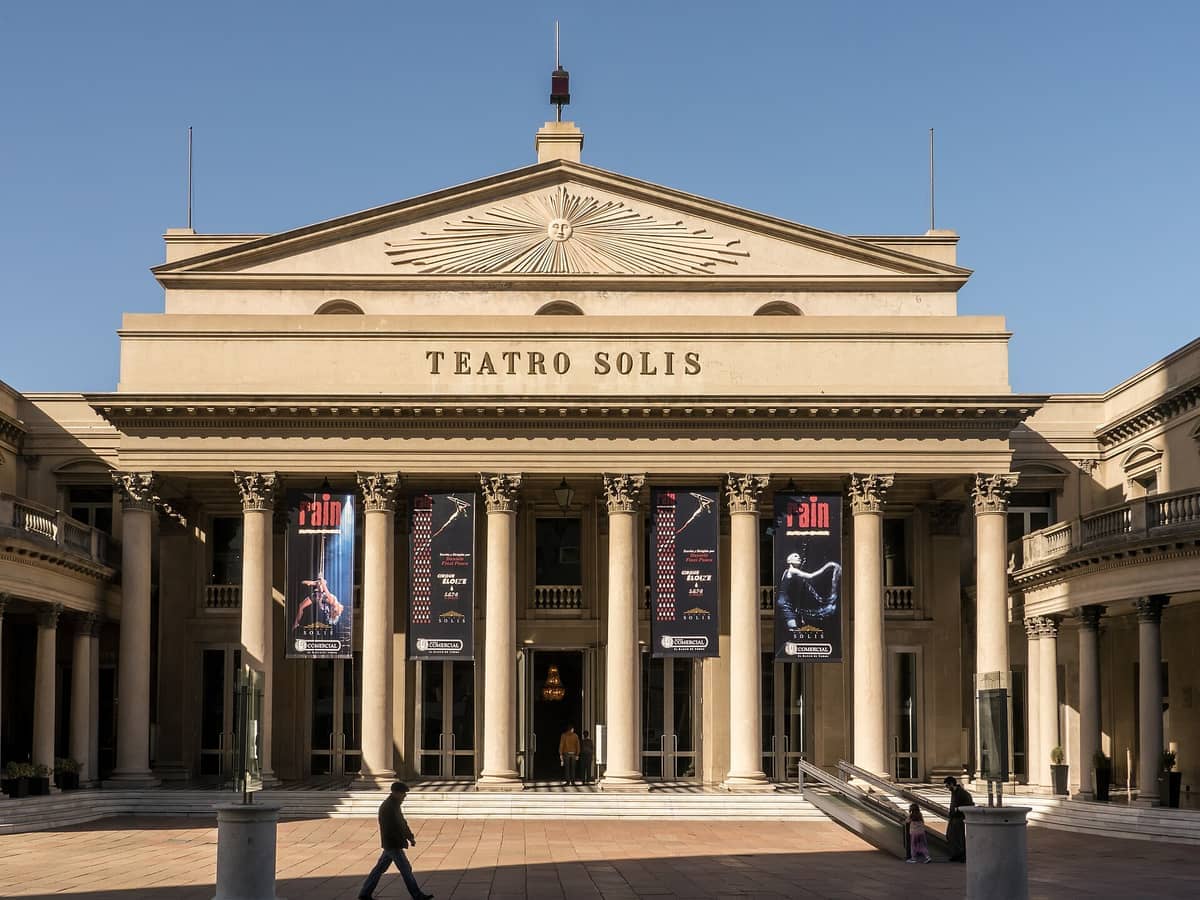
Teatro Solís is Montevideo's premier historic theatre and one of the most architecturally significant buildings in all of Uruguay. Situated in the heart of Ciudad Vieja, the city's colonial old town, it has anchored the cultural life of the Uruguayan capital since the 19th century. The building rises on the corner of Buenos Aires and Bartolomé Mitre, its neoclassical facade giving little away from the street about the ornate world inside.
For travelers already planning time in Ciudad Vieja, Teatro Solís fits naturally into a morning or afternoon circuit. It sits one block from Plaza Independencia, meaning you can combine both in a single outing without backtracking.
💡 Local tip
Guided tours are free every Wednesday. If your schedule allows, this is the obvious day to visit — the experience is identical to paid days, and the crowd is typically thinner mid-week.
The Building: What You Actually See
From the street, the theatre presents a restrained neoclassical exterior: stone columns, symmetrical bays, and a facade that reads as serious rather than showy. The drama comes once you step inside. The main auditorium opens into a horseshoe of tiered boxes, plush seating, and warm gold and red detailing that reflects light differently depending on time of day and whether the stage lighting is active.
The guided tour takes you through spaces that are normally closed to the public: backstage corridors, the fly tower where rigging and scenery are managed, and the older structural elements that survived the building's major restoration in the early 2000s. Staff guides explain the acoustic engineering, the box configuration, and the history of the stage itself, which has hosted opera, ballet, theatre, and political events over its long life.
Photography is generally possible in public areas during guided tours, though restrictions may apply during rehearsals or technical setups. The warm interior tones photograph well under available light, and the upper-tier boxes offer an angle on the auditorium that most images of the theatre don't capture.
Tickets & tours
Live prices and dates from our booking partner. If you book, we may earn a commission at no extra cost to you.
Guided Tour with Wine Tasting Experience at Bouza Winery
From 68 €Instant confirmationFree cancellationAirport to Hotel or Hotel to Airport Transfer in Montevideo
From 47 €Instant confirmationFree cancellationTasting and Lunch at Bodega Pizzorno in Montevideo
From 115 €Instant confirmationFree cancellationPunta del Este full-day guided tour from Montevideo
From 47 €Instant confirmationFree cancellation
Visiting by Time of Day
The theatre building is open to the public Tuesday through Sunday from 14:00 to 20:00, but guided tours themselves run at set times during the day (typically late morning and mid-afternoon), so unscheduled casual visits to interior spaces are not possible in the morning. Afternoon light filters differently through the building depending on the season, but the interior is artificially lit regardless, so the external light matters mainly for the experience of approaching and leaving.
Arriving shortly after 14:00 tends to be the quietest window. By late afternoon, particularly on weekends, tour groups and school visits can create a livelier atmosphere in the lobby and foyer areas. If you prefer a more contemplative pace through the building, aim for a weekday early in the open hours.
On performance nights, the theatre takes on a different character entirely. The box office stays open until the start of the show, and the lobby fills with audience members. Even if you are not attending, the area around the entrance on a performance evening gives you a sense of the theatre as a living institution rather than a preserved monument.
History and Cultural Context
Teatro Solís has 19th-century origins—it opened in 1856—and has been central to Montevideo's cultural identity for well over a century. It is named after Juan Díaz de Solís, the explorer credited with being the first European to reach the Río de la Plata. The building underwent a major restoration and modernization program in the early 2000s, which renewed the technical infrastructure while preserving the historic character of the auditorium and public spaces.
The theatre holds a notable distinction in Latin America: it was the first theatre on the continent to receive formal accessibility certification, recognizing its ramps, wheelchair-accessible boxes, elevators with Braille controls, and trained staff support for visitors with visual impairments. This isn't a footnote — it reflects a meaningful institutional commitment that sets Teatro Solís apart from comparable historic venues across the region. For more on Montevideo's broader cultural offerings, the best museums in Montevideo guide covers several institutions in the same general area.
The theatre sits within Ciudad Vieja's web of 19th and early 20th-century architecture. Walking the surrounding blocks after your visit rewards architectural curiosity, with several notable buildings visible within a short radius.
Practical Details: Getting There, Tickets, and Access
The theatre's address is Buenos Aires s/n, corner Bartolomé Mitre, in Ciudad Vieja. It is one block south of Plaza Independencia, which is served by a large number of city bus lines. On foot from the plaza, you will reach the theatre entrance in under two minutes. Taxis and ride-hailing services can drop you directly at the door.
Guided visit tickets cost 200 UYU for nationals and 400 UYU for foreigners, with Wednesdays free. The box office operates Tuesday through Sunday from 15:00 to 20:00, or until the start of any evening performance. Phone inquiries are handled Monday through Friday 14:00–18:00, and Saturday, Sunday, and holidays 15:00–18:00. Seasonal schedules can vary—check the official site before planning a January visit.
⚠️ What to skip
Hours and ticket prices can change for special events, holidays, and seasonal schedules. Always verify current information at teatrosolis.org.uy before your visit, particularly in January and around major public holidays.
Accessibility is genuinely comprehensive here: the building has elevator access, Braille-equipped controls, wheelchair-accessible boxes, ramp entry, and staff trained to assist visitors with different needs. This applies to both the general visit and guided tour areas. Prams and strollers are also accommodated.
Attending a Performance
Guided tours give you the architecture; a live performance gives you the theatre working as intended. The programme includes opera, orchestral concerts, ballet, and theatrical productions, with the season generally running year-round outside of any specific dark periods or holiday pauses. Ticket prices vary by production and seating location and are available through the box office and the Red UTS ticketing network.
If you are planning a longer stay in Montevideo, pairing a Teatro Solís performance with dinner nearby in Ciudad Vieja makes for a complete evening. The Mercado del Puerto is within walking distance for an earlier meal, though it tends to close by evening. Checking restaurant options on the surrounding streets gives more flexibility for a later post-show dinner.
Dress code for performances is generally smart casual to formal depending on the production type. There is no strict enforcement, but the audience at opera and ballet evenings tends to dress up. For a Tuesday drama performance, the crowd is more mixed.
Honest Assessment: Is It Worth Your Time?
At 200 UYU for Uruguayan visitors and 400 UYU for foreigners (Wednesdays are free), the question of cost barely registers. The more relevant question is whether architectural and cultural tourism is what you want from your time in Montevideo. If you are here primarily for beaches or food markets, Teatro Solís can feel like an obligation rather than a pleasure.
But for anyone interested in how cities accumulate cultural weight, this building delivers. It is not a museum frozen in amber — it is a working theatre with a live programme and a staff that clearly cares about the space. Paired with a walk through Ciudad Vieja and a stop at Plaza Matriz nearby, a Teatro Solís visit forms the backbone of the most rewarding few hours you can spend in Montevideo's historic core.
Who might skip it: travelers with very limited time who have already allocated their indoor hours elsewhere, or those visiting solely for Uruguay's beaches and coastline. If architecture guidebooks are not part of your usual reading, the guided tour may feel repetitive after the first few rooms.
Insider Tips
- Wednesdays are free and typically less crowded than weekends. If you have schedule flexibility, this is the single easiest way to improve the visit.
- Ask at the box office about upcoming rehearsals or open-stage events. Occasionally the theatre runs access programmes where visitors can observe rehearsals from the upper boxes.
- The lobby and foyer areas are worth arriving a few minutes early to examine at a calm pace — the architectural details at eye level repay attention that tour groups sometimes rush past.
- Performance tickets for less prominent weekday shows are often available with very short notice. If you are in Ciudad Vieja in the late afternoon, check the box office board for that evening's programme.
- The theatre is easiest to photograph from the street in the morning before it opens, when the facade is in better light and foot traffic is low. Come back later for the interior visit.
Who Is Teatro Solís For?
- Architecture and heritage travelers who want to see a working 19th-century theatre from the inside
- Culture seekers looking to attend a live opera, ballet, or classical concert at a historically significant venue
- First-time visitors to Montevideo combining a Ciudad Vieja walking circuit with a deeper interior experience
- Travelers with accessibility needs, given the theatre's certified and comprehensive access infrastructure
- Budget-conscious visitors who want a high-quality cultural experience at a very low cost, especially on free Wednesdays
Nearby Attractions
Other things to see while in Ciudad Vieja:
- Catedral Metropolitana de Montevideo
The Catedral Metropolitana de Montevideo, also known as Iglesia Matriz, is the mother church of the Archdiocese of Montevideo and the spiritual anchor of the city's oldest square. A neoclassical basilica with three naves, a transept, and a dome on a cylindrical drum, it stands opposite the Cabildo on Plaza de la Constitución and is free to enter.
- Mercado del Puerto
Mercado del Puerto is the gastronomic heart of Montevideo's Ciudad Vieja, a 19th-century iron-and-glass market hall packed with traditional parrillas, smoke-filled air, and the kind of asado culture that defines Uruguay. Entry is free, the food is serious, and the atmosphere is unlike anything else in the city.
- Museo Andes 1972
Museo Andes 1972 is a compact but deeply affecting memorial museum in Montevideo's historic Ciudad Vieja, dedicated to Uruguayan Air Force Flight 571 and the extraordinary survival story that followed the 1972 Andes crash. Across three levels and 400 square metres, original artifacts, audiovisual material, and survivor accounts transform one of the twentieth century's most gripping human dramas into something quiet, personal, and hard to forget.
- Museo de Arte Precolombino e Indígena (MAPI)
Tucked into a colonial street in Ciudad Vieja, the Museo de Arte Precolombino e Indígena (MAPI) presents thousands of years of indigenous American art with clarity and care. It is compact, thoughtfully curated, and free on Monday mornings — making it one of the most rewarding cultural stops in Montevideo for travelers who want substance over spectacle.
Planning a trip? Discover personalized activities with the Nomado app.