Catedral Metropolitana de Montevideo: The Heart of Ciudad Vieja's Historic Core
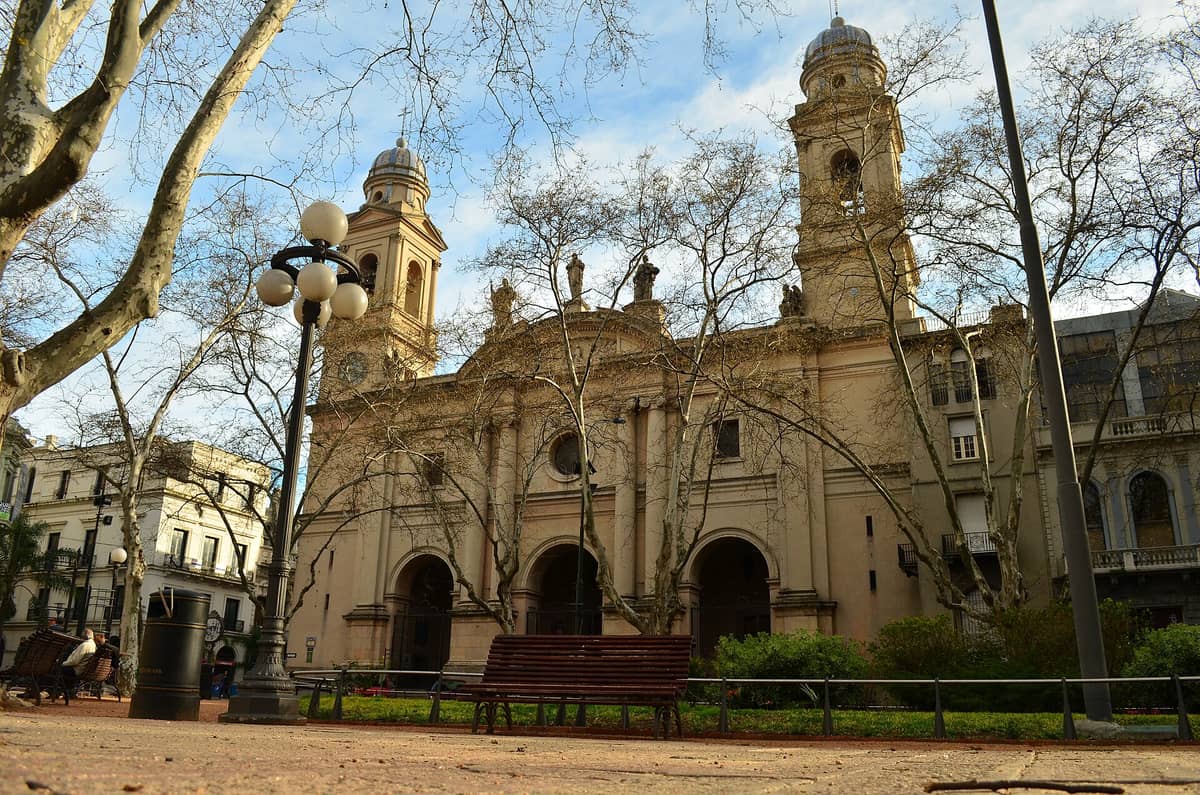
The Catedral Metropolitana de Montevideo, also known as Iglesia Matriz, is the mother church of the Archdiocese of Montevideo and the spiritual anchor of the city's oldest square. A neoclassical basilica with three naves, a transept, and a dome on a cylindrical drum, it stands opposite the Cabildo on Plaza de la Constitución and is free to enter.
Quick Facts
- Location
- Calle Ituzaingó 1373, esq. Sarandí, Plaza Matriz, Ciudad Vieja, Montevideo
- Getting There
- Multiple city bus lines serve Ciudad Vieja; a short walk from Plaza Independencia along Peatonal Sarandí
- Time Needed
- 20–40 minutes for the interior; longer if you linger on Plaza Matriz
- Cost
- Free entry; donations welcome
- Best for
- Architecture lovers, history seekers, quiet reflection, and anyone doing the Ciudad Vieja walking circuit
- Official website
- catedralmontevideo.com.uy/web2
What the Catedral Metropolitana Actually Is
The Catedral Metropolitana de Montevideo, formally dedicated as the Iglesia de la Inmaculada Concepción and locally known as the Iglesia Matriz, is the seat of the Archdiocese of Montevideo and the oldest and most institutionally significant Catholic church in Montevideo. It faces Plaza de la Constitución (Plaza Matriz), the city's founding square, with the Cabildo directly opposite, making this corner of Ciudad Vieja the clearest physical expression of colonial Montevideo's civic and religious life existing side by side.
In architectural terms, it is a neoclassical basilica with three naves, a transept, and a dome raised on a cylindrical drum. The facade is sober and symmetrical, with twin bell towers framing a triangular pediment. Inside, the proportions are generous without being overwhelming: the central nave draws the eye toward the altar, the lateral naves are quieter and feel more intimate, and the quality of light shifts considerably depending on the time of day you arrive.
💡 Local tip
Opening hours vary slightly by day. The church is open Monday to Saturday 09:00–18:00 and on Sundays 10:00–12:30, though these can shift around religious observances and feast days. Check the official parish site before planning a Sunday visit.
How the Experience Changes by Time of Day
Arriving in the morning, around 9:30 to 10:30, gives you the best quality of interior light. The eastern-facing windows allow soft, diffuse light into the lateral naves, and the central nave is quiet enough that you can hear the faint echo of your own footsteps on the stone floor. This is the hour when a handful of locals stop in before work, some briefly lighting a candle, others sitting in pews for a few minutes of silence. The rhythm feels genuinely devotional rather than touristic.
By midday, especially on weekdays, Plaza Matriz outside fills with office workers eating lunch on benches, and the cathedral sees more casual visitors passing through. The light at this hour is flat and less photogenic inside, and the street noise filters in more noticeably through the main doors. It is still worth visiting, but the contemplative quality of the morning visit is harder to find.
Late afternoon, between 16:00 and 17:30, is arguably the most visually rewarding time for photography. The sun moves around to the western side of the building, and warm light enters obliquely through the transept windows, catching the dust in the air and illuminating the dome from below in a way that reads quite dramatically on camera. The square outside becomes more active too, with street vendors and pedestrians using the Peatonal Sarandí nearby.
Tickets & tours
Live prices and dates from our booking partner. If you book, we may earn a commission at no extra cost to you.
Airport to Hotel or Hotel to Airport Transfer in Montevideo
From 47 €Instant confirmationFree cancellationTasting and Lunch at Bodega Pizzorno in Montevideo
From 115 €Instant confirmationFree cancellationPunta del Este full-day guided tour from Montevideo
From 47 €Instant confirmationFree cancellationColonia guided city tour from Montevideo
From 71 €Instant confirmationFree cancellation
Historical and Cultural Context
The cathedral's history is inseparable from the founding of Montevideo itself. The site on Plaza Matriz has been associated with religious practice since the earliest years of the colonial settlement, and the present structure represents successive phases of construction and renovation across centuries. The dedication to the Immaculate Conception reflects the Marian tradition that characterized Spanish colonial religious culture throughout the Río de la Plata region.
As the mother church of the Archdiocese of Montevideo, the Catedral Metropolitana has been the site of state funerals, independence-era ceremonies, and major liturgical events in Uruguayan history. It occupies the same square as the Cabildo, which now functions as a museum. Together, these two buildings represent what was once the administrative and spiritual center of the colonial city. If you are following a structured Ciudad Vieja walking tour, the cathedral and the Cabildo should be treated as a single stop rather than two separate ones: the interplay between the ecclesiastical and civic buildings is part of what makes Plaza Matriz legible as a historic space.
Uruguay is constitutionally secular, having separated church and state with the 1918 constitution, one of the earliest Latin American countries to do so. This secular character is visible in the city's day-to-day atmosphere, and the cathedral's presence in public life is more cultural and historical than politically dominant. That context matters when you observe how Montevideanos interact with the building: with familiarity and without particular ceremony.
Inside the Cathedral: What You Will Actually See
The interior is more restrained than many South American cathedrals. The neoclassical vocabulary keeps ornamentation measured, with columns and pilasters in pale tones, arched ceilings, and artwork distributed across side altars and niches. The main altar is the visual focal point, and the dome above the crossing allows natural light to fall into the center of the building. The acoustic quality of the space is notable: even a low voice carries, and the silence between sounds is unusually complete by city-center standards.
The lateral naves contain devotional chapels and painted works. These are worth examining slowly if you have an interest in religious art, though the collection is not as extensive or internationally significant as those found in major cathedrals in Buenos Aires or Lima. The choir area and organ are visible from the nave but not always accessible to visitors outside of scheduled Masses.
ℹ️ Good to know
Masses are celebrated regularly throughout the week. If you arrive during an active service, you are welcome to enter quietly and observe from the back, but it is courteous to avoid walking around taking photographs during the liturgy. Wait until the service concludes.
Getting There and Practical Logistics
The cathedral sits at the corner of Ituzaingó and Peatonal Sarandí, the pedestrian street that runs between Plaza Independencia and Plaza Matriz. If you are arriving from Plaza Independencia, the walk along Sarandí takes around five minutes and passes several colonial-era facades, bookshops, and the occasional street musician. This route is also the most logical sequence for exploring Ciudad Vieja on foot.
Multiple city bus lines serve Ciudad Vieja, making the area accessible from most parts of Montevideo. For visitors coming from the coastal neighborhoods like Pocitos or Parque Rodó, the Rambla bus routes that connect to the Old Town are the most practical option. There is no metro system in Montevideo. Taxis and ride-hailing services (including Uber) operate throughout the city. For a full overview of how to navigate the city, the guide to getting around Montevideo covers all main options.
Parking is available in lots on the edges of Ciudad Vieja, but driving into the historic core is often impractical due to narrow one-way streets. Walking or arriving by bus is more reliable.
Accessibility
The main entrance, approximately 20 meters from Peatonal Sarandí, is accessible via a ramp with a handrail, built according to national accessibility standards (Uruguay's standardization institute, UNIT). The interior of the church can be navigated by wheelchair. The main doors are swing-type, which may require assistance. Public toilets are not available inside the building for general visitors. For travelers with significant mobility considerations, the approach along Sarandí is pedestrian-only and flat, making the route from Plaza Independencia manageable.
Photography and Visitor Conduct
Photography is generally permitted inside the cathedral during open visiting hours outside of Masses. The dome, seen from directly below on the crossing, is the most architecturally interesting single shot. For exterior photography, the view from the center of Plaza Matriz captures both the cathedral facade and the Cabildo opposite, giving a sense of the historic square's scale. Early morning light hits the facade from the east, which is flattering for architectural shots. A wide-angle lens is useful inside; the central nave is generous but not enormous, and you will not need very wide to capture the full height.
The cathedral is a working religious building, not a museum. Dress modestly: shoulders covered and no beachwear. This is standard for any Catholic church in Uruguay. The wider Montevideo architecture guide puts the cathedral in the context of other significant buildings in the city if you want to deepen your understanding of the neoclassical and Art Deco layers of the urban fabric.
Who Should Manage Their Expectations
If you are traveling from countries with baroque or heavily ornamented cathedral traditions (Spain, Mexico, Brazil), the Catedral Metropolitana may read as understated to the point of plainness. The neoclassical interior is elegant but not visually dense. Visitors hoping for gilded altarpieces, extensive fresco programs, or a large treasury collection will not find them here. The value of this building is historical and spatial rather than decorative.
It is also worth being clear: the cathedral is not an all-day attraction. The average visitor spends between 20 and 40 minutes inside. The real reason to come here is the combination of the building itself with its setting on Plaza Matriz, the surrounding colonial streetscape, and its position as the logical starting or ending point of a Ciudad Vieja walking circuit.
Insider Tips
- Arrive at 9:30 on a weekday morning for the quietest visit and the best interior light. The number of other visitors at this hour is typically very low, and the atmosphere is genuinely calm.
- After visiting the cathedral, cross Plaza Matriz to the Cabildo. The two buildings are essentially one unified historic site: you miss half the story if you only enter one of them.
- The dome is best appreciated from directly below the crossing inside. Stop there and look straight up before moving toward the altar.
- On Sundays, Mass schedules mean the building is less available for casual visiting. If your main interest is the architecture rather than the liturgy, a weekday morning is more practical.
- The Peatonal Sarandí immediately outside is a useful orientation point. Street numbers increase as you move away from the port, so Ituzaingó 1373 is in the heart of the historic grid, easy to locate without a map.
Who Is Catedral Metropolitana de Montevideo For?
- Travelers doing the Ciudad Vieja historical walking circuit who want to understand the colonial urban layout
- Architecture enthusiasts interested in neoclassical ecclesiastical design in Latin America
- Visitors seeking a quiet indoor pause during a full day of outdoor exploration in the Old Town
- Anyone interested in Uruguayan history and the relationship between church, state, and civic space
- Travelers on a budget who want a substantive cultural experience without paying for entry
Nearby Attractions
Other things to see while in Ciudad Vieja:
- Mercado del Puerto
Mercado del Puerto is the gastronomic heart of Montevideo's Ciudad Vieja, a 19th-century iron-and-glass market hall packed with traditional parrillas, smoke-filled air, and the kind of asado culture that defines Uruguay. Entry is free, the food is serious, and the atmosphere is unlike anything else in the city.
- Museo Andes 1972
Museo Andes 1972 is a compact but deeply affecting memorial museum in Montevideo's historic Ciudad Vieja, dedicated to Uruguayan Air Force Flight 571 and the extraordinary survival story that followed the 1972 Andes crash. Across three levels and 400 square metres, original artifacts, audiovisual material, and survivor accounts transform one of the twentieth century's most gripping human dramas into something quiet, personal, and hard to forget.
- Museo de Arte Precolombino e Indígena (MAPI)
Tucked into a colonial street in Ciudad Vieja, the Museo de Arte Precolombino e Indígena (MAPI) presents thousands of years of indigenous American art with clarity and care. It is compact, thoughtfully curated, and free on Monday mornings — making it one of the most rewarding cultural stops in Montevideo for travelers who want substance over spectacle.
- Museo del Carnaval
The Museo del Carnaval on Rambla 25 de Agosto preserves the costumes, drums, and photographs behind Uruguay's legendary carnival tradition. Small in size but dense with cultural weight, it offers genuine insight into a celebration that runs longer than any other in the world.
Planning a trip? Discover personalized activities with the Nomado app.