Museo del Carnaval: Inside Montevideo's Greatest Celebration
The Museo del Carnaval on Rambla 25 de Agosto preserves the costumes, drums, and photographs behind Uruguay's legendary carnival tradition. Small in size but dense with cultural weight, it offers genuine insight into a celebration that runs longer than any other in the world.
Quick Facts
- Location
- Rambla 25 de Agosto de 1825 Nº 218, esq. Maciel, Ciudad Vieja, Montevideo
- Getting There
- City buses to Mercado del Puerto stop; short walk from Plaza Independencia along Peatonal Sarandí
- Time Needed
- 45–90 minutes
- Cost
- Approx. UYU $200 general admission; children under 12 free. Verify on arrival as prices change.
- Best for
- Cultural travelers, carnival enthusiasts, families, first-time visitors to Montevideo
- Official website
- http://www.museodelcarnaval.org
What the Museo del Carnaval Actually Is
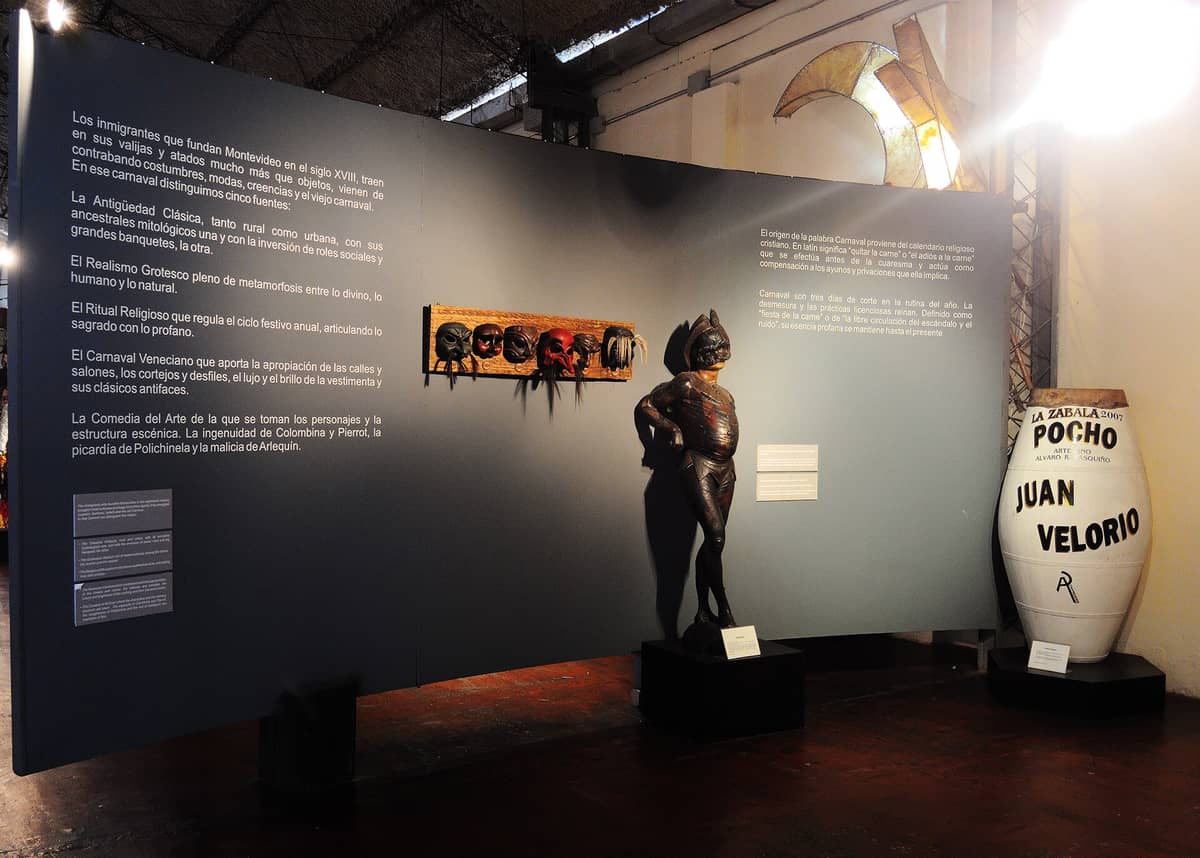
The Museo del Carnaval opened in November 2006 in a compact historic building facing the port waterfront in Ciudad Vieja, near the Mercado del Puerto. Its subject is Uruguay's carnival tradition, which by most counts runs for roughly 40 days each year from late January into early March, making it the longest carnival season in the world. The museum does not stage performances or re-enactments. What it offers instead is a carefully assembled archive of objects, photographs, audiovisual recordings, and costumes that collectively explain how this tradition developed, who maintains it, and what it means to Montevideo.
The scale is modest. This is not a massive institution, and visitors expecting grand halls will find instead a series of intimate rooms packed with detail. That intimacy, if you approach it with curiosity rather than impatience, is one of its strengths. You can get very close to the objects, read the labels without jostling crowds, and absorb the visual complexity of carnival costuming at close range.
ℹ️ Good to know
Opening hours are generally Wednesday to Sunday, 11:00–17:00. Confirm current hours directly with the museum at +598 2916 5493 or contacto@museodelcarnaval.org before visiting.
The Collections: Costumes, Candombe, and Comparsa Culture
The core of the permanent collection centers on the major categories of Uruguayan carnival performance. Murga groups, whose theatrical and satirical musical performances are the backbone of the carnival schedule at the Teatro de Verano, are represented through elaborate stage costumes and archival video. The colors are extraordinary, even under museum lighting: layered sequins, hand-sewn embroidery, and structured headdresses that performers carry through entire shows.
The museum also devotes substantial space to the candombe tradition, the Afro-Uruguayan drumming practice that forms the heartbeat of Barrio Sur and Palermo during carnival season. Photographs trace the llamadas parades, where competing comparsas parade along dedicated streets to the sound of chico, repique, and piano drums. If you plan to see a llamada in person, visiting this museum beforehand gives you a framework for what you are watching. For deeper context on candombe's history and significance, the Montevideo candombe guide is worth reading before your visit.
Parodistas, Humoristas, Revistas, and Lubolos are the other main carnival categories, each with distinct performance styles, costumes, and competitive histories. The museum organizes its displays to reflect these categories, so by the time you exit, you have a working vocabulary for the different groups you might encounter during carnival season or at a performance at the Teatro de Verano.
Tickets & tours
Live prices and dates from our booking partner. If you book, we may earn a commission at no extra cost to you.
Punta del Este full-day guided tour from Montevideo
From 47 €Instant confirmationFree cancellationGuided Tour with Wine Tasting Experience at Bouza Winery
From 68 €Instant confirmationFree cancellationAirport to Hotel or Hotel to Airport Transfer in Montevideo
From 47 €Instant confirmationFree cancellationTasting and Lunch at Bodega Pizzorno in Montevideo
From 115 €Instant confirmationFree cancellation
The Building and Its Location
The museum occupies a historic building on Rambla 25 de Agosto de 1825, the waterfront street that runs along the port edge of Ciudad Vieja. The location is significant: the port district has historically been one of the city's most socially diverse neighborhoods, and the Afro-Uruguayan communities that preserved candombe traditions through the 20th century had strong roots in this part of the city.
Standing outside the entrance, you face the water and the working port infrastructure. On one side is the Mercado del Puerto, whose iron roof and wood-fire grill smoke are impossible to miss. The contrast between the carnival museum's focus on performance and memory and the market's focus on immediate pleasure (grilled meat, wine, weekend crowds) makes for an interesting pairing. Most visitors do both in the same afternoon, which is a reasonable plan.
The building itself sits at street level, which means entry is straightforward. Official accessibility information is limited, and visitors with specific mobility requirements should contact the museum directly before arriving, as detailed specifications about ramps, lifts, or accessible facilities are not published.
How the Experience Changes by Time of Day and Season
The museum opens at 11:00 Wednesday through Sunday. Early in the day, the building is quiet and the light inside is calm. The rooms are small enough that even a handful of simultaneous visitors can make the space feel occupied, so arriving shortly after opening gives you the best chance of moving through at your own pace. By early afternoon, groups from nearby hotels and day-trip visitors from the port area tend to filter through, especially on weekends.
During the carnival season itself, roughly January through early March, the museum gains a kind of live energy that is absent in other months. Carnival is happening outside in the streets, and the connection between the museum's archived objects and the current performances around the city becomes tangible. Visiting in February, when the major competitions are running at the Teatro de Verano in Parque Rodó, allows you to cross-reference what you see in the museum with performances you can attend that same evening.
💡 Local tip
If your trip overlaps with carnival season (late January to early March), visit the museum first and then attend a live murga or candombe event. The museum's explanatory framework transforms a live performance from spectacle into something you can genuinely follow.
Outside carnival season, from April through December, the museum is quieter and the carnival context is more abstract. This is not a problem if you are a patient visitor with an interest in cultural history, but visitors hoping for the full sensory immersion of carnival itself will find the museum more like a study aid than a destination in its own right. The museum preserves memory; the streets and stages provide the experience.
Practical Walkthrough: What to Expect
The visit takes between 45 minutes and 90 minutes for most people. There is no single correct order to move through the rooms, though the layout generally progresses from historical context to the individual carnival categories and then to specific objects and recorded performances. Allow time to watch the audiovisual material: the recordings of llamadas and murga performances give the static costumes and drums around you a sense of movement.
Admission is approximately UYU $200 for adults, with children under 12 entering free. Pricing has varied across recent seasons, and discount schemes for MERCOSUR visitors and holders of certain bank cards have been reported previously. The safest approach is to check the official website or call ahead. Payment conditions at the door may differ from what is listed online at any given time.
The museum is a short walk from Plaza Independencia along Peatonal Sarandí toward the port. City buses serving the Ciudad Vieja and Mercado del Puerto area stop close by on Rambla 25 de Agosto. If you are combining this with a broader walk through the old city, it fits naturally into a route that also includes the nearby Puerta de la Ciudadela and the colonial streets running toward the port.
⚠️ What to skip
Photography policies inside the museum are not clearly published. Ask at the entrance before shooting. Flash photography of historic textiles and costumes is typically restricted in preservation-focused museums.
Who Should Consider Skipping This
The Museo del Carnaval is a focused, specialist institution. Travelers with a passing interest in carnival as a general concept, or those who are primarily visiting Montevideo for its beaches, food scene, or architecture, may find the visit rewarding but not transformative. The collection depth rewards visitors who bring some prior curiosity about Uruguayan popular culture; without that, the individual objects, though visually striking, can feel harder to contextualize.
Visitors with very young children should also factor in the small room sizes and quiet atmosphere. The museum is not designed as an interactive children's space. For a more kinetic family experience in the same neighborhood, the activity around the Mercado del Puerto or a walk along the waterfront is likely a better fit for restless under-sevens.
The museum is also genuinely small. If you are working through a full day in Ciudad Vieja with limited time, you may need to choose between this and other institutions in the area. It is not a half-day attraction; it is a focused 60-to-90-minute stop that works best as part of a broader itinerary rather than as a standalone destination.
Insider Tips
- If you are visiting during carnival season and plan to attend Teatro de Verano performances, pick up a schedule at the museum. Staff are familiar with the current season and can sometimes advise on which murga groups are particularly strong in a given year.
- The museum's location next to Mercado del Puerto means the area gets extremely crowded on Saturday lunchtimes. If your goal is a calm museum visit followed by a meal at the market, arrive at the museum when it opens at 11:00 and move to the market before noon, rather than arriving with the main lunch crowd.
- Ask at reception whether any temporary exhibitions are running. The museum supplements its permanent collection with rotating displays that sometimes focus on specific carnival categories, decades, or individual performers, and these can significantly expand the experience.
- Admission prices are denominated in Uruguayan pesos and may be adjusted seasonally or annually. Carrying local currency makes payment straightforward, though you should confirm whether card payment is accepted if you prefer not to carry cash.
- The building faces the Rambla and the port, which means there is good natural light on the exterior in the morning. If you want photographs of the building's facade with the waterfront in the background, shoot from the Rambla side before entering.
Who Is Museo del Carnaval For?
- Travelers visiting Montevideo during carnival season who want to understand what they are seeing in the streets and at performances
- Cultural travelers with a specific interest in Afro-Uruguayan history, candombe traditions, and popular performance culture
- First-time visitors to Montevideo wanting a concise introduction to one of the country's most distinctive cultural expressions
- Families with older children (8 and up) who can engage with visual and audiovisual displays at their own pace
- Anyone combining a Ciudad Vieja walking tour with the Mercado del Puerto and looking for a meaningful cultural stop along the way
Nearby Attractions
Other things to see while in Ciudad Vieja:
- Catedral Metropolitana de Montevideo
The Catedral Metropolitana de Montevideo, also known as Iglesia Matriz, is the mother church of the Archdiocese of Montevideo and the spiritual anchor of the city's oldest square. A neoclassical basilica with three naves, a transept, and a dome on a cylindrical drum, it stands opposite the Cabildo on Plaza de la Constitución and is free to enter.
- Mercado del Puerto
Mercado del Puerto is the gastronomic heart of Montevideo's Ciudad Vieja, a 19th-century iron-and-glass market hall packed with traditional parrillas, smoke-filled air, and the kind of asado culture that defines Uruguay. Entry is free, the food is serious, and the atmosphere is unlike anything else in the city.
- Museo Andes 1972
Museo Andes 1972 is a compact but deeply affecting memorial museum in Montevideo's historic Ciudad Vieja, dedicated to Uruguayan Air Force Flight 571 and the extraordinary survival story that followed the 1972 Andes crash. Across three levels and 400 square metres, original artifacts, audiovisual material, and survivor accounts transform one of the twentieth century's most gripping human dramas into something quiet, personal, and hard to forget.
- Museo de Arte Precolombino e Indígena (MAPI)
Tucked into a colonial street in Ciudad Vieja, the Museo de Arte Precolombino e Indígena (MAPI) presents thousands of years of indigenous American art with clarity and care. It is compact, thoughtfully curated, and free on Monday mornings — making it one of the most rewarding cultural stops in Montevideo for travelers who want substance over spectacle.
Planning a trip? Discover personalized activities with the Nomado app.