Museo de Arte Precolombino e Indígena (MAPI): Indigenous Art in the Heart of Old Montevideo
Tucked into a colonial street in Ciudad Vieja, the Museo de Arte Precolombino e Indígena (MAPI) presents thousands of years of indigenous American art with clarity and care. It is compact, thoughtfully curated, and free on Monday mornings — making it one of the most rewarding cultural stops in Montevideo for travelers who want substance over spectacle.
Quick Facts
- Location
- 25 de Mayo 279, between Colón and Pérez Castellano, Ciudad Vieja, Montevideo
- Getting There
- Multiple city buses serve Ciudad Vieja; the museum is walkable from Plaza Independencia (approx. 10 min on foot heading west into the old city)
- Time Needed
- 1 to 2 hours
- Cost
- Free entry on Mondays until 2:00 pm; verify current general admission pricing at mapi.uy before visiting
- Best for
- History enthusiasts, art lovers, curious travelers wanting cultural depth beyond colonial architecture
- Official website
- mapi.uy
What MAPI Actually Is — and Why It Stands Apart
The Museo de Arte Precolombino e Indígena, universally known as MAPI, is Montevideo's dedicated museum for pre-Columbian and indigenous American art. It operates under the Department of Culture of the Municipality of Montevideo and occupies a restored building on 25 de Mayo, one of the quieter colonial streets threading through Ciudad Vieja. The street itself — narrow, cobbled, lined with 19th-century facades — sets an appropriately contemplative tone before you even step inside.
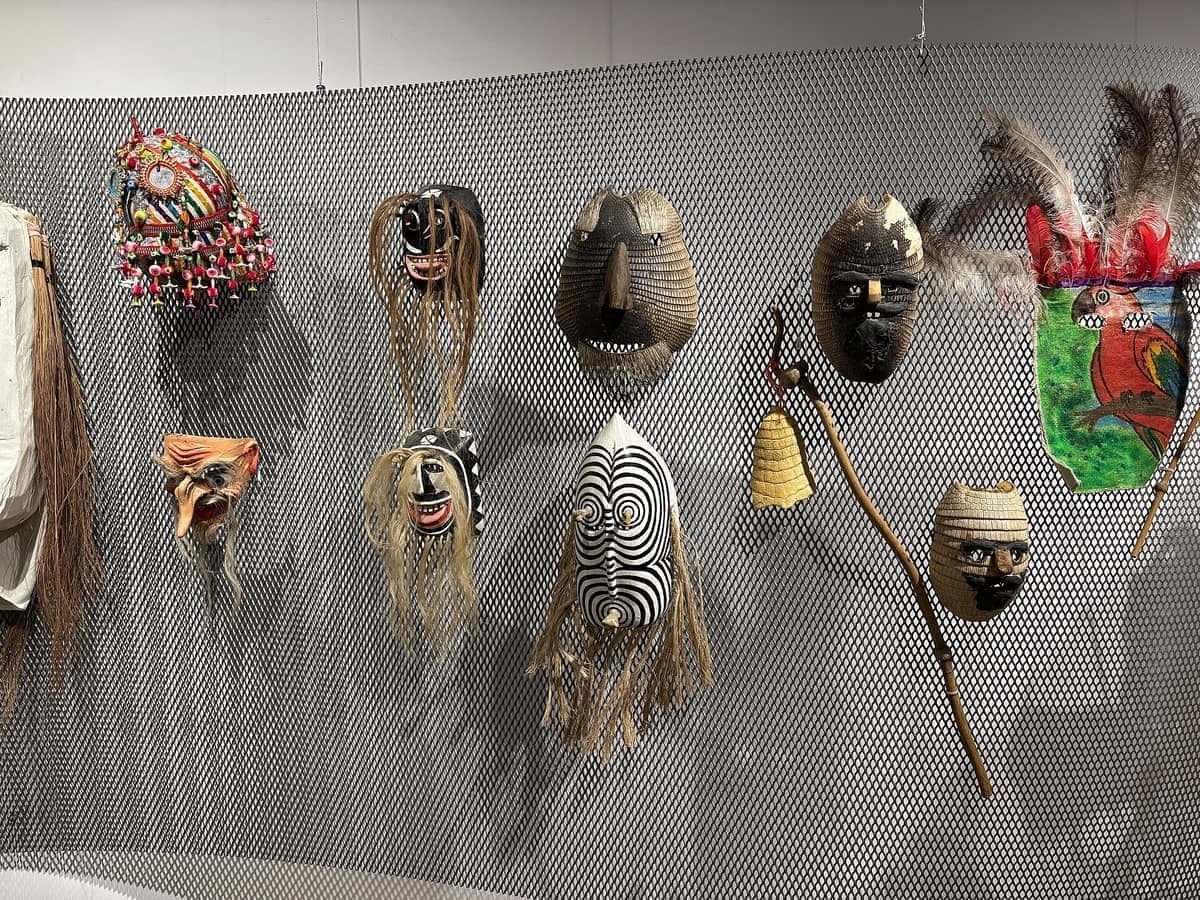
What distinguishes MAPI from a general history museum is its curatorial focus. The collection does not scatter attention across all of Uruguayan or South American history. Instead, it concentrates on objects created by indigenous peoples across the Americas — ceramics, textiles, stone carvings, and ritual items — organized in ways that foreground artistic intention rather than treating the works as ethnographic specimens. That framing matters. You leave thinking about the makers as artists, not just as archaeological subjects.
For travelers already planning a walk through Ciudad Vieja, MAPI fits naturally into a route that might also include Plaza Matriz, the Catedral Metropolitana, and the nearby Mercado del Puerto. A morning that starts at MAPI, when crowds are thinnest, and ends with lunch at the market, works particularly well.
Opening Hours and When to Go
MAPI is open Monday through Saturday, 10:30 am to 6:00 pm. Last admission is at 5:30 pm — note that arriving at 5:45 pm will get you turned away at the door. The museum is closed on Sundays, which catches visitors off guard if they are planning a full weekend itinerary around Ciudad Vieja.
💡 Local tip
Monday mornings are free until 2:00 pm. If your schedule allows, this is the best time to visit: fewer visitors, no admission cost, and the cool morning light filtering into the galleries creates a calm atmosphere suited to the material. Arrive before 11:00 am for the quietest experience.
Midweek mornings — Tuesday through Thursday before noon — are also reliably uncrowded. Saturday afternoons tend to draw more visitors, including school and tour groups in the earlier hours. The collection is not large enough to feel overwhelming on a busy day, but the quieter sessions allow more time at individual pieces without feeling rushed.
Tickets & tours
Live prices and dates from our booking partner. If you book, we may earn a commission at no extra cost to you.
Guided Tour with Wine Tasting Experience at Bouza Winery
From 68 €Instant confirmationFree cancellationAirport to Hotel or Hotel to Airport Transfer in Montevideo
From 47 €Instant confirmationFree cancellationTasting and Lunch at Bodega Pizzorno in Montevideo
From 115 €Instant confirmationFree cancellationPunta del Este full-day guided tour from Montevideo
From 47 €Instant confirmationFree cancellation
Inside the Collection: What You Will See
The collection spans a remarkable geographic and temporal range: objects from Mesoamerican cultures, Andean civilizations, Amazonian peoples, and the indigenous groups of the Southern Cone, some predating the Common Era by centuries. Ceramics dominate in terms of sheer number — vessels, figurines, and ritual containers in an extraordinary variety of forms — but textiles, metalwork, and carved stone pieces also feature prominently.
Several pieces consistently draw sustained attention from visitors. Andean textiles, where geometric patterns were encoded with cultural meaning, reward slow looking: the closer you stand, the more the structure of individual threads becomes visible, and the more the precision of pre-industrial weaving becomes apparent. Ceramic figurines from various Mesoamerican traditions vary enormously in character, from serene to animated, and the museum's labeling does a reasonable job of contextualizing what each culture is understood to have valued in human representation.
The building itself is worth a few moments of attention. The restored colonial structure has been adapted thoughtfully — display lighting is controlled, climate is regulated, and the room layout follows a logic that allows visitors to move through regional and thematic groupings without backtracking. The rooms are not large, but the proportions feel appropriate to the collection's scale. It never feels like objects are being stretched to fill space.
ℹ️ Good to know
Exhibition labels at MAPI are provided in Spanish. Some temporary exhibitions include English translations. If reading Spanish is not comfortable, it helps to do a brief background read on pre-Columbian cultures before your visit so the visual context carries the experience when language gaps appear.
The Neighborhood Context: Ciudad Vieja Around MAPI
25 de Mayo is one of the more atmospheric streets in Ciudad Vieja. It runs roughly north-south through the old peninsula, and this block in particular retains much of its 19th-century character: ground-floor doorways with iron fittings, worn stone thresholds, and the faint smell of old plaster that marks genuinely historic buildings rather than recently restored facsimiles. The street is narrow enough that traffic is minimal, and the ambient sound is mostly footsteps and distant port activity.
Before 11:00 am, this stretch of 25 de Mayo is almost entirely quiet. A few cafes are opening, delivery workers pass through, and pigeons hold the cobblestones. By midday the area picks up modestly, with nearby office workers and a trickle of tourists on the architecture circuit. There is no large plaza directly in front of MAPI to generate crowd density — it sits mid-block, which contributes to the sense of discovery when you find it.
The surrounding Ciudad Vieja rewards exploration before or after your museum visit. The walking tour of Ciudad Vieja covers many of the key buildings within easy distance, including the Palacio Salvo and the Puerta de la Ciudadela, both of which anchor the historic district's architectural identity.
Practical Details: Getting There, Accessibility, and Photography
MAPI is located at 25 de Mayo 279, between the cross streets Colón and Pérez Castellano. From Plaza Independencia — Montevideo's main central square and the eastern gateway to Ciudad Vieja — the museum is a short walk heading west through the old city streets. The route is straightforward and mostly flat, passing through the core of the historic district. Multiple city bus lines serve Ciudad Vieja; the network is extensive, though route planning benefits from checking current schedules directly with operators or local apps before traveling.
The museum confirms wheelchair access is available. The building's historic structure means that some adaptation has been required to achieve this, and visitors with specific mobility requirements may wish to contact the museum directly before arriving to confirm current access details.
Photography policies in smaller Uruguayan museums vary and can change with specific exhibitions. Generally, non-flash photography for personal use is permitted in many such institutions, but it is worth asking staff at the entrance before raising a camera. The controlled lighting in the galleries, while excellent for viewing, can make handheld shots of darker alcoves challenging without image stabilization.
⚠️ What to skip
The museum is closed on Sundays. If Ciudad Vieja is on your itinerary for a Sunday, plan your cultural visits accordingly — several nearby churches and the Mercado del Puerto remain open, but MAPI will not be.
Honest Assessment: Who This Museum Is Really For
MAPI is a focused, serious museum. It is not an immersive, multimedia experience with interactive displays and theatrical staging. The collection is presented with scholarly care in a relatively traditional format, with informative but text-heavy labeling. Visitors who come looking for entertainment in the theme-park sense will find it underwhelming. Visitors who arrive genuinely curious about indigenous American civilizations and their material cultures will find it quietly extraordinary.
The museum is well suited to travelers who have already covered Montevideo's broader historical and architectural highlights and want something more specific. If you are working through the city's museum landscape, the best museums in Montevideo guide can help you sequence visits efficiently. MAPI pairs particularly well with the Museo Torres García for an art-focused day — one anchored in pre-Columbian indigenous work, the other in 20th-century Uruguayan modernism.
Families with young children face a real question here. The collection is fragile, the atmosphere is contemplative, and the labeling is not designed for children. That said, children who are drawn to ancient objects — the strangeness of very old things — may respond well to the ceramics. It is not the right call for restless toddlers, but curious eight-to-twelve year olds with some preparation in advance could find the visit engaging.
Travelers on extremely tight schedules may reasonably prioritize other Ciudad Vieja sites over MAPI. But for anyone with two hours to spare on a weekday morning, particularly a Monday when entry is free, this museum earns its place on the itinerary without qualification.
Insider Tips
- Visit on a Monday before 2:00 pm for free admission. The museum is significantly less crowded than on Saturday, and the quieter galleries let you spend time with individual pieces that deserve it.
- Do a short background read on Andean or Mesoamerican cultures before arriving. The labeling is informative but in Spanish, and prior context transforms the textile and ceramic galleries from interesting to genuinely absorbing.
- The street outside, 25 de Mayo, is one of the more photogenic in Ciudad Vieja. Arrive a few minutes early and walk a block in each direction before entering — the facades and ironwork on this stretch are worth photographing in morning light.
- Ask staff at the entrance about any current temporary exhibitions. MAPI hosts rotating shows that sometimes focus on specific cultures or time periods, and these can be the most compelling material in the building on a given visit.
- Admission closes at 5:30 pm, not 6:00 pm. The museum website notes this clearly, but it is easy to misread the closing time and arrive too late for entry. Plan to be inside by 5:15 pm at the latest if you are coming at the end of the day.
Who Is Museo de Arte Precolombino e Indígena (MAPI) For?
- History and archaeology enthusiasts who want depth on pre-Columbian and indigenous American cultures
- Art travelers seeking South American collections beyond colonial and European-influenced work
- Budget-conscious visitors: free Monday mornings make this an excellent zero-cost cultural stop
- Solo travelers who appreciate quiet, unhurried museum environments
- Travelers pairing a Ciudad Vieja walking day with a substantive indoor cultural experience
Nearby Attractions
Other things to see while in Ciudad Vieja:
- Catedral Metropolitana de Montevideo
The Catedral Metropolitana de Montevideo, also known as Iglesia Matriz, is the mother church of the Archdiocese of Montevideo and the spiritual anchor of the city's oldest square. A neoclassical basilica with three naves, a transept, and a dome on a cylindrical drum, it stands opposite the Cabildo on Plaza de la Constitución and is free to enter.
- Mercado del Puerto
Mercado del Puerto is the gastronomic heart of Montevideo's Ciudad Vieja, a 19th-century iron-and-glass market hall packed with traditional parrillas, smoke-filled air, and the kind of asado culture that defines Uruguay. Entry is free, the food is serious, and the atmosphere is unlike anything else in the city.
- Museo Andes 1972
Museo Andes 1972 is a compact but deeply affecting memorial museum in Montevideo's historic Ciudad Vieja, dedicated to Uruguayan Air Force Flight 571 and the extraordinary survival story that followed the 1972 Andes crash. Across three levels and 400 square metres, original artifacts, audiovisual material, and survivor accounts transform one of the twentieth century's most gripping human dramas into something quiet, personal, and hard to forget.
- Museo del Carnaval
The Museo del Carnaval on Rambla 25 de Agosto preserves the costumes, drums, and photographs behind Uruguay's legendary carnival tradition. Small in size but dense with cultural weight, it offers genuine insight into a celebration that runs longer than any other in the world.
Planning a trip? Discover personalized activities with the Nomado app.