Museo Torres García: Montevideo's Window into Latin American Modernism
Housed on Peatonal Sarandí in Ciudad Vieja, the Museo Torres García is the permanent home of Joaquín Torres García's pioneering constructivist work. Small in footprint but dense in ideas, it rewards visitors who slow down and look closely.
Quick Facts
- Location
- Peatonal Sarandí 683, Ciudad Vieja, Montevideo
- Getting There
- Walk 5 min from Plaza Independencia along Peatonal Sarandí; multiple city bus routes stop at or near the plaza
- Time Needed
- 45–90 minutes
- Cost
- 200 UYU (visitors); 100 UYU (Uruguay residents with ID). Verify current rates at the museum or official site.
- Best for
- Art lovers, design-minded travelers, anyone curious about Latin American modernism
- Official website
- http://www.torresgarcia.org.uy
What Is the Museo Torres García?
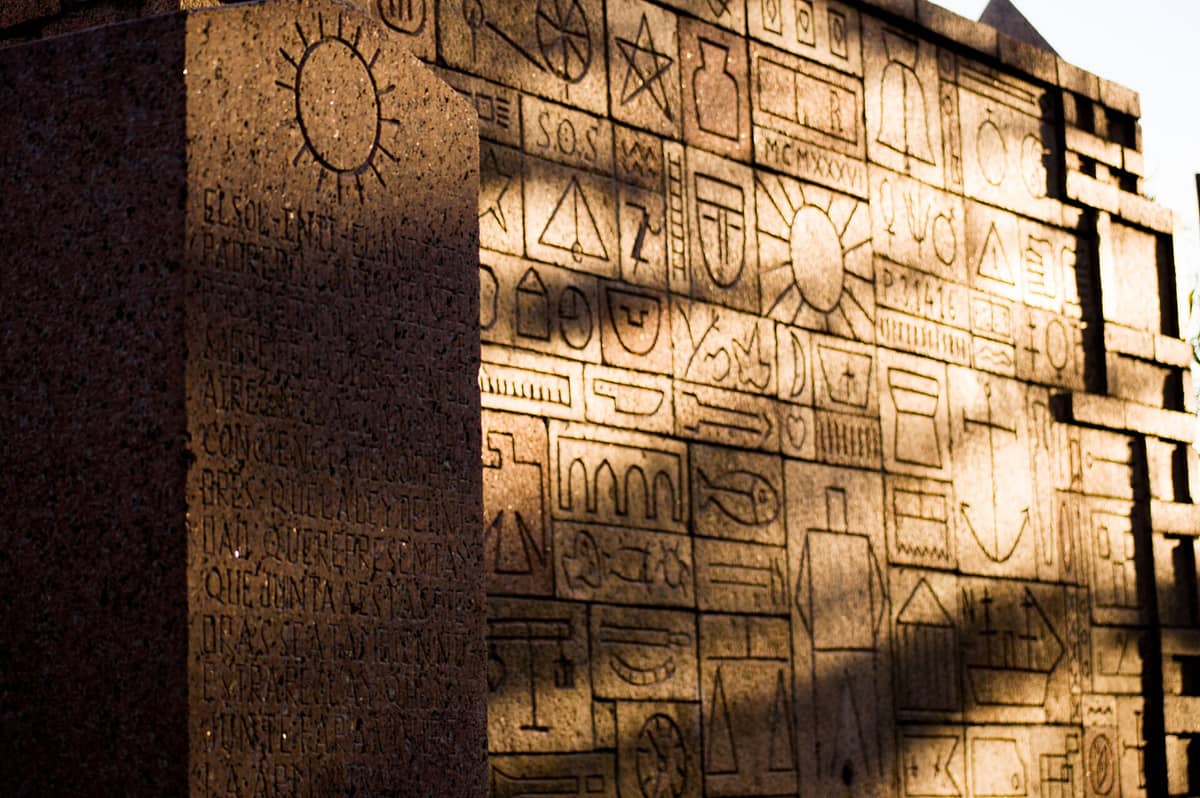
The Museo Torres García, on the pedestrian walkway Peatonal Sarandí in Montevideo's historic Ciudad Vieja, is the definitive space for understanding Joaquín Torres García: one of the most significant Latin American artists of the twentieth century and the creator of a distinctive constructivist language he called Universalismo Constructivo. The museum is operated by the Fundación Joaquín Torres García, established specifically to preserve and exhibit his work and legacy.
Torres García was born in Montevideo in 1874, spent decades in Europe and the United States working alongside figures such as Piet Mondrian and Theo van Doesburg, and returned definitively to Uruguay in 1934, where he spent his final years teaching, writing, and producing an extraordinary volume of work. His most famous single image, the 1943 drawing "América Invertida" (South America at the top of the map), became a cultural touchstone for an entire continent's relationship with its own geography and identity.
The museum sits within easy walking distance of several other major landmarks in the old city, including Plaza Independencia and the Puerta de la Ciudadela. It is compact enough to combine with a broader Plaza Matriz walking loop without feeling rushed.
💡 Local tip
The museum is closed on major public holidays including 1 January, 1 May, 18 July, 25 August, and 25 December. The official hours are 10:00 to 18:00 daily (gallery evacuation begins 10 minutes before closing); some travel sources report it may be closed Sundays, so confirm directly with the museum or via torresgarcia.org.uy before your visit.
The Collection: What You Actually See
The building is multi-story, with exhibition levels organized thematically and chronologically. Entering from Sarandí, you step out of the noise of the pedestrian street and into something far quieter. The ground floor typically introduces Torres García's biography and context, with photographs, documents, and early works that trace his European years.
The core of the collection is his mature constructivist paintings: grids subdivided into compartments filled with schematic symbols, tools, anchors, suns, fish, human figures, and letters. The effect is somewhere between a Mondrian composition and an ancient pictographic script. Up close, the surfaces reveal textured paint and deliberate imperfection. These are not cold geometric abstractions; they carry warmth, even humor.
Beyond the paintings, the museum holds drawings, sculptures, wooden toys, ceramics, and examples of the murals Torres García produced during his career. The variety is one of the surprises. Visitors expecting a painter's retrospective find instead evidence of a builder's mind. The museum also hosts temporary exhibitions, which occupy a portion of the upper floors and rotate throughout the year.
ℹ️ Good to know
Torres García's wooden toys, designed in the 1930s and 1940s, are among the most charming objects in the collection. They reflect his belief that art should not be confined to gallery walls. Look for them carefully; they are sometimes displayed modestly and easy to pass.
Tickets & tours
Live prices and dates from our booking partner. If you book, we may earn a commission at no extra cost to you.
Guided Tour with Wine Tasting Experience at Bouza Winery
From 68 €Instant confirmationFree cancellationAirport to Hotel or Hotel to Airport Transfer in Montevideo
From 47 €Instant confirmationFree cancellationTasting and Lunch at Bodega Pizzorno in Montevideo
From 115 €Instant confirmationFree cancellationPunta del Este full-day guided tour from Montevideo
From 47 €Instant confirmationFree cancellation
How Visits Actually Feel at Different Times of Day
Peatonal Sarandí is at its most active between 11:00 and 14:00, when office workers, tourists, and vendors fill the pedestrian strip. Arriving during this window means a lively approach but can also mean small clusters of visitors inside the museum. The rooms are not large, and a tour group in the building significantly changes the atmosphere.
Mornings just after opening (10:00 to 11:00) tend to be noticeably quieter. The light through the upper floors is good at this hour, and the gallery staff are less occupied, which can make for a more attentive experience. Late afternoon, roughly 16:00 to 17:30, is a second quiet window before closing. The street outside takes on a different quality in the afternoon light as it falls across the colonial facades of Ciudad Vieja.
Because the museum is indoors and climate-controlled, weather matters less here than at most Montevideo attractions. On rainy days in autumn or winter, when temperatures drop to 8–14°C and the old city streets feel grey and damp, the Museo Torres García becomes an especially natural stop: dry, warm, and substantive.
Getting There and Moving Around
The museum's address is Peatonal Sarandí 683, Ciudad Vieja. The most straightforward approach is on foot from Plaza Independencia, which takes roughly five minutes walking west along Sarandí. The street is pedestrianized, flat, and easy to navigate. This makes it accessible for strollers and wheelchairs before you even reach the building.
Inside, the museum has been designed with physical accessibility in mind: double entrance doors, a ramp, and an elevator that serves all exhibition floors. This is notable because many historic buildings in Ciudad Vieja are not accessible. The museum is a clear exception.
Multiple city bus routes serve Plaza Independencia from various parts of Montevideo. Montevideo operates on a bus-only public transit network with no metro system, so the bus is the primary public option. For guidance on navigating the city by bus and other means, see getting around Montevideo.
💡 Local tip
Taxis and ride-hailing apps (including Uber) are available throughout the city and can drop you at the edge of the pedestrian zone. From there, it is about a two-minute walk to the museum entrance.
Photography, Practical Details, and What to Bring
Photography policies in small art museums change, and the Museo Torres García is no exception. Some travel accounts report photography permitted without flash; others indicate restrictions in certain rooms. The safest approach is to ask at the entrance desk, which takes about ten seconds and avoids any awkward confrontations mid-visit.
The museum has a small shop near the entrance where books, prints, and reproductions are available. The publications on Torres García's theory of Universalismo Constructivo are substantive rather than decorative, and the selection tends to be better curated than souvenir shops elsewhere in the city. Spanish is the primary language of museum materials, though some publications and labels include limited English.
Admission as of the official visit page is 200 UYU for international visitors and 100 UYU for Uruguayan residents presenting a national identity document. These figures should be confirmed before visiting, as museum tariffs in Uruguay are updated periodically and exchange rates for the Uruguayan peso fluctuate. The main contact telephone numbers for the museum are (+598) 2916 2663 and (+598) 2915 2635.
Cultural Context: Why Torres García Still Matters
Torres García occupies a position in Latin American art history that is not always well known outside the region but is impossible to overstate within it. He proposed, at a time when the cultural traffic ran almost entirely from Europe to South America, that the Americas had their own visual tradition worth building on. His engagement with pre-Columbian symbols was not decorative appropriation but a genuine theoretical argument about what a universal art language might look like if centered on the southern hemisphere.
This question of identity and cultural origin connects to threads you encounter throughout Montevideo's museums and public spaces. If you find the museum's ideas compelling, a visit to the Museo de Arte Precolombino e Indígena provides a useful counterpoint, showing the actual pre-Columbian objects that Torres García's work was in conversation with.
His Taller Torres García, the art school he founded in Montevideo after his return from Europe, influenced a generation of Uruguayan artists and remains a reference point in the country's cultural history. The museum reflects this pedagogical dimension in how it presents his work: not as isolated masterpieces but as part of a coherent, teachable system.
Montevideo's relationship with art and public culture is broader than one museum. For a wider view of what the city offers across its collections, the guide to the best museums in Montevideo places the Museo Torres García in the context of the city's full range of institutions.
Honest Assessment: Who This Museum Is and Is Not For
The Museo Torres García is a focused, single-artist institution. If you have no prior interest in twentieth-century modernist art or constructivism, and you are working through a city in limited time, this may not be where your hours are best spent. The rooms are not large, the experience is cerebral rather than spectacular, and there is nothing here designed to entertain at a surface level.
If, on the other hand, you are drawn to the intersection of art and ideas, or you are curious about how Latin America developed its own modernist traditions independent of European movements, the museum punches well above its size. It is also one of the more honest and carefully maintained small museums in the city. The collection is presented without unnecessary theatrics, and that restraint is itself a statement about what the museum values.
Insider Tips
- Arrive within the first hour after opening (10:00 to 11:00) for the quietest experience. Sarandí fills up fast with midday foot traffic, and the interior galleries reflect that crowd.
- The museum shop carries serious monographs on Torres García's theories that are difficult to find outside Uruguay. If you are interested in taking something home beyond a postcard, browse here before leaving.
- Look carefully at the wooden construction toys and the ceramics on display. They are easy to walk past in pursuit of the paintings, but they reveal a dimension of Torres García's practice that the canvases alone do not communicate.
- If you want more context before entering, the walk along Peatonal Sarandí itself is historically layered. The street passes colonial-era buildings, and the Puerta de la Ciudadela at its eastern end sets the historical frame for the whole neighborhood.
- The museum telephone is (+598) 2916 2663 (with additional lines such as 2915 2635). A quick call the morning of your visit to confirm hours is worth it, especially around Uruguayan public holidays when schedules can change without prominent online notice.
Who Is Museo Torres García For?
- Art lovers and design-minded travelers with an interest in Latin American modernism
- Architecture and urban history enthusiasts doing a Ciudad Vieja walking circuit
- Rainy-day visitors looking for a dry, substantive alternative to outdoor sightseeing
- Travelers with limited mobility, given the museum's strong accessibility infrastructure
- Anyone researching the cultural history of Uruguay's identity and its relationship with European avant-garde movements
Nearby Attractions
Other things to see while in Ciudad Vieja:
- Catedral Metropolitana de Montevideo
The Catedral Metropolitana de Montevideo, also known as Iglesia Matriz, is the mother church of the Archdiocese of Montevideo and the spiritual anchor of the city's oldest square. A neoclassical basilica with three naves, a transept, and a dome on a cylindrical drum, it stands opposite the Cabildo on Plaza de la Constitución and is free to enter.
- Mercado del Puerto
Mercado del Puerto is the gastronomic heart of Montevideo's Ciudad Vieja, a 19th-century iron-and-glass market hall packed with traditional parrillas, smoke-filled air, and the kind of asado culture that defines Uruguay. Entry is free, the food is serious, and the atmosphere is unlike anything else in the city.
- Museo Andes 1972
Museo Andes 1972 is a compact but deeply affecting memorial museum in Montevideo's historic Ciudad Vieja, dedicated to Uruguayan Air Force Flight 571 and the extraordinary survival story that followed the 1972 Andes crash. Across three levels and 400 square metres, original artifacts, audiovisual material, and survivor accounts transform one of the twentieth century's most gripping human dramas into something quiet, personal, and hard to forget.
- Museo de Arte Precolombino e Indígena (MAPI)
Tucked into a colonial street in Ciudad Vieja, the Museo de Arte Precolombino e Indígena (MAPI) presents thousands of years of indigenous American art with clarity and care. It is compact, thoughtfully curated, and free on Monday mornings — making it one of the most rewarding cultural stops in Montevideo for travelers who want substance over spectacle.
Planning a trip? Discover personalized activities with the Nomado app.