Museo Histórico Cabildo: Montevideo's Colonial Heart in Ciudad Vieja
The Museo Histórico Cabildo de Montevideo occupies the city's most significant colonial-era civic building, steps from Plaza Matriz in Ciudad Vieja. Free to enter and open Monday to Saturday within specific daytime hours, it offers a compact but substantive look at Montevideo's founding period, independence-era politics, and urban evolution — all inside a building that has held civic functions since the colonial period.
Quick Facts
- Location
- Juan Carlos Gómez 1362, esquina Sarandí, Ciudad Vieja, Montevideo
- Getting There
- Multiple city bus lines serve Ciudad Vieja; walkable from Plaza Independencia in about 10 minutes
- Time Needed
- 45 minutes to 1.5 hours
- Cost
- Free (Entrada libre y gratuita)
- Best for
- History enthusiasts, architecture lovers, budget travelers, first-time visitors to Ciudad Vieja
- Official website
- cabildo.montevideo.gub.uy/museo
What the Cabildo Actually Is
The Museo Histórico Cabildo de Montevideo is both a building and an institution, and understanding that distinction makes a visit far more rewarding. The Cabildo itself is the former colonial town hall, one of the oldest surviving civic structures in Montevideo, sitting at the corner of Juan Carlos Gómez and Sarandí in the Ciudad Vieja peninsula. Since 1958, the building has served as the city's official Municipal Historic Museum and Archive, inaugurated there on 21 September 1958. The museum as an institution is older still, founded on 25 August 1915, though it occupied a different location in its early decades before settling here permanently.
The building's colonnaded facade and interior courtyard place it firmly in the Spanish colonial administrative tradition: thick walls, high-ceilinged galleries, stone floors that hold the cool even on warm afternoons. It faces Plaza Matriz, Montevideo's oldest square, which means arriving at the Cabildo is itself a small historical event. The plaza's cathedral on the opposite side, the surrounding 19th-century commercial buildings, and the Cabildo's own arcade create one of the most coherent colonial streetscapes remaining in the city.
💡 Local tip
Free guided visits are commonly offered around 15:00 on selected days without paid booking. If your Spanish is limited, arriving just before 3 PM still gives you a chance to follow along and ask questions — guides at smaller municipal museums often speak some English or are used to international visitors.
The Building as Exhibit: Architecture Worth Slowing Down For
Before you focus on the display cases, take a few minutes with the building itself. The Cabildo's arcaded ground-floor gallery, the inner courtyard, and the proportions of its rooms reflect the administrative architecture Spain exported across its American colonies: functional, formal, and built to project authority. Montevideo was a relatively late Spanish colonial foundation, established formally in 1726, and the Cabildo represents the kind of civic permanence the colonial administration sought to project. Comparing the building's scale and style to, say, the more theatrical facades elsewhere in Ciudad Vieja helps you read the colonial urban hierarchy.
The courtyard, in particular, rewards a slow pace. Stone paving, a central well or fountain feature depending on the restoration period you're visiting, and the surrounding arcaded walkways give the interior a quiet, cloistered feeling entirely at odds with the busy streets outside. Morning light cuts into the courtyard at an angle that makes the stonework look warm rather than austere — if you're doing a Ciudad Vieja walking loop, earlier in the day produces better photography conditions here.
Tickets & tours
Live prices and dates from our booking partner. If you book, we may earn a commission at no extra cost to you.
Guided Tour with Wine Tasting Experience at Bouza Winery
From 68 €Instant confirmationFree cancellationAirport to Hotel or Hotel to Airport Transfer in Montevideo
From 47 €Instant confirmationFree cancellationTasting and Lunch at Bodega Pizzorno in Montevideo
From 115 €Instant confirmationFree cancellationPunta del Este full-day guided tour from Montevideo
From 47 €Instant confirmationFree cancellation
What the Museum Holds: The Collection in Plain Terms
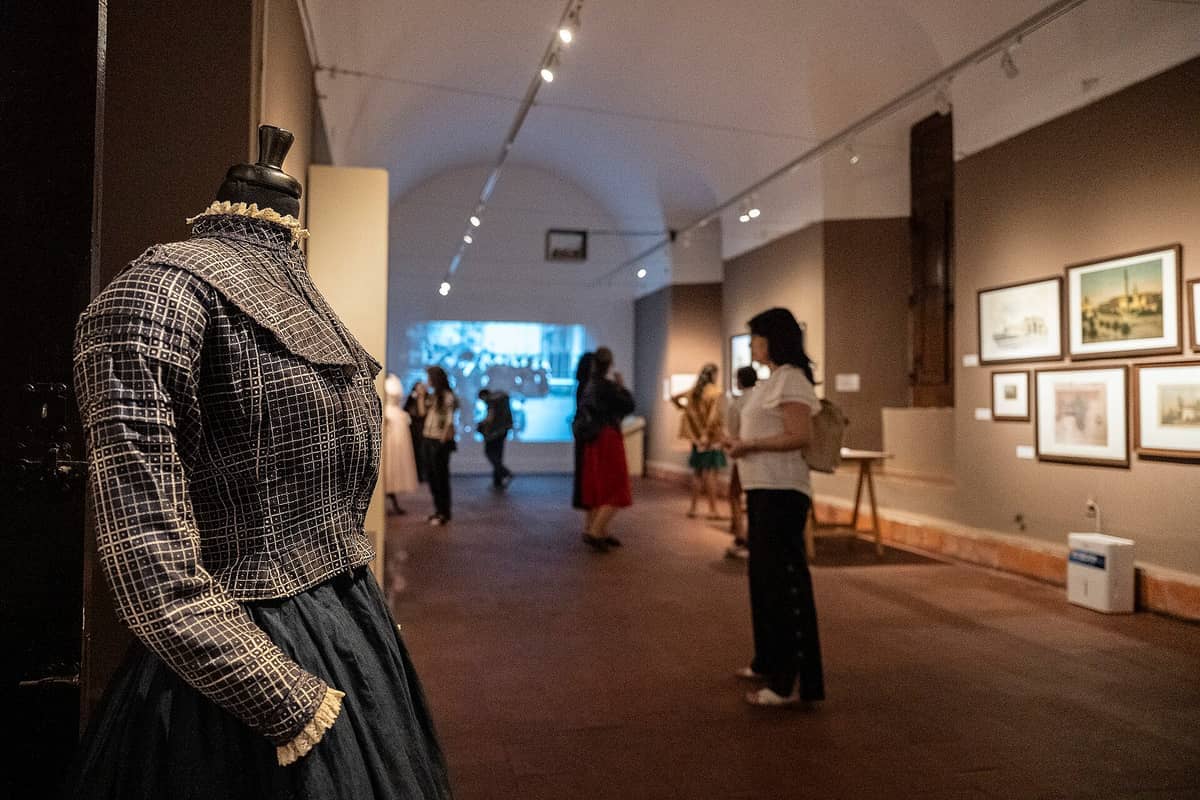
The Cabildo's collection focuses on Montevideo's colonial period, the independence era, and 19th-century civic life. Expect paintings, maps, documents, furniture, decorative objects, and personal items associated with figures from Uruguay's foundational history. The archive function of the building means that research materials related to the city's official past are also maintained here, though access to archival materials is typically separate from the public museum rooms.
The rooms are arranged to give a chronological and thematic walk through the city's history. Colonial-era items sit alongside independence-period artifacts, portraits of civic and military figures, and objects that trace Montevideo's transition from a Spanish garrison town to the capital of an independent republic. The scale is modest rather than encyclopedic, which is actually one of the museum's strengths: you can absorb the full collection in a focused 45-to-90-minute visit without feeling overwhelmed.
Travelers who want a deeper dive into Uruguayan visual culture can pair this visit with the Museo Juan Manuel Blanes, which holds the country's most significant collection of Uruguayan painting, including large-format history canvases that give a very different perspective on some of the same figures and events referenced in the Cabildo's collection.
Visiting by Time of Day: How the Experience Shifts
Weekday mornings before noon are not an option — the museum opens at 12:00 Monday through Friday — and the first hour after opening tends to be quiet. Arriving at 12:00 or 12:30 means you're likely to have the courtyard and several rooms largely to yourself, which makes the architectural reading of the space much easier.
By mid-afternoon, particularly on weekdays around 14:00 to 15:00, school groups and tour parties sometimes pass through. The building's acoustics mean that a single group in the courtyard creates significant noise that carries into adjacent rooms. If you're sensitive to that, the early slot or arriving after 15:30 when groups have typically moved on works better. Saturday mornings, when the museum opens at 11:00, are often the calmest overall, as tourism in Ciudad Vieja tends to build toward the afternoon.
ℹ️ Good to know
Opening hours: Monday to Friday 12:00–17:45, Saturday 11:00–17:00 (also on working public holidays). Closed Sundays. These hours apply year-round including during summer (January–February). Verify at the official site before visiting as municipal schedules can change around public holidays.
Location and Getting There
The Cabildo sits on Plaza Matriz, a short walk north from Plaza Independencia along Sarandí, which is pedestrianized for much of its length through Ciudad Vieja. The walk takes around 10 minutes at an easy pace and passes several notable buildings, making the approach itself part of the experience. Multiple city bus lines run along the edges of Ciudad Vieja, connecting to Centro and the rest of Montevideo's bus network.
If you're arriving from other parts of the city and want orientation on the bus system, the getting around Montevideo guide covers the main routes serving the old town. Ride-hailing apps including Uber operate in Montevideo and can drop you directly on Sarandí or the adjacent streets, which are accessible to vehicles outside the fully pedestrianized blocks.
There is no on-site parking. Ciudad Vieja has some paid street parking on its perimeter streets, but the neighborhood is compact enough that driving into it is rarely the most practical choice. Arriving on foot from Plaza Independencia or by bus from Centro is simpler and puts you on the pedestrian circuit naturally.
Fitting the Cabildo into a Ciudad Vieja Day
The Cabildo works well as part of a longer Ciudad Vieja loop rather than a standalone destination. The museum is free and compact, which means it functions as an anchor for a morning or afternoon that also takes in Plaza Matriz and the Catedral Metropolitana directly on the same square, the pedestrian stretch of Sarandí toward Plaza Independencia, and the Mercado del Puerto a few blocks southwest for lunch.
History-focused visitors can build a denser circuit by combining the Cabildo with the Museo del Carnaval and the Museo Torres García — both within walking distance in Ciudad Vieja — for a half-day covering colonial history, Carnival culture, and 20th-century avant-garde art. The combination gives a fuller picture of Montevideo's layered identity than any single museum visit can provide.
If you're trying to plan a full two-day trip to Montevideo, the 2 days in Montevideo itinerary integrates Ciudad Vieja's key sites efficiently with the rest of the city.
Honest Assessment: Who This Is For and Who Should Skip It
The Museo Histórico Cabildo rewards visitors who arrive with some curiosity about Uruguayan history and are willing to read interpretive panels in Spanish — the collection is not heavily translated into English, which can reduce accessibility for non-Spanish readers visiting without a guide. If your interest in the colonial period is general rather than specific, the building's architecture and the experience of Plaza Matriz may be more memorable than the individual objects inside.
Travelers who find small civic history museums repetitive, or who are specifically looking for pre-Columbian collections, contemporary art, or natural history, will find their time better spent elsewhere in Montevideo. The collection is focused and coherent, but it isn't spectacular in the way that internationally significant collections are. What it offers is context: the kind of institutional memory that helps everything else you see in the city make more sense.
For budget travelers, the free admission removes any calculus about whether it's worth it. For families with younger children, the building's courtyard is engaging, but the collection itself skews toward adults with historical interest rather than interactive or hands-on content.
Insider Tips
- The museum's 15:00 free guided visit is regularly offered according to the current program and is listed as requiring no paid reservation — show up a few minutes early near the entrance to join. Even if you don't follow all the Spanish, the guide's route through the rooms is useful for orientation.
- The courtyard is the architectural centerpiece of the building. Take time before or after viewing the collection to sit in it for a few minutes. The ambient sound shifts noticeably when tour groups aren't present — it becomes surprisingly quiet for a building in the middle of a capital city.
- Sarandí pedestrian street between the Cabildo and Plaza Independencia is worth walking slowly in both directions at different times of day. Street vendors, book sellers, and the changing light on the colonial facades make it feel different in the morning versus late afternoon.
- The museum also functions as a municipal archive, which means the building sees a steady flow of researchers and local officials alongside tourists. This gives it an active, working feeling that distinguishes it from purely ceremonial historic sites.
- Saturday at 11:00 opening is generally the least crowded entry window. Weekday lunchtimes draw office workers to the surrounding streets but rarely into the museum itself, making 12:00 to 13:00 on weekdays also relatively quiet.
Who Is Museo Histórico Cabildo de Montevideo For?
- First-time visitors to Montevideo wanting historical grounding before exploring the rest of Ciudad Vieja
- Architecture enthusiasts interested in surviving Spanish colonial civic buildings in the Río de la Plata region
- Budget travelers: free admission with no booking required
- Travelers combining a Ciudad Vieja walking circuit with lunch at Mercado del Puerto
- History researchers or students with interest in Uruguayan independence-era documents and artifacts
Nearby Attractions
Other things to see while in Ciudad Vieja:
- Catedral Metropolitana de Montevideo
The Catedral Metropolitana de Montevideo, also known as Iglesia Matriz, is the mother church of the Archdiocese of Montevideo and the spiritual anchor of the city's oldest square. A neoclassical basilica with three naves, a transept, and a dome on a cylindrical drum, it stands opposite the Cabildo on Plaza de la Constitución and is free to enter.
- Mercado del Puerto
Mercado del Puerto is the gastronomic heart of Montevideo's Ciudad Vieja, a 19th-century iron-and-glass market hall packed with traditional parrillas, smoke-filled air, and the kind of asado culture that defines Uruguay. Entry is free, the food is serious, and the atmosphere is unlike anything else in the city.
- Museo Andes 1972
Museo Andes 1972 is a compact but deeply affecting memorial museum in Montevideo's historic Ciudad Vieja, dedicated to Uruguayan Air Force Flight 571 and the extraordinary survival story that followed the 1972 Andes crash. Across three levels and 400 square metres, original artifacts, audiovisual material, and survivor accounts transform one of the twentieth century's most gripping human dramas into something quiet, personal, and hard to forget.
- Museo de Arte Precolombino e Indígena (MAPI)
Tucked into a colonial street in Ciudad Vieja, the Museo de Arte Precolombino e Indígena (MAPI) presents thousands of years of indigenous American art with clarity and care. It is compact, thoughtfully curated, and free on Monday mornings — making it one of the most rewarding cultural stops in Montevideo for travelers who want substance over spectacle.
Planning a trip? Discover personalized activities with the Nomado app.