Museo Juan Manuel Blanes: Montevideo's Free Fine Arts Museum in a Historic Villa
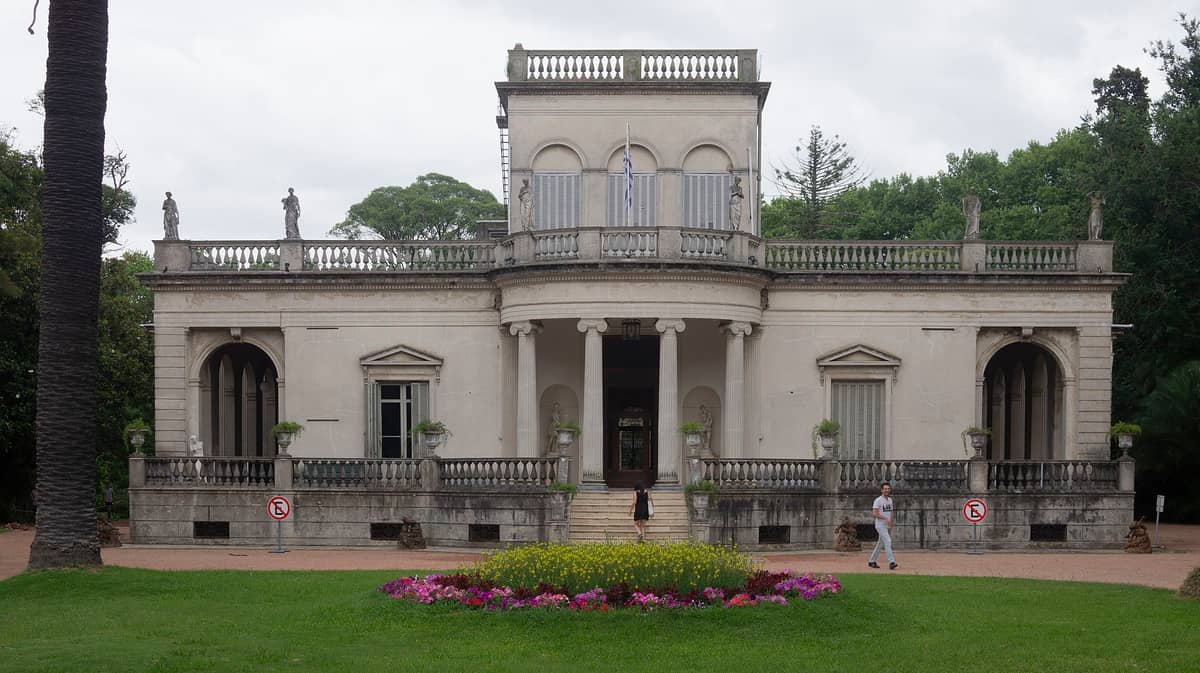
The Juan Manuel Blanes Municipal Museum of the Arts holds more than 4,000 works inside a Palladian-style villa built in 1870 and designated a National Heritage Site. Entry is free, and the surrounding Prado gardens add an unhurried, residential calm that distinguishes the experience from Montevideo's more central cultural sites.
Quick Facts
- Location
- Av. Millán 4015, Prado, Montevideo
- Getting There
- Multiple city buses along Av. Millán; short walk from Parque Prado and the Botanical Garden
- Time Needed
- 1.5 to 2.5 hours for the museum; add 30–45 minutes to stroll the grounds
- Cost
- Free admission
- Best for
- Art lovers, architecture enthusiasts, slow-travel visitors, families with older children
- Official website
- blanes.montevideo.gub.uy
What the Museo Juan Manuel Blanes Actually Is
The Museo Municipal de Bellas Artes Juan Manuel Blanes — known locally as Museo Blanes — is Montevideo's principal fine arts museum and one of the most significant art repositories in Uruguay. It holds a permanent collection of over 4,000 works, displayed on a rotating basis across two floors and 3,476 square metres of exhibition space inside a Palladian-style villa dating to around 1870. The museum opened formally in 1930, and the villa was declared a National Heritage Site in 1975.
The name honours Juan Manuel Blanes (1830–1901), Uruguay's most celebrated 19th-century painter. Blanes trained in Florence and became the defining visual chronicler of the Río de la Plata region, producing large-scale historical canvases depicting pivotal moments in Uruguayan and Argentine history. His paintings are technically precise, often theatrical, and carry genuine weight — not the decorative patriotism you might expect from a state-sponsored collection, but the work of someone genuinely trying to document a young nation finding its footing.
💡 Local tip
Admission is completely free. The museum is open Tuesday to Sunday, 12:00–18:00 (last entry 17:45), and closed on Mondays.
The Building and Grounds: What You See Before You Enter
The villa sits in the Prado neighbourhood, one of Montevideo's quieter and more residential zones, bordered by the Botanical Garden and the broad sweep of Parque Prado. Approaching along Avenida Millán, the transition is gradual — the urban noise fades, replaced by tree canopy, slower foot traffic, and the particular silence of a neighbourhood that isn't trying to impress anyone. The museum grounds are reached through a gated entrance, and the effect is immediately different from anything in Ciudad Vieja or Centro.
The villa itself follows a Palladian template interpreted through a late 19th-century Uruguayan lens: symmetrical facades, arched windows, and a pale exterior that reads differently depending on the light. On overcast winter afternoons, the building looks austere and slightly melancholy. On bright summer mornings, when the grounds are open before the museum itself, the combination of green lawns and warm stone is genuinely striking. The architecture rewards attention before you step inside.
The Prado neighbourhood places Museo Blanes on a natural cultural circuit alongside the Jardín Botánico and Parque Prado, both within easy walking distance. Combining all three into a half-day loop makes logistical sense and gives the visit a more complete, unhurried character.
Tickets & tours
Live prices and dates from our booking partner. If you book, we may earn a commission at no extra cost to you.
Guided Tour with Wine Tasting Experience at Bouza Winery
From 68 €Instant confirmationFree cancellationAirport to Hotel or Hotel to Airport Transfer in Montevideo
From 47 €Instant confirmationFree cancellationTasting and Lunch at Bodega Pizzorno in Montevideo
From 115 €Instant confirmationFree cancellationPunta del Este full-day guided tour from Montevideo
From 47 €Instant confirmationFree cancellation
The Collection: What to Prioritise Inside
The permanent collection spans Uruguayan art from the colonial period through the 20th century, with particular depth in 19th-century figurative work and the post-independence national school. Blanes's own canvases anchor the collection. His large historical paintings — some depicting military campaigns, others more intimate rural scenes — demonstrate a technical fluency acquired in Italy applied to subjects that are entirely Rioplatense. The scale of some pieces demands proper gallery space to appreciate; this building provides it.
Beyond Blanes, the collection includes work by Pedro Figari, whose post-Impressionist paintings of candombe ceremonies and gaucho life represent one of Uruguay's most internationally recognised artistic contributions. Figari's colours are warm and slightly hazy, capturing candlelight and firelight in ways that feel more emotional than documentary. If you have any interest in understanding Afro-Uruguayan cultural history visually, his rooms are essential.
The collection rotates, so not every work is on permanent display. Temporary exhibitions run alongside the permanent galleries and tend to feature contemporary Uruguayan artists. If you want broader context on Montevideo's art and cultural scene before your visit, the guide to Montevideo's best museums covers how Museo Blanes fits alongside other institutions in the city.
How the Visit Changes by Time of Day
The museum opens at noon, which shapes the visitor pattern. Midday on weekdays is consistently the quietest window — school groups tend to arrive in the afternoon, and weekend crowds peak around 15:00 to 17:00. If you want the permanent collection largely to yourself, a Tuesday or Wednesday around 12:00 to 13:30 is reliable.
Late afternoon visits carry a different quality. The light through the villa's arched windows shifts considerably by 17:00, becoming more directional and warmer, which does interesting things to oil paintings that were almost certainly conceived to be seen in similar light. The trade-off is less time before closing, and the energy in the building becomes slightly more rushed as the last-entry window approaches.
The grounds, which open significantly earlier than the galleries, are worth arriving for independently on summer mornings. Before noon, when the museum interior is closed, the gardens attract dog walkers, joggers, and people reading on benches — a Montevideo neighbourhood scene rather than a tourist site. The exterior architecture is fully accessible and worth photographing in morning light.
ℹ️ Good to know
Photography is generally permitted in the permanent galleries, but always confirm for temporary exhibitions, as restrictions vary by show. Natural light enters through the upper windows — a tripod is not practical inside, but a camera with decent low-light performance handles the interior well.
Getting There and Practical Logistics
Prado is not walking distance from Ciudad Vieja or Centro — plan on 20 to 30 minutes by bus or 15 to 20 minutes by taxi or ride-hailing from the city centre. Multiple bus routes use Avenida Millán, and the stop closest to the museum is close enough that the walk from the pavement to the entrance gate is brief. Confirm current route numbers with the STM (Sistema de Transporte Metropolitano) app or website before travelling, as routes are subject to adjustment.
For visitors unfamiliar with navigating Montevideo's bus network, the guide to getting around Montevideo explains how the system works, including how to pay and plan routes efficiently.
The building has two floors, and the historic villa structure means internal access between levels involves stairs. The official museum pages do not detail specific accessibility provisions such as ramps or lifts. Visitors with mobility requirements should contact the museum directly before visiting to confirm current arrangements.
There is no formal cloakroom infrastructure; large bags may be impractical in narrower gallery rooms. Comfortable walking shoes are adequate — no special clothing is required. The surrounding neighbourhood has cafés and small restaurants along Avenida Millán suitable for a meal before or after the visit.
Honest Assessment: Who This Is For, and Who Might Leave Unmoved
Museo Blanes rewards visitors who arrive with some curiosity about Uruguayan history and visual culture. The collection is specifically and deliberately national in focus — this is not a survey of European art or a blockbuster institution with recognisable international names. If you come expecting the breadth of a major European art museum, you will be disappointed. If you come wanting to understand what Uruguay looked like to the people who were building it, the paintings are genuinely illuminating.
The building and setting are the other argument for the visit, independent of any specific interest in Uruguayan painting. A Palladian villa in a residential park, free to enter, quiet on weekdays, with decent gallery lighting — it is a good place to spend two hours regardless of your relationship with 19th-century figurative art. For context on how Montevideo's architecture developed during the same period that Blanes was painting, the Montevideo architecture guide provides useful background.
Families with young children should think carefully. The galleries are quiet and delicate, and the collection does not include the interactive or multimedia elements that keep younger visitors engaged. Older children with an interest in history or art will get something from it; toddlers and impatient primary-school-age children probably will not, and the atmosphere does not naturally accommodate the noise that comes with them.
Candombe, History, and Why Figari Matters
Pedro Figari's presence in the collection connects Museo Blanes to a larger story about Afro-Uruguayan cultural identity. His paintings of candombe — the percussion-driven ceremonial music and dance tradition brought by enslaved Africans to the Río de la Plata region — are among the most important visual documents of that culture from the early 20th century. If you want to understand candombe before or after seeing the paintings, the guide to candombe in Montevideo covers its history and where to experience it live today.
Blanes himself documented the yellow fever epidemic of 1871 in Buenos Aires in one of his most reproduced works — a large canvas depicting a scene of crisis and human cost that reads more like journalism than romantic history painting. It represents a documentary instinct that runs through much of his best work. Seeing the original scale of these paintings in person changes them considerably from any reproduction.
Insider Tips
- Arrive at noon when the museum first opens on a Tuesday or Wednesday — you will often have entire gallery rooms to yourself, which makes the large-scale Blanes canvases far more immersive than when other visitors are moving around them.
- The museum grounds open before the galleries. In summer, the garden is worth a 30-minute walk before noon while the building is still closed — the facade photographs well in morning light, and the neighbourhood atmosphere is entirely different from anything in the city centre.
- Temporary exhibitions are free like the permanent collection and sometimes feature the strongest contemporary Uruguayan work in the city. Check the official site before your visit to see what is running alongside the permanent galleries.
- Combine the visit with the Jardín Botánico and Parque Prado into a half-day Prado circuit — all three are within easy walking distance and the neighbourhood rewards slow exploration on foot.
- The last entry is at 17:45, not 18:00. Arriving at 17:30 leaves only 15 minutes before the last-entry cutoff, which is not enough time to see both floors properly. Budget at least 90 minutes inside for a meaningful visit.
Who Is Museo Juan Manuel Blanes For?
- Art and art history enthusiasts with an interest in South American or specifically Uruguayan painting
- Architecture visitors drawn to 19th-century Palladian villa design in a residential setting
- Slow travellers who want to leave the tourist circuit and spend time in a genuine Montevideo neighbourhood
- Budget-conscious visitors seeking a high-quality cultural experience at zero cost
- Anyone wanting visual context for Uruguayan history, the gaucho tradition, or Afro-Uruguayan candombe culture
Nearby Attractions
Combine your visit with:
- Cerro de Montevideo
Standing at 132 metres above sea level, the Cerro de Montevideo is the city's literal high point, crowned by the Fortaleza General Artigas, a 19th-century fortress that once served as watchtower, military prison, and lazaretto. Today it houses a military museum and delivers some of the most expansive views in Uruguay. The visit rewards effort, but requires planning.
- Jardín Botánico de Montevideo
The Museo y Jardín Botánico 'Prof. Atilio Lombardo' is Montevideo's botanical garden and museum, set in the Prado neighborhood. Admission is free, the grounds open daily until 21:00, and the atmosphere shifts noticeably from meditative morning calm to afternoon family strolls. It rewards unhurried visitors with native plant collections, a small natural history museum, and a level of quiet you rarely find this close to the city centre.
- Mercado Agrícola de Montevideo (MAM)
The Mercado Agrícola de Montevideo is a beautifully restored early-20th-century market hall where fresh produce stalls, specialty food vendors, and sit-down restaurants coexist under a soaring iron-and-glass roof. Free to enter and open seven days a week from 9:00 to 22:00, it draws local shoppers in the morning and a gastronomy crowd into the evening hours.
- Museo de la Memoria (MUME)
The Museo de la Memoria (MUME) is Montevideo's dedicated space for confronting Uruguay's dictatorship period and honoring those who resisted it. Housed in a 19th-century country estate, it offers free admission and a sobering, carefully curated experience that rewards visitors willing to engage with difficult history.
Planning a trip? Discover personalized activities with the Nomado app.