Jardín Botánico de Montevideo: The City's Quiet Green Heart
The Museo y Jardín Botánico 'Prof. Atilio Lombardo' is Montevideo's botanical garden and museum, set in the Prado neighborhood. Admission is free, the grounds open daily until 21:00, and the atmosphere shifts noticeably from meditative morning calm to afternoon family strolls. It rewards unhurried visitors with native plant collections, a small natural history museum, and a level of quiet you rarely find this close to the city centre.
Quick Facts
- Location
- Av. 19 de Abril 1181, Prado, Montevideo
- Getting There
- Multiple bus lines serve Av. 19 de Abril; no metro in Montevideo
- Time Needed
- 1.5 to 2.5 hours for garden and museum combined
- Cost
- Free admission to the garden; museum entry also free
- Best for
- Nature lovers, slow travelers, families with children, photographers
- Official website
- jardinbotanico.montevideo.gub.uy
What the Jardín Botánico Actually Is
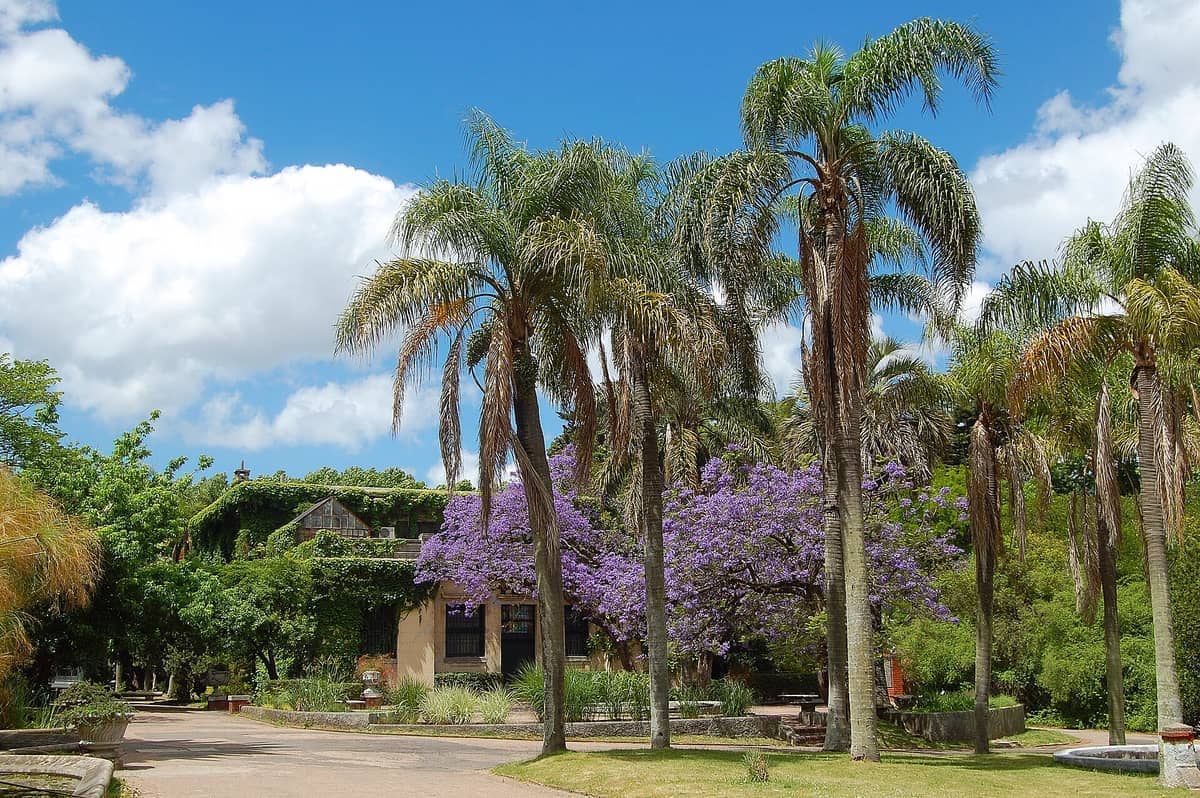
The Museo y Jardín Botánico 'Prof. Atilio Lombardo' is Montevideo's official botanical garden, managed by the city government and named after the Uruguayan botanist Professor Atilio Lombardo. Located in the Prado neighborhood, one of the city's older residential districts northwest of the centre, it functions simultaneously as a scientific collection, a public park, and a small natural history museum. The combination is less common than it sounds: most urban botanical gardens in South America lean hard one way or the other. This one holds both roles without abandoning either.
The garden occupies a substantial green space accessible from the main entrance on Av. 19 de Abril 1181, with a secondary gate on Av. Luis Alberto de Herrera when operational. The Av. 19 de Abril entrance is generally considered the main access point and is easier to find for first-time visitors arriving by bus.
ℹ️ Good to know
Admission is free. The garden opens daily from 07:00 to 21:00 (last entry 20:30 on the Herrera gate side, 21:00 on Av. 19 de Abril). The museum keeps shorter hours: Monday to Friday 09:00–15:45, Saturday 09:00–13:45. The museum is closed on Sundays.
The Feel of the Place: Morning, Afternoon, and Evening
Early mornings here have a specific quality that is hard to find elsewhere in Montevideo. The garden opens at 07:00, and in the first hour or so it attracts joggers cutting through on their route, older residents walking slowly along the main paths, and the occasional birder with binoculars. The light through the canopy is low and filtered, the air carries the smell of damp soil and cut grass, and the sounds from the surrounding streets are almost entirely blocked by the tree cover. It is, briefly, genuinely quiet.
By mid-morning the character shifts. Families begin arriving, particularly on weekends. Children are drawn to the open lawns and the shadier paths, and the greenhouse area and plant collections get more foot traffic. The pace becomes sociable rather than contemplative. On weekday mornings, student groups sometimes visit the museum or take part in guided educational programs, so the museum entrance can be briefly crowded around 10:00–11:00.
Afternoon visits in summer (December through February) require some planning. Montevideo summers are warm and humid, with temperatures regularly reaching 26–28°C, and the garden offers shade but not air conditioning. The tree cover helps considerably, and the paths along the denser planted sections stay cooler than open lawns. In autumn and spring, afternoons are the most comfortable time to visit: temperatures sit between 13°C and 22°C, the light is excellent for photography, and the plant collections show seasonal color. Winter afternoons (June–August) can be sharp, with temperatures dropping toward 8–9°C after sunset, so if you plan to stay past 18:00 in winter, bring a layer.
The garden staying open until 21:00 is an underused fact. On mild evenings in spring and autumn, the hour before closing is remarkably peaceful. Most visitors have left, the light turns golden, and the museum is already shut, which means the outdoor space belongs almost entirely to the few people who know to come late.
Tickets & tours
Live prices and dates from our booking partner. If you book, we may earn a commission at no extra cost to you.
Airport to Hotel or Hotel to Airport Transfer in Montevideo
From 47 €Instant confirmationFree cancellationTasting and Lunch at Bodega Pizzorno in Montevideo
From 115 €Instant confirmationFree cancellationPunta del Este full-day guided tour from Montevideo
From 47 €Instant confirmationFree cancellationColonia guided city tour from Montevideo
From 71 €Instant confirmationFree cancellation
The Plant Collections and Greenhouses
The garden's collections include native Uruguayan and regional flora alongside introduced species. For a visitor without a botany background, the most immediately striking elements are the large mature trees, some of which have been growing here long enough to form genuine canopies rather than the token shade of younger plantings. Walking beneath them, the sense of scale changes. Paths feel smaller, the sky appears in fragments, and the temperature drops a few degrees.
The greenhouses are a separate experience and worth seeking out. They house plants that cannot survive Montevideo's mild but occasionally cold winters outdoors, including tropical and subtropical species. The air inside the greenhouse is noticeably warmer and more humid than outside, and the smell shifts to something more tropical and green. Visiting the greenhouse on a cold winter morning is one of the more pleasant contrasts the garden offers.
Guided visits to the greenhouse and seed distribution are available by prior reservation through the city's official channels. Groups and school visits use this system regularly.
💡 Local tip
To book a guided visit or greenhouse reservation, contact the garden directly through the official Intendencia de Montevideo website rather than via third-party tour operators. The service is aimed at educational groups but is not exclusively reserved for them.
The Museum: What You'll Find Inside
The museum component of the Museo y Jardín Botánico is modest in size and scope compared to the garden itself. It houses botanical and natural history collections connected to Uruguay's flora and the scientific work associated with the institution's namesake, Professor Atilio Lombardo. For visitors whose primary interest is the garden, the museum can feel like a brief complement rather than a destination in its own right. For anyone with a genuine interest in Uruguayan botany, plant taxonomy, or natural history, it provides context that the garden paths alone cannot.
Museum opening hours mean you cannot combine an evening garden visit with a museum tour. If both are on your list, plan to arrive before 15:00 on a weekday or before 13:30 on a Saturday. Sunday visits are garden-only.
If the museum closes before you can get there, the Museo Juan Manuel Blanes is also located in the Prado neighborhood and is worth combining into the same afternoon, particularly for those interested in Uruguayan art and cultural history.
Getting There and Getting Around
The garden is in Prado, a neighborhood that most visitors do not pass through unless they are specifically heading there. It is not within walking distance of the main tourist circuits in Ciudad Vieja or Centro. The most practical approach for most visitors is the bus network. Multiple lines serve Av. 19 de Abril and the surrounding streets; the city's STM app and the Montevideo municipal transport information resources can identify the correct route from wherever you are staying.
Ride-hailing services including Uber operate in Montevideo and provide a straightforward option if you are not yet comfortable with the bus routes. For a broader orientation to moving around the city, the getting around Montevideo guide covers bus cards, apps, and taxi etiquette in detail.
The garden has two access gates, and both lead to the same grounds, but the Av. 19 de Abril entrance is more clearly marked and has more direct bus connections. If you arrive via the Av. Luis Alberto de Herrera gate, note its earlier closing time of 20:45 compared to 21:00 on the Av. 19 de Abril side. Arriving by the wrong gate as it closes is an avoidable irritation.
⚠️ What to skip
The Herrera gate closes at 20:45, five minutes before the Av. 19 de Abril gate. If you plan a late afternoon or evening visit, enter and exit via Av. 19 de Abril to avoid being caught at a locked gate.
Photography, Accessibility, and What to Bring
The garden is excellent for plant and macro photography throughout the year, and the low morning light in spring and autumn provides the most dramatic conditions for canopy shots and dew on foliage. Midday in summer produces harsh flat light on open sections, though the shaded paths still reward close-up work. Bring a wide lens if you want to capture the full scale of the older trees.
Wear comfortable flat shoes. The paths are not technically challenging, but they include some uneven surfaces and gravel sections that are uncomfortable in sandals or dress shoes. In summer, sunscreen and water are worth carrying for the open lawn areas. In winter, a wind-resistant layer is more important than a heavy coat: Montevideo winters are mild (average highs around 14–15°C) but the Prado area can feel exposed on overcast afternoons.
Specific wheelchair accessibility details are not documented on the official garden pages. Visitors with mobility requirements should contact the garden directly through the Intendencia de Montevideo before visiting to confirm which paths and facilities are fully accessible. Do not rely on general assumptions about public park accessibility.
Honest Assessment: Is It Worth the Trip?
The Jardín Botánico is not a spectacle. It will not compete with the visual drama of the city's architectural set pieces or the energy of a Sunday market. What it offers is something genuinely different within Montevideo's attraction landscape: a well-maintained, free, and quiet green space that functions as a real botanical collection rather than a decorative park with labeled plants. The combination of a working museum, guided visit options, and daily public access is genuinely unusual.
For visitors building a fuller picture of Montevideo's green spaces, it pairs well with Parque Prado, which is located in the same neighborhood and includes the famous rose garden. Combining the two in a single morning or afternoon gives a comprehensive look at how Prado has developed as the city's historic green corridor.
Who should skip it: anyone whose available time in Montevideo is very limited and who prioritizes history, architecture, or the waterfront above all else. The garden sits at a distance from the main tourist circuit, and the journey takes real time. If you have only one full day in the city, other attractions will likely deliver more of what most travelers come to Montevideo for. If you have two days or more, the garden earns its place on the list.
For context on how to sequence Montevideo's main sights across multiple days, the 2 days in Montevideo itinerary offers a practical framework that accommodates both the historic core and neighborhoods like Prado.
Insider Tips
- The 19:00–20:45 window on weekday evenings is the least crowded time in the entire garden. Most visitors have left by then, the museum is closed, and the light in autumn and spring is exceptional for photography.
- The secondary Av. Luis Alberto de Herrera gate closes at 20:45, not 21:00. Plan your exit gate before you go in if you are visiting late.
- Guided visits and greenhouse access by reservation are available through the Intendencia de Montevideo and are genuinely different from a self-guided walk. The guided format surfaces details about plant taxonomy and the garden's scientific work that are otherwise invisible to a casual visitor.
- Pair the garden with Parque Prado, a short walk away in the same neighborhood. The rose garden in Parque Prado is one of Montevideo's most photographed spots and rounds out a morning in the area without requiring extra transport.
- If you arrive on a Saturday, get to the museum by 13:00 at the latest. The 13:45 closing time is enforced, and the garden tends to be busiest around midday. Arriving at 09:00 on a Saturday gives you quiet museum time before the park fills up.
Who Is Jardín Botánico de Montevideo For?
- Nature and plant enthusiasts who want to see Uruguay's native flora in a maintained scientific collection
- Photographers looking for macro, canopy, and botanical subjects away from the tourist circuit
- Families with children seeking a free, open, and safe outdoor space with enough variety to hold attention
- Slow travelers spending multiple days in Montevideo who want to explore beyond the waterfront and Ciudad Vieja
- Anyone who wants to understand the Prado neighborhood, one of the city's most historically layered residential districts
Nearby Attractions
Combine your visit with:
- Cerro de Montevideo
Standing at 132 metres above sea level, the Cerro de Montevideo is the city's literal high point, crowned by the Fortaleza General Artigas, a 19th-century fortress that once served as watchtower, military prison, and lazaretto. Today it houses a military museum and delivers some of the most expansive views in Uruguay. The visit rewards effort, but requires planning.
- Mercado Agrícola de Montevideo (MAM)
The Mercado Agrícola de Montevideo is a beautifully restored early-20th-century market hall where fresh produce stalls, specialty food vendors, and sit-down restaurants coexist under a soaring iron-and-glass roof. Free to enter and open seven days a week from 9:00 to 22:00, it draws local shoppers in the morning and a gastronomy crowd into the evening hours.
- Museo de la Memoria (MUME)
The Museo de la Memoria (MUME) is Montevideo's dedicated space for confronting Uruguay's dictatorship period and honoring those who resisted it. Housed in a 19th-century country estate, it offers free admission and a sobering, carefully curated experience that rewards visitors willing to engage with difficult history.
- Museo Juan Manuel Blanes
The Juan Manuel Blanes Municipal Museum of the Arts holds more than 4,000 works inside a Palladian-style villa built in 1870 and designated a National Heritage Site. Entry is free, and the surrounding Prado gardens add an unhurried, residential calm that distinguishes the experience from Montevideo's more central cultural sites.
Planning a trip? Discover personalized activities with the Nomado app.