Cerro de Montevideo and the Fortaleza General Artigas: The City's Highest Point
Standing at 132 metres above sea level, the Cerro de Montevideo is the city's literal high point, crowned by the Fortaleza General Artigas, a 19th-century fortress that once served as watchtower, military prison, and lazaretto. Today it houses a military museum and delivers some of the most expansive views in Uruguay. The visit rewards effort, but requires planning.
Quick Facts
- Location
- José Batlle y Ordóñez S/N, Cerro de Montevideo, 12802 Montevideo
- Getting There
- Bus lines 124 or 125 to Terminal Cerro; then bus 18L or taxi to fortress
- Time Needed
- 2 to 3 hours including transit and the climb
- Cost
- Low-cost entry (fees approximate; verify on-site). Free for children and over-65s per some reports
- Best for
- Panoramic views, Uruguayan military history, photography, half-day excursions
What the Cerro de Montevideo Actually Is
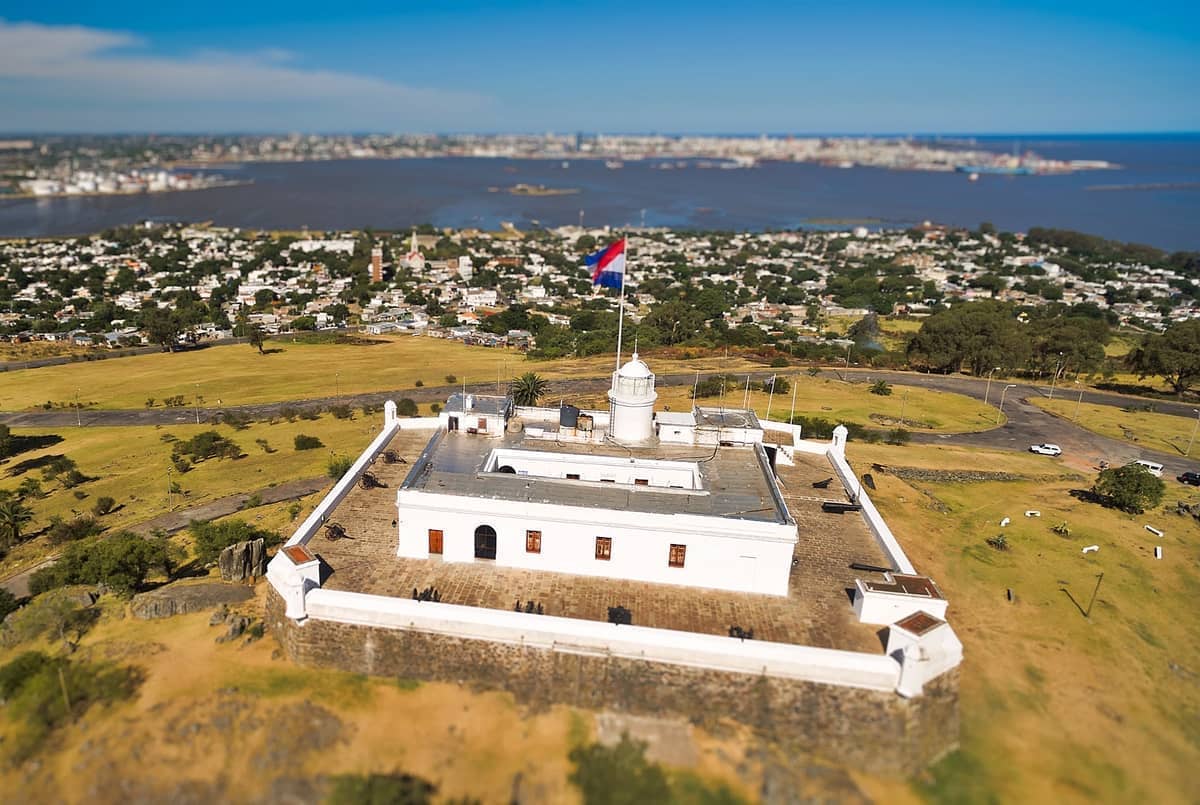
The Cerro de Montevideo is the highest natural point in the city, rising approximately 132 metres above sea level on the western edge of the urban area. That number sounds modest, but given how flat the surrounding terrain is, the elevation translates into genuinely sweeping views across the Río de la Plata, the city skyline, and the broad arc of Montevideo Bay.
At the summit sits the Fortaleza General Artigas, also known as the Fortaleza del Cerro, a historic military fortification whose stone walls date to the early 19th century. The fortress was declared a national historic monument in 1930, and now functions as a military museum open to the public. The combination of landscape and history makes this one of the few places in Montevideo where you can orient yourself geographically while also stepping through centuries of the country's past.
ℹ️ Good to know
The name 'Montevideo' is widely believed to derive from the hill itself. One popular theory traces it to Portuguese navigators recording 'Monte VI de O' or 'Monte vide eu' ('I see a hill') on early charts, though historians debate the exact etymology. Either way, the Cerro is literally where the city gets its name.
The Fortress: History in Stone
Construction of the fortress began in the early 1800s, during the Spanish colonial period, and it changed hands several times as Montevideo passed through Portuguese, Brazilian, and eventually independent Uruguayan control. Its strategic position overlooking the bay made it invaluable for monitoring maritime traffic into the Río de la Plata, one of the widest estuaries in the world.
Over the course of the 19th century, the Fortaleza del Cerro served multiple functions: watchtower, military garrison, prison, and quarantine facility (lazaretto) for ships arriving from ports where disease was a concern. Walking the ramparts today, you can still trace the logic of its design. The walls face outward toward the river, and the interior courtyard is compact enough that you sense how self-contained life inside must have been.
The Military Museum inside the fortress holds a collection of weapons, uniforms, maps, and historical documents spanning Uruguay's independence era through the 20th century. The collection is not large by international standards, but it is curated with enough context to give a visitor without prior knowledge of Uruguayan history a solid grounding. Signage is primarily in Spanish.
Tickets & tours
Live prices and dates from our booking partner. If you book, we may earn a commission at no extra cost to you.
Airport to Hotel or Hotel to Airport Transfer in Montevideo
From 47 €Instant confirmationFree cancellationTasting and Lunch at Bodega Pizzorno in Montevideo
From 115 €Instant confirmationFree cancellationPunta del Este full-day guided tour from Montevideo
From 47 €Instant confirmationFree cancellationColonia guided city tour from Montevideo
From 71 €Instant confirmationFree cancellation
The View: What You See from the Top
The panorama from the fortress walls is the main reason most visitors make the trip. On a clear day, the Río de la Plata stretches to the horizon in every direction, shifting from brown near the shore to a steely blue-grey farther out. To the east, the city's grid resolves into recognizable landmarks: the port cranes, the dome of the Palacio Salvo, and on very clear mornings, the faint outline of the Rambla curving toward Pocitos.
Mornings generally offer the clearest visibility, before afternoon haze builds over the water. Late afternoon light, especially in autumn and winter, turns the stone of the ramparts a warm ochre and the river below a deep copper. If photography is your priority, plan to arrive around 90 minutes before sunset. For context on how these views fit into the city's broader geography, the Rambla de Montevideo running below gives you the inverse perspective, looking back up at the Cerro from sea level.
💡 Local tip
Bring binoculars if you have them. The Río de la Plata is wide enough that distant freighters and ferries are visible but small. Binoculars make the view considerably more rewarding.
Getting There: The Practical Reality
The Cerro sits on the western side of the city, away from the tourist corridor that runs from Ciudad Vieja to Pocitos. This is not a place you stumble upon. Reaching it requires a deliberate trip, and the logistics deserve careful reading before you leave your accommodation.
By public bus, lines 124 and 125 depart from downtown and travel to Terminal Cerro, the bus terminal at the base of the hill. From there, bus line 18L continues up toward the fortress and stops within a few blocks of the entrance. The full journey from central Montevideo typically takes around 30 to 45 minutes depending on traffic. Taxis and ride-hailing apps are a faster option and can drop you closer to the gate.
The surrounding neighbourhood at the base of the hill has a rougher character than the areas most visitors frequent. Several traveller accounts advise against visiting alone, particularly at off-peak hours. Going with at least one other person during daylight, and arranging a return ride in advance rather than relying on finding a taxi at the summit, is a sensible precaution. For broader orientation on navigating the city, the getting around Montevideo guide covers bus routes, apps, and neighbourhood context in detail.
⚠️ What to skip
The area around the base of the Cerro is considered less safe than central Montevideo. Visit during daytime, preferably on a weekday or weekend morning when foot traffic is higher, and arrange your return transport before you head up.
Opening Hours, Tickets, and Timing
Multiple sources cite the fortress as open approximately Wednesday to Sunday, with hours generally falling between 10:00 and 17:00 or later in summer. However, hours have shifted over time and differ across listings. Before making the trip, verify directly with the fortress or check the official Intendencia de Montevideo tourism page, which is the most reliable source.
Entry fees are low by any standard. Different travel sources report figures ranging from around 20 to 150 Uruguayan pesos, with the higher end typically including a guided visit. Children and adults over 65 are reported to enter free. Given the gap between sources and the frequency of price updates in Uruguay, treat any number cited online as approximate and confirm on arrival.
The visit itself takes between one and two hours if you explore the museum and walk the full perimeter of the ramparts. Combining it with the broader neighbourhood requires more time. If you are working through a city itinerary, it pairs well with a morning at the Mercado del Puerto in Ciudad Vieja, which is open primarily at midday. Head to the Cerro in the afternoon when the market crowd has thinned.
The Approach and the Walk Up
The path to the fortress from the bus stop is uphill on a paved road. The incline is consistent but not severe, and the walk takes roughly 15 to 20 minutes at an easy pace. Along the way, the surrounding vegetation becomes noticeably lusher compared to the dry scrub lower on the hill. You will hear birds, and on weekday mornings the road is nearly empty.
The fortress entrance presents itself abruptly: a stone gate in a wall, with a small booth for ticket purchase. Inside, the courtyard is gravel and stone, framed by the original military buildings now converted into museum rooms. The smells shift from the slightly earthy outdoor air to the cooler, dustier interior of a historic building with thick walls and small windows.
Accessibility is limited by the nature of the site. The approach road, the entrance, and many interior areas involve uneven stone surfaces and steps without alternative routes. Visitors with mobility limitations should contact the fortress directly before visiting to understand current conditions, as no formal accessibility scheme is documented in available official materials.
Honest Assessment: Is It Worth the Trip?
The Cerro de Montevideo does not have the polish of a well-funded heritage site. The museum collection is modest, the signage is Spanish-only, and the journey from central Montevideo requires effort and attention to safety. Visitors expecting a slick, bilingual experience comparable to major European fortresses will find it underwhelming. But that is also part of its character: this is a working-class neighbourhood on the edge of a South American capital, and the fortress reflects that honest context rather than hiding it. If you are in Montevideo for only one or two days and prioritise efficiency, there are more immediate rewards in Ciudad Vieja or along the Rambla. But if you have time, an interest in history, and a willingness to navigate independently, the view alone justifies the journey.
For travellers who want a high vantage point with more central access and less logistical complexity, the Mirador de la Intendencia offers rooftop views from the city hall in the Centro neighbourhood, free of charge and easy to combine with other central attractions.
Insider Tips
- Visit on a weekday morning rather than a weekend afternoon. The uphill road is quieter, the fortress less crowded, and the light is better for photographs of the eastern-facing ramparts.
- Ask the ticket booth about guided visits before assuming they are included. Some periods offer guided tours for a slightly higher fee, and a guide dramatically improves the military museum experience given that all signage is in Spanish.
- Carry water. There are no vendors or cafés at the summit level, and the walk up in summer heat (December to February) is warmer than it looks from below.
- Arrange your return transport before you leave the base. Phone for a taxi or book a ride-hailing app while you are still at Terminal Cerro, so you are not waiting alone at the top after the fortress closes.
- The fortress flag is raised daily and visible from parts of the city. If you spot it from the Rambla or the port area, you are already oriented toward the Cerro and can use it as a navigation reference.
Who Is Cerro de Montevideo For?
- History enthusiasts interested in Uruguayan military and colonial heritage
- Photographers seeking wide-angle views of the Río de la Plata and city skyline
- Travellers on extended stays who have covered the central highlights and want context beyond the tourist corridor
- Independent travellers comfortable navigating public buses and modest facilities
- Visitors who want to understand why Montevideo is called Montevideo
Nearby Attractions
Combine your visit with:
- Jardín Botánico de Montevideo
The Museo y Jardín Botánico 'Prof. Atilio Lombardo' is Montevideo's botanical garden and museum, set in the Prado neighborhood. Admission is free, the grounds open daily until 21:00, and the atmosphere shifts noticeably from meditative morning calm to afternoon family strolls. It rewards unhurried visitors with native plant collections, a small natural history museum, and a level of quiet you rarely find this close to the city centre.
- Mercado Agrícola de Montevideo (MAM)
The Mercado Agrícola de Montevideo is a beautifully restored early-20th-century market hall where fresh produce stalls, specialty food vendors, and sit-down restaurants coexist under a soaring iron-and-glass roof. Free to enter and open seven days a week from 9:00 to 22:00, it draws local shoppers in the morning and a gastronomy crowd into the evening hours.
- Museo de la Memoria (MUME)
The Museo de la Memoria (MUME) is Montevideo's dedicated space for confronting Uruguay's dictatorship period and honoring those who resisted it. Housed in a 19th-century country estate, it offers free admission and a sobering, carefully curated experience that rewards visitors willing to engage with difficult history.
- Museo Juan Manuel Blanes
The Juan Manuel Blanes Municipal Museum of the Arts holds more than 4,000 works inside a Palladian-style villa built in 1870 and designated a National Heritage Site. Entry is free, and the surrounding Prado gardens add an unhurried, residential calm that distinguishes the experience from Montevideo's more central cultural sites.
Planning a trip? Discover personalized activities with the Nomado app.