Mirador de la Intendencia: Montevideo from 77 Metres, for Free
The Mirador Panorámico de la Intendencia de Montevideo sits on the 22nd floor of the city's main municipal building, offering unobstructed 360-degree views across the capital, the Río de la Plata, and the surrounding neighbourhoods. Entry is completely free, but you need to book a slot in advance. Here is everything you need to plan a visit.
Quick Facts
- Location
- 22nd floor, Intendencia de Montevideo, Centro. Visitor entrance: Soriano 1372, corner of Ejido.
- Getting There
- Multiple city buses run along Avenida 18 de Julio directly in front of the building. No metro in Montevideo.
- Time Needed
- 30–60 minutes is typical; longer if you linger at the café.
- Cost
- Free. No paid ticket required, but advance online reservation is mandatory (QR code at entry).
- Best for
- City orientation, photography, architecture enthusiasts, and travellers on a tight budget.
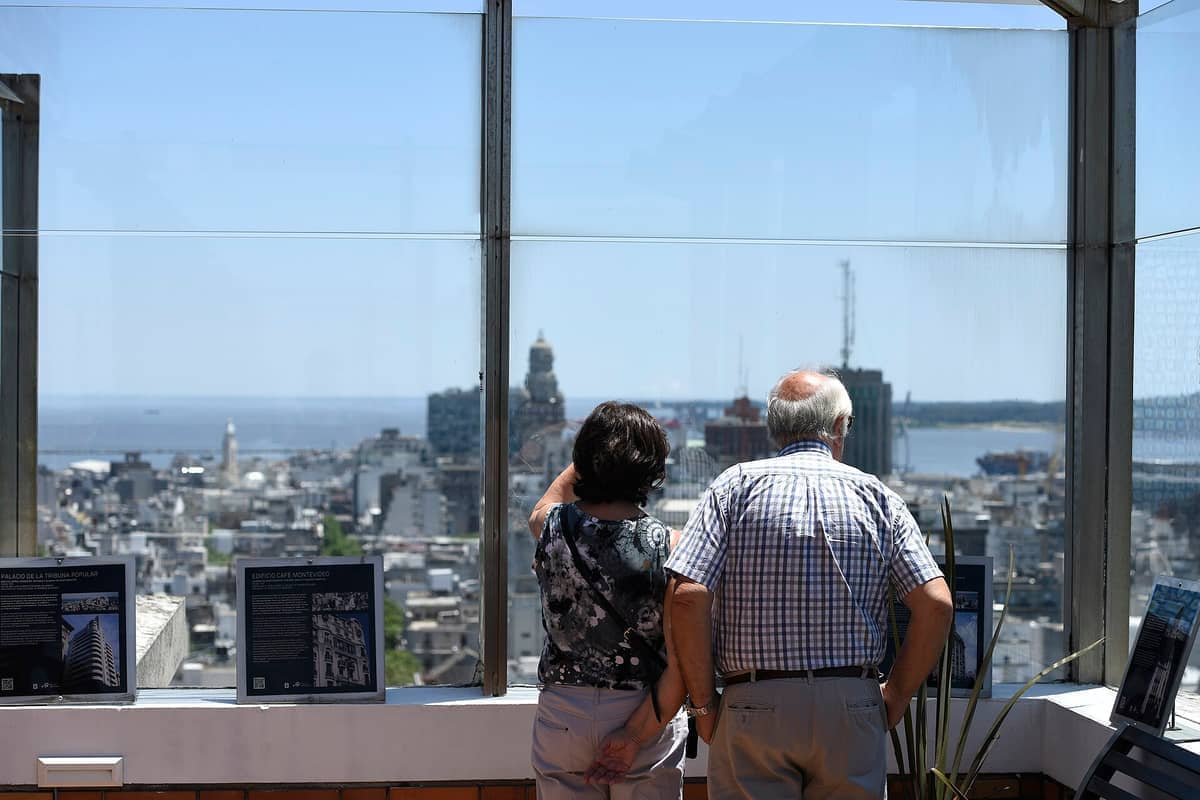
What the Mirador de la Intendencia Actually Is
The Mirador Panorámico de la Intendencia de Montevideo is a public observation deck on the 22nd floor of the Intendencia de Montevideo building, the main headquarters of the city's municipal government, on Avenida 18 de Julio in the Centro district. At approximately 77 metres above street level, it is one of the highest publicly accessible vantage points in the Uruguayan capital, and the fact that it costs nothing to visit makes it one of the most accessible too.
The building itself is a significant piece of mid-20th century civic architecture in Montevideo, and arriving via its formal entrance on 18 de Julio already gives you a sense of the institutional weight it carries. The visitor access to the Mirador, however, is routed through a separate entrance at the back of the building on Soriano 1372, at the corner of Ejido. First-time visitors often walk straight to the main façade and have to loop around, so note that detail before you go.
⚠️ What to skip
Advance reservation is required. You cannot simply walk up and take the elevator. Book your slot online via the official Intendencia de Montevideo tramites portal and bring the QR code to the entrance.
The View: What You Can See from 77 Metres
The platform delivers a genuine 360-degree panorama. To the south and southeast, the Río de la Plata stretches to the horizon, its vast, brown-grey surface fading into the distance with no visible far bank. On clear days, the contrast between the low coastal city and that enormous body of water is one of the more striking urban perspectives you will find in South America. The river is not just background scenery here; it is the dominant geographical fact of Montevideo, and the Mirador makes that legible.
Looking west, the irregular skyline of Ciudad Vieja unfolds, punctuated by the distinctive tower of the Palacio Salvo and the older rooftops of the historic centre. The Salvo, briefly the tallest building in South America after its 1928 completion, remains a commanding landmark from this angle. To the north and east, the city extends across its characteristically flat terrain, with the Tres Cruces area, Parque Batlle, and the residential districts rolling outward. On exceptionally clear winter days, Cerro de Montevideo, the hill that gave the city its name, is visible to the west.
For context on what you are seeing, it helps to have already walked the Ciudad Vieja streets before coming up. The overhead perspective makes architectural relationships that are hard to read at ground level suddenly clear, particularly how the old colonial grid gives way to the wider avenues of the Centro.
Tickets & tours
Live prices and dates from our booking partner. If you book, we may earn a commission at no extra cost to you.
Guided Tour with Wine Tasting Experience at Bouza Winery
From 68 €Instant confirmationFree cancellationAirport to Hotel or Hotel to Airport Transfer in Montevideo
From 47 €Instant confirmationFree cancellationTasting and Lunch at Bodega Pizzorno in Montevideo
From 115 €Instant confirmationFree cancellationPunta del Este full-day guided tour from Montevideo
From 47 €Instant confirmationFree cancellation
How the Experience Changes Through the Day
Morning visits, particularly on weekdays, tend to be quieter. The light from the north and east is strong and useful for photography across the western neighbourhoods, and the air is often clearer before afternoon haze builds over the river. The building is staffed and operational early, but weekday slots around opening time (10:00) are typically easier to book than weekend afternoons.
Weekend afternoons draw more visitors, including Montevidean families, and the small café on the floor adds a social dimension that you do not get on a typical midweek morning. The late afternoon window on summer weekends, when light falls warm and low across the water, produces the most photogenic conditions. That said, those are also the hardest slots to secure, so book well in advance if that timing matters to you.
One detail worth knowing: visits can be suspended when Montevideo issues orange or red weather alerts. The platform is exposed, and the city's climate, while generally mild, does bring rapid weather changes in winter and spring. If you are visiting between June and October, check the weather forecast before heading over, and have a backup plan in case the Mirador is closed on arrival.
💡 Local tip
For photography, late afternoon in summer (December to February) gives the best light over the river. For quieter visits with easier booking, aim for a weekday morning in the shoulder seasons of March–May or September–November.
The Building: A Note on Architectural Context
The Intendencia de Montevideo building is not just a functional government tower. It represents the architectural ambitions of Uruguay's mid-century period, when Montevideo was investing heavily in public institutions and civic infrastructure. The building's scale and position on 18 de Julio, the city's main commercial artery, were deliberate statements about municipal authority and urban modernity. Avenida 18 de Julio itself is the spine of central Montevideo, connecting Plaza Independencia at the western end with the Tres Cruces area to the east, and the Intendencia sits prominently along this corridor.
If you are interested in how this building fits into the broader story of Montevideo's urban development, the Montevideo architecture guide covers the key periods and buildings worth seeking out, including several others visible from the Mirador platform itself.
Practical Walkthrough: From Booking to the Platform
Start by booking your slot on the official Intendencia tramites portal (linked in the Quick Facts above). The system requires you to select a date and time, register basic details, and receive a QR code confirmation. The process is straightforward, though the portal is in Spanish.
On the day, go to Soriano 1372 (corner Ejido), not the main 18 de Julio entrance. Show your QR code at the ground floor desk. Elevators take you up to the 22nd floor. The platform itself is partially enclosed and partially open-air, depending on current configuration. There is no extensive exhibition or signage beyond some orientation markers, so this is a view-focused experience rather than an interpretive one.
A café operates on the same floor, described in municipal communications as being 'almost 80 metres high.' It is a reasonable place to sit with a coffee and extend the experience beyond a quick look around, particularly if you arrive before crowds build. There is no pressure to buy anything to access the view.
ℹ️ Good to know
Opening hours vary by source and may be updated seasonally. Recent official municipal information cites daily visits roughly between 10:00 and early evening. Always verify current hours on the official Intendencia website before visiting, as hours have differed between weekdays and weekends in previous periods.
Getting There and the Surrounding Area
The Mirador sits in the Centro district, which is one of the easiest parts of the city to reach by bus. Multiple lines run along Avenida 18 de Julio, one of Montevideo's main transit corridors. There is no metro system in Montevideo; buses are the primary public transport option. Ride-hailing apps including Uber also operate in the city.
The Mirador pairs naturally with a walk along Avenida 18 de Julio or into Ciudad Vieja. Plaza Independencia is a short walk west, and from there you can continue into the old town on foot. The Ciudad Vieja walking tour gives a structured route if you want to make a half-day of it.
Wear comfortable shoes. The area around the Intendencia building is pedestrian-friendly and flat, and there is no significant walking involved to reach the building itself. Bring a light jacket in winter and spring; the platform can be exposed and wind at 77 metres is noticeably stronger than at street level even on mild days.
Who Will Enjoy This, and Who Might Not
The Mirador works best as a city orientation tool and a photography stop. If you are early in your visit to Montevideo, coming up here before exploring on foot gives you a spatial understanding of how the city is laid out that is hard to get from a map. The free admission makes it a low-stakes decision.
Travellers who prefer immersive, on-the-ground experiences and find observation decks abstract may not get much from this beyond the initial view. The experience is also limited if visibility is poor, which does happen during winter fog or overcast days when the river disappears into grey. If you have limited time in Montevideo and are choosing between this and exploring the streets of Ciudad Vieja, the streets will give you more. But if you have an hour and the weather is cooperating, the Mirador adds real value to a trip.
For travellers planning more broadly around what to see, the guide to things to do in Montevideo puts the Mirador in context alongside the city's other major attractions.
Insider Tips
- Book your reservation as soon as your travel dates are confirmed. Weekend afternoon slots, especially in summer, fill up days in advance. Weekday morning slots are almost always available on shorter notice.
- Enter from Soriano 1372 at the corner of Ejido, not from the main Avenida 18 de Julio façade. First-time visitors frequently waste time going to the wrong entrance.
- Bring a long lens or a phone with good optical zoom if photography matters to you. The Palacio Salvo, the waterfront, and Cerro de Montevideo all reward tighter framing from this height.
- Check Montevideo's weather alert status before you go. Orange or red weather alerts result in the Mirador being closed for safety reasons, and there is no guarantee of rescheduling on the same day.
- The café on the 22nd floor is a genuinely pleasant spot for a coffee above the city. If you time your visit for late morning, you can arrive at opening, spend 20 minutes taking in the view, then settle in before the midday crowd arrives.
Who Is Mirador de la Intendencia For?
- First-time visitors wanting to orient themselves spatially before exploring on foot
- Architecture and urban photography enthusiasts
- Budget travellers who want a high-impact experience at zero cost
- Families with children who will appreciate the scale and novelty of the height
- Anyone combining a half-day walk through Centro and Ciudad Vieja
Nearby Attractions
Other things to see while in Centro:
- Auditorio Nacional del SODRE
The Auditorio Nacional Adela Reta is Uruguay's most important performing arts venue, a 25,000-square-metre complex in central Montevideo that reopened in 2009 after decades of reconstruction. Home to the SODRE symphony orchestra, ballet, and opera, it draws serious music lovers and curious visitors alike.
- Cementerio Central
Inaugurated in 1835, the Central Cemetery of Montevideo is one of South America's most architecturally rich burial grounds. Free to enter and loaded with marble mausoleums, neo-Gothic chapels, and the graves of presidents and artists, it rewards those willing to look slowly.
- Estadio Centenario
Built for the 1930 FIFA World Cup and declared a Monument of World Football, Estadio Centenario is one of the most historically significant sports venues in the Americas. The on-site Uruguayan Football Museum makes it worth visiting even on non-match days.
- Museo del Fútbol (Estadio Centenario)
Housed within the Tribuna Olímpica of the iconic Estadio Centenario, the Museo del Fútbol traces Uruguay's extraordinary football legacy from its earliest amateur roots to World Cup wins in 1930 and 1950. For anyone who takes football seriously, this is one of the most emotionally resonant sports museums in South America.
Planning a trip? Discover personalized activities with the Nomado app.