Auditorio Nacional del SODRE (Adela Reta): Montevideo's Grand Concert Hall
The Auditorio Nacional Adela Reta is Uruguay's most important performing arts venue, a 25,000-square-metre complex in central Montevideo that reopened in 2009 after decades of reconstruction. Home to the SODRE symphony orchestra, ballet, and opera, it draws serious music lovers and curious visitors alike.
Quick Facts
- Location
- Andes esquina Mercedes, Centro, Montevideo
- Getting There
- Multiple city buses serve Avenida 18 de Julio, a short walk away; no metro in Montevideo
- Time Needed
- 2–3 hours for a performance; 30 minutes for a lobby visit or box office stop
- Cost
- Ticket prices vary by event; check sodre.gub.uy for current listings. Box office open Mon–Sat 14:00–19:00.
- Best for
- Classical music, opera, ballet, and architecture enthusiasts
- Official website
- sodre.gub.uy
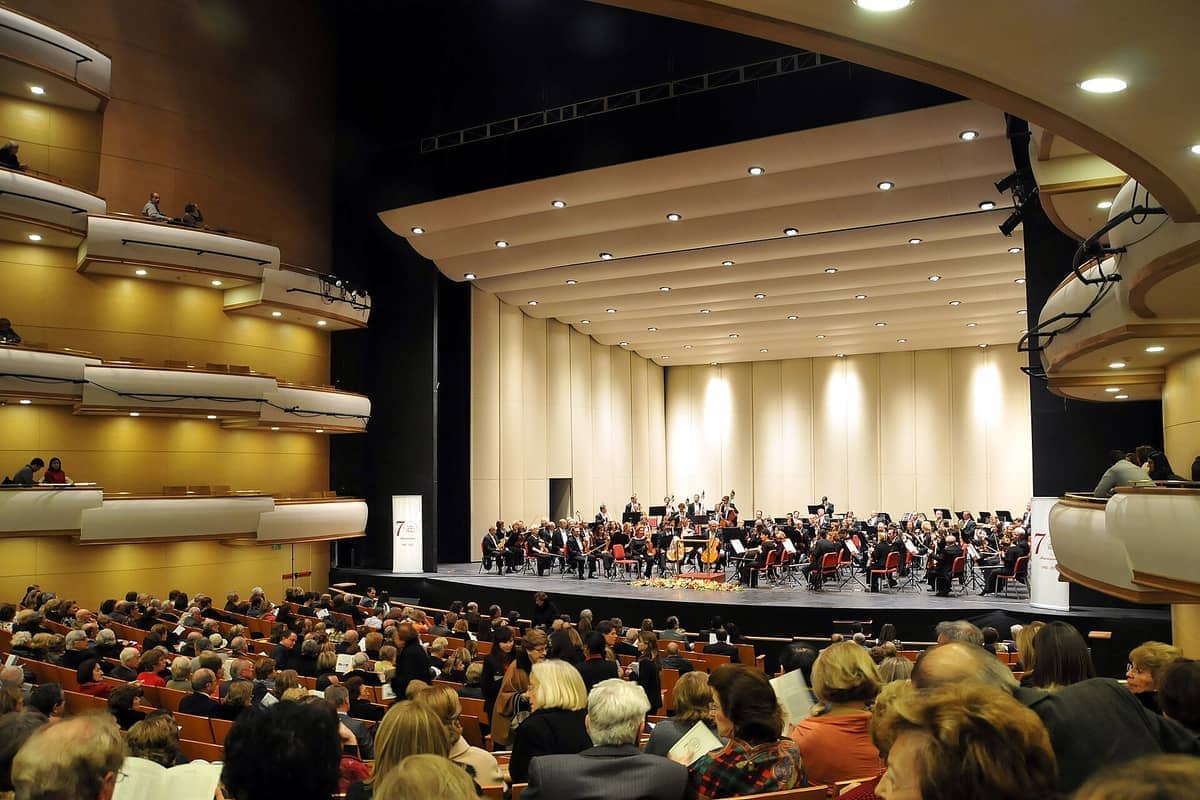
What Is the Auditorio Nacional del SODRE?
The Auditorio Nacional Adela Reta, commonly known as the Auditorio Nacional del SODRE, is Uruguay's flagship performing arts complex. It sits at the corner of Andes and Mercedes streets in the Centro neighborhood, a few blocks from the city's main artery, Avenida 18 de Julio. The building is the institutional home of SODRE (Servicio Oficial de Difusión, Representaciones y Espectáculos), the national public service organization for diffusion and performing arts founded in 1929, which operates Uruguay's national symphony orchestra, ballet company, and choir.
The venue was inaugurated on 21 November 2009, completing a reconstruction effort that stretched across decades. The original SODRE auditorium, built in the 1930s, was gutted by a catastrophic fire in 1971 and remained in ruins for nearly four decades before the rebuilt complex finally opened. Today, the building covers approximately 25,000 square metres and its main hall, the Sala Eduardo Fabini, holds 2,000 seats under a stage tower that rises 27 metres. A second, more intimate space, the Sala Hugo Balzo, hosts chamber concerts, recitals, and smaller productions. For context on what else Montevideo's Centro neighborhood offers culturally, see the Montevideo architecture guide.
ℹ️ Good to know
The auditorium is officially named 'Auditorio Nacional Adela Reta' in honor of the Uruguayan jurist and feminist activist Adela Reta (1920–2001). You may see both names used interchangeably in listings and signage.
The Building: Architecture and Scale
The current structure is a purpose-built concert hall designed to meet international acoustic and technical standards. The exterior is composed of a clean, contemporary facade that reads as serious institutional architecture rather than a showpiece, which suits Uruguay's understated public aesthetic. The building occupies a full city block, and its scale only becomes apparent once you're standing at street level. Three street entrances on Andes, Mercedes, and Florida provide access, giving the complex a permeability that larger concert halls in other cities lack.
Inside, the lobby areas are high-ceilinged and well-proportioned, with warm materials that soften the functional concrete bones of the building. The Sala Eduardo Fabini is a traditional horseshoe-format concert hall with steeply raked upper tiers. Sight lines from the balconies are good, and the acoustic treatment means that even seats far from the stage reward attentive listening. The 27-metre stage tower is not decorative: it accommodates full orchestral staging and large opera productions that would be impossible in smaller regional venues.
The Sala Hugo Balzo offers an entirely different experience: a smaller, more direct space where a string quartet or a solo pianist fills the room without amplification. If your travel dates coincide with a chamber program, this is where the building reveals itself most honestly. Check the full guide to things to do in Montevideo for how to fit a concert into a broader itinerary.
Tickets & tours
Live prices and dates from our booking partner. If you book, we may earn a commission at no extra cost to you.
Guided Tour with Wine Tasting Experience at Bouza Winery
From 68 €Instant confirmationFree cancellationAirport to Hotel or Hotel to Airport Transfer in Montevideo
From 47 €Instant confirmationFree cancellationTasting and Lunch at Bodega Pizzorno in Montevideo
From 115 €Instant confirmationFree cancellationPunta del Este full-day guided tour from Montevideo
From 47 €Instant confirmationFree cancellation
What's On: Programming and the SODRE Companies
The auditorium programs year-round across several disciplines. The Orquesta Filarmónica de Montevideo and the Orquesta Sinfónica del SODRE both perform here regularly, as does the Ballet Nacional del SODRE, which has built a strong international reputation and brings in guest choreographers and visiting companies. Opera productions, though less frequent, do occur, and the venue's stage dimensions make it genuinely capable of full-scale opera rather than the concert-version compromises you find at smaller halls.
The programming mix includes popular and folk music concerts in addition to classical fare, which broadens the audience considerably. Uruguay's music culture is not exclusively classical, and SODRE reflects that: a typical month's calendar might span a symphonic Beethoven cycle, a tango evening, a visiting international soloist, and a national ballet premiere. Ticket prices vary significantly by event and seating tier, so checking the official site well in advance is essential, especially for major productions.
💡 Local tip
The SODRE website (sodre.gub.uy) publishes the full performance calendar in Spanish. If you don't read Spanish, use a browser translation tool or look for event titles, which are usually self-explanatory. Booking in advance online is strongly recommended for popular ballet and opera nights.
Visiting Without a Ticket: The Lobby and Public Access
You do not need a ticket to enter the lobby and common areas during reception hours, which run Monday to Friday from 12:00 to 19:00 and Saturday from 14:00 to 19:00. The box office operates within those same Saturday hours and Monday to Saturday from 14:00 to 19:00. This means the building is genuinely accessible to anyone who wants to see the interior architecture, pick up a program, or inquire about upcoming events.
During the day, the lobby has a quiet, purposeful atmosphere: staff are present, rehearsal sounds occasionally carry through the walls, and the building feels like a working institution rather than a monument. In the early evenings before performances, the mood shifts. Montevideo's concertgoing audience tends toward the well-dressed and unhurried, and the pre-show gathering in the lobby is a social ritual as much as a practical one. Arriving 30 to 45 minutes before curtain is common practice.
If you're combining a visit with a broader Centro day, note that the Palacio Legislativo and the Plaza Independencia are both within easy walking distance, making this area one of the denser concentrations of significant civic architecture in Montevideo.
Accessibility
The auditorium has dedicated accessible entrances, with the Mercedes Street door confirmed as enabled during all opening hours. The Sala Eduardo Fabini has six accessible places for wheelchair users, and the Sala Hugo Balzo has two. The venue explicitly notes that accessible-ticket purchases must currently be made at the box office rather than online, so anyone requiring these seats should plan to visit or contact the box office directly ahead of an event.
Practical Logistics: Getting There and When to Go
The auditorium is located at Andes esquina Mercedes in the Centro neighborhood. Montevideo has no metro system, so the primary public transport option is the city bus network, which is extensive and covers the Centro thoroughly. Avenida 18 de Julio, one of Montevideo's main east-west corridors, is a short walk from the venue and served by numerous bus lines. Ride-hailing apps, including Uber, operate in Montevideo and are a reliable option for evening arrivals or departures, particularly after late performances.
For first-time visitors, Centro is easy to navigate on foot. From Plaza Independencia, the auditorium is roughly a 10-minute walk northeast. Taxis are easy to find in the area before performances; getting one afterward can require a few minutes of patience as crowds disperse. If you're staying in Pocitos or another coastal neighborhood, factor in 15 to 20 minutes by bus or taxi.
Evening performances typically begin between 19:00 and 20:30. Winter evenings in Montevideo (June through August) can be genuinely cold, with temperatures dropping to around 8–9°C, so a coat is practical. The building is well-heated inside, but the walk from a bus stop or taxi can be brisk. Spring and autumn evenings are mild and pleasant for arriving on foot from elsewhere in the Centro.
⚠️ What to skip
Performance schedules and ticket availability change frequently. Do not assume a production you saw listed weeks ago still has seats. Check sodre.gub.uy close to your travel dates and book as soon as you confirm your plans.
Who Should Consider Skipping This
The auditorium is a performance venue first and an attraction second. Travelers with no particular interest in classical music, ballet, or live performance will find that the lobby visit, while architecturally pleasant, is not a destination in itself. The building does not offer guided public tours, and without a performance to attend, there is limited reason to spend more than 20 minutes here. If your Montevideo itinerary is focused on outdoor spaces, markets, or beach neighborhoods, this venue will not compete for your time. It is relevant primarily to travelers who want to experience Uruguay's cultural institutions from the inside.
Insider Tips
- Seats in the upper tiers of the Sala Eduardo Fabini offer excellent acoustics and significantly lower ticket prices than stalls or lower balcony sections. For orchestral concerts, the sound quality difference is minimal.
- The Sala Hugo Balzo programs are often less publicized but represent some of the best value in Montevideo's performing arts calendar. Chamber recitals here sell out less quickly than main-stage shows.
- If you arrive early for an evening performance, the lobby area is a good place to pick up a printed program, which usually includes detailed Spanish-language notes on the repertoire and artists.
- For accessible seating, contact the box office directly rather than attempting to book online. The box office staff can confirm exact seat positions and proximity to accessible entrances.
- SODRE occasionally programs free or reduced-price events, particularly for Uruguayan national holidays or special outreach productions. Checking the calendar around late June (Uruguay's national holiday period) can reveal discounted programming.
Who Is Auditorio Nacional del SODRE For?
- Classical music and opera enthusiasts looking for a world-class acoustics experience in South America
- Ballet travelers tracking the Ballet Nacional del SODRE's internationally recognized productions
- Architecture visitors interested in major contemporary civic buildings in Montevideo's Centro
- Travelers who want to spend an evening the way Montevideo residents actually do, rather than at a tourist-facing venue
- Cultural travelers combining a concert with a broader Centro neighborhood itinerary
Nearby Attractions
Other things to see while in Centro:
- Cementerio Central
Inaugurated in 1835, the Central Cemetery of Montevideo is one of South America's most architecturally rich burial grounds. Free to enter and loaded with marble mausoleums, neo-Gothic chapels, and the graves of presidents and artists, it rewards those willing to look slowly.
- Estadio Centenario
Built for the 1930 FIFA World Cup and declared a Monument of World Football, Estadio Centenario is one of the most historically significant sports venues in the Americas. The on-site Uruguayan Football Museum makes it worth visiting even on non-match days.
- Mirador de la Intendencia
The Mirador Panorámico de la Intendencia de Montevideo sits on the 22nd floor of the city's main municipal building, offering unobstructed 360-degree views across the capital, the Río de la Plata, and the surrounding neighbourhoods. Entry is completely free, but you need to book a slot in advance. Here is everything you need to plan a visit.
- Museo del Fútbol (Estadio Centenario)
Housed within the Tribuna Olímpica of the iconic Estadio Centenario, the Museo del Fútbol traces Uruguay's extraordinary football legacy from its earliest amateur roots to World Cup wins in 1930 and 1950. For anyone who takes football seriously, this is one of the most emotionally resonant sports museums in South America.
Planning a trip? Discover personalized activities with the Nomado app.