Museo de la Memoria (MUME): Montevideo's Witness to the Dictatorship Years
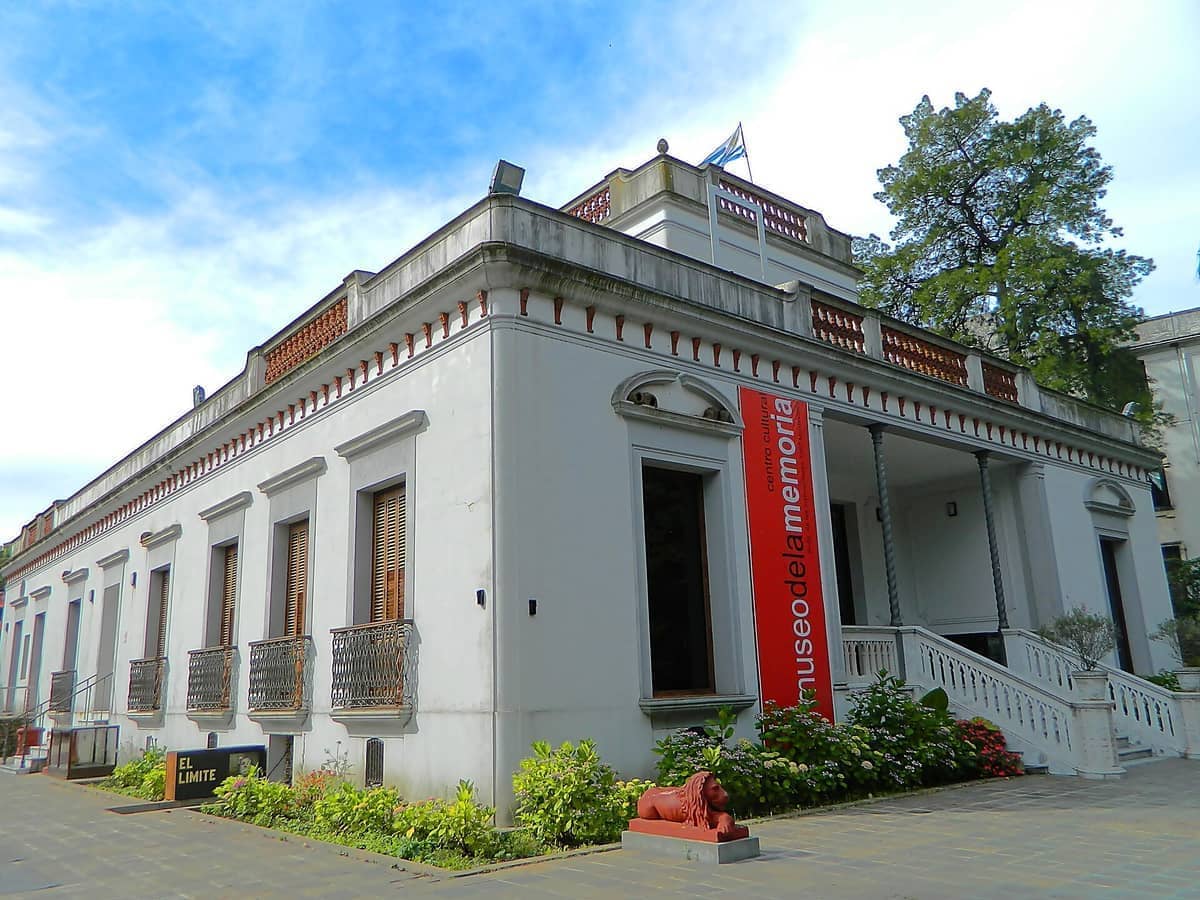
The Museo de la Memoria (MUME) is Montevideo's dedicated space for confronting Uruguay's dictatorship period and honoring those who resisted it. Housed in a 19th-century country estate, it offers free admission and a sobering, carefully curated experience that rewards visitors willing to engage with difficult history.
Quick Facts
- Location
- Av. de las Instrucciones 1057, Paso de las Duranas, Montevideo
- Getting There
- Multiple urban bus routes along Av. de las Instrucciones; also accessible by taxi or ride-hailing app
- Time Needed
- 1.5 to 2.5 hours for the museum; add 30 minutes for the surrounding park
- Cost
- Free admission; guided visits (second Saturday of each month, 15:00) are also free with prior registration
- Best for
- History-focused travelers, those interested in human rights, architecture enthusiasts
- Official website
- mume.montevideo.gub.uy
What MUME Is and Why It Exists
The Museo de la Memoria, known by its acronym MUME, opened its doors on 10 December 2007, a date chosen deliberately: International Human Rights Day. It is a cultural center of the Intendencia de Montevideo, Uruguay's municipal government, and its mandate is specific: to preserve the memory of state terrorism, document the resistance to Uruguay's civic-military dictatorship (1973–1985), and affirm the values of democracy, freedom, and social justice that were suppressed during that period.
Uruguay's dictatorship left deep marks. Thousands were detained and tortured, many were forcibly disappeared, and around 380,000 Uruguayans went into exile, an enormous proportion for a country of its size. For years after the return to democracy, public reckoning with that period was uneven. MUME represents an institutional commitment to keeping that reckoning alive and accessible, particularly for younger generations who did not live through those years.
If you are building an itinerary around Montevideo's cultural institutions, MUME pairs naturally with the Museo Histórico Cabildo in Ciudad Vieja for a broader arc from colonial governance to 20th-century political crisis. Together they sketch Uruguay's long, complicated relationship with power.
ℹ️ Good to know
Opening hours: Monday to Saturday, 12:00–18:00. The surrounding park has slightly extended hours (Mon–Sat 10:00–18:00, Sunday 11:00–17:00). The museum itself is closed on Sundays. Guided visits are offered on Saturdays at 15:00; check the official website before visiting.
The Building: A Dictator's Villa Repurposed
The museum occupies the former country estate (quinta) of Máximo Santos, a 19th-century military figure who served as President of Uruguay from 1882 to 1886 and whose authoritarian style earned him genuine historical notoriety. That the city chose this particular building to house a museum about state repression is not accidental. The irony is embedded in the project's identity: a space once associated with concentrated personal power now documents what that kind of power does to ordinary people.
The estate sits on Avenida de las Instrucciones 1057, near the intersection with Bulevar José Batlle y Ordóñez, on the northwestern edge of the Prado neighborhood. The main structure is a substantial 19th-century villa with period architectural details including arched windows, thick masonry walls, and a formal layout that feels somewhat at odds with the gravity of its current content. That tension is part of the experience. Walking through ornate rooms that now contain testimonies of detention and resistance creates a dissonance worth sitting with.
The building is classified as having universal accessibility. The estate grounds include a park, which is separately accessible on Sunday mornings even when the museum is closed. For more on Montevideo's park spaces and how they interact with cultural life, see the Parque Prado guide, which covers the adjacent Prado neighborhood parkland.
Tickets & tours
Live prices and dates from our booking partner. If you book, we may earn a commission at no extra cost to you.
Guided Tour with Wine Tasting Experience at Bouza Winery
From 68 €Instant confirmationFree cancellationAirport to Hotel or Hotel to Airport Transfer in Montevideo
From 47 €Instant confirmationFree cancellationTasting and Lunch at Bodega Pizzorno in Montevideo
From 115 €Instant confirmationFree cancellationPunta del Este full-day guided tour from Montevideo
From 47 €Instant confirmationFree cancellation
What You Will See Inside
MUME's permanent exhibition covers the arc of Uruguay's dictatorship period: the political context leading to the 1973 coup, the mechanics of state repression (detention centers, interrogation, torture), the experience of exile, and the organized resistance including the role of unions, political parties, student movements, and cultural figures. The collection includes photographs, testimonies, personal objects belonging to detainees, documents, and audiovisual materials.
The presentation is measured rather than sensationalist. Curators have balanced the need to be clear about what happened with a respect for the dignity of those who suffered. Certain display areas are deliberately quiet, with low lighting and minimal text, allowing visitors to spend time with photographs and objects without being hurried through. Others are more documentary in tone, layering historical documents with contextual explanation.
The museum also functions as an active cultural center, hosting temporary exhibitions, educational events, and public programs. Visiting on Saturday gives you access to a free guided visit (registration required in advance) led by staff who can answer questions and provide depth that self-guided visits cannot replicate. Spanish fluency is helpful for getting the most from the permanent text panels, though the subject matter often communicates powerfully through images and objects regardless of language.
💡 Local tip
Check the museum's official website for the current guided-visit schedule and arrive early if you plan to join the Saturday visit.
Visiting by Time of Day: How the Experience Shifts
MUME opens at noon, and the first hour or two of opening tends to be quieter, particularly on weekdays. Arriving at 12:00 on a Tuesday or Wednesday gives you a low-crowd window that suits the contemplative nature of the exhibition. The afternoon light enters through the building's arched windows at an angle that creates a slightly warmer atmosphere in some rooms, softening what is otherwise austere material.
Late-afternoon visits (from around 16:30 onward) sometimes see an uptick in visitors: school groups occasionally visit in the early afternoon, and individual visitors tend to arrive after lunch. The museum closes at 18:00, so if you arrive after 17:00 you may feel some pressure. Budget at least 90 minutes to move through the space without rushing.
The park surrounding the quinta is most pleasant in the morning, when it is accessible from 10:00 onward and often very quiet. Spending time in the grounds before the museum opens at noon is a reasonable way to structure a visit, particularly in spring and autumn when temperatures in Montevideo sit comfortably between 12 and 22 degrees Celsius.
Getting There and Practical Logistics
MUME sits outside the main tourist circuit that runs through Ciudad Vieja and the Centro. It is not walkable from the historic center unless you have significant time and energy. The most practical approach for most visitors is to take one of the urban bus lines that serve the area, or to use a taxi or ride-hailing service. The ride from Plaza Independencia to the museum takes roughly 20 to 30 minutes depending on traffic.
If you are staying in Pocitos or the central areas and planning a day that includes MUME, consider combining it with a visit to Parque Batlle, which lies roughly between the museum and the beach neighborhoods. That combination covers green space, sports history, and political memory in a single half-day circuit away from the historic center.
There is no significant commercial infrastructure immediately around MUME, so eating beforehand or afterward is worth planning. The Prado area has local cafes and small restaurants, but it is not a neighborhood with obvious tourist dining. Carry water, especially in summer when Montevideo's humidity can be considerable.
⚠️ What to skip
The park opens on Sundays (11:00–17:00), but the building is not part of the regular Sunday hours. Do not plan a Sunday museum visit without confirming any special opening through the official website. Do not plan a Sunday museum visit without confirming any special opening through the official website.
Photography and Emotional Preparation
Photography policies in rooms with testimony-based or survivor-identified materials can be sensitive. Check with staff at the entrance about which areas permit photography. The building's architectural exterior and the park grounds are generally photographable without restriction, and the play of late morning light on the villa's facade makes for a striking image against the surrounding greenery.
More practically: this museum is emotionally demanding. If you have personal connections to the region's political history, or to themes of disappearance and exile, prepare accordingly. Visitors who approach MUME expecting a passive cultural browse may find themselves sitting with the material longer than anticipated. That is not a flaw in the museum's design. It is the point.
For context on how Uruguay's 20th-century history intersects with broader cultural expression, Montevideo's Museo Torres García in Ciudad Vieja offers a complementary lens: an artist whose exile and return mirror the larger story of Uruguayan creative life under political pressure. The two museums are thematically linked even if their content is very different.
Who Should Reconsider This Visit
MUME is not for everyone, and there is no shame in acknowledging that. Travelers on a very short Montevideo visit who want to cover major architectural and scenic highlights may find the time investment and the distance from the center difficult to justify against competing priorities. The museum's location means a dedicated trip rather than a casual detour.
Young children are unlikely to find the content engaging, and some exhibit areas are not appropriate contexts for kids who are not old enough to process the subject matter. Families traveling with children under 10 or 11 should probably prioritize other spaces. For guidance on kid-friendly options across the city, the Montevideo with kids guide covers suitable alternatives.
Insider Tips
- If you want the guided visit, check the museum's official website for the current Saturday schedule and arrive early.
- Arrive when the park opens in the morning and spend time in the grounds before the museum opens at noon. The contrast between the peaceful early-morning gardens and the weight of the interior exhibition adds a layer to the experience that pure museum visits miss. The contrast between the peaceful early-morning gardens and the weight of the interior exhibition adds a layer to the experience that pure museum visits miss.
- Combine MUME with a morning at Parque Prado, which is adjacent to the same neighborhood. That gives the day a coherent thematic thread around memory, place, and Montevideo's relationship with its own past.
- The museum's archive and library resources are available to researchers; if you are working on Uruguayan history or human rights topics, contact the museum directly about access before your visit.
- Spanish is the dominant language of the exhibition panels and audiovisual content. If your Spanish is limited, consider reading background material on Uruguay's dictatorship period before visiting, as this will help you extract more from the images and objects even when the written context is harder to follow.
Who Is Museo de la Memoria (MUME) For?
- Travelers with a serious interest in 20th-century Latin American political history
- Visitors who want to understand contemporary Uruguayan society through the lens of what came before it
- Architecture and heritage travelers interested in how 19th-century buildings are repurposed for contemporary civic purposes
- Human rights professionals, students, or researchers visiting Montevideo
- Older teenagers and adults looking for a culturally substantive half-day away from the tourist center
Nearby Attractions
Combine your visit with:
- Cerro de Montevideo
Standing at 132 metres above sea level, the Cerro de Montevideo is the city's literal high point, crowned by the Fortaleza General Artigas, a 19th-century fortress that once served as watchtower, military prison, and lazaretto. Today it houses a military museum and delivers some of the most expansive views in Uruguay. The visit rewards effort, but requires planning.
- Jardín Botánico de Montevideo
The Museo y Jardín Botánico 'Prof. Atilio Lombardo' is Montevideo's botanical garden and museum, set in the Prado neighborhood. Admission is free, the grounds open daily until 21:00, and the atmosphere shifts noticeably from meditative morning calm to afternoon family strolls. It rewards unhurried visitors with native plant collections, a small natural history museum, and a level of quiet you rarely find this close to the city centre.
- Mercado Agrícola de Montevideo (MAM)
The Mercado Agrícola de Montevideo is a beautifully restored early-20th-century market hall where fresh produce stalls, specialty food vendors, and sit-down restaurants coexist under a soaring iron-and-glass roof. Free to enter and open seven days a week from 9:00 to 22:00, it draws local shoppers in the morning and a gastronomy crowd into the evening hours.
- Museo Juan Manuel Blanes
The Juan Manuel Blanes Municipal Museum of the Arts holds more than 4,000 works inside a Palladian-style villa built in 1870 and designated a National Heritage Site. Entry is free, and the surrounding Prado gardens add an unhurried, residential calm that distinguishes the experience from Montevideo's more central cultural sites.
Planning a trip? Discover personalized activities with the Nomado app.