Mercado Agrícola de Montevideo (MAM): The City's Living Market Hall
The Mercado Agrícola de Montevideo is a beautifully restored early-20th-century market hall where fresh produce stalls, specialty food vendors, and sit-down restaurants coexist under a soaring iron-and-glass roof. Free to enter and open seven days a week from 9:00 to 22:00, it draws local shoppers in the morning and a gastronomy crowd into the evening hours.
Quick Facts
- Location
- José L. Terra 2220, Montevideo, Uruguay
- Getting There
- Bus lines 148, 149, 169, 175, 187, 188, 199, 370, 526, G
- Time Needed
- 1–2 hours (longer if dining)
- Cost
- Free entry; food and drink at vendor prices
- Best for
- Food lovers, architecture fans, families, slow mornings
- Official website
- www.mam.com.uy
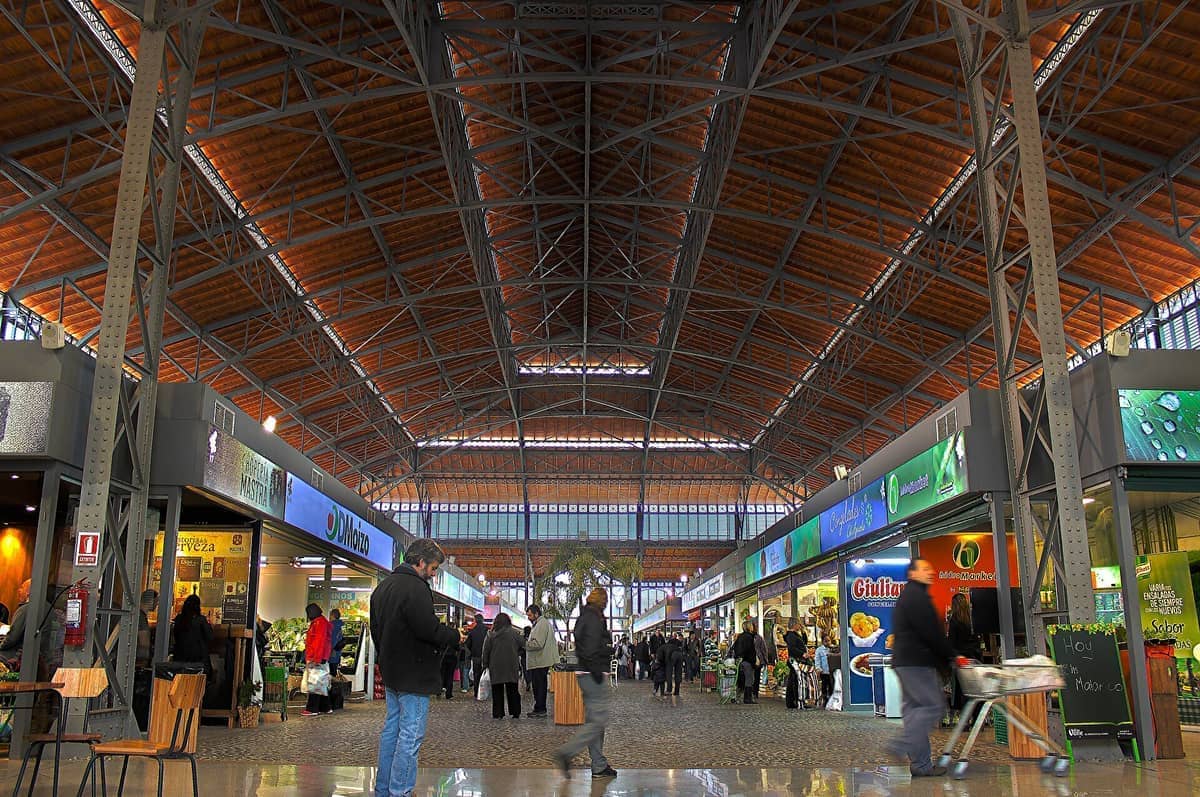
What the Mercado Agrícola de Montevideo Actually Is
The Mercado Agrícola de Montevideo, known locally as the MAM, is a public market housed inside a century-old industrial building on José L. Terra, a few blocks north of the Centro. The structure, whose construction began in 1906 and was fully habilitated by 1912, opened to the public in 1913, built in the same era of optimism that produced the city's great civic halls, and its iron skeleton and brick facade have been carefully restored rather than demolished or disguised. Today it functions as a hybrid space: part fresh-food market, part food hall, part covered plaza where the city shows up on a Saturday morning.
Entry is free. There is no gate, no ticket, no security check beyond a bag glance. You walk in from José L. Terra or from the Martín García side and the building opens around you, high-ceilinged and surprisingly loud with the kind of noise that comes from a few hundred people moving between stalls, arguing about cheese, and dragging wheeled shopping bags across a stone floor.
💡 Local tip
The MAM celebrated 11 years since its major remodeling in 2024, marking its reopening around 2013. The restored structure is as much the attraction as the vendors inside — look up at the iron trusses before you start shopping.
The MAM is not Montevideo's only market experience. The Mercado del Puerto in Ciudad Vieja skews heavily toward tourists and grilled meat. The MAM is where the city actually buys groceries, which makes it a fundamentally different experience — more honest, more varied, and easier on the wallet.
The Building: A Restored 1913 Iron Hall
The market was built in the early 20th century, with its foundation stone laid in 1906 and construction extending until its definitive habilitation in 1912 and opening in 1913, during Uruguay's first economic golden age, when Montevideo was expanding rapidly and the city needed wholesale and retail infrastructure to match. The architecture belongs to the industrial tradition of late-19th and early-20th-century European market halls: a structural iron frame spans a wide interior without columns interrupting the floor plan, large clerestory windows run along the upper walls, and brick exteriors give the building a solidity that feels permanent rather than makeshift.
The remodeling completed by 2013 cleaned and reinforced the structure without stripping it of character. The iron is painted, the brick is pointed, and the floors are consistent. What the renovation also added: ramp-equipped entrances, electric sliding main doors, and accessible bathrooms, which makes the MAM one of the more practically inclusive public spaces in the city. Parking is available on site, and more than ten bus lines stop nearby, making it reachable from nearly every corner of Montevideo.
If you are spending time exploring Montevideo's architectural heritage, the MAM pairs well with the ornate facades of Palacio Salvo and the civic grandeur of the Palacio Legislativo. The MAM represents a third strain: industrial, functional, built to serve rather than impress, and more interesting for it.
Tickets & tours
Live prices and dates from our booking partner. If you book, we may earn a commission at no extra cost to you.
Airport to Hotel or Hotel to Airport Transfer in Montevideo
From 47 €Instant confirmationFree cancellationTasting and Lunch at Bodega Pizzorno in Montevideo
From 115 €Instant confirmationFree cancellationPunta del Este full-day guided tour from Montevideo
From 47 €Instant confirmationFree cancellationColonia guided city tour from Montevideo
From 71 €Instant confirmationFree cancellation
What You Find Inside: Produce, Specialty Food, and Restaurants
The interior divides roughly into three zones, though the boundaries blur in practice. The fresh-produce section runs along the central floor: vendors selling vegetables, fruit, herbs, and staples to Montevidean shoppers who come here because the quality is reliable and the variety is broader than a supermarket. In the morning, this area operates at a serious pace — vendors stacking crates, shoppers filling bags, prices called out in quick Rioplatense Spanish.
Around the perimeter and in the mezzanine-level spaces, the market shifts toward specialty and artisan products. You will find aged cheeses, cured meats, local honey, olive oil, wines from Uruguayan producers, fresh pasta, baked goods, and small-batch preserves. Several of these vendors are serious operations with loyal clienteles, not tourist-facing stalls. If you are self-catering or want to bring something home that was actually made in Uruguay, this is the right place to look.
The gastronomy section operates on a separate rhythm. Restaurants and food counters line parts of the hall and are listed on the official site as open from 11:00 to 23:00, a full hour later than the market's general closing time of 22:00. The event access via the Martín García entrance extends until midnight, as per the official schedule. The options span traditional Uruguayan food, international cuisines, and casual lunch spots. Portions tend to be generous, prices are reasonable by any standard, and you are eating inside a protected heritage structure rather than a food-court annex.
ℹ️ Good to know
Opening hours: general market 9:00–22:00 daily; gastronomy 11:00–23:00; Paseo de Compras 10:00–22:00; event access from Martín García entrance until 00:00.
How the Experience Changes Through the Day
Morning, between 9:00 and noon, is when the market functions as a market. The light comes in from the upper windows at a low angle, catching the dust and the steam from coffee cups. The produce stalls are fully stocked and staffed. Noise levels are high. This is the time to shop, to watch the city operate at a working pace, and to have coffee at one of the early-opening counters. It is not the quietest experience, but it is the most authentic one.
Midday brings the lunch crowd: office workers, nearby residents, students. The restaurant section fills. Tables that were empty at 10:30 are claimed by 13:00. If you want to eat without waiting, arrive before noon or after 14:00.
Afternoon is the market at its most relaxed. Shopping traffic drops, the produce stalls thin out, and the building becomes easier to navigate and photograph without crowds blocking sight lines. The iron structure overhead becomes more visible when the floor is less packed. Late afternoon on a weekday is perhaps the best time to spend an hour simply looking at the building itself.
Evening pulls in a different crowd. The gastronomy section stays open until 23:00, and the MAM functions as a dinner destination for people from surrounding neighborhoods. Weekend evenings can include events in the central space. The atmosphere shifts from market to social venue, and the building's acoustics, which amplify noise considerably in the middle of the day, become more manageable when spread across a slower evening crowd.
Practical Navigation: What to Know Before You Arrive
The MAM is located at José L. Terra 2220, in a neighborhood north of the Centro that most tourists do not pass through by accident. It is not adjacent to the main tourist circuit, which means a small deliberate effort is required to get there. That effort is worth it. More than ten bus lines service the area, including routes such as 148, 149, 169, 175, 187, 188, 199, 370, 526, and G. If you are staying in Pocitos, Centro, or anywhere along the central city, a bus gets you there without a taxi.
For broader context on getting around the city by bus, the getting around Montevideo guide covers routes and payment systems in detail.
There is on-site parking if you are arriving by car or ride-hailing app. The main entrance on José L. Terra has electric sliding doors designed for accessibility, and ramp access is available. Accessible bathrooms are inside the building. The floor is level throughout, which makes it manageable for strollers and wheelchairs, though the noise and crowd density during peak hours may be challenging for some visitors.
Photography inside the MAM is straightforward during low-traffic hours. The light from the high windows creates even, diffused illumination that works without flash. The iron trusses overhead make for strong architectural compositions, and the produce stalls offer color that photographs well in the morning. If you are shooting with a wide lens, the early morning, when the floor is clear, gives you the best opportunity to capture the full interior span.
⚠️ What to skip
The MAM is not in the tourist center of Montevideo. It takes deliberate planning to include in an itinerary. If your time is very limited and you are focused purely on historic architecture or waterfront sights, it may not make the cut. But if food, daily life, and architectural character interest you, it is worth the trip.
Who This Attraction Suits and Who Should Reconsider
The MAM works exceptionally well for travelers who want to see Montevideo as a functioning city rather than a museum piece. If you are interested in what Uruguayans actually eat, buy, and cook, this is better source material than any restaurant alone. Families with children handle it well: the space is large, entry is free, the food options are varied, and there is enough movement and stimulus to hold attention without requiring active engagement with exhibits or queues.
Travelers with a serious interest in Uruguayan food culture will find the MAM a useful complement to a meal at the Mercado del Puerto and to reading the what to eat in Montevideo guide before visiting.
The MAM is less suited to travelers who are in Montevideo for a single day with a checklist of major sights. On a tight schedule, the time required to travel there and back, plus the time spent inside, competes with Ciudad Vieja, the waterfront, and the main plazas. It also may not satisfy visitors whose primary interest is colonial or 19th-century architecture, since the building's character is industrial rather than ornate.
If you are building a two-day itinerary, the 2 days in Montevideo guide can help you sequence the MAM alongside the city's main sights without feeling rushed.
Insider Tips
- Arrive on a Saturday morning between 9:30 and 11:00 for the fullest produce section and the most local crowd. The energy is different from a weekday — more families, more browsing, more life.
- The mezzanine level, if accessible during your visit, offers a view down into the central hall that reveals the full scale of the iron roof. Worth the stairs specifically for that perspective.
- Several vendors here sell Uruguayan wines, olive oils, and aged cheeses that travel well as gifts or self-catering supplies. Prices are fair and quality is generally reliable. This is a better place to buy these things than an airport gift shop.
- If you are eating lunch here, look for the counters serving daily specials rather than menu items. These tend to be faster, cheaper, and more representative of what Uruguayans actually eat midweek.
- The Martín García entrance stays accessible until midnight for events, according to the official schedule. Check the MAM's official site before visiting on a weekend evening — the central space occasionally hosts markets, performances, or themed food events that change the atmosphere entirely.
Who Is Mercado Agrícola de Montevideo (MAM) For?
- Food lovers who want to shop where locals actually shop
- Architecture enthusiasts interested in early-20th-century industrial heritage
- Families looking for a free, spacious, and food-rich afternoon
- Self-catering travelers stocking up on Uruguayan specialty products
- Anyone with a half-day to spend on a slower, neighborhood-focused visit
Nearby Attractions
Combine your visit with:
- Cerro de Montevideo
Standing at 132 metres above sea level, the Cerro de Montevideo is the city's literal high point, crowned by the Fortaleza General Artigas, a 19th-century fortress that once served as watchtower, military prison, and lazaretto. Today it houses a military museum and delivers some of the most expansive views in Uruguay. The visit rewards effort, but requires planning.
- Jardín Botánico de Montevideo
The Museo y Jardín Botánico 'Prof. Atilio Lombardo' is Montevideo's botanical garden and museum, set in the Prado neighborhood. Admission is free, the grounds open daily until 21:00, and the atmosphere shifts noticeably from meditative morning calm to afternoon family strolls. It rewards unhurried visitors with native plant collections, a small natural history museum, and a level of quiet you rarely find this close to the city centre.
- Museo de la Memoria (MUME)
The Museo de la Memoria (MUME) is Montevideo's dedicated space for confronting Uruguay's dictatorship period and honoring those who resisted it. Housed in a 19th-century country estate, it offers free admission and a sobering, carefully curated experience that rewards visitors willing to engage with difficult history.
- Museo Juan Manuel Blanes
The Juan Manuel Blanes Municipal Museum of the Arts holds more than 4,000 works inside a Palladian-style villa built in 1870 and designated a National Heritage Site. Entry is free, and the surrounding Prado gardens add an unhurried, residential calm that distinguishes the experience from Montevideo's more central cultural sites.
Planning a trip? Discover personalized activities with the Nomado app.