Asado in Montevideo: A Complete Guide to Uruguay's Beef Culture
Uruguay takes its beef seriously, and nowhere is that more evident than in Montevideo's parrilla restaurants. This guide covers the culture behind asado, where to find the best grills across the city, what to expect on the menu, and honest pricing so you know what you're getting into before you sit down.
Tickets & tours
Live prices and dates from our booking partner. If you book, we may earn a commission at no extra cost to you.
TL;DR
- Asado in Montevideo is a daily affair at parrilla restaurants, not just a weekend ritual — any day works for a proper grill meal.
- The Mercado del Puerto is the most famous spot for asado but also one of the priciest — expect USD 20–40 for a main cut, or around USD 50 for a shared mixed grill for three.
- Neighborhood parrillas across Pocitos, Cordón, and Centro offer the same quality beef for roughly half the price, with a more local atmosphere.
- Key cuts to know: tira de asado (short ribs), vacío (flank), and entraña (skirt steak). Add provoleta and morcilla to round out the experience.
- For context on navigating the city to find these spots, see the getting around Montevideo guide.
What Asado Actually Means in Uruguay
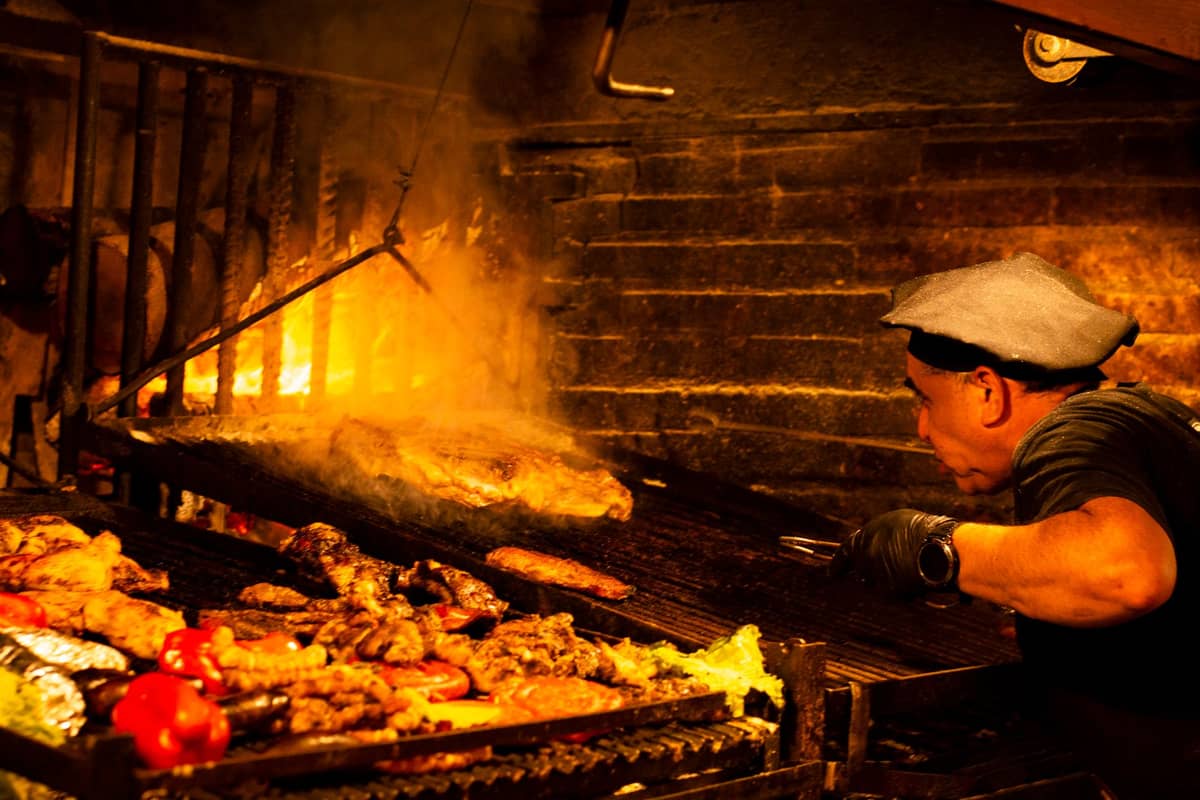
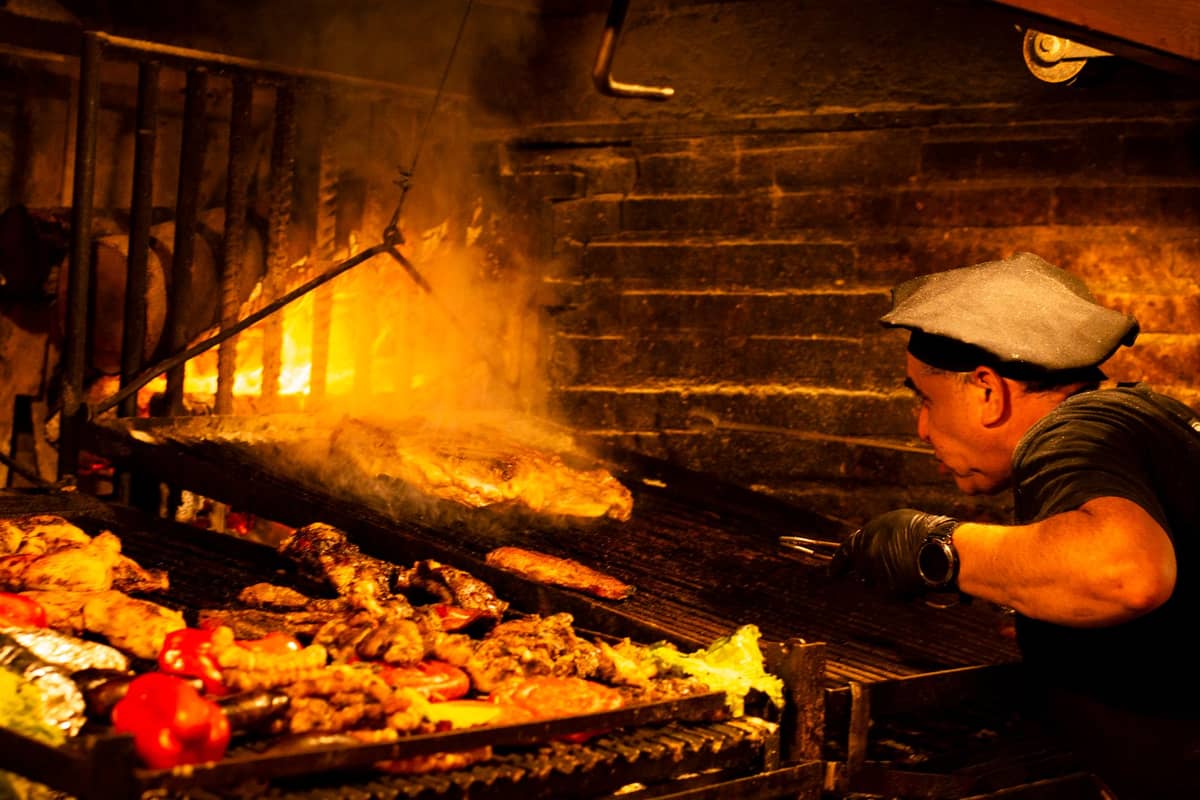
Asado is not simply a cooking method in Uruguay — it is a social institution. While Argentina often dominates the international conversation about South American beef, Uruguay produces some of the highest-quality grass-fed beef in the world, and Uruguayans are fiercely proud of it. Per capita beef consumption in Uruguay consistently ranks among the highest globally. In Montevideo, this culture plays out daily in the city's parrilla restaurants, from hole-in-the-wall neighborhood spots to the tourist-facing showrooms of the old port market.
The word parrilla refers both to the grill itself (a wood or charcoal fire set low, with the grate raised or lowered to control heat) and to the restaurants that specialize in grilled meats. A traditional Uruguayan parrilla cooks cuts slowly over quebracho wood or charcoal, without marinades or heavy seasoning. The philosophy is that good beef needs nothing more than fire and salt (sal gruesa, coarse salt applied just before or during cooking). This restraint is intentional and marks a real cultural difference from Brazilian churrasco or Argentine asado styles, which can involve more varied preparations.
ℹ️ Good to know
Uruguay's beef is almost entirely grass-fed and pasture-raised. The country's low population density and vast grasslands (known as campo) mean cattle are raised on pasture, which produces leaner, more flavorful meat than grain-finished alternatives. When Uruguayans debate beef quality, they are usually comparing cuts and fire technique, not the source — the source is assumed to be excellent.
Mercado del Puerto: The Iconic Option
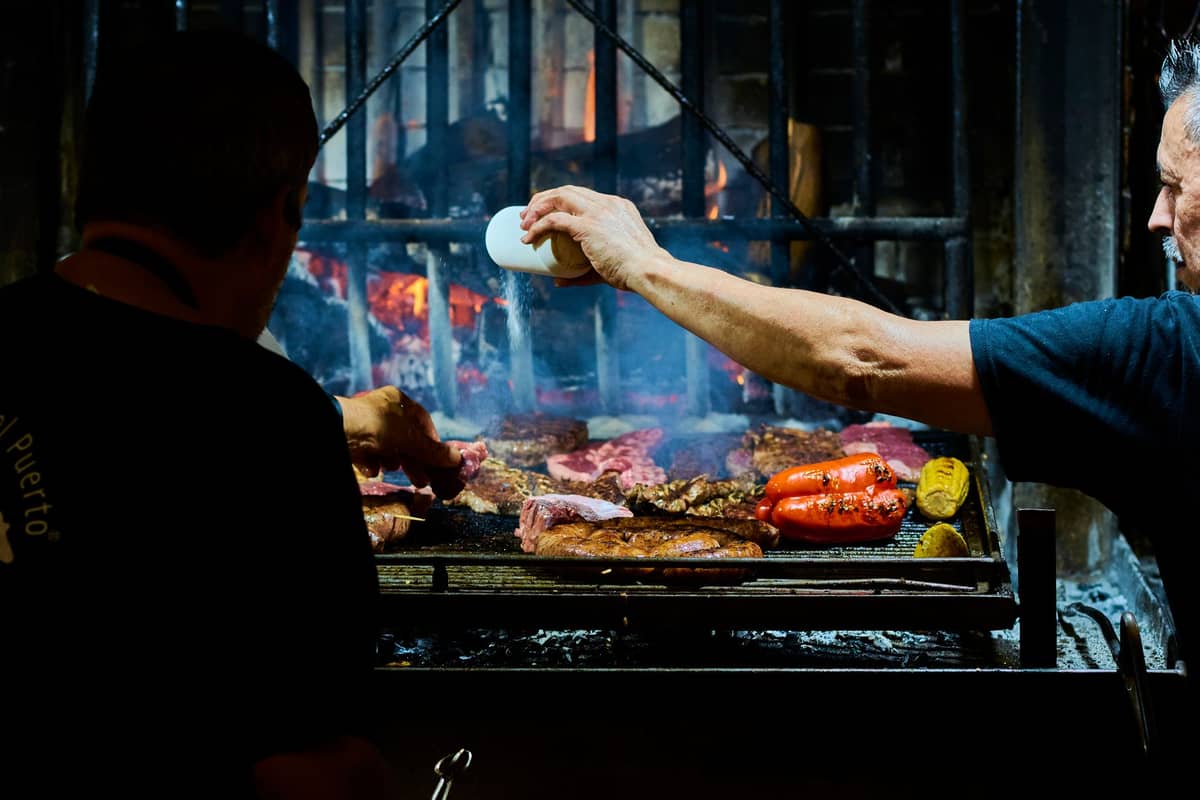
Located at Rambla 25 de Agosto de 1825 in Ciudad Vieja, directly opposite Montevideo's port and near the ferry terminal for Buenos Aires, the Mercado del Puerto is the most internationally recognized place to eat asado in the city. The iron-and-glass market hall dates to 1868 and houses a row of competing parrilla stalls, each with its own wood-fired grill and a salesperson outside trying to pull you in. On weekday lunchtimes, the smoke alone is enough to navigate by.
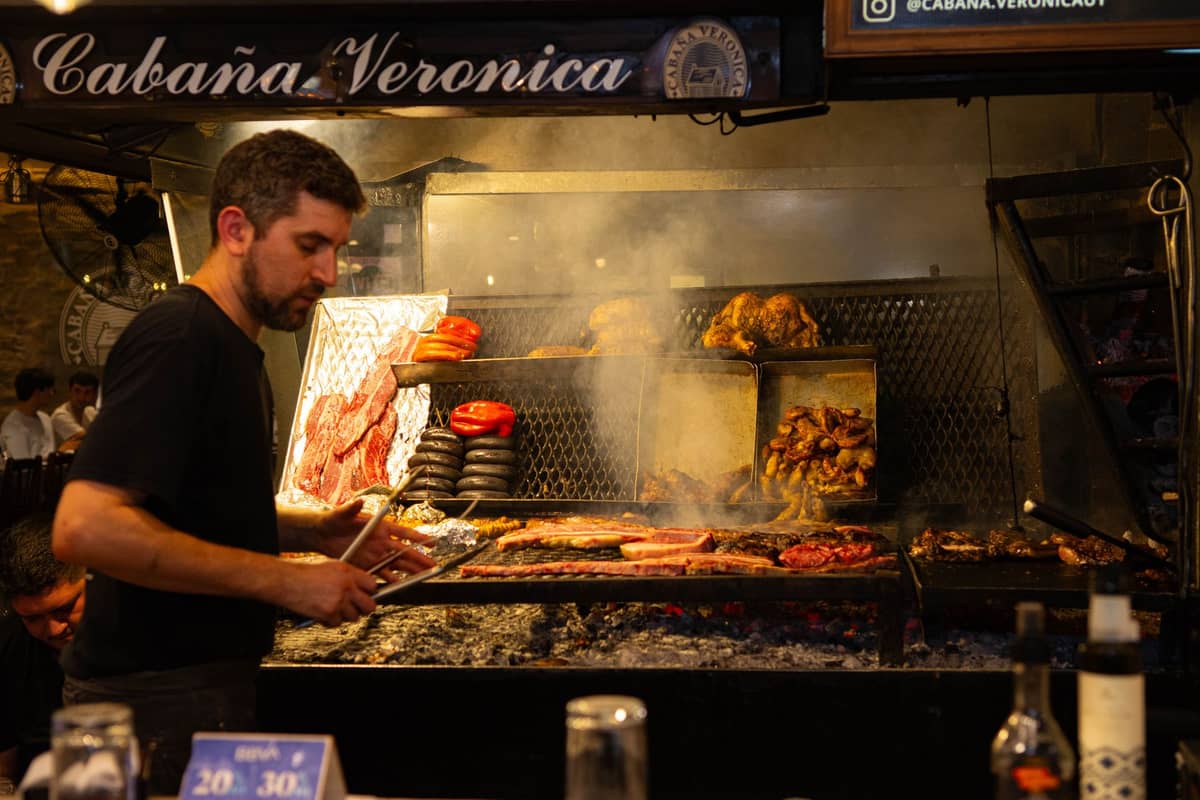
The experience here is theatrical and worth doing at least once. The grills are visible, the cuts are large, and the energy during peak hours (roughly 12:00–15:00 on weekdays, busier on Saturdays) is genuine. Most stalls operate daily from around 10:00 to 17:00 or later, though Saturday lunch is the traditional peak. One of the better-regarded stalls is Cabaña Verónica (stand 038), which offers a classic parrillada with starters around 250 UYU and meat mains around 750 UYU — reasonable by market standards.
⚠️ What to skip
Mercado del Puerto is not a budget option. A main cut (steak or ribs) typically runs USD 20–40, and a shared mixed parrilla for around three people comes to roughly USD 50 before drinks and sides. These prices are significantly above what you'd pay at a neighborhood parrilla for equivalent food. Come for the atmosphere and the spectacle, but don't expect value-for-money to be the draw.
The tourist pressure at Mercado del Puerto is real — stall touts can be persistent, and some spots inflate prices for those who don't ask upfront. The rule is simple: look at the menu posted outside before sitting, confirm prices for the cuts you want, and don't feel rushed by the salesperson. The quality at most stalls is genuinely good, but the variance between stalls is smaller than the competition suggests. Cabaña Verónica has a strong reputation; beyond that, trust your instincts on atmosphere and freshness of the grill.
Neighborhood Parrillas: Where Montevideanos Actually Eat
For a more authentic and considerably cheaper asado experience, the city's residential neighborhoods deliver. PocitosPocitos and Cordón both have established parrilla restaurants where a full meal with sides runs 800–1,400 UYU per person. Carrasco and Punta Carretas push toward 1,200–2,200 UYU, reflecting the upscale demographics of those neighborhoods. The food at a solid neighborhood parrilla is often indistinguishable from the Mercado del Puerto — the main difference is that you're eating alongside locals rather than tourists.
Informal parrillas (sometimes called parrilladas or simply restoranes with a grill) can get you a complete meal for 350–700 UYU per person. These are often unassuming storefronts with no English menu and a chalkboard listing the day's cuts. That's a feature, not a bug. The city-wide range for a sit-down parrilla meal is roughly USD 9–35 per person depending on neighborhood, restaurant category, and how much you order.
- Mercado del Puerto stalls USD 20–40 per main cut; USD 50 shared parrilla for ~3 people. Tourist-facing, theatrical, worth one visit.
- Upscale neighborhood parrillas (Pocitos, Carrasco) 1,200–2,200 UYU per person (roughly USD 25–45). More refined service, same quality beef.
- Traditional neighborhood parrillas (Cordón, Centro) 800–1,400 UYU per person (roughly USD 16–28). Reliable quality, local crowd, minimal frills.
- Informal/fast parrillas 350–700 UYU per person (roughly USD 7–14). No atmosphere, maximum value. Great for a solo lunch.
What to Order: The Essential Cuts and Sides
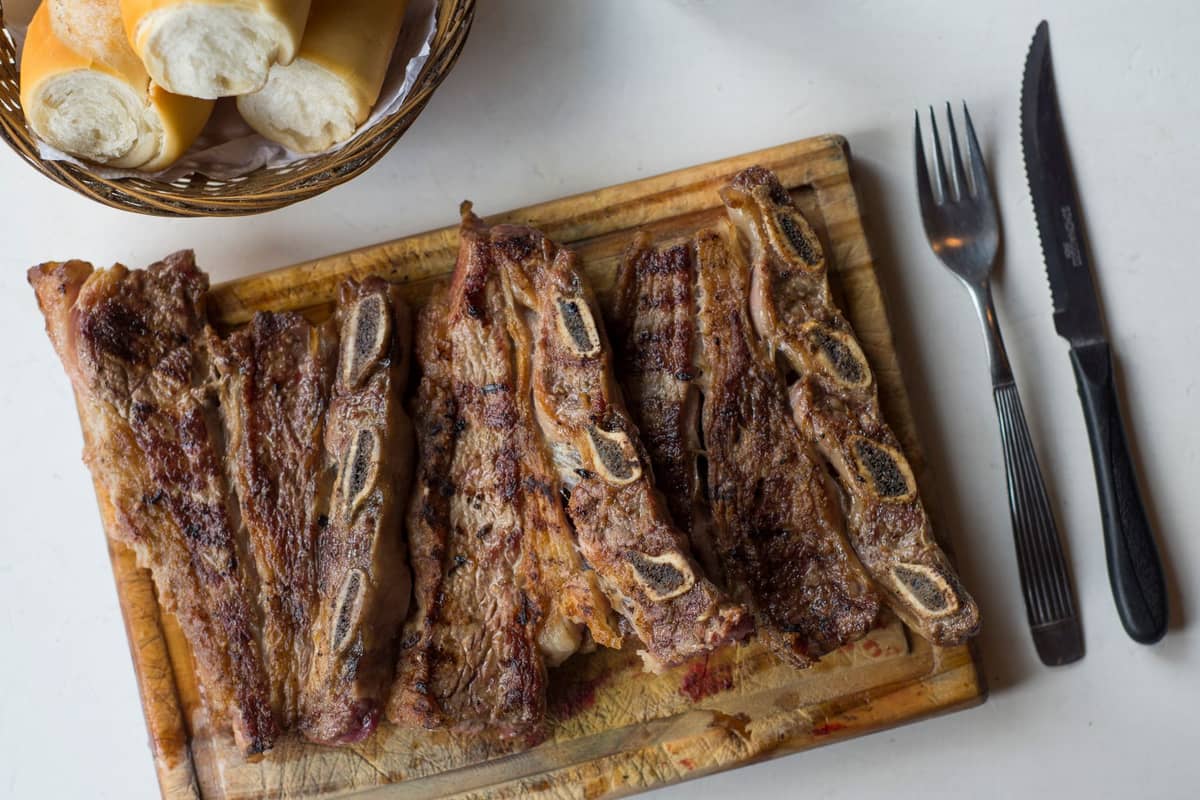
Uruguayan parrilla menus follow a fairly consistent structure. Understanding the key cuts before you sit down will help you order with confidence rather than defaulting to whatever the waiter recommends for tourists.
- Tira de asado Cross-cut short ribs, grilled slowly. This is the quintessential Uruguayan cut — fatty, collagen-rich, deeply savory. Non-negotiable on a first visit.
- Vacío Flank steak with a thin fat cap. Tender, well-marbled, and extremely popular locally. Often the first to sell out at busy parrillas.
- Entraña Skirt steak — thin, quick to cook, intensely flavored. Best when served medium-rare and rested properly. A good test of the cook's skill.
- Chorizo and morcilla Pork sausage and blood sausage, respectively. Usually served as starters while the main cuts finish cooking. Both are excellent; the morcilla here tends to be sweeter and more delicate than Spanish versions.
- Provoleta Thick disc of provolone cheese grilled directly on the parilla until charred on the outside and molten inside. Often finished with dried oregano and chili flakes. A near-universal starter.
- Mollejas Sweetbreads — grilled thymus or pancreas glands. Prized by locals, polarizing for visitors. Worth trying if you're open to offal; the texture is crisp outside and creamy within.
💡 Local tip
In Uruguay, beef is typically served more well-done than in European or North American contexts by default. If you want your steak pink inside, specify 'jugoso' (juicy/medium-rare) or 'a punto' (medium) when ordering. 'Bien cocido' means well-done. Don't be surprised if the cook looks mildly pained at 'jugoso' — just be clear and friendly about it.
Sides at a traditional parrilla are simple: chimichurri (parsley, garlic, oil, vinegar), salsa criolla (diced tomato and onion), and occasionally a green salad or papas fritas. The focus is always on the meat. Wine is the standard pairing — Uruguay's tannat grape produces structured reds that hold up well to fatty cuts. For more on what to drink alongside your meal, the Uruguayan wine scene is worth exploring separately.
For a broader look at Montevideo's food culture beyond beef, the what to eat in Montevideo guide covers everything from chivito sandwiches to tortas fritas.
Asado Etiquette and Practical Logistics
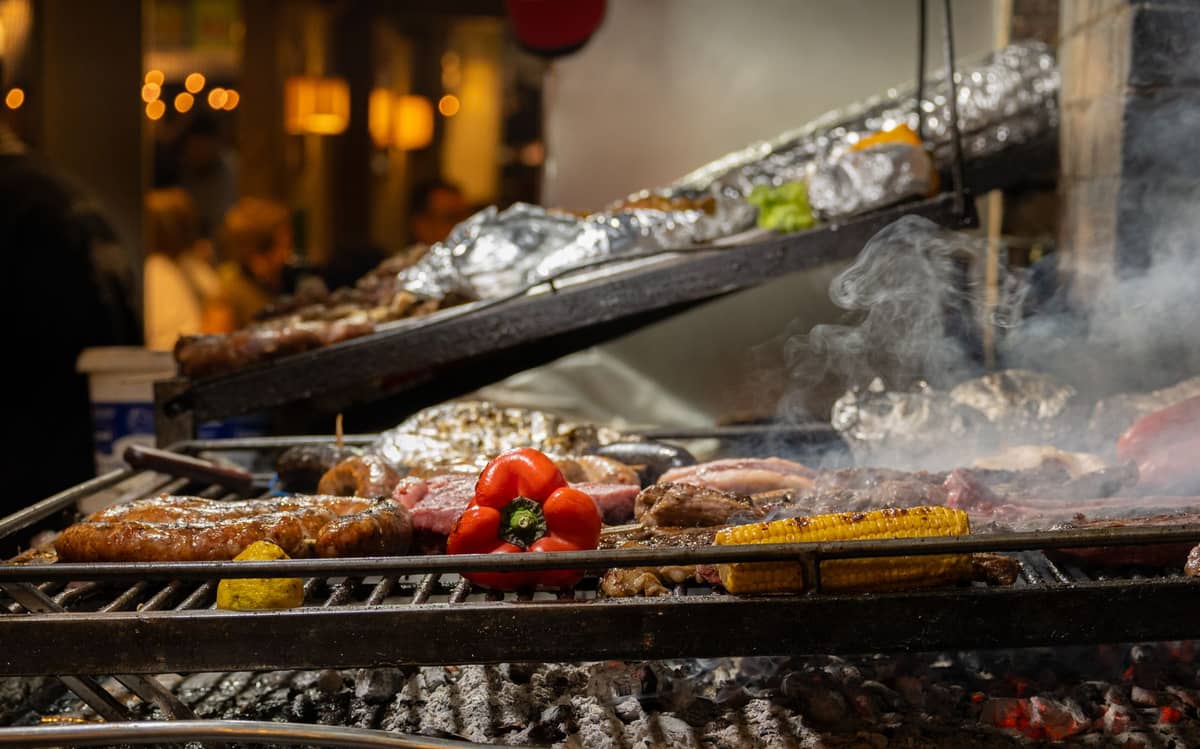
Parrilla restaurants in Montevideo rarely take reservations for lunch, operating on a first-come basis. Weekday lunches from 12:30 to 14:30 are the busiest periods. Saturday lunch at Mercado del Puerto is the peak of the week — arrive before noon or expect a wait. Dinner at parrillas is less crowded and often quieter; many Uruguayans eat asado at home on weekends and go out for it during the week.
Tipping in Uruguay is customary at sit-down restaurants, though not as rigidly enforced as in the US. Leaving 10% of the bill is standard and appreciated. Some restaurants add a cubierto (cover charge) that covers bread and condiments — this is normal and not negotiable. Meals at parrillas tend to be slow and social by design; don't expect a quick turnover, and don't rush it.
✨ Pro tip
If you want to see asado from the production side, the Mercado Agrícola de Montevideo (MAM) in the Villa Dolores neighborhood has a good butcher section where you can see the cuts up close and buy vacuum-packed beef to take home or self-cater. It's also a fascinating food market in its own right and far less tourist-heavy than Mercado del Puerto.
Asado culture intersects with Montevideo's broader social life in ways that aren't always obvious to visitors. Weekend family asados happen in backyards, on rooftop terraces, and in public parks. If you're staying somewhere with a grill or have a local contact, an invitation to a private asado is a more intimate and arguably more authentic experience than any restaurant. The free things to do in Montevideo guide covers some of the park spaces where public barbecuing is common on weekends.
When to Go and Seasonal Patterns
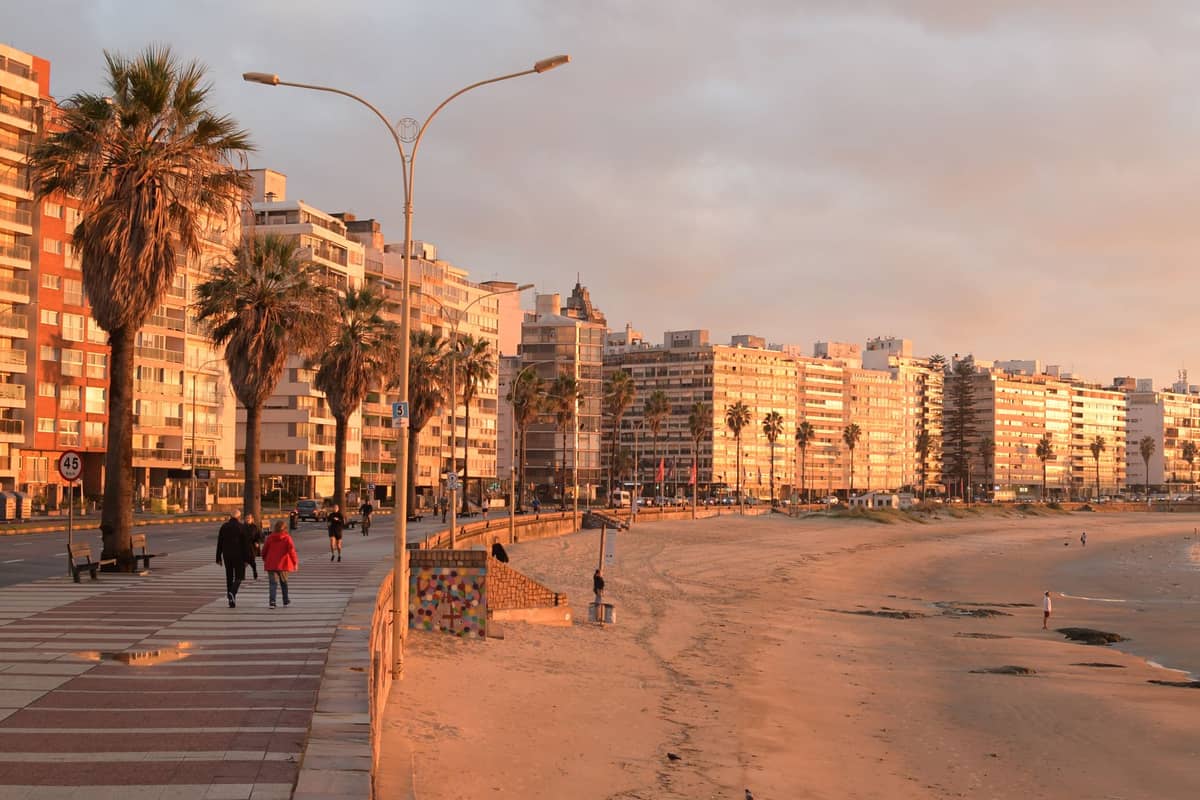
Asado is year-round in Montevideo. Unlike some food cultures tied to seasonal produce, beef is always available and the parrilla restaurants operate on consistent schedules regardless of season. Mercado del Puerto is open daily throughout the year. That said, the experience varies by time of year in practical ways.
Summer (December through February) brings the warmest weather and the highest tourist volume, which means more competition for tables at Mercado del Puerto and slightly longer waits at popular neighborhood spots. The outdoor-adjacent atmosphere of some parrillas is more enjoyable in mild weather — spring (September to November) and autumn (March to May) offer temperatures in the 13–22°C range that make lingering over a long lunch genuinely comfortable. Winter (June to August) is perfectly fine for asado; there's something appropriate about a slow-cooked meal on a grey Río de la Plata afternoon. For a fuller breakdown of when to visit based on weather and crowds, see the best time to visit Montevideo guide.
One seasonal note worth flagging: during Carnival (late January through February), Montevideo's food scene gets busier overall and some local restaurants adjust their hours or focus. It's not a reason to avoid the city — quite the opposite — but it's worth checking individual restaurant hours during that period rather than assuming standard schedules apply.
FAQ
Is Mercado del Puerto worth it for asado in Montevideo?
It depends on what you're optimizing for. The atmosphere and spectacle are genuinely impressive, and the beef quality is good. But prices are significantly higher than neighborhood parrillas — USD 20–40 for a main cut versus USD 10–20 elsewhere. Go once for the experience, but don't make it your only parrilla meal in Montevideo.
What is the difference between asado and parrilla in Uruguay?
Asado refers to the technique and tradition of slow-cooking beef over wood or charcoal fire. Parrilla refers both to the grill itself and to the restaurants that specialize in this style of cooking. In everyday speech, Uruguayans use the terms loosely and interchangeably when talking about going out for grilled meat.
How much does asado cost in Montevideo in 2026?
Budget roughly 350–700 UYU per person at informal spots, 800–1,400 UYU at traditional neighborhood parrillas, and 1,500–2,500 UYU at Mercado del Puerto or upscale restaurants. A shared mixed parrilla for three at the port market runs around USD 50 total before drinks. Always verify current prices as the Uruguayan peso fluctuates.
What cuts should I order at a Uruguayan parrilla?
Start with provoleta (grilled provolone) and chorizo while you wait. For mains, tira de asado (cross-cut short ribs) is the most distinctly Uruguayan cut and should be your first choice. Vacío (flank steak) and entraña (skirt steak) are both excellent. If you're open to it, try mollejas (sweetbreads) as a local specialty.
Can I find good asado outside Ciudad Vieja?
Absolutely — and in many cases, better value. Neighborhoods like Pocitos, Cordón, and Punta Carretas have solid parrilla restaurants serving the same grass-fed Uruguayan beef at lower prices and with a more local crowd. Ask staff at your accommodation for a neighborhood recommendation rather than defaulting to the tourist circuit.
Tickets & tours
Live prices and dates from our booking partner. If you book, we may earn a commission at no extra cost to you.
Planning a trip? Discover personalized activities with the Nomado app.