Punta Carretas Shopping: Montevideo's Mall Inside a Former Prison
Punta Carretas Shopping occupies a converted 1915 prison in one of Montevideo's most pleasant coastal neighborhoods. Free to enter, it combines everyday retail with genuine architectural curiosity, making it worth a look even if shopping isn't your priority.
Quick Facts
- Location
- José Ellauri 350, esquina Solano García y Francisco García Cortinas, Punta Carretas, Montevideo 11300
- Getting There
- Multiple city bus lines along nearby avenues; taxi and rideshare easily available
- Time Needed
- 1–2 hours for a casual visit; longer if dining or watching a film
- Cost
- Free entry; costs apply for purchases, cinema, and parking
- Best for
- Architecture lovers, families, rainy-day refuge, curious travelers
- Official website
- www.puntacarretas.com.uy
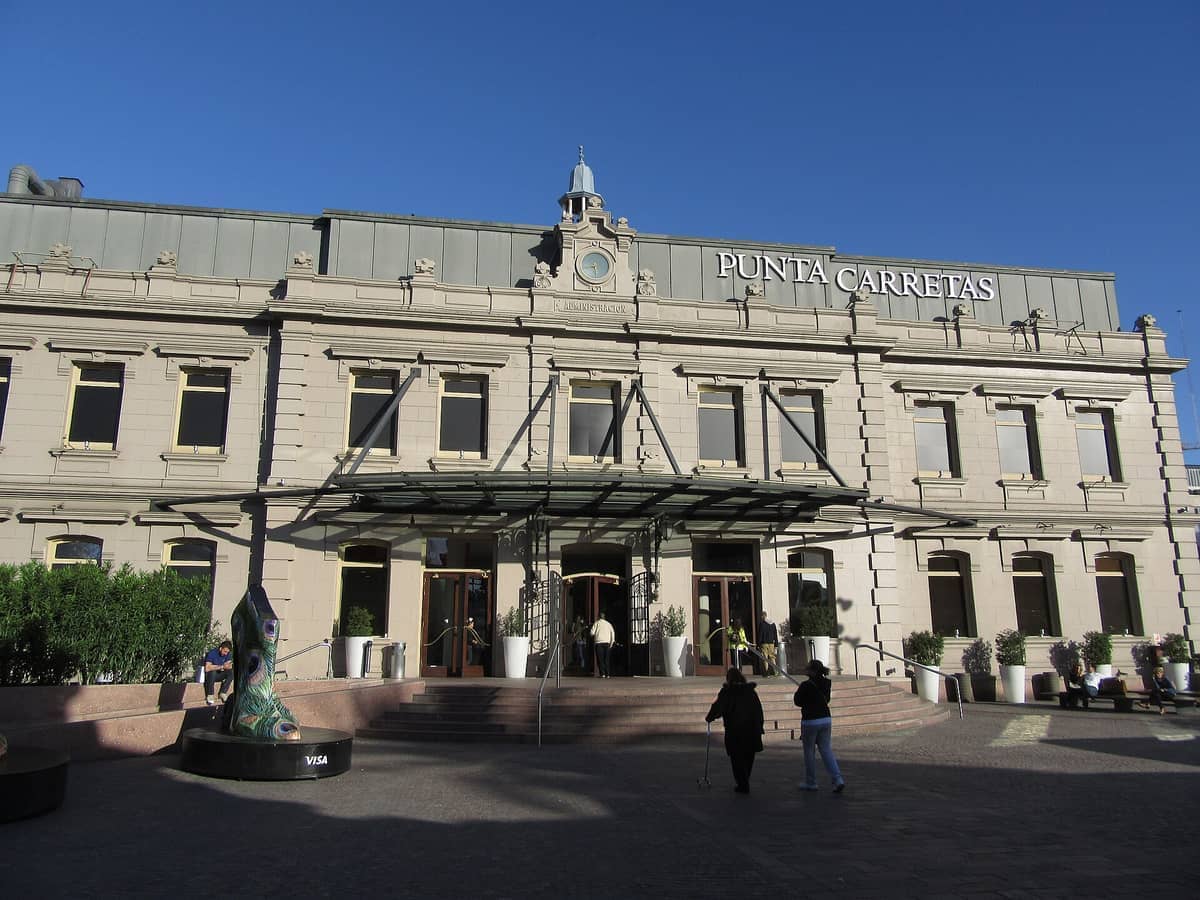
A Shopping Mall With a Past Worth Knowing
Punta Carretas Shopping is not a typical mall. The building that houses it began its life around 1915 as the Penal de Punta Carretas, a prison that operated for over seven decades before closing in 1986. By 1994, after redevelopment began in the early 1990s, it had reopened as one of Montevideo's most distinctive retail spaces. The original perimeter walls, arched entrance, and sections of the historic facade were preserved during conversion, so visitors stepping inside encounter something genuinely uncommon: a working shopping center where the bones of the old prison are still visible.
The prison had a turbulent history. During Uruguay's dictatorship period in the 1970s, it held political prisoners. It was also the site of one of the most famous escape attempts in South American history, the Tupamaros tunnel breakout of 1971, in which over a hundred prisoners escaped through a tunnel dug beneath the facility. None of that drama is formally exhibited inside the mall today, but knowing the history changes how you read the architecture as you walk through it.
💡 Local tip
Before entering the mall, pause at the main entrance arch on José Ellauri. This stone gateway is original to the 1915 prison structure and one of the clearest surviving visual links to the building's past. Most visitors walk straight through without looking up.
What the Space Actually Looks Like Inside
The interior is organized around a central atrium covered by a large skylight that floods the ground floor with natural light. The conversion preserved the basic cellular structure of the building, which means the layout feels more labyrinthine than a purpose-built mall. Corridors lead to unexpected courtyards, and some areas retain thick masonry walls that no amount of retail signage can disguise. On overcast days, the quality of light inside shifts noticeably, and the older stonework becomes more pronounced against the modern shop fronts.
The retail offer is solidly middle-market: clothing chains, shoe stores, a pharmacy, a supermarket, electronics, and services like banks and a cinema. It is not a luxury destination, and visitors seeking high-end boutiques or artisan goods will come away disappointed. What it offers instead is a well-run, comfortable space that serves its neighborhood well, with the architectural backdrop functioning as a bonus rather than the main event.
The food court is on the upper level and is a reasonable place to stop for lunch. Options lean toward casual Uruguayan fare and international fast food rather than anything exceptional. If you want a more considered meal, the surrounding Punta Carretas neighborhood has independent restaurants within a few blocks that offer far better value and atmosphere.
Tickets & tours
Live prices and dates from our booking partner. If you book, we may earn a commission at no extra cost to you.
Punta del Este full-day guided tour from Montevideo
From 47 €Instant confirmationFree cancellationGuided Tour with Wine Tasting Experience at Bouza Winery
From 68 €Instant confirmationFree cancellationAirport to Hotel or Hotel to Airport Transfer in Montevideo
From 47 €Instant confirmationFree cancellationTasting and Lunch at Bodega Pizzorno in Montevideo
From 115 €Instant confirmationFree cancellation
How the Experience Changes by Time of Day
Weekday mornings, from opening at 10:00 until around noon, are the quietest. The atrium carries little foot traffic, the natural light through the skylight is at its most interesting, and you can move through the architectural spaces without navigating crowds. This is the best time to look at the structure itself.
Weekday lunch hours and Friday evenings bring a noticeable shift. Locals from surrounding apartment buildings and offices fill the food court and the supermarket. The mall is genuinely used by residents rather than being primarily a tourist destination, which gives it an authentic, neighborhood quality. On Saturday afternoons, it gets significantly busier, with families and groups using it as a social space as much as a shopping destination. Sunday hours (10:00–21:00) are comparable to weekdays in terms of crowd density.
ℹ️ Good to know
Mall hours: Monday to Thursday 10:00–21:00, Friday and Saturday 10:00–22:00, Sunday 10:00–21:00. The mall closes on January 1, May 1, and December 25. Individual stores and the cinema may keep slightly different schedules.
The Neighborhood Context: Why Location Matters Here
Punta Carretas is one of Montevideo's calmer residential neighborhoods, sitting between Pocitos to the north and the Parque Rodó area to the west. It is characterized by wide tree-lined streets, older apartment buildings, and a pace that feels unhurried compared to the commercial center of the city. The mall anchors the neighborhood's social infrastructure rather than dominating it.
From the mall's main entrance, the Rambla de Montevideo is a short walk south. On a clear day, pairing a visit to Punta Carretas Shopping with a walk along the waterfront makes for a complete afternoon: architecture and retail followed by open sky and river views. The contrast between the enclosed stone corridors of the mall and the wide coastal promenade is more striking than either experience alone.
Photography and Practical Walkthrough
The most photographically interesting elements are the entrance arch, the central atrium skylight from below, and any section where original stonework is visible alongside contemporary shopfronts. Midmorning light through the atrium works well for interior shots. No special photography permits are required for personal use in the common areas, though individual store policies may vary.
The mall is accessible by multiple city bus routes along the main avenues that border the Punta Carretas neighborhood. Taxis and rideshare services drop off directly at the José Ellauri entrance. There is vehicle parking within the complex, charged separately. For visitors using public transport across Montevideo, consult current route information before traveling, as services and stops can change.
Accessibility within the mall includes elevators and escalators connecting the levels. For specific mobility requirements, the mall's management contact is listed on the official site. If you are building a broader itinerary around this part of the city, the guide to getting around Montevideo covers bus routes and rideshare options in useful detail.
Honest Assessment: Who This Is and Is Not For
Travelers who came specifically to shop will find a competent but unremarkable mall. The retail mix is not meaningfully different from other shopping centers in Montevideo, and the historic architecture, while present, is not interpreted or highlighted through any formal exhibition or signage. If you arrive expecting a museum-quality presentation of the prison's history, you will not find it.
Where Punta Carretas Shopping does succeed is as a piece of urban fabric: a place where history and daily life coexist without one being packaged for the other. Architecture enthusiasts, travelers interested in adaptive reuse of historic buildings, and anyone curious about how a city integrates its difficult past into ordinary present-day use will find something genuinely worth considering here. For a broader sense of Montevideo's architectural character, the Montevideo architecture guide provides useful context for how buildings like this one fit into the city's layered building history.
Families with children will find the mall convenient and easy to navigate, with the food court providing a practical midday stop. Travelers on rainy days have a legitimate reason to duck in: the covered atrium and multiple levels offer a dry hour or two without spending anything beyond a coffee or a meal.
⚠️ What to skip
Do not come expecting a heritage attraction with guided tours or historical exhibits. The mall operates as a fully commercial space. The prison history is visible in the architecture but not explained anywhere inside the building.
Insider Tips
- The supermarket inside the mall is one of the more convenient spots in the neighborhood to pick up local products, Uruguayan snacks, and dulce de leche at non-tourist prices. Worth a browse even if you are not doing a full shop.
- If you arrive on a weekday morning before noon, the atrium is at its most photogenic: natural light from the skylight creates strong geometric shadows on the stone and tile floors below.
- The entrance arch on José Ellauri faces roughly northwest. Late afternoon sun catches the stonework at a low angle and makes the texture of the original prison masonry much more visible than at midday.
- The cinema inside the mall typically screens a mix of mainstream international releases and occasionally Uruguayan or regional films. Check the schedule before your visit if this interests you, as evening screenings can draw crowds that make the upper food court livelier than expected.
- Combine this stop with a walk toward Playa Pocitos or Playa Ramírez afterward. Both beaches are within comfortable walking distance and make the afternoon feel more complete than a mall visit alone.
Who Is Punta Carretas Shopping For?
- Architecture and adaptive reuse enthusiasts who appreciate buildings with layered histories
- Families needing a practical, air-conditioned stop with food options and easy navigation
- Travelers caught in rain needing a covered space in the Punta Carretas area
- Visitors curious about everyday Montevideo life away from tourist circuits
- Shoppers looking for mid-market Uruguayan retail in a neighborhood setting
Nearby Attractions
Other things to see while in Punta Carretas:
- Castillo Pittamiglio
Built by engineer and alchemist Humberto Pittamiglio on the Punta Carretas waterfront, Castillo Pittamiglio is unlike anything else in Montevideo. Part castle, part museum, part philosophical statement, it sits directly on the Rambla and opens to the public as a free cultural space with paid guided tours.
Planning a trip? Discover personalized activities with the Nomado app.