Montevideo on a Budget: How to Visit for Less
Montevideo is more affordable than its reputation suggests. With free museum days, a reliable bus network costing around US$1.50 per ride, and a coastline that charges nothing for entry, the Uruguayan capital rewards travelers who plan smart. This guide breaks down exactly how to keep costs low without sacrificing the best the city has to offer.
Tickets & tours
Live prices and dates from our booking partner. If you book, we may earn a commission at no extra cost to you.
TL;DR
- Urban buses (STM network) cost around UYU 52–64 per ride with a card — roughly US$1.30–1.60 — making public transport the clear budget choice over taxis or ride-hailing.
- Many museums offer free entry on Mondays, with Tuesday free for Uruguayan residents — visit on weekdays to slash sightseeing costs. See our list of the best museums in Montevideo for priorities.
- The 22-kilometer Rambla coastal promenade, city beaches, and most parks cost nothing — beach days and walking tours are naturally budget-friendly.
- Shoulder seasons (March-May and September-November) offer lower accommodation rates and comfortable temperatures — see the best time to visit Montevideo for a full breakdown.
- Eating at mercados and parrillas at lunch (not dinner) is the single best way to experience Uruguayan food without the full restaurant price tag.
Is Montevideo Actually Affordable?
Uruguay has a reputation in South America for being relatively expensive, and compared with Bolivia or Peru, that reputation is partially deserved. Montevideo is the priciest city in the country, and some categories — accommodation in particular — can feel steep if you're arriving from neighboring Argentina. But the comparison point matters. Measured against European capitals or major Brazilian cities, Montevideo on a budget is genuinely achievable. The city has a comprehensive free cultural offer, an effective public bus network, and a food culture built around large, shareable portions.
The key is knowing which costs are fixed and which are discretionary. Transport and entry fees can be kept very low with some planning. Dining and accommodation have a wide range. Uruguay travel costs are heavily influenced by the Uruguayan peso (ISO code: UYU), which fluctuates against the US dollar — checking current exchange rates before you go is worth a few minutes of your time.
ℹ️ Good to know
Uruguay's electrical system runs on 220V at 50Hz. Plug types are typically C, F, and L (European-style two-pin and Italian-style three-pin). Travelers from North America need both a voltage converter and an adapter. Pack this before you arrive — airport shops charge significantly more.
Getting Around Montevideo Without Spending Much
The Sistema de Transporte Metropolitano (STM) bus network covers virtually every neighborhood in Montevideo and is the backbone of budget travel here. With an STM card, a single urban ride (1‑hora boleto) costs around UYU 50 — roughly US$1.30–1.60 at mid-2025 exchange rates. Paying cash is slightly more expensive. Suburban routes with distance-based fares run from around UYU 57 up to UYU 85 for longer distances (up to 28 km). These figures are published by the Intendencia de Montevideo and the Ministry of Transport, but note that small annual increases are common, so verify the current tariff on the official municipal portal before traveling.
Ride-hailing apps including Uber operate in Montevideo and are convenient for late nights or airport transfers, but the cost is substantially higher than the bus for everyday sightseeing. The Carrasco International Airport (IATA: MVD) sits about 18–20 km east of Plaza Independencia — a taxi or remise will cost significantly more than the public bus that stops outside the terminal. If you're not carrying heavy luggage and aren't arriving late at night, the bus is the correct budget call. For a full breakdown of transport options, getting around Montevideo covers routes, cards, and practical logistics.
- STM bus with card Around UYU 52–64 per ride. Works across the urban network. Get the card from authorized points of sale citywide.
- Cash bus fare Slightly higher than card price. Fine for one-off trips but inefficient if you're riding multiple times daily.
- Uber / ride-hailing Convenient and reliable, but 4–6x the cost of a bus. Best reserved for airport runs or late nights when buses are sparse.
- Walking Ciudad Vieja, Centro, and Parque Rodó are all walkable between themselves. The Rambla is a flat, linear path excellent for long coastal walks.
- Cycling Montevideo has a public bike-share system (Movete) in central areas. Worth exploring if you're based in Pocitos or near the rambla.
💡 Local tip
Buy your STM card as soon as you arrive and load it with enough credit for your stay. The per-ride discount over cash adds up quickly across a multi-day visit, and the card works on all urban routes without needing exact change.
Free and Low-Cost Sightseeing
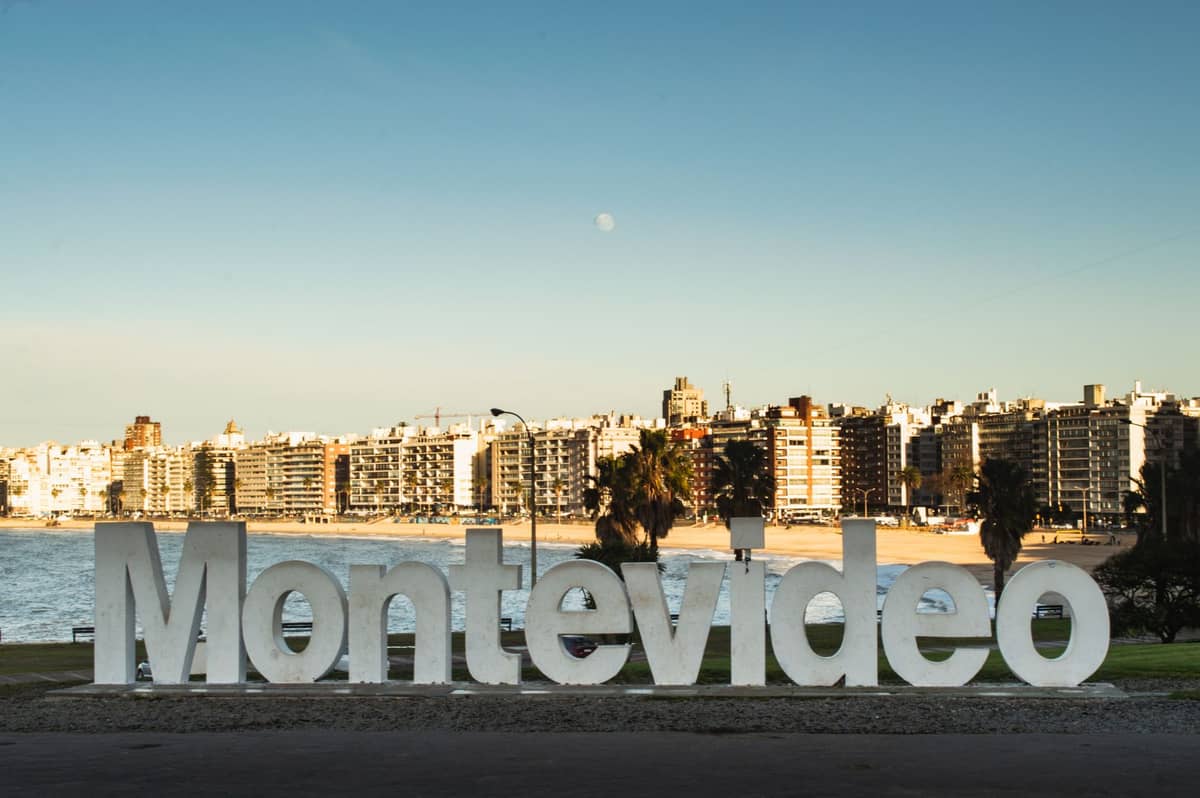
Montevideo's best free asset is its coastline. The Rambla de Montevideo stretches roughly 22 kilometers along the Río de la Plata, running from the port and Ciudad Vieja area all the way east to Carrasco. Walking or cycling this route on a clear morning, with the wide estuary on one side and the city's changing architecture on the other, costs nothing and delivers more genuine atmosphere than most paid attractions. Urban beaches including Playa Ramírez, Playa Pocitos, and Playa Buceo are free to use year-round.
The city's parks are another cost-free resource. Parque Rodó has rowing boats for hire and an amusement area, but the park itself is open access. The Jardín Botánico in Prado is free to enter and makes a quiet escape from the city center. Both sites are reachable by bus without transfers from most central neighborhoods.
Museums require more planning but can also be done cheaply. Many museums in the national system have free or very low-cost entry policies, with specific days (often Tuesdays) free for Uruguayan residents at participating institutions. Some privately run or special museums charge modest admission for non-residents — typically a few hundred pesos — so it is worth checking each museum’s current policy and timing your visit if you’re planning to hit several institutions in one day. Official campaigns from the Ministry of Education and Culture actively promote summer museum visits (December-February) as a budget-friendly indoor activity, particularly useful during Montevideo's hotter, more humid months.
- Mondays: free for everyone The best single strategy for budget museum visits. Combine two or three institutions in a morning and spend the afternoon on the Rambla.
- Torres García Museum One of the finest small art museums in South America. Check current admission — free-day policies apply here.
- Museo del Carnaval Small but genuinely engaging. Covers Montevideo's Carnival tradition including candombe and murgas. Budget around UYU 300–400 if visiting on a non-free day.
- Mirador de la Intendencia Free panoramic viewpoint over the city from the Intendencia building on Plaza Independencia. One of the best free views in Montevideo.
- Ciudad Vieja self-guided walk The historic old town is best explored on foot. Key landmarks including the Puerta de la Ciudadela, Plaza Matriz, and Palacio Salvo are visible from the street at no cost.
For a structured itinerary that prioritizes free and low-cost attractions, the free things to do in Montevideo guide covers over a dozen no-cost options across the city, including the best streets in Ciudad Vieja for architecture and history without an entry fee.
Eating Well on a Uruguayan Peso Budget
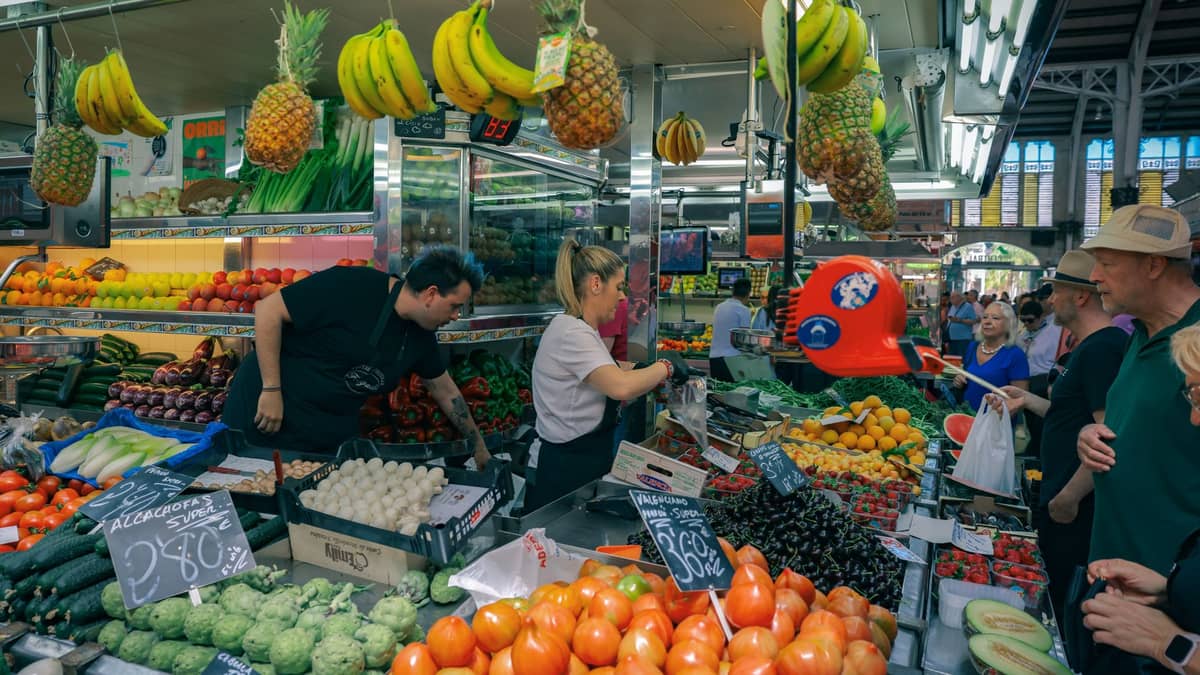
Uruguay's food culture revolves around meat, bread, and dairy — all of which happen to be cheap when consumed the way locals do. The single best budget meal strategy in Montevideo is eating your main meal at lunch. Most restaurants and parrillas offer a lunchtime menu del día (a fixed-price set menu) that typically includes a main course, side, and sometimes a drink or dessert, at a fraction of the evening à la carte price. In working-class neighborhoods and central areas, these run from around UYU 350–600 — substantial and filling.
The Mercado Agrícola de Montevideo (MAM) in the Villa Dolores area is one of the best places to eat affordably without sacrificing quality. The food court inside has stalls selling everything from freshly made pasta to roasted chickens, with most options well under UYU 500. It's popular with locals on weekends and far more authentic than tourist-facing establishments near the waterfront. The Mercado del Puerto in Ciudad Vieja is worth visiting for the atmosphere, but prices there are higher and it skews toward tourists — go for a drink and the smoke, not for a budget lunch.
Street food options include chivitos (Uruguay's definitive steak sandwich) from corner cafeterias, medialunas (crescent pastries) from any bakery for morning breakfast, and pizza sold by the slice from the numerous pizzerías that line the Centro streets. Supermercados (supermarkets) such as Tienda Inglesa, Disco, and Ta-Ta have good deli sections and fresh bread — self-catering for breakfast and snacks is easy and cuts daily food costs considerably.
⚠️ What to skip
Avoid the waterfront restaurants immediately adjacent to the Puerto and Ciudad Vieja tourist zones for sit-down meals — they charge premium prices targeting day-trippers. Walk two or three blocks inland and the quality-to-price ratio improves substantially.
Accommodation: Where to Sleep Without Overpaying

Accommodation is where budget travelers in Montevideo feel the most pressure. The city is not a backpacker hub in the way Buenos Aires or Mendoza are, and hostel density is lower. That said, options exist across the price spectrum. Hostels in Ciudad Vieja and Centro offer dorm beds starting from around US$12–20 per night depending on season, with private rooms from US$35–60. Guesthouses (casas de huéspedes) scattered through Parque Rodó and Cordón offer mid-range private rooms at competitive prices and often include breakfast.
The choice of neighborhood matters for budget travelers. Staying in Pocitos or Carrasco puts you in the most attractive coastal areas but means bus rides into the main sightseeing zones. Staying in Centro or Ciudad Vieja keeps transport costs down since most historic attractions are walkable, but these neighborhoods are less residential and quieter after dark. For a full comparison of neighborhoods and price ranges, where to stay in Montevideo breaks it down by budget and travel style.
Seasonality affects rates noticeably. January and February are peak summer months when Uruguayan domestic tourism spikes — accommodation fills up and prices rise, especially in coastal neighborhoods. The shoulder seasons of March-May and September-November offer better value and more comfortable sightseeing temperatures (typically 13–22°C). If you have flexibility on dates, avoiding the January-February peak is one of the most effective ways to reduce overall trip cost.
Day Trips and Wider Uruguay: Budget Considerations
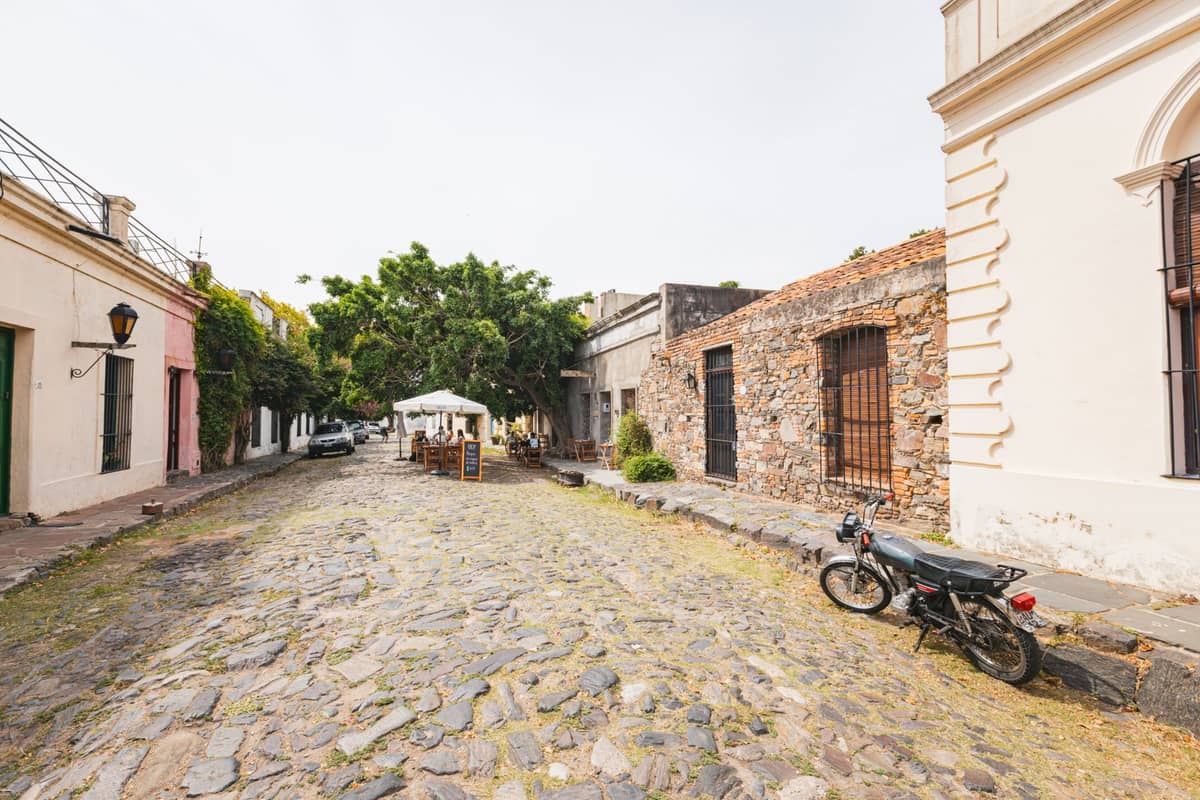
Travelers doing uruguay travel on a budget often want to see more than just the capital. Two of the most popular day trips are genuinely affordable. Colonia del Sacramento, the UNESCO-listed colonial town about 180 km west, is reachable by COT or Turil bus from Tres Cruces terminal for around 550–600 UYU one-way. The Colonia del Sacramento day trip guide covers transport options, booking tips, and timing advice for making the most of this day trip.
Punta del Este, Uruguay's famous beach resort about 140 km east, is reachable by bus from Tres Cruces for around UYU 500–700 one way depending on the company and season. High season (January-February) sees prices for accommodation in Punta spike dramatically — it's one of the most expensive resort destinations in South America during that period. Visiting as a day trip from Montevideo is a smarter budget move than overnighting there in peak season. The Punta del Este day trip from Montevideo explains how to do this efficiently.
FAQ
How much does it cost to travel to Uruguay and specifically visit Montevideo?
Flight costs vary significantly by origin. Once in Montevideo, a realistic daily budget for a careful traveler is around US$40–60 covering a hostel dorm, bus transport, one restaurant meal and self-catered breakfast. A mid-range budget of US$80–120 per day covers a private guesthouse room, all meals at local restaurants, and entrance fees. The main variable is accommodation — food and transport can be kept very low with local choices.
Are there free museums in Montevideo?
Yes. Many state-run museums have free or very low-cost entry, and several offer a weekly free day for residents (often on Tuesdays). Policies and free days vary by museum rather than being universally on Mondays, so the most reliable strategy is to check each institution’s official site or the Ministry of Education and Culture listings before you go.
What is the cheapest way to get around Montevideo?
The STM urban bus network. With an STM card, a single ride costs around UYU 50 (roughly US$1.30–1.60). The network covers all major neighborhoods. Walking is also viable in the central areas — Ciudad Vieja to Centro to Parque Rodó is manageable on foot.
Is Montevideo cheaper than Buenos Aires?
It depends on the category. At current exchange rates, Buenos Aires can appear cheaper due to Argentina's currency dynamics. But for visitors paying in hard currency, Montevideo and Buenos Aires are broadly comparable, with Montevideo sometimes more expensive for accommodation. Transport and basic food in Montevideo are genuinely affordable by regional standards.
What is the best time to visit Montevideo on a budget?
Shoulder seasons — March to May and September to November — offer the best combination of lower accommodation prices, mild temperatures (13–22°C), and thinner crowds. Avoid January and February if budget is a priority, as domestic tourism peaks and coastal accommodation prices rise significantly.
Tickets & tours
Live prices and dates from our booking partner. If you book, we may earn a commission at no extra cost to you.
Planning a trip? Discover personalized activities with the Nomado app.