Is Montevideo Worth Visiting? An Honest Assessment
Montevideo is Uruguay's capital and its most-visited city, attracting about 876,000 foreign tourists in 2025 alone. But is it worth a detour on your South America trip? This guide breaks down what the city genuinely offers, who it suits, and what to skip.
Tickets & tours
Live prices and dates from our booking partner. If you book, we may earn a commission at no extra cost to you.
TL;DR
- Montevideo is worth visiting if you want a relaxed, walkable South American capital with genuine cultural depth and excellent food.
- The city rewards slower travel: plan at least 3 full days to cover Ciudad Vieja, the Rambla coastline, and the local food scene properly.
- Spring (September–November) and autumn (March–May) offer the best weather for sightseeing without peak-season crowds.
- Costs are moderate by South American standards: budget travelers can get by on US$50–70 per day, while mid-range travelers typically spend US$100–150.
- Montevideo pairs well with a day trip to Colonia del Sacramento or a weekend in Punta del Este.
The Honest Case For and Against Montevideo
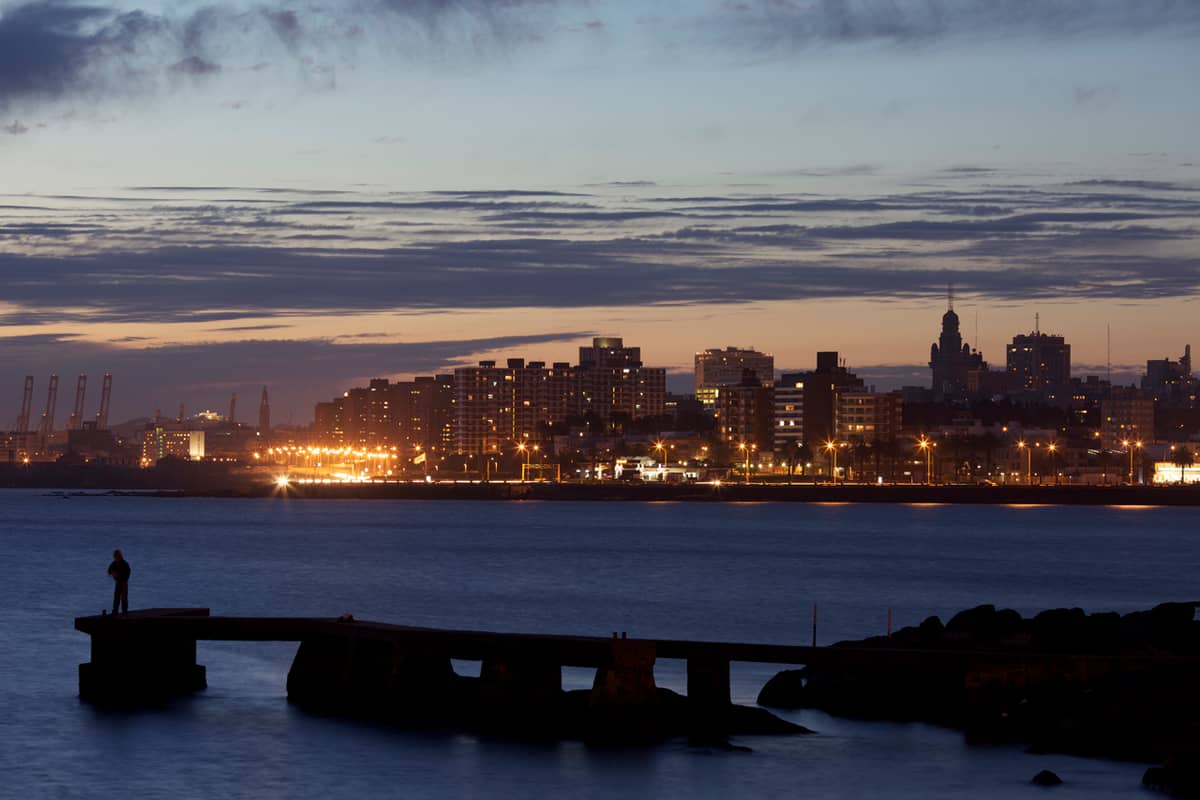
Visiting Uruguay without stopping in Montevideo would be like passing through France without seeing Paris, but that comparison only goes so far. Montevideo is not a city that dazzles you on arrival. Its skyline is low, its streets are quieter than Buenos Aires, and there is no single landmark that belongs on every bucket list. What it delivers instead is something rarer in South America: a city that feels genuinely livable, where culture is embedded in daily life rather than packaged for tourists.
With a city-proper population of around 1.29 million (2023 census), Montevideo accounts for roughly 37% of Uruguay's entire population. That concentration of people, institutions, and history in a relatively compact 201 km² (2023 census definition of the capital city area) means the city packs a lot into a small footprint. It has serious museums, a world-class theatre, a deep food culture, and one of the longest urban waterfronts in South America. The question is whether that matches what you are looking for.
⚠️ What to skip
Montevideo is not the right choice if you are chasing adrenaline, dramatic scenery, or a packed nightlife circuit every night of the week. It is a city for people who enjoy walking, eating well, and absorbing local atmosphere. Travelers expecting Buenos Aires-level energy often leave underwhelmed.
What Montevideo Actually Offers Visitors
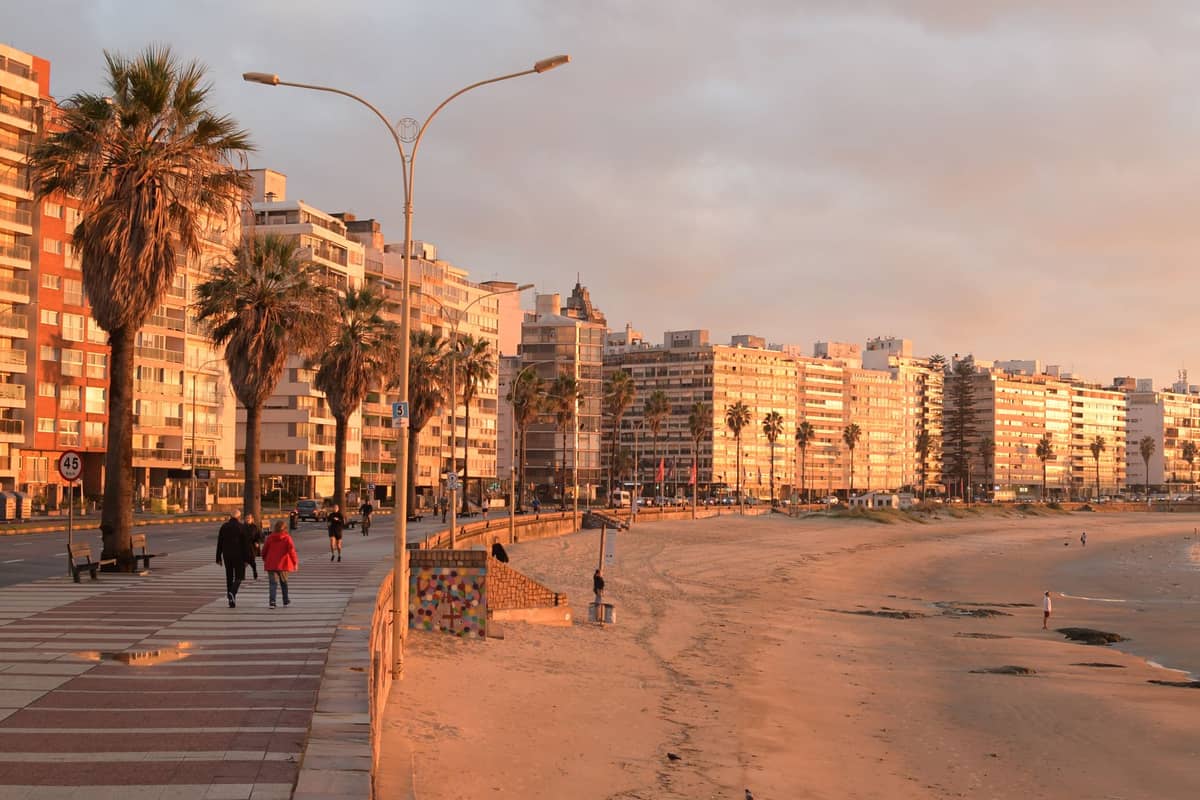
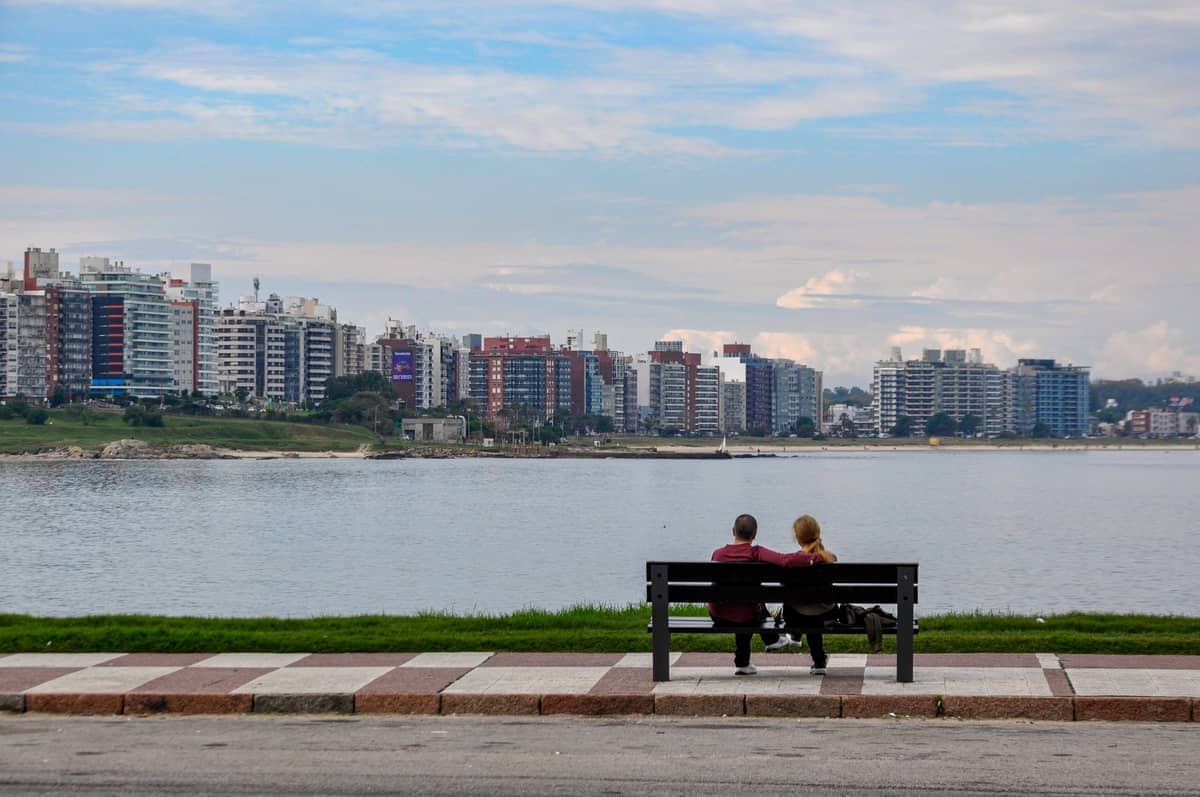
The strongest argument for visiting is the combination of the Rambla de Montevideo and Ciudad Vieja. The Rambla is a roughly 22-kilometre coastal promenade that runs along most of the city's coastline, connecting beaches, parks, and residential neighborhoods. Locals use it daily for jogging, cycling, and evening walks. It is genuinely one of the finest urban waterfronts in the region, and entirely free.
Ciudad Vieja, the historic peninsula district, contains the city's oldest architecture alongside some of its best restaurants and bars. The Mercado del Puerto is the iconic destination for a traditional asado lunch, though it skews expensive and touristy on weekends. For a better daily market experience, the Mercado Agrícola de Montevideo in Villa Española is where locals actually shop, eat, and linger.
- Architecture The city has an unusual mix of Art Deco, neoclassical, and modernist buildings. The Palacio Salvo, Palacio Lapido, and Palacio Piria are all within walking distance of Plaza Independencia and worth examining up close.
- Museums The Museo Torres García, dedicated to Uruguay's most internationally recognized artist, is compact but genuinely excellent. The Museo del Carnaval explains the city's Candombe traditions far better than any guide can in passing.
- Food and drink Uruguayan beef is legitimately world-class, and Montevideo is the best place to eat it. Beyond asado, the city has strong Italian-influenced baking traditions, good wine culture built around Tannat, and a growing craft beer scene.
- Day trips Colonia del Sacramento is 2.5–3 hours by bus and is one of the most atmospheric small towns in South America. Punta del Este is reachable in about 2–2.5 hours by bus.
When to Go: Seasons, Crowds, and Weather
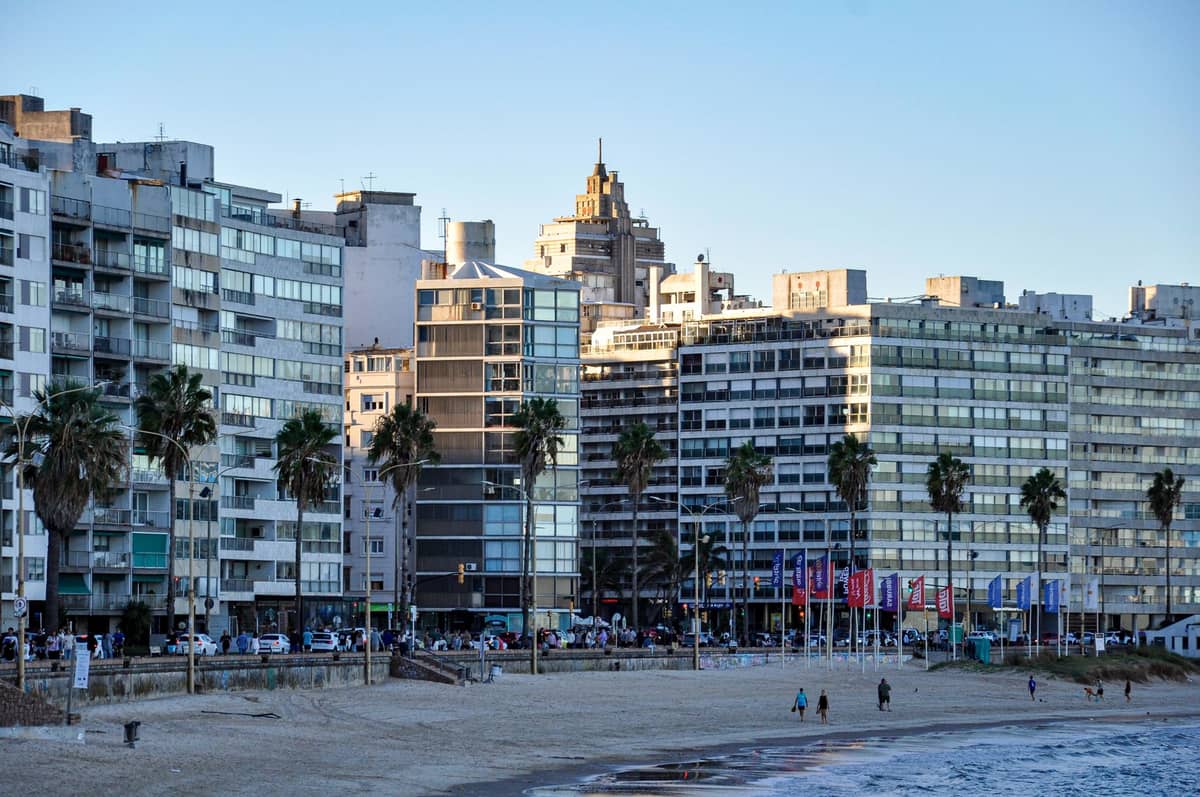
Montevideo has a humid subtropical climate (Köppen Cfa), which means four distinct seasons without extremes. Summer runs December through February, with average daytime highs of 26–28°C and humid conditions that make the beaches and Rambla very popular. This is also when domestic tourism peaks: Uruguayan families from across the country visit the capital, and prices for accommodation tend to rise.
Winter (June–August) brings cool, occasionally grey days with highs around 14–16°C and lows near 7–9°C. It is rarely bitterly cold, but rain is more frequent and beach activities are off the table. The city remains fully functional and some cultural programming (theatre, concerts) is actually at its richest. If you are visiting primarily for museums, architecture, and food, winter is underrated.
The genuinely optimal windows are autumn (March–May) and spring (September–November), when temperatures sit roughly in the 13–22°C range, rainfall is moderate, and crowds are thinner than summer. The best time to visit Montevideo in terms of weather and value is probably late March through May, after the summer crowds dissipate but before the winter chill sets in. October and November are equally good for first-time visitors.
ℹ️ Good to know
Carnival season (typically late January to early March) transforms the city. The Desfile de Llamadas in Barrio Sur is one of the most spectacular street events in South America, featuring Candombe drumming processions. If you can time your visit around it, the experience is extraordinary — but book accommodation well in advance and expect higher prices.
Costs and Logistics: What to Expect on the Ground
Uruguay is the most expensive country in South America for tourists, and Montevideo reflects that. Foreign visitors to the city spent an average of about US$569 per person per stay in 2025 (Uruguay Ministry of Tourism data), though that figure includes business travelers and those staying in upscale hotels. In practice, costs depend heavily on your travel style.
- Budget travelers staying in hostels and eating at market stalls or supermarkets can manage on US$50–70 per day.
- Mid-range travelers in a 3-star hotel with sit-down meals and occasional taxis should budget US$100–150 per day.
- Upscale options (boutique hotels in Pocitos or Carrasco, wine-paired dinners, private transfers) push well above US$200 per day.
- Airport transfers from Carrasco International Airport (IATA: MVD, located around 21–22 km east of Plaza Independencia) cost roughly US$30–35 by taxi or remise; public buses exist but are significantly slower with luggage.
- The city's bus network is comprehensive and cheap — a single fare costs around US$1.50–2 equivalent and covers most tourist routes. Uber also operates in Montevideo.
For a practical breakdown of spending less, see our guide to visiting Montevideo on a budget. For neighborhood recommendations and where the best-value areas to stay are, the where to stay in Montevideo guide covers the key tradeoffs between Ciudad Vieja, Pocitos, and Centro.
✨ Pro tip
Uruguay uses 220V electricity with Type C, Type F, and Type L plugs (similar to European standards, with an additional local type). North American travelers need both a voltage converter and a plug adapter. The currency is the Uruguayan peso (UYU); US dollars are widely accepted in tourist contexts but you will get better rates paying in pesos for most local purchases. Tap water in Montevideo is treated and generally considered safe to drink, though always confirm current advisories before your trip.
The Neighborhoods That Shape the Experience
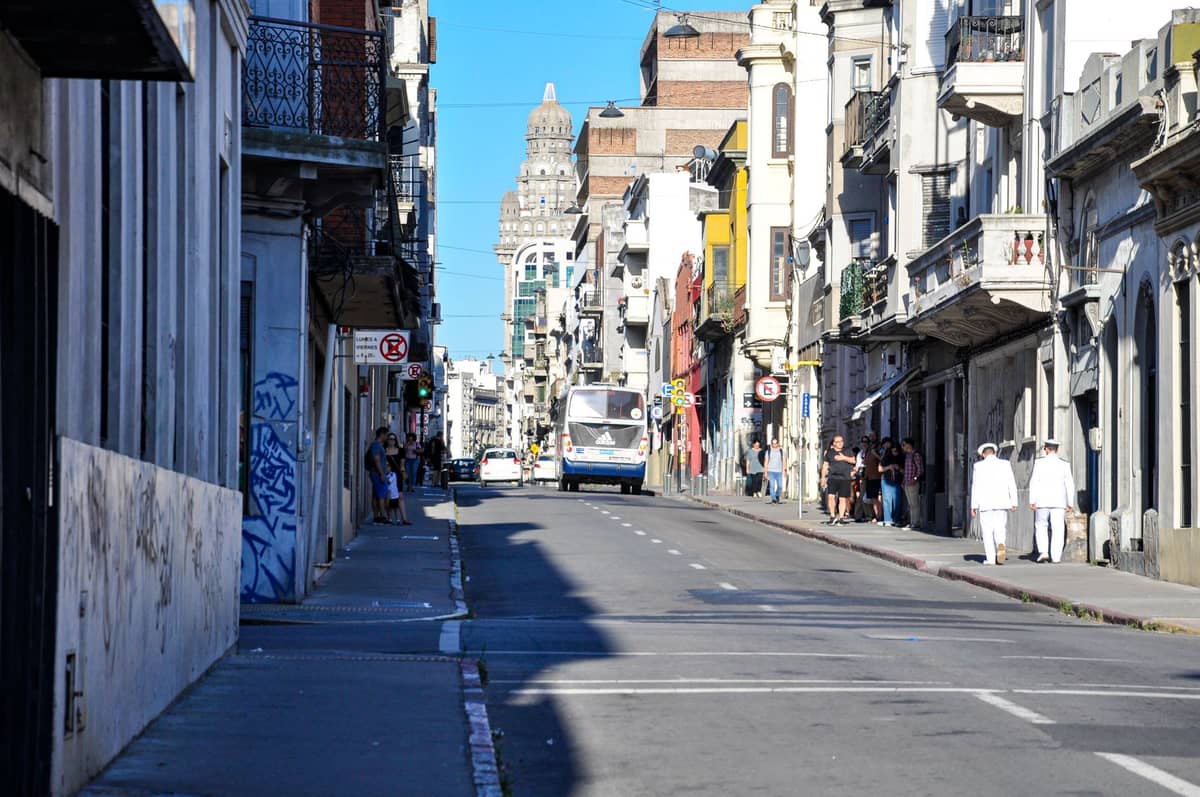
Most first-time visitors split their time between three areas. Ciudad Vieja is where history concentrates: the colonial grid, Plaza Independencia, the Teatro Solís, and the best street-level architecture. It is quieter at night than it looks on maps, and some blocks feel deserted after dark, so it is worth being aware of your surroundings.
Pocitos is the residential neighborhood most visitors end up gravitating toward for eating and drinking. It has a pleasant urban beach (Playa Pocitos), a good concentration of cafés and restaurants on Avenida Brasil and surrounding streets, and a safer, more relaxed feel after dark. Punta Carretas Punta Carretas borders Pocitos and contains a shopping mall built inside a converted prison, which is worth a look even if you do not plan to shop.
For something less touristy, Barrio Sur and Palermo are where Candombe culture is most alive. The Llamadas processions originate here, and on weekend evenings you can sometimes hear drumming rehearsals in the streets. It gives you a version of Montevideo that most short-stay visitors miss entirely.
Who Should Visit Montevideo (and Who Should Skip It)
Montevideo is worth visiting for travelers who prioritize authenticity over spectacle. It is a city that rewards curiosity: the architecture has real stories behind it, the food culture is deeply rooted, and the Uruguayan personality (open, unhurried, direct) makes casual conversations with locals unusually easy compared to larger South American capitals.
It works particularly well as part of a broader itinerary. Flying into Montevideo, spending 3–4 days exploring the city, doing a day trip to Colonia del Sacramento, and then continuing to Buenos Aires (connected by ferry across the Río de la Plata) is one of the most satisfying compact itineraries in the Southern Cone. See the full day trips from Montevideo guide for options beyond Colonia.
Who should reconsider: if your South America trip is under two weeks and heavy on must-see highlights, Montevideo may not compete with Iguazú, Patagonia, or the Atacama for pure visual impact. It is also not the place to go if beach resort life is your primary goal; for that, Punta del Este (especially December–February) is the regional answer.
💡 Local tip
Safety in Montevideo is a common concern. The city is broadly safe by regional standards, but Ciudad Vieja and the port area warrant the usual urban awareness after dark. Keep valuables out of sight, use official taxis or ride-hailing apps rather than flagging down unmarked vehicles, and check current conditions before your trip. For a full breakdown, read the Montevideo safety guide.
FAQ
Is Montevideo worth visiting compared to Buenos Aires?
They are meaningfully different cities. Buenos Aires is larger, louder, and has more nightlife, fine dining options, and international-level arts programming. Montevideo is smaller, quieter, and less intense, which many travelers find refreshing. If you have the time, visiting both via the Buenos Aires-Montevideo ferry (about 3–3.5 hours) is the obvious move. If you only have time for one, Buenos Aires offers more sheer volume of things to do; Montevideo offers a more relaxed, authentic experience.
How many days do you need in Montevideo?
Three full days is the practical minimum for a first visit: one day for Ciudad Vieja and the historic centre, one day for the Rambla and coastal neighborhoods, and one day for a museum focus or a day trip to Colonia del Sacramento. Four to five days allows you to go deeper into neighborhoods like Barrio Sur and Palermo, visit the Cerro fortress, and eat your way through more of the food scene without feeling rushed.
Is Montevideo safe for tourists?
Uruguay consistently ranks among the safer countries in Latin America, and Montevideo reflects that relative stability. Petty theft (bag snatching, phone theft) is the most common risk, particularly in crowded areas and around the port. Violent crime against tourists is uncommon but not unheard of. Standard urban precautions apply: do not display expensive equipment openly, use reputable transport, and avoid deserted streets late at night in unfamiliar areas.
What is the best time of year to visit Montevideo?
Autumn (March–May) and spring (September–November) offer the most comfortable conditions for sightseeing, with mild temperatures (13–22°C range) and moderate crowds. Summer (December–February) is warmer and more social, especially around Carnival in late January or February, but accommodation prices rise and it is more crowded. Winter (June–August) is quiet and occasionally grey, but not unpleasant for a city-focused trip.
Is visiting Uruguay expensive?
Uruguay is the most expensive country in South America for visitors, and Montevideo has the widest range of prices. Budget travelers can manage on around US$50–70 per day using hostels, markets, and public transport. Mid-range travelers should plan for US$100–150 per day. The Uruguayan peso (UYU) is the local currency; US dollars are widely accepted in tourist contexts, but paying in pesos usually gets you a better effective rate at most shops and restaurants.
Tickets & tours
Live prices and dates from our booking partner. If you book, we may earn a commission at no extra cost to you.
Planning a trip? Discover personalized activities with the Nomado app.