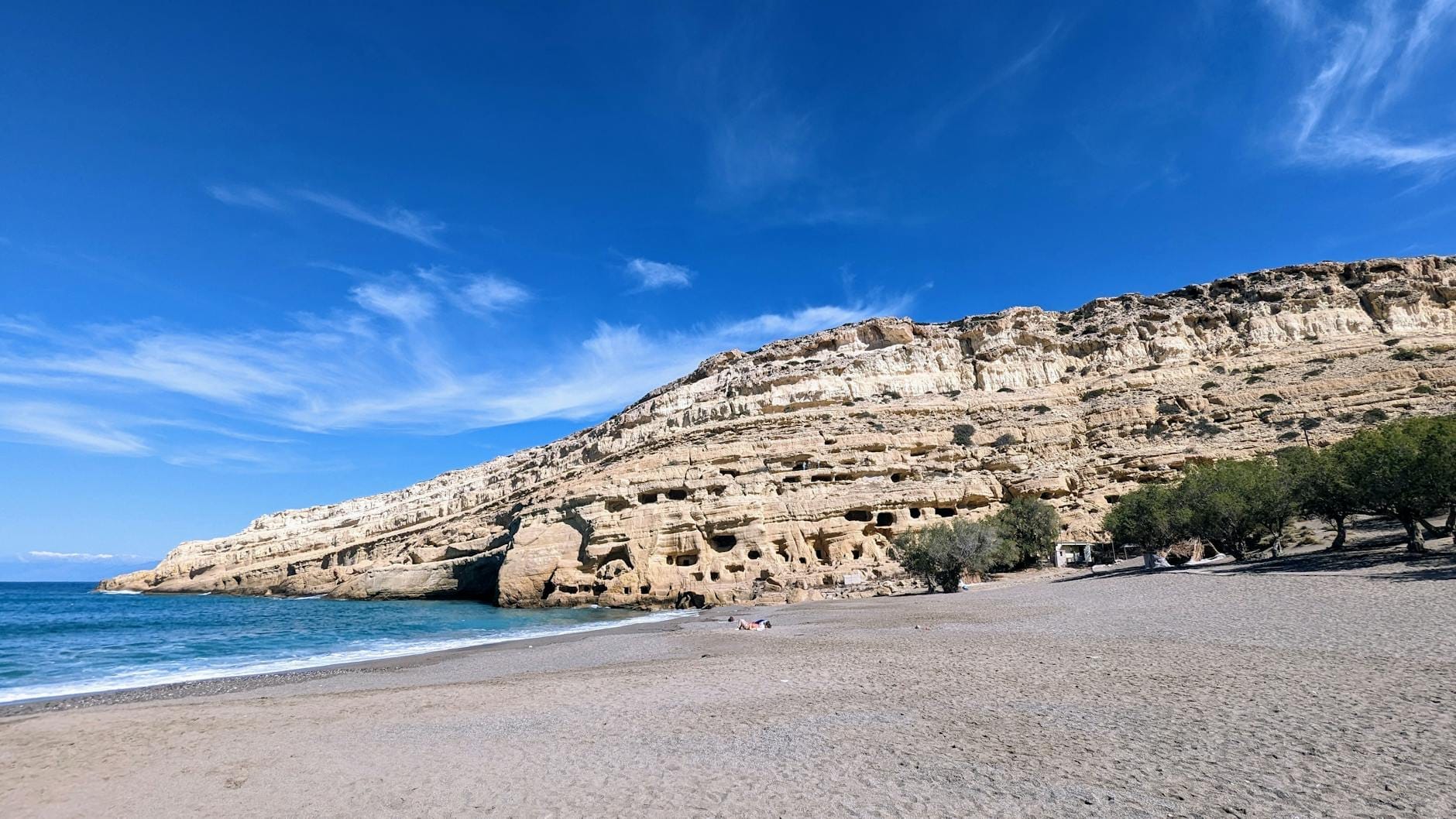
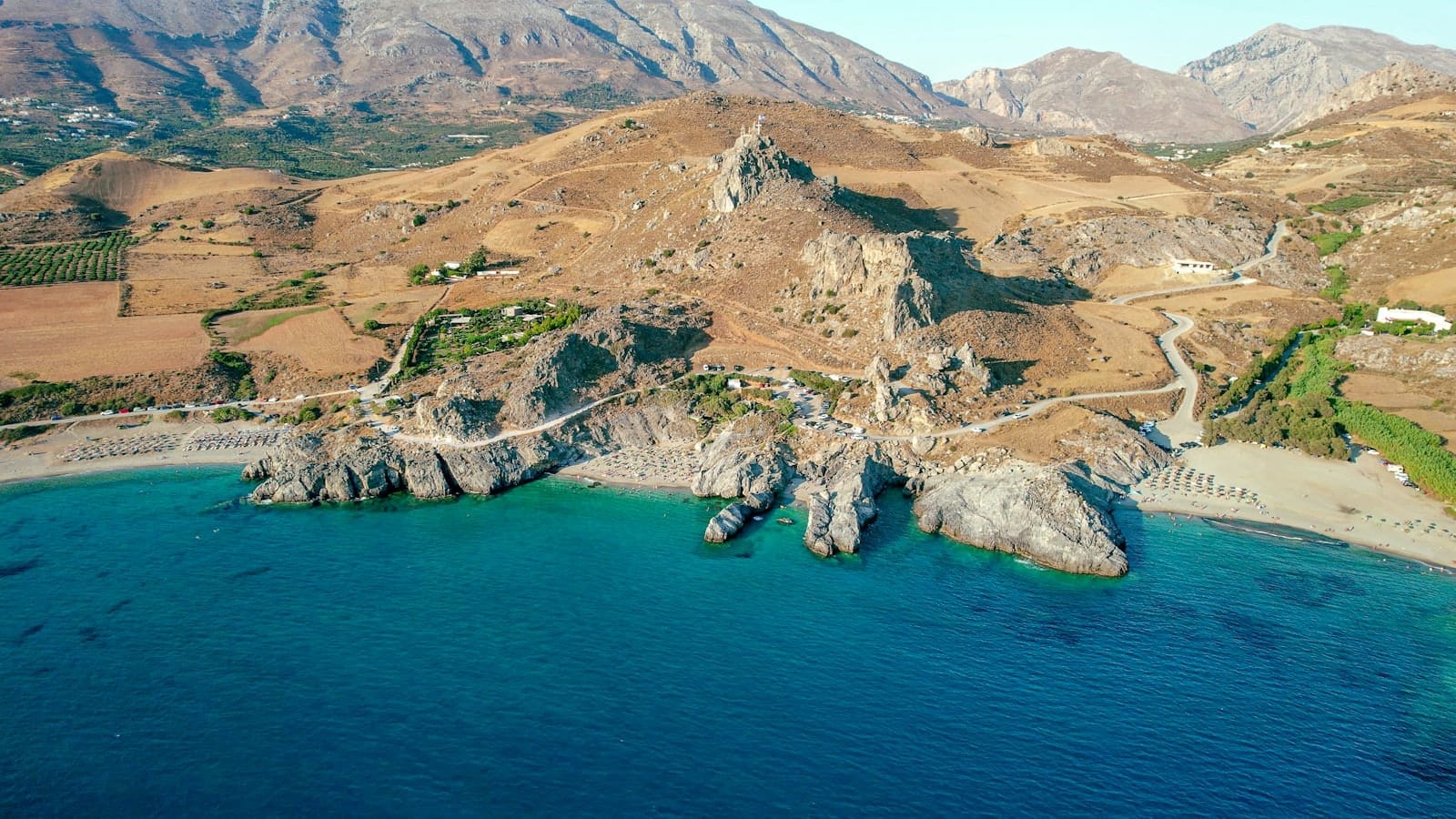
Plakias is a low-key resort town on Crete's southwest coast, sitting in a crescent bay backed by olive groves and the foothills of the White Mountains. The broader south coast stretching toward Chora Sfakion and Preveli offers some of the island's most rewarding beaches, gorge hikes, and coastal scenery without the crowds of the north shore.
Plakias and the surrounding south coast represent a different side of Crete entirely: quieter, slower, and closer to the landscape than most of the island's resort zones. The beaches here are longer and less organized, the tavernas are mostly family-run, and the mountains come down to the sea in a way that makes every coastal drive feel dramatic.
Orientation
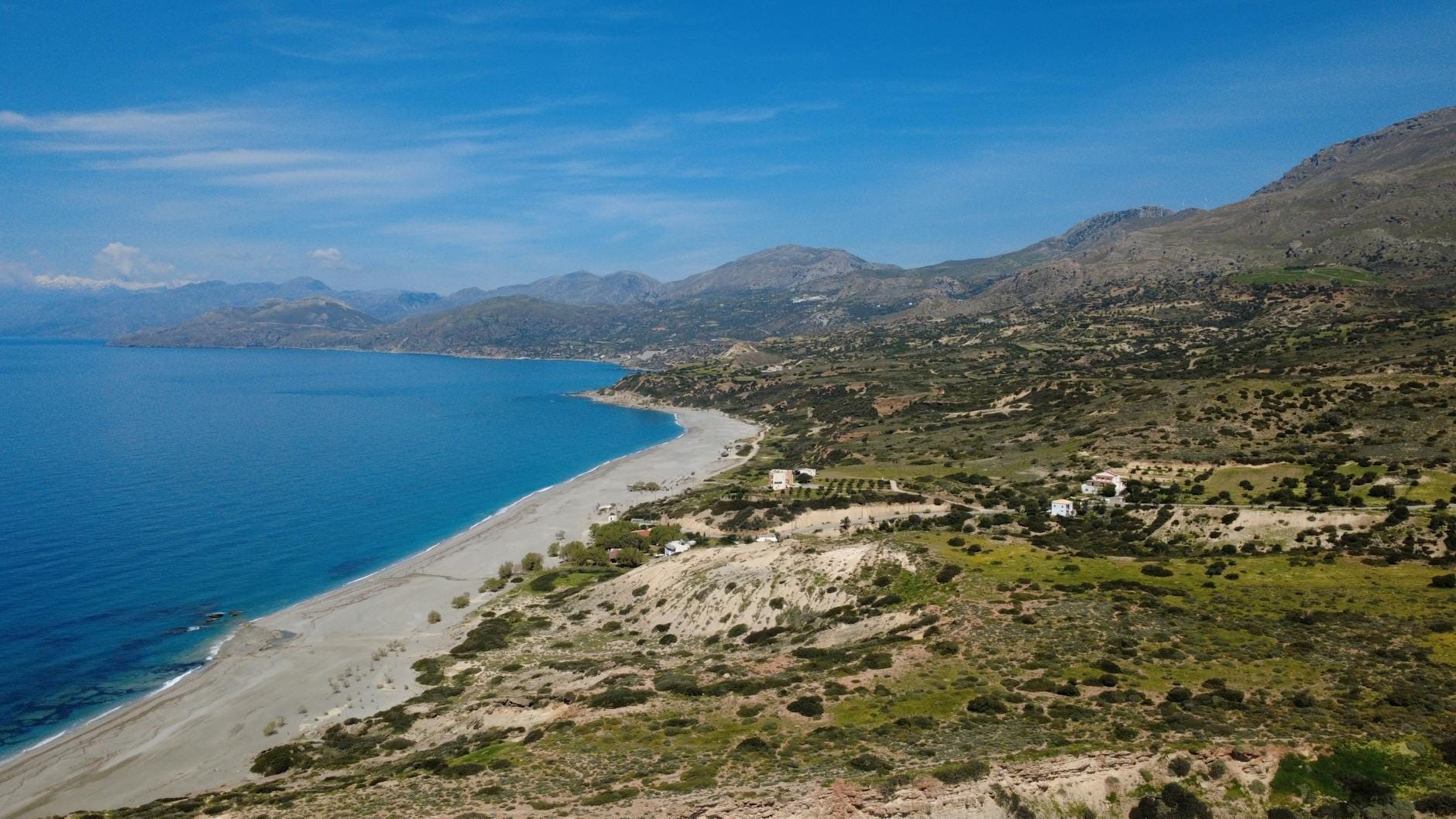
Plakias sits on Crete's southwest coast, in the Rethymno regional unit, roughly 36 kilometers south of Rethymno city. The town occupies a broad crescent bay framed by two rocky headlands: Kako Mouri to the east and a lower promontory to the west. Behind the bay, the land rises sharply through olive groves and terraced hillsides toward the villages of Myrthios and Sellia, both perched at around 200 meters elevation and clearly visible from the waterfront.
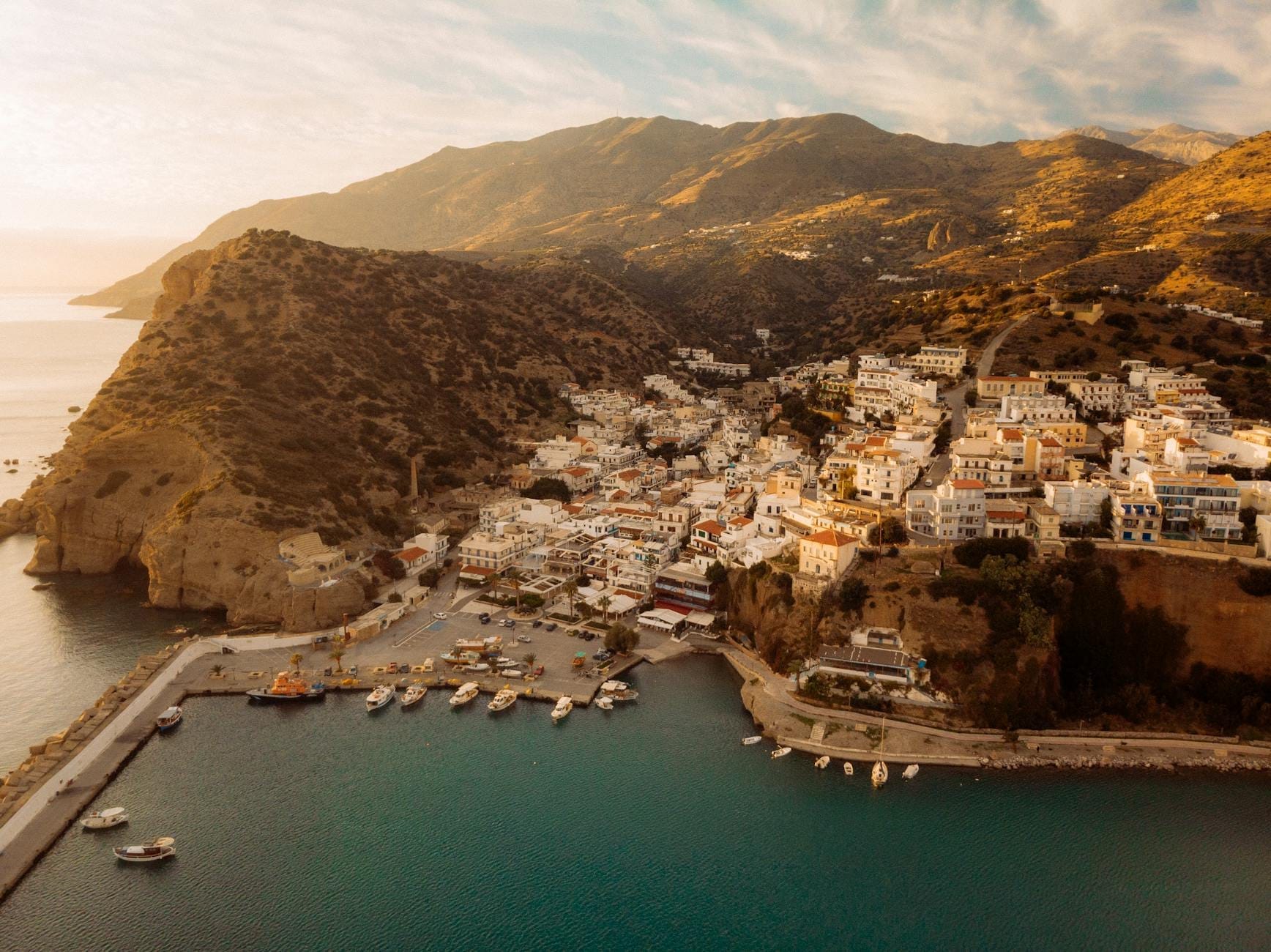
The south coast as a whole stretches from Chora Sfakion (Sfakia) in the west, a small port town with ferry connections, eastward past Plakias, Damnoni, and Preveli toward the Agiopharango Gorge area and eventually Agia Galini to the east. This coastal strip is split from the north of the island by the spine of the White Mountains and the Kourtaliotiko Gorge, which means that accessing the south coast always involves a mountain crossing. That natural barrier is precisely why this coastline has developed so differently from the tourist infrastructure of Heraklion or Chania.
For travelers planning a wider Cretan itinerary, the south coast sits at a useful midpoint. Rethymno is the nearest large town, about 45 minutes north by car, and the route through the Kourtaliotiko Gorge is one of the more spectacular drives on the island. To the east, the road eventually leads toward Agios Nikolaos and the Lasithi region, though that journey takes several hours along winding coastal roads.
Character & Atmosphere
Plakias has the feel of a place that resisted the full package-holiday transformation that overtook much of Crete's north coast in the 1980s and 1990s. There are no large resort hotels here, no waterslide parks, no strip of international chain restaurants. What you get instead is a single main road running along the seafront, a cluster of small apartments and studios, a handful of supermarkets, and enough tavernas to eat well for a week without repeating yourself.
In the early morning, the waterfront is quiet enough to hear the sea. Local fishermen are sometimes out on the bay, and the light on the mountains to the north has that particular Mediterranean quality: sharp and golden before the heat builds. By mid-morning in summer, visitors start arriving at the beach, but even in July and August the crowds feel manageable compared to anything on the north coast. The beach is long enough that you can always find space away from the main concentration of sunbeds near the center.
After dark, Plakias is genuinely quiet. There are bars along the waterfront and a few places with music, but this is not a nightlife destination. Tavernas fill up around 8 or 9 in the evening, conversations carry from table to table across small terraces, and by midnight most of the town is winding down. The stars are visible from the beach in a way that is impossible in larger resort towns.
The villages above Plakias have their own rhythm entirely. Myrthios and Sellia, both accessible by a short drive or a steep walk uphill, offer panoramic views over the bay and a slower pace than even Plakias itself. These are working Cretan villages where older residents still farm the olive terraces and the kafeneion fills with locals in the late afternoon. Sitting at a table in Myrthios with the bay spread out 200 meters below is one of the more quietly satisfying experiences the south coast offers.
💡 Local tip
Visit Myrthios or Sellia in the late afternoon for sunset views over the bay. The drive up is only 10 minutes from Plakias, and several tavernas in both villages have terraces facing west.
What to See & Do
The main draw of the Plakias area is its beaches, and there are enough of them within easy reach that you could spend a week here without visiting the same one twice. Plakias Beach itself is a long, open stretch of sand and pebble that runs the full width of the bay, with clear water that deepens gradually. East of the main beach, a short walk or drive brings you to Souda and Ammoudi, smaller coves with calmer water and less foot traffic. Further east, Damnoni Beach is broader and more organized, with a taverna and sunbed rentals.
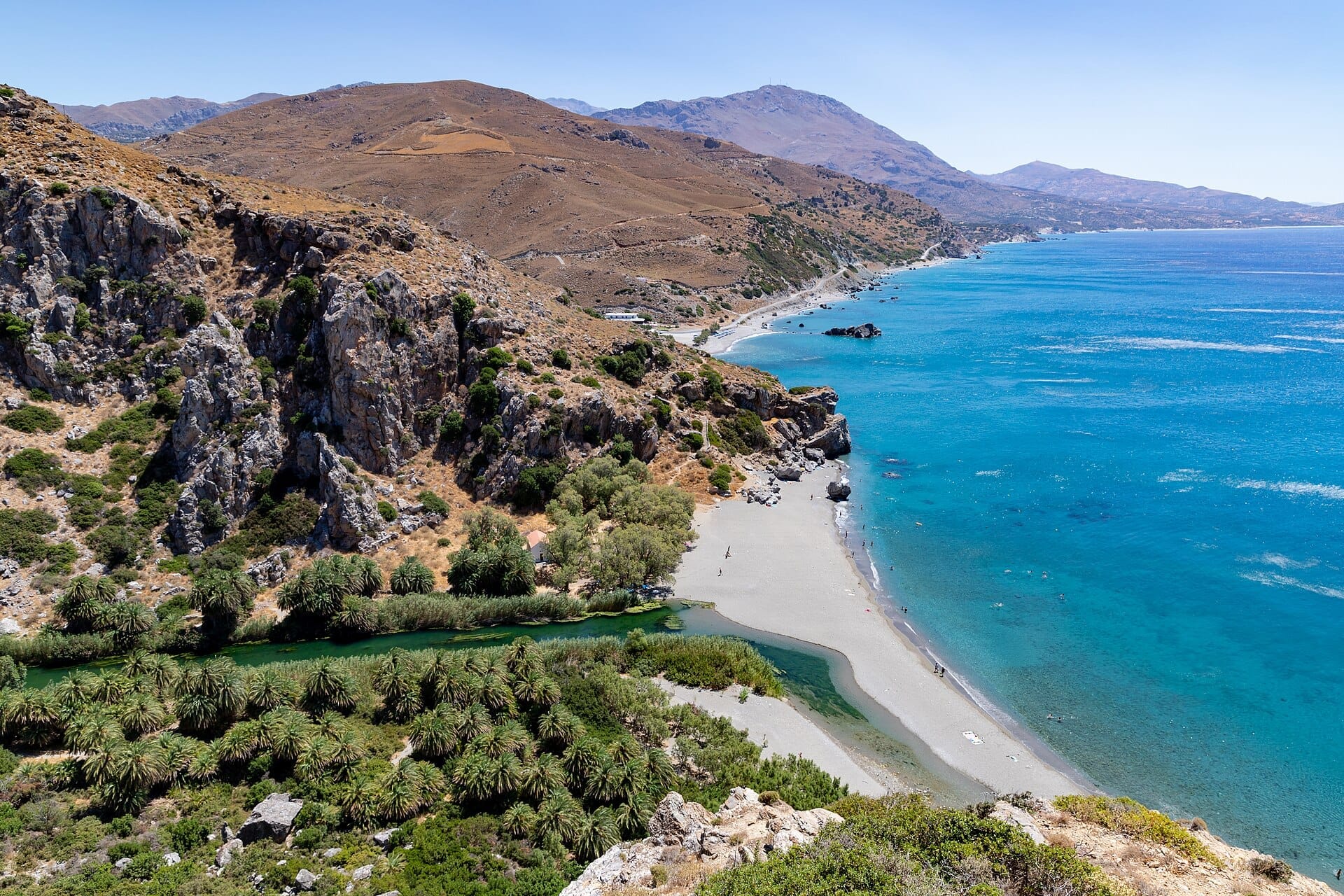
The standout excursion from Plakias is Preveli Beach, a palm-lined river mouth where the Kourtaliotiko river meets the Libyan Sea. The palms are genuine date palms, not a landscaping choice, and the combination of fresh river water, sea, and gorge walls is unlike anything else on the island. You can reach the beach on foot from two car parks (the lower one is closer but fills up fast in summer), or by boat from Plakias during the summer months.
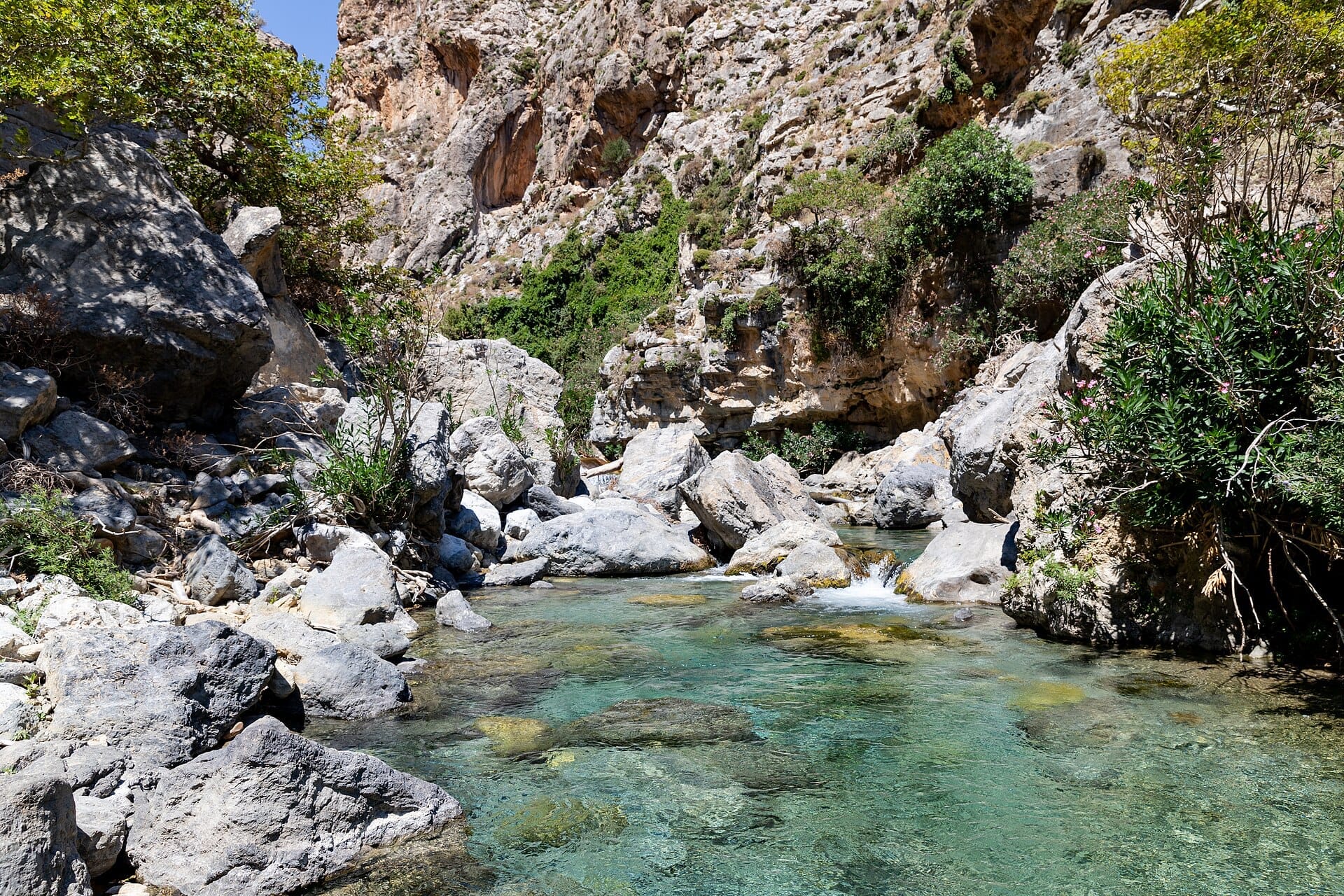
The Kourtaliotiko Gorge is worth exploring in its own right, not just as the road to Preveli. The gorge cuts through limestone cliffs and is home to the Agios Nikolaos chapel, a small Byzantine church set into a cliff face above a spring. The drive through it on the main road from Rethymno is dramatic, but you can also walk sections of the gorge floor.
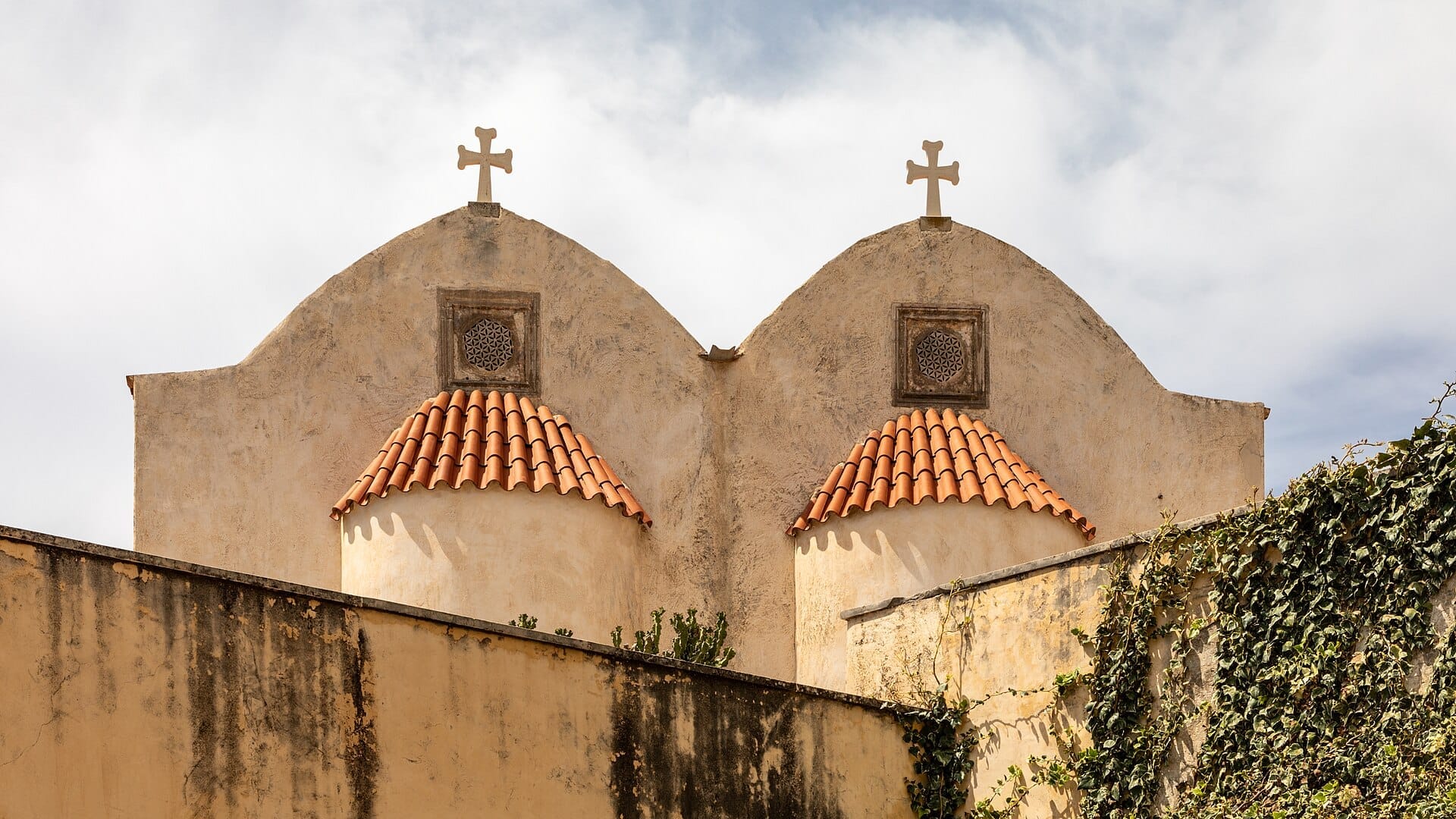
For hikers, the Plakias area offers trails of varying difficulty. The coastal path from Plakias toward Damnoni is an easy 5-kilometer walk with sea views throughout. More demanding is the approach to the Aradena Gorge further west near Chora Sfakion, one of the lesser-visited gorge hikes on the island. The Preveli Monastery sits on the clifftop above Preveli Beach and is open to visitors; its history includes hiding Allied soldiers during World War II, a fact that locals are still proud of.
West of Plakias, the coastal road toward Rodakino passes through some genuinely remote terrain, with small beaches at Korakas and Polyrizos that see almost no visitors outside of peak season. Skinaria Beach, accessible by a rough track, is popular with snorkelers for its clear water and rocky seabed. Travelers interested in the broader context of Cretan history can make a day trip to the Minoan Palace of Phaistos, which is about an hour's drive east through the Mesara plain.
Plakias Beach: the main bay, long and open, with gentle entry into the water
Damnoni Beach: broader, slightly more organized, 5km east of Plakias
Preveli Beach: palm grove at the river mouth, reached by foot or summer boat
Kourtaliotiko Gorge: dramatic limestone canyon on the road north toward Rethymno
Preveli Monastery: cliff-top monastery with wartime history and sea views
Myrthios and Sellia: hilltop villages with panoramic bay views
Skinaria Beach: snorkeling spot on a rough track east of the main bay
Aradena Gorge: less-visited gorge hike near Chora Sfakion to the west
Eating & Drinking
The food scene in Plakias is straightforwardly Cretan: grilled fish, lamb, dakos (barley rusk with tomato and cheese), fresh salads, and local olive oil on almost everything. The tavernas along the waterfront are the obvious option for lunch or dinner, and while most of them cater primarily to tourists, quality is generally reliable and prices are reasonable by Greek island standards.
For a sense of what Cretan cooking actually looks like at its best, consider eating at one of the tavernas in Myrthios or Sellia rather than on the waterfront. The ingredients and recipes are often the same, but the setting is different and the clientele tends to be more mixed. Cretan cuisine is worth understanding on its own terms before visiting; the Cretan food guide covers the key dishes and local specialties in detail.
Seafood is available everywhere along the coast, and fresh fish is typically priced by weight rather than per dish. Ask to see the catch of the day rather than ordering from the menu by name. Octopus drying on lines outside tavernas is a common sight and a reliable indicator that the place takes its seafood seriously. Local wine is usually available by the carafe; look for Cretan varieties made from Kotsifali or Vidiano grapes.
For breakfast and coffee, small cafes along the main road open by 8am in summer. The pace is slow and no one will hurry you, which is either relaxing or frustrating depending on your priorities. There are also a couple of small supermarkets in Plakias where you can put together picnic supplies for beach days, which keeps costs down significantly.
ℹ️ Good to know
Plakias has no large grocery chains. The local supermarkets stock basics including fresh produce, local cheese, and wine, but for a wider selection, a trip to Rethymno is worth planning once during your stay.
Getting There & Around
A car is strongly recommended for exploring the south coast. Plakias is accessible by car from Rethymno in about 45 minutes via the main road south through the Kourtaliotiko Gorge, and the drive itself is one of the better arguments for renting a car on Crete. The road is well-maintained but involves tight bends through the gorge section, so allow extra time if you are towing anything or unfamiliar with mountain driving.
Public buses connect Plakias to Rethymno on a schedule that is adequate for a day trip but limiting if you want flexibility. Services typically run several times daily in summer, reducing in the shoulder and off seasons. Check current KTEL schedules before planning around them. For a full overview of how to move around the island, the getting around Crete guide covers buses, car rental, and road conditions in detail.
Within the Plakias area, walking covers most of the town itself easily. The waterfront, supermarkets, and main tavernas are all within a few minutes of each other on foot. For reaching outlying beaches like Damnoni, Skinaria, or Preveli, you need a vehicle or a summer boat. During July and August, boat trips from Plakias harbor run to Preveli Beach and sometimes westward along the coast, which is a practical alternative to the car parks at Preveli that fill up by mid-morning in peak season.
Chora Sfakion to the west operates ferry services to several isolated beaches and to the island of Gavdos, Greece's southernmost point. From Chora Sfakion, ferries reach Sweetwater Beach and Loutro, a small settlement accessible only by boat or foot. These connections make it possible to spend a day on the western south coast without needing to drive the full length of the coastal road.
⚠️ What to skip
The lower car park for Preveli Beach fills completely by 10am in July and August. Either arrive before 9am, take the summer boat from Plakias, or use the upper car park and accept the longer walk down to the beach.
Where to Stay
Accommodation in Plakias is almost entirely made up of small studios, apartments, and family-run guesthouses. There are no large hotels or all-inclusive resorts, which is a deliberate reflection of how the town has developed. Most properties are within a few minutes walk of the beach, and the price difference between waterfront and back-street accommodation is modest.
Plakias suits independent travelers, couples, and families who want a quieter base with good beach access and day-trip potential. It is not well-suited to travelers who want organized entertainment, extensive nightlife, or the kind of infrastructure you find in Heraklion or Chania. For those weighing up the major bases on the island, the where to stay in Crete guide covers the tradeoffs between the north coast cities and the quieter south coast villages.
The villages above Plakias, particularly Myrthios, have a small number of rental properties that offer a genuinely different experience: cooler temperatures in summer, views over the bay, and a quieter environment. The tradeoff is that you need a car to get down to the beach. For travelers who plan to do most of their exploring by car anyway, this can be the better choice.
Plakias works well as a base for day trips to Agia Galini to the east, the Preveli area, and the Rethymno old town to the north. Travelers who want a south coast base but with slightly more amenities sometimes split their time between Plakias and Agia Galini. For a full south-coast itinerary including beaches, gorges, and monasteries, a minimum of three nights in the area is worth planning.
Practical Considerations
The south coast sits on the Libyan Sea, which means stronger UV exposure and slightly different wind patterns from the north of the island. Summer temperatures in Plakias regularly exceed 30 degrees Celsius, and the lack of shade on the beaches means sunscreen and water are non-negotiable for any beach day. The sea itself is warm from June through October.
For travelers interested in the broader context of what to expect from the island's summer season, the guide to Crete in summer covers crowds, temperatures, and what to prioritize in the peak months. The south coast is genuinely less crowded than the north, but Preveli Beach in particular becomes very busy in July and August. If avoiding crowds is a priority, visiting in October is worth considering: the sea is still warm, the summer visitors have left, and the coastal roads are quiet.
ATMs are available in Plakias, and most tavernas and accommodation providers accept cards, though it is worth carrying some cash for smaller purchases and trail-side kiosks. Mobile coverage is generally good in the town itself but can drop in the gorge and on more remote coastal tracks. The nearest hospital is in Rethymno.
TL;DR
Plakias is a low-key resort town on Crete's southwest coast with no large hotels, no resort infrastructure, and genuine south-coast character: slow-paced, family-run, and set against dramatic mountain scenery.
The area's main draws are its beaches (Plakias, Damnoni, Preveli, Skinaria), the Kourtaliotiko Gorge, and hiking trails including the coastal path and the approach to Preveli Monastery.
A rental car is essentially required to get the most out of the south coast: buses connect Plakias to Rethymno but run on limited schedules, and many of the best beaches require your own transport.
Best suited to independent travelers, couples, and families who want beach access, day-trip potential, and quiet evenings. Not suitable for travelers who prioritize nightlife, large hotel facilities, or ease of access without a car.
Peak season (July to August) brings noticeable crowds to Preveli Beach specifically; the rest of the south coast remains quieter, and shoulder months like May, June, and September offer the most comfortable conditions.
Crete has over 1,000 beaches, ranging from famous pink-sand lagoons to wild river-mouth coves. This guide ranks the best by region so you can plan your base and your days on the water without the guesswork.
Crete is large enough that each of its main towns sits within reach of completely different landscapes, ruins, and coastlines. This guide organizes the best day trips by base town, so whether you're staying in Chania, Heraklion, Rethymno, or Agios Nikolaos, you'll know exactly where to go and how to get there.
Crete holds one of the richest concentrations of museums in the Mediterranean, from world-class Minoan collections to maritime heritage and Byzantine icons. This guide covers the essential museums and historically significant sites across the island, organized by theme and region.
Crete rewards visitors year-round, but the right time depends entirely on what you want. This guide breaks down every month by weather, crowds, prices, and activities so you can plan with confidence.
Choosing between Chania and Heraklion shapes your entire Crete experience. This guide breaks down both cities honestly, covering location, culture, beaches, day trips, and who each one actually suits.
Cretan cuisine is one of the most distinctive and well-studied food traditions in the world, rooted in 4,000 years of agricultural practice and the foundational principles of the Mediterranean diet. This guide covers the essential dishes, local ingredients, seasonal patterns, and practical tips for eating well across the island.
Crete's coastline is best explored from the water. From the tidal lagoon at Balos to the haunting island of Spinalonga, these are the boat trips worth planning your days around.
Crete delivers more romance than most Greek islands dare to promise. From the pink-sand shores of Elafonissi to candlelit dinners in Chania's Venetian harbour and private yacht trips around hidden sea caves, this guide covers every romantic experience worth planning, plus honest advice on where the crowds go and where couples actually find peace.
October is one of the most underrated months to visit Crete. The summer crowds have thinned, sea temperatures stay around 23°C, and the island shifts into a slower, more authentic rhythm. This guide covers what the weather actually looks like, which attractions stay open, where crowds still linger, and how to plan a genuinely rewarding trip.
July and August are Crete's most popular months, and for good reason. The sea hits 26°C, the days stretch to 12 hours of sunshine, and almost every beach, taverna, and archaeological site is fully operational. But peak season on Greece's largest island comes with real trade-offs. This guide breaks down exactly what to expect and how to handle it.
Crete's interior is a world apart from its famous coastline. This guide covers the island's most compelling mountain villages, the gorges and caves surrounding them, and the ancient sites tucked into its high plateaus and rugged massifs.
Crete after dark ranges from cocktails beside a Venetian harbour to all-night club marathons in Malia. This guide breaks down the best nightlife in Crete by city, venue type, and season, so you know exactly where to go and what to expect before you arrive.
Crete produces some of the world's finest olive oil and a range of wines from indigenous grapes found nowhere else on earth. This guide covers where to taste, what to look for, how to book tours, and what's actually worth bringing home.
Crete is one of the Mediterranean's most rewarding destinations, and it doesn't have to be expensive. This guide breaks down real daily costs, the cheapest ways to get around, where to eat well for under €10, and which experiences are completely free — so you can spend more time enjoying the island and less time worrying about your wallet.
Crete rewards self-drivers like few Mediterranean islands can. From the white-pebble coves of the south coast to the gorge-carved mountains of the interior, this guide covers every route, practical detail, and honest warning you need to drive Crete with confidence.
The ferry from Crete to Santorini is faster, cheaper, and more scenic than flying via Athens. This guide covers every option: high-speed ferries, slow overnight boats, the flight reality, day trip logistics, and what to book first in summer.
Two of Greece's most iconic islands, but they deliver very different experiences. This guide breaks down beaches, budget, activities, and logistics so you can decide which island actually suits your trip.
From pink-sand beaches with toddler-safe shallows to underwater aquariums and myth-soaked caves, Crete delivers a remarkable range of family experiences. This guide breaks down the best activities by age group, the seasonal realities parents need to know, and the honest warnings that travel brochures skip.
Crete rewards travelers who know where to look, and the best experiences here rarely require a ticket. From pink-sand beaches and mythological caves to Venetian harbors and ancient ruins, here are 20 genuinely free things to do across the island.
Crete is 260 km long and divided into four distinct regions. Getting around efficiently requires planning. This guide breaks down every transport option — from KTEL buses to car rental pricing — so you can move around Greece's largest island without wasting a day.
Crete rewards travelers who look beyond Knossos and Elafonissi. This guide uncovers the island's lesser-known beaches, gorges, ancient sites, and villages that most visitors drive straight past.
Crete is one of Europe's finest hiking destinations, with towering gorges, mountain plateaus, coastal paths, and ancient landscapes to explore. This guide covers the best trails across the island, from iconic gorge walks to quieter routes that reward those willing to go further.
Crete delivers a caliber of luxury that rivals anywhere in the Mediterranean. This guide cuts through the noise to identify the best high-end hotels, private villas, and exclusive experiences across the island's four regions, with honest advice on where to splurge and where to save.
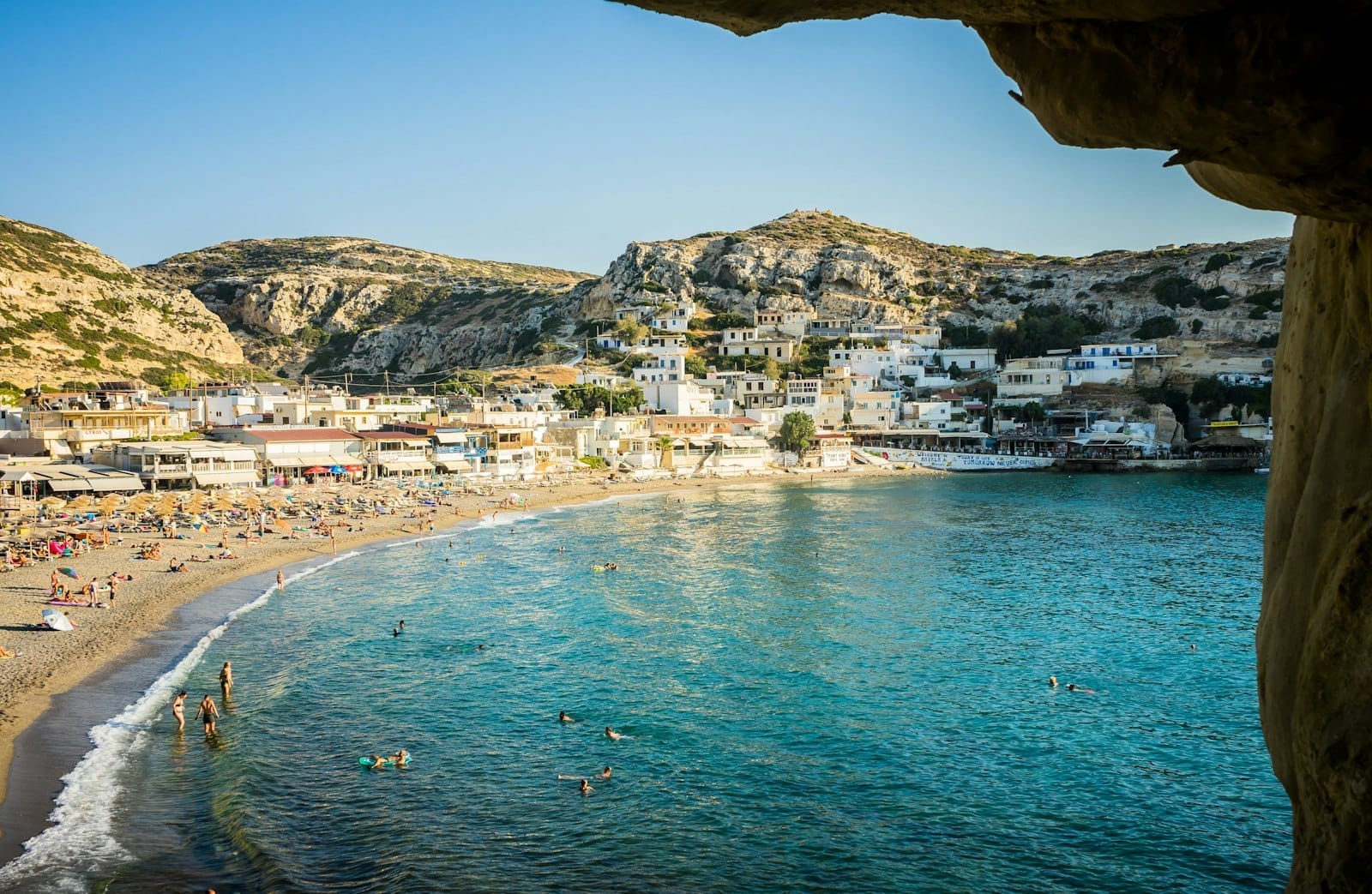
The Matala Beach Festival is one of Europe's largest free-entry music events, held annually on the south coast of Crete. Running across four stages for three days each July, it draws thousands of visitors to a beach that has its own remarkable counterculture history. Here is everything you need to plan your visit.
The Minoans built Europe's first advanced civilization on Crete over 4,000 years ago, leaving behind palaces, frescoes, and artifacts that still astonish. This guide covers the essential sites, museums, and landscapes connected to their remarkable world.
Seven days is enough to cover Crete's four regional units, its best beaches, and its most significant ancient sites — if you plan it right. This guide gives you a day-by-day route built around a rental car, honest crowd warnings, and practical details on costs and timing.
Crete is Greece's largest island and one of its most rewarding destinations, with Minoan ruins, dramatic gorges, world-class beaches, and a food culture that puts most of Europe to shame. This guide covers the best things to do in Crete across every category, with honest advice on what's worth your time and what to skip.
Crete is 260 km long, and choosing the wrong base can cost you hours of driving each day. This guide breaks down the best areas to stay in Crete by location, travel style, and budget, with honest advice on which towns to avoid and which hotels are worth booking early.