Matala Beach Festival: Dates, Tips & What to Expect
The Matala Beach Festival is one of Europe's largest free-entry music events, held annually on the south coast of Crete. Running across four stages for three days each July, it draws thousands of visitors to a beach that has its own remarkable counterculture history. Here is everything you need to plan your visit.
Plan and book this trip
Tools from our partner Travelpayouts help you compare flights and hotels. If you book through them, we may earn a commission at no extra cost to you.
Flights
Hotels map
TL;DR
- The Matala Beach Festival takes place every July in Matala, on Crete's south coast — entrance is completely free. Check the official website for exact dates.
- Four distinct stages host Greek and international acts, DJs, and tribute bands across three nights, from sunset to starlight.
- Running annually since 2011, the festival is rooted in Matala's 1960s hippie heritage — the cliff caves here sheltered artists and free spirits long before any stage was erected.
- Accommodation books up weeks in advance; arriving without a reservation during festival weekend is a serious mistake.
- Pair the festival with a broader south-coast itinerary: Preveli Beach and the Matala caves are both worth your time before or after the music.
What the Matala Beach Festival Actually Is
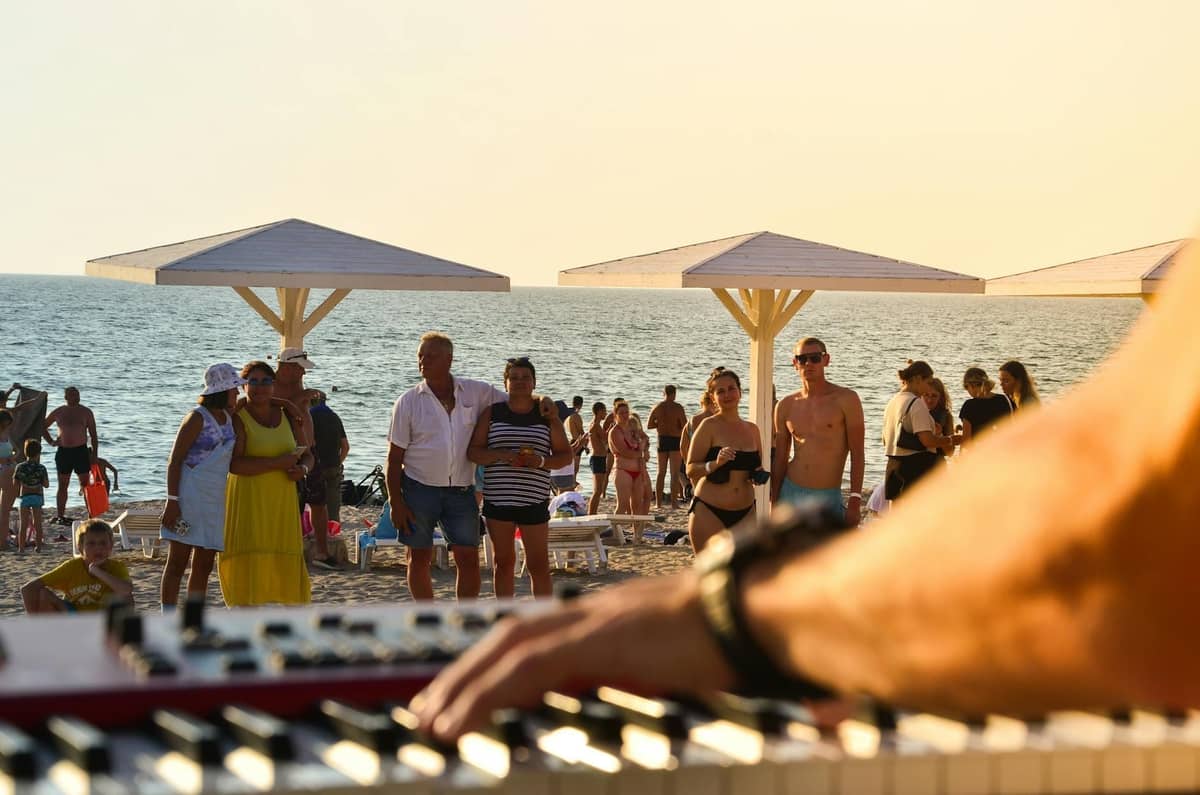
The Matala Beach Festival is a three-day open-air music event held every July in Matala, a small coastal village on the southwestern edge of the Heraklion regional unit. What started in 2011 as a modest local celebration has grown into one of the largest free-admission music festivals in Europe, drawing crowds of tens of thousands over the course of a weekend. The festival typically runs over a weekend in early July — check the official website for exact dates each year.
The programming mixes top Greek rock and pop acts with international bands, DJ sets, and tribute performances covering artists like Queen and Jimi Hendrix, as well as 1950s and 1960s medleys. None of this is accidental: the music deliberately echoes the era that made Matala famous. The format runs from late afternoon through the small hours, which suits the Mediterranean summer climate well. Daytime temperatures in July regularly exceed 30°C, so the festival correctly starts when the heat begins to ease.
ℹ️ Good to know
Entrance to all stages and activities at the Matala Beach Festival is completely free. You do not need a ticket, wristband, or advance registration to attend. Budget for food, drinks, and accommodation only.
The Four Stages: Where to Plant Yourself
One of the festival's most distinctive features is that the entire village of Matala becomes the venue. The four stages are spread across different locations, each with its own character, and moving between them is part of the experience.
- The Cave Stage The centrepiece of the whole festival, positioned in front of the ancient cliff caves cut into the sandstone headland above the beach. High-energy performances, the largest crowds, and the most dramatic backdrop. This is where the headline acts typically perform.
- The Square Stage Located in the central square of the village, with continuous entertainment and easy access to food and drink stalls. Good option for families or anyone who wants to watch with space to sit down nearby.
- The Tree Stage Set against a carved olive tree backdrop, this stage leans into lounge and acoustic vibes. The atmosphere is more relaxed than the Cave Stage, and it attracts a slightly older crowd who want to hear the music without standing shoulder to shoulder.
- The Bridge Stage Positioned above the famous graffiti that reads 'Today is Life, Tomorrow Never Comes' — an inscription that has become something of an unofficial motto for the festival and for Matala itself. Quirky setting, worth visiting for the visual alone.
✨ Pro tip
Arrive early on the first evening to walk between all four stages before the prime-time sets begin. The village is small enough that you can scout every location in under 20 minutes, and you will make better choices about where to spend your time each night.
The History Behind the Festival: Why Matala?
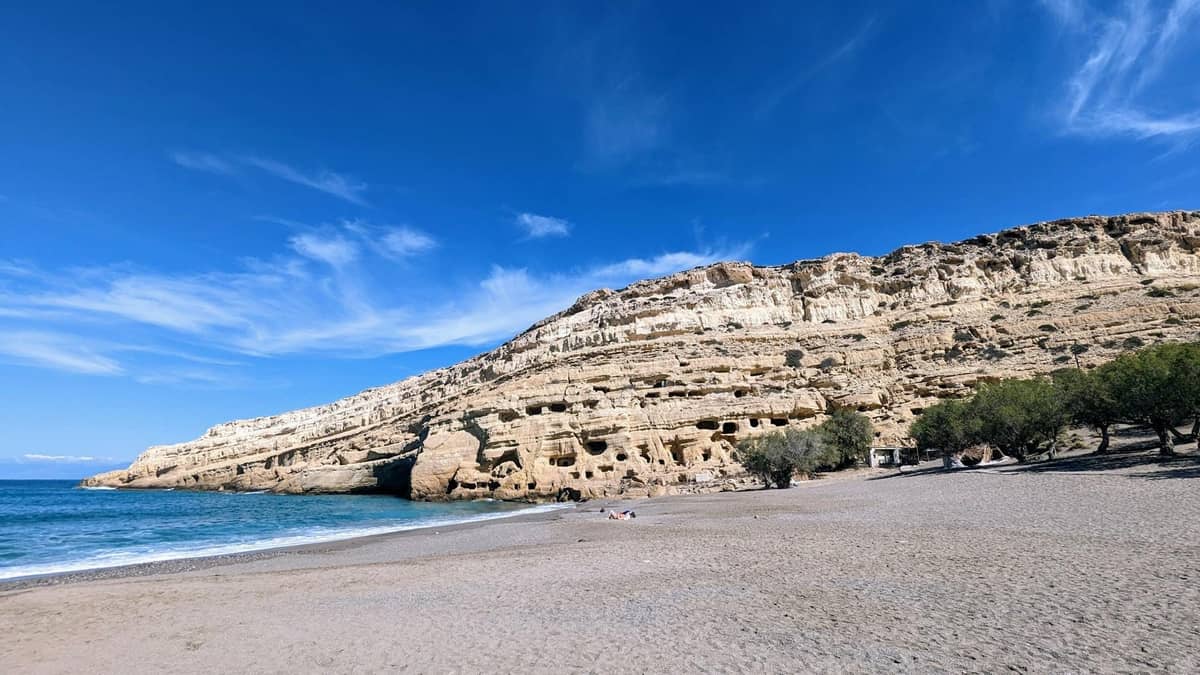
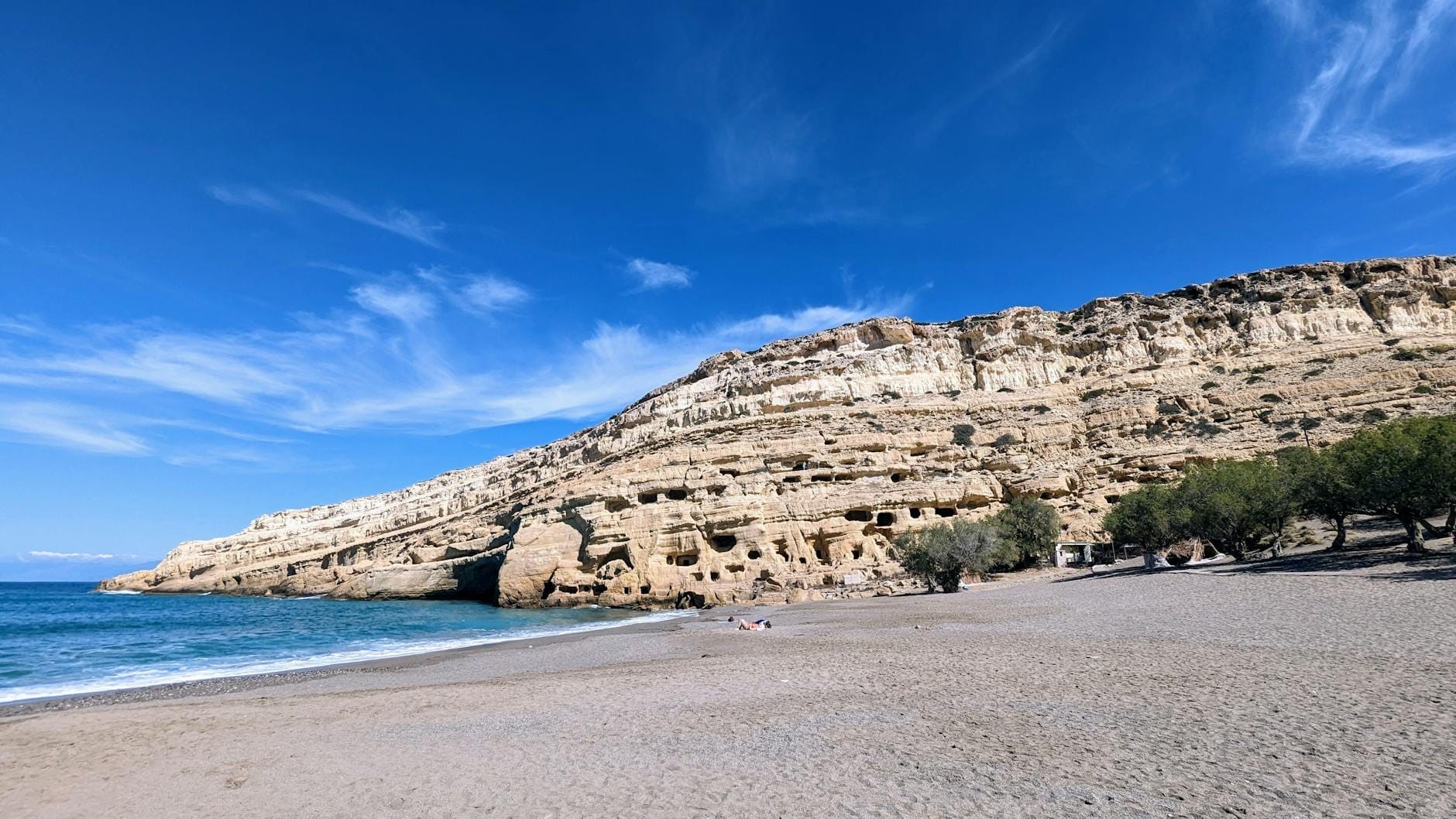
Matala is not a random venue choice. The village and its caves have genuine counterculture significance. In the 1960s and early 1970s, the sandstone caves carved into the cliff face became home to a community of artists, musicians, and free-spirited travelers from across Europe and North America. The caves, which date back to Neolithic times and were used as Roman tombs, provided shelter and a sense of freedom that was hard to find elsewhere. Joni Mitchell famously spent time in Matala during this period, and the village drew comparisons to a Greek Haight-Ashbury. You can read more about the physical site in our guide to the Matala caves.
The festival, established in 2011, deliberately revives this spirit. The programming choices, the stage names, the 1960s tribute acts — all of it is a conscious reference to that era. Whether you find this charming or slightly self-conscious probably depends on how much you care about music history. Either way, it gives the event a sense of identity that distinguishes it from generic beach festivals.
Matala itself is a small, easy-going village with a broad sandy beach framed by red-tinged cliffs. Outside of festival weekend it is genuinely quiet. The beach at Matala is well-suited to relaxed swimming and has a handful of tavernas and cafes along the waterfront. Arriving a day or two before the festival gives you a completely different experience of the place before the crowds arrive.
Beyond the Stages: Parallel Events and Side Activities
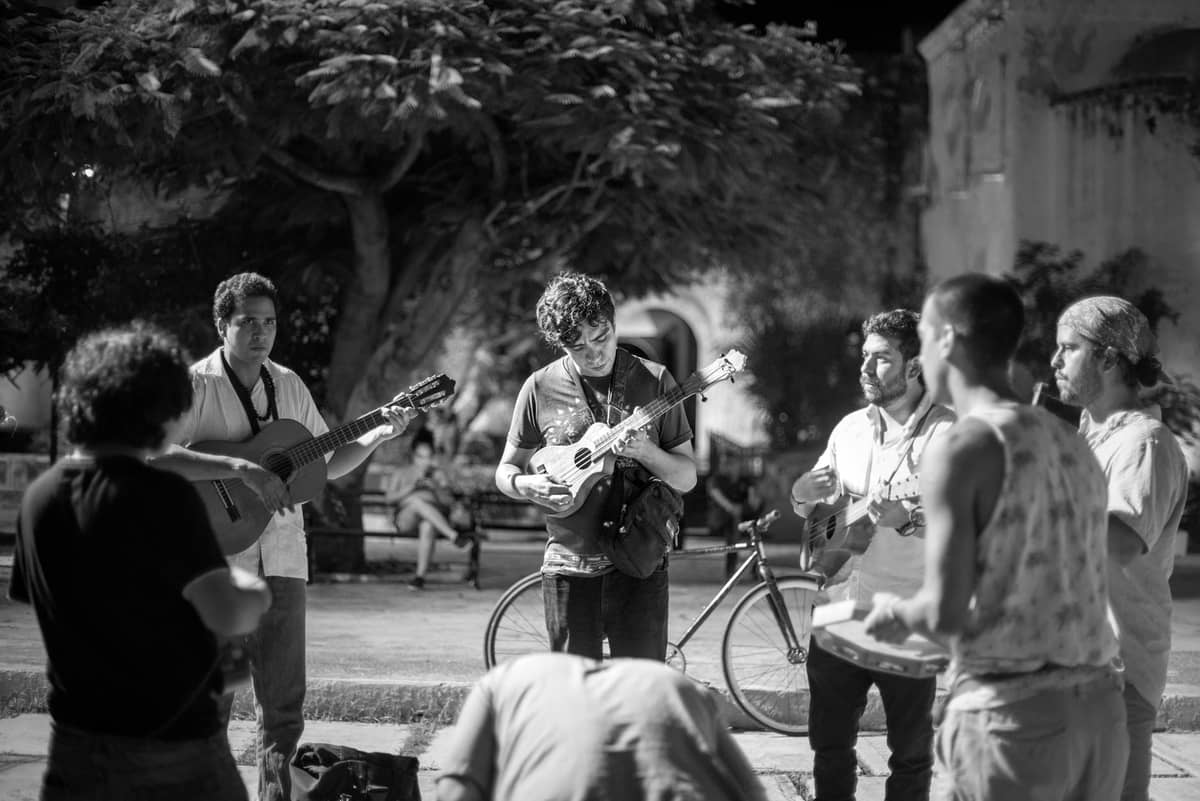
The festival programme extends beyond the four main stages. The Matala Busking Project brings independent street artists and musicians into the village lanes throughout the weekend, which adds a layer of spontaneity to the event. You are as likely to stumble across a solo guitarist performing outside a taverna as you are to find a scheduled DJ set.
The Matala Street Painting event, a community art project that transforms walls and pavements across the village, takes place on the Sunday before the main festival weekend, typically scheduled for the Sunday before the main festival weekend. If you can arrive that day, it is worth seeing the village in this state before the music crowds arrive. Beach yoga sessions and painting workshops are also offered during the festival days, though specific schedules are confirmed closer to the event via the official website.
Practical Planning: Accommodation, Transport, and Timing
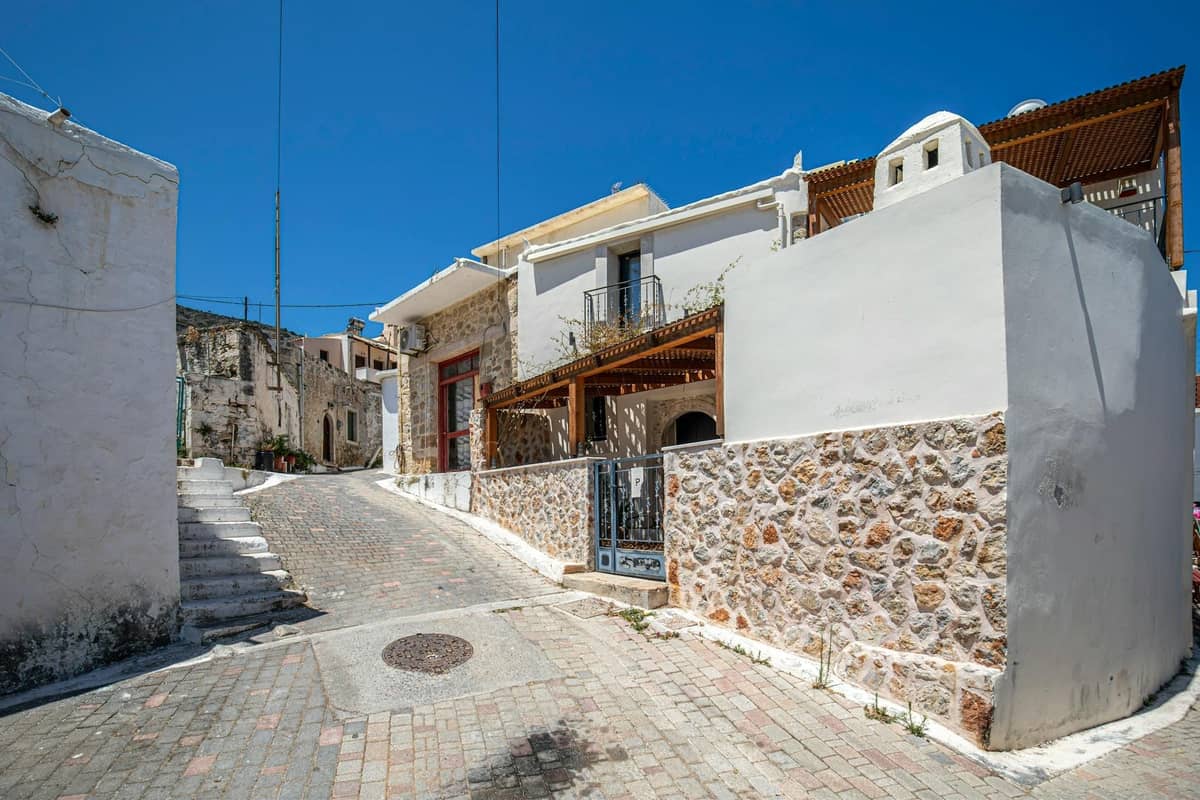
Matala is a small village with limited accommodation capacity. During festival weekend, every room within reasonable distance fills up, and prices reflect the demand. The village itself has a handful of small hotels, rooms-to-rent (domátia), and apartments. Nearby Pitsidia, roughly 4 kilometres inland, offers additional options and tends to be slightly quieter. Book as early as possible, ideally three to four months in advance for the festival weekend.
⚠️ What to skip
Do not arrive at Matala on festival weekend without a confirmed accommodation booking. The village has very limited capacity, and staying in Heraklion or Rethymno means a drive of roughly 70-80 kilometres each way on mountain roads at night. This is possible but exhausting, and you will miss the late-night atmosphere entirely.
Getting to Matala without a car is genuinely difficult. There is bus service from Heraklion via Mires, but schedules are infrequent and do not accommodate late-night festival return times. Renting a car is the practical choice for most visitors, and gives you the flexibility to explore the broader south coast before or after the festival. See our guide to getting around Crete for full transport options and rental advice.
If you are combining the festival with a broader Crete itinerary, the south coast has a lot to offer. Preveli Beach and its palm-lined river gorge are about 45 kilometres west of Matala. The ancient site of Minoan Phaistos sits just 14 kilometres away and makes an excellent half-day trip. For a broader look at what to do across the island, our one-week Crete itinerary offers a structured route.
- Book accommodation 3-4 months in advance for festival weekend; Pitsidia is a viable alternative to Matala village itself
- Rent a car: public bus options are limited and do not align with festival hours
- Arrive on June 29 if you can, to catch the Street Painting event before crowds build
- Bring cash: smaller food stalls and street vendors at Greek festivals often do not accept cards
- Festival runs sunset to late night across three evenings; pace yourself across all three days
- The beach is swimmable during the day before evening programming begins — use the mornings and early afternoons
2026 Festival and Future Dates
Confirmed dates for the 2026 Matala Beach Festival have not been formally announced. Based on 12 consecutive years of programming, the festival reliably takes place in early July. The most dependable source for confirmed dates is the official festival website at matalabeachfestival.org, which typically publishes the following year's dates in the autumn or early winter. If you are planning well in advance, monitor that site and book accommodation speculatively for the first or second weekend of July.
For travelers considering July as their travel window more broadly, our guide to visiting Crete in summer covers what to expect from the island's peak season, including beach conditions, crowd levels, and temperature ranges. If you are thinking about the shoulder season instead, Crete in October is a genuinely good alternative.
FAQ
Is the Matala Beach Festival free to attend?
Yes. Entrance to all stages and all festival activities is completely free. There is no ticket, wristband, or registration required. You will spend money on food, drinks from vendors, and accommodation, but the music itself costs nothing.
When is the Matala Beach Festival?
The Matala Beach Festival takes place every July, typically over a three-day weekend in early July. Programming runs from late afternoon through the early hours of the morning on each evening. Check the official website for exact dates.
How do I get to Matala for the festival?
Renting a car is the most practical option. Matala is approximately 70 kilometres south of Heraklion, reachable via the E75 motorway and then inland roads through Mires. There is bus service from Heraklion via Mires, but the schedule is infrequent and does not align well with festival hours. Taxis from Heraklion are an option for one-way travel but can be expensive and hard to book for the return late at night.
What kind of music plays at the Matala Beach Festival?
The festival mixes Greek rock and pop acts with international bands, DJ sets, and tribute acts covering 1960s and 1970s icons including Queen and Jimi Hendrix. The programming deliberately references Matala's counterculture history. The four stages offer different genres and atmospheres simultaneously, so you can move between them depending on what is playing.
Is Matala Beach Festival suitable for families with children?
The daytime and early evening programming is family-friendly, and the Square Stage in particular offers accessible viewing with space nearby. The festival gets crowded and louder as the night progresses. Families with young children are better suited to the early evening hours before the main headline acts, which typically go on late. Accommodation is the bigger challenge: book well in advance, and consider Pitsidia as a quieter base a few kilometres from the village.