Crete Road Trip: The Ultimate Self-Drive Guide
Crete rewards self-drivers like few Mediterranean islands can. From the white-pebble coves of the south coast to the gorge-carved mountains of the interior, this guide covers every route, practical detail, and honest warning you need to drive Crete with confidence.
Plan and book this trip
Tools from our partner Travelpayouts help you compare flights and hotels. If you book through them, we may earn a commission at no extra cost to you.
Flights
Hotels map
TL;DR
- A Crete road trip is the single best way to see the island: public transport is limited, and the most rewarding sites sit well off the tourist trail.
- The island spans roughly 260 km east to west. Allow at least 7 days to cover the highlights without feeling rushed — see our one-week Crete itinerary for a proven day-by-day plan.
- Main north-coast roads (VOAK/A90, E75) are fast and well-maintained. Mountain and south-coast roads are narrower but perfectly driveable with care.
- Book your rental car in advance, especially for summer travel to Crete — availability drops sharply in July and August.
- Spring (April–May) and autumn (September–October) offer the best combination of open roads, mild temperatures, and accessible hiking trails including the Samaria Gorge.
Why Drive Crete? The Case for a Self-Drive Trip
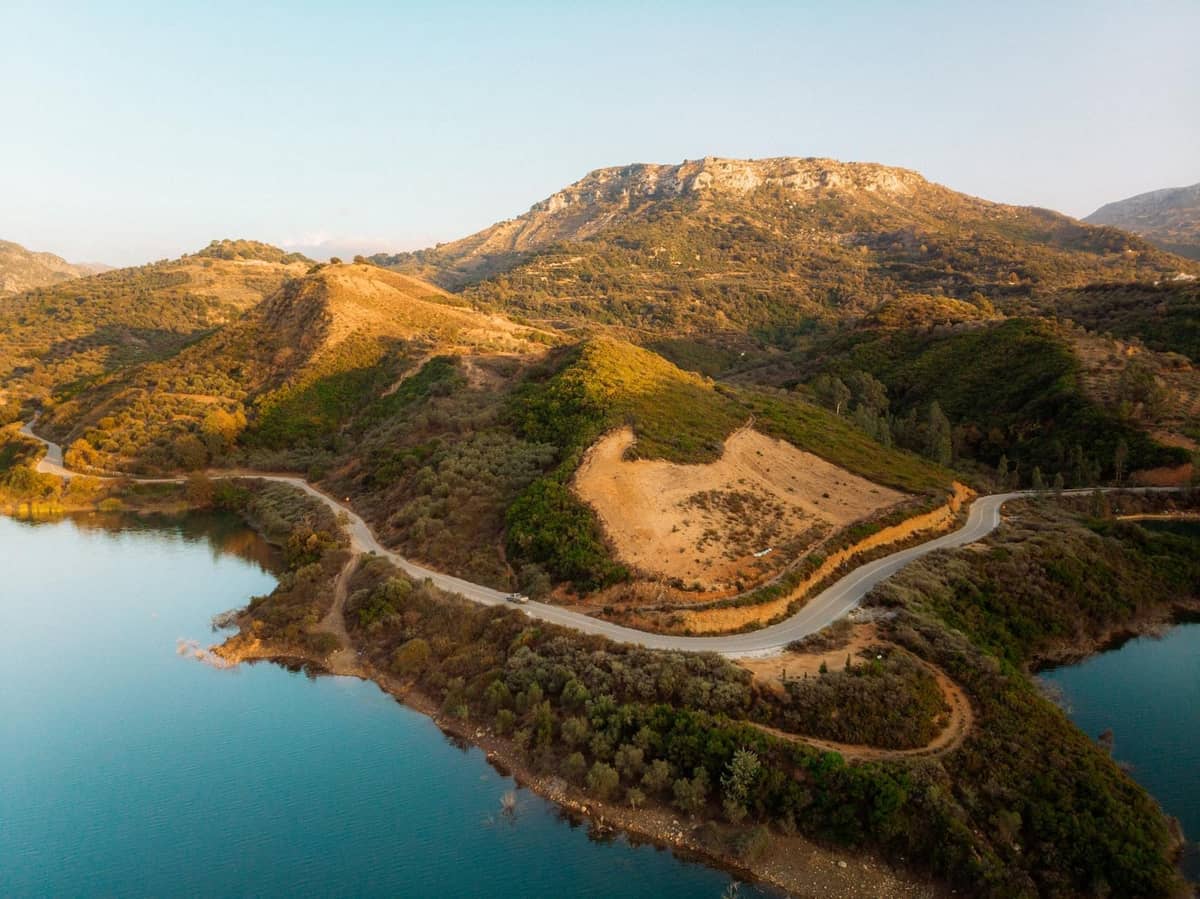
Crete is Greece's largest island at 8,336 square kilometres, divided into four regional units: Chania, Rethymno, Heraklion, and Lasithi. The island's spine is a near-continuous mountain chain that separates the developed, resort-heavy north coast from a dramatically quieter south coast of steep gorges, monasteries, and beaches that remain genuinely hard to reach without your own wheels. That geographic reality is exactly why a road trip transforms a Crete holiday.
The island's bus network (KTEL) connects major towns reliably but runs infrequently on secondary routes and rarely at all to villages, gorge trailheads, or south-coast coves. No ride-hailing app operates meaningfully outside Heraklion. Taxis exist, but costs accumulate fast when you're trying to reach places like the Lassithi Plateau or the far-western tip near Balos. A rental car is, for most travellers, simply the most practical decision they'll make.
ℹ️ Good to know
Crete has over 400 gorges cutting through its interior. The road network threads between and through many of them, making even ordinary driving routes scenically remarkable. This isn't just beach-hopping: the drives are part of the experience.
Renting a Car in Crete: What You Need to Know
Both Heraklion Nikos Kazantzakis International Airport (IATA: HER) and Chania International Airport (IATA: CHQ) have on-site and nearby rental desks from major international operators as well as strong local companies. Chania is the better starting point if you plan to explore the west first; Heraklion suits an east-to-west circuit. Picking up in one city and dropping off in another typically incurs a one-way fee, so factor that into planning.
- Vehicle size A compact or small SUV is ideal. Mountain tracks and village lanes can be tight, and some south-coast roads have passing places rather than full two-lane widths. Avoid large estate cars or vans unless you have a specific reason.
- Insurance Basic collision damage waiver (CDW) is standard, but it typically excludes the undercarriage, tyres, and glass — all real risks on rough tracks. Full coverage or a standalone travel policy that covers rental cars is worth the extra cost.
- Fuel strategy Rural petrol stations are sparse and sometimes closed on Sundays. Fill up whenever the tank drops below half, particularly before heading south over the mountains or into the Lasithi region.
- Booking timing Reserve at least 4-6 weeks ahead for June to August travel. Prices rise sharply closer to peak season, and the better local operators sell out entirely. Comparison platforms like Discover Cars aggregate local and international fleets usefully.
- Driving licence EU licences are accepted without issue. Non-EU visitors should carry an International Driving Permit alongside their national licence. The minimum age at most operators is 21, with a surcharge sometimes applied under 25.
⚠️ What to skip
Google Maps routing in Crete can suggest shortcuts that are unpaved goat tracks rather than actual roads. Cross-reference with a dedicated mapping app like Maps.me or download offline maps before entering mountain zones where mobile signal is unreliable.
The Main Routes: A Practical Breakdown
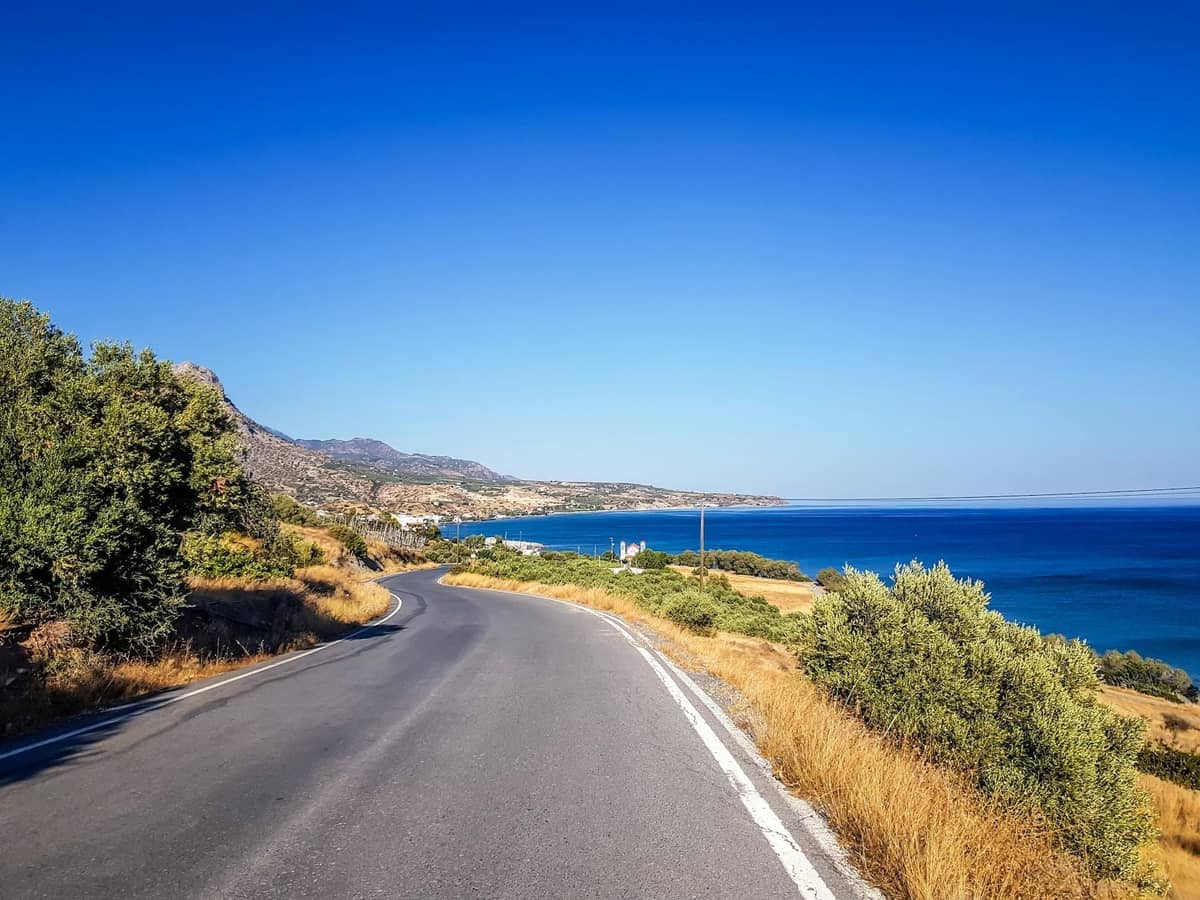
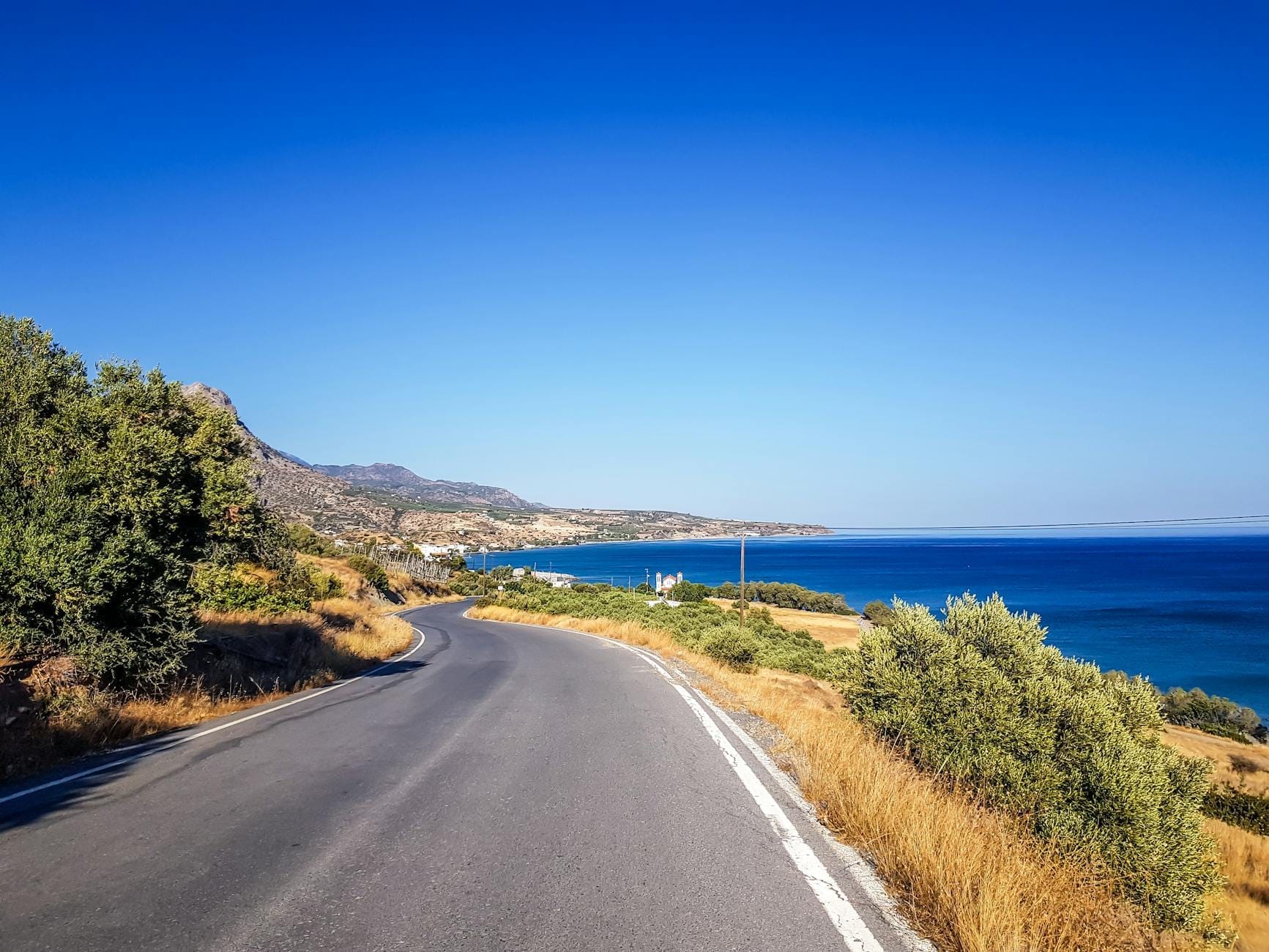
Crete's road network divides naturally into three tiers. The north-coast E75 and VOAK/A90 motorway runs the full length of the island and is fast, well-signed, and mostly dual carriageway. Secondary roads connecting north and south coast are mountain routes with switchbacks, livestock crossings, and occasional fruit stalls on blind corners. Tertiary tracks, mostly found in the far east and far west, range from compacted dirt to genuine off-road terrain.
West Crete: Chania and the Gorge Country
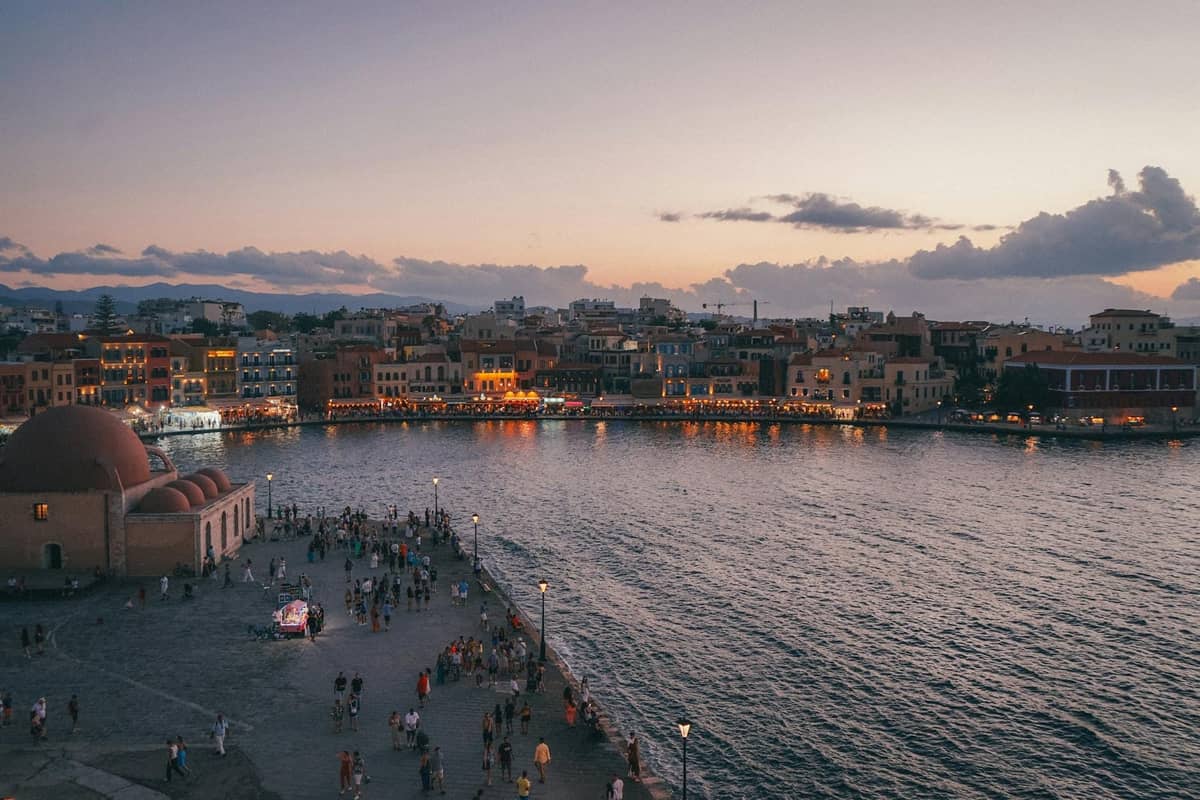
Most road trips begin in Chania, and for good reason. The city has the island's most atmospheric base: a former Venetian capital with a well-preserved old town, a working harbour, and strong accommodation across every budget. From here, the main self-drive loops are accessible within an hour in any direction.
Northwest of Chania, the road to Balos Lagoon ends with a notoriously rough 8 km unpaved track (or you can park at Kaliviani and walk/take a boat). Elafonissi beach is about 75 km southwest of Chania on a fully paved road that cuts through quiet hill villages. Both can be done as day trips from Chania, though arriving early — before 10am — makes a meaningful difference to the experience.
The south from Chania goes through the White Mountains (Lefka Ori), one of the most dramatic drives on the island. The road to Omalos, the plateau where the Samaria Gorge trail begins, climbs through cypress forests to around 1,080 metres. The gorge itself is 16 km long, one of the longest walkable gorges in Europe, open from approximately 1 May to 31 October each year. You cannot drive through it — the route is one-way on foot, ending at the coastal village of Agia Roumeli, where ferries return you eastward to Chora Sfakion.
💡 Local tip
The Imbros Gorge is shorter (8 km), open year-round, and significantly less crowded than Samaria. It starts near the village of Imbros on the south-coast road and is an excellent alternative for anyone visiting outside the gorge season or wanting a quieter experience.
Central Crete: Rethymno, the South Coast, and Knossos
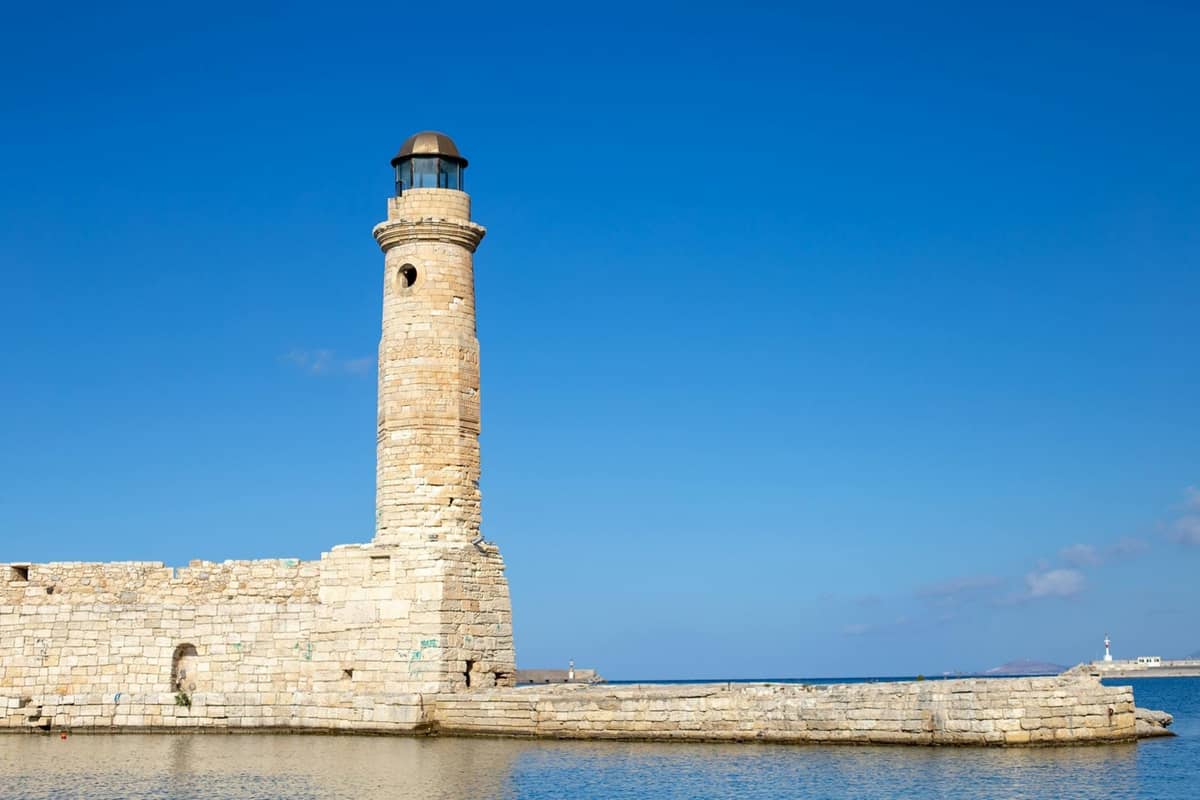
Rethymno sits about 60 km east of Chania via the E75, roughly an hour's drive. It warrants at least a half-day stop: the old town is compact, the Venetian Fortezza fortress overlooks the sea, and the narrow lanes between them are some of the most intact in Crete. It works well as an overnight midpoint on an east-west road trip rather than a rushed day trip.
South of Rethymno, the road descends through the Kourtaliotiko Gorge toward Preveli beach, where a river meets the Libyan Sea beneath a palm grove. The drive down is genuinely spectacular — vertical rock walls, a monastery perched on a cliff, and virtually no development until you reach the small car park at the end. From Plakias nearby, the south coast road east toward Agia Galini gives access to some of the island's least-visited beaches.
Continuing east, Heraklion is the island's administrative capital and home to the Palace of Knossos, the centre of Minoan civilisation and one of five Cretan Minoan palace sites inscribed on the UNESCO World Heritage List in 2024. Knossos is 5 km south of the city centre and easily reached by car. Arrive before 9am or after 4pm to avoid the worst of the coach-tour crowds.
East Crete: Agios Nikolaos, Lasithi, and the Far East
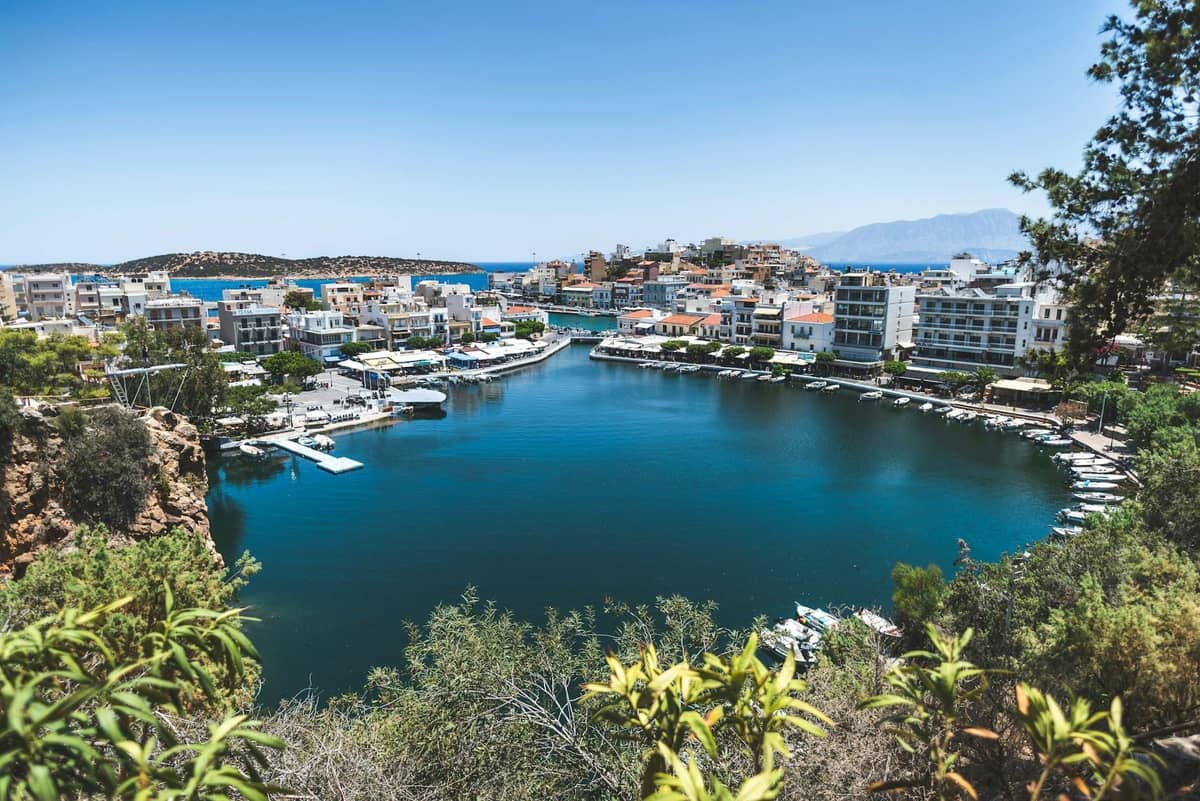
East of Heraklion, the road follows the north coast through resort towns before the landscape opens up around Agios Nikolaos and the Gulf of Mirabello. The town is worth a brief stop for its natural harbour lake and the drive north to Elounda offers views across to Spinalonga Island. From here, the road trip begins to feel genuinely off the beaten path.
Inland from Agios Nikolaos, the route up to the Lassithi Plateau is one of the most rewarding drives on the island. At around 840 metres elevation, the plateau is a broad agricultural plain ringed by mountains, studded with the ruins of old windmills, and home to the Dikteon Cave — mythologically the birthplace of Zeus. The road up involves serious hairpin bends, but the surface is paved and the views justify every gear change.
The far east, particularly the area around Sitia and the Minoan palace site at Zakros, is the least-visited corner of Crete. Roads here are good but slower, and distances feel longer due to the terrain. The reward is real solitude: the beach at Vai with its natural palm forest, the dramatic Richtis Gorge with its 25-metre waterfall, and the Minoan Palace of Zakros, which sits at sea level in a narrow valley. Budget at least two days for eastern Crete to avoid rushing.
Driving in Crete: Practical Tips and Honest Warnings
- Speed limits 90 km/h on national roads, 50 km/h in built-up areas, 110 km/h on the motorway sections near Heraklion. These are enforced with camera systems in some areas.
- Road conditions The E75 and VOAK are excellent. Mountain roads are generally paved but can have potholes, sharp-edged drops, and blind corners. Drive slowly and expect oncoming vehicles in the centre of narrow lanes.
- Animals on the road Sheep and goats cross freely in mountain areas, particularly in the Sfakia region and around Lassithi. This is genuinely common and not a joke — slow down in these zones, especially at dusk.
- Parking in towns Chania Old Town and parts of Rethymno have restricted parking and narrow access streets. Use public car parks on the periphery and walk in. Trying to drive into the historic cores wastes significant time.
- Petrol before south-coast routes Always fill up in the last major town before heading south over the mountains. Some south-coast villages have no petrol facilities at all.
One misconception worth addressing: many travellers assume Crete is difficult to drive. The main roads are genuinely good, signs are clear and usually bilingual, and the traffic outside of peak summer months is manageable. The mountain roads are not intimidating for anyone accustomed to European rural driving. For a more detailed look at getting around the island, the complete guide to getting around Crete covers buses, ferries, and taxis alongside the car option.
✨ Pro tip
Schedule your most remote drives for Tuesday through Thursday. Weekends bring Cretan day-trippers to popular beaches and gorges, and some of the narrower access roads see genuine traffic jams in July and August. Arriving mid-week at Preveli or Elafonissi can mean the difference between a quiet beach and a packed one.
When to Go: Seasons and Road Trip Timing
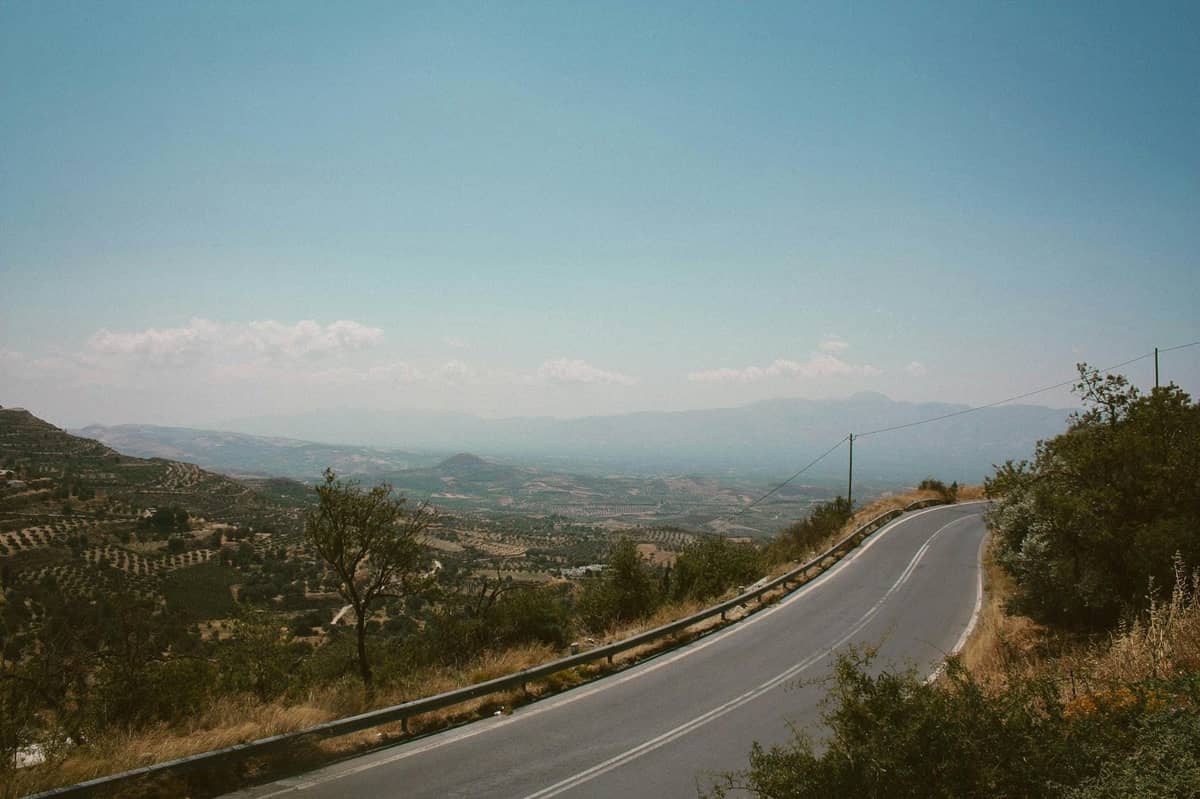
The ideal window for a Crete road trip is April through June or September through October. Spring brings wildflowers on mountain roads, the Samaria Gorge opens, and temperatures are comfortable for hiking. Autumn keeps the sea warm through October while cutting crowds substantially. For a detailed breakdown of what each month offers, the guide to the best time to visit Crete is worth reading before you book flights.
July and August are not impossible for a road trip, but the heat (regularly above 35°C inland), traffic on the main coastal road, and packed conditions at every popular beach make the experience considerably more demanding. If summer is the only option, plan drives for early morning, rest between noon and 4pm, and accept that the south-coast roads will be slower than the distances suggest.
Winter driving is possible and surprisingly rewarding for those interested in village life, olive harvests, and complete solitude at the coast. The Samaria Gorge closes from approximately 1 November, some coastal tavernas shut entirely, and a handful of mountain roads can be icy or snow-blocked above 1,000 metres from December to February. But the island does not shut down: Heraklion, Chania, and Rethymno remain fully operational year-round.
FAQ
Is it worth renting a car in Crete?
Yes, for most travellers it is the single most impactful decision they'll make. Public transport covers the main north-coast towns but leaves out the south coast, mountain villages, gorge trailheads, and most of the island's best beaches. A rental car typically costs between €20 and €60 per day depending on season and vehicle class, which is reasonable given what it unlocks.
How long does it take to drive across Crete?
The full east-west length of around 260 km takes approximately 3 to 3.5 hours non-stop on the north-coast E75. In practice, expect longer: traffic around Heraklion, road works, and the temptation to stop add time. A road trip covering the full island comfortably needs at least 7 days.
Is driving in Crete difficult for tourists?
Not particularly. The main roads are well-maintained and well-signed, often in both Greek and Latin script. Mountain roads require more attention — steep gradients, tight corners, and occasional livestock — but they are not technically demanding. The biggest adjustment for UK and US drivers is that Greek driving culture is more assertive than they may be used to.
Can you do a Crete road trip in 3 days?
Three days is enough for a focused route but not the full island. West Crete (Chania, Balos or Elafonissi, Samaria Gorge, south coast) makes a logical 3-day loop. Trying to add Heraklion, Knossos, and Lasithi in the same time frame results in driving more than you see.
What is the best base for a Crete road trip?
Chania is the most popular base for good reason: it sits at the western end, has excellent car rental options, and offers easy access to both the south coast and the far west. Heraklion makes more sense if your trip focuses on eastern Crete and Minoan sites. Rethymno works well as a central overnight stop between the two.