Elafonissi Beach: Crete's Pink-Sand Lagoon Explained
Elafonissi Beach sits on Crete's remote southwestern tip, where crushed shells from microscopic foraminifera tint the sand pink and a shallow lagoon connects the shore to a small protected island. Free to enter and genuinely striking, it draws large summer crowds that reward early arrivals and discourage afternoon visits.
Quick Facts
- Location
- Southwestern Crete, Chania prefecture, 78 km from Chania city
- Getting There
- Car (78 km from Chania via paved road) or seasonal ferry from Palaiochora (~1 hr)
- Time Needed
- 3–5 hours; full day if combining with the island
- Cost
- Free entry; parking and sunbed hire charged separately in season
- Best for
- Families, nature lovers, photographers, off-the-beaten-track beach seekers
What Makes Elafonissi Different
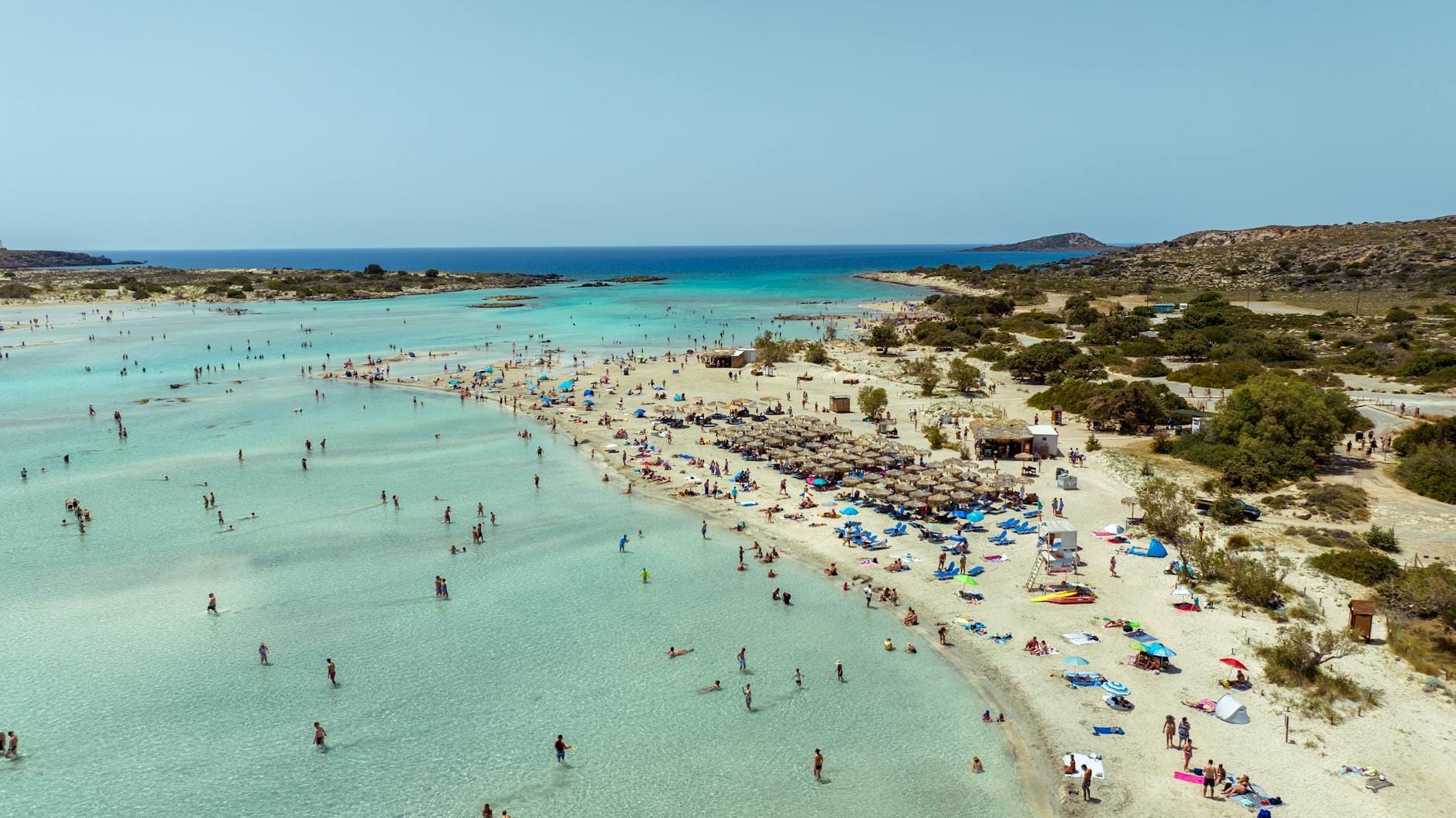
Elafonissi Beach is not the only beautiful beach in Crete, but it is the only one where you can wade across a chest-high lagoon to reach a small protected island. The crossing, roughly 200 metres of warm, crystalline shallows, is itself the experience. Children treat it as a paddling playground. Adults cross holding bags above their heads, half-laughing at the absurdity and half-stunned by the colour of the water around them.
The pink tint in the sand is real, not a filter or a tourist myth. It comes from the crushed skeletal remains of foraminifera, microscopic marine organisms whose red and pink shells accumulate in the dunes over centuries. The colour is subtle rather than vivid, showing most clearly in dry sand at the dune edges and in the shallows where the lagoon bottom catches the light. Photographs taken in late afternoon, when the sun drops to the southwest, tend to capture it most faithfully.
ℹ️ Good to know
Elafonissi is a protected Natura 2000 site. Removing sand, shells, or any plant material is prohibited under Greek law and carries on-the-spot fines. Wardens do patrol during peak season.
The Landscape: Beach, Lagoon, and Island
The main beach curves along the western edge of a shallow bay, backed by low sand dunes stabilised by endemic plants. The dune system is the most ecologically sensitive part of the site; walking through it is officially discouraged, and established footpaths exist for a reason. The beach itself is wide and the sand coarse by Mediterranean standards, which means it does not cling to wet skin the way fine sand does.
The lagoon separating the beach from the Elafonissi islet reaches a maximum depth of roughly waist height for most adults, though it varies with tides and season. The bottom is sandy and firm underfoot. The islet covers approximately 0.435 square kilometres, rises to around 30 metres at its highest point, and has its own smaller beaches on its far side that tend to be quieter than the main shore. The western-facing cove on the islet catches the last of the sun and is worth seeking out.
Loggerhead sea turtles, known locally by the scientific name Caretta caretta, nest in the dunes along this coastline. If you see an area roped off near the dune base, it marks an active nest. Give it a wide berth, particularly in the evening.
Tickets & tours
Hand-picked options from our booking partner. Prices are indicative; availability and final rates are confirmed when you complete your booking.
Visit a Family-Run Olive Mill with Food Tasting in Heraklion
From 19 €Instant confirmationFree cancellationSnorkeling experience in Crete
From 45 €Instant confirmationFree cancellationSpinalonga self-guided audio tour on your phone
From 12 €Instant confirmationFree cancellationMalia to Sissi private tuk-tuk journey with tastings
From 45 €Instant confirmationFree cancellation
How the Experience Changes by Time of Day
Arrive before 9 a.m. and Elafonissi is close to magical. The light comes from the east, backlighting the lagoon and turning the water a pale green-gold. The air smells of salt and wild thyme from the hills above the access road. The sand is cold underfoot. There are perhaps fifty people in view across the whole bay.
By 11 a.m. in July and August, the car park is filling fast and the first tour buses have arrived. By 1 p.m. the main beach is crowded enough that finding a clear stretch of sand without a neighbouring sunbed requires effort. The lagoon crossing becomes a slow procession. This is not the beach's fault; it is a consequence of its fame and its distance from alternative options. If you arrive in the middle of the afternoon in high summer, manage your expectations accordingly.
Late afternoon, from around 4 p.m. onwards, sees coaches depart and the crowd thin noticeably. The light shifts to a warm reddish tone that flattens the waves and intensifies the sand colour. This is the best window for photography and the most pleasant time for a relaxed swim. The water temperature in July and August typically stays warm well into the evening.
💡 Local tip
Visiting in September or October cuts crowds dramatically while keeping sea temperatures comfortable. The dune vegetation is at its most colourful in early autumn, and parking is rarely an issue after the school holidays end.
Getting to Elafonissi: The Practical Reality
The most reliable way to reach Elafonissi is by car. The drive from Chania city takes roughly 90 minutes to two hours depending on traffic, following a paved road that winds through the Topolia Gorge and small mountain villages before descending to the coast. The final section of road is narrow in places with passing spots, so drive cautiously. A rental car gives you full control over timing, which matters enormously at this beach.
In summer, a seasonal ferry connects Elafonissi with Palaiochora, the nearest coastal town, roughly one hour away by boat. Departures from Palaiochora are typically at 9 a.m. with a return around 5 p.m., though schedules change each season and should be verified locally. This option works well if you are already based in Palaiochora or prefer a boat approach. If you are planning a broader road trip around western Crete, the Crete road trip guide covers the southwest coast in detail and can help you combine Elafonissi with other stops on the same day.
Public bus service from Chania to Elafonissi operates during the summer season, but the schedules are infrequent and the journey long. Unless you are travelling on a strict budget with flexible timing, the bus is rarely the most practical choice for a day trip. Verify current KTEL Chania schedules before committing to this option.
⚠️ What to skip
The car park at Elafonissi fills completely by mid-morning in peak season. Overflow parking along the approach road adds a 10-20 minute walk. If you arrive after 10 a.m. in July or August, factor this in.
History and Protected Status
Elafonissi has been inhabited and visited for centuries. The area carries associations with piracy in earlier centuries, when the remote southwestern coastline offered shelter to vessels operating outside Ottoman authority. A shipwreck in 1907, in which a boat carrying hundreds of passengers sank near the island, left a memorial that remains visible near the shore.
The area's ecological significance was formalised through inclusion in the Natura 2000 European network of protected habitats, which restricts development and commercial exploitation. This is partly why the beach has retained its character despite heavy visitor numbers. For travellers interested in the broader ecological and cultural landscape of western Crete, the White Mountains that frame the inland horizon from this coastline form part of the same protected zone.
What to Bring and What to Expect on the Ground
Shade is limited on the main beach. Natural shade from trees does not exist here; a few sunbed operators provide parasols for hire, but supply does not always meet demand at peak times. Bring your own sun protection: a beach umbrella, high-SPF sunscreen, and a hat. The south-facing orientation means the beach receives direct sun from mid-morning until sunset.
Water shoes are worth packing. The lagoon crossing involves patches of small pebbles and the occasional sea urchin near the rocks at the island's edge. Sandals that can get wet or dedicated water shoes protect your feet and give you more confidence on the crossing. The sea floor is sandy across most of the lagoon, but it becomes rockier near the islet.
Facilities at Elafonissi include toilets, outdoor showers, a small number of snack and drink kiosks, and sunbed hire. The kiosks are basic, with drinks, ice cream, and simple snacks. If you are planning a full day, bring your own food. The nearest village with a proper taverna is a short drive back up the road.
If you are combining this trip with other stops in the southwest of Crete, Falassarna Beach on the northwestern tip of the Chania prefecture is around 60 kilometres away and makes a natural pairing on a two-beach day, particularly if you are based in Chania city.
Photography: What Actually Works
The pink sand photographs most convincingly in the dry dunes away from the waterline, in early morning or late afternoon light. Midday sun bleaches the colour out and makes the shot look like any white-sand beach. For the lagoon colour, shoot from a slightly elevated point, such as the low rise at the island's northern edge, looking back toward the main beach. This angle captures the transition from turquoise shallows to deeper blue.
Drone photography is popular here, but Greece enforces Civil Aviation Authority rules on drone operation; check current permit requirements before flying. For a beach that rewards aerial perspective, Balos Lagoon in the same Chania prefecture offers a similar landscape with an established viewpoint high above the water that works well for ground-based photography.
Accessibility and Family Considerations
The shallow lagoon makes Elafonissi genuinely suitable for young children and non-swimmers. The gradient into the water is gradual across most of the beach, and the lagoon crossing, while requiring some confidence in the water, is well within range for children old enough to walk. The sand underfoot in the shallows is soft and warm by midday. Toddlers in particular tend to gravitate toward the lagoon rather than the open sea.
Wheelchair access to the beach itself is difficult due to the soft sand and uneven dune paths. The access road and car park are paved, but the beach surface is not hardened. Visitors with mobility limitations may find the kiosk area and the first few metres of beach accessible but the full experience difficult.
Families planning a broader Crete holiday will find useful context in the Crete with kids guide, which covers beach selection alongside inland activities suited to different age groups.
Who Will Be Disappointed
Travellers expecting the pink sand to be vivid, like images processed heavily on social media, will find the real thing more understated. The colour is genuine but it requires the right light and the right angle to see clearly. Visitors arriving midday in August, surrounded by crowds and harsh overhead sun, sometimes leave underwhelmed.
Those seeking a quiet, secluded beach day should look elsewhere in July and August. Elafonissi is no secret and the distance from Chania city does not deter the volume of visitors it receives in peak season. If solitude is the priority, the beaches along the southern coast near Plakias or the less-visited stretches of eastern Crete will serve better. The beach rewards those who time their visit intelligently, not those who turn up hoping the crowds will somehow not be there.
Insider Tips
- The smaller beaches on the far side of the islet, reached by walking around the island's rocky perimeter, stay quieter throughout the day even when the main beach is packed. Worth the 10-minute walk.
- The approach road from Chrysoskalitissa Monastery passes through stretches of scrubland that bloom with wild flowers in spring. If visiting in April or May, slow down on this final stretch.
- Bring more water than you think you need. The kiosks sell drinks at high-season prices, the shade is minimal, and the drive back to the nearest town is 20 minutes. Dehydration is a real risk on a full day here.
- The seasonal boat from Palaiochora is far more relaxed than it sounds. Arriving by sea means you miss the car park stress entirely and the coastal approach to the beach is genuinely beautiful.
- If the main beach feels overwhelming on arrival, walk five minutes south along the shoreline. The beach extends further than most visitors explore, and the crowd density drops sharply past the main access point.
Who Is Elafonissi Beach For?
- Families with young children who want shallow, safe swimming in a spectacular setting
- Nature-focused travellers interested in protected coastal ecosystems and endemic flora
- Photographers chasing that specific pink-sand shot, ideally in early morning or late afternoon
- Road trippers building a southwest Crete loop that combines beach, monastery, and mountain scenery
- Visitors travelling in shoulder season who want a landmark beach without summer chaos
Nearby Attractions
Other things to see while in Chania:
- Archaeological Museum of Chania
Opened in 2022 in a purpose-built 6,000 m² building in the Chalepa suburb, the Archaeological Museum of Chania traces western Crete's story from the Palaeolithic era through the 4th century AD. With over 4,100 finds, tactile exhibits, and a location just outside the Old Town, it rewards anyone who wants more than a beach holiday.
- Balos Lagoon
Balos Lagoon sits at the northwestern tip of Crete, where a shallow, turquoise-green pool forms between the Gramvousa Peninsula and the rocky spur of Cape Tigani. The sand is faintly pink from crushed shells and coral. The crowds in July and August are real. Here is what the experience actually involves.
- Chania Old Town
Chania Old Town is a living archive of civilizations stacked on top of one another, from Neolithic Kydonia to Venetian merchant palaces to Ottoman minarets. Free to enter and open at all hours, it rewards slow exploration more than rushed sightseeing.
- Falassarna Beach
Falassarna stretches for three kilometres along Crete's remote northwestern tip, offering pink-gold sand, clear turquoise water, and the atmospheric ruins of an ancient Hellenistic port. It is one of the island's most consistently celebrated beaches, and on a calm morning, the praise feels entirely justified.