White Mountains (Lefka Ori): Crete's Untamed Alpine Wilderness
The White Mountains, or Lefka Ori, are the dramatic limestone massif dominating western Crete. With more than 50 peaks above 2,000 metres, around 50 gorges, and a biodiversity found nowhere else on Earth, this is serious mountain terrain that rewards prepared hikers with landscapes unlike anything else in Greece.
Quick Facts
- Location
- Western Crete, Chania prefecture — approximately 40–50 km south of Chania city
- Getting There
- Rental car strongly recommended; buses reach Omalos plateau (Samaria Gorge trailhead) seasonally from Chania
- Time Needed
- Half day (gorge hike) to multiple days (peak ascents and ridge routes)
- Cost
- No admission fee for the mountains; Samaria Gorge charges an entry fee; guide hire recommended for peak routes
- Best for
- Experienced hikers, nature photographers, birdwatchers, and anyone seeking solitude above the tourist belt
What the Lefka Ori Actually Are
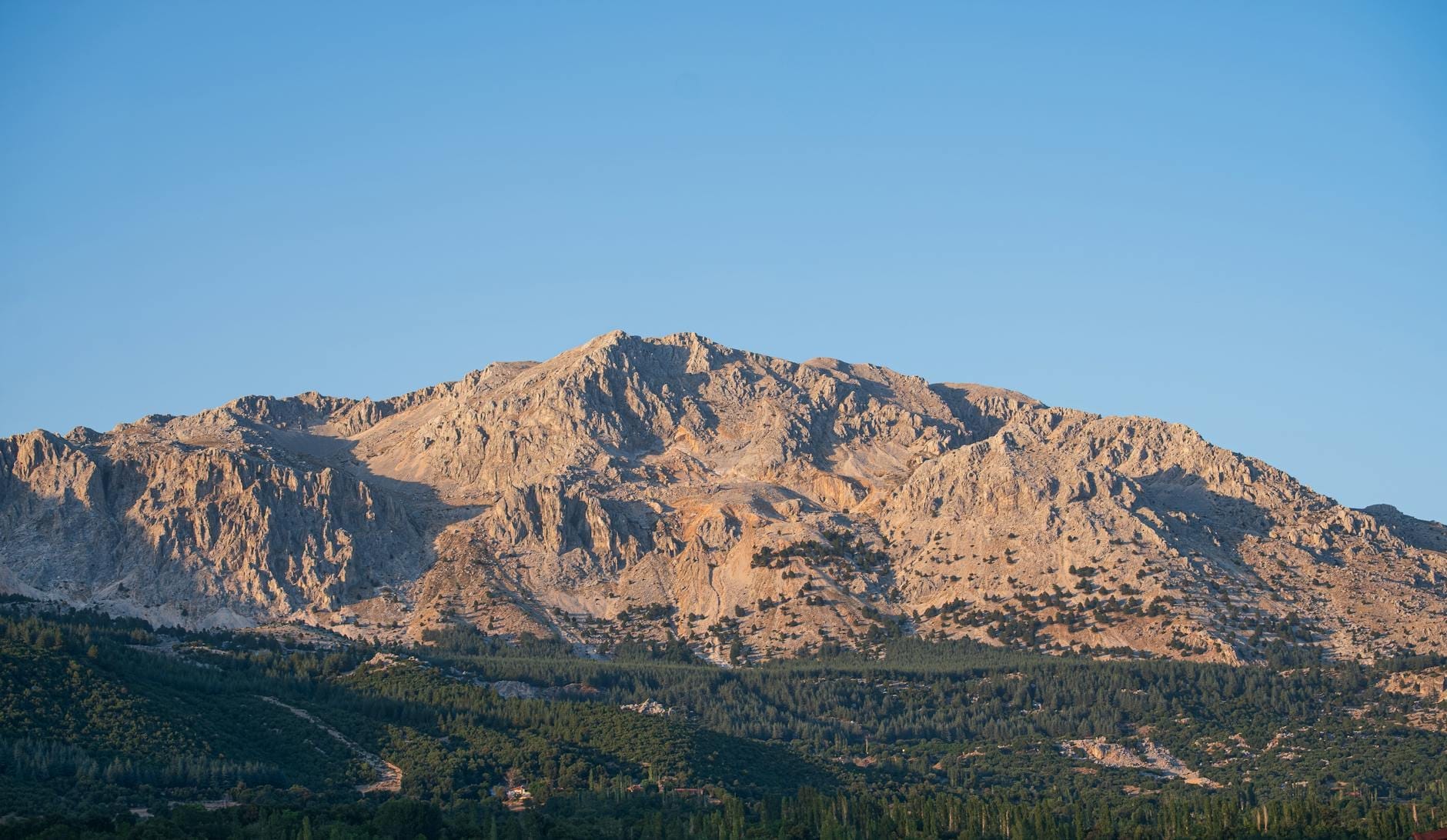
The White Mountains (Lefka Ori, Λευκά Όρη) are not a single ridge or a neat park with a car park and a café at the top. They are a vast limestone massif roughly 60 km across and 38 km deep, occupying a significant portion of the Chania regional unit in western Crete. More than 50 peaks exceed 2,000 metres. The highest, Pachnes, reaches 2,453 metres, making it Crete's second tallest mountain overall. From the coast, the range looks like a wall of pale rock that changes colour through the day: bone white at noon, amber at dusk, and ghostly grey under cloud.
The name Lefka Ori refers partly to the snow that covers the upper plateau from roughly mid-December through early April, and partly to the bare, bleached limestone that makes the high terrain look permanently frosted even in summer. The older Cretan name, Madares, translates roughly as 'bare of vegetation', which describes the upper elevations accurately. Below the treeline, the slopes are covered with Cretan pine, kermes oak, and dense phrygana scrub that smells sharply of thyme and sage on warm afternoons.
ℹ️ Good to know
The Lefka Ori are a NATURA 2000 protected site. No formal entry fee applies to the mountains themselves, though the Samaria Gorge, which cuts through the range, has its own entrance fee and access hours.
The Terrain: Gorges, Plateaus, and the High Desert
Approximately 50 gorges have been carved into this massif by centuries of water cutting through karst limestone. The most visited is the Samaria Gorge, which runs roughly 16 km from the Omalos plateau down to the Libyan Sea at Agia Roumeli. It draws the majority of visitors to the range and, during peak summer months, can feel crowded by mid-morning. The gorge itself is genuinely impressive regardless of crowds: at the famous Iron Gates (Sideroportes), the walls close to less than four metres apart while rising over 300 metres above your head.
Less visited but rewarding alternatives include the Imbros Gorge, which is shorter, accessible without a guided tour, and significantly quieter. It runs from the village of Imbros down toward the south coast and takes around two to three hours to walk one way. The walls are lower than Samaria's but the path is less worn, and in spring the wildflowers in the gorge floor are remarkable.
Above the gorges, the high plateau called the Anopoli basin and the Omalos plateau serve as the main gateways into the alpine zone. Omalos sits at around 1,080 metres and is the starting point for the Samaria descent as well as trails climbing toward Pachnes and the main ridge. The plateau itself is flat farming land ringed by peaks, and in early morning, before the tour buses arrive, it has an almost Tibetan stillness to it.
Tickets & tours
Hand-picked options from our booking partner. Prices are indicative; availability and final rates are confirmed when you complete your booking.
White Mountains small group tour with tastings and lunch
From 135 €Instant confirmationFree cancellation4x4 mountains and sea south coast route in Crete
From 92 €Instant confirmationFree cancellationCave of Zeus & mountainous East Crete adventure private tour
From 590 €Instant confirmationFree cancellationCave of Zeus & mountainous East Crete private tour from Chania
From 730 €Instant confirmationFree cancellation
Wildlife and the Kri-Kri
The ecological significance of the Lefka Ori is difficult to overstate. Around 170 plant taxa are endemic to this range, meaning they grow nowhere else on Earth. The combination of isolation, elevation range, and the particular chemistry of Cretan limestone has produced a degree of biodiversity that scientists and botanists visit specifically to study. Spring, from late March through May, is the best time to see wildflowers in the lower gorges and on the southern slopes: orchids, anemones, cyclamens, and plants with no common name in any other language.
The kri-kri, the wild Cretan goat (Capra aegagrus cretica), lives in the more remote sections of the massif and on a few offshore islands. They are shy and most active at dawn and dusk. On rocky ridgelines, you may spot them as silhouettes against the sky before they disappear into gullies. Griffon vultures are common overhead in the high terrain, and Bonelli's eagles have been recorded in the range. The combination of raptors circling above and complete silence except for wind and distant goat bells is one of the more memorable sensory experiences the mountains offer.
How Difficulty and Season Shape Your Visit
The Lefka Ori demand honest self-assessment from visitors. Hiking here is not like walking the marked trails of Swiss national parks. The high terrain involves scree slopes, unmarked routes, and ravines where navigation errors have had serious consequences. Ascending Pachnes from the Omalos side is a full-day undertaking requiring solid fitness, proper boots, and either navigation experience or a local guide. The E4 long-distance trail passes through the range, but sections of it are poorly marked and require map and compass skills.
⚠️ What to skip
Weather in the high Lefka Ori changes rapidly. Afternoon thunderstorms are common in summer, and above 2,000 metres temperatures can drop significantly even in August. Never start a high-route ascent after mid-morning without confirmed weather, and always carry water: the limestone plateau has no surface water in summer.
The most accessible entry point for non-specialist hikers is the Omalos plateau, from which you can walk the first kilometre or two of the Samaria trail to the wooden staircase viewpoint (Xyloskalo) without committing to the full 16 km descent. This gives a real sense of the gorge's scale and the surrounding peaks. The south coast village of Agia Roumeli, accessible only by boat or on foot through Samaria, has a beach and simple tavernas and represents the other end of the classic traverse.
Serious multi-day routes through the high plateau connect the gateway villages and require mountain huts or camping. For those considering a longer hiking trip in western Crete, the overview in the hiking in Crete guide covers route options, difficulty levels, and the best months for each style of walking.
Getting There and the Surrounding Area
The Lefka Ori are best approached from Chania, which sits about 40–50 km north of the main trailhead areas. A rental car gives you the flexibility to reach Omalos early (essential in summer before the tour buses arrive), explore the Askyfou and Anopoli approaches, and drive the southern coastal road for post-hike swimming. The mountain road from Chania to Omalos is paved but narrow in sections, with several hairpin bends; it takes around 45 minutes in good conditions.
Seasonal buses run from Chania bus station (KTEL) to Omalos during the Samaria Gorge season, which typically runs from May to mid-October. These are timed to connect with gorge hiking starts in the morning and boat returns from Agia Roumeli in the late afternoon. Outside this window, public transport options are very limited and a rental car becomes near-essential for access.
For travellers planning an itinerary that combines mountain and coastal experiences, the Crete road trip guide maps out logical routes that link the southern foothills with the beaches of the Libyan coast.
Photography and the Quality of Light
Photographically, the Lefka Ori operate on their own schedule. The best light falls in the first two hours after sunrise, when the east-facing limestone cliffs glow orange-pink and mist sits in the gorge floors. By 10am in summer, the light becomes harsh and flat on the white rock. Afternoon cloud build-up over the peaks can produce dramatic skies from around 2pm onward, but these often signal approaching thunderstorms rather than safe shooting conditions. The Xyloskalo viewpoint at the top of the Samaria Gorge gives a clean west-facing composition of the gorge mouth and surrounding cliffs and is one of the most photographed spots in the range.
Winter is genuinely interesting for photographers willing to make the drive: from November through March, the upper peaks carry snow while the lower gorge entrances remain accessible, and the contrast between white peaks and the evergreen slopes below is striking. There are essentially no other tourists. The light in winter is softer and the air is cleaner, giving distances that summer haze obscures.
💡 Local tip
For the Samaria Gorge in summer, arrive at Omalos no later than 7am. The descent takes 4–6 hours and the last ferry from Agia Roumeli leaves in late afternoon. Missing it means an unplanned overnight in the village.
Who This Is Not For
The White Mountains are not suited to visitors who expect polished visitor infrastructure. There are no cable cars, no mountain restaurants above the trailhead areas, no mobile signal in most of the high terrain, and no search-and-rescue services that operate on short notice. Visitors with limited mobility will find the terrain inaccessible beyond the plateau edges. Families with young children can enjoy the lower gorge approaches but should not attempt serious ascents. Travellers who are visiting Crete primarily for beaches and food can admire the Lefka Ori from the coast without feeling they have missed anything essential: the mountains are a specialist experience and honest about it.
Insider Tips
- The Askyfou plateau approach from the east, via the village of Imbros, sees a fraction of the Omalos traffic. Arriving here in early morning gives you the high mountain atmosphere without any of the Samaria tour-group crowds.
- Spring water sources dry up completely on the high plateau by June. Carry at least two litres per person when ascending above 1,500 metres in summer, and do not rely on streams shown on older maps.
- If you are doing the Samaria Gorge traverse, take the ferry from Agia Roumeli to Sougia rather than back to Hora Sfakion. The ride along the Libyan coast is longer but the scenery is better, and Sougia has a calmer beach for post-hike recovery.
- The kri-kri are most visible on the rocky ridgelines north of Pachnes around dawn. A good pair of binoculars is worth bringing: the goats are usually several hundred metres away when spotted.
- The mountain villages on the southern edge of the range, particularly Anopoli and Loutro (accessible only on foot or by boat), offer a completely different Crete from the coastal resorts. An overnight here breaks up a multi-day traverse and gives access to shorter day routes that most visitors never find.
Who Is White Mountains (Lefka Ori) For?
- Experienced hikers seeking remote, technically demanding terrain away from the tourist circuit
- Nature photographers chasing early-morning gorge light and winter snow contrasts
- Botanists and wildlife enthusiasts drawn to Crete's high concentration of endemic species
- Travellers who want a complete contrast to the beach-resort experience of northern Crete
- Multi-day trekkers following sections of the E4 European long-distance trail
Nearby Attractions
Other things to see while in Chania:
- Archaeological Museum of Chania
Opened in 2022 in a purpose-built 6,000 m² building in the Chalepa suburb, the Archaeological Museum of Chania traces western Crete's story from the Palaeolithic era through the 4th century AD. With over 4,100 finds, tactile exhibits, and a location just outside the Old Town, it rewards anyone who wants more than a beach holiday.
- Balos Lagoon
Balos Lagoon sits at the northwestern tip of Crete, where a shallow, turquoise-green pool forms between the Gramvousa Peninsula and the rocky spur of Cape Tigani. The sand is faintly pink from crushed shells and coral. The crowds in July and August are real. Here is what the experience actually involves.
- Chania Old Town
Chania Old Town is a living archive of civilizations stacked on top of one another, from Neolithic Kydonia to Venetian merchant palaces to Ottoman minarets. Free to enter and open at all hours, it rewards slow exploration more than rushed sightseeing.
- Elafonissi Beach
Elafonissi Beach sits on Crete's remote southwestern tip, where crushed shells from microscopic foraminifera tint the sand pink and a shallow lagoon connects the shore to a small protected island. Free to enter and genuinely striking, it draws large summer crowds that reward early arrivals and discourage afternoon visits.