The Lassithi Plateau is a vast highland plain in the Dikti Mountains of eastern Crete, sitting at around 840 metres above sea level. Ringed by a dozen traditional villages and famous for its mythological connections, agricultural produce, and the sacred Dikteon Cave, it offers a completely different Crete from the coastal resorts below.
The Lassithi Plateau is one of those places in Crete that genuinely surprises visitors who arrive expecting just another mountain viewpoint. At 840 metres above sea level, surrounded by the Dikti range and spread across roughly 25 square kilometres of fertile plain, it feels like a separate country from the beach towns below. This is working agricultural land with real villages, a mythology-laden cave, and a pace of life that has barely shifted in generations.
Orientation
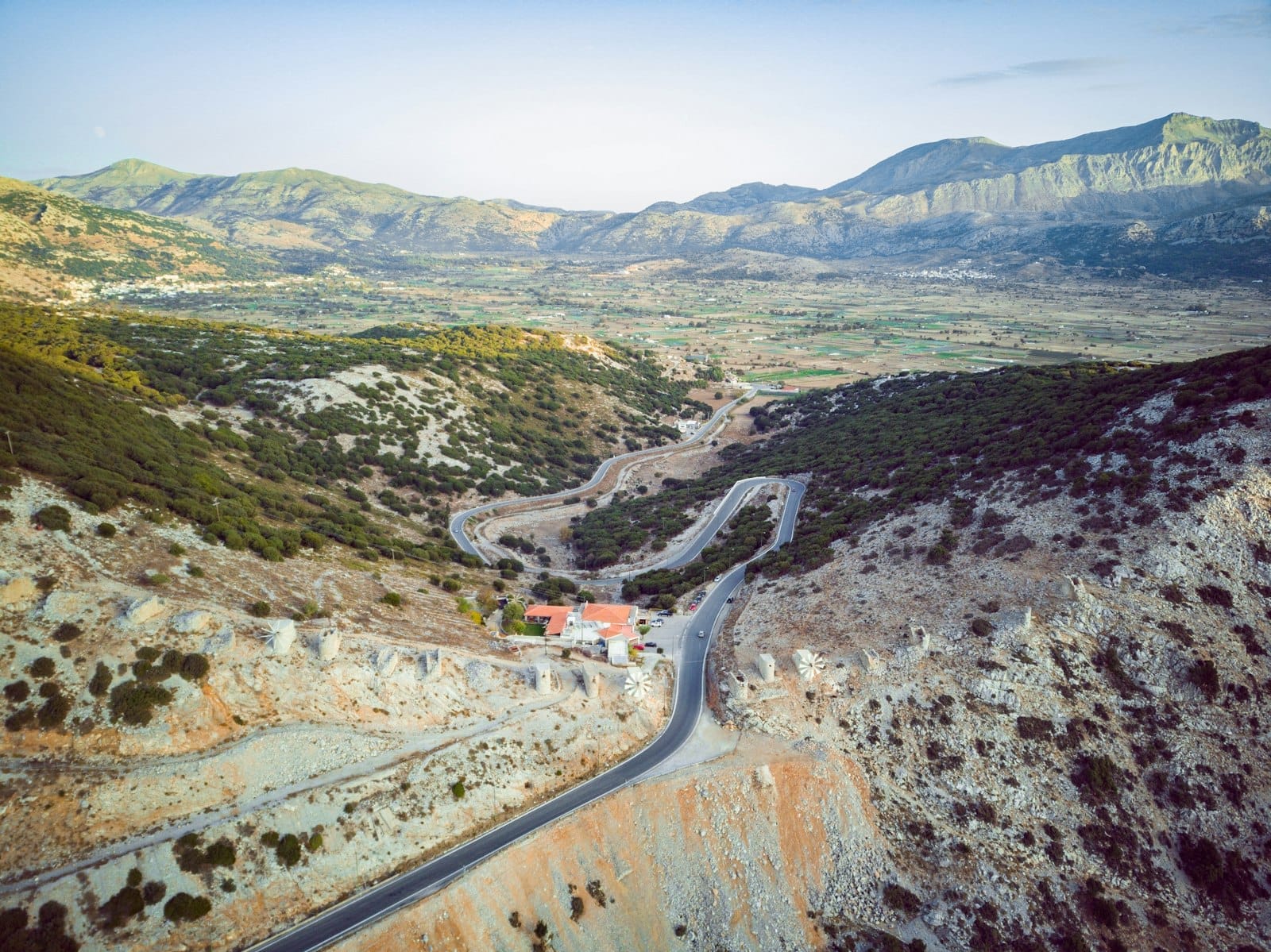
The Lassithi Plateau sits in the heart of the Dikti Mountains in the Lasithi regional unit of eastern Crete. It measures roughly 11 kilometres east to west and 6 to 7 kilometres north to south, making it large enough that you can spend a full day exploring without retracing your steps. The plateau lies approximately 70 kilometres east of Heraklion and around 50 kilometres southwest of Agios Nikolaos, connected to both by winding mountain roads that climb steeply through pine forest and scrubland before the landscape suddenly opens onto the plateau floor.
The municipal seat is Tzermiado, the largest village, positioned toward the northern edge of the plateau. Psychro, the village most visitors head for first because it sits at the foot of the Dikteon Cave, is on the western edge. Agios Georgios occupies the southern flank. A circular road of roughly 20 kilometres connects most of the main villages, making it straightforward to drive the full loop. The plateau is endorheic, meaning it has no outflowing river. Rainwater and snowmelt drain internally, which historically kept the soil exceptionally fertile and explains why this land has been farmed continuously for millennia.
If you are planning a broader loop through central and eastern Crete, the Lassithi Plateau pairs well with a stop at Agios Nikolaos on the coast, or can be reached as a long day trip from Heraklion. Consult a Crete road trip itinerary if you plan to combine it with other inland sites.
Character & Atmosphere
The first thing you notice arriving on the plateau is the silence. After the noise and diesel of the coastal highway and the stress of the mountain switchbacks, the plateau floor feels almost theatrically calm. The fields are divided into long rectangular plots, and in spring they turn a dozen shades of green. By summer the soil dries to pale gold between irrigation channels. The air temperature is noticeably cooler than the coast, sometimes by as much as 8 to 10 degrees, and in winter the plateau regularly receives snow that makes the roads impassable for days at a time.
In the early morning, the villages come alive in a distinctly agricultural way. Tractors move slowly along the perimeter road, vegetable sellers set up at roadside stalls in Tzermiado, and the smell of wood smoke drifts from kafeneion chimneys. The light at this hour is extraordinary: flat and gold across the plain, with the Dikti peaks catching the first sun while the valley floor stays in shadow. By mid-morning, the first tour buses arrive from Heraklion, mostly heading directly to Psychro and the cave. The square in Psychro fills up quickly in high summer, and the cafes and souvenir stalls around the cave entrance become lively.
By early afternoon, most tour groups have left, and the plateau returns to its quieter rhythms. The villages of Agios Georgios and Agios Konstantinos see far fewer day-trippers and offer a more authentic glimpse of daily life on the plateau. After dark, the plateau is almost completely quiet. There is very little nightlife and only a handful of tavernas stay open past 10pm. The sky above Lassithi, away from any coastal light pollution, is one of the best places on the island for stargazing.
ℹ️ Good to know
The Lassithi Plateau sits at around 840 metres above sea level. Even in July and August, evenings can be cool enough to need a light jacket. Pack a layer if you are planning to eat outside after sunset.
What to See & Do
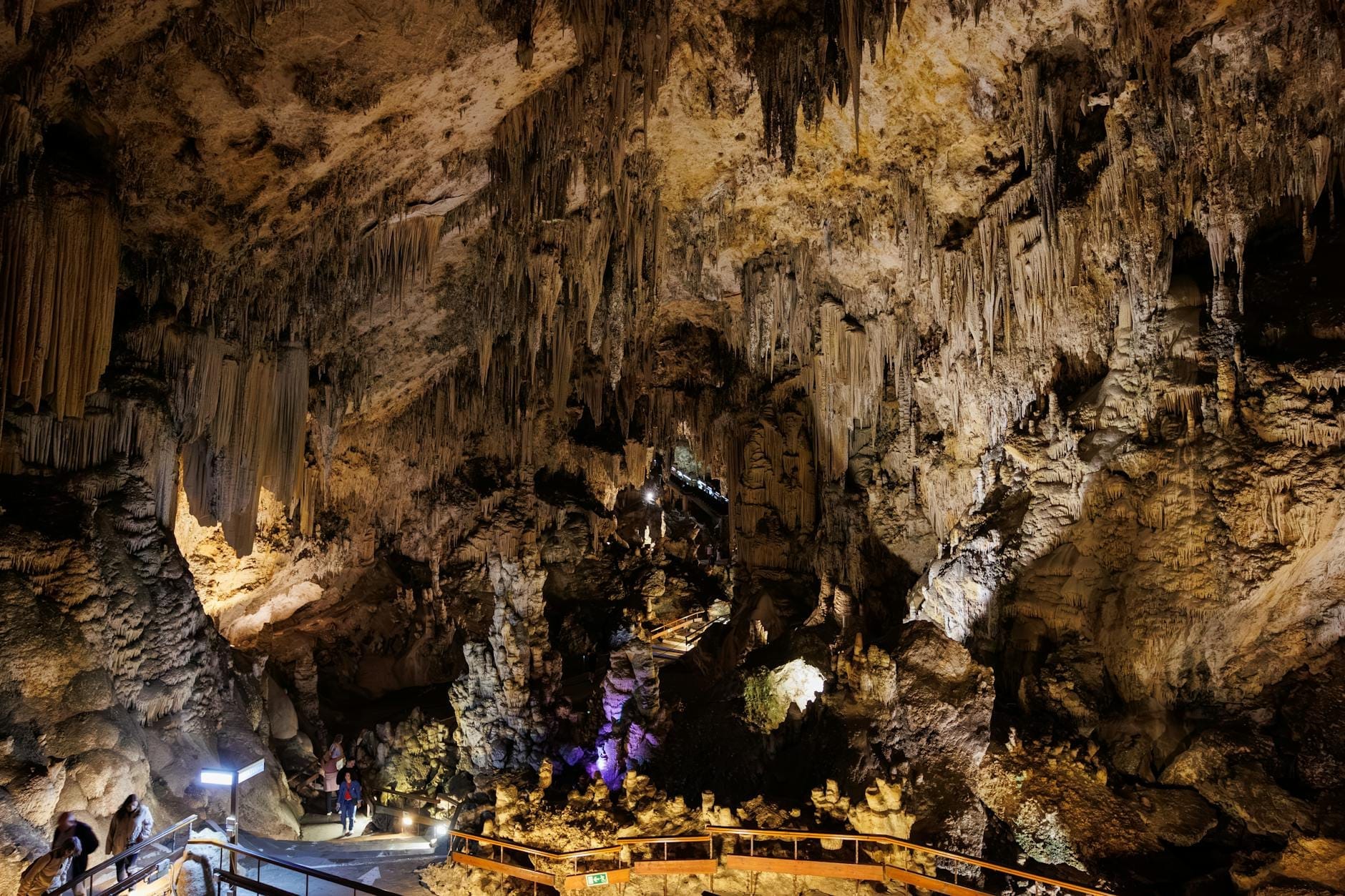
The single most visited site on the plateau is the Dikteon Cave (Diktaion Andron) above the village of Psychro, known in ancient Greek religion as the birthplace of Zeus. The cave is substantial, descending around 65 metres through stalactite-filled chambers to a small lake at the bottom. Archaeologists have found Minoan votive offerings here dating back to around 2000 BCE, suggesting it was a significant cult site long before the Classical myths attached it to Zeus. Read more on the Dikteon Cave page for opening times and practical entry details.
Beyond the cave, the plateau rewards slower exploration. The village of Agios Georgios contains two small but worthwhile museums: a folklore museum documenting traditional Cretan rural life, with displays of agricultural tools, weavings, and domestic objects. It is small but genuinely informative and rarely crowded. Tzermiado, the administrative centre, has a more workaday character and is worth stopping in for a coffee and a walk through the central square.
Two monasteries punctuate the plateau's edges. Kroustalenia Monastery sits near Agios Konstantinos on the northern edge and dates to the Byzantine period, though most of the current structures are later. Vidiani Monastery is located near Kato Metochi on the southeastern side. Both are active religious sites and require respectful dress. The plateau also gives access to hiking routes into the surrounding Dikti range, including trails toward the Nissimos plateau above Tzermiado and the Limnakaro plateau above Agios Georgios, both of which are smaller, higher, and almost entirely unvisited compared to the main plateau floor.
Dikteon Cave (Psychro): the plateau's main archaeological and mythological attraction
Agios Georgios folklore museum: traditional tools, costumes, and domestic objects from plateau life
Kroustalenia Monastery: Byzantine-era monastery near Agios Konstantinos
Circular plateau drive: roughly 20 km connecting all main villages
Nissimos and Limnakaro sub-plateaus: higher, quieter walking terrain above the main plateau
Agricultural stalls in Tzermiado: fresh potatoes, apples, and local honey
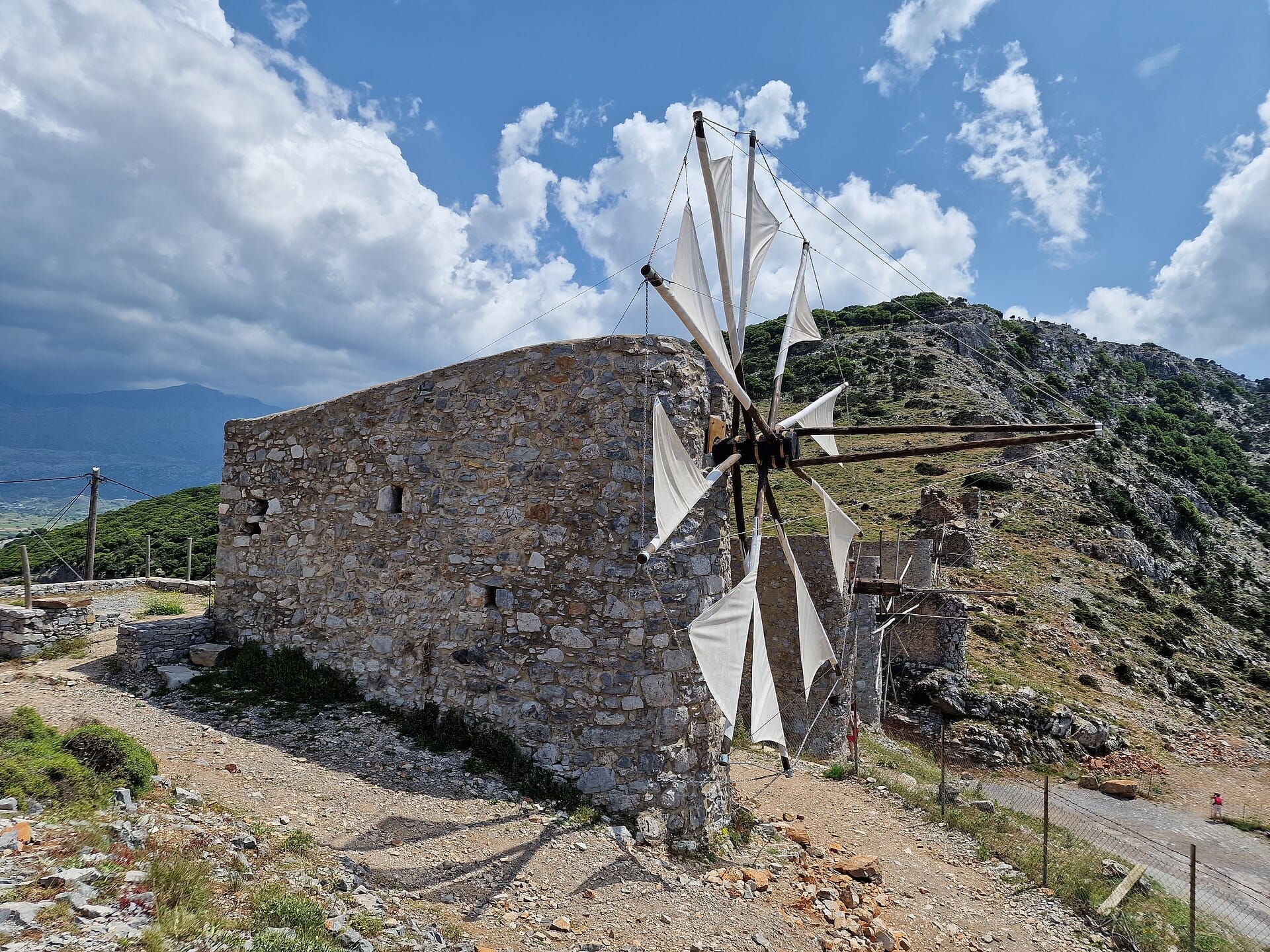
The plateau's famous windmills, once numbering in the thousands and used to pump irrigation water, are now mostly decommissioned and replaced by electric pumps. A small number of restored examples remain near the approaches to the plateau and are often photographed from the road. The area sits within the broader Lasithi regional unit, which also contains Minoan Palace of Zakros and the windmill landscape that still defines the visual identity of this part of Crete.
💡 Local tip
If you are visiting the Dikteon Cave, wear closed shoes with grip. The path descends on uneven stone steps that can be slippery in wet weather, and the cave interior is cool and damp year-round. Mules are available to carry visitors who have difficulty walking to the cave entrance, but the descent inside is always on foot.
Eating & Drinking
The food on the Lassithi Plateau is firmly rooted in the agricultural produce of the land itself. The plateau is one of Crete's most important growing areas for potatoes, apples, and assorted vegetables. Local tavernas serve dishes built around this produce: slow-cooked lamb or goat, roasted potatoes, stewed greens, and thick bean soups that are standard winter fare but appear on menus year-round. Honey from the Dikti mountain slopes is sold at roadside stalls and in village shops, and it has a distinctive dark, floral character quite different from the honey sold at coastal tourist markets.
Taverna quality varies considerably. Around Psychro, several places cater almost entirely to the tour group circuit, with laminated menus and dishes timed for fast turnover. The food is usually adequate but rarely memorable. Moving to Tzermiado or Agios Georgios gives you access to smaller, family-run tavernas where the menus are shorter, the produce is local, and the pacing is more relaxed. A full meal with wine in these villages rarely exceeds 18 to 25 euros per person.
The kafeneion in each village is the real social hub of plateau life. These are traditional Greek coffee houses where locals play backgammon and drink Greek coffee or raki throughout the day. They are not primarily set up for tourists, but visitors who sit quietly and order a coffee are generally welcomed. If you want to understand how food culture connects to the wider Cretan landscape, the Cretan food guide gives useful context on ingredients, dishes, and local customs around dining.
There are no bars in the conventional tourist sense on the plateau. If you are looking for evening drinks, the tavernas in Tzermiado and Agios Georgios serve local wine and raki alongside food. The plateau is not a destination for nightlife, and the few visitors who stay overnight tend to wrap up by 10pm.
Getting There & Around
The most practical way to reach the Lassithi Plateau is by car. Crete has no rail network, so road access is the only option. From Heraklion, the most common route runs east along the northern coastal highway and then turns south and inland through Stalida or Malia, climbing through Krasi before reaching the plateau edge. The drive takes approximately 90 minutes in normal conditions but considerably longer during peak season or after rain, when the mountain roads require careful navigation. The switchback section approaching the plateau from the north is narrow in places and requires care when meeting oncoming vehicles.
From Agios Nikolaos, the approach is roughly 50 kilometres via the inland road through Neapoli, which is a slightly gentler climb. This route is often used by visitors basing themselves on the eastern coast who want to combine a plateau visit with other Lasithi regional sites.
KTEL buses serve the plateau from both Heraklion and Agios Nikolaos, with services running to Tzermiado and Psychro. Schedules are limited, typically one or two departures per day in each direction, and the service is reduced or suspended in winter when roads may be closed by snow. Always check current KTEL Lasithi schedules before relying on bus travel here. If you are arriving without a car and planning to explore more than just Psychro, the bus is a significant constraint.
Once on the plateau, a car is effectively essential for reaching the smaller villages and the monastery sites. The circular road is in reasonable condition and clearly signposted. Cycling the plateau loop is possible in the cooler months and is a popular activity among touring cyclists, but the access roads from the coast are long, steep, and hot in summer. Walking between the main villages on the plateau floor is feasible; the distances are modest and the terrain is flat.
⚠️ What to skip
The Lassithi Plateau receives snow in winter and the mountain access roads can close without much warning. If you are visiting between November and March, check road conditions before setting out, especially if approaching from the north via Krasi. The plateau itself can be foggy in early mornings even in summer.
For practical guidance on navigating Crete without a car, and understanding the island's bus and ferry connections, the getting around Crete guide is a useful starting point.
Where to Stay
Accommodation on the Lassithi Plateau is limited compared to the coast, and that is part of the appeal for visitors who choose to stay. The options are almost entirely small guesthouses, agritourism properties, and family-run rooms in the villages. Tzermiado has the largest concentration of accommodation, with a handful of guesthouses in the village centre that offer simple, clean rooms at prices well below coastal equivalents. Agios Georgios also has a small number of options, including properties with views across the plateau.
Staying overnight transforms the experience significantly. Most day-trippers leave by mid-afternoon, and the plateau in the evening has a completely different quality: local life reasserts itself, the light on the Dikti peaks is remarkable at dusk, and the absence of coastal crowds is genuinely striking. For travellers who want to understand rural Cretan life rather than just observe it from a tour bus window, a night or two on the plateau is worthwhile.
The plateau is not suited to travellers whose priority is beaches, nightlife, or easy access to multiple coastal attractions. For a broader view of where different types of travellers should base themselves in Crete, the where to stay in Crete guide covers all the main options and trade-offs.
History & Context
The Lassithi Plateau has been inhabited since at least the Neolithic period, and its fertility made it a significant site throughout Minoan civilisation. The Dikteon Cave was a functioning religious site during the Minoan period, with archaeological finds dating to around 2000 BCE. In Greek mythology, the plateau and its cave became associated with the birth of Zeus, a story that almost certainly has older, pre-Hellenic roots. The plateau's relative inaccessibility made it a place of refuge and resistance in later periods too, including during the Venetian occupation of Crete, when the Venetians reportedly attempted to depopulate the plateau several times to suppress rebellions.
The windmills that once defined the plateau's visual character were introduced to manage irrigation and numbered in the thousands at their peak. By the late 20th century, electric pumps had replaced most of them, but the image of the plateau studded with white-sailed windmills became one of Crete's most reproduced photographs. Today, a small number of restored examples remain as landmarks near the main access roads. For a deeper grounding in the Minoan history that underpins so many sites in this part of Crete, the guide to Minoan history in Crete provides essential context.
The plateau sits within the Lasithi administrative unit, one of four regional units that make up the Region of Crete. Lasithi is the least populous of the four, with around 77,800 residents spread across a large and geographically varied territory that stretches from the plateau in the west to the far eastern tip of the island. This low population density is one reason the plateau retains a character that feels genuinely rural rather than staged for tourism.
Honest Assessment: Is the Lassithi Plateau Right for You?
The Lassithi Plateau is not a destination for every traveller visiting Crete, and it is worth being direct about that. If your visit is primarily about beaches, coastal towns, or urban eating and drinking, the plateau is a detour that will feel remote and possibly underwhelming unless you connect with the particular qualities it offers. The road access is time-consuming from most coastal bases, the accommodation is basic, and the entertainment options after dark are essentially non-existent.
For travellers who prioritise landscape, archaeology, and rural culture, however, the plateau is one of the most distinctive places on the island. The combination of the Dikteon Cave, the working villages, the mountain walking terrain, and the agricultural character of the land gives it a depth that coastal resorts simply do not have. It also sits within practical reach of other significant Lasithi sites. If you are planning a day trip format, pair it with a stop at Lake Voulismeni in Agios Nikolaos on the way back, or combine it with a longer eastern Crete itinerary using the one-week Crete itinerary as a framework.
TL;DR
The Lassithi Plateau is a high mountain plain at 840 m in the Dikti range, roughly 70 km east of Heraklion and 50 km from Agios Nikolaos.
The main draw is the Dikteon Cave above Psychro, a Minoan cult site linked to the mythological birthplace of Zeus, but the villages, monasteries, and walking terrain reward slower exploration.
Best visited by car: bus connections from Heraklion and Agios Nikolaos exist but are limited to one or two services per day and don't cover the smaller villages.
Temperatures are noticeably cooler than the coast; roads can close in winter due to snow. Bring a layer even in summer if staying the evening.
Suited to travellers interested in archaeology, rural landscapes, and Cretan village life rather than beach holidays or nightlife.
Crete has over 1,000 beaches, ranging from famous pink-sand lagoons to wild river-mouth coves. This guide ranks the best by region so you can plan your base and your days on the water without the guesswork.
Crete is large enough that each of its main towns sits within reach of completely different landscapes, ruins, and coastlines. This guide organizes the best day trips by base town, so whether you're staying in Chania, Heraklion, Rethymno, or Agios Nikolaos, you'll know exactly where to go and how to get there.
Crete holds one of the richest concentrations of museums in the Mediterranean, from world-class Minoan collections to maritime heritage and Byzantine icons. This guide covers the essential museums and historically significant sites across the island, organized by theme and region.
Crete rewards visitors year-round, but the right time depends entirely on what you want. This guide breaks down every month by weather, crowds, prices, and activities so you can plan with confidence.
Choosing between Chania and Heraklion shapes your entire Crete experience. This guide breaks down both cities honestly, covering location, culture, beaches, day trips, and who each one actually suits.
Cretan cuisine is one of the most distinctive and well-studied food traditions in the world, rooted in 4,000 years of agricultural practice and the foundational principles of the Mediterranean diet. This guide covers the essential dishes, local ingredients, seasonal patterns, and practical tips for eating well across the island.
Crete's coastline is best explored from the water. From the tidal lagoon at Balos to the haunting island of Spinalonga, these are the boat trips worth planning your days around.
Crete delivers more romance than most Greek islands dare to promise. From the pink-sand shores of Elafonissi to candlelit dinners in Chania's Venetian harbour and private yacht trips around hidden sea caves, this guide covers every romantic experience worth planning, plus honest advice on where the crowds go and where couples actually find peace.
October is one of the most underrated months to visit Crete. The summer crowds have thinned, sea temperatures stay around 23°C, and the island shifts into a slower, more authentic rhythm. This guide covers what the weather actually looks like, which attractions stay open, where crowds still linger, and how to plan a genuinely rewarding trip.
July and August are Crete's most popular months, and for good reason. The sea hits 26°C, the days stretch to 12 hours of sunshine, and almost every beach, taverna, and archaeological site is fully operational. But peak season on Greece's largest island comes with real trade-offs. This guide breaks down exactly what to expect and how to handle it.
Crete's interior is a world apart from its famous coastline. This guide covers the island's most compelling mountain villages, the gorges and caves surrounding them, and the ancient sites tucked into its high plateaus and rugged massifs.
Crete after dark ranges from cocktails beside a Venetian harbour to all-night club marathons in Malia. This guide breaks down the best nightlife in Crete by city, venue type, and season, so you know exactly where to go and what to expect before you arrive.
Crete produces some of the world's finest olive oil and a range of wines from indigenous grapes found nowhere else on earth. This guide covers where to taste, what to look for, how to book tours, and what's actually worth bringing home.
Crete is one of the Mediterranean's most rewarding destinations, and it doesn't have to be expensive. This guide breaks down real daily costs, the cheapest ways to get around, where to eat well for under €10, and which experiences are completely free — so you can spend more time enjoying the island and less time worrying about your wallet.
Crete rewards self-drivers like few Mediterranean islands can. From the white-pebble coves of the south coast to the gorge-carved mountains of the interior, this guide covers every route, practical detail, and honest warning you need to drive Crete with confidence.
The ferry from Crete to Santorini is faster, cheaper, and more scenic than flying via Athens. This guide covers every option: high-speed ferries, slow overnight boats, the flight reality, day trip logistics, and what to book first in summer.
Two of Greece's most iconic islands, but they deliver very different experiences. This guide breaks down beaches, budget, activities, and logistics so you can decide which island actually suits your trip.
From pink-sand beaches with toddler-safe shallows to underwater aquariums and myth-soaked caves, Crete delivers a remarkable range of family experiences. This guide breaks down the best activities by age group, the seasonal realities parents need to know, and the honest warnings that travel brochures skip.
Crete rewards travelers who know where to look, and the best experiences here rarely require a ticket. From pink-sand beaches and mythological caves to Venetian harbors and ancient ruins, here are 20 genuinely free things to do across the island.
Crete is 260 km long and divided into four distinct regions. Getting around efficiently requires planning. This guide breaks down every transport option — from KTEL buses to car rental pricing — so you can move around Greece's largest island without wasting a day.
Crete rewards travelers who look beyond Knossos and Elafonissi. This guide uncovers the island's lesser-known beaches, gorges, ancient sites, and villages that most visitors drive straight past.
Crete is one of Europe's finest hiking destinations, with towering gorges, mountain plateaus, coastal paths, and ancient landscapes to explore. This guide covers the best trails across the island, from iconic gorge walks to quieter routes that reward those willing to go further.
Crete delivers a caliber of luxury that rivals anywhere in the Mediterranean. This guide cuts through the noise to identify the best high-end hotels, private villas, and exclusive experiences across the island's four regions, with honest advice on where to splurge and where to save.
The Matala Beach Festival is one of Europe's largest free-entry music events, held annually on the south coast of Crete. Running across four stages for three days each July, it draws thousands of visitors to a beach that has its own remarkable counterculture history. Here is everything you need to plan your visit.
The Minoans built Europe's first advanced civilization on Crete over 4,000 years ago, leaving behind palaces, frescoes, and artifacts that still astonish. This guide covers the essential sites, museums, and landscapes connected to their remarkable world.
Seven days is enough to cover Crete's four regional units, its best beaches, and its most significant ancient sites — if you plan it right. This guide gives you a day-by-day route built around a rental car, honest crowd warnings, and practical details on costs and timing.
Crete is Greece's largest island and one of its most rewarding destinations, with Minoan ruins, dramatic gorges, world-class beaches, and a food culture that puts most of Europe to shame. This guide covers the best things to do in Crete across every category, with honest advice on what's worth your time and what to skip.
Crete is 260 km long, and choosing the wrong base can cost you hours of driving each day. This guide breaks down the best areas to stay in Crete by location, travel style, and budget, with honest advice on which towns to avoid and which hotels are worth booking early.