Best Beaches in Crete: Ranked by Region
Crete has over 1,000 beaches, ranging from famous pink-sand lagoons to wild river-mouth coves. This guide ranks the best by region so you can plan your base and your days on the water without the guesswork.
Plan and book this trip
Tools from our partner Travelpayouts help you compare flights and hotels. If you book through them, we may earn a commission at no extra cost to you.
Flights
Hotels map
No single base gives you every great beach in Crete. The island stretches over 260 kilometers from west to east, and the beach character shifts dramatically: the northwest delivers the big-name Instagram stars, the south coast hides some of Europe's most atmospheric swimming spots, and the far east rewards the effort with near-empty bays and Europe's only natural palm forest. If you're still deciding where to stay, read our comparison of Chania vs Heraklion to see which base puts you closest to the beaches you care about most. For full trip planning, the one-week Crete itinerary shows how to combine beach days with the island's other highlights. One rule applies everywhere: in July and August, arrive early or pay for it in crowds. May, June, and September are the sweet spot.
💡 Local tip
A rental car is essential for reaching most beaches on this list. Public buses serve some (Elafonissi has a direct summer service from Chania), but schedules are limited and drop-off times force you to leave when the beach is at its best.
West Crete: The Chania Region's Iconic Beaches
The Chania region contains the most celebrated beaches on the island, and for good reason. The combination of crystalline water, dramatic geography, and varied terrain here is hard to match anywhere in Greece. These beaches draw the biggest crowds in peak season, so timing and logistics matter. See the best time to visit Crete guide for a breakdown of what each month actually looks like on the ground.
1. Wade to a Pink-Sand Island at Elafonissi
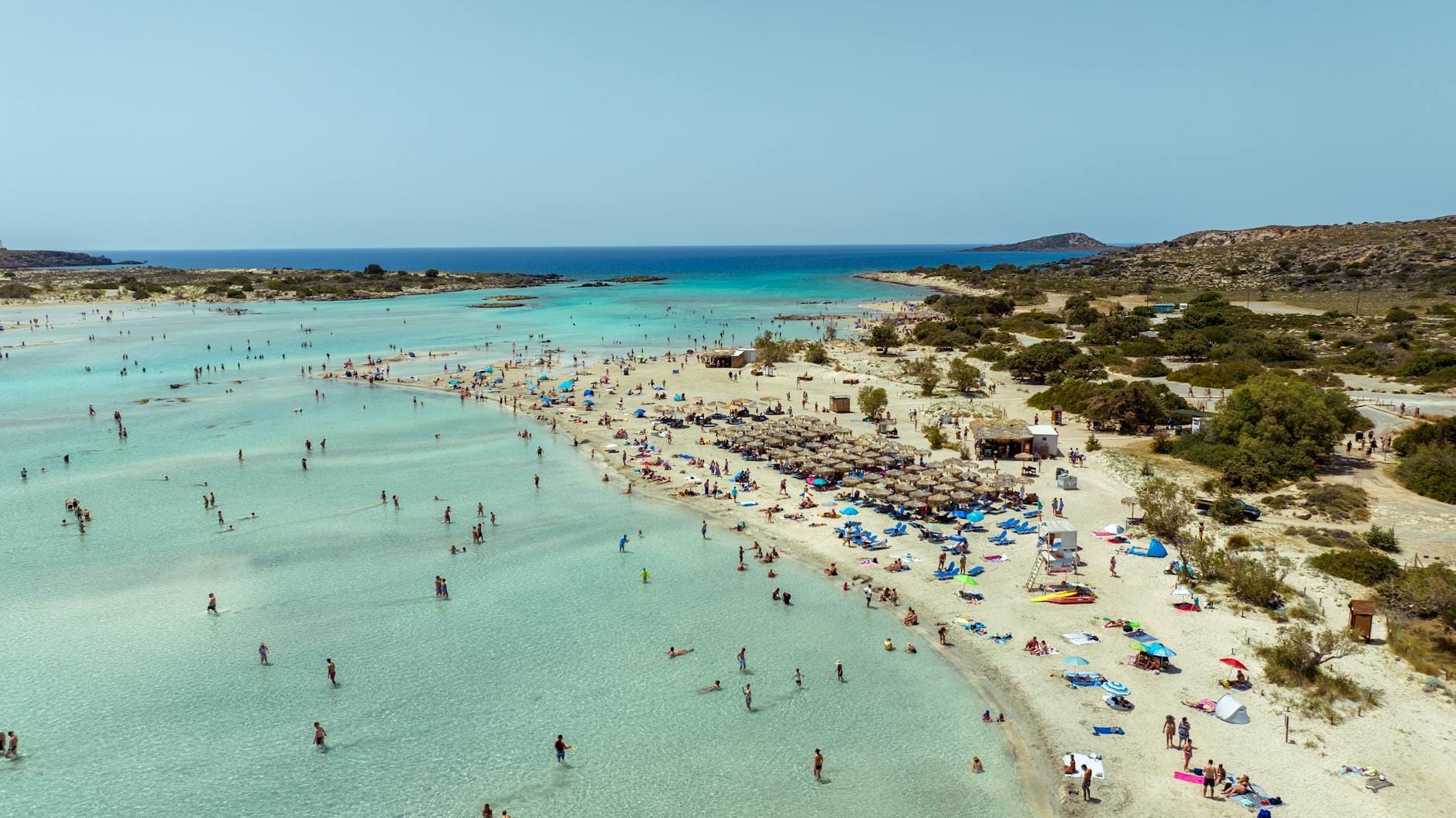
Consistently ranked among Europe's best beaches, Elafonissi earns it: shallow turquoise water, sand tinged pink by crushed shells, and a small island you can reach on foot. Arrive before 9am in July and August. About 75km from Chania, 1.5-2 hours by car.
Explore1. Wade to a Pink-Sand Island at Elafonissi
Consistently ranked among Europe's best beaches, Elafonissi earns it: shallow turquoise water, sand tinged pink by crushed shells, and a small island you can reach on foot. Arrive before 9am in July and August. About 75km from Chania, 1.5-2 hours by car.
Explore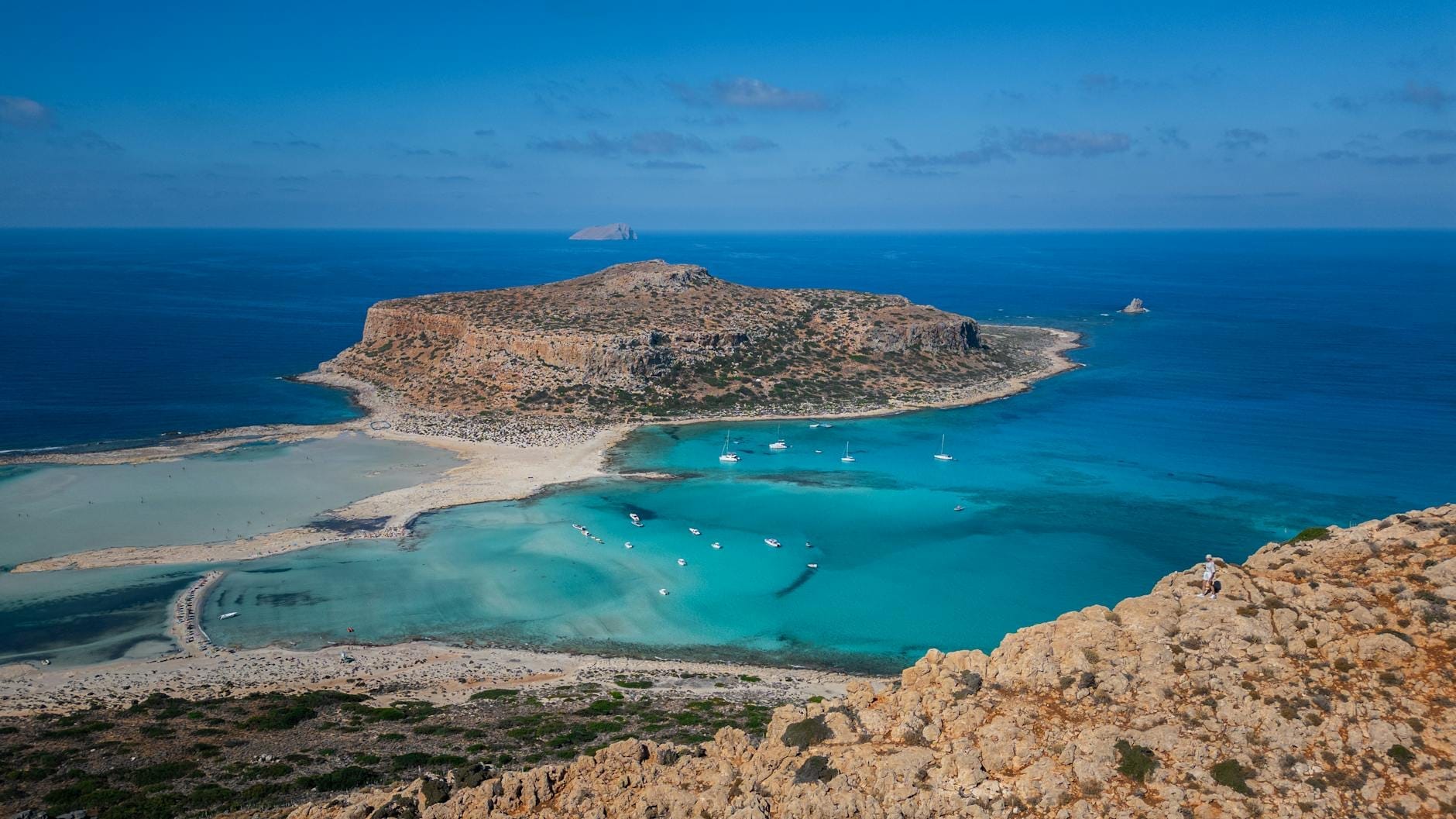
2. Reach Crete's Most Photographed Lagoon at Balos
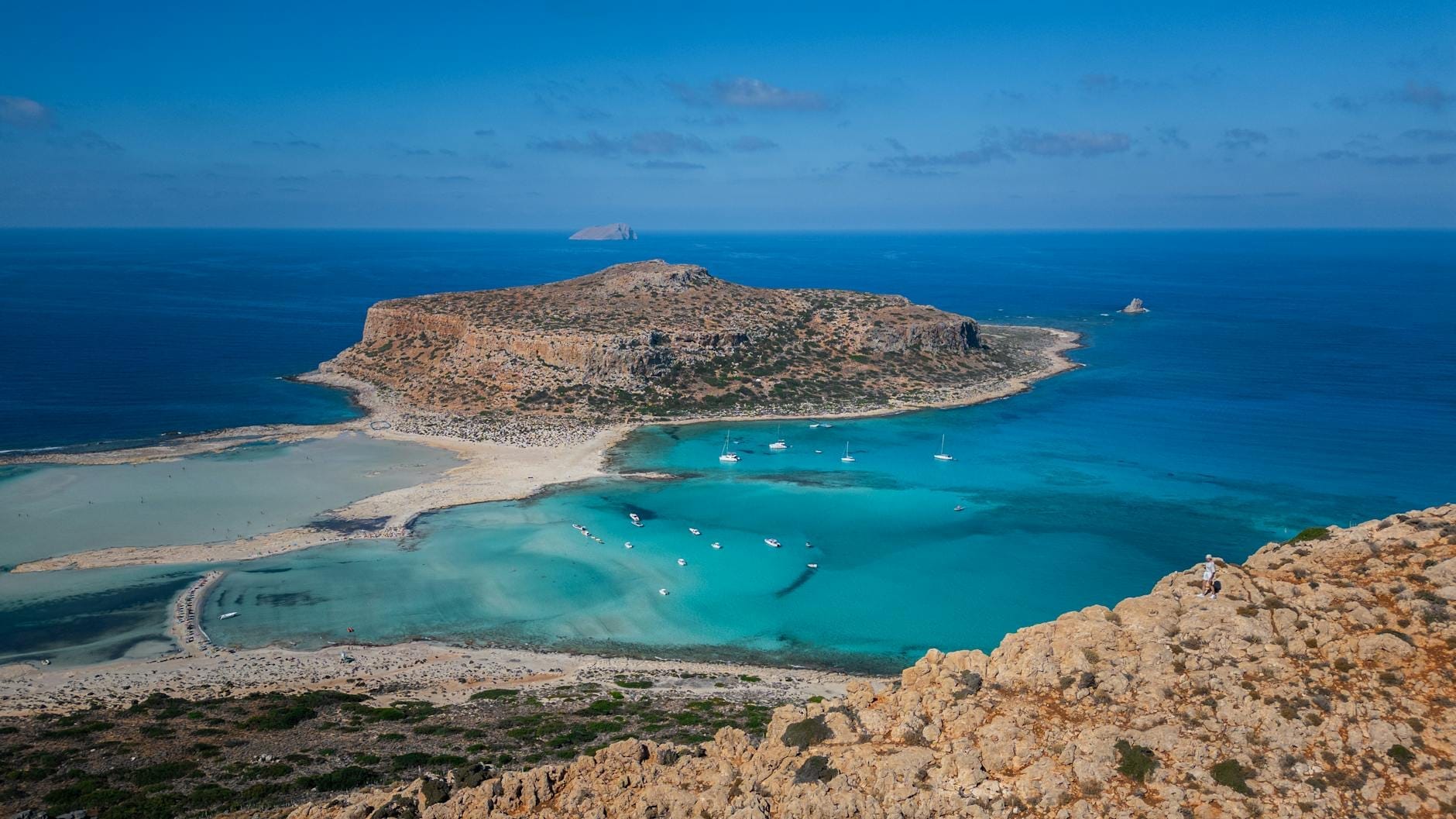
Balos is the image you see on every Crete postcard: a tidal lagoon of milky-blue water enclosed by white sand and framed by Gramvousa headland. Access is by boat from Kissamos (easiest) or a steep 45-minute hike down. Crowds peak midday; boats return by late afternoon.
Explore2. Reach Crete's Most Photographed Lagoon at Balos
Balos is the image you see on every Crete postcard: a tidal lagoon of milky-blue water enclosed by white sand and framed by Gramvousa headland. Access is by boat from Kissamos (easiest) or a steep 45-minute hike down. Crowds peak midday; boats return by late afternoon.
Explore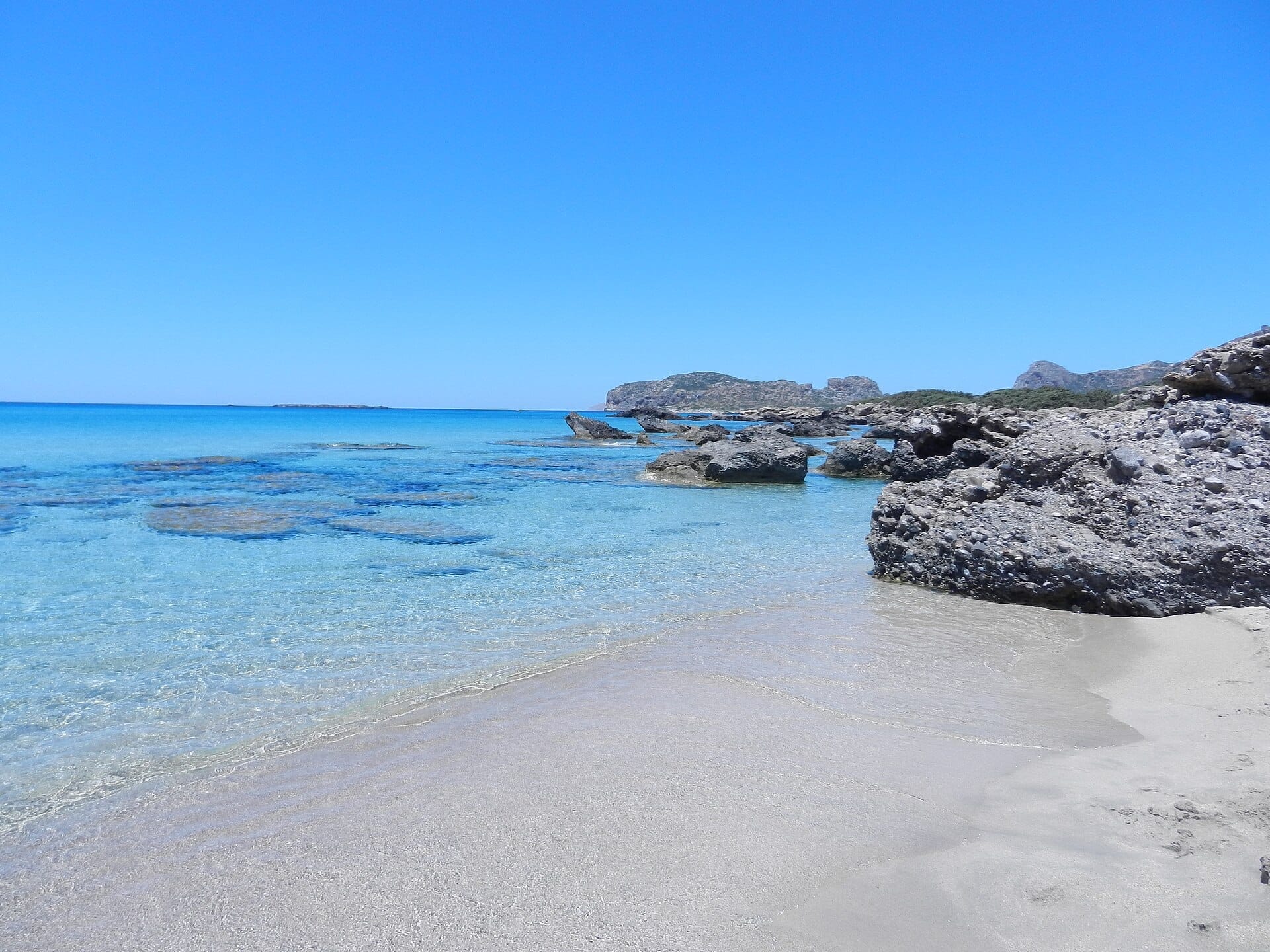
3. Watch Crete's Best Sunsets from Falassarna
Falassarna faces due west, making it the island's premier sunset beach. The sand is wide, fine, and golden, the water stays shallow for a long way out, and it gets noticeably fewer visitors than Elafonissi. Ruins of a Minoan harbor sit nearby. West winds can bring waves.
Explore3. Watch Crete's Best Sunsets from Falassarna
Falassarna faces due west, making it the island's premier sunset beach. The sand is wide, fine, and golden, the water stays shallow for a long way out, and it gets noticeably fewer visitors than Elafonissi. Ruins of a Minoan harbor sit nearby. West winds can bring waves.
Explore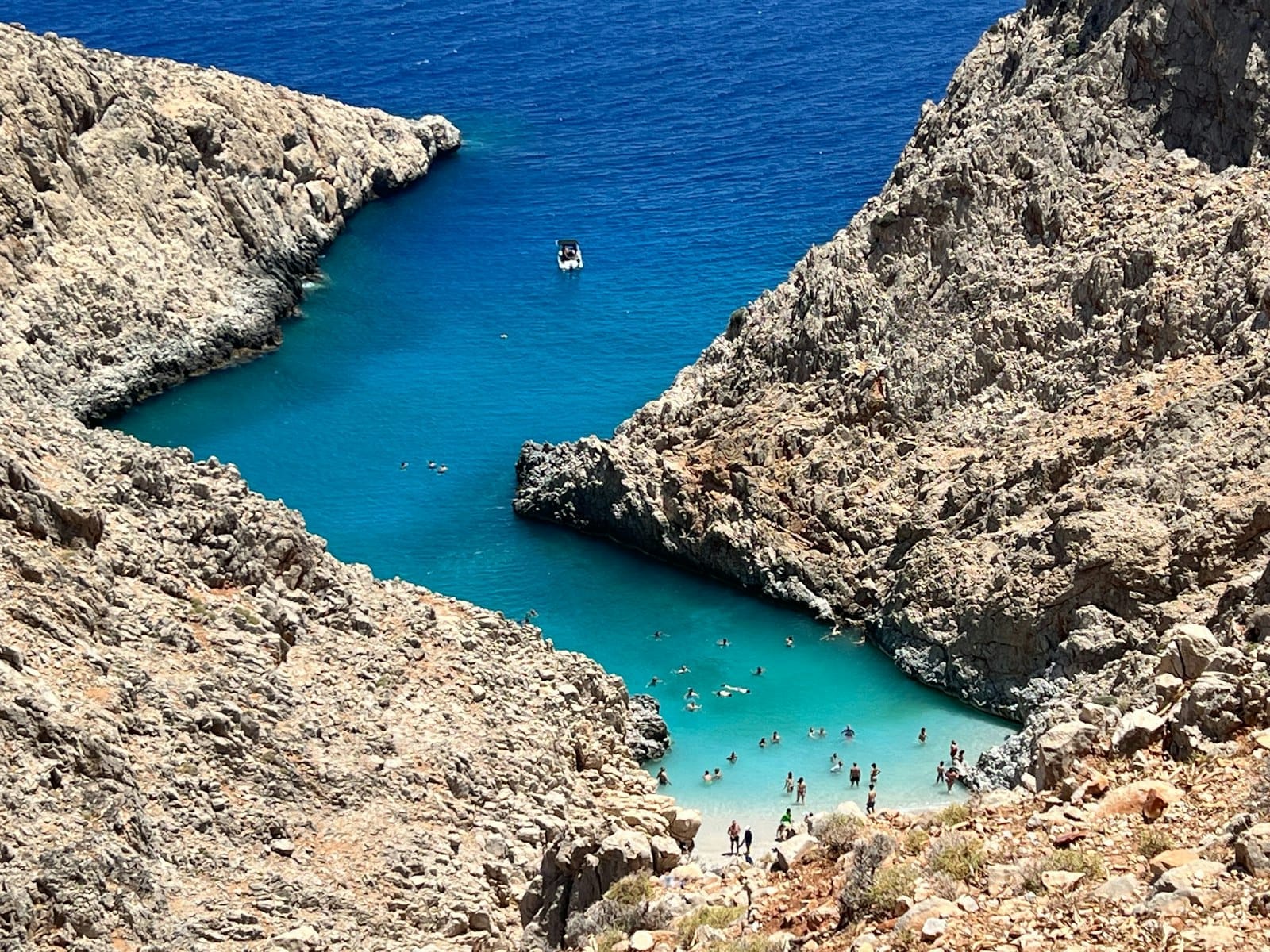
4. Swim in a Vivid Turquoise Cove at Seitan Limani
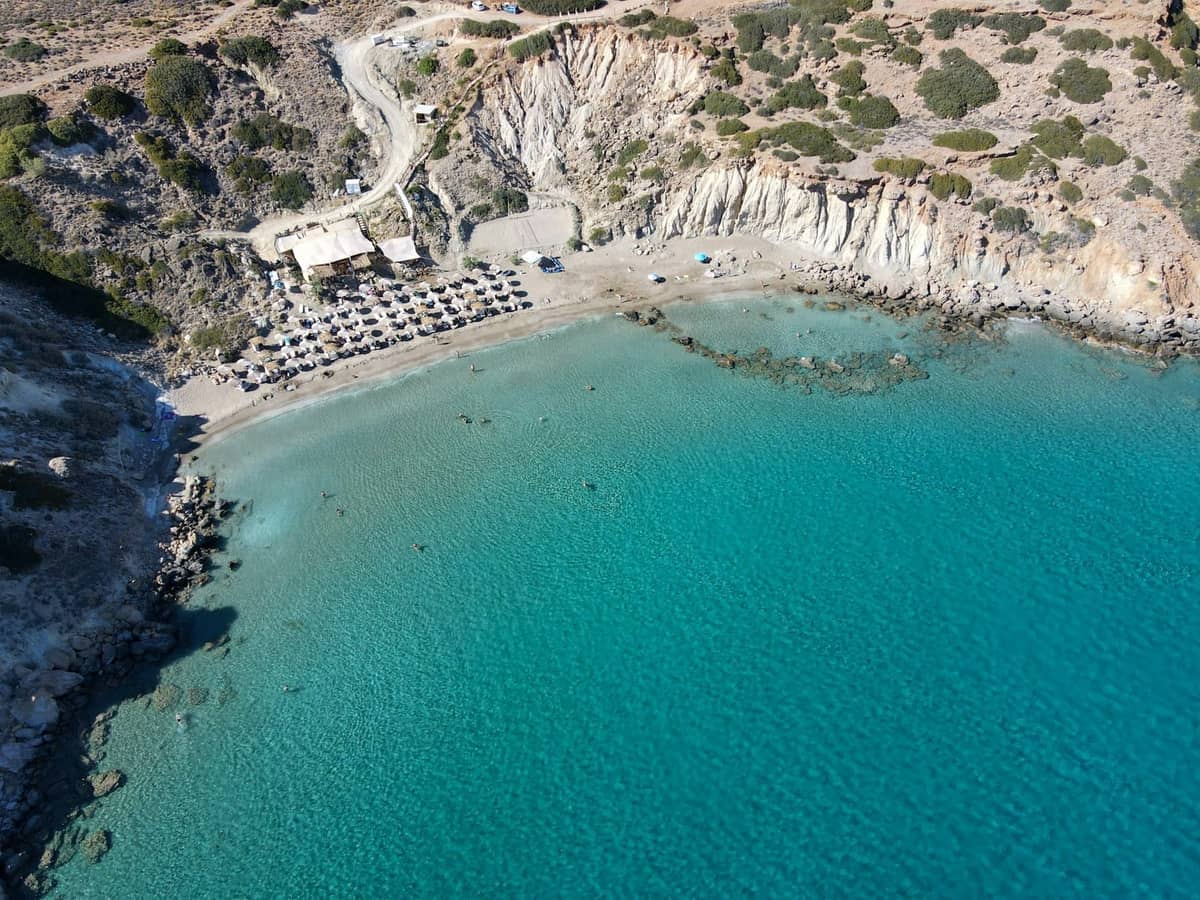
Seitan Limani is a narrow crack in the Akrotiri Peninsula cliffs that opens onto a cove of almost unreal turquoise water. It's only 15km from Chania but requires a steep, rocky scramble to reach. No facilities, no sunbeds: bring water and good footwear.
Explore4. Swim in a Vivid Turquoise Cove at Seitan Limani
Seitan Limani is a narrow crack in the Akrotiri Peninsula cliffs that opens onto a cove of almost unreal turquoise water. It's only 15km from Chania but requires a steep, rocky scramble to reach. No facilities, no sunbeds: bring water and good footwear.
Explore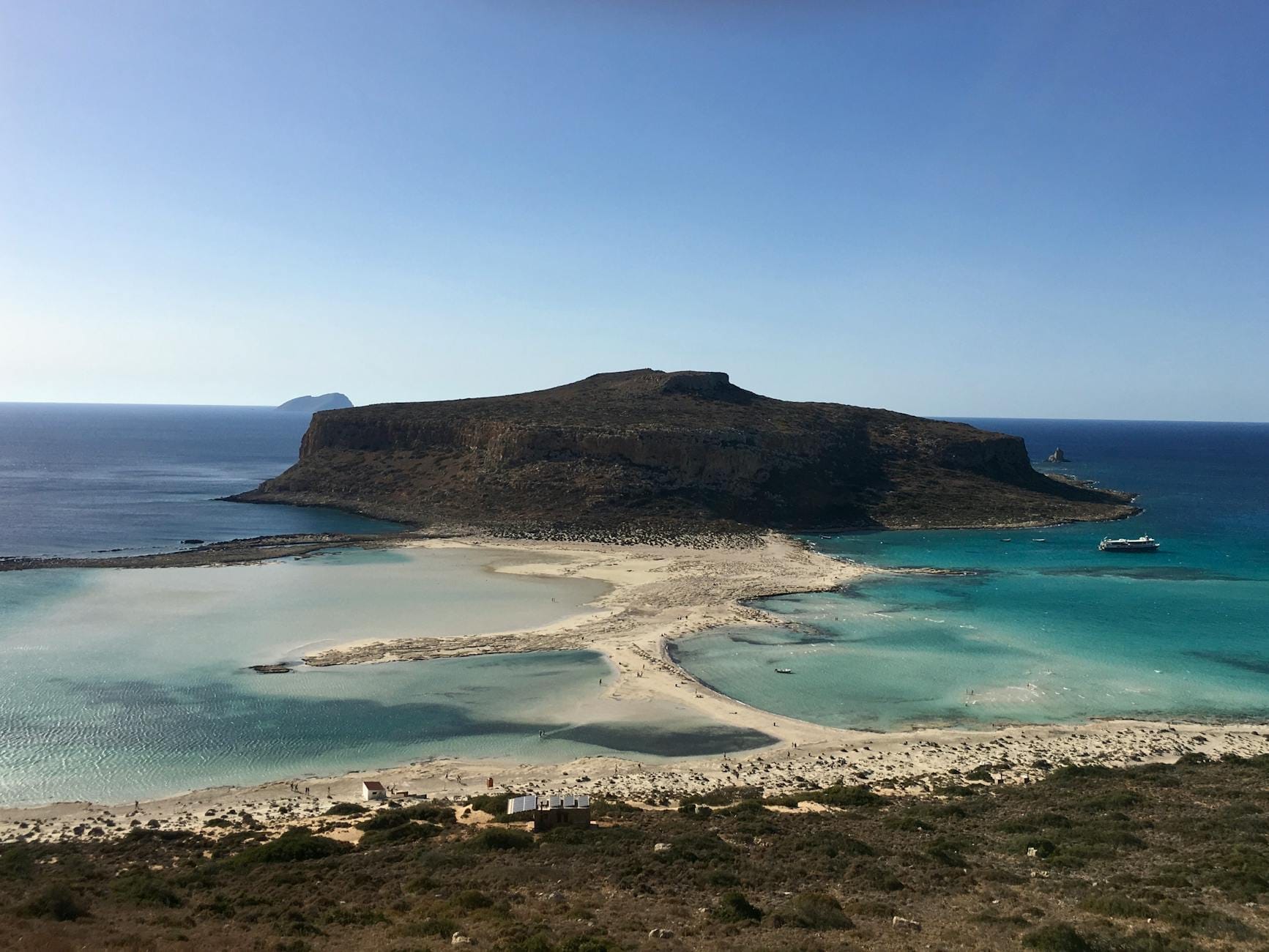
5. Combine a Venetian Fortress with a Beach Day at Gramvousa
Most Balos boat trips stop at Gramvousa Island first, where you can climb to a well-preserved Venetian fortress with sweeping views before dropping into the clear water below. It adds a historical dimension to what would otherwise be a pure beach day.
Explore5. Combine a Venetian Fortress with a Beach Day at Gramvousa
Most Balos boat trips stop at Gramvousa Island first, where you can climb to a well-preserved Venetian fortress with sweeping views before dropping into the clear water below. It adds a historical dimension to what would otherwise be a pure beach day.
ExploreSouth Crete: Wild Shores of the Libyan Sea
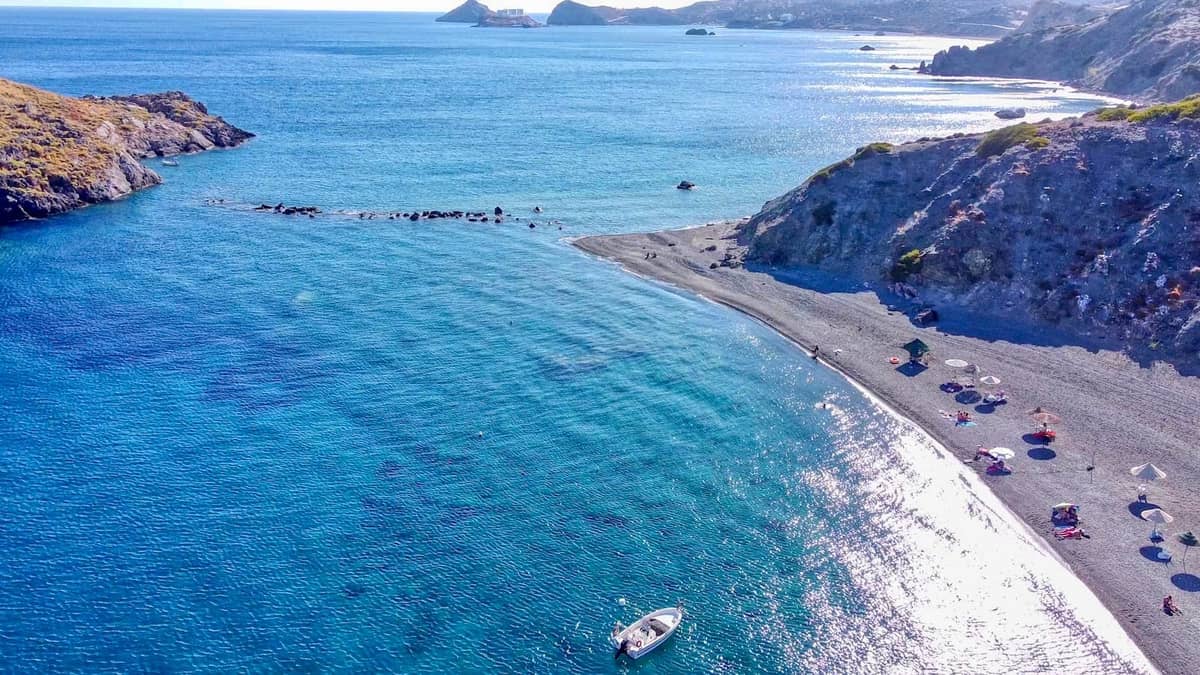
The south coast is where Crete gets interesting for travelers willing to put in a little effort. Roads are slower and winding, facilities are simpler, but the beaches are extraordinary and rarely as crowded as the north. The Crete road trip guide covers the south coast route in detail, including the best stops between Plakias and Matala.
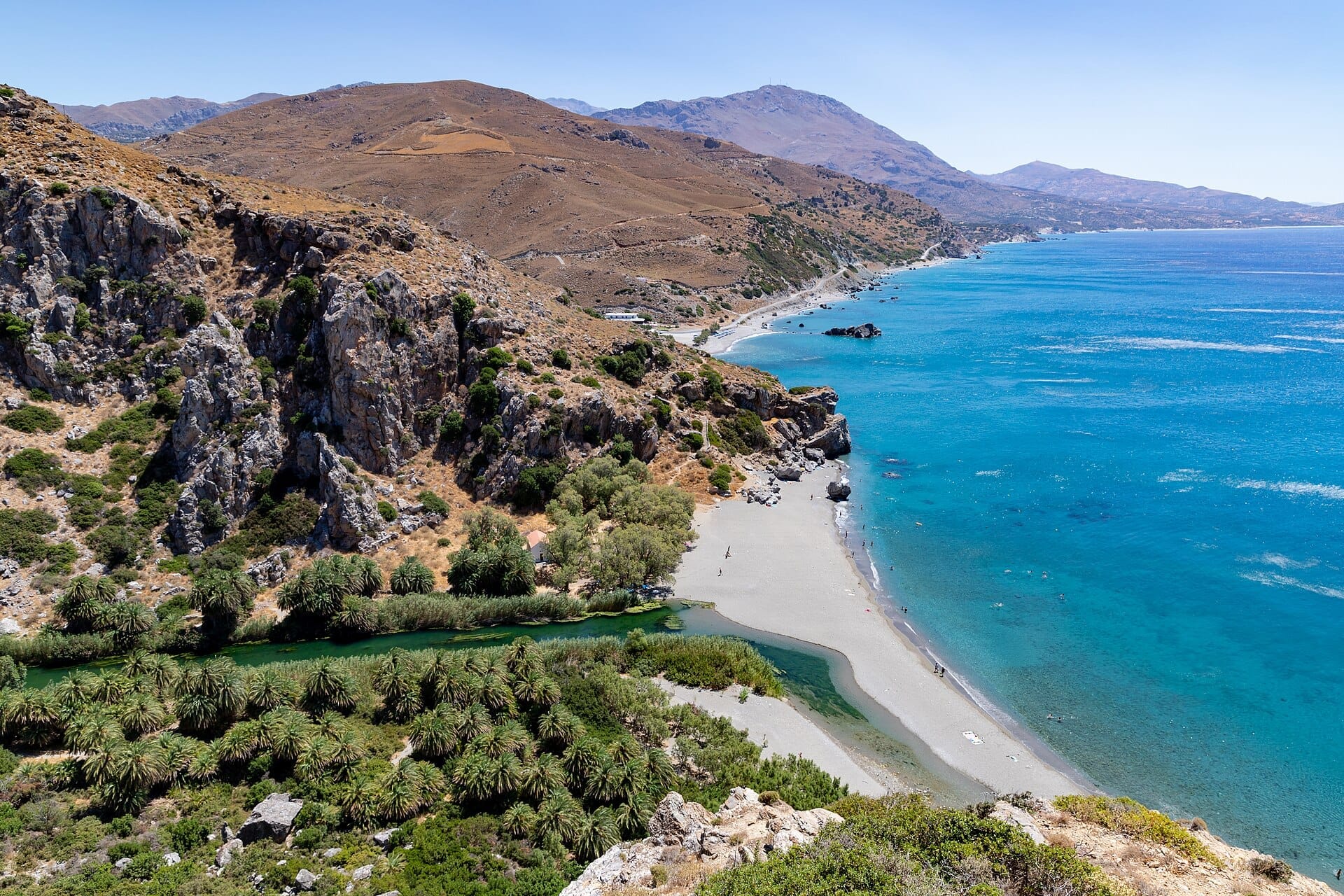
6. Find Tropical Scenery at the Palms and River of Preveli
Preveli is Crete's most exotic beach: a freshwater river runs through a gorge lined with Cretan date palms before meeting the Libyan Sea. You can swim in the river, the sea, or both. Access is either a short walk down from a car park or a longer hike through Kourtaliotiko Gorge.
Explore6. Find Tropical Scenery at the Palms and River of Preveli
Preveli is Crete's most exotic beach: a freshwater river runs through a gorge lined with Cretan date palms before meeting the Libyan Sea. You can swim in the river, the sea, or both. Access is either a short walk down from a car park or a longer hike through Kourtaliotiko Gorge.
Explore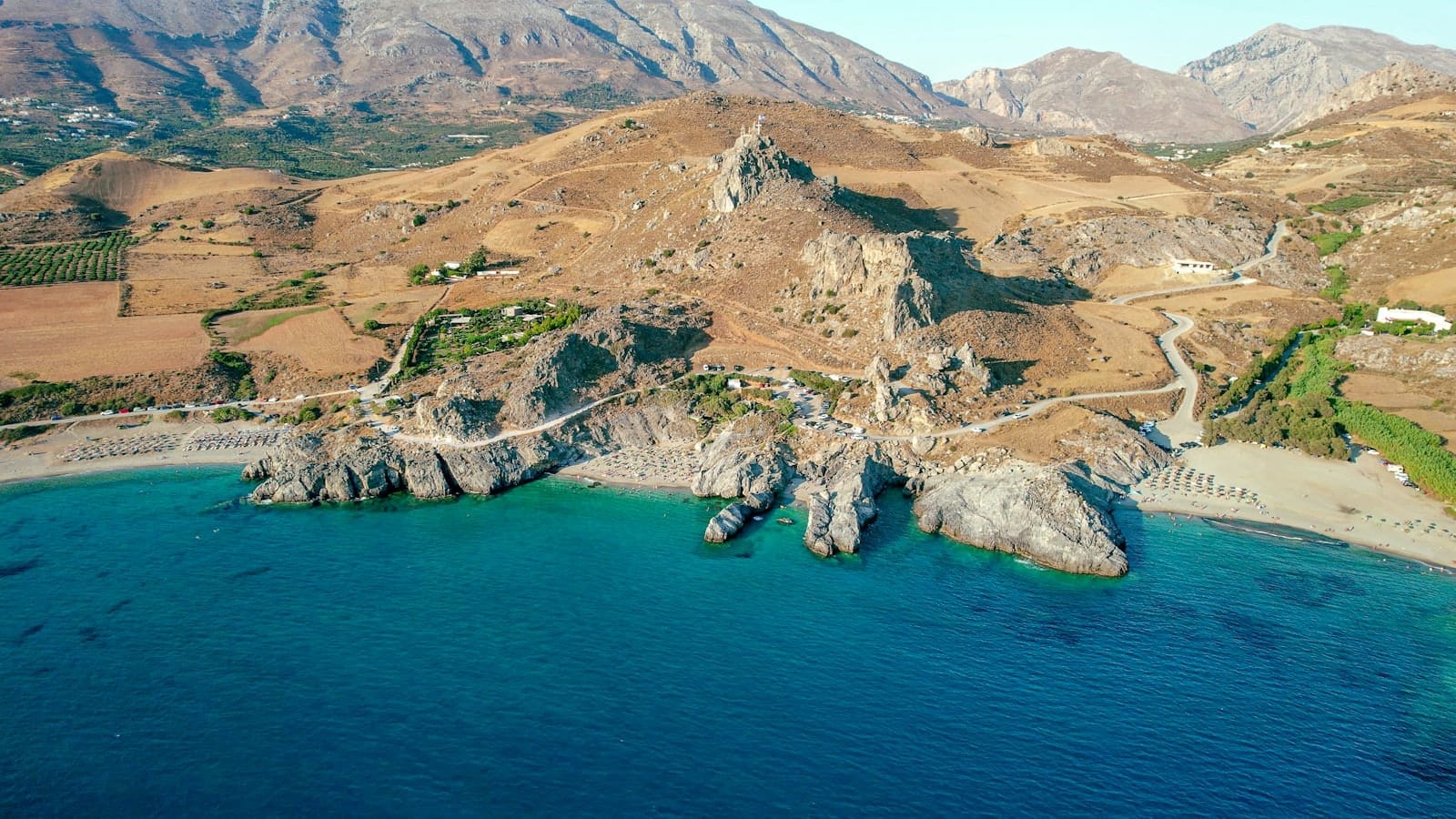
7. Settle in for a Slow Beach Day at Plakias
Plakias is a long sweep of pebble-and-sand backed by the Cretan mountains, with shallow entry and very little tourist infrastructure. It's the beach for people who want to read a book and swim, not pay for sunbeds or queue for parking. The village has good tavernas.
Explore7. Settle in for a Slow Beach Day at Plakias
Plakias is a long sweep of pebble-and-sand backed by the Cretan mountains, with shallow entry and very little tourist infrastructure. It's the beach for people who want to read a book and swim, not pay for sunbeds or queue for parking. The village has good tavernas.
Explore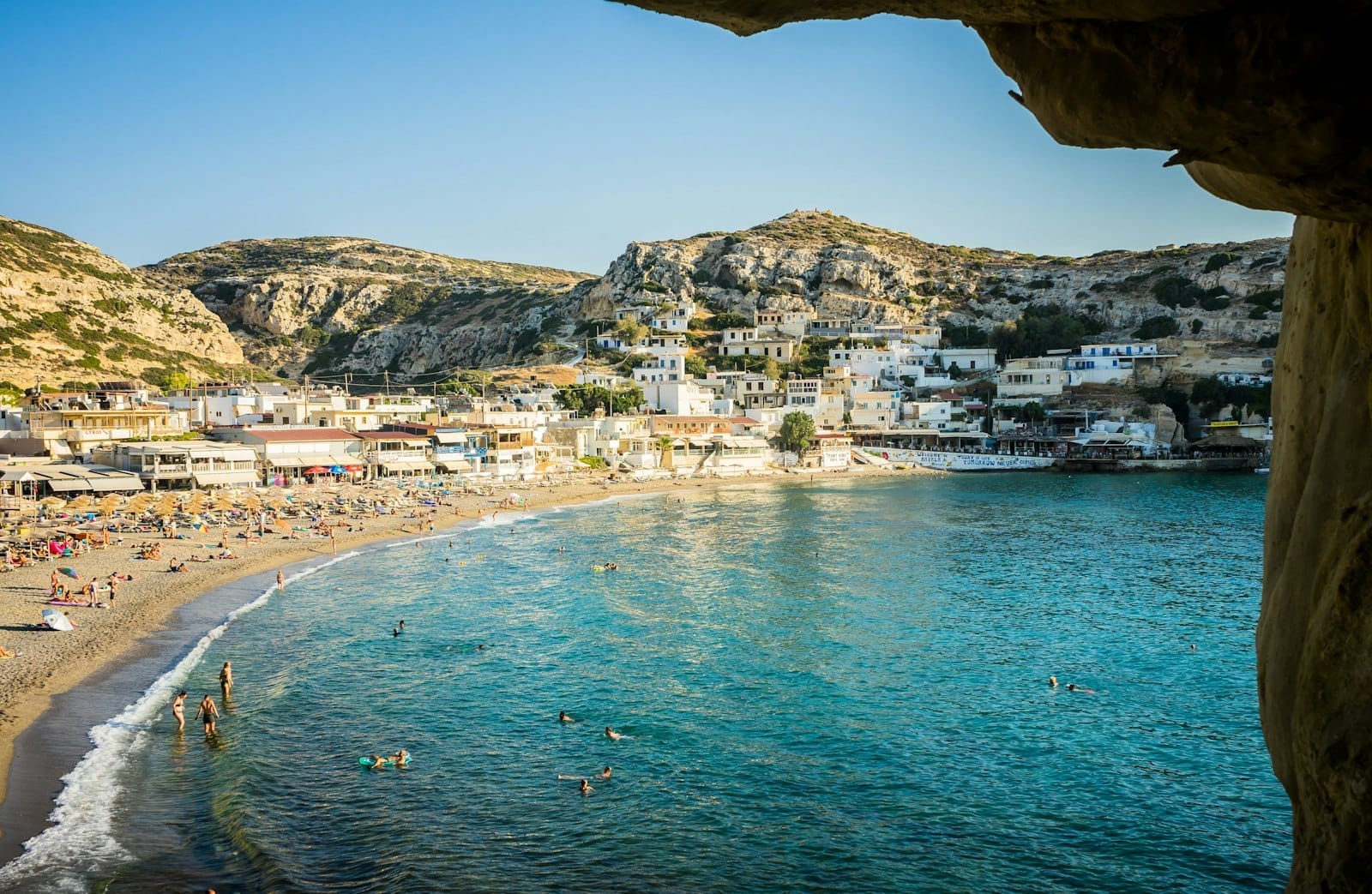
8. Swim Beneath the Caves at Matala's Legendary Beach
Matala delivers golden sand, warm water, and dramatic sandstone cliffs riddled with ancient cave dwellings. The caves made it a hippie haven in the 1960s and 1970s. Today the bay is relaxed and scenic, with a small village for lunch and one of the best sunsets on the south coast.
Explore8. Swim Beneath the Caves at Matala's Legendary Beach
Matala delivers golden sand, warm water, and dramatic sandstone cliffs riddled with ancient cave dwellings. The caves made it a hippie haven in the 1960s and 1970s. Today the bay is relaxed and scenic, with a small village for lunch and one of the best sunsets on the south coast.
Explore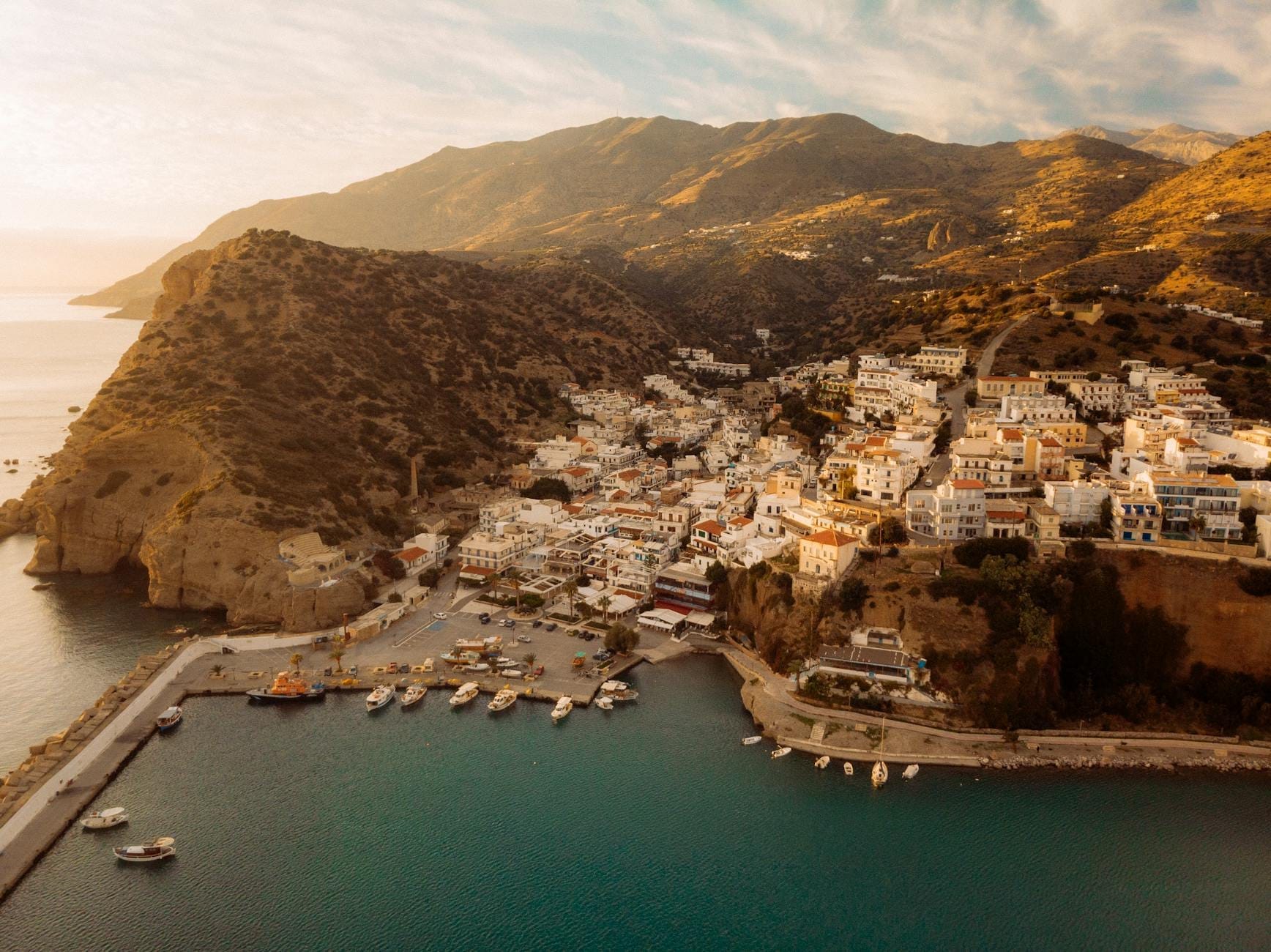
9. Explore South Coast Coves by Boat from Agia Galini
Agia Galini itself has a modest pebble beach, but its real value is as a launch point: local boats run to several excellent beaches along the coast that have no road access. The harbor village is charming and far less visited than the famous spots to the west.
Explore9. Explore South Coast Coves by Boat from Agia Galini
Agia Galini itself has a modest pebble beach, but its real value is as a launch point: local boats run to several excellent beaches along the coast that have no road access. The harbor village is charming and far less visited than the famous spots to the west.
ExploreRethymno Region: The Urban Beach and the Hidden Coast
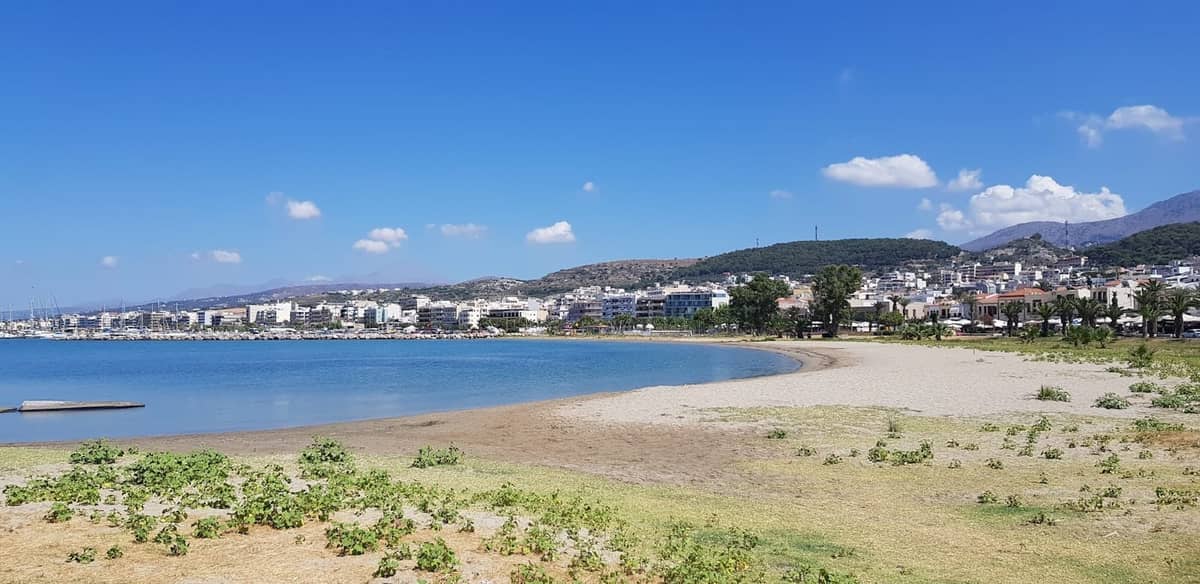
Rethymno sits between the mass-tourism strip to its east and the wilder south coast to its south. Its own beach is one of the most accessible on the island, and it's a good base for day trips in multiple directions. Browse the where to stay in Crete guide if you're weighing up Rethymno against the other options.
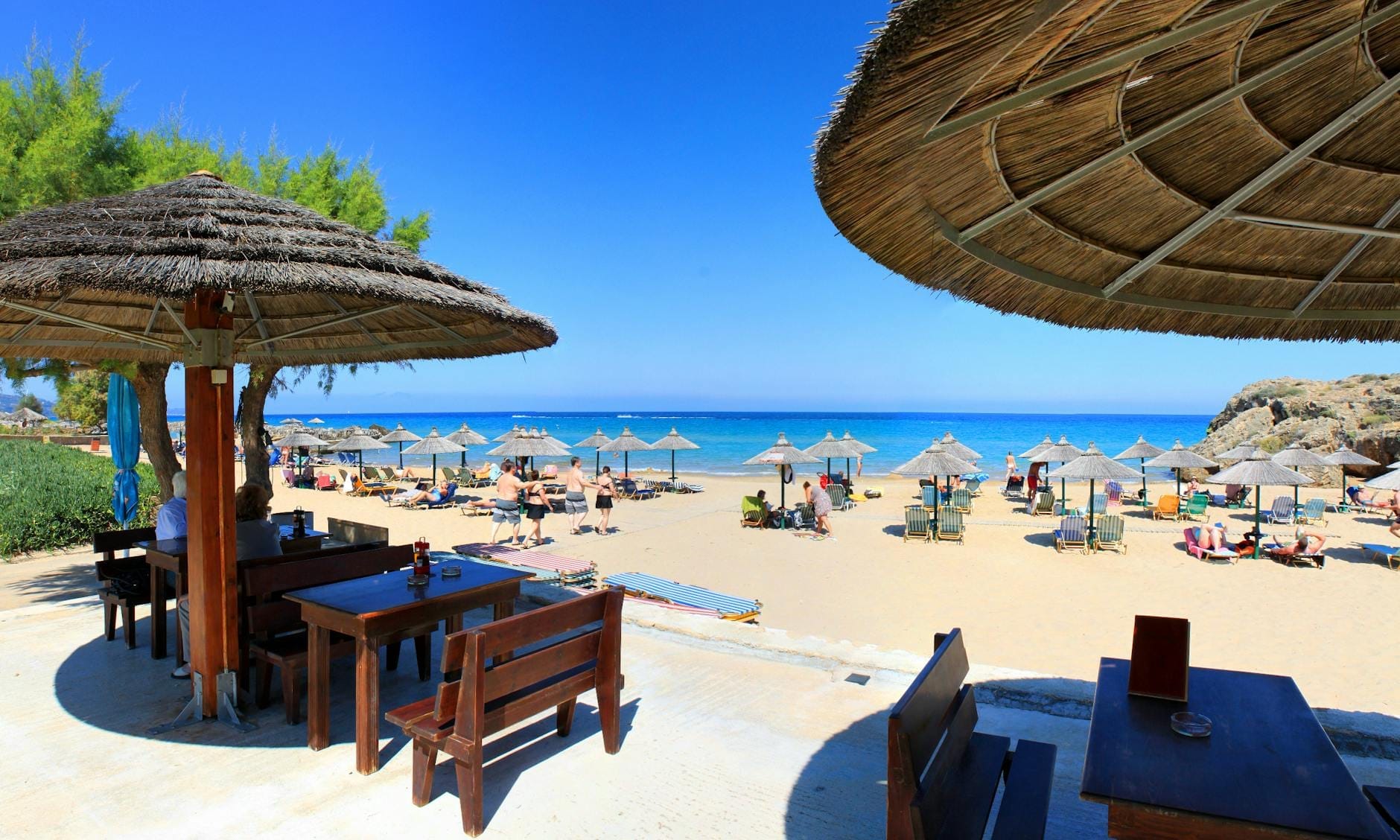
10. Swim in the Shadow of a Venetian Fortress at Rethymno Beach
Rethymno's beach stretches east from the old town for several kilometers, with calm, shallow water and the massive Venetian Fortezza as an unlikely backdrop. It's one of the few urban beaches in Crete where you can walk from your hotel, swim, and walk back for dinner in the old town.
Explore10. Swim in the Shadow of a Venetian Fortress at Rethymno Beach
Rethymno's beach stretches east from the old town for several kilometers, with calm, shallow water and the massive Venetian Fortezza as an unlikely backdrop. It's one of the few urban beaches in Crete where you can walk from your hotel, swim, and walk back for dinner in the old town.
ExploreEast Crete: Unique Landscapes and Quieter Shores
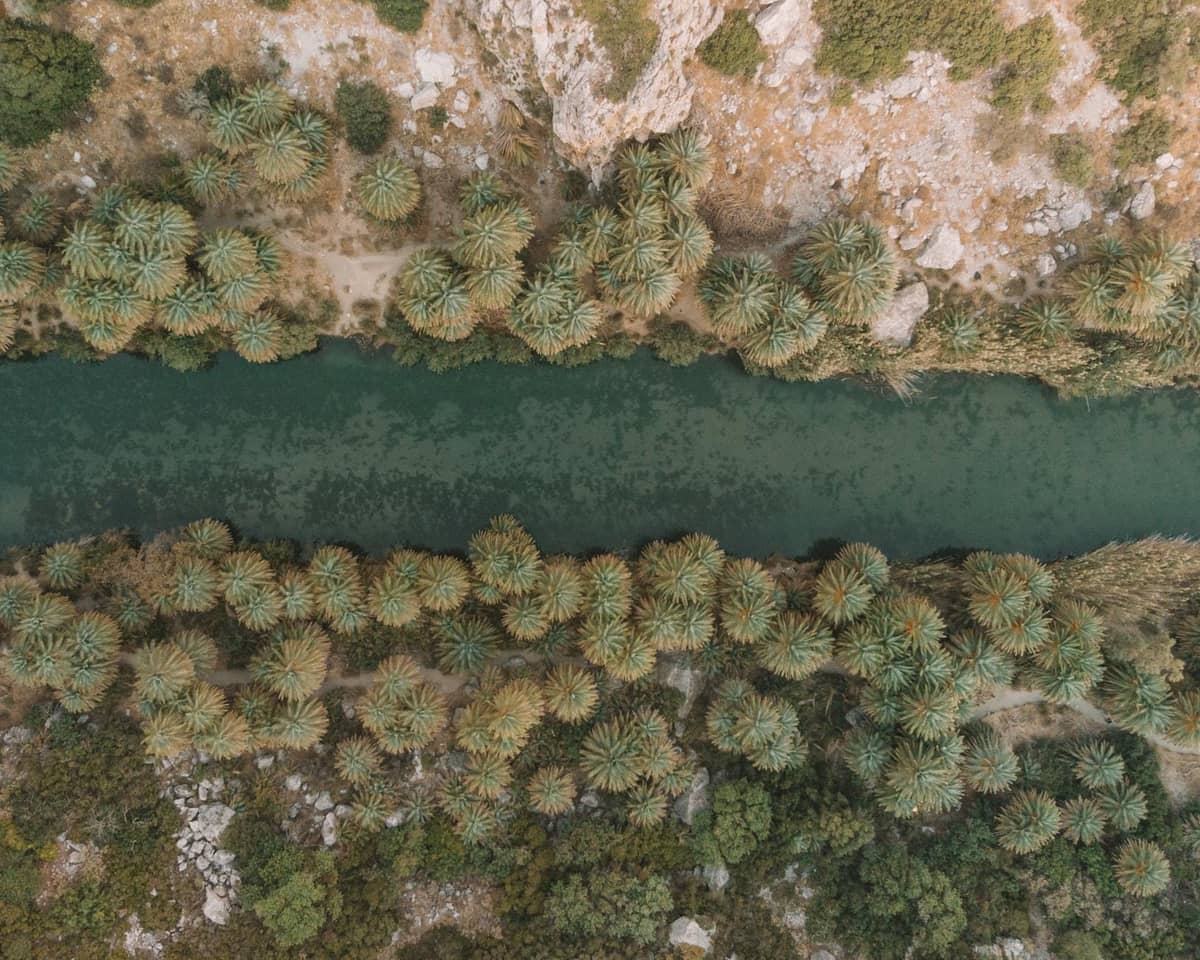
Eastern Crete takes longer to reach, and most visitors never make it. That's the point. The region around Agios Nikolaos and beyond to Sitia and Vai offers a noticeably different experience: fewer crowds, more authentic villages, and landscapes that don't look like anywhere else in the Mediterranean. The beaches here reward the extra driving time many times over.
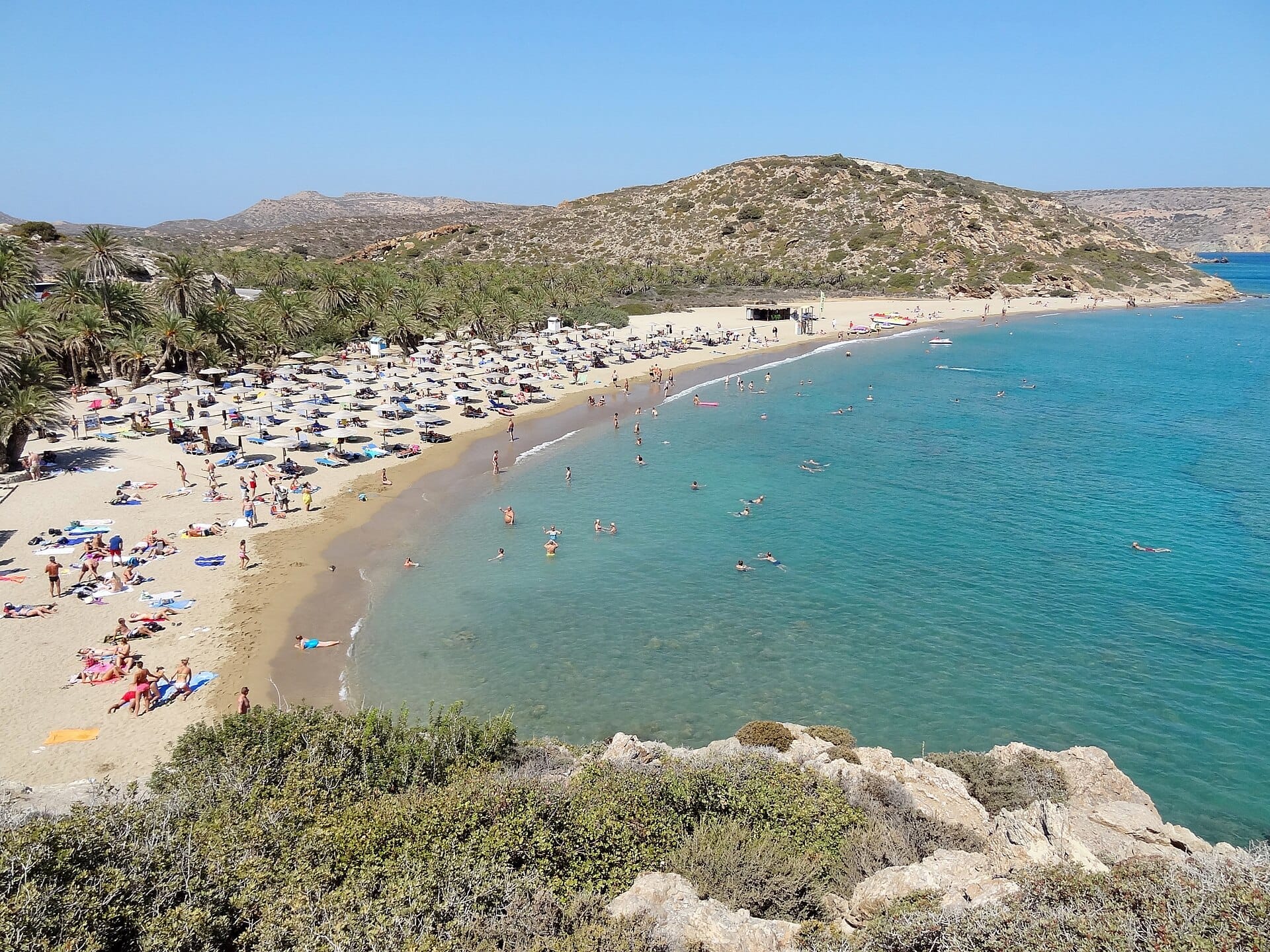
11. Swim Beside Europe's Largest Natural Palm Forest at Vai
Vai is genuinely unlike any other beach in Europe: thousands of Cretan date palms grow right to the sand's edge, framing a turquoise bay in the island's far east. It gets busy midday in peak season, but mornings are quiet. Pair it with a visit to the Minoan palace at Zakros nearby.
Explore11. Swim Beside Europe's Largest Natural Palm Forest at Vai
Vai is genuinely unlike any other beach in Europe: thousands of Cretan date palms grow right to the sand's edge, framing a turquoise bay in the island's far east. It gets busy midday in peak season, but mornings are quiet. Pair it with a visit to the Minoan palace at Zakros nearby.
Explore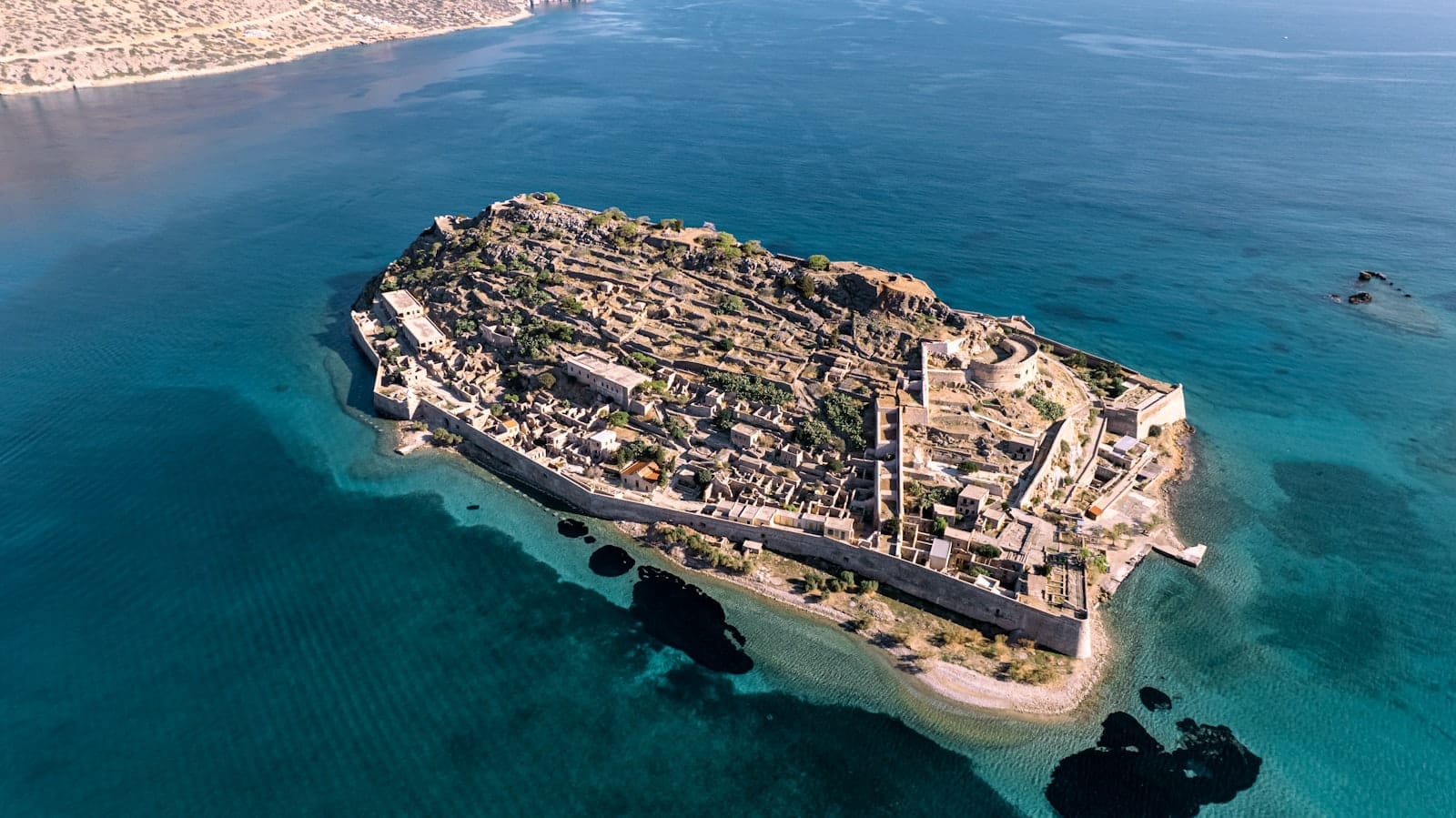
12. Take a Boat to Spinalonga and Swim in the Gulf of Elounda
The boat trips to Spinalonga from Elounda or Agios Nikolaos all pass through some of the calmest, clearest water in Crete. Many visitors combine the island visit with a swim stop in the gulf. The water here is sheltered and exceptionally clear, making it one of the best swimming areas in the east.
Explore12. Take a Boat to Spinalonga and Swim in the Gulf of Elounda
The boat trips to Spinalonga from Elounda or Agios Nikolaos all pass through some of the calmest, clearest water in Crete. Many visitors combine the island visit with a swim stop in the gulf. The water here is sheltered and exceptionally clear, making it one of the best swimming areas in the east.
ExploreSouth Crete's Hidden Coastline: Caves, Cliffs, and Local Villages
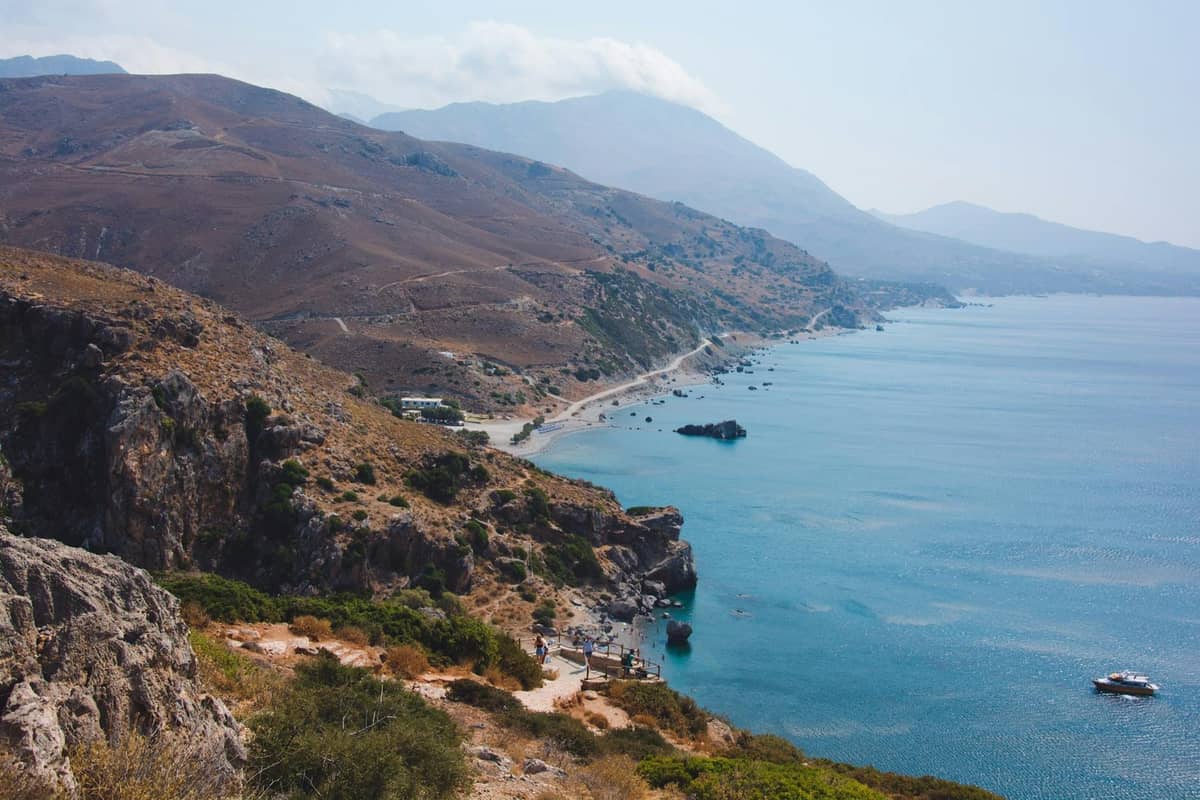
Some of Crete's most rewarding coastal spots are not beaches in the traditional sense: they're cliff-top viewpoints, coves below monasteries, and harbors with boats that take you somewhere better. These spots reward independent travelers who are willing to wander.
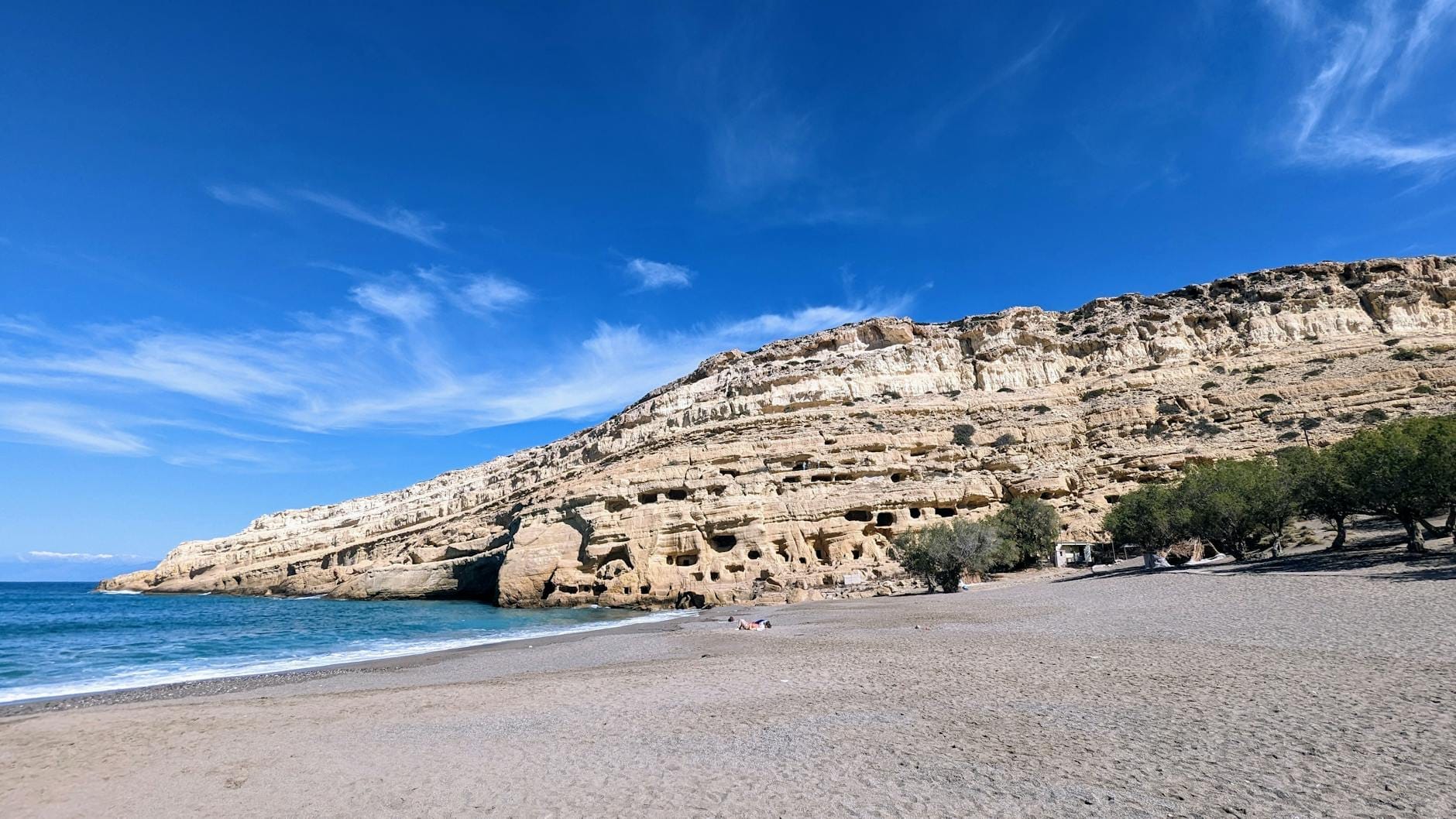
13. Climb into the Ancient Caves Above Matala Beach
The caves carved into the sandstone cliffs above Matala are part beach-day bonus, part archaeology, part counterculture history. Once ancient Roman tombs, they became famous as hippie dwellings in the 1970s. The view over the bay from the upper caves is one of the best on the south coast.
Explore13. Climb into the Ancient Caves Above Matala Beach
The caves carved into the sandstone cliffs above Matala are part beach-day bonus, part archaeology, part counterculture history. Once ancient Roman tombs, they became famous as hippie dwellings in the 1970s. The view over the bay from the upper caves is one of the best on the south coast.
Explore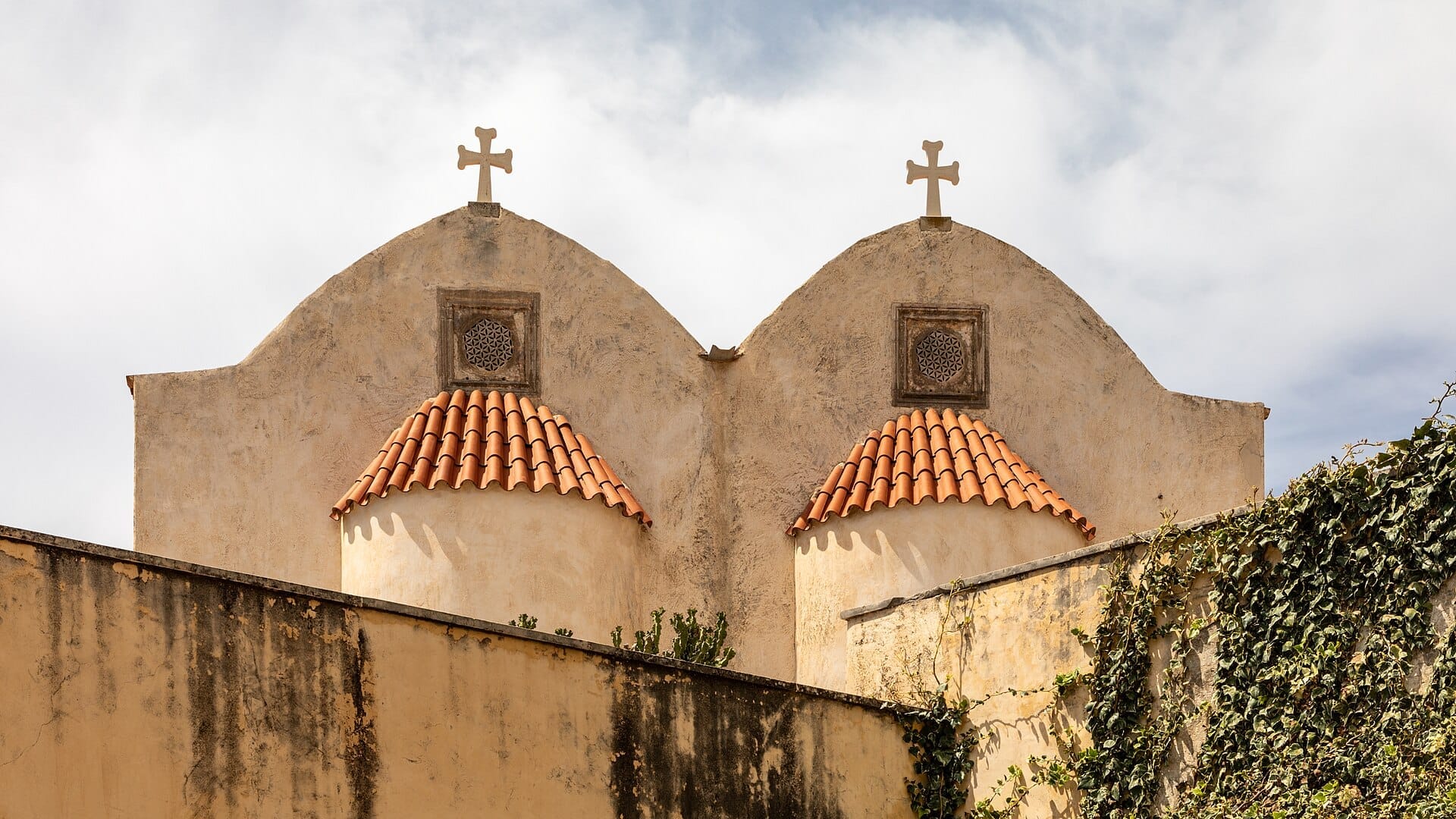
14. Stop at Preveli Monastery for Clifftop Views Before the Beach
Moni Preveli sits on a cliff above the Libyan Sea, just a short drive from Preveli Beach. Most travelers heading to the beach pass it without stopping, which is a mistake. The views down the coast are exceptional, the monastery courtyard is peaceful, and the WWII history is genuinely moving.
Explore14. Stop at Preveli Monastery for Clifftop Views Before the Beach
Moni Preveli sits on a cliff above the Libyan Sea, just a short drive from Preveli Beach. Most travelers heading to the beach pass it without stopping, which is a mistake. The views down the coast are exceptional, the monastery courtyard is peaceful, and the WWII history is genuinely moving.
Explore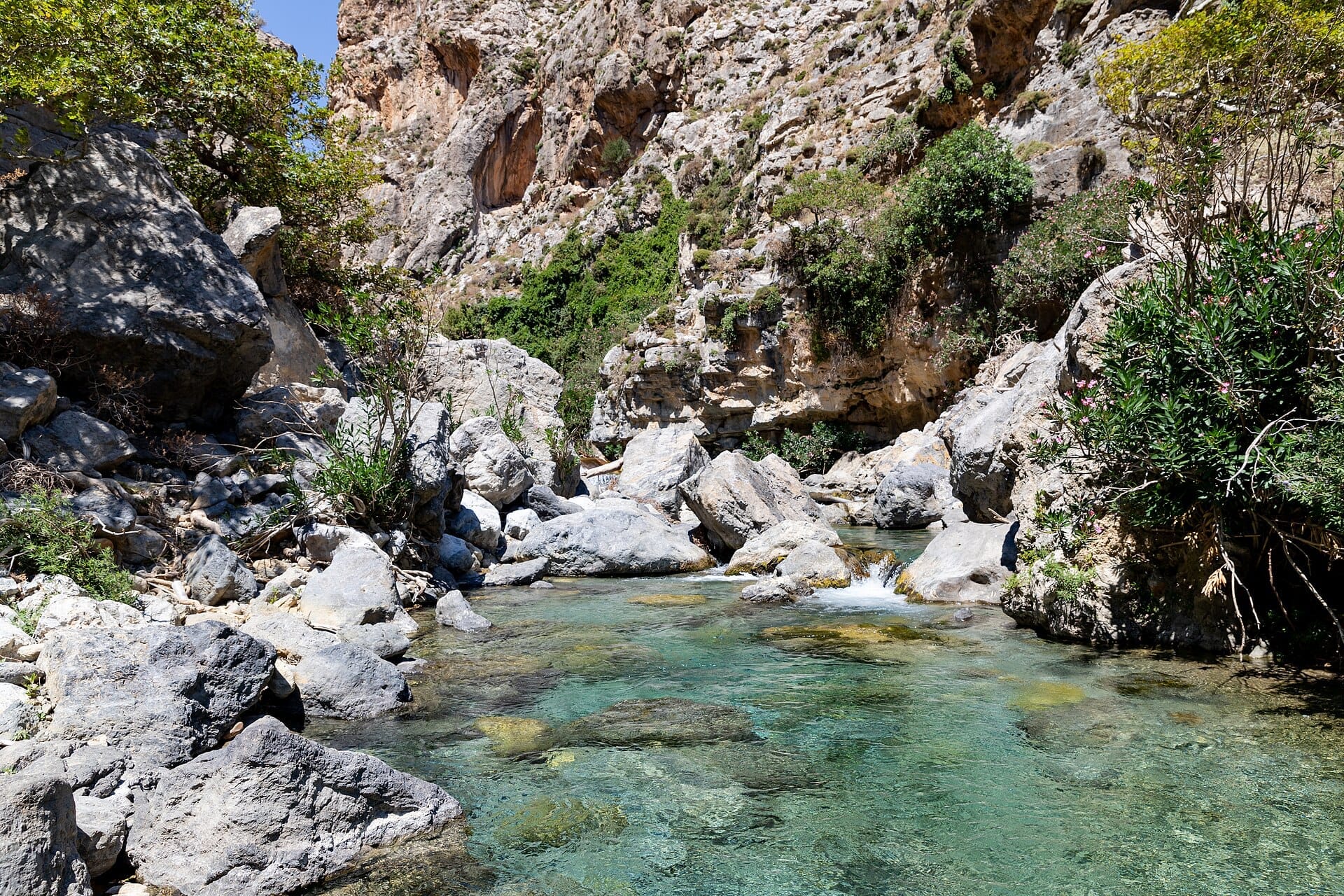
15. Hike Through Kourtaliotiko Gorge on the Way to Preveli Beach
The road to Preveli Beach passes the head of Kourtaliotiko Gorge, and a short trail drops into the canyon where springs, rock pools, and sheer limestone walls create a dramatic break from the coast. It takes 30-60 minutes to explore and adds real depth to a south coast beach day.
Explore15. Hike Through Kourtaliotiko Gorge on the Way to Preveli Beach
The road to Preveli Beach passes the head of Kourtaliotiko Gorge, and a short trail drops into the canyon where springs, rock pools, and sheer limestone walls create a dramatic break from the coast. It takes 30-60 minutes to explore and adds real depth to a south coast beach day.
Explore✨ Pro tip
For the south coast beaches (Preveli, Matala, Plakias), base yourself in Rethymno or Plakias village rather than driving the full distance from Heraklion or Chania. The mountain roads add significant time both ways.
FAQ
What is the best beach in Crete overall?
Elafonissi and Balos are the two most famous and consistently ranked highest, but they get very crowded in July and August. Elafonissi is consistently ranked among Europe's best beaches. For a less crowded alternative with equal natural beauty, Falassarna or Preveli are better choices in peak season.
Do I need a car to reach the best beaches in Crete?
For most of them, yes. Elafonissi and Balos have summer bus services from Chania and organized boat trips from Kissamos respectively, but a rental car gives you much more flexibility. Rethymno Beach and the Elounda area are accessible without a car, but the west and south coast beaches are very hard to reach by public transport.
When is the best time to visit Crete's beaches?
May, June, and September offer the best combination of warm water, good weather, and manageable crowds. July and August are the hottest months and the most crowded, especially at Elafonissi and Balos. October can still be warm enough for swimming, particularly in the south and east.
Are there beaches in Crete suitable for families with young children?
Yes. Rethymno Beach and the beaches around Elounda and Agios Nikolaos have calm, shallow water ideal for children. Elafonissi's lagoon is also very shallow and safe for kids, though it gets crowded. Avoid Seitan Limani and the more remote coves if you're traveling with young children, as access involves steep, uneven paths.
Is Balos accessible by car or only by boat?
Both. You can drive to a car park above the beach and hike down on a steep, rocky path (about 45 minutes each way), or take a boat from Kissamos port. The boat is easier and more popular, but books up fast in peak season. The road to the car park is unpaved and can be challenging for low-clearance vehicles.