Spinalonga Island: Crete's Most Haunting Fortress
Spinalonga Island sits at the mouth of the Elounda Lagoon in eastern Crete, carrying four centuries of layered history: Venetian battlements, Ottoman occupation, and the last active leper colony in Europe. It draws over 300,000 visitors a year and rewards those who come prepared.
Quick Facts
- Location
- Elounda Lagoon, Lasithi Prefecture, eastern Crete
- Getting There
- Boat only — departures from Agios Nikolaos, Elounda, or Plaka village (~800 m away)
- Time Needed
- 2–3 hours on the island; factor in boat travel
- Cost
- Boat ticket + site entry fee required; verify current prices locally before visiting
- Best for
- History lovers, photographers, literary pilgrims, and anyone with a serious interest in the human past
What Spinalonga Actually Is
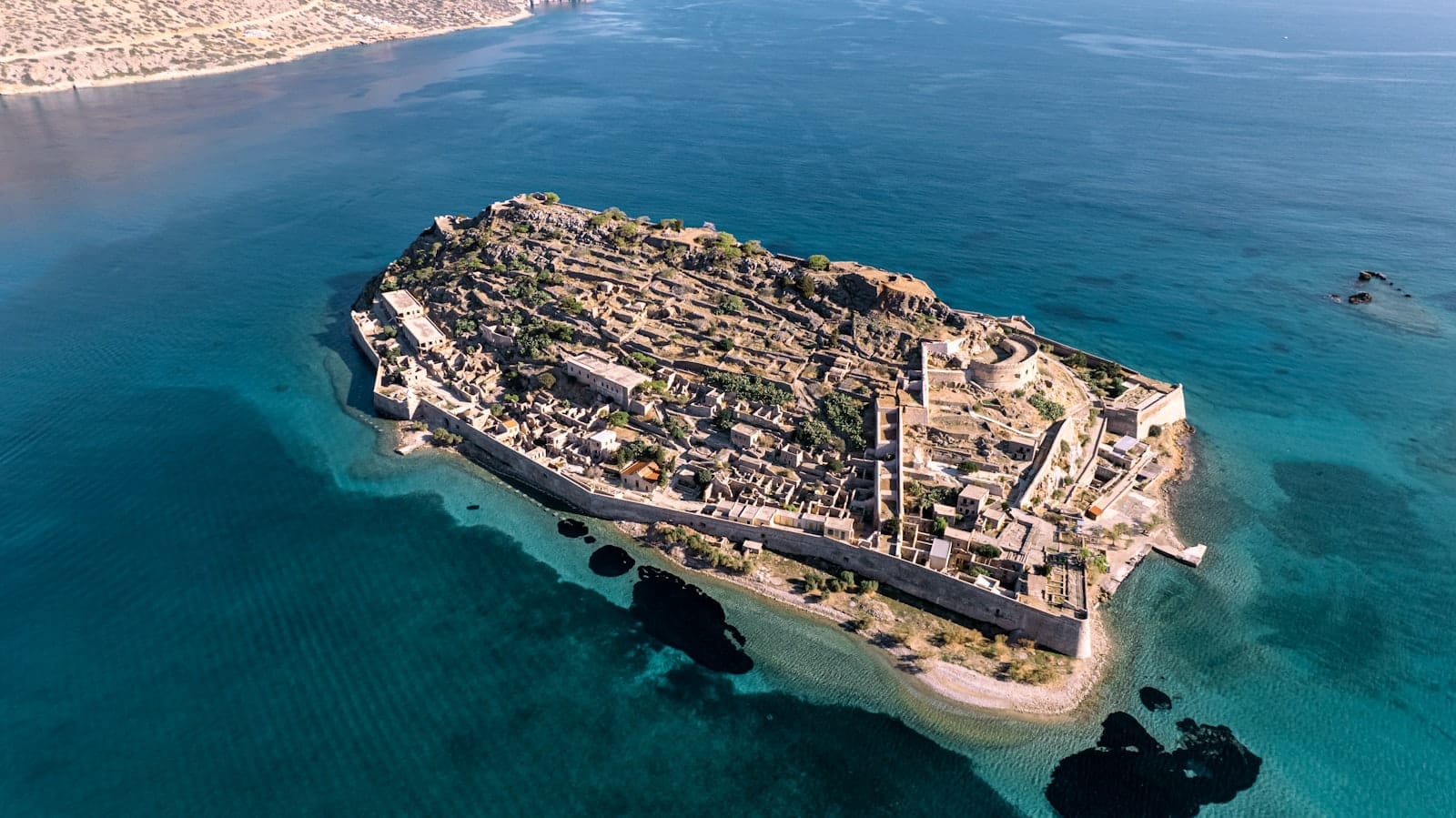
Spinalonga Island is a small fortified islet measuring 85 acres and rising to a maximum height of 53 meters at its peak. Its Venetian name derives from the Latin spina lunga, meaning 'long thorn,' a reference to the island's elongated profile as it protrudes into the Elounda Lagoon. Though it has been officially renamed Kalydron in Greek, virtually everyone, including locals, still calls it Spinalonga.
The island is only accessible by boat, which itself shapes the experience. The short crossing from Plaka village, roughly 800 meters, takes just a few minutes. From Elounda or Agios Nikolaos the journey is longer and often combined with a wider boat excursion of the bay. That mandatory water crossing creates a psychological threshold: you leave the mainland behind, and the island feels genuinely cut off. For a place that served as Europe's last active leper colony until 1957, that isolation is not just a historical detail. It is something you feel.
ℹ️ Good to know
Opening hours and entrance fees are subject to seasonal changes. Verify current prices and schedules through the local tourism offices in Elounda or Agios Nikolaos before your visit. Boat operators on the waterfront can usually confirm same-day details.
Four Centuries of Layered History
Construction of the Venetian fort began in 1574, with the main fortification walls completed by 1579. The Venetians built Spinalonga as a defensive node to control the natural harbor at Elounda, and its walls were formidable enough to resist Ottoman conquest long after the rest of Crete had fallen. While the Ottomans took the island of Crete in 1669, Spinalonga held out until 1715, making it one of the last Venetian outposts in the eastern Mediterranean. That is a remarkable 46-year resistance, largely overlooked in broader histories of the period.
Under Ottoman rule, a civilian settlement developed inside the walls. A mosque replaced a Venetian church. Tradespeople and families built homes in the narrow lanes that still exist today, albeit in various states of decay. When Crete gained autonomy from the Ottoman Empire in 1898, the Ottoman residents departed and the island's next chapter began within a few years.
In 1903, the Greek state designated Spinalonga as a leper colony. The first 251 patients were transferred on December 14, 1904. The colony remained active until 1957, making it the last operating leper colony in Europe. At its peak the settlement housed a few hundred people who, despite their isolation, organized a functioning community with a doctor, a priest, and even a café. The colony's story became widely known through Victoria Hislop's 2005 novel 'The Island,' which was later adapted into a major Greek television series.
The historical layers here are genuinely complex: Venetian military architecture sitting beneath Ottoman domestic buildings, in turn repurposed for a 20th-century medical community. For broader context on Crete's layered past, the guide to Minoan and ancient Cretan history adds useful background, though Spinalonga's story is primarily early modern.
Tickets & tours
Hand-picked options from our booking partner. Prices are indicative; availability and final rates are confirmed when you complete your booking.
Spinalonga self-guided audio tour on your phone
From 12 €Instant confirmationFree cancellationVisit a Family-Run Olive Mill with Food Tasting in Heraklion
From 19 €Instant confirmationFree cancellationSnorkeling experience in Crete
From 45 €Instant confirmationFree cancellationMalia to Sissi private tuk-tuk journey with tastings
From 45 €Instant confirmationFree cancellation
What You See When You Walk the Island
Boats dock at the island's main gate, a narrow Venetian archway cut directly through the fortification wall. The gateway passage is low and slightly claustrophobic, with smooth-worn stone underfoot. Step through it and you enter the main lane of the former settlement.
The path curves along the inner shoreline, passing ruined houses with empty window frames, collapsed rooftops, and the occasional intact doorway still decorated with original tilework. The Ottoman mosque is visible and partially standing. Further along, the hospital block used during the leper colony period is the most intact structure, and the most sobering: rows of small rooms, peeling walls, the geometry of a place designed to contain people rather than welcome them.
The route climbs toward the Venetian bastions at the island's higher points. From the upper walls, the view across the Elounda Lagoon toward the Cretan mountains is genuinely striking: calm turquoise water, low scrubby hills, and the faint outline of the mainland coast. The contrast between that pastoral beauty and the history beneath your feet is one of the things that makes Spinalonga linger in the memory.
The entire walking circuit is roughly 1 kilometer. The path is uneven in places, with loose gravel, steep steps, and no guardrails on the higher sections. Wear closed shoes with grip. The site offers limited shade, so sun exposure is significant between May and September.
⚠️ What to skip
The path involves uneven stone surfaces and steep climbs. It is not suitable for wheelchair users or those with significant mobility limitations. The island has no cafés or water points once you are inside, so bring water and sun protection.
How the Experience Changes Through the Day
Spinalonga receives over 300,000 visitors per year, which makes it the second most-visited archaeological site in Crete after Knossos. On a summer afternoon, particularly between 11am and 3pm, the main lane can feel genuinely crowded. Groups queue at the gate, tour guides compete to be heard, and the atmosphere can feel more like a traffic flow than an exploration.
Early morning departures from Plaka or Elounda reach the island before the larger excursion boats arrive from Agios Nikolaos. The light at that hour is also better for photography: softer, with long shadows that emphasize the texture of the stonework. The air still carries a slight coolness off the water, and the birds in the scrub inland from the path are audible rather than drowned out by commentary.
Late afternoon arrivals offer a similar crowd advantage. As the day-trip boats head back, the island quiets considerably. The light turns amber on the walls, and the ruins take on a different quality entirely. However, confirm last boat departure times with your operator before planning a late visit.
Getting There: Boats from Elounda, Plaka, and Agios Nikolaos
The closest and quickest crossing is from Plaka village, approximately 800 meters from the island. Small local boats make the crossing in minutes, and the informal nature of the Plaka crossing tends to attract fewer large groups. From Elounda, the crossing is longer but combined with views across the lagoon that are worthwhile in their own right. Excursion boats from Agios Nikolaos often combine Spinalonga with a stop at the salt flats or a swim break, making it a longer half-day trip.
There is no road access and no bridge. You cannot visit independently without a boat. Operators line the waterfronts at all three departure points and typically sell tickets directly. Prices vary by departure point and whether the ticket includes entry to the site or only the crossing.
If you are planning a wider trip through eastern Crete, combining Spinalonga with the landscapes around the Agios Nikolaos area makes logistical sense. The town is a reasonable base with accommodation, restaurants, and transport connections toward the Lasithi Plateau and the far east of the island.
Photography, Atmosphere, and Who Might Not Enjoy This
The site photographs well throughout, but the ruined domestic structures of the leper colony period are particularly striking. The contrast between intact decorative details, a surviving doorway arch, a tiled threshold, and the collapsed rooms behind them makes for images that reward careful composition over quick snapshots. A wide-angle lens handles the narrow lanes well; a standard zoom works for the bastions and lagoon views.
The atmosphere at Spinalonga is heavier than at most archaeological sites. The leper colony closed within living memory, and the hospital building in particular carries a weight that some visitors find genuinely affecting. Children can visit, but the site is not designed for them. There are no interactive displays, no playground, and the historical subject matter requires real context to mean anything. Visitors looking for a light beach-adjacent activity may find the site more intense than expected.
If the goal is a boat trip with visual drama rather than historical depth, the Gramvousa Island and Balos lagoon trip in western Crete offers a similar boat excursion format with more emphasis on scenery. Spinalonga works best for those who arrive with some historical context and genuine curiosity about what happened here.
Spinalonga in Context: Eastern Crete
Spinalonga sits in the Lasithi regional unit, which covers eastern Crete and includes some of the island's least-visited and most rewarding territory. The Minoan Palace of Zakros is in the same regional unit, roughly two hours east by road. The contrast between a Bronze Age palace site and a 20th-century medical community illustrates the unusual range of Cretan history available in a relatively compact area.
For a complete approach to the eastern part of the island, the Crete road trip guide covers practical routing between the main sites in Lasithi Prefecture, including how to combine Spinalonga with the surrounding landscape without doubling back unnecessarily.
Insider Tips
- Take the boat from Plaka village rather than Elounda or Agios Nikolaos. The crossing is shorter, cheaper, and the smaller boats mean you arrive before the large excursion groups. Plaka is a 15-minute drive north of Elounda along the lagoon road.
- Bring an audio guide app or download content before you arrive. The site has very few explanatory panels, and without context the ruins are atmospheric but confusing. Several commercial apps and free podcasts cover the leper colony history in detail.
- The upper Venetian bastions are frequently skipped by visitors who turn back after the hospital block. The climb takes about 10 minutes from the main path and the panorama across the lagoon toward the Cretan mountains is the best elevated view available from this part of Crete's northeastern coast.
- Victoria Hislop's novel 'The Island' is set here. Reading it before you visit, or even just the first chapter, gives the ruins of the leper colony a human dimension that no on-site panel can provide. It was also adapted into a Greek TV series called 'To Nisi' if you prefer screen to page.
- Light-colored or white clothing absorbs significantly less heat on the exposed upper walls. There is minimal shade on the island, and the reflected light off the limestone in July and August is intense. A hat and at least one liter of water per person are practical requirements, not suggestions.
Who Is Spinalonga Island For?
- Travelers with a genuine interest in early modern European and Mediterranean history
- Photographers drawn to atmospheric ruins, textured stonework, and water-framed landscapes
- Literary visitors who have read Victoria Hislop's 'The Island' or watched the Greek TV adaptation
- Those seeking a half-day cultural excursion that combines a short boat ride with serious historical content
- Anyone building an eastern Crete itinerary who wants to anchor it around a site of real historical weight