Lake Voulismeni: Agios Nikolaos' Hidden Sinkhole Lake Explained
Lake Voulismeni sits at the centre of Agios Nikolaos like a natural amphitheatre, its cliff-rimmed shores lined with cafes and its deep blue water connected to the sea by a narrow channel. Free to visit at any hour, it is both the social hub of the town and one of the more geologically unusual spots in eastern Crete.
Quick Facts
- Location
- Central Agios Nikolaos, Lasithi, Crete (postal code 721 00)
- Getting There
- Walkable from the KTEL bus stop and the town harbour in under 5 minutes
- Time Needed
- 30–60 minutes to walk the circuit; longer if you stop at a lakeside cafe
- Cost
- Free entry; open 24 hours, year-round
- Best for
- Evening strollers, geology enthusiasts, photographers at golden hour
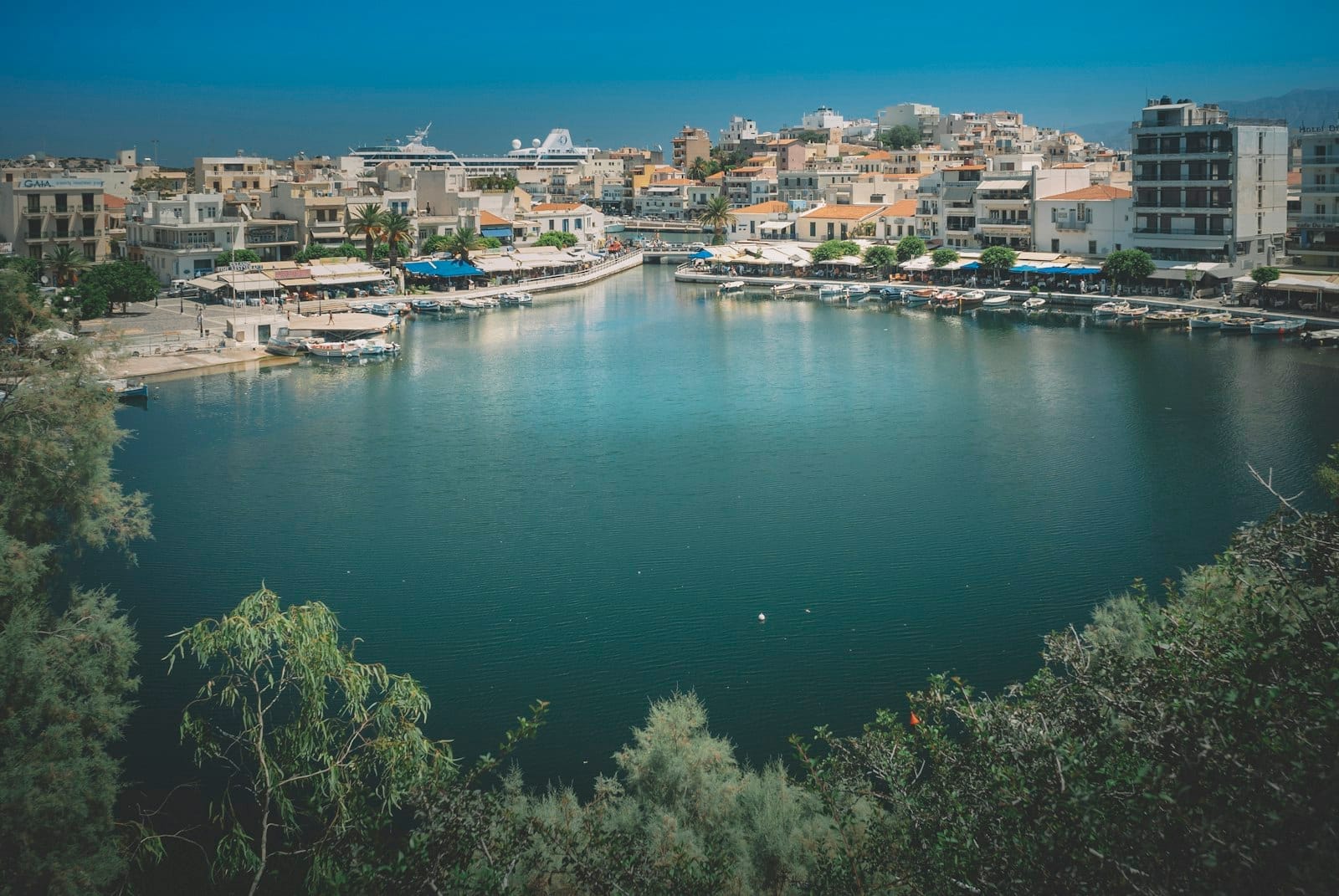
What Lake Voulismeni Actually Is
Lake Voulismeni is a near-circular saltwater lagoon roughly 137 metres in diameter, set inside a steep natural bowl of rock right in the middle of Agios Nikolaos. It is not a conventional lake: geologically it is a collapsed sinkhole, and for most of its recorded history it had no connection to the sea at all. Today a short channel links it to Mirabello Bay, making the water brackish and giving the surface its characteristic deep blue-green colour.
The depth is what surprises most visitors once they learn the figure: approximately 64 metres straight down, which means the floor of this apparently modest urban pond sits well below sea level. Standing at the edge, the water looks still and opaque, giving little indication of what lies beneath.
ℹ️ Good to know
Swimming is prohibited in Lake Voulismeni. The restriction is enforced and posted around the perimeter. The depth and the lack of a safe entry or exit point make this genuinely dangerous, not just bureaucratic.
The History Behind the Channel
For centuries, Lake Voulismeni was a freshwater sinkhole fed by underground springs, entirely isolated from the sea. Locals used it as a water source, and it accumulated a layer of mythology: ancient Greeks associated it with Athena, who was said to have bathed here, and some accounts connected it to the goddess Artemis. Whether or not you give those legends weight, the physical isolation of the lake from the surrounding coastline gave it an atmosphere that is easy to understand even today.
The 1856 earthquake disrupted the underground spring system and caused the water to become brackish. Then, sometime in the second half of the 19th century or early 20th century, a channel to the sea was dug. Sources differ on the date and the engineers responsible: some cite 1867 or 1870 under Ottoman administration, others point to French Army engineers in 1907. What is certain is that the channel changed the lake's character permanently, replacing the freshwater ecosystem with the saltwater lagoon visitors see today.
If you walk the short channel path toward the harbour, you pass over a small bridge where the two water bodies meet. The contrast between the narrow channel and the open bay beyond illustrates neatly how artificial the connection is. For more context on the town that grew around this geography, the Agios Nikolaos area guide covers the town's layout and history in detail.
Tickets & tours
Hand-picked options from our booking partner. Prices are indicative; availability and final rates are confirmed when you complete your booking.
From Argiroupolis to Kournas Lake and Chania tour from Heraklion
From 630 €Instant confirmationFree cancellationVisit a Family-Run Olive Mill with Food Tasting in Heraklion
From 19 €Instant confirmationFree cancellationSnorkeling experience in Crete
From 45 €Instant confirmationFree cancellationSpinalonga self-guided audio tour on your phone
From 12 €Instant confirmationFree cancellation
Walking the Lake: What to Expect Hour by Hour
The paved path around Lake Voulismeni is short, roughly 430 metres for the full circuit, and takes about ten minutes at a relaxed pace. The western and southern shores are the most developed, lined with restaurants and cafes that push their terraces right to the waterline. Tables are set out from mid-morning and stay occupied well past midnight in summer. The eastern and northern sides have fewer businesses and offer better views across the water to the cliffs opposite.
Morning is quieter. Before 9 a.m., locals use the path for exercise and the cafes are just opening. The water catches early light from the east and the reflection of the pale rock face is clearest at this hour. Midday in July and August is the least comfortable time: the bowl shape traps heat, the terrace crowds peak, and the light is flat and harsh for photography. Late afternoon brings shade to the western terrace earlier than you might expect, and by 6 p.m. the quality of light on the cliff face is noticeably better.
Evenings are when the lake earns its reputation as the social centre of Agios Nikolaos. The ring of cafe lights reflects in the dark water, the cliff is illuminated from below, and the narrow streets feeding down to the shore fill with people after dinner. If you visit in late spring, the Easter period brings a specific tradition: fireworks are set off over the lake, and the bowl amplifies both the sound and the reflection to considerable effect.
💡 Local tip
For the best photographs of the lake and cliff face, position yourself on the northeastern path in the hour before sunset. The warm light hits the cliff directly and the terrace lights on the opposite shore provide foreground detail without overpowering the frame.
Geology, Depth, and What the Water Tells You
The deep colour of the water, which shifts between teal and dark blue depending on the sky, is partly a function of depth. Very deep water absorbs the longer red wavelengths of light and reflects the shorter blue ones more strongly. Because the lake is connected to the sea, tidal movement (minimal in the Mediterranean but present) creates very slow circulation. On calm days the surface is almost perfectly still, giving it a mirror quality that the Aegean rarely offers.
The cliff face that rings the northern and eastern sides reaches several metres in height and is composed of limestone typical of this part of Crete. The rock is worn smooth in places where people have leaned over to look at the water below. Small boats occasionally tie up at the waterfront restaurants, but no private watercraft operate on the lake itself.
Eastern Crete's geology is part of a broader landscape that includes dramatic gorges and karst formations. If you are interested in how the terrain shapes the region, the guide to Richtis Gorge illustrates a different side of the same underlying rock system.
Practical Details for Your Visit
Lake Voulismeni is genuinely free and genuinely open at any hour. There are no gates, no tickets, and no closing time. The path is paved and even underfoot on most sections, but the cliff edges are unfenced and some sections of the northern shore require careful footing. Wheelchair access is partial: the southern terrace restaurants are accessible from the main road level, but the full circuit is not achievable without navigating steps.
Agios Nikolaos is served by KTEL buses connecting to Heraklion (roughly 70 km west) and to Sitia and other eastern Lasithi destinations. The bus station is within a five-minute walk of the lake. If you are driving, parking near the lake is limited in summer; the town car parks are a short walk away. The lake is compact enough that it fits naturally into a broader morning or afternoon spent exploring the town rather than requiring a dedicated journey.
Agios Nikolaos sits on the Mirabello Bay coastline, making it a logical base for eastern Crete. The nearby island of Spinalonga Island is one of the most visited day-trip destinations in the region and departs from the harbour that the lake channel feeds into. If you are planning a longer stay in the area, the best day trips in Crete guide includes several excursions that start from this part of the island.
Managing Expectations Honestly
Lake Voulismeni is not a wilderness landscape. It is an urban water feature in a busy tourist town, surrounded by commercial terraces and souvenir shops. The charm comes from the scale contrast: the deep cliff-ringed bowl in the middle of an ordinary street grid is genuinely unexpected, and the depth of the water is legitimately striking once you know the figure. But visitors who arrive expecting something remote or dramatic may find the reality more modest.
In peak summer, the lakeside terraces are loud, service is stretched, and the path is crowded. If you are visiting Agios Nikolaos for the first time, spending 30 minutes at the lake in the evening and then walking down to the harbour is a logical way to see both landmarks without overlap. If you are visiting specifically for nature or solitude, this is not the right destination.
Visitors who want the natural landscape of eastern Crete without the commercial overlay will find more satisfaction at sites like Vai palm beach or the Lassithi plateau windmills, both reachable as day trips from Agios Nikolaos.
⚠️ What to skip
The lake's northern cliff edge has no safety barrier in some sections. Keep children back from the edge and do not attempt to climb down to the water. The drop is significant and the rock surface is uneven.
Insider Tips
- The cafes on the eastern shore are slightly cheaper than those on the main western terrace, and the view from the east looking west toward the cliff is actually the stronger composition for photographs.
- Visit on Easter Saturday evening if your dates allow. The fireworks display over the lake is a local tradition and the bowl acoustics make it far more intense than a standard outdoor display.
- The channel bridge between the lake and the harbour is one of the few spots where you can see both water bodies in the same frame. It is a better photography position than any point on the lake circuit itself.
- Water temperature at the surface is noticeably cooler than the sea, even in August. The depth pulls cold water up from below, which you can feel if you reach down from the terrace level.
- Early September is the best overall time to visit Agios Nikolaos: the summer crowds thin out, the cafes remain fully open, and the evening light at the lake lasts longer as the angle of the sun changes.
Who Is Lake Voulismeni For?
- First-time visitors to Agios Nikolaos who want to understand the town's layout and social centre
- Photographers looking for reflective water and dramatic cliff compositions in an accessible setting
- Travellers with limited mobility who want a scenic stop that requires minimal walking
- Evening strollers who want a focal point for an after-dinner walk
- Geology and natural history enthusiasts interested in sinkhole formation and earthquake geography