Crete vs Santorini: Which Greek Island Should You Choose?
Two of Greece's most iconic islands, but they deliver very different experiences. This guide breaks down beaches, budget, activities, and logistics so you can decide which island actually suits your trip.
Plan and book this trip
Tools from our partner Travelpayouts help you compare flights and hotels. If you book through them, we may earn a commission at no extra cost to you.
Flights
Hotels map
TL;DR
- Crete is Greece's largest island at 260 km wide, offering beaches, gorges, Minoan ruins, and mountain villages — it rewards trips of a week or more and is better explored with a rental car. See one week in Crete itinerary for a full plan.
- Santorini is a compact volcanic island built around caldera views and sunsets — spectacular for a 3-4 night romantic stay, less suited to beach lovers or active travelers.
- Santorini consistently runs 40-60% more expensive than Crete for accommodation and dining, especially in peak season (July-August).
- If you want soft sandy beaches, Crete wins outright. Santorini's beaches are volcanic rock and dark pebbles.
- You don't have to pick just one: ferries connect the two islands, making a combined trip straightforward. Check the Crete to Santorini ferry guide for schedules and crossing times.
The Core Difference: What Each Island Actually Is
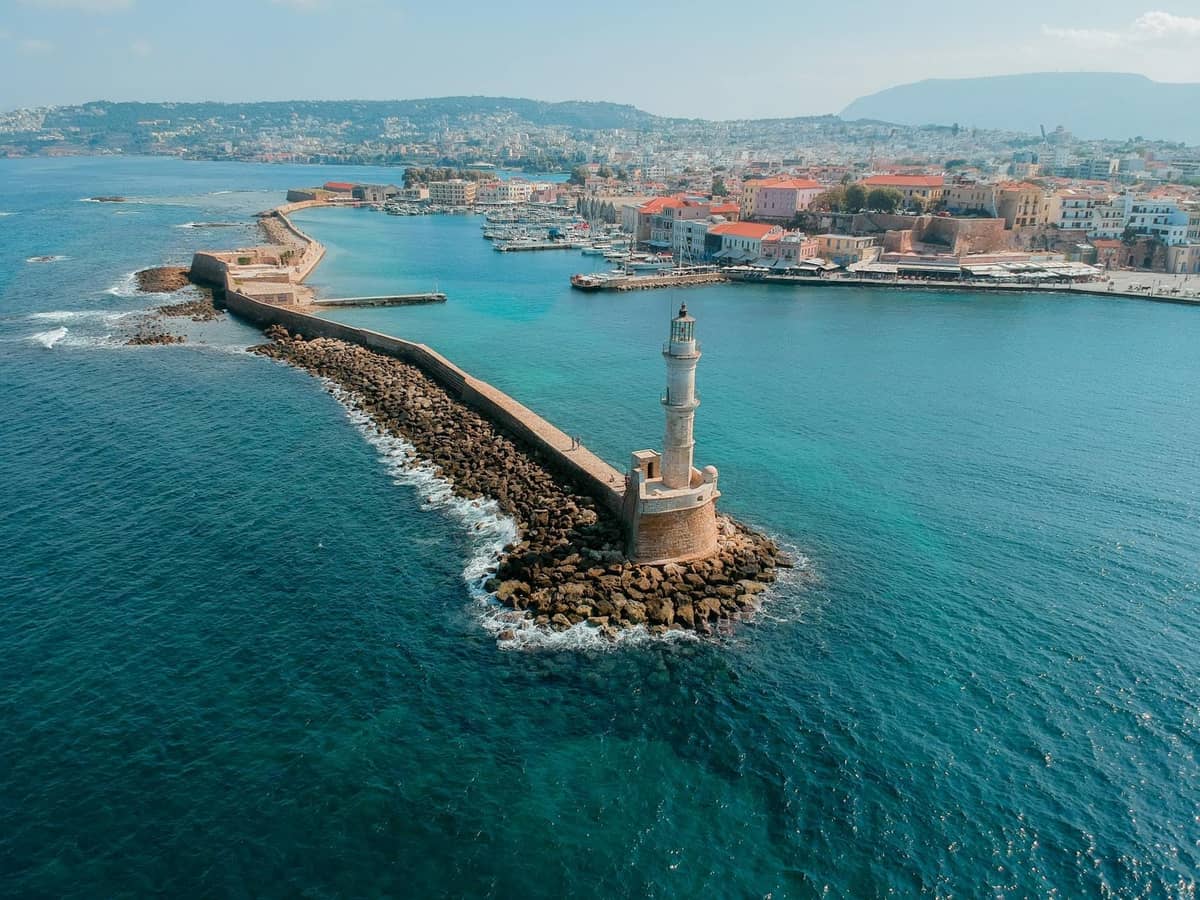
This comparison comes down to a fundamental difference in what each island offers. Crete is a destination unto itself, a place with enough variety that many travelers return multiple times and still find new corners. At 8,336 km², it is the largest island in Greece and the fifth largest in the Mediterranean. It has four distinct regional units, a mountain range running its entire length, dozens of beach styles, Bronze Age ruins, and a food culture that predates most of European cuisine. It is, in short, an island you explore.
Santorini is something different: a showpiece. The caldera, formed by one of the largest volcanic eruptions in prehistoric times, creates a landscape that is genuinely like nowhere else in the world. The whitewashed architecture of Oia and Fira clings to clifftops above blue water and you understand immediately why it dominates Instagram. But that is largely what Santorini is: a visual experience, delivered efficiently in 3-4 days. For deeper context on what Crete specifically delivers, the complete guide to things to do in Crete covers the full range.
ℹ️ Good to know
Neither island is objectively better. The right answer depends entirely on what you want from a trip. This guide is structured to help you identify which priorities point where.
Beaches: A Clear Winner
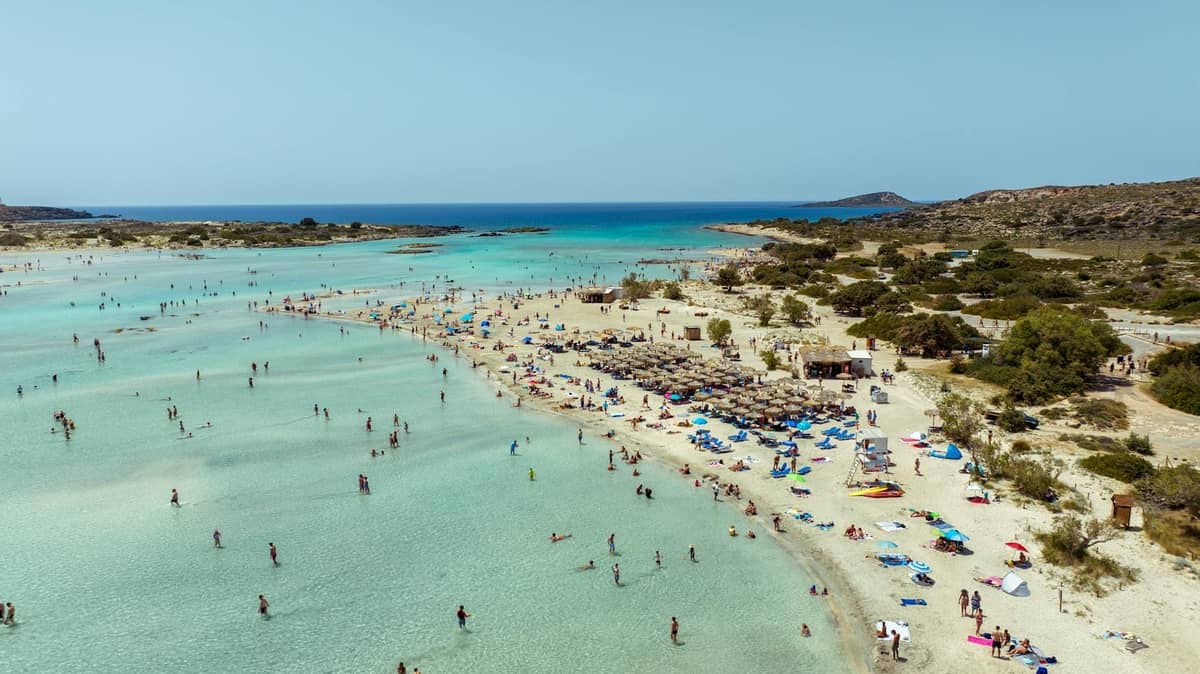
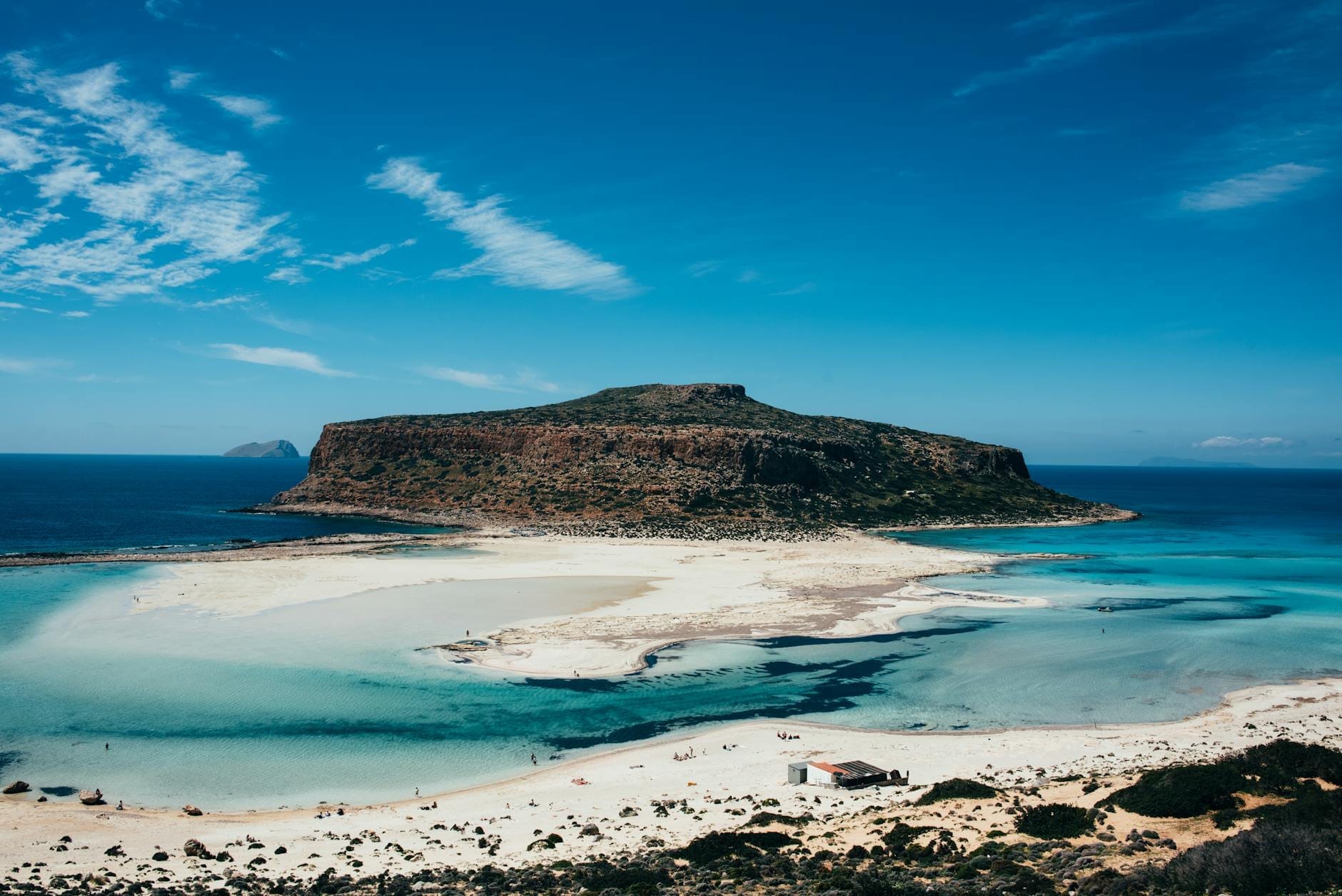
If beaches are a priority, this is the easiest part of the comparison. Crete has some of the best beaches in the entire Mediterranean, and they vary enormously. Elafonissi has pink-tinged sand and shallow turquoise water across a coastal lagoon. Balos Lagoon is a photogenic sweep of pale sand accessible by boat or a 20-minute hike from the cliff road. Falassarna on the northwest coast delivers wide golden sand and long swimmable stretches without the crowds of the lagoon beaches.
Santorini's beaches are volcanic. Perissa and Kamari are the main ones, both with black pebbles and rocky sea floors. They are not bad, but they are not what most people picture when they imagine a Greek island beach. The Red Beach near Akrotiri is visually dramatic with its rust-colored cliffs, but it is small, difficult to access, and often too crowded to be enjoyable. Nobody goes to Santorini specifically for swimming. They go for the views.
⚠️ What to skip
Balos and Elafonissi become severely crowded in July and August, with tour buses arriving by 10am. Visit before 9am or after 4pm, or go in May, June, or September when the experience is significantly better.
History and Culture: Crete Runs Deeper
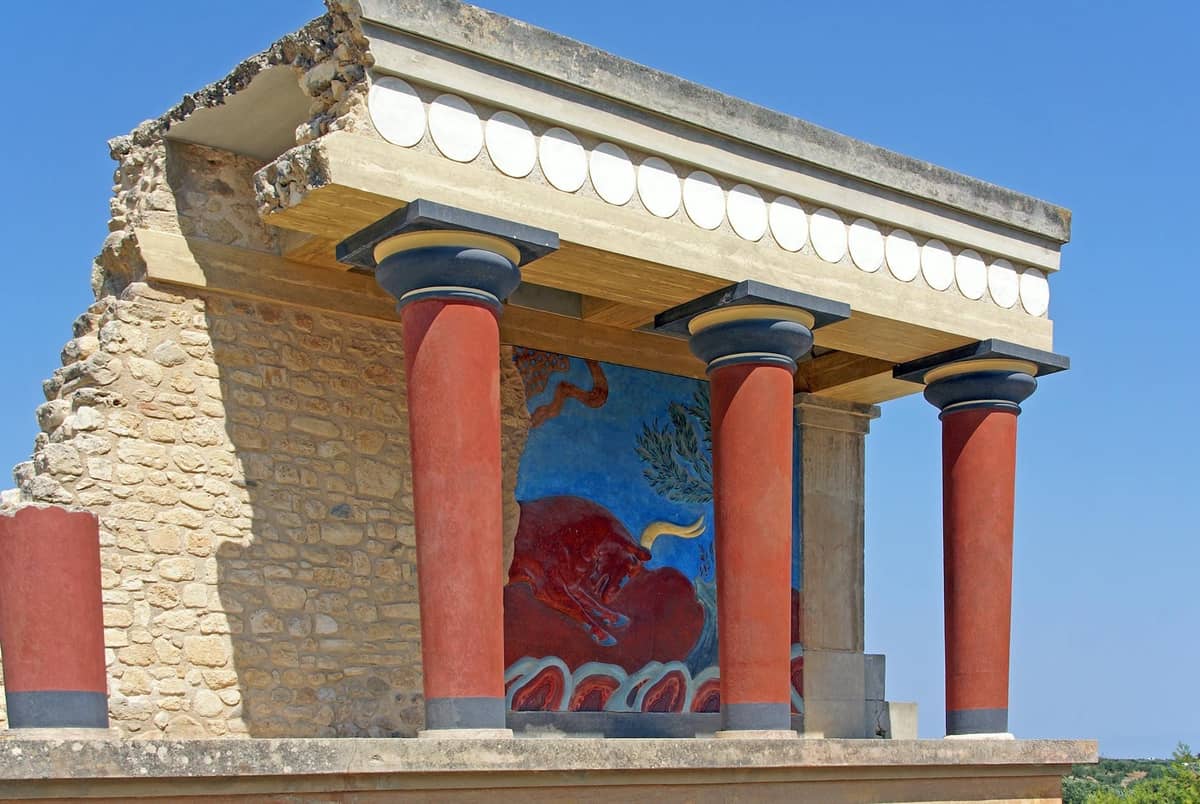
Crete is the birthplace of Minoan civilization, Europe's first advanced culture, which flourished from roughly 2700 to 1450 BCE. The Palace of Knossos outside Heraklion is the centerpiece, a site of genuine historical weight that even non-archaeology travelers find compelling. The Minoan sites in Crete, including Knossos, Phaistos, Malia, and Zakros, are key archaeological treasures. Beyond Minoan ruins, Crete has Byzantine churches, Venetian harbors, Ottoman fountains, and a living food culture centered on olive oil, fresh cheese, and slow-cooked lamb.
Santorini's main historical site is Akrotiri, a Minoan-era town preserved under volcanic ash, similar in concept to Pompeii. It is genuinely worth a morning. The caldera itself tells a geological story, and the Minoan history of the Aegean connects both islands. But beyond Akrotiri and a few small museums, Santorini is not a cultural destination in the way Crete is. The towns of Fira and Oia are largely given over to tourism infrastructure.
Cost Comparison: Budget Realities
Santorini is one of the most expensive destinations in Greece, driven by demand outpacing accommodation supply on a small island. A mid-range hotel in Fira or Oia in peak season (July-August) typically runs €200-400 per night. Budget options exist but are usually in less scenic parts of the island and book out months in advance. Restaurants in Oia and along the caldera charge €20-35 for a main course, with wine lists that can double the bill.
Crete is substantially more affordable. Mid-range accommodation in Chania or Rethymno runs €80-160 per night at comparable quality. Tavernas serving fresh fish, dakos salad, and grilled meat charge €12-20 for a main course. If you are traveling with a family, on a tight budget, or staying longer than a long weekend, Crete is the practical choice. For specific strategies, the Crete on a budget guide covers accommodation, food, and transport costs in detail.
- Budget Accommodation Crete: €40-80/night for guesthouses and small hotels. Santorini: €90-150/night for anything decent, well above €300 in caldera-view properties.
- Dining Crete: A full taverna meal with wine for two, around €35-50. Santorini: The same spend is realistic for one person at a mid-range restaurant.
- Getting Around Crete requires a rental car for most of its highlights: expect €30-50/day. Santorini is small enough to use buses, taxis, and ATVs, but car hire is still around €40-60/day.
- Entry Costs Knossos charges around €15 entry. Akrotiri on Santorini charges around €12. Both are worth paying.
Activities: Depth vs. Atmosphere
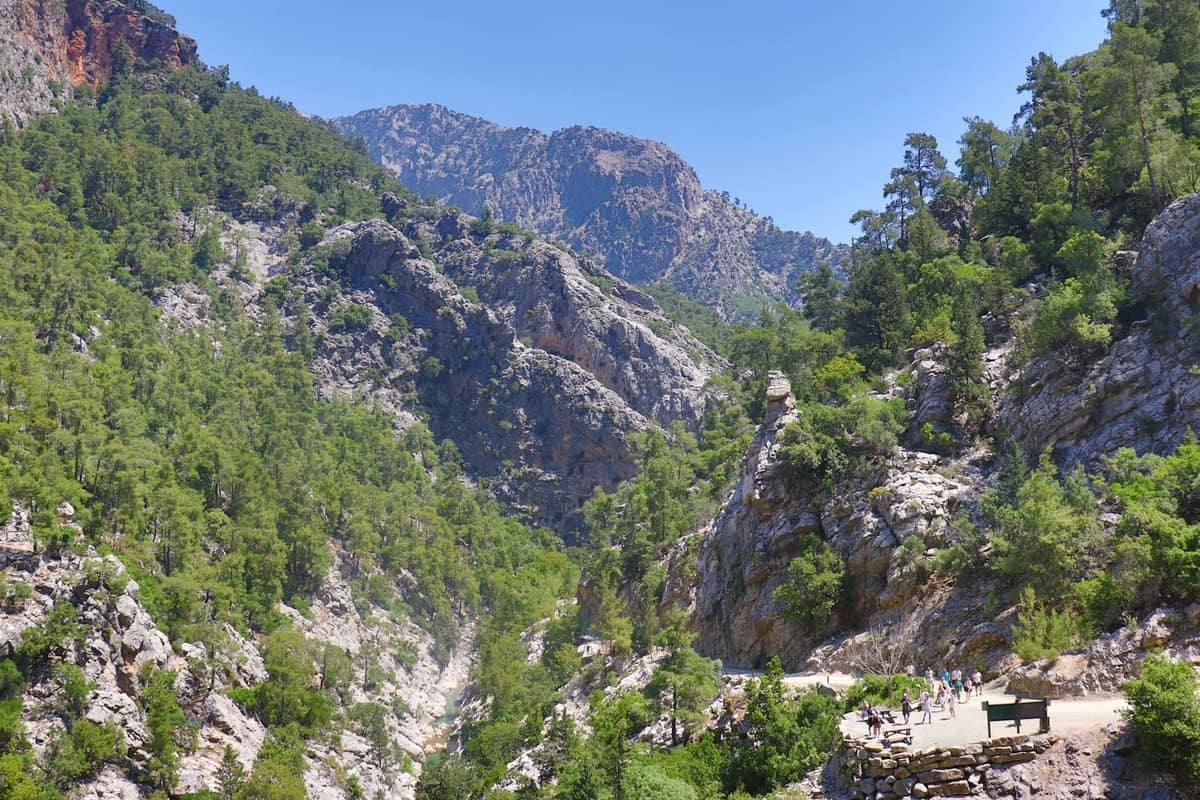
Crete is built for active travelers. The Samaria Gorge in the White Mountains is one of Europe's great gorge hikes, covering 16 km through dramatic limestone cliffs, passable from May to October. Dozens of other gorges across the island offer quieter equivalents. Boat trips to the Gramvousa peninsula and Balos, diving off the south coast, and cycling through the Lassithi Plateau are all genuinely rewarding. For families, there is enough variety that different ages and interests can be satisfied simultaneously.
Santorini's activity list is shorter but well-defined. The Fira-to-Oia hike along the caldera rim takes 3-4 hours and delivers consistent views throughout. Boat trips to the active volcanic island of Nea Kameni are popular. Wine touring across the island's volcanic vineyards is a genuine highlight, since Santorini's Assyrtiko grape produces one of Greece's most distinctive white wines. Watching the sunset from Oia is genuinely spectacular, though the crowds have become so significant that the magic is somewhat diminished unless you find a quieter viewpoint.
✨ Pro tip
On Santorini, skip the main Oia sunset crowd and walk 10 minutes to Skaros Rock or the Byzantine castle ruins at Oia's eastern edge for the same light with a fraction of the people. On Crete, the best hikes and gorges require an early start to beat the heat and the tour groups.
Who Should Go Where: Honest Recommendations
This is where most comparison guides go soft and say 'it depends on you.' That is true, but it is more useful to be direct about what each island is actually suited for.
- Choose Crete if: You have 5 days or more. You want sandy beaches. You are traveling with children or mixed-age groups. You want to hike, explore ruins, or eat well without spending a fortune. You want flexibility and variety rather than a single defining landscape.
- Choose Santorini if: You have 3-4 days and want a visually iconic, contained experience. You are on a honeymoon or romantic trip and the caldera views and sunset dinners are the point. Budget is not a major constraint. You accept that beaches will be volcanic and swimming is secondary.
- Do both if: You have 10 days or more. The ferry crossing from Heraklion takes around 2 hours on a high-speed service. Spend 6-7 nights in Crete and 3 nights in Santorini. This combination is logical, cost-effective, and covers both kinds of Greek island experience.
Couples planning a honeymoon sometimes find Crete is actually the stronger choice because it offers both romantic atmosphere (particularly in the old towns of Chania and Rethymno) and genuine variety. The Crete honeymoon guide covers boutique hotels, private beaches, and boat trips that match what Santorini offers at a considerably lower price point.
💡 Local tip
The shoulder season (late April to early June, or September to mid-October) is the right time for both islands. Prices drop noticeably, crowds thin, and the weather is excellent. On Crete especially, September and October are arguably better than peak summer: the sea is warm, the light is softer, and the island returns to something closer to its real character.
FAQ
Is Crete or Santorini better for families?
Crete is significantly better for families. It has calm, shallow sandy beaches suitable for children, a wide range of activities for different ages, and much lower prices that make a longer trip practical. Santorini's rocky beaches, steep caldera paths, and high costs make it less family-friendly, though a short stay is certainly possible.
How do you get from Crete to Santorini?
High-speed ferries (SeaJets, Hellenic Seaways) run from Heraklion to Santorini in approximately 1.5 to 2.5 hours, costing around €110–€130 one-way in peak season. Conventional ferries cost around €30–€40 but take approximately 6 hours. Seasonal direct flights (Sky Express) also connect Heraklion and Santorini in about 30 minutes.
Which island is cheaper: Crete or Santorini?
Crete is noticeably cheaper across all categories: accommodation, food, activities, and car hire. On a comparable mid-range budget, you can stay 7 nights in Crete for roughly what 4 nights in Santorini would cost. Budget and mid-range travelers consistently find Crete much more manageable.
Does Santorini have good beaches?
That depends on your definition. Santorini's beaches are volcanic, with black or dark grey pebbles rather than sand. Perissa and Kamari are the largest and most visited. The Red Beach is dramatic visually. None of them compare to Crete's sandy beaches for swimming comfort. If soft sand and clear shallow water are important, Santorini will likely disappoint.
How many days do you need for Crete vs Santorini?
Santorini can be done well in 3-4 days: enough time to hike the caldera rim, visit Akrotiri, explore Fira and Oia, and take a boat trip. Crete genuinely needs 7 days minimum to see more than one or two areas, and many travelers find a week still leaves significant parts of the island unexplored. A two-week trip combining both islands is the ideal structure if time allows.