Rethymno sits at the midpoint of Crete's north coast, preserving one of the best-intact Venetian old towns in Greece alongside a long public beach and a dramatic hilltop fortress. It rewards slow travel: the alleyways shift character from quiet morning bakeries to lively evening tavernas without ever losing their architectural elegance.
Rethymno is the kind of Cretan city that earns its reputation through texture rather than spectacle. Its old town is a genuine living neighborhood of Venetian stone archways, Ottoman minarets, and wooden balconies overhanging lanes barely wide enough for two people to pass. Set between a working harbor and a long sandy beach, with a 16th-century fortress watching over everything from the headland, it strikes a balance between historic depth and everyday comfort that neither Heraklion nor Chania quite manages.
Orientation
Rethymno sits roughly halfway between Heraklion to the east and Chania to the west, on the northern coast of Crete. It is the capital of the Rethymno Regional Unit, one of the island's four administrative divisions, and home to around 40,000 people in its urban core. Coordinates place the city center at approximately 35°22'N, 24°28'E.
The city divides cleanly into two zones. The Old Town occupies the headland to the west, where the street grid is a tangle of narrow Venetian lanes climbing toward the Fortezza at the highest point. The New Town stretches east along the waterfront and inland, with wider streets, modern apartment buildings, and the main commercial thoroughfares. The public beach runs along the eastern edge of the city for several kilometers, with the harbor and its lighthouse marking the western boundary of the waterfront.
Iroon Square (Plateia Iroon) functions as the informal dividing line between old and new, with the municipal market and main pedestrian shopping street connecting the two halves. The bus station for long-distance routes to Heraklion and Chania sits near the eastern approach to the old town, making arrivals by coach easy to orient from.
ℹ️ Good to know
Rethymno is about 78 km west of Heraklion and 60 km east of Chania along the E75 highway. Both cities are roughly an hour away by bus or car, making Rethymno a practical base for exploring central Crete.
Character & Atmosphere
The old town is where Rethymno justifies every visit. Walk into the lanes behind the Venetian harbour at 8am and you are almost alone: a bakery selling koulouri, cats arranged on warm stone steps, a grandmother beating dust from a rug hung over a wrought-iron balcony. The architecture layers centuries without apology: Venetian stone arches frame Ottoman wooden balconies; a minaret rises above a building that was a mosque, then a church, then a mosque again. The Nerantzes Mosque, converted from the Venetian church of Santa Maria, still anchors one of the old town's main squares, now used as a music conservatory.
By midday in summer the main lanes fill with tourists navigating souvenir shops and taverna touts near the harbour. The narrow streets that run away from the waterfront, however, remain quieter throughout the day. These are residential blocks where children play outside apartment doors and small kafeneions serve locals who have no interest in the tourist menu outside. The contrast between these two experiences sits just fifty meters apart.
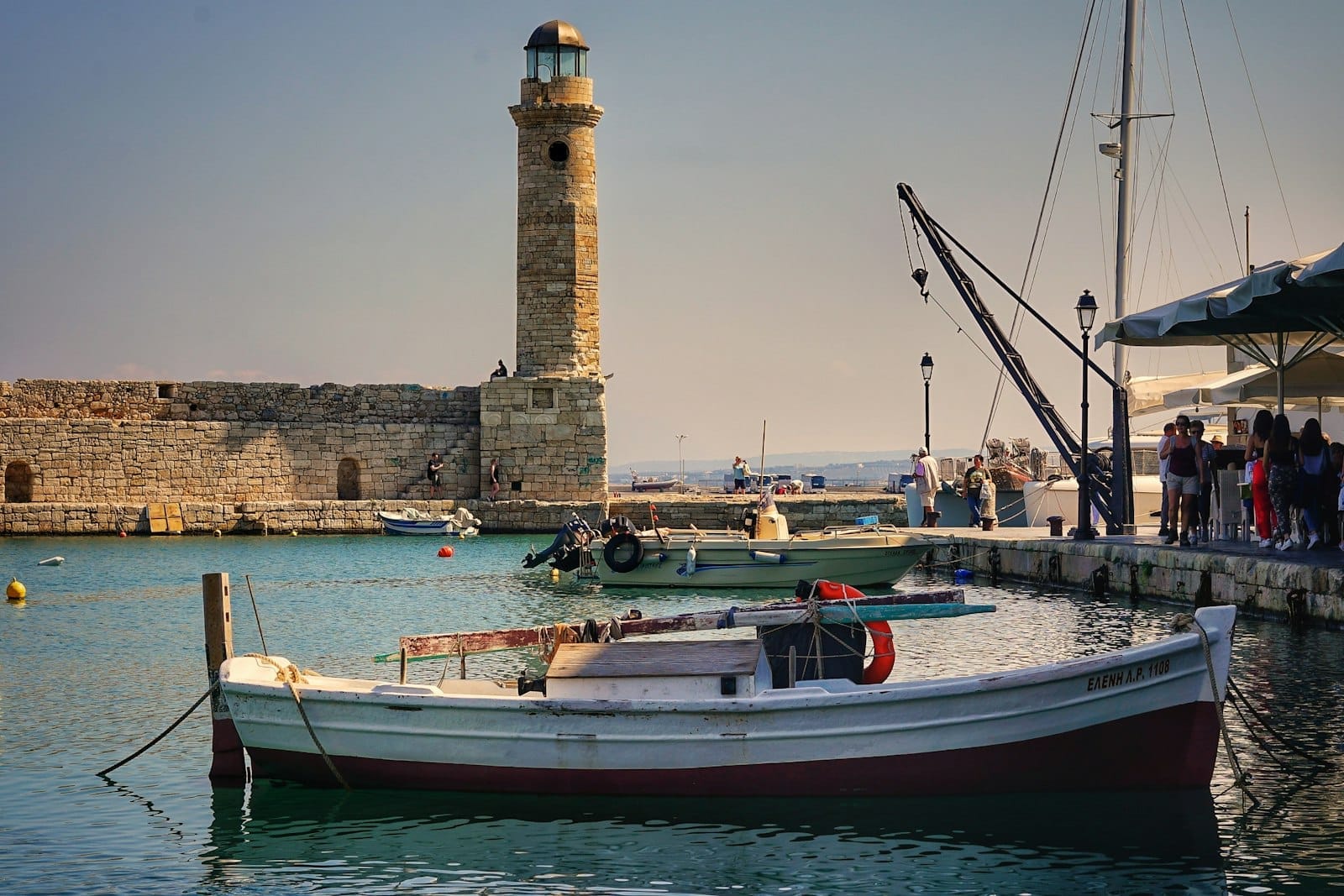
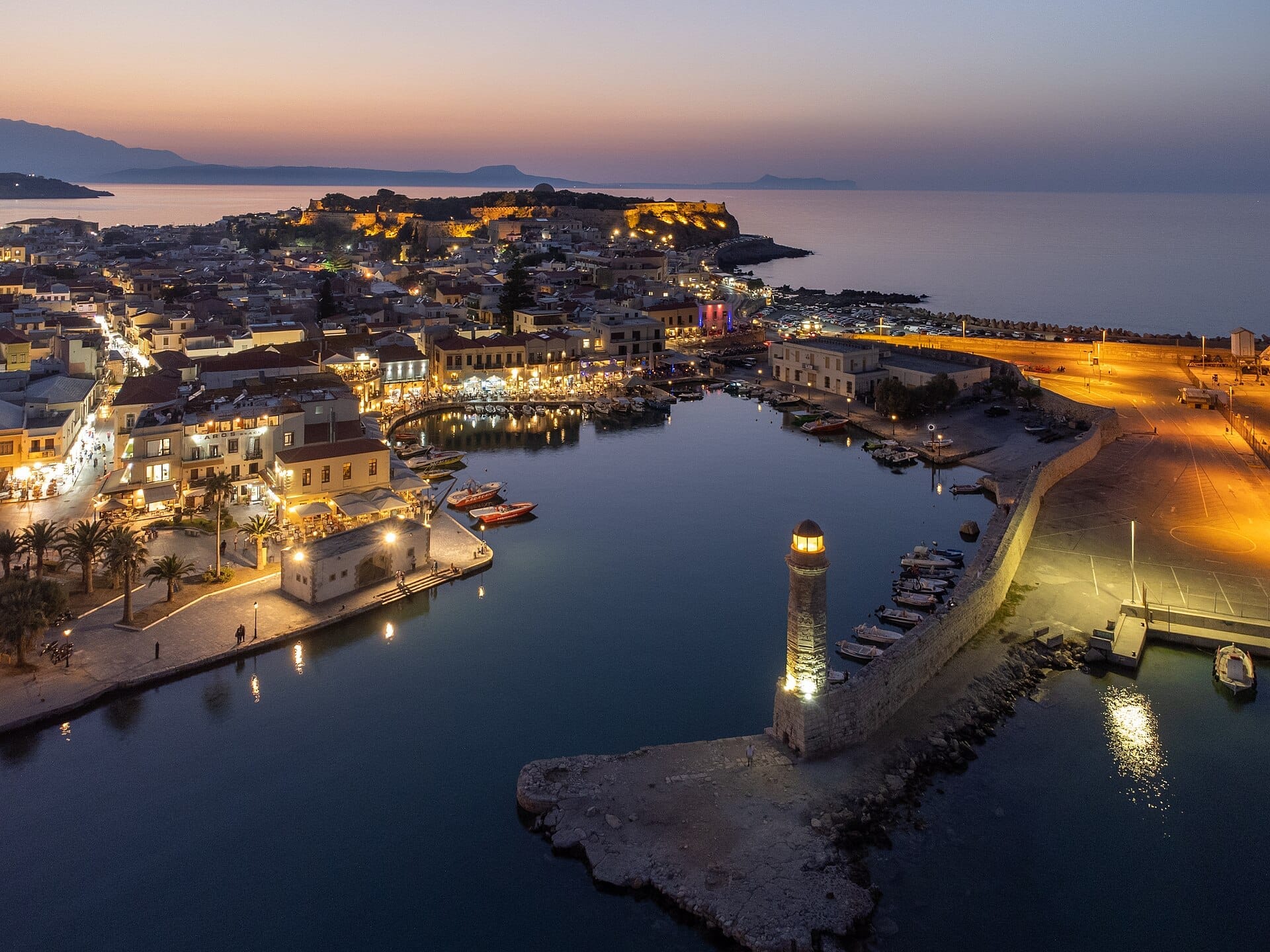
The afternoon light on the Venetian harbour is something particular. Around 5pm, when the sun comes low from the west, the stone takes on a warm amber tone and the lighthouse at the harbor entrance becomes the kind of scene that explains why so many people photograph it. The Rimondi Fountain, a 17th-century Venetian public fountain in a small square near the heart of the old town, catches the same light and draws people to the surrounding tables well into the evening.
After dark, the old town divides further. The harbor waterfront runs loud with bars and restaurants until late, with a clientele mixing young Greek tourists, European backpackers, and couples. Three or four streets back, the same neighborhood is near-silent by 11pm. The long beach promenade in the new town has its own strip of bars and restaurants, louder and less characterful, but useful for those staying east of the old town.
💡 Local tip
The best time to walk the deep lanes of the old town is early morning or early evening. The midday heat in summer makes the narrow streets uncomfortably warm, and the afternoon crowds concentrate on the harbor and main tourist routes.
What to See & Do
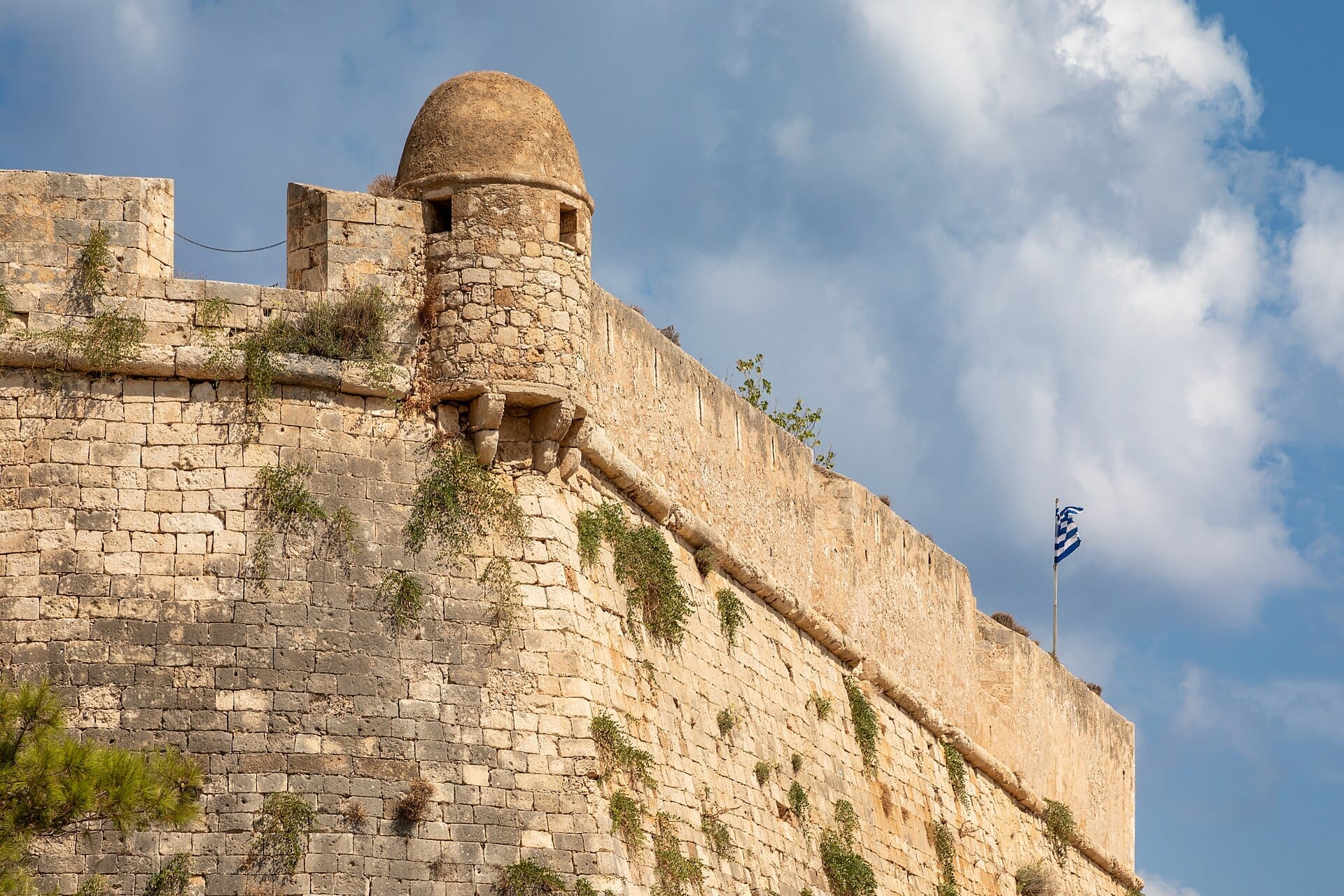
The **Fortezza** Fortezza of Rethymno is the city's defining landmark and worth at least two hours. Built by the Venetians in the 1570s after repeated Ottoman raids proved the old defenses inadequate, it occupies nearly the entire headland above the old town. Walk the perimeter walls for views north over the Cretan Sea and south over the city rooftops, then explore the interior: the Sultan Ibrahim Mosque at its center (originally built as a cathedral), storage rooms, barracks, and the remains of the bishop's residence. The scale of the complex surprises most visitors.
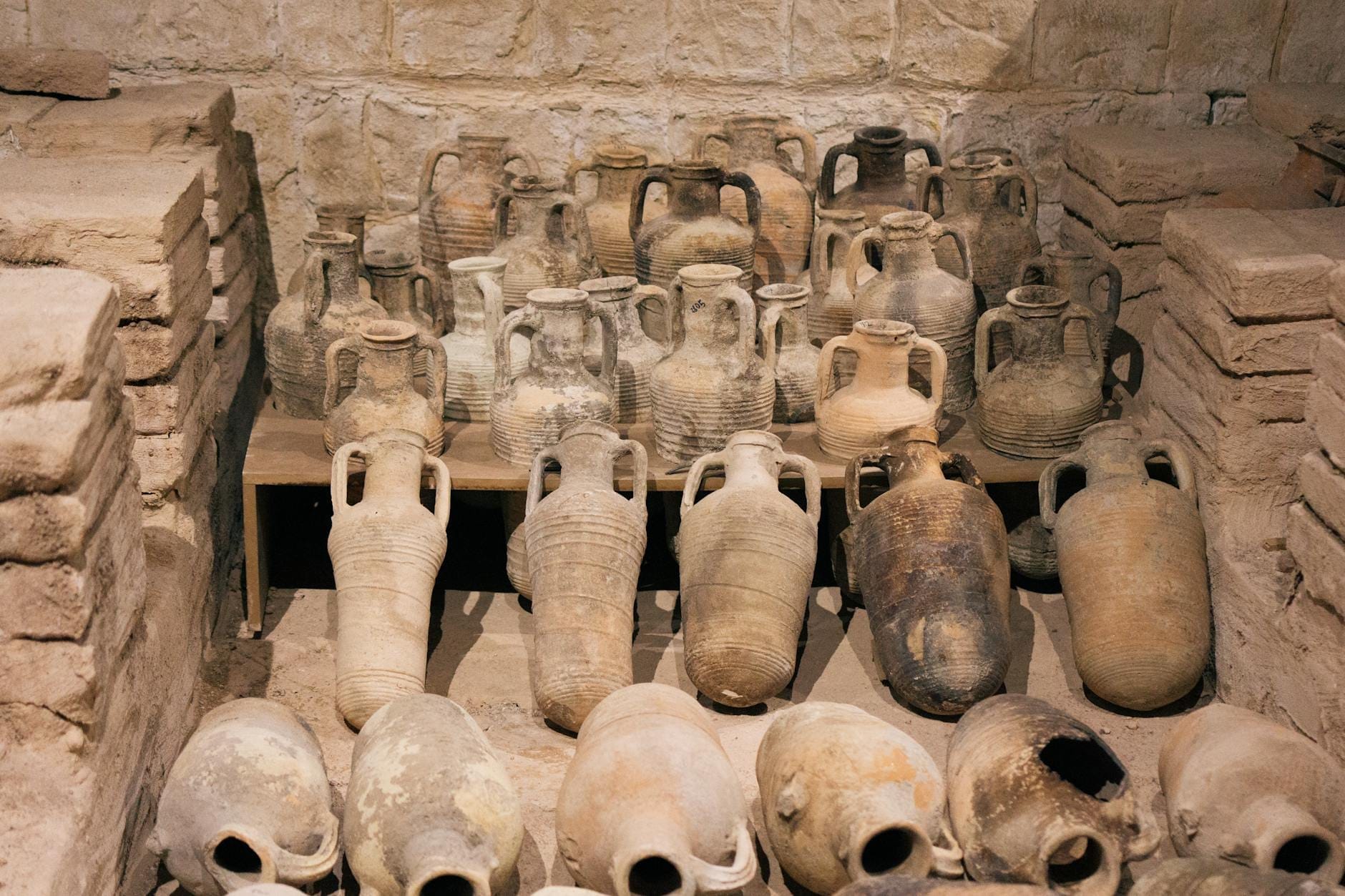
Directly below **Rethymno Archaeological Museum** Fortezza, the Rethymno Archaeological Museum holds a well-organized collection covering the region from Neolithic through Roman periods. It is less overwhelming than the equivalent museums in Heraklion or Chania and takes about 90 minutes to cover properly. The Minoan collection from local sites is the highlight.
The Venetian harbour itself is worth time beyond the restaurant tables. The harbour lighthouse, an Ottoman reconstruction of the original Venetian structure, stands at the end of the breakwater and is photographed from every angle. The customs house at the harbour entrance is one of the few largely intact Venetian civic buildings on the island.
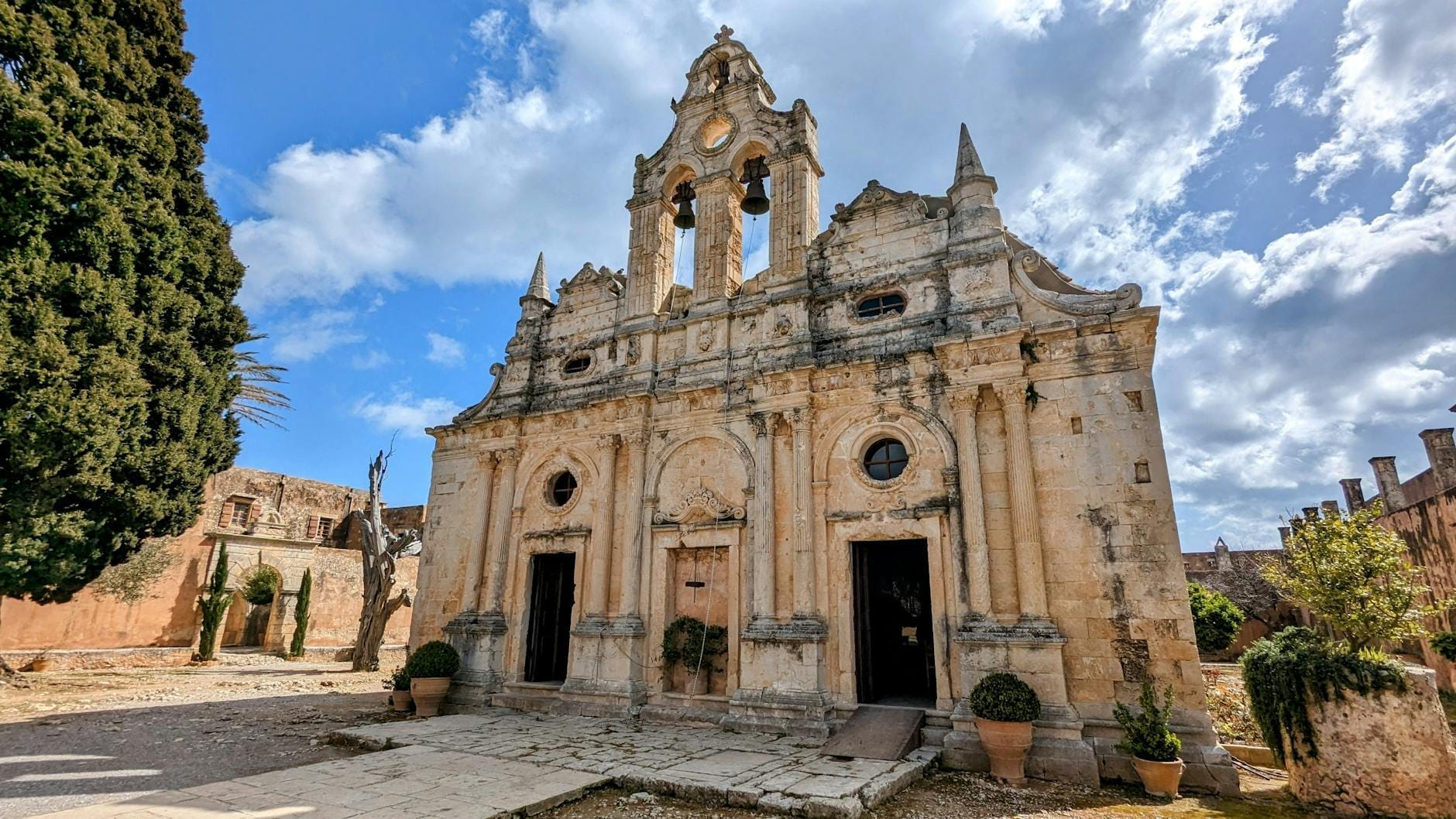
Rethymno is also a good base for day trips into the surrounding region. The Arkadi Monastery is about 25 km southeast and holds enormous significance in Cretan history: the 1866 explosion that killed hundreds of Cretan fighters and civilians rather than surrender to Ottoman forces became a symbol of the independence struggle. The monastery itself is architecturally striking and rarely crowded outside summer weekends. For gorge walking, the Kourtaliotiko Gorge is accessible within an hour's drive south and connects to the coast near Preveli.
Fortezza: plan 1.5-2 hours, go early to avoid midday heat
Rimondi Fountain square: best visited in the early evening
Nerantzes Mosque / Music Conservatory: exterior worth seeing
Venetian harbour and lighthouse walk
Arkadi Monastery day trip (25 km southeast)
Kourtaliotiko Gorge and Preveli Beach (1 hour south)
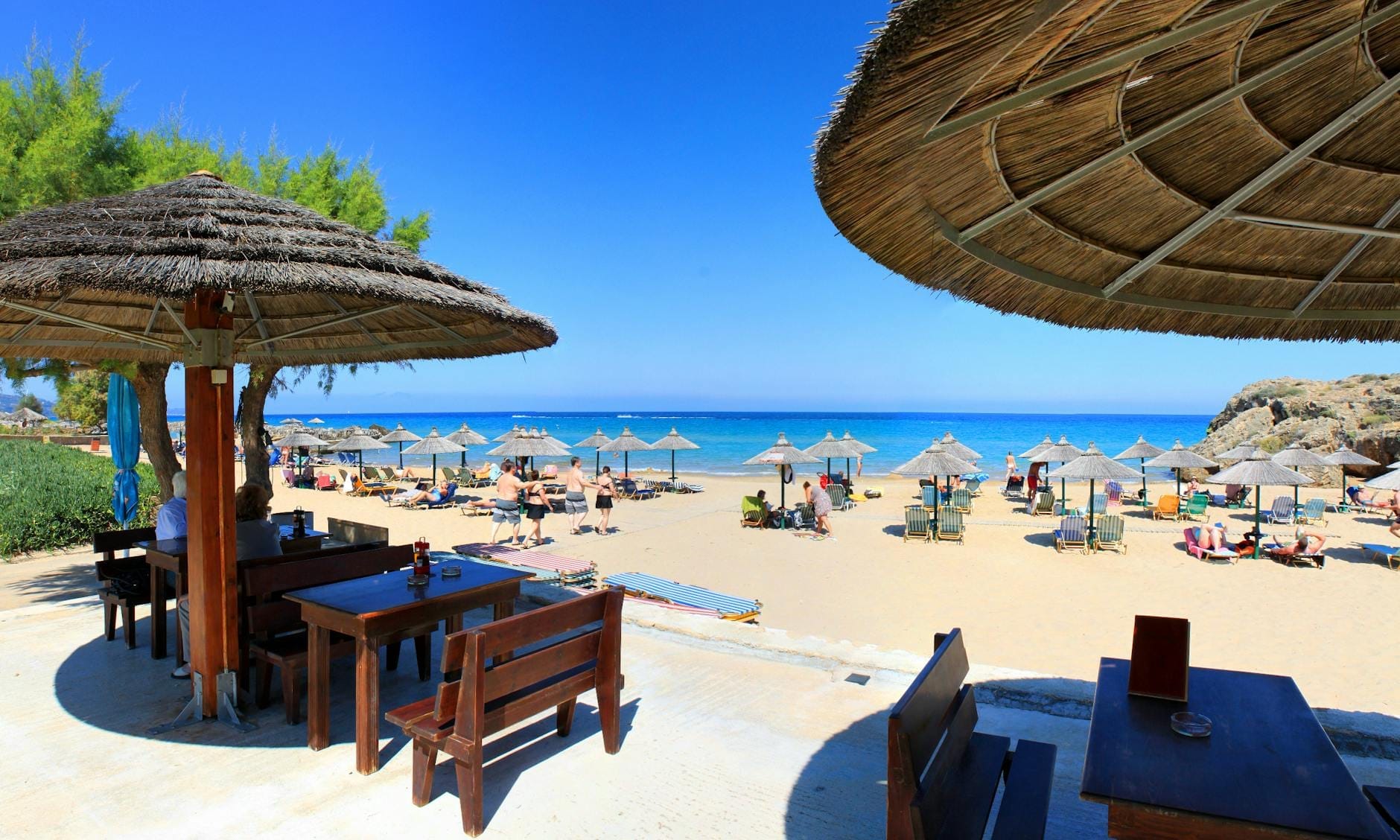
For beach options, the city's own long sandy beach runs east of the harbor for several kilometers and is easily walkable from the old town. Those willing to rent a car will find far less crowded options along the coast in both directions. Preveli Beach, about 35 km south, is one of the most distinctive beaches in Crete, where a freshwater river meets the sea beneath a palm grove.
Eating & Drinking
Rethymno's food scene is more honest than its tourist numbers might suggest. The harbor waterfront is predictably tourist-facing, with menus in six languages and outdoor seats designed to catch foot traffic rather than serve memorable food. Walk two or three streets into the old town and the quality improves. Cretan cooking here means dishes built around locally grown olive oil, fresh vegetables, legumes, and mountain herbs. For an overview of what to look for across Crete, the Cretan food guide covers the island's regional specialties in detail.
Look for dakos on most menus: a barley rusk topped with crushed tomato, local mizithra cheese, and olive oil. Lamb dishes slow-cooked with local herbs, stamnagathi (a wild Cretan green with a slightly bitter edge), and fresh seafood grilled simply with lemon and olive oil are the backbone of most serious menus in the old town. The city has a university, which means there is a working café and bar culture beyond the purely tourist-facing establishments.
For morning coffee and breakfast, the area around Petichaki Square and the lanes running south from the Rimondi Fountain have small cafés that serve locals as much as visitors. A proper Greek breakfast here is Greek yogurt with honey and walnuts, or a cheese pie from a bakery, rather than the buffet hotel version.
Rethymno produces wine and olive oil from the surrounding hinterland. Cretan wines made from indigenous varieties like Vidiano (white) and Kotsifali (red) appear on better wine lists in the old town. The municipal market near Iroon Square is the place to buy olive oil, local honey, and dried herbs to take home.
⚠️ What to skip
The harbor waterfront tavernas are almost universally overpriced relative to quality. Touts standing outside and laminated menus with photographs are reliable indicators. Better food at lower prices is consistently found in the lanes one to two streets back from the waterfront.
Getting There & Around
Rethymno has no airport. The nearest airports are Heraklion Nikos Kazantzakis (HER), about 78 km east, and Chania International (CHQ), about 60 km west. Both are well-connected to European cities in summer. From either airport, the simplest option is the intercity KTEL bus, which runs regularly along the north coast highway and stops at Rethymno's main bus station. Journey time is approximately one hour from Heraklion and 45-50 minutes from Chania. For guidance on moving between towns across the island, the guide to getting around Crete covers all transport options.
The KTEL bus station in Rethymno handles both intercity routes (to Heraklion, Chania, and Iraklion Airport) and regional routes into the surrounding villages and mountain areas. The Amari valley and villages toward Anogia are served by separate local bus lines from the station. Schedules reduce significantly outside the summer season.
Within the city, the old town is entirely walkable. The Fortezza, the harbor, the Rimondi Fountain, and the Archaeological Museum are all within a 10-15 minute walk of each other. Taxis are available from the main square and from the harbor. The long city beach is a flat 15-20 minute walk east from the old town along the promenade.
For exploring the wider region, a rental car is the practical choice. The E75 coastal highway runs east and west from the city, and the mountain roads south toward Arkadi Monastery, the Amari Valley, and the south coast are best navigated with your own vehicle. The Crete road trip guide outlines routes that make Rethymno a logical midpoint stop.
💡 Local tip
If you are arriving by bus from Heraklion or Chania with luggage, the KTEL bus station is about a 10-minute walk from the center of the old town. Most accommodation in the old town will arrange luggage storage or early check-in if you arrive before 2pm.
Where to Stay
Rethymno has accommodation that genuinely suits different types of traveler. The old town contains a concentration of boutique hotels and guesthouses converted from Venetian and Ottoman-era buildings. These properties offer stone vaulted ceilings, narrow staircases, and windows framing centuries-old architecture outside. They come at a price premium and are often not suitable for travelers with heavy luggage or mobility considerations due to the uneven stone lanes and multi-story buildings without lifts.
The harbor and beach strip in the new town has a wider range of hotels from budget to mid-range, with the advantage of easier parking and direct beach access. The trade-off is that you lose the old town atmosphere and the evening walk to the interesting restaurants and bars is longer.
Rethymno is well-suited to couples and solo travelers who want a base with genuine character without the full tourist-density of Chania's old town. Families with young children do well here given the calm, shallow city beach. For a wider comparison of where to base yourself across the island, the guide to where to stay in Crete covers all the main options.
Old Town: best for atmosphere, boutique hotels, close to Fortezza and harbor, not ideal for heavy luggage
Harbor area: mid-range hotels, good restaurant access, can be noisy at night
Beach strip (New Town): wider hotel range, easy beach access, less character, better for families with cars
Avoid booking based on hotel photos alone: old town properties vary enormously in condition and the lanes can be confusingly similar
Honest Assessment: Is Rethymno Right for You?
Rethymno occupies a sensible middle ground on the Cretan north coast. It is more intimate than Heraklion, which is a proper city that happens to have good ancient sites, and less aggressively touristic than Chania at the height of summer. The comparison between the two western cities is worth making before you book: the Chania vs Heraklion guide covers the wider debate, but Rethymno genuinely sits between them in character and visitor experience.
The city's weaknesses are worth naming directly. The harbor tourist strip is mediocre and pushy. Parking in and around the old town is difficult in summer. The city beach is long but not particularly clean or beautiful compared to what you can reach within an hour's drive. And outside of the old town's architectural interest and the Fortezza, there are fewer headline attractions than at either of the island's other major cities.
Where Rethymno succeeds is as a base: comfortable, well-connected by bus, with enough genuine local life in its streets to feel like you are somewhere real rather than a resort. For travelers who want to combine beach time with cultural exploration, day trips to Arkadi Monastery or the Cretan interior, and evenings eating well in an atmospheric old town, it delivers consistently. Those primarily interested in Minoan archaeology should consider Heraklion for the Palace of Knossos and the Heraklion Archaeological Museum. Those focused purely on beaches should look at options along the western coast.
TL;DR
Rethymno has the best-preserved Venetian old town on Crete's north coast, combined with a long city beach and a dramatic hilltop fortress that takes 2 hours to explore properly.
Best suited to: couples, culture-focused travelers, and anyone who wants a characterful base for exploring central Crete without the full tourist intensity of Chania.
The harbor waterfront is tourist-facing and overpriced; the real character of the city is in the lanes two streets back and on the slopes below the Fortezza.
Well-connected by KTEL bus to Heraklion (1 hour) and Chania (50 minutes); a rental car is needed for the best day trips into the mountains and south coast.
Not ideal for travelers primarily chasing beaches: the city beach is convenient but ordinary, and the region's best coastal spots require transport.
Crete has over 1,000 beaches, ranging from famous pink-sand lagoons to wild river-mouth coves. This guide ranks the best by region so you can plan your base and your days on the water without the guesswork.
Crete is large enough that each of its main towns sits within reach of completely different landscapes, ruins, and coastlines. This guide organizes the best day trips by base town, so whether you're staying in Chania, Heraklion, Rethymno, or Agios Nikolaos, you'll know exactly where to go and how to get there.
Crete holds one of the richest concentrations of museums in the Mediterranean, from world-class Minoan collections to maritime heritage and Byzantine icons. This guide covers the essential museums and historically significant sites across the island, organized by theme and region.
Crete rewards visitors year-round, but the right time depends entirely on what you want. This guide breaks down every month by weather, crowds, prices, and activities so you can plan with confidence.
Choosing between Chania and Heraklion shapes your entire Crete experience. This guide breaks down both cities honestly, covering location, culture, beaches, day trips, and who each one actually suits.
Cretan cuisine is one of the most distinctive and well-studied food traditions in the world, rooted in 4,000 years of agricultural practice and the foundational principles of the Mediterranean diet. This guide covers the essential dishes, local ingredients, seasonal patterns, and practical tips for eating well across the island.
Crete's coastline is best explored from the water. From the tidal lagoon at Balos to the haunting island of Spinalonga, these are the boat trips worth planning your days around.
Crete delivers more romance than most Greek islands dare to promise. From the pink-sand shores of Elafonissi to candlelit dinners in Chania's Venetian harbour and private yacht trips around hidden sea caves, this guide covers every romantic experience worth planning, plus honest advice on where the crowds go and where couples actually find peace.
October is one of the most underrated months to visit Crete. The summer crowds have thinned, sea temperatures stay around 23°C, and the island shifts into a slower, more authentic rhythm. This guide covers what the weather actually looks like, which attractions stay open, where crowds still linger, and how to plan a genuinely rewarding trip.
July and August are Crete's most popular months, and for good reason. The sea hits 26°C, the days stretch to 12 hours of sunshine, and almost every beach, taverna, and archaeological site is fully operational. But peak season on Greece's largest island comes with real trade-offs. This guide breaks down exactly what to expect and how to handle it.
Crete's interior is a world apart from its famous coastline. This guide covers the island's most compelling mountain villages, the gorges and caves surrounding them, and the ancient sites tucked into its high plateaus and rugged massifs.
Crete after dark ranges from cocktails beside a Venetian harbour to all-night club marathons in Malia. This guide breaks down the best nightlife in Crete by city, venue type, and season, so you know exactly where to go and what to expect before you arrive.
Crete produces some of the world's finest olive oil and a range of wines from indigenous grapes found nowhere else on earth. This guide covers where to taste, what to look for, how to book tours, and what's actually worth bringing home.
Crete is one of the Mediterranean's most rewarding destinations, and it doesn't have to be expensive. This guide breaks down real daily costs, the cheapest ways to get around, where to eat well for under €10, and which experiences are completely free — so you can spend more time enjoying the island and less time worrying about your wallet.
Crete rewards self-drivers like few Mediterranean islands can. From the white-pebble coves of the south coast to the gorge-carved mountains of the interior, this guide covers every route, practical detail, and honest warning you need to drive Crete with confidence.
The ferry from Crete to Santorini is faster, cheaper, and more scenic than flying via Athens. This guide covers every option: high-speed ferries, slow overnight boats, the flight reality, day trip logistics, and what to book first in summer.
Two of Greece's most iconic islands, but they deliver very different experiences. This guide breaks down beaches, budget, activities, and logistics so you can decide which island actually suits your trip.
From pink-sand beaches with toddler-safe shallows to underwater aquariums and myth-soaked caves, Crete delivers a remarkable range of family experiences. This guide breaks down the best activities by age group, the seasonal realities parents need to know, and the honest warnings that travel brochures skip.
Crete rewards travelers who know where to look, and the best experiences here rarely require a ticket. From pink-sand beaches and mythological caves to Venetian harbors and ancient ruins, here are 20 genuinely free things to do across the island.
Crete is 260 km long and divided into four distinct regions. Getting around efficiently requires planning. This guide breaks down every transport option — from KTEL buses to car rental pricing — so you can move around Greece's largest island without wasting a day.
Crete rewards travelers who look beyond Knossos and Elafonissi. This guide uncovers the island's lesser-known beaches, gorges, ancient sites, and villages that most visitors drive straight past.
Crete is one of Europe's finest hiking destinations, with towering gorges, mountain plateaus, coastal paths, and ancient landscapes to explore. This guide covers the best trails across the island, from iconic gorge walks to quieter routes that reward those willing to go further.
Crete delivers a caliber of luxury that rivals anywhere in the Mediterranean. This guide cuts through the noise to identify the best high-end hotels, private villas, and exclusive experiences across the island's four regions, with honest advice on where to splurge and where to save.
The Matala Beach Festival is one of Europe's largest free-entry music events, held annually on the south coast of Crete. Running across four stages for three days each July, it draws thousands of visitors to a beach that has its own remarkable counterculture history. Here is everything you need to plan your visit.
The Minoans built Europe's first advanced civilization on Crete over 4,000 years ago, leaving behind palaces, frescoes, and artifacts that still astonish. This guide covers the essential sites, museums, and landscapes connected to their remarkable world.
Seven days is enough to cover Crete's four regional units, its best beaches, and its most significant ancient sites — if you plan it right. This guide gives you a day-by-day route built around a rental car, honest crowd warnings, and practical details on costs and timing.
Crete is Greece's largest island and one of its most rewarding destinations, with Minoan ruins, dramatic gorges, world-class beaches, and a food culture that puts most of Europe to shame. This guide covers the best things to do in Crete across every category, with honest advice on what's worth your time and what to skip.
Crete is 260 km long, and choosing the wrong base can cost you hours of driving each day. This guide breaks down the best areas to stay in Crete by location, travel style, and budget, with honest advice on which towns to avoid and which hotels are worth booking early.