Lake Kournas: Crete's Only Freshwater Lake
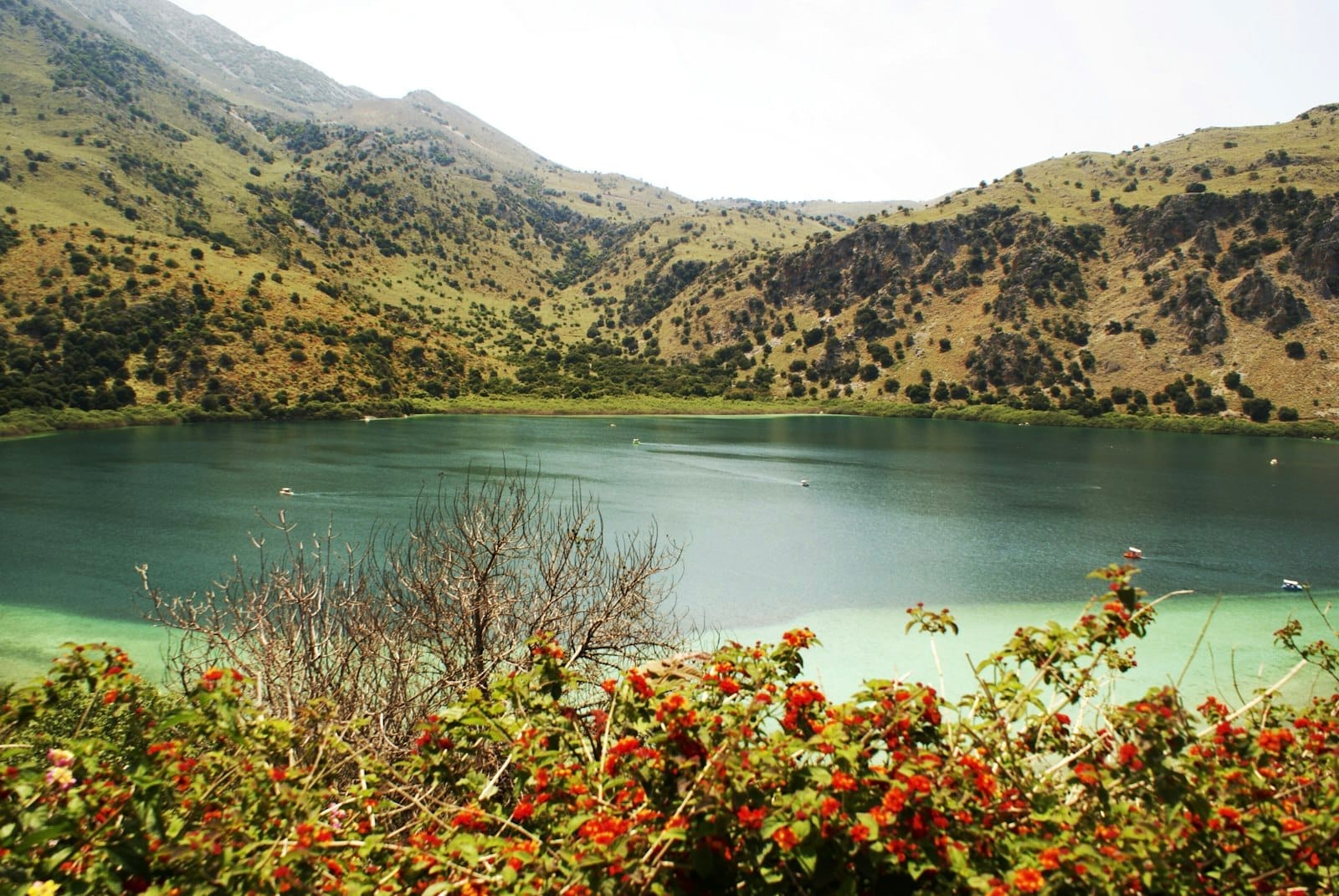
Tucked inland from the north coast between Chania and Rethymno, Lake Kournas is Crete's sole freshwater lake — a striking contrast to the island's rugged, sun-scorched landscape. Terrapins bask on rocky outcrops, water birds drift across the surface, and the surrounding hills reflect in the still water with an almost mirror-like quality that explains the lake's name.
Quick Facts
- Location
- Apokoronas, Chania region — 3-4 km inland from Georgioupolis, 47 km east of Chania, 20 km west of Rethymno
- Getting There
- Car recommended; follow signs from Georgioupolis on the E75. No scheduled public bus to the lake itself
- Time Needed
- 1.5 to 3 hours, depending on whether you walk the perimeter or linger at a lakeside taverna
- Cost
- Free entry to the lake; pedalo rental and taverna meals are paid separately (seasonal pricing)
- Best for
- Families, nature lovers, wildlife watchers, and anyone wanting a break from beach crowds
What Makes Lake Kournas Worth Visiting
Lake Kournas holds a genuinely unusual place in Cretan geography: it is the island's only natural freshwater lake. That alone draws attention, but what keeps visitors longer than expected is the atmosphere. The lake sits in a natural bowl formed by low hills on three sides, with the White Mountains visible on clear days to the south. The water is a deep, shifting blue-green, its color varying with the angle of the sun and the season. There are no dramatic cliffs or ancient ruins here. The draw is quieter: a working ecosystem in the middle of a Mediterranean island better known for beaches and palace sites.
The lake is fed by springs originating in the White Mountains, most notably a spring known locally as Mati (meaning 'eye'). Water levels rise noticeably in winter and early spring when snowmelt and rainfall push the lake to its fullest extent. By August, the level drops enough to expose sandy shores around parts of the perimeter, giving the lake a different visual character in summer compared to spring.
💡 Local tip
Visit in spring (April to early June) for the fullest water levels, greenest hillside vegetation, and the most active wildlife. Summer visits are more crowded but the exposed sandy shallows make it easier to wade in.
History and Name: From Ancient Korisia to Arabic Mirrors
The lake's ancient name was Koresia, associated with the nearby settlement of Korion or Hippocorion. Ancient sources suggest a temple to Athena once stood on the hill above the southern shore, though nothing of it survives visibly today. The transition from 'Korisia' to 'Kournas' is thought to trace through the Arabic word 'kournas,' meaning lake, a linguistic trace of the Arab occupation of Crete between 824 and 961 CE. That etymology is fitting: on a still morning before any wind arrives, the surface of the lake reflects the encircling hills with almost photographic precision.
Today the lake and its surrounding habitat are designated a Natura 2000 protected site, recognizing the ecosystem's importance for biodiversity. The nature reserve occupies particularly the southwest shore, where reed beds and wetland vegetation provide nesting cover. Historically, eels were present in the lake; now the most visible fauna are freshwater terrapins (European pond turtles), various duck species, and water snakes. Terrapins are easy to spot on warm mornings when they haul themselves onto rocks and fallen branches near the shore.
Tickets & tours
Hand-picked options from our booking partner. Prices are indicative; availability and final rates are confirmed when you complete your booking.
From Argiroupolis to Kournas Lake and Chania tour from Heraklion
From 630 €Instant confirmationFree cancellationVisit a Family-Run Olive Mill with Food Tasting in Heraklion
From 19 €Instant confirmationFree cancellationSnorkeling experience in Crete
From 45 €Instant confirmationFree cancellationSpinalonga self-guided audio tour on your phone
From 12 €Instant confirmationFree cancellation
The Experience at Different Times of Day
Early morning, before the coach tours arrive from the coastal resorts, the lake is at its most serene. The water is glassy, the hills catch the first warm light, and the only sounds are frogs, birds, and the occasional splash of a terrapin dropping from a rock. This is the best window for photography: soft light, no pedalo traffic, no music from the taverna sound systems.
By mid-morning, particularly from June to September, families and day-trippers from Georgioupolis and the Rethymno resort strip begin arriving. The pedalo hire operations open up, and the small cluster of tavernas on the eastern shore start serving coffee and eventually lunch. The atmosphere becomes more relaxed and social rather than contemplative. Children wade in the shallows where the sandy bottom is visible, and the terrapins become bold enough to approach visitors who sit quietly near the water's edge.
Late afternoon sees the light shift to gold across the water and the hills above take on a deeper green. Most day visitors leave by mid-afternoon, and the lake quietens again. If you time a meal at one of the tavernas for around 5 pm, you often have the place nearly to yourself with a view across the water as the light softens.
ℹ️ Good to know
The lake surface is approximately 580,000 square meters, with a perimeter of roughly 3.5 km. The full perimeter walk takes around 45 to 60 minutes at an easy pace, though part of the southwest section near the nature reserve can be uneven and overgrown outside the main footpaths.
Wildlife and the Ecosystem Up Close
The resident European pond turtles are the star attraction for most visitors, and they deliver. On any warm morning, dozens can be spotted spread across exposed rocks and logs around the northern and eastern shores. They're cautious but not skittish, and if you settle on a boulder near the waterline and stay still, they will resume their sunbathing within minutes. Water snakes are also present, though rarely seen unless you're moving slowly through the vegetation at the margins.
Bird life includes mallards, coots, and various wading species, with more activity during the spring migration period. The reed beds on the southwest shore are worth scanning with binoculars. Kingfishers are occasionally reported here. The water itself is clear enough in the shallows to see small fish near the surface, particularly in the early morning before any boat traffic stirs the sediment.
For anyone spending multiple days in the region, Lake Kournas makes an excellent pairing with a coastal morning at Preveli Beach or a hike through the Kourtaliotiko Gorge, both of which are less than an hour's drive to the south. The contrast between freshwater wetland and dramatic coastal gorge geology makes for a satisfying day.
Getting There and Getting Around the Lake
The lake is not reachable by public bus from Rethymno or Chania in any direct, practical way. A car or scooter is the realistic option for most visitors. From Rethymno, head west on the E75 coastal road for approximately 20 km and take the signed turnoff toward Georgioupolis; from there, follow signs inland for Kournas village. The road climbs gently through olive groves and arrives at a small parking area near the eastern shore, where the tavernas and pedalo hire are concentrated. The drive from Rethymno takes around 25 minutes.
From Chania, the lake is about 43 km east, roughly 40 to 45 minutes by car on the same E75. If you're based in Georgioupolis, the lake is only 3 to 4 km inland, and the road is manageable on a bicycle for moderately fit riders, though it does climb.
If you're planning a road trip through this part of the island, the lake fits naturally into a loop that includes Georgioupolis and then continues south toward Preveli Monastery. See our Crete road trip guide for a full route through the Rethymno region.
⚠️ What to skip
The terrain around most of the lake's perimeter is uneven, with loose stone and root-covered paths in places. Wheelchair access is limited to the paved area near the eastern shore tavernas. The southwest Natura 2000 section is not accessible to anyone with limited mobility.
Pedalos, Tavernas, and What to Expect Practically
The eastern shore has the only real visitor infrastructure at the lake: a small cluster of tavernas serving Cretan staples, grilled fish, and cold drinks, along with seasonal pedalo hire. Pedalos are popular with families and give you a completely different perspective on the lake, allowing you to drift to the quieter western sections away from shore. Rental prices are seasonal and negotiated on the spot; there are no advance bookings.
The taverna food quality varies, as it does anywhere catering to passing tourists, but portions are generally generous and the setting, with water directly below the terrace, compensates for any culinary ambition gaps. Go for the simpler dishes: grilled lamb chops, dakos, and local wine rather than anything elaborate.
If you want context for what you're eating alongside the lake, the Cretan food guide covers the island's distinct culinary traditions in detail.
Photography and Practical Tips
The lake photographs best from the northern hillside, where you can shoot down across the water with the White Mountains behind on clear days. Getting to that elevated position requires a short, steep scramble up from the main path, but the view justifies it. For reflections, arrive before 9 am in summer; any breeze after mid-morning disturbs the surface. In autumn and winter, the lake level is higher and the surrounding hills are greener, making for more dramatic landscape shots even in overcast light.
The best months for photography and wildlife watching overlap with the broader best time to visit Crete: April through early June, and again in September to October when summer crowds thin and the light is golden.
Who Will Love This Place and Who Might Not
Lake Kournas suits families with young children particularly well. The water is calm, there are no waves or currents, the terrapins are a guaranteed hit, and pedalo rides provide an hour of easy entertainment. Nature photographers and birdwatchers find real value here, especially in spring. Couples who have already done the main beach circuit and want something different for a half-day will find it refreshing.
That said, travelers expecting a dramatic landscape spectacle should calibrate their expectations. This is a gentle, pastoral lake in a shallow bowl, not a mountain scenery showpiece. Visitors who have already seen genuinely stunning freshwater landscapes elsewhere in Europe may find it pleasant but unremarkable. In peak July and August, the combination of coach tour groups and pedalo queues can also make the eastern shore feel crowded and loud for a couple of hours around midday.
If you're weighing up how to spend limited time in this part of Crete, also consider Samaria Gorge for a more physically demanding full-day alternative, or explore the broader hiking options across Crete to match your fitness level and available days.
Insider Tips
- Arrive before 9 am in summer if you want the lake to yourself. The tour groups from Georgioupolis and Rethymno typically arrive between 10 am and 11 am, and the shift in atmosphere is immediate.
- The spring known as Mati, which feeds the lake from the hillside above the southern shore, becomes visible as a distinct seep in late summer when water levels drop. It's worth seeking out if you're walking the full perimeter.
- Bring binoculars. The terrapins are visible with the naked eye, but the birdlife in the reed beds on the southwest shore requires magnification to appreciate properly.
- The tavernas directly on the water charge a slight premium for the view. A small kafeneion near the car park above the shore serves cheaper coffee and is popular with locals year-round.
- In October and November, the lake often has the best combination of full water levels, colored hillside vegetation, and very few visitors. The light is softer than summer and the air temperature is comfortable for the perimeter walk.
Who Is Lake Kournas For?
- Families with young children looking for a half-day alternative to beach days
- Wildlife watchers and birdwatchers, especially in spring and early autumn
- Photographers wanting calm reflective water and landscape variety
- Road-trippers passing between Chania and Rethymno who want a genuine stop rather than a roadside layby
- Couples seeking a quiet, low-key afternoon with good taverna food and water views
Nearby Attractions
Other things to see while in Rethymno:
- Arkadi Monastery
Perched on a fertile plateau 500 meters above sea level, 23 kilometers from Rethymno, Arkadi Monastery carries the weight of one of the most dramatic episodes in Cretan history. The 1866 explosion that killed hundreds of refugees rather than allow Ottoman capture transformed this working monastery into a national symbol. Today it remains an active religious site, a sobering museum, and one of the most architecturally striking complexes on the island.
- Fortezza of Rethymno
Perched on Paleokastro hill above Rethymno's old harbor, the Fortezza is one of the best-preserved Venetian fortifications in the Mediterranean. Built between 1573 and 1580, it offers sweeping sea views, Ottoman-era monuments, and a walk through 400 years of Cretan history.
- Rethymno Archaeological Museum
The Rethymno Archaeological Museum traces Cretan civilization from the Paleolithic era through Roman occupation, displayed inside the 16th-century Church of Saint Francis. For a small admission fee, visitors access one of the most coherent regional collections in Crete, covering Minoan palace culture, burial customs, and everyday life across the centuries.
- Rethymno Beach
Rethymno Beach is a 13 to 15 kilometre arc of golden sand that begins at the eastern edge of Rethymno's Old Town and stretches east toward Skaleta. Free to access, gently shelving, and backed by hotels and tavernas, it works equally well for a quick morning swim or a full beach day.