Heraklion Archaeological Museum: The World's Greatest Minoan Collection
The Archaeological Museum of Heraklion holds the most complete collection of Minoan artifacts on earth, spanning 5,500 years from the Neolithic period through Roman times. For anyone serious about ancient Mediterranean civilizations, this is the definitive stop in Crete.
Quick Facts
- Location
- Xanthoudidou & Hatzidaki St., Heraklion city center, near Eleftherias Square
- Getting There
- Walkable from Heraklion port (15 min) and the old town; central bus routes stop at Eleftherias Square
- Time Needed
- 2 to 3 hours minimum; serious visitors spend a full half-day
- Cost
- Paid admission; verify current prices and combo tickets at heraklionmuseum.gr
- Best for
- History enthusiasts, archaeology lovers, families with curious teenagers, solo travelers
- Official website
- heraklionmuseum.gr/en
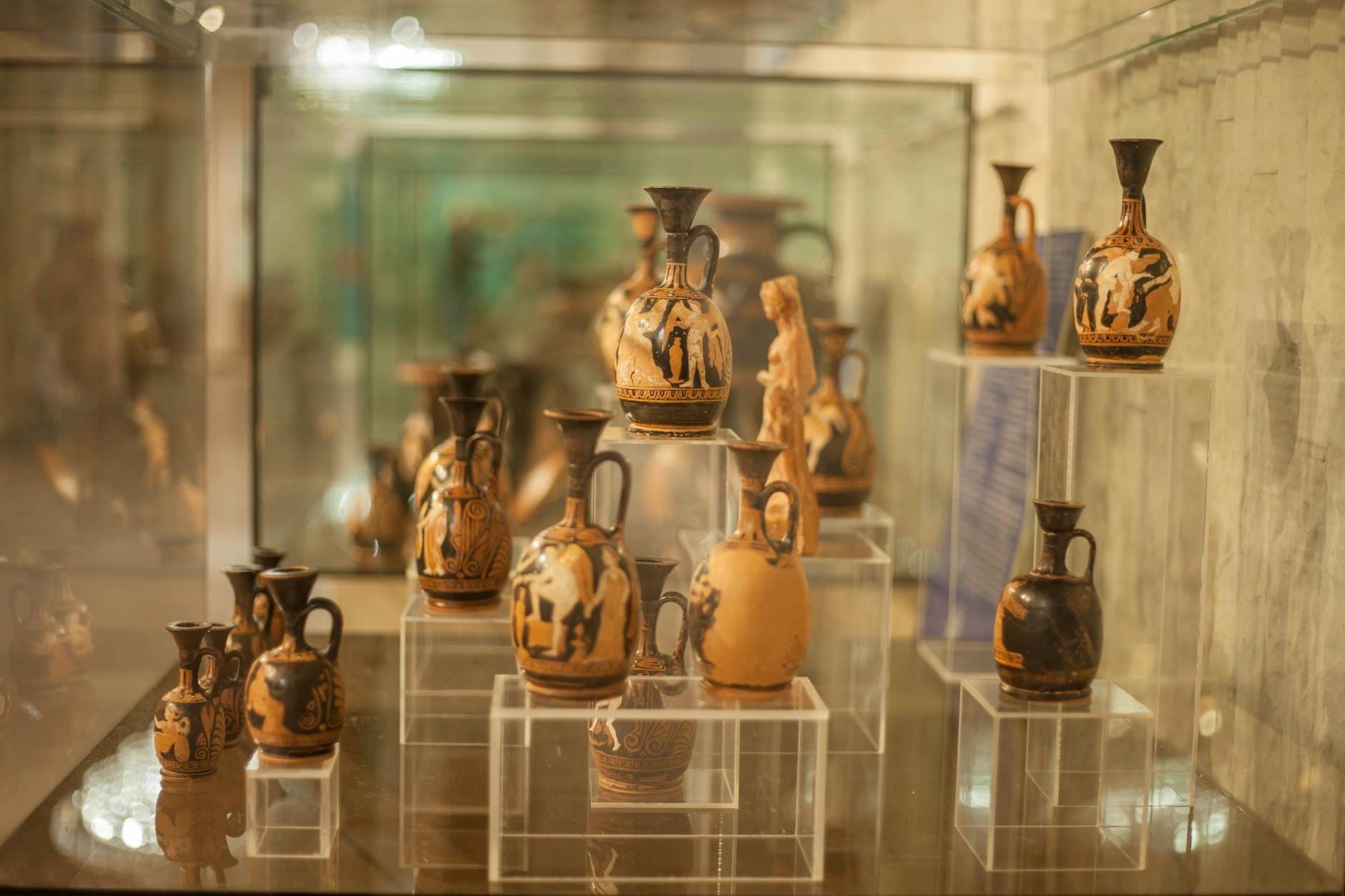
Why This Museum Matters
The Archaeological Museum of Heraklion is not simply one of Greece's better regional museums. It is the primary repository for one of the most sophisticated Bronze Age civilizations ever documented. The Minoans, who flourished on Crete from roughly 2700 BCE, left behind a material culture of extraordinary refinement: painted frescoes of athletic young men leaping over bulls, ceramic vessels so thin-walled they seem impossible to have survived three millennia underground, and a still-undeciphered script known as Linear A. Almost all of it ends up here, in a modernist building in the center of Heraklion, where you can stand a few centimeters from objects that predate classical Greece by over a thousand years.For context, the Minoans were building palace complexes and trading across the eastern Mediterranean while northern Europeans were still in the early Bronze Age. Knossos and the other major palace sites — Phaistos, Malia, Zakros, and Kydonia — were collectively inscribed on the UNESCO World Heritage List in 2024, a recognition that has only deepened international interest in the museum's holdings.
If you plan to visit the Palace of Knossos during your trip, the museum is not optional — it is essential preparation. The site itself is largely bare ruins and reconstructed columns; the objects that once filled it are here. Doing the museum first gives the palace excavations a completely different level of meaning.
💡 Local tip
Arrive at opening time or in the final 90 minutes before closing. Midday hours between 11am and 2pm see the heaviest cruise-ship and tour-group traffic, which makes the galleries genuinely congested and harder to appreciate.
The Building and Its History
The museum was founded in 1883, initially as a modest collection of local antiquities assembled during the late Ottoman period of Crete. The current building was designed by architect Patroklos Karantinos in a clean modernist style and constructed between 1935 and 1958. It stands on the site of a former Venetian monastery, a layer of history that feels apt for a city where the past rarely sits quietly beneath the surface.
A major renovation completed in 2014 reorganized the permanent galleries chronologically across two floors, significantly improved lighting, and added bilingual labeling in Greek and English. The result is a museum that feels contemporary without erasing its mid-century bones. The entrance hall is cool and high-ceilinged, a genuine relief if you arrive in July or August heat. Natural light enters through upper windows in several galleries, which improves the experience of viewing frescoes but means the atmosphere shifts noticeably depending on whether the day outside is overcast or bright.
Tickets & tours
Hand-picked options from our booking partner. Prices are indicative; availability and final rates are confirmed when you complete your booking.
Knossos Archaeological Site Entrance Tickets and Heraklion Audio Guide
From 10 €Instant confirmationVisit a Family-Run Olive Mill with Food Tasting in Heraklion
From 19 €Instant confirmationFree cancellationHeraklion Snorkelling Tour with Sea Scooter
From 70 €Instant confirmationFree cancellationEcobike wine ride tour of Heraklion
From 79 €Instant confirmationFree cancellation
What You Will Actually See: A Room-by-Room Orientation
The permanent collection is arranged chronologically, moving from Neolithic settlements through Early and Middle Minoan periods, peaking with the Late Minoan palace culture, and concluding with Geometric, Archaic, Classical, and Roman Crete. The Minoan galleries occupy the largest footprint and justify the visit on their own.
The Kamares Ware Ceramics
Among the earliest highlights are the Kamares Ware vessels from the Middle Minoan period, roughly 2000 to 1700 BCE. These are polychrome ceramic pieces with swirling abstract decoration in white, red, and orange on dark grounds — patterns that look almost Art Nouveau. The walls of some cups are barely 1mm thick. Standing in front of them, it is worth pausing to register that these were functional drinking vessels made four thousand years ago.
The Frescoes
The fresco galleries contain the museum's most famous images, including the Bull Leaping Fresco from Knossos, the Ladies in Blue, and the Blue Monkey fresco. These are fragmentary, reconstructed from small surviving pieces, which means some of what you are looking at involves scholarly interpretation. The museum is honest about this, and the reconstruction process itself is fascinating. The color saturation in the originals is startling — these civilizations were not using earth tones in their interiors. Blues, saffron yellows, and deep reds suggest a visual culture of considerable boldness.
The Phaistos Disc and Room 3
Room 3 contains what is arguably the museum's single most photographed object: the Phaistos Disc, a baked clay disc approximately 16cm in diameter, stamped on both sides with 241 tokens in a spiral pattern using 45 distinct signs. Discovered at the Minoan palace of Phaistos in 1908, it dates to roughly 1700 BCE. The script remains undeciphered despite over a century of attempts. The disc sits in a low case under glass, and it is significantly smaller than most first-time visitors expect. That smallness is part of what makes it remarkable. The signs are dense, deliberate, and completely opaque.
The Minoan palace at Phaistos itself is one of the most underrated archaeological sites in Crete — well worth combining with a museum visit if you have a rental car or join a day trip from Heraklion.
The Snake Goddess Figurines
Two small faience figurines known as the Snake Goddesses are among the most reproduced images of Minoan Crete. Both show a bare-breasted female figure with snakes wrapped around her arms. Found in a palace repository at Knossos, they date to around 1600 BCE. Whether they represent a deity, a priestess, or something else entirely is still debated. Up close, the craftsmanship in the faience inlay work is extraordinary for objects less than 35cm tall.
How the Visit Changes by Time of Day
The museum opens its doors to a trickle of early arrivals, often independent travelers who know better than to come later. These first two hours are noticeably quieter. Sound in the galleries is minimal — footsteps on stone floors, the occasional murmured exchange between two visitors, the soft hum of climate control. This is when the frescoes reward sustained looking.
By mid-morning, organized tour groups begin arriving in waves. Groups tend to cluster around the fresco rooms and the Phaistos Disc, creating bottlenecks at specific cases. The audio guide in the group leader's hand means that five different narrations are often playing simultaneously in the same gallery. If you are sensitive to this kind of sensory overlap, time your visit to the quieter objects — the Geometric and Roman galleries on the upper floor see far less traffic, and the quality of material is still high.
Late afternoon, roughly from 3:30pm onward, the tour groups depart and the museum settles again. The light through the upper windows shifts warmer, which does something genuinely pleasant to the fresco colors. Staff begin moving quietly through the galleries. This is the second-best window for a visit, though verify closing times on the official site before planning accordingly, as seasonal hours vary.
⚠️ What to skip
The last admission is typically 20 minutes before official closing time. Do not cut it close if you want to see the upper floor properly — arriving 30 minutes before close leaves almost no time in the Minoan peak galleries.
Practical Details for Getting the Most from Your Visit
The museum is located at the intersection of Xanthoudidou and Hatzidaki Streets, a short walk from Eleftherias Square in central Heraklion. From the Venetian harbor area or the market street of 1866, it is reachable on foot in 10 to 15 minutes. There is no dedicated parking immediately adjacent, so arriving by foot or taxi is more practical than by car.
Heraklion's central market, 1866 Street Market, is a logical pairing for the same morning: arrive at the museum when it opens, spend two to three hours, then browse the market before lunch.
An audio guide is available for rent at the entrance and is worthwhile for solo travelers. The English labels on exhibits are generally informative, but context about the relationships between objects and their original palace contexts is not always obvious from signage alone. Photography without flash is permitted throughout the permanent collection. Cases can produce reflections, so a slight angle adjustment usually resolves glare. Tripods are not permitted.
Comfortable shoes matter more than most visitors anticipate. The floors are stone throughout, and two full floors of galleries add up to considerable walking distance. There is a small museum shop and a cafe. Accessibility provisions including elevator access to upper floors exist, though visitors with specific mobility requirements should contact the museum directly at +30 2810 279000 or amh@culture.gr before visiting to confirm current arrangements.
ℹ️ Good to know
Combo tickets pairing the Archaeological Museum with Knossos are sometimes available and represent good value if you plan to visit both, which most serious visitors do. Check current options at heraklionmuseum.gr or through the e-ticket portal at hhticket.gr before arriving.
Honest Assessment: Who Benefits and Who Might Struggle
This is not a museum that works well as a quick walk-through. The Minoan collection is dense with objects that require some baseline curiosity about Bronze Age civilization to appreciate fully. Visitors who come expecting dramatic reconstructed rooms or interactive displays will find a more traditional, object-focused presentation. The renovation has improved significantly on what was once a quite dated layout, but this remains a scholarly collection first and a show-stopping spectacle second.
Families with young children should calibrate expectations carefully. There is no children's activity program or dedicated play space, and the cases are low enough that small children will press close to the glass. That said, children who have been primed with stories about the Minotaur, King Minos, or Theseus often respond unexpectedly well to seeing the actual objects from that world. For deeper context on the mythology and history behind the collection, the guide to Minoan history in Crete is worth reading before your visit.
Visitors spending only a single day in Heraklion who are primarily interested in beaches and food can reasonably prioritize other experiences. But for anyone with even a passing interest in ancient history, skipping this museum in favor of a day on the coast would be a significant missed opportunity. The Minoan collection here has no equivalent anywhere else in the world — not Athens, not London, not New York.
If you are building a Heraklion itinerary around history and culture, combine the museum with a walk along the Heraklion Venetian Walls and a trip out to Knossos in the afternoon. That sequence gives you a span of roughly 3,500 years of Heraklion's story in a single day.
Insider Tips
- The Phaistos Disc case sits low and is frequently surrounded by people photographing it. Arrive in the first hour of opening and you can stand at the case alone for as long as you want — the difference in experience is significant.
- The upper floor Roman and Geometric galleries are consistently undervisited. The collection of Archaic-period bronze figures and the Roman-era portrait busts are worth 20 minutes of quiet attention that most visitors never give them.
- If you are serious about the frescoes, bring a small pair of compact binoculars. Some of the reconstructed fresco panels are mounted high and the detail in the upper sections is not visible from floor level.
- The museum shop stocks several genuinely good scholarly catalogs and reproduction items. The Minoan collection catalog (available in English) is the most authoritative single-volume reference available and costs far less than comparable museum catalogs in northern Europe.
- Cell signal inside the building is often weak, particularly in the basement-level and inner gallery spaces. Download offline maps and any audio content before entering rather than relying on streaming.
Who Is Heraklion Archaeological Museum For?
- History and archaeology enthusiasts who want depth, not highlights
- Visitors combining the museum with a trip to Knossos or Phaistos
- Travelers on a rainy or extremely hot day who need an indoor alternative
- Curious teenagers and adults who have read any background on ancient civilizations
- Photographers interested in ancient artifacts and museum interior composition
Nearby Attractions
Other things to see while in Heraklion:
- CretAquarium
Located 15 km east of Heraklion on a former American military base, CretAquarium is one of Europe's largest modern aquariums. Run by the Hellenic Centre for Marine Research, it showcases around 2,000 animals from 200 Mediterranean species across 1,800,000 liters of seawater. It is a serious scientific institution that doubles as a compelling day out.
- 1866 Street Market (Heraklion)
Running from Meidani Square to Kornarou Square in the heart of Heraklion, the 1866 Street Market is the most concentrated expression of Cretan food culture in the city. Free to enter, alive with vendors and locals, and framed by layers of Ottoman and Venetian history, it rewards anyone willing to slow down and look closely.
- Heraklion Venetian Walls & Koules Fortress
Rising from the breakwater of Heraklion's old harbor, the Koules Fortress is one of the best-preserved Venetian sea fortresses in the eastern Mediterranean. Combined with the city's sweeping land walls, this is Heraklion's most visually commanding historical site.
- Natural History Museum of Crete
Housed in a restored industrial power plant on Heraklion's waterfront, the Natural History Museum of Crete covers 3,500 square metres of Eastern Mediterranean biodiversity, geology, and paleontology. The star exhibit is a 4.5-metre Deinotherium skeleton — the largest land mammal ever found on Crete. It is a serious research institution that also works well as a family afternoon.