1866 Street Market: Heraklion's Living Food Bazaar
Running from Meidani Square to Kornarou Square in the heart of Heraklion, the 1866 Street Market is the most concentrated expression of Cretan food culture in the city. Free to enter, alive with vendors and locals, and framed by layers of Ottoman and Venetian history, it rewards anyone willing to slow down and look closely.
Quick Facts
- Location
- Odos 1866, Heraklion city centre, between Meidani and Kornarou Square
- Getting There
- Short walk from Lions Square (Plateia Venizelou); no direct bus required
- Time Needed
- 45 minutes to browse; 1.5–2 hours if you stop to eat or shop seriously
- Cost
- Free entry; bring cash for purchases
- Best for
- Food lovers, photographers, anyone wanting a non-touristy slice of Heraklion
- Official website
- visitheraklion.eu/en/1866-street
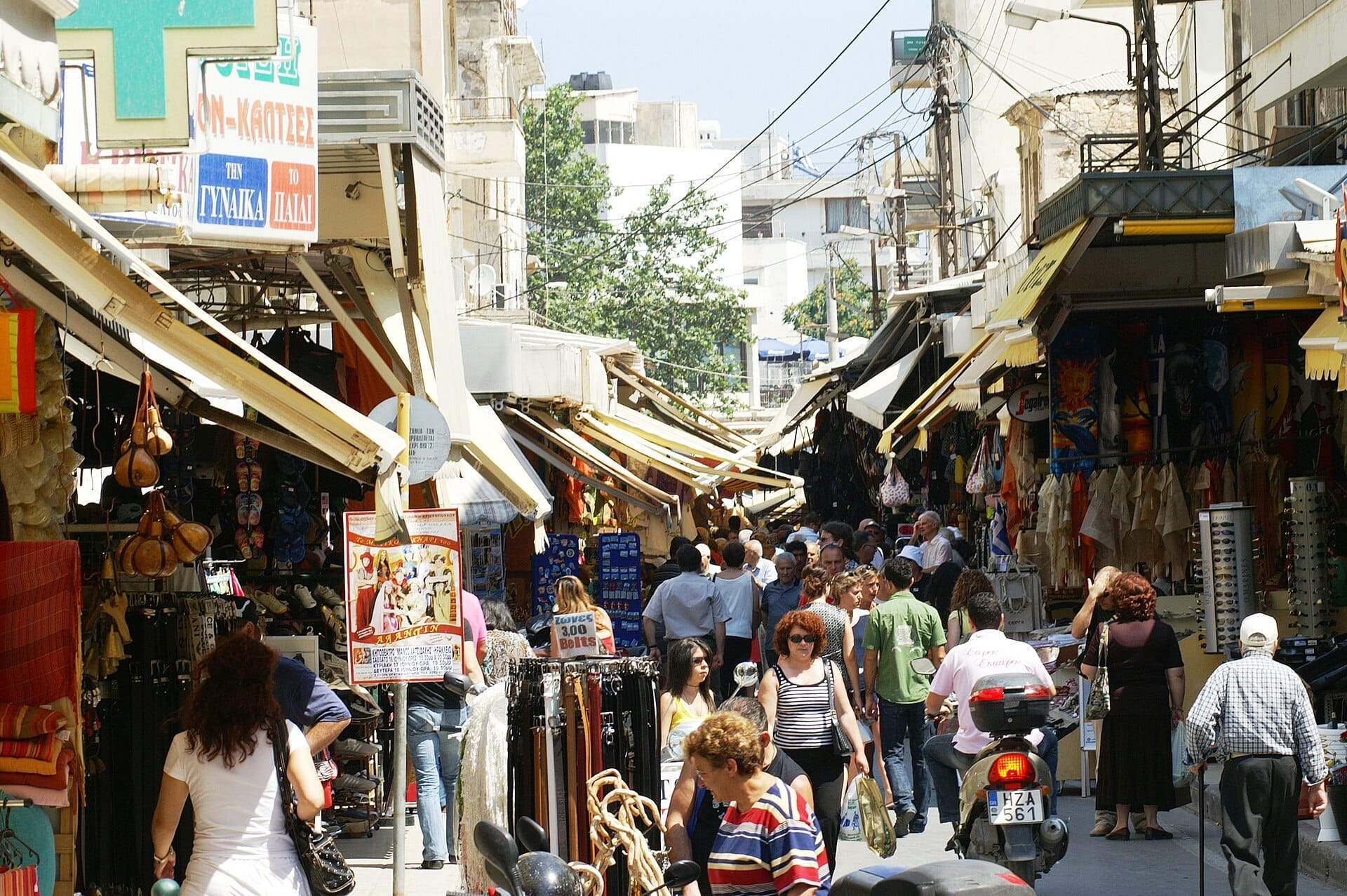
What Is the 1866 Street Market?
The 1866 Street Market, officially Odos 1866 (Οδός 1866), is Heraklion's main open-air food and goods market, stretching along a pedestrianised street from Meidani to Kornarou Square. It is also known locally as the Agora or Heraklion Central Market. Unlike the curated craft markets found near tourist waterfronts, this one serves the city's actual residents. Cretan grandmothers price-checking olive oil tins outnumber tourists on most weekday mornings.
The street is named in honour of the 1866 Cretan uprising against Ottoman rule, a revolt that culminated in the dramatic siege of Arkadi Monastery and galvanised international sympathy for Cretan independence. The parallel street is named after 1821, another key date in Greek independence history. The naming is deliberate: this corridor of commerce runs between two commemorations of resistance. That context gives the market a weight most visitors don't immediately notice.
💡 Local tip
Bring cash. Most stall vendors do not accept cards, and the best herb and spice sellers often have no card reader at all. ATMs are available on the side streets branching off the market.
What You'll Actually Find Here
The market's primary identity is food. Stalls overflow with Cretan thyme honey in unlabelled jars, rough-hewn blocks of graviera cheese, cured meats, dried herbs — oregano, sage, mountain tea — and olives in more varieties than most visitors knew existed. Olive oil is sold in tins and bottles at prices significantly lower than airport shops or resort boutiques. If you're planning to bring Cretan products home, this is where serious shoppers come.
Alongside the food stalls, you'll find a denser mix than you might expect: household goods, cheap clothing, leather sandals, tourist souvenirs, and bakeries. The souvenir density increases toward the Lions Square end; the more interesting artisan and food stalls tend to cluster toward the Kornarou Square end. Walk the whole length before buying anything.
For fresh fish and seafood, skip the market street itself and walk a block to Karterou Street, where the fishmongers operate out of dedicated stalls. It's rawer and less photogenic, but the selection is genuine and the prices are what locals actually pay. If fish markets interest you, this short detour is worth it. Heraklion's relationship with the sea runs deep, as explored further in the Historical Museum of Crete nearby.
Tickets & tours
Hand-picked options from our booking partner. Prices are indicative; availability and final rates are confirmed when you complete your booking.
Visit a Family-Run Olive Mill with Food Tasting in Heraklion
From 19 €Instant confirmationFree cancellationHeraklion Snorkelling Tour with Sea Scooter
From 70 €Instant confirmationFree cancellationEcobike wine ride tour of Heraklion
From 79 €Instant confirmationFree cancellationEcobike food ride tour of Heraklion
From 99 €Instant confirmationFree cancellation
How the Market Changes Through the Day
Early morning, roughly 8–10am, is when the market is at its most functional. Vendors arrange displays, delivery boxes are stacked on the cobblestones, and the customers are almost entirely local. The smells are sharpest then: cut herbs, fresh bread from the bakeries, the mineral tang of the fishmongers' ice. If you want to feel like you're seeing Heraklion rather than touring it, this is the window.
By midday the market fills with a mix of shoppers and tourists. The narrow pedestrian lane becomes genuinely crowded in peak summer months; two people with backpacks and a stroller can block traffic for a moment. Vendors are louder and more actively engaging passers-by. This is the best time for photographs of the street at full energy, but it's not the most comfortable time to browse at your own pace.
Late afternoon, from around 4pm onward, is a middle-ground worth considering. The midday crowd thins, the light shifts to something warmer from the west, and some vendors begin discounting perishables. Certain stalls close in the mid-afternoon and reopen in the evening; the rhythm isn't perfectly predictable, so if you have a specific purchase in mind, morning is the reliable window.
⚠️ What to skip
In July and August, the market street between 11am and 2pm becomes genuinely uncomfortable. The narrow lane traps heat and the crowds are at their thickest. If you're sensitive to heat or crowds, visit before 9:30am or after 5pm.
The Historical Architecture You Might Walk Past Without Noticing
The market's surroundings contain more history per square metre than most visitors realise. At the Kornarou Square end, near the Bembo Fountain, a 16th-century Venetian structure assembled from ancient Roman fragments, including a headless Roman statue that still stands embedded in the structure. Adjacent to it is the former Sebil, a small domed Ottoman fountain-kiosk built by Haci Ibrahim Agha as a charitable water source. Today it functions as a café, but the original form is largely intact.
Inside the market street itself, look for the Koudoumas coffee shop, which incorporates a surviving Venetian archway into its facade. Nearby, a 16th-century church sits half-hidden, surrounded by buildings on the adjacent streets. These details are easy to miss when the street is crowded, but they reveal how densely layered this part of Heraklion actually is. The city's Venetian past is most formally documented at the Heraklion Venetian Walls, but the market street is where that history quietly persists in daily life.
For the deeper historical context of Crete's civilisations, the Heraklion Archaeological Museum is a 15-minute walk from the market and holds one of the most significant collections of Minoan artefacts in the world. Pairing the two in a single morning makes practical sense.
Practical Walkthrough: Getting the Most Out of a Visit
The market runs along a single primary street, so navigation is simple: start at one end, walk to the other, and return on the same path or loop back through the parallel side streets. The walk from Meidani to Kornarou Square takes about 10 minutes at a slow stroll with no stops. Budget more time if you intend to buy anything, since negotiating weight, packaging, and payment at herb or cheese stalls takes a few minutes each.
Wear comfortable shoes. The street surface is uneven in places, with cobblestones that become slippery when wet. In rain, the market continues operating but the experience changes significantly: vendors pull awnings out, the light drops, and the smells intensify in an interesting way. A light rain in spring or autumn doesn't ruin a visit; a downpour does. There is no shelter for a prolonged wait.
Wheelchair access is possible along the main pedestrian lane, but the surface texture and occasional delivery obstructions make it uneven. Side street supermarkets and cafés off the market are more reliably accessible. The market itself has no ramps, accessible toilets, or official accessibility infrastructure.
ℹ️ Good to know
Photography is welcomed by most vendors, but it's courteous to ask before pointing a camera directly at a person. A smile and a word of Greek — 'boró na traváxo fotografia?' (can I take a photo?) — goes a long way and often leads to a better shot anyway.
How This Market Fits Into a Heraklion Day
The 1866 Street Market works best as part of a broader exploration of central Heraklion rather than as a standalone destination. The walk from the Palace of Knossos to the city centre passes close enough to make the market a natural stop. Kornarou Square, at the market's southern end, is a pleasant place to sit with a coffee after browsing — the cafés around the square are less expensive and less tourist-oriented than those near Lions Square.
If you're planning a full day in Heraklion, a good sequence is: the Archaeological Museum in the morning, the market for late-morning shopping and snacks, lunch in the side streets near Kornarou Square, and the Venetian walls or waterfront in the afternoon. That structure lets you cover the city's main draws without excessive backtracking. The one-week Crete itinerary covers how to fit Heraklion into a longer island trip.
Who should consider skipping: if you have no interest in food shopping and have already spent time in similar Mediterranean markets (Mercato Centrale in Florence, Mahane Yehuda in Jerusalem, any Greek agora), the 1866 Street Market may feel familiar rather than revelatory. It's not a spectacle; it's a working street. Travellers expecting a curated food hall or a heavily designed 'market experience' will be underwhelmed. Those who find meaning in ordinary commerce and unpretentious local life will find it disproportionately rewarding.
Insider Tips
- The best herb and spice value is at stalls toward the Kornarou Square end, not the first stalls you encounter coming from Lions Square. The closer you are to the tourist-facing end, the higher the markup.
- Touli's bakery on the market street, bakes kalitsounia (soft cheese pastries) that are a reliable morning snack and cost considerably less than café versions nearby.
- The Sebil Ottoman kiosk at Kornarou Square now operates as a café. It's a genuinely good place to sit — underused by tourists, shaded, and architecturally interesting. Coffee there costs less than at the cafés on Lions Square.
- If you're buying olive oil to take home, ask vendors whether they can seal tins properly for travel. Many are experienced with this request and will tape or wrap the lid without being asked twice.
- Avoid the market on public holidays. Several stalls close and the overall experience is patchy. A weekday morning between late September and early June represents the market at its most consistent.
Who Is 1866 Street Market (Heraklion) For?
- Food shoppers looking for authentic Cretan products at local prices
- Photographers interested in texture, colour, and candid urban scenes
- Travellers who want to spend time in a space oriented toward residents rather than tourists
- History enthusiasts who appreciate layered architecture (Venetian, Ottoman, modern all on one street)
- Anyone building a broader Heraklion day who needs a grounding, unhurried mid-morning activity
Nearby Attractions
Other things to see while in Heraklion:
- CretAquarium
Located 15 km east of Heraklion on a former American military base, CretAquarium is one of Europe's largest modern aquariums. Run by the Hellenic Centre for Marine Research, it showcases around 2,000 animals from 200 Mediterranean species across 1,800,000 liters of seawater. It is a serious scientific institution that doubles as a compelling day out.
- Heraklion Archaeological Museum
The Archaeological Museum of Heraklion holds the most complete collection of Minoan artifacts on earth, spanning 5,500 years from the Neolithic period through Roman times. For anyone serious about ancient Mediterranean civilizations, this is the definitive stop in Crete.
- Heraklion Venetian Walls & Koules Fortress
Rising from the breakwater of Heraklion's old harbor, the Koules Fortress is one of the best-preserved Venetian sea fortresses in the eastern Mediterranean. Combined with the city's sweeping land walls, this is Heraklion's most visually commanding historical site.
- Natural History Museum of Crete
Housed in a restored industrial power plant on Heraklion's waterfront, the Natural History Museum of Crete covers 3,500 square metres of Eastern Mediterranean biodiversity, geology, and paleontology. The star exhibit is a 4.5-metre Deinotherium skeleton — the largest land mammal ever found on Crete. It is a serious research institution that also works well as a family afternoon.