Rethymno Old Town: Where Venice Meets the Ottoman Empire on Crete
Rethymno Old Town is one of the best-preserved medieval urban cores in the Mediterranean, layering ancient Greek foundations, Venetian aristocratic architecture, and Ottoman additions into a single walkable district. Entry is free, the streets are open around the clock, and the density of historical detail rewards anyone who slows down.
Quick Facts
- Location
- Rethymno, Crete, Greece — centered around the Venetian Harbor
- Getting There
- 10-minute walk from Rethymno KTEL bus station; limited parking at the old town perimeter — use peripheral lots and walk in
- Time Needed
- 2 to 4 hours for a thorough walk; full day if you stop for meals and explore the Fortezza
- Cost
- Free to enter and explore; individual attractions like the Fortezza charge separate admission
- Best for
- History enthusiasts, architecture lovers, slow travelers, couples, and photographers
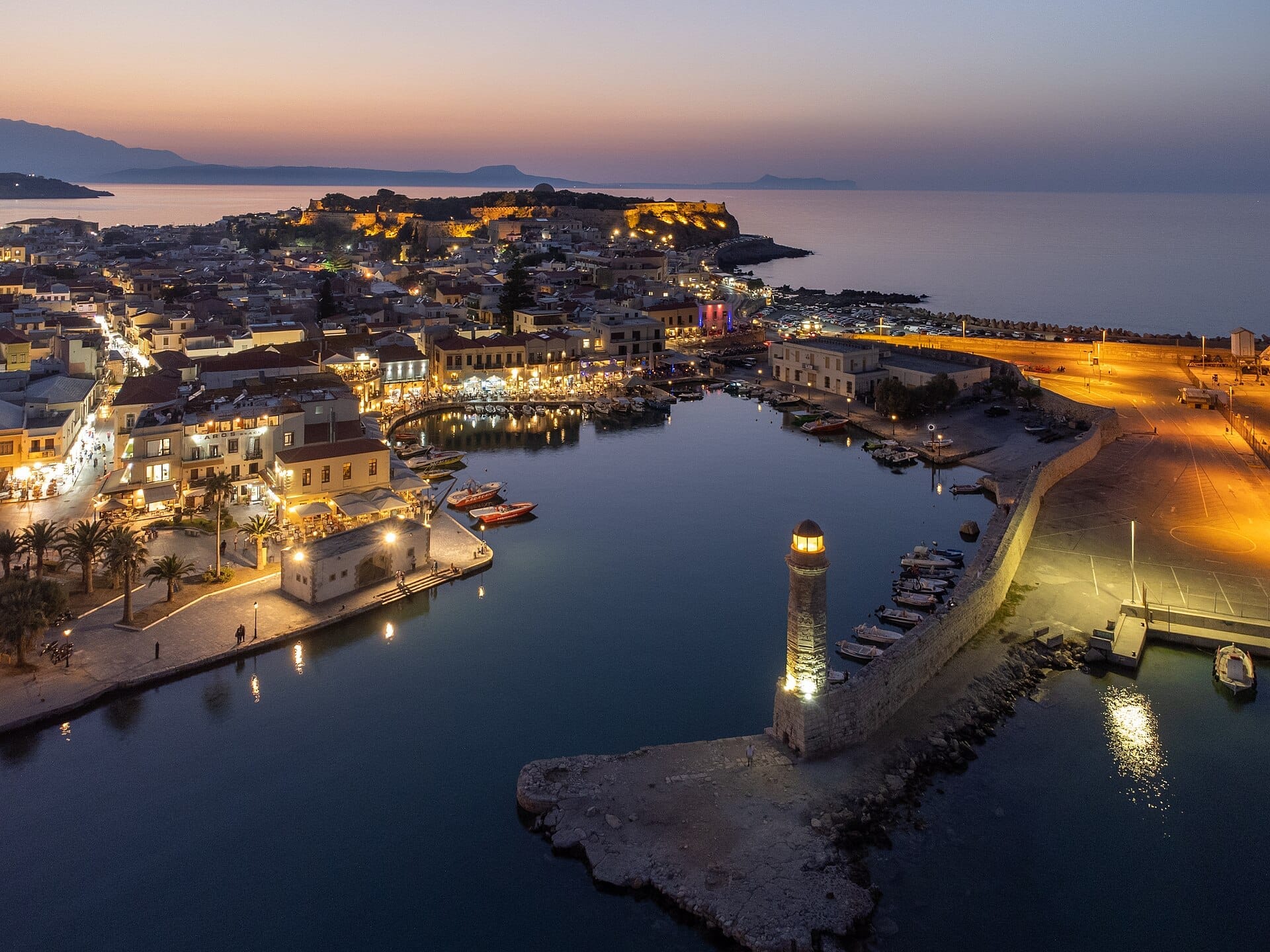
What Rethymno Old Town Actually Is
Rethymno Old Town, known in Greek as Παλιά Πόλη Ρεθύμνου (Palia Poli Rethymnou), is a living historic district rather than a reconstructed tourist site. It has been officially declared a historical monument and traditional settlement, meaning that alterations to its architecture are tightly regulated. The result is a streetscape that has changed remarkably little in outline since the 16th and 17th centuries.
The city itself has roots going back to ancient Rhithymna, a settlement traceable to at least the 4th or 5th century BC. But the bones of what you walk through today were laid during Venetian rule, when the Republic of Venice transformed Rethymno into a fortified administrative center. The Ottomans captured it in 1646 and 1648, adding their own layer: minarets converted from churches, a public hammam, and a distinctly different sensibility in some of the narrower back lanes. Both layers are still visible, often on the same block.
ℹ️ Good to know
The old town is open 24 hours a day, 7 days a week, with no gates or admission fees for the streets and public spaces. Some individual monuments within it have their own hours and ticket prices.
The Architecture: What You're Actually Looking At
Walking into the old town from Petichaki Square, the first thing you register is the scale. These are not grand boulevards. The streets are narrow, paved with worn stone, and lined with buildings whose overhanging wooden balconies were an Ottoman addition layered onto Venetian stone facades. Many buildings show both periods on the same facade: a pointed Renaissance doorway at street level, a latticed timber balcony above it.
The Rimondi Fountain, built in 1626 at Petichaki Square, is one of the most photographed spots in Rethymno. Three lion-head spouts still carry water, and the family coat of arms of the Venetian rector who commissioned it is carved above them. It is a small structure, but it anchors the social life of the square around it, with cafe chairs arranged in a rough semicircle facing it by mid-morning.
The Venetian Loggia on Arkadíou Street, attributed to the military architect Michele Sanmicheli and dating to the 16th century, is one of the finest Renaissance public buildings surviving in Crete. During the Ottoman period it functioned as a mosque. Today it serves as an information office and shop for reproductions of ancient Greek art. The arched portico facing the street is worth pausing at even if you do not go inside.
For a broader understanding of the objects that passed through this city across the centuries, the Rethymno Archaeological Museum sits close to the old town and provides essential context for the Minoan and Roman layers that predate the Venetian construction you see on the surface.
Tickets & tours
Hand-picked options from our booking partner. Prices are indicative; availability and final rates are confirmed when you complete your booking.
Chania's old town food and wine walking tour with lunch
From 145 €Instant confirmationFree cancellationFalassarna full-day tour from Rethymno
From 23 €Instant confirmationFree cancellationVisit a Family-Run Olive Mill with Food Tasting in Heraklion
From 19 €Instant confirmationFree cancellationSnorkeling experience in Crete
From 45 €Instant confirmationFree cancellation
The Fortezza: Above It All
The Fortezza dominates the western edge of the old town from a rocky promontory above the harbor. Built by the Venetians in the late 16th century after a series of devastating Ottoman raids, it is one of the largest Venetian fortresses in the Mediterranean. The scale becomes apparent only when you walk through the main gate: this was designed to shelter the entire population of Rethymno within its walls.
The Fortezza of Rethymno has its own separate admission fee and opening hours. The views from its ramparts across the old town rooftops, the harbor, and the Cretan Sea make the climb worthwhile, particularly in the late afternoon when the light is warm and the shadows define the stone textures clearly. On clear days, the White Mountains to the west are visible from the upper walls.
How the Old Town Changes Through the Day
Early morning is the most rewarding time to be in the old town, roughly from 7 to 9 AM. The streets smell of damp stone, bakeries are pulling tiropita and fresh bread from ovens, and the only other people moving through the lanes are locals on their way to work. You can stand at the Rimondi Fountain and hear the water clearly. The light in summer hits the eastern-facing facades directly at this hour, throwing Venetian doorways and carved lintels into sharp relief.
By 10 AM, tour groups begin arriving from the resort areas east of town, and the main commercial street, Arkadíou, fills quickly. The core tourist zone around the harbor and the Rimondi Fountain becomes noticeably crowded from late morning through early afternoon in July and August. If you want to photograph the harbor or the fountain without other people in frame, arrive before 9 AM or come back after 8 PM.
Evenings transform the district entirely. By 8 PM, the souvenir shops have pulled down their shutters, the heat has dropped, and the restaurants in the old town's interior lanes fill with a mix of locals and visitors. The narrow streets around Nearchou Square and toward the lighthouse have a completely different character at night: quieter, more atmospheric, lit by warm yellow light from taverna windows. This is the better half of the old town experience, and it is free.
💡 Local tip
Arrive before 9 AM for photography and a genuine sense of the place without crowds. Return after 8 PM for the evening atmosphere. Avoid the 11 AM to 3 PM window in summer if you dislike heat and congestion.
Practical Walkthrough: How to Navigate
The old town is compact enough to cover on foot in two hours at a comfortable pace, but the density of things worth noticing rewards a slower approach. A logical route starts at Petichaki Square and the Rimondi Fountain, moves north toward the Venetian Harbor, then climbs west toward the Fortezza. From the Fortezza, descend through the back lanes toward the Ottoman Hammam on Radamanthos Street, a 17th-century bathhouse with a marble floor that is visible from the exterior even though it is not open to visitors. Then loop back east along Arkadíou Street.
Wear shoes with grip. The cobblestones are uneven and polished smooth in places, particularly on the slope leading up to the Fortezza. In summer, carry water: there is no shade on the Fortezza ramparts, and the stone radiates heat by midday. The streets inside the old town are mostly too narrow for vehicles, but delivery scooters use some of them in the morning, so stay aware.
Accessibility is a genuine limitation here. The cobblestone surfaces, stone staircases, and steep approaches to the Fortezza make wheelchair and reduced-mobility access difficult in much of the district. Some of the harbor-front areas are flatter, but the most historically interesting lanes are largely inaccessible to anyone with significant mobility constraints.
⚠️ What to skip
The streets of the old town are not suitable for wheeled luggage, pushchairs, or wheelchairs in most areas. If you are staying in an old town accommodation, check the specific access route to your hotel before booking.
The Ottoman Layer: What Most Visitors Walk Past
Most visitors focus on the Venetian elements, which are better preserved and more heavily documented. But the Ottoman period lasted roughly 250 years in Rethymno, longer than the most intensively built phase of Venetian occupation, and its traces are worth seeking out deliberately.
The minaret near the Neratze Mosque, a former Augustinian church converted to a mosque during Ottoman rule, is one of the most striking vertical elements in the old town skyline. The mosque building itself has served various functions over the centuries and is now used as a concert hall. The minaret can be climbed for a view over the rooftops, though hours are limited and vary seasonally. The Ottoman Hammam on Radamanthos Street, built around 1670, is another reminder that this was a fully functioning Ottoman city for two and a half centuries, not merely a Venetian one.
If the layered history of Crete's towns interests you, the contrast between Rethymno and Chania's old town is instructive. For a comparison of the two cities more broadly, the guide on Chania vs Heraklion covers their different characters in detail.
Eating and Drinking in the Old Town
The harbor front is where most tourists end up eating, and the quality reflects that: the restaurants on the waterfront are competent but rarely exceptional, and prices run higher than the city average. The better value and more interesting food is found in the interior lanes, particularly around Nearchou Square and the streets behind the Venetian Loggia. Look for places with handwritten menus or chalkboard specials, which tend to indicate daily kitchen work rather than frozen inventory.
Rethymno is a good place to eat into Cretan food culture. The local diet leans heavily on olive oil, wild greens, fresh cheese, and slow-cooked lamb, all of which appear in various forms on menus throughout the old town. The guide to Cretan food is worth reading before you order.
Who Should Consider Skipping It
Rethymno Old Town is not for everyone. Travelers who primarily want beach time and do not have a strong interest in architecture or history will find the experience pleasant but probably not worth a special trip from a resort hotel. The old town is real and lived-in, which means it is also somewhat worn: peeling paint, crumbling stucco, and the occasional pile of building materials are part of the streetscape. If you are expecting a pristine, fully restored historic zone, you will find it rougher around the edges than that. That roughness is, for many visitors, exactly the point.
Visitors primarily interested in Crete's ancient history rather than its Venetian and Ottoman layers would be better served prioritizing the Palace of Knossos or the Minoan Palace of Phaistos instead.
Insider Tips
- The lighthouse at the far end of the harbor breakwater is a short walk from the old town and gives the best ground-level view of the Venetian Harbor and the Fortezza together. Most visitors turn back at the harbor restaurants and miss it entirely.
- The minaret of the Neratze Mosque offers one of the few elevated views of the old town that does not require climbing the Fortezza. Check locally for current opening hours, as they change seasonally and are not always posted online.
- Rethymno has a genuine university population, which means the coffee culture in the old town is better than you might expect in a tourist-heavy destination. Look for the smaller cafes in the interior lanes rather than the harbor front for better coffee at lower prices.
- If you are visiting in summer, the Rethymno Renaissance Festival brings theatrical and musical performances into the Fortezza and old town streets, typically in July and August. The Fortezza at night during a performance is a very different experience from a daytime visit.
- The back lanes between the Hammam and the Fortezza base see almost no tourist foot traffic even in peak season. This is where the residential character of the old town is most intact, with laundry lines, potted plants, and cats on windowsills that no guidebook photograph has bothered to document.
Who Is Rethymno Old Town For?
- Architecture and history enthusiasts who want to trace Venetian and Ottoman layers in the same streetscape
- Slow travelers and couples who enjoy aimless walking, good coffee, and evening dining without a fixed agenda
- Photographers looking for texture, layered facades, and early morning light without the crowds of Chania
- Visitors on a budget, since the core experience costs nothing and excellent food is available at reasonable prices in the interior lanes
- Travelers combining a beach holiday with cultural depth, since Rethymno Old Town is within easy reach of the nearby beach
Nearby Attractions
Other things to see while in Rethymno:
- Arkadi Monastery
Perched on a fertile plateau 500 meters above sea level, 23 kilometers from Rethymno, Arkadi Monastery carries the weight of one of the most dramatic episodes in Cretan history. The 1866 explosion that killed hundreds of refugees rather than allow Ottoman capture transformed this working monastery into a national symbol. Today it remains an active religious site, a sobering museum, and one of the most architecturally striking complexes on the island.
- Fortezza of Rethymno
Perched on Paleokastro hill above Rethymno's old harbor, the Fortezza is one of the best-preserved Venetian fortifications in the Mediterranean. Built between 1573 and 1580, it offers sweeping sea views, Ottoman-era monuments, and a walk through 400 years of Cretan history.
- Lake Kournas
Tucked inland from the north coast between Chania and Rethymno, Lake Kournas is Crete's sole freshwater lake — a striking contrast to the island's rugged, sun-scorched landscape. Terrapins bask on rocky outcrops, water birds drift across the surface, and the surrounding hills reflect in the still water with an almost mirror-like quality that explains the lake's name.
- Rethymno Archaeological Museum
The Rethymno Archaeological Museum traces Cretan civilization from the Paleolithic era through Roman occupation, displayed inside the 16th-century Church of Saint Francis. For a small admission fee, visitors access one of the most coherent regional collections in Crete, covering Minoan palace culture, burial customs, and everyday life across the centuries.